What It Means When A Hawk Hangs Around Your New York Bird Feeder
A Cooper’s Hawk can chase a songbird straight through a tangle of branches at full speed and come out the other side with lunch. I still remember the first time I watched one do it near my feeder. My coffee went cold while I stood frozen at the window.
The chickadees had gone quiet a minute earlier. The juncos sat like tiny statues under the shrubs. Nobody moved a feather, and honestly, neither did I.
Birds have their own alarm system, and they read danger long before we spot it. You need to watch those silent moments closely, because they tell a story. Here in New York, that story plays out in thousands of backyards every winter.
So why does this sharp-eyed visitor keep coming back to your yard? The answer says more about your feeder than you might expect, and some of it may make you smile.
That Hawk Perched By Your Feeder Is Reading The Menu
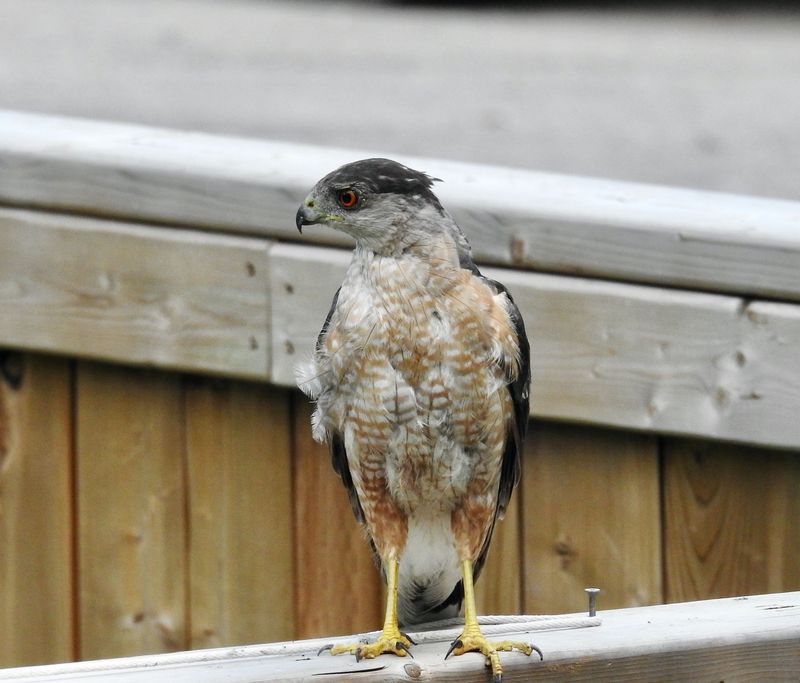
Your feeder is doing its job a little too well. Every morning it pulls in a crowd of finches, sparrows, juncos, and doves, all packed into one small space.
To a hawk, that busy scene looks like a reliable place to find food. Experts at Cornell Lab of Ornithology explain that bird-eating hawks learn where small birds gather and return to those spots again and again.
Your seed is not the attraction. The diners are.
I find that oddly flattering, in a way. A hawk hanging around means your yard supports enough songbirds to be worth a predator’s time.
Hawks tend to show up more often in late fall and winter. Leaves are gone, cover is thinner, and feeder traffic peaks as birds hunt for easy calories in the cold.
Some hawks that nest farther north also move into New York for the colder months.
Watch for clues before you ever see the hunter. Birds may freeze in place, scatter all at once, or give sharp alarm calls.
Blue jays sometimes even mob a perched hawk, screaming loudly until it leaves.
So when that hawk lands on your fence, try not to panic. It is simply checking out a spot that keeps paying off.
Knowing why it came is the first step toward deciding what, if anything, you want to change.
Cooper’s And Sharp-Shinned Hawks Are The Usual Feeder Suspects
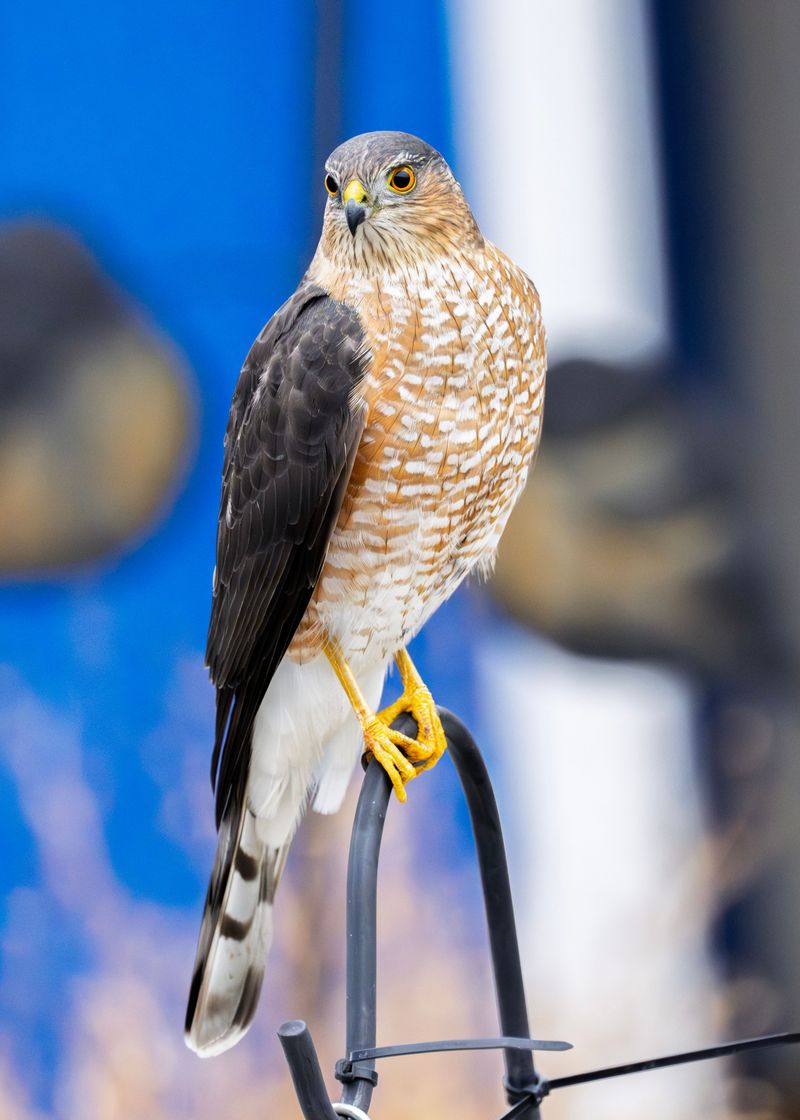
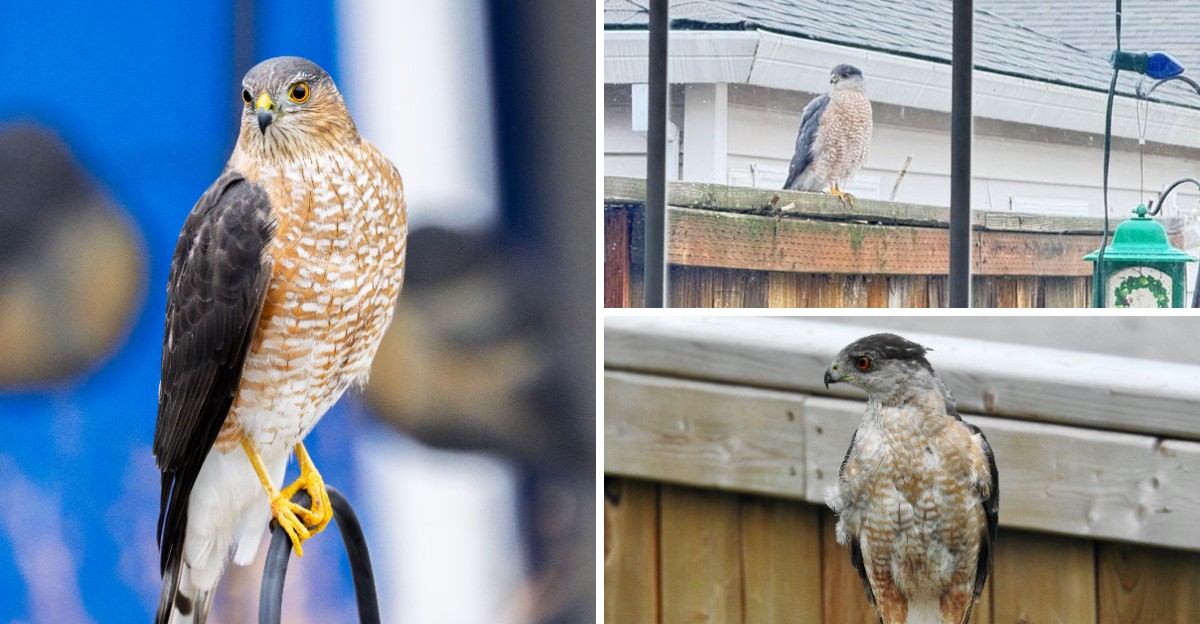
Meet the two hawks most likely to crash your backyard party. In New York, the regular feeder visitors are Cooper’s Hawks and Sharp-shinned Hawks, both members of a group called accipiters.
Accipiters are built for chasing birds through tight spaces. They have short, rounded wings and long tails that work like rudders.
That design lets them twist around tree trunks and dart through shrubs at surprising speed.
Telling them apart can feel like a puzzle. Both have blue-gray backs as adults, reddish barring on the chest, and banded tails.
Cooper’s Hawks are about crow-sized, while Sharp-shinned Hawks are closer to the size of a blue jay.
A few tricks help. Cooper’s Hawks usually have a rounded tail tip and a larger head that looks like it wears a dark cap.
Sharp-shinned Hawks often show a squared tail tip and a small head that barely sticks out in flight.
Fun fact for your next family dinner. The female is noticeably larger than the male in both species, so a big female Sharpie and a small male Cooper’s can look nearly identical.
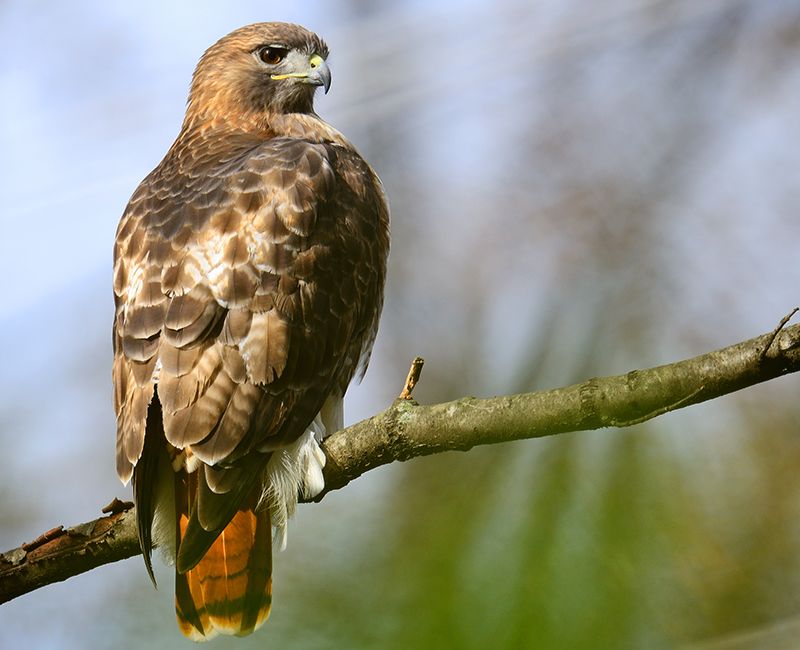
Red-tailed Hawks also live across the state, but they mostly hunt rodents in open fields. If a chunky hawk sits on a light pole near your yard, it is probably watching for squirrels or mice instead of your finches.
Dense Shrubs Near The Feeder Give Songbirds A Quick Escape
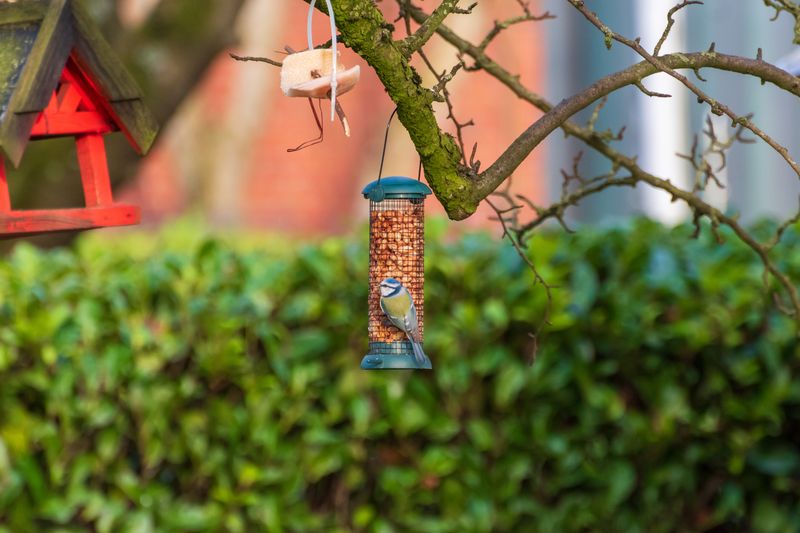
Cover is the best bodyguard a little bird can have. When a hawk swoops in, songbirds dive for the nearest thick branches, and those few feet can make all the difference.
Many bird experts suggest placing feeders within about 10 feet of dense shrubs or evergreens. That distance gives birds a fast hiding spot while keeping lurking cats from using the shrubs as an ambush point right beside the feeder.
Native plants are a smart choice here. Eastern red cedar, American holly, winterberry, and arrowwood viburnum all do well in many parts of the state.
They offer shelter, and several produce berries that feed birds in winter.
Personally, I love a good brush pile too. Stack fallen branches loosely in a corner of the yard, with bigger limbs on the bottom and smaller twigs on top.
Sparrows and wrens treat it like a cozy safe house.
Please skip invasive shrubs like burning bush, Japanese barberry, and Asian honeysuckles. They are restricted in New York because they crowd out native plants in nearby woods.
Planting takes patience, so fall and early spring are the best times to get new shrubs in the ground. In the meantime, a discarded holiday tree propped near your feeder works as a handy winter shelter.
Your birds will dart into it within days.
Moving Your Bird Feeder Can Change A Hawk’s Hunting Plans
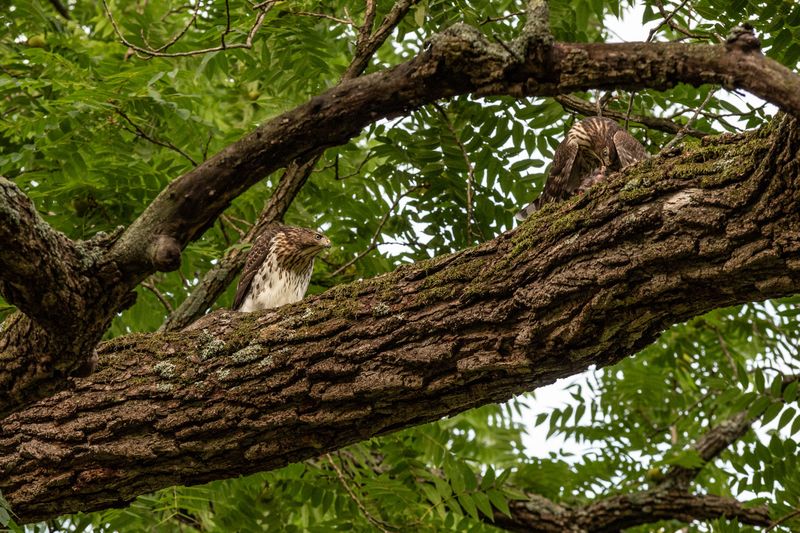
A little rearranging can work wonders. Hawks rely on surprise and a clear flight path, so anything that blocks their approach makes your feeder a tougher target.
Try hanging feeders under a porch roof, an awning, a pergola, or the lower branches of a big tree. Overhead cover makes it harder for a hawk to spot birds from above and harder to swoop down without crashing into something.
Ground feeding is another habit worth rethinking. Seed scattered on open lawn leaves doves and juncos exposed.
If you love feeding ground birds, sprinkle seed close to shrubs instead of in the middle of the grass.
Got a hawk that just will not quit? Taking feeders down for about a week often does the trick.
Songbirds spread out to find other food, and the hawk usually moves on to a busier hunting spot.
I know that feels sad, especially in January. Your birds will be fine, though, since they visit many food sources each day and do not depend on one feeder.
One more tip pays off. Keep feeders either very close to windows, within three feet, or farther than 30 feet away.
Startled birds fleeing a hawk often hit glass, and that placement helps reduce dangerous collisions during a panic.
A Hunting Hawk Signals A Healthy Backyard Food Web
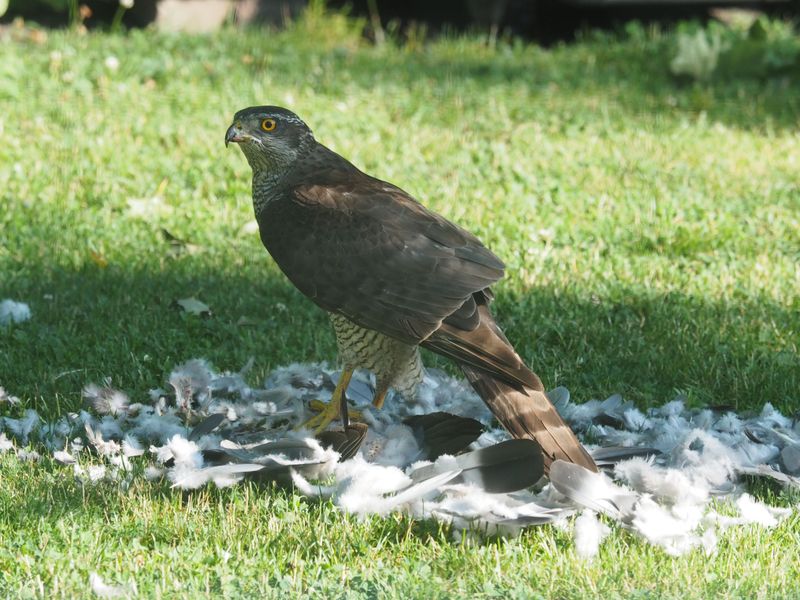
Watching a hawk catch a songbird can sting a little. Still, a hawk at your feeder is a sign that nature is working the way it should.
Predators sit near the top of the food web. They only stick around where prey is plentiful, so a regular hawk visitor means your neighborhood supports lots of small birds, plus the insects, seeds, and plants those birds need.
Research shared by Cornell Lab of Ornithology and others shows that hawks hunting at feeders have little effect on overall songbird populations. Common feeder species like house finches, sparrows, and mourning doves raise plenty of young each year.
Hawks often catch birds that are sick, slow, or less alert. That may help keep flocks healthier over time, though scientists are still studying how much this matters at backyard scale.
Here is a comeback story I adore. Cooper’s Hawks declined sharply in the mid-1900s because of pesticides like DDT and shooting.
After DDT was banned in 1972 and protections grew stronger, their numbers rebounded across the state and much of the country.
Many Cooper’s Hawks now nest right in suburbs and cities. So the hawk in your yard is part of a real conservation success.
That thought makes the occasional feathered drama a bit easier to accept.
Every Hawk In New York Is Protected By Law
Frustration is understandable, but your options have limits. All native hawks in the United States are protected under the federal Migratory Bird Treaty Act.
That law makes it illegal to capture, harm, or harass hawks without a permit. It also covers their nests, eggs, and even feathers.
New York State law adds its own protections for birds of prey, enforced by the Department of Environmental Conservation.
So trapping a hawk and moving it is off the table. So is anything meant to injure it.
Fines can be serious, and the hawk is simply doing what nature built it to do.
Gentle deterrents are fine, though. Moving feeders, adding cover, or pausing feeding for a while are all legal and effective.
Some people also hang reflective tape nearby, although results are mixed.
Found an injured hawk? Do not try to handle it yourself, because those talons are sharp.
Contact a licensed wildlife rehabilitator instead. The DEC website lists rehabilitators by county across the state.
Spotting a feather on your lawn is tempting too. Even collecting a single hawk feather is technically against federal law.
Snap a photo, admire the beautiful barring, and leave it where it fell for the sake of following the rules.
Grab Your Binoculars And Enjoy The Raptor Show
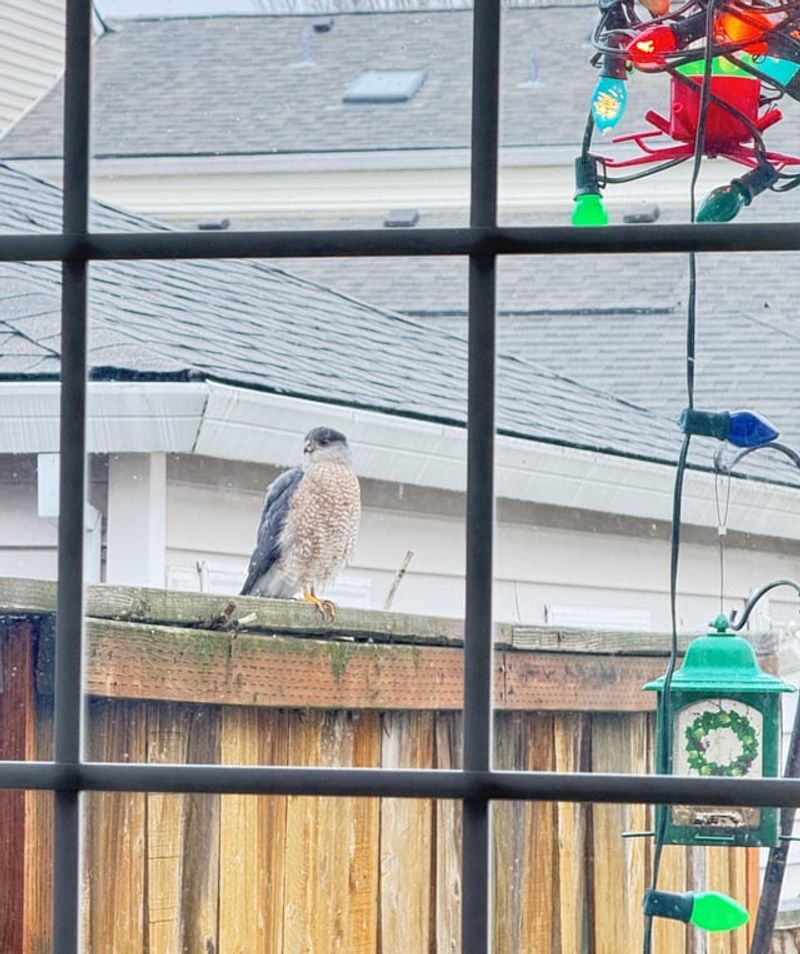
Some of my favorite winter mornings started with a hawk sighting. Once you stop seeing the visitor as a villain, it becomes the most exciting bird in your yard.
Keep binoculars and a notebook by the window. Jot down when the hawk shows up, where it perches, and how the songbirds react.
Patterns appear fast, and you might learn its favorite tree or time of day.
Curious kids love this kind of detective work. Have them compare tail shapes, count the bands, or guess whether the visitor is a Cooper’s or a Sharp-shinned Hawk.
You can share your sightings too. Projects like eBird and Project FeederWatch use backyard reports to track how birds are doing across North America.
Your notes from a kitchen window really can help scientists.
Balance is the real goal here. Keep cover thick, feeders clean, and placement smart, then let nature handle the rest.
Songbirds are tougher and smarter than we give them credit for.
Next time the yard goes suddenly silent, look up slowly. A hawk perched on your fence is a gift of wild beauty right outside your door.
Few backyard moments feel quite as thrilling, and I hope you get to enjoy plenty of them.