How To Make A California Front Yard Look Fuller Without Adding Thirsty Plants
A front yard can look a little flat even when the plants in it are perfectly healthy. That is usually the frustrating part.
You are watering carefully, keeping things neat, and still the space feels sparse, unfinished, or like it is missing that easy fullness you notice in really inviting California landscapes. The good news is that a lush look does not have to come with a bigger water bill.
A fuller yard often comes down to plant shape, layering, spacing, and a few smart design moves that make everything feel more generous without packing in thirsty choices that struggle the minute the weather turns hot.
That is where California gardeners can get clever. The right mix of low-water plants, soft mounding forms, and well-placed texture can make even a simple front yard feel richer and more put together.
Once those pieces start working together, the whole space feels less bare, more welcoming, and a lot more finished than you might expect.
Build In Layers
Imagine walking past a yard that feels like it has depth, like it goes on forever even though it is just a small strip of land. That feeling comes from layering.
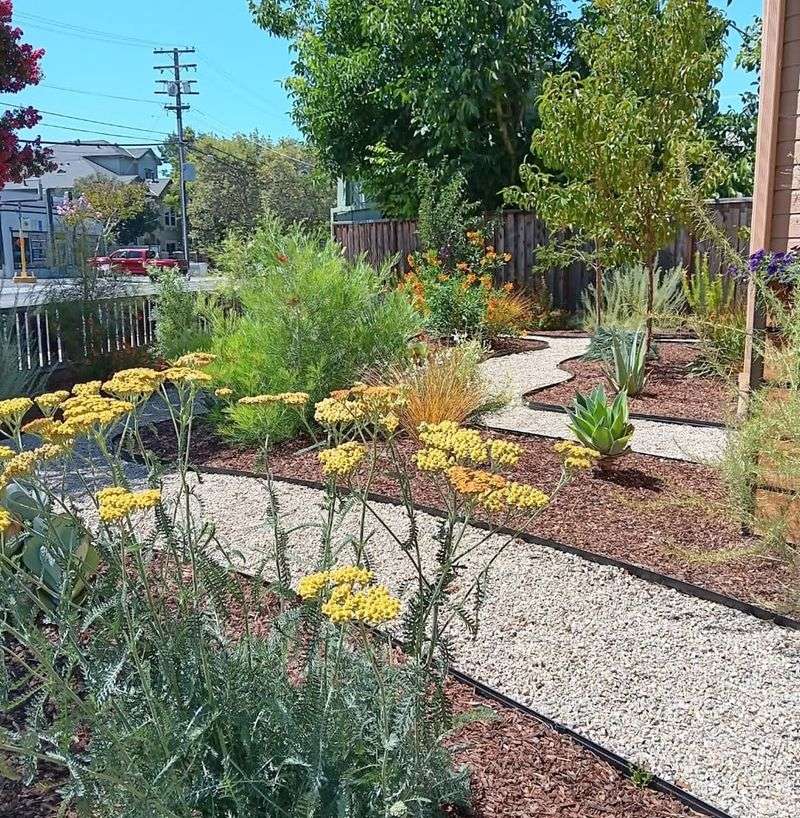
Layering means placing taller plants at the back, medium plants in the middle, and low plants or groundcovers at the front. It is one of the easiest ways to make any California front yard look fuller without planting more than you need.
When your eye travels from short to tall, the yard looks bigger and more intentional. It does not feel flat or bare.
Even with just a handful of drought-tolerant plants, this arrangement creates visual richness. Think of it like a natural hillside in the California foothills where plants stack up in a way that feels effortless.
Start simple. Pick one tall plant like a native manzanita or a compact desert willow for the back.
Add a mid-size shrub like salvia in the middle. Then finish with a low creeping plant up front.
Three layers, big impact. This works especially well in narrow parkway strips or small front yard beds common in many California neighborhoods.
Repeat The Same Plants In Groups
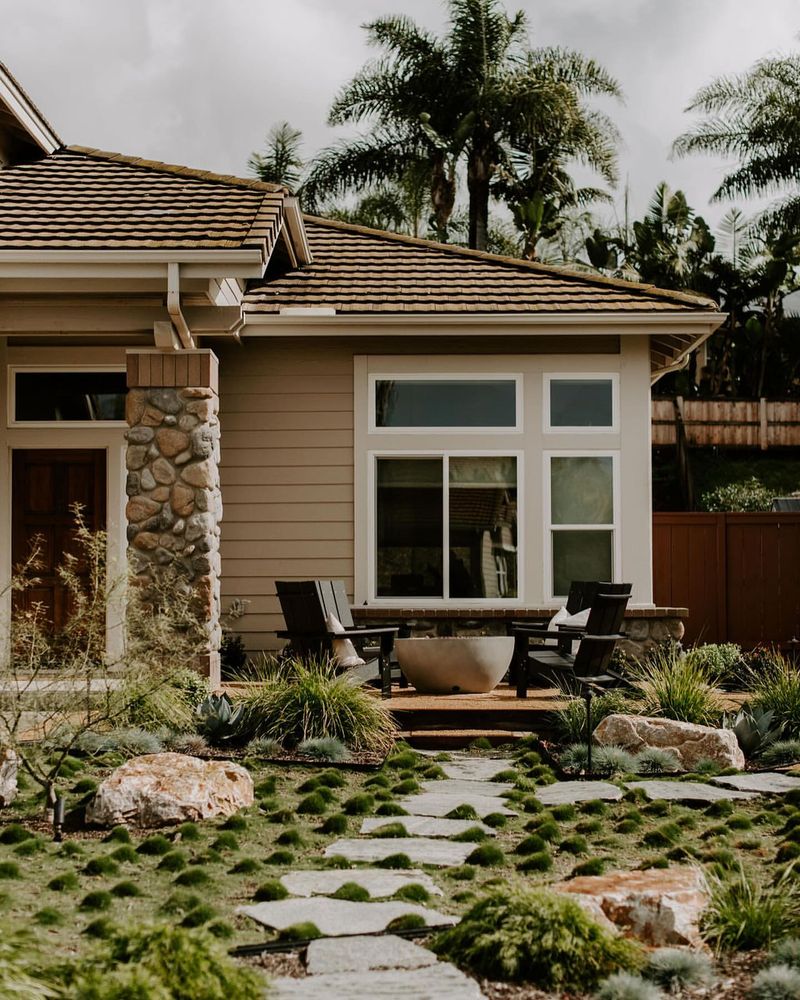
One of the most overlooked tricks in yard design is repetition. When you scatter many different plants all over the yard, the eye does not know where to look.
The space feels busy but also oddly empty at the same time. Grouping the same plant together in clusters of three or five creates a rhythm that makes the yard feel intentional and full.
Picture a row of purple salvia repeated in two or three spots across the front of a California bungalow. Suddenly the yard has a pattern.
It feels designed. It feels complete.
Repetition gives the landscape a sense of movement and flow, which tricks the eye into seeing more volume than is actually there.
This works with almost any drought-tolerant plant. Try grouping Cleveland sage, blue chalk sticks, or even ornamental grasses in matching clusters.
Space them slightly apart so they have room to fill in over one growing season. In California’s mild climate, many of these plants bulk up quickly.
Your California Garden Changes Every Week. Your Plan Should Too.
Gardening in California changes quickly throughout the season. Every Friday you’ll receive a simple weekly plan showing exactly what to plant, prune, fertilize, harvest, and protect so you never miss the right timing.
Within a year, those small clusters become full, lush mounds that make the whole yard look professionally designed without spending a fortune.
Use Low-Water Groundcovers To Cover Bare Soil
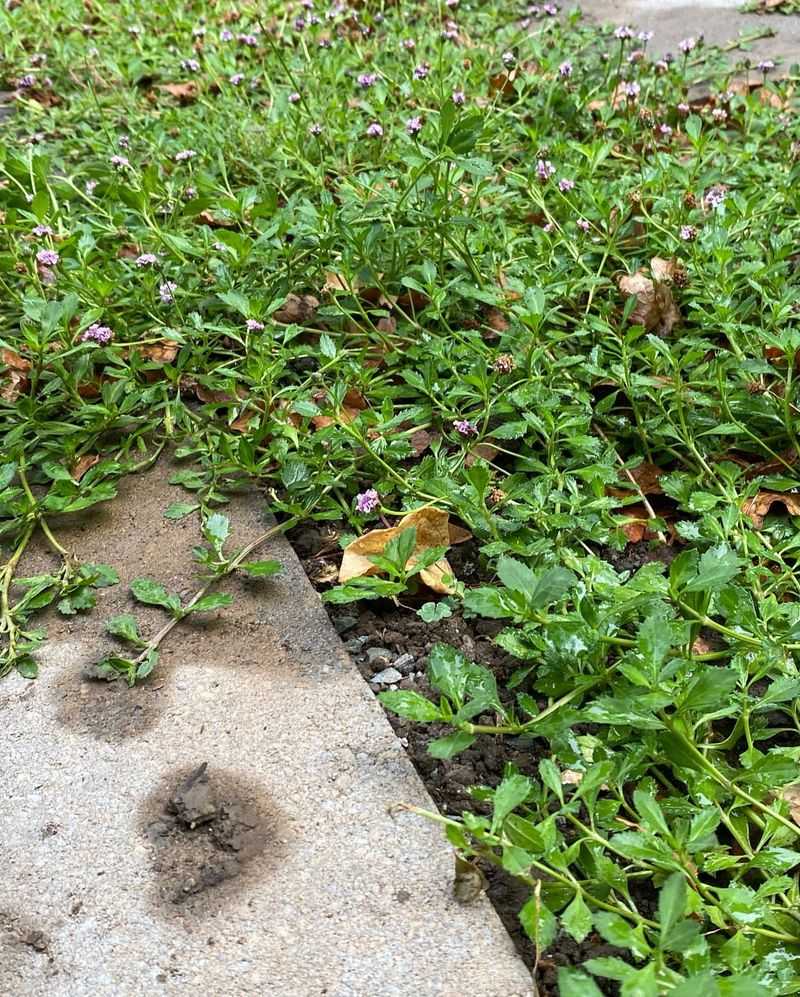
Bare soil is the enemy of a full-looking yard. Nothing makes a landscape feel incomplete faster than patches of dry, cracked earth between plants.
In California, where summers are long and hot, bare soil also loses moisture quickly and invites weeds. Covering that soil with a low-water groundcover changes everything.
Dymondia margaretae is a California favorite. It spreads slowly but steadily, forming a tight, silver-green carpet that stays low and neat.
Creeping thyme is another smart pick. It handles foot traffic, smells wonderful, and stays green with very little water.
Both options fill in the gaps between larger plants and give the yard a finished, polished look.
The key is to plant groundcovers close enough that they eventually knit together. In California’s climate, most low-water groundcovers establish well in fall when temperatures cool down and rains return.
Once they are rooted in, they spread on their own and crowd out weeds naturally. You end up with a yard that looks full from edge to edge, and you barely have to water it once the plants are settled.
It is a practical and attractive solution for any California homeowner.
Rely On Mulch As A Design Element
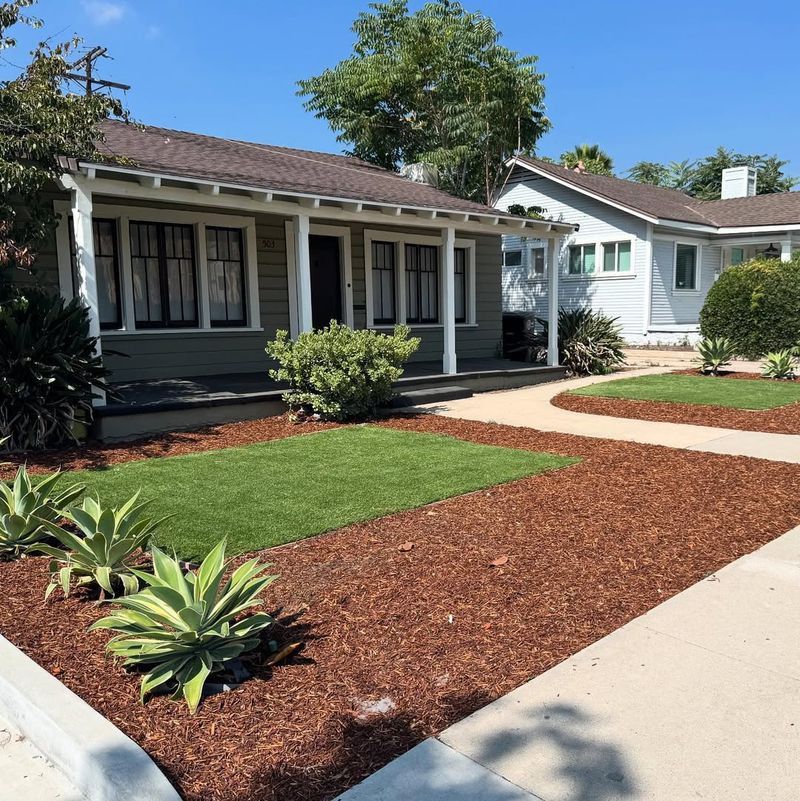
Most people think of mulch as something you throw down to protect plants and forget about. But in a California yard, mulch can be so much more than that.
Used thoughtfully, it becomes a real design element that ties the whole landscape together and makes the yard look full even when plants are still small and growing in.
Dark wood chip mulch creates contrast against light-colored rocks or silver-leafed plants. Decomposed granite gives a warm, earthy tone that feels at home in the California landscape.
Spreading a consistent layer of mulch around all your plants connects them visually. The yard stops looking like a collection of random plants and starts looking like a cohesive design.
A good rule of thumb is to apply two to three inches of mulch across all planting beds. Keep it a few inches away from plant stems to prevent rot.
Refresh it once a year to keep the color rich and the coverage thick. In California’s dry climate, mulch also reduces water evaporation from the soil significantly, which means your plants stay healthier and you water less.
It is a simple addition that delivers a big visual upgrade for very little cost.
Mix Leaf Shapes And Plant Forms
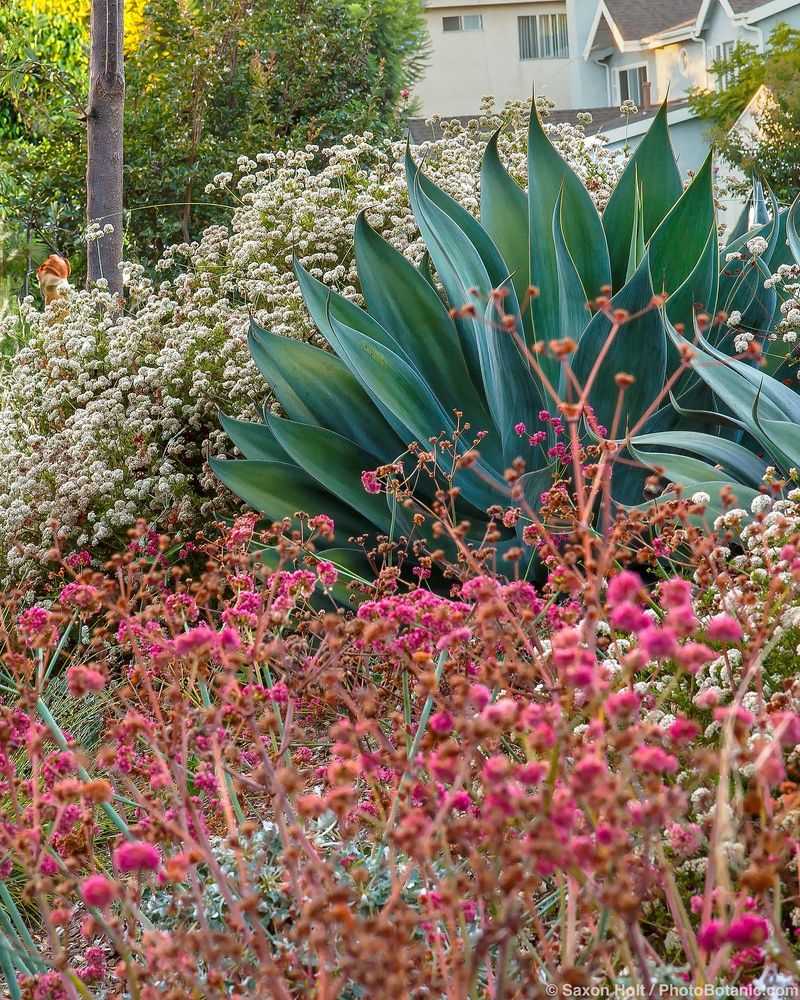
Variety in leaf shape and plant form is what separates a boring yard from one that stops people in their tracks. When every plant looks the same, the yard feels flat.
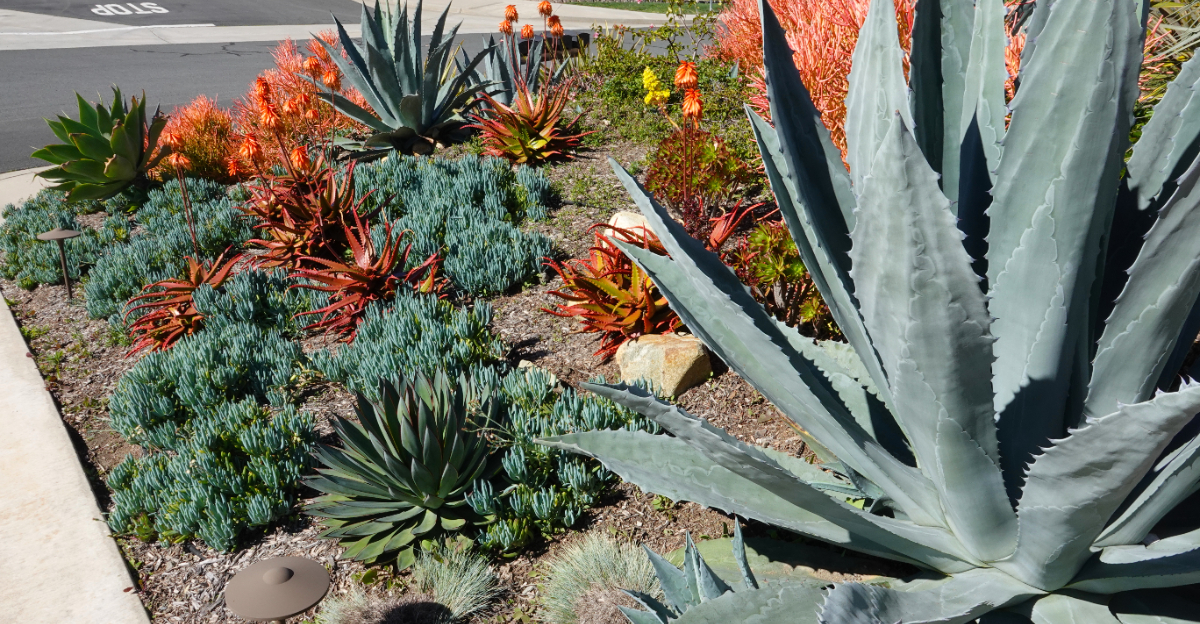
But when you mix a spiky agave next to a soft, mounding sage next to a feathery ornamental grass, the contrast creates texture and depth that makes the whole space feel alive and full.
California has incredible options for mixing plant forms without touching the hose much. Blue oat grass adds soft, arching blades.
Agave americana brings bold, sculptural structure. Penstemon adds tall, airy spikes of color.
Together, these plants create a landscape that looks layered and complex even if you only have a dozen plants total.
Think of it like putting together an outfit. You would not wear all the same texture from head to toe.
The same logic applies to plants. A round shape next to a tall spiky one next to a low spreading one creates visual interest at every level.
Walk around your California neighborhood and notice which yards catch your eye. Chances are, the ones that look fullest are the ones playing with different plant shapes and forms most creatively.
Choose Plants That Grow Under Similar Water Needs
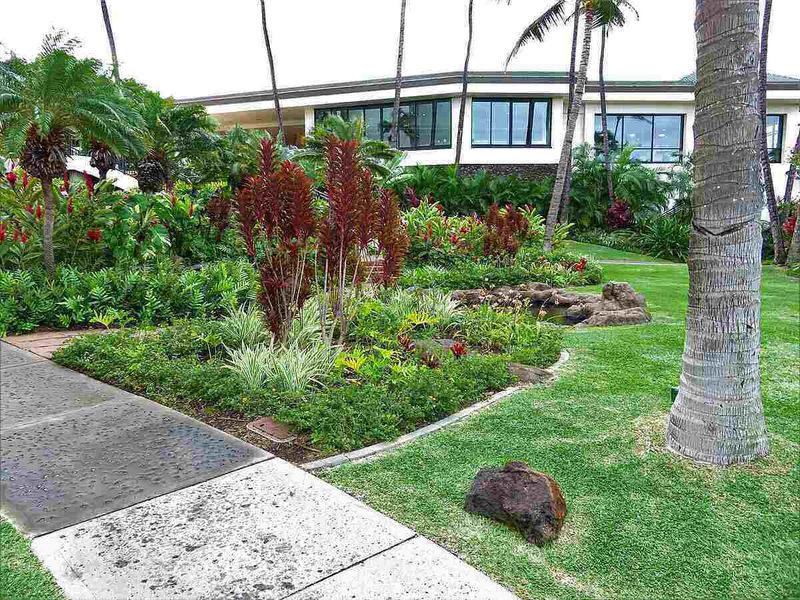
Grouping plants by their water needs is called hydrozoning, and it is one of the smartest things a California homeowner can do. When plants in the same bed share similar water requirements, your irrigation becomes simple and efficient.
No plant gets too much or too little. Everyone thrives, and a thriving plant always looks fuller than a stressed one.
Picture a bed of California lilac, artemisia, and red yucca all planted together. They all prefer dry conditions once established.
You water them together on the same schedule. They grow strong and full because they are not competing with a water-hungry plant nearby that is pulling resources in a different direction.
This approach also reduces maintenance. You are not out there hand-watering one thirsty corner while the rest of the yard dries out.
Everything stays consistent. In California’s Mediterranean climate, most drought-tolerant plants hit their stride in spring and hold their shape through the long dry summer if they are grouped correctly.
When plants are healthy and well-matched, they grow in faster and fill the space more completely. A well-hydrozoned yard always looks more intentional, more finished, and more full than one where plants are placed randomly without considering their needs.
Avoid Overcrowding At Planting Time
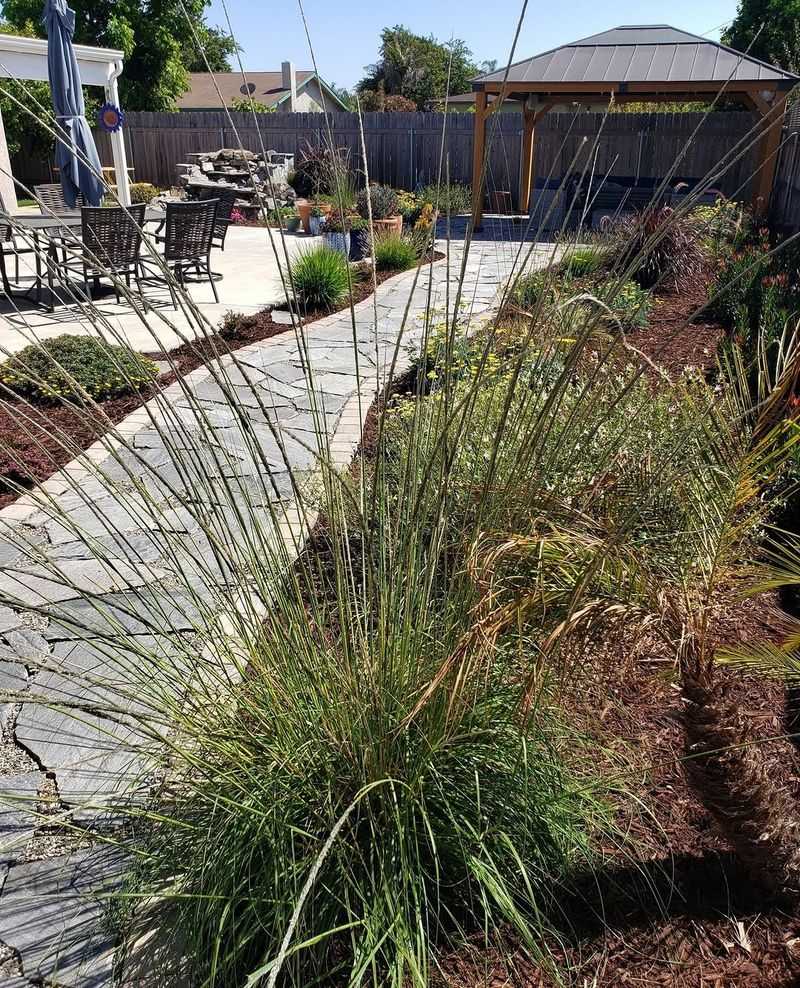
Here is something that surprises a lot of new gardeners: planting too many things too close together actually makes a yard look worse over time, not better. When plants are overcrowded, they compete for water, light, and nutrients.
They grow weak and leggy. Some get shaded out entirely.
The result is a messy, patchy yard that never quite fills in the way you hoped.
In California, where drought-tolerant plants are often naturally spreading shrubs, giving each plant enough room to reach its full size is essential. A California buckwheat, for example, can spread three to four feet wide.
If you plant five of them too close together, within two seasons you have a tangled mess instead of a full, healthy mass planting.
Trust the spacing on the plant tag and resist the urge to fill every inch right away. Use mulch and groundcovers to cover the bare soil while your plants grow in.
Within one to two growing seasons in California’s forgiving climate, well-spaced plants will grow to their natural size and fill the yard beautifully.
The yard will look intentional, healthy, and genuinely full because every plant had the room it needed to become its best self.