How To Make Your Arizona Yard More Suitable For Cactus Wrens
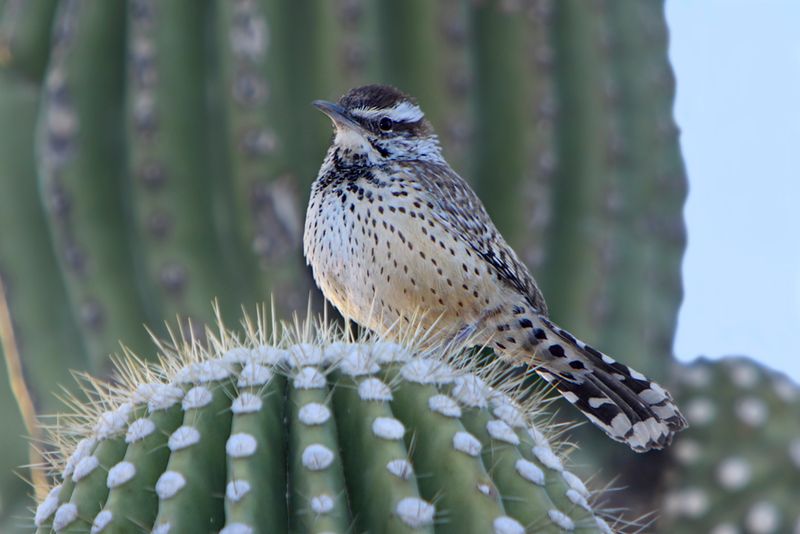
A bird that builds a nest shaped like a football on its side might already live near your yard. It sits right in the thorns, where most animals would never dare.
I love how bold this little singer is, honestly. The bird is Arizona’s state bird, and it stays here through every season.
So why do so many gardeners think it needs help to stick around?
Cactus Wrens Already Live Year-Round in Parts of Arizona
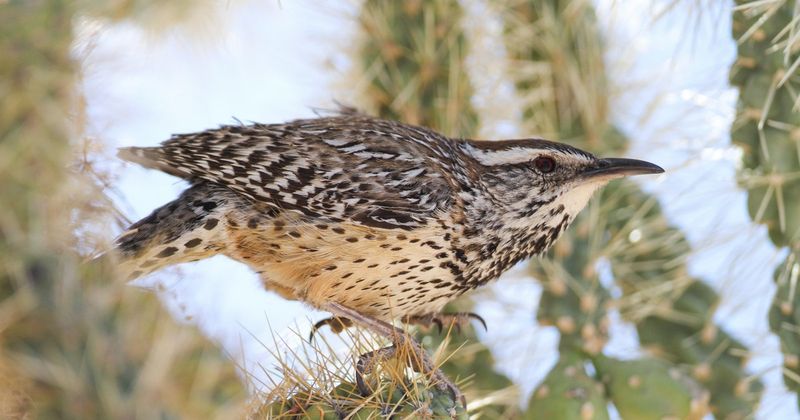
Here is a plot twist for the winter-minded gardener. Cactus wrens are not winter visitors that a yard has to talk into staying.
According to Arizona Game and Fish, these birds live year-round in desert areas of southern, western, and central Arizona. That does not mean they appear equally in every corner of the state or at every elevation.
Higher, cooler areas are a different story.
So the real question is how your yard can be useful, not how to hold a bird in place. A yard with the right habitat features may make a good stop, though no planting can promise a visit.
Think of it as setting a welcoming table without sending an invitation. The next sections cover the features that matter most, starting with thorny cover.
Keep Thorny Cover for Nesting and Roosting
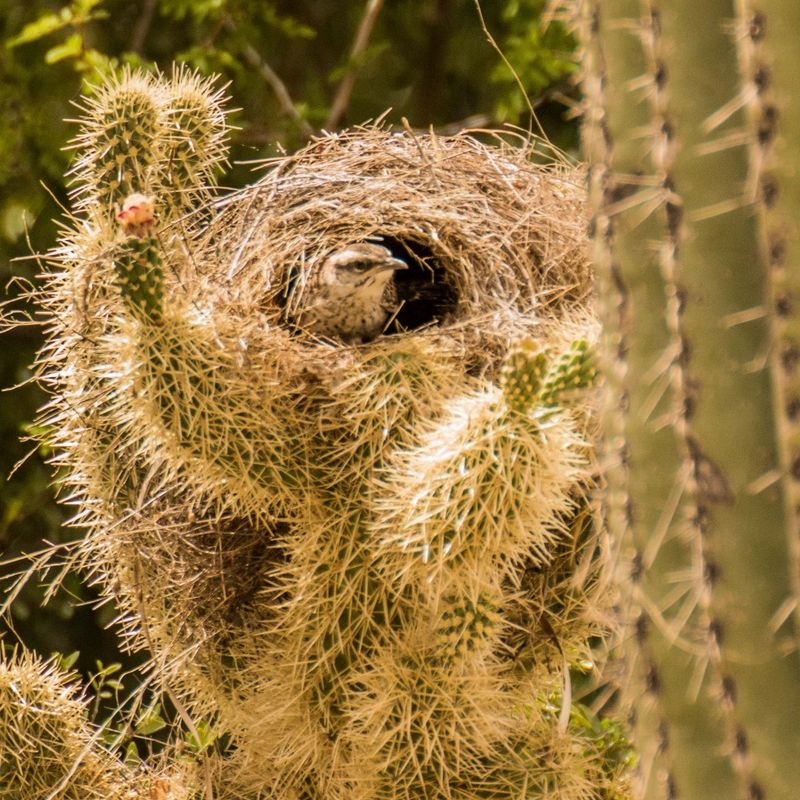
A cactus wren nest looks like a messy ball of grass with a tunnel door, and it sits right in the spikes. The thorns work like a security fence.
I find that clever and a little funny.
Wrens build in thorny plants such as cholla, prickly pear, and other cacti, along with woody shrubs and trees. Arizona Game and Fish lists mesquite, palo verde, catclaw acacia, and desert willow among them.
Cornell reports nest sites about 3 to 10 feet above ground, so mature, branching plants matter more than tiny seedlings.
The nests are not only for raising chicks. Cornell Lab of Ornithology notes that wrens also use them to roost outside the breeding season.
That makes existing thorny plants valuable all year.
If your yard already has suitable cacti or spiny shrubs, keep them where you safely can. Old, established plants are hard to replace, and a new planting takes years to offer similar cover.
Choose Plants That Fit Your Part of the Desert
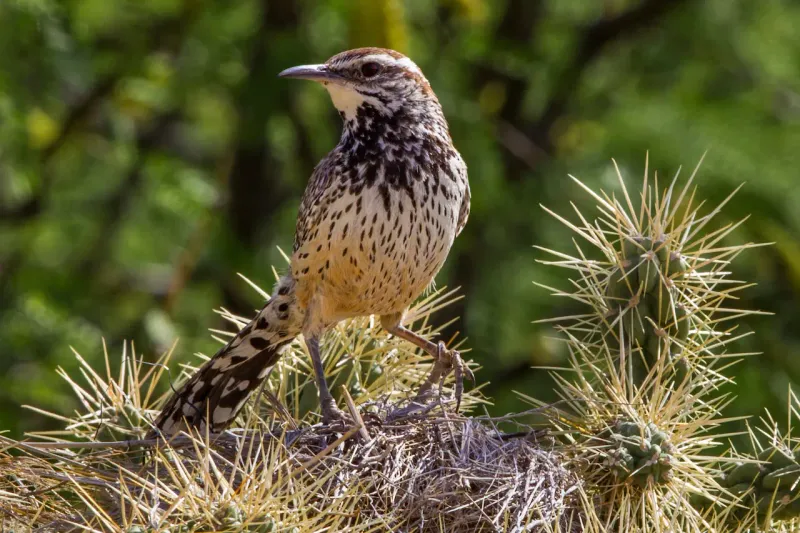
Plant lists can feel like a buffet, but your yard only has so much room. Prickly pear, cholla, mesquite, ironwood, palo verde, and catclaw acacia all show up in habitat descriptions for this bird.
Arizona Game and Fish names cholla, mesquite, ironwood, palo verde, and catclaw acacia as nest-site vegetation. Audubon’s central Arizona plant guide points to prickly pear as cover and ironwood as a plant wrens use.
Those are candidates, not magic spells.
Arizona is not one planting zone. Match each species to your region, elevation, soil, sun, and available space.
A big mesquite will not fit in a tiny courtyard.
Ask a local native plant nursery what thrives near you. Pick nursery-grown plants suited to your site, and treat any wren visit as a bonus.
Leave Natural Foraging Opportunities
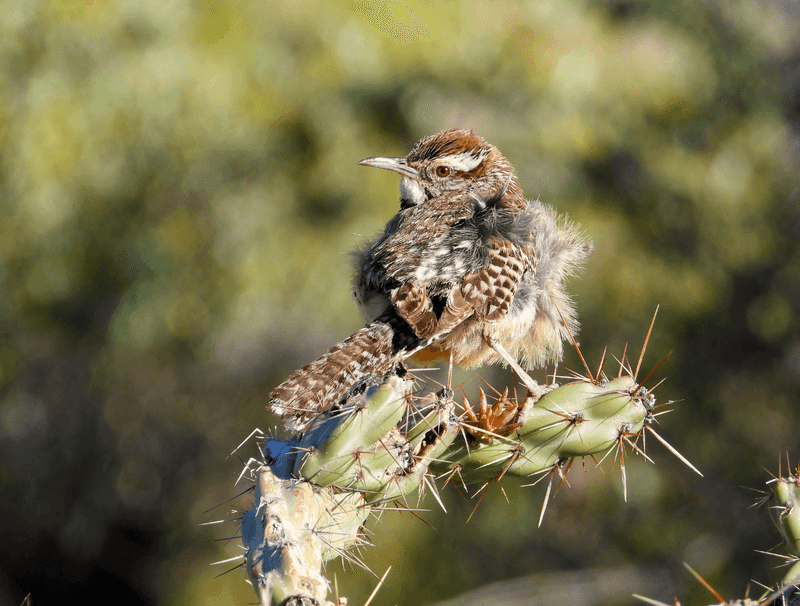
Watch a cactus wren for a few minutes and you will see a busy little detective. It pokes at the ground, flips through leaves, and checks shrubs and bark.
According to Cornell’s life history account, wrens eat mostly spiders and insects. They also eat fruit, especially cactus fruit.
That diet depends on natural surfaces where small creatures live.
So a spotless, bare yard may not offer much to search. Leave some leaf litter under shrubs, let native plants keep their natural shape, and skip the urge to rake every corner.
Do not expect wrens to handle scorpions, ticks, or mosquitoes for you. The sources describe their prey, not a pest control service.
Just enjoy the foraging show.
Water New Desert Plants According to Their Needs
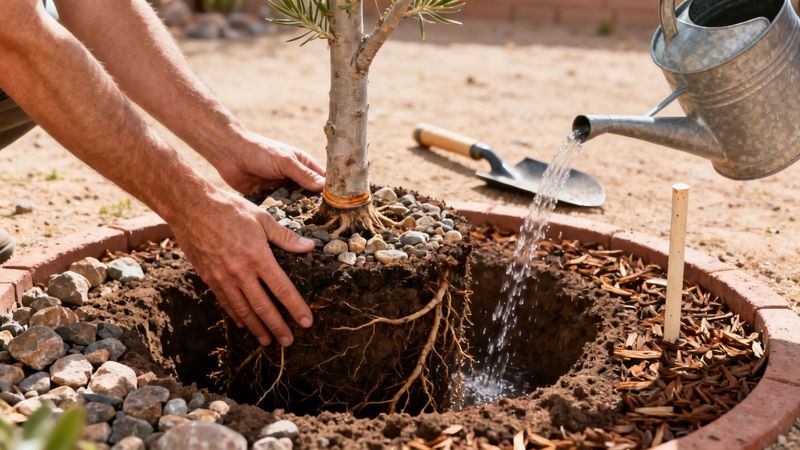
Desert plants are tough, but a baby plant is still a baby. Newly planted shrubs, trees, and cacti need establishment care while their roots settle in.
University of Arizona Cooperative Extension explains that many established native or desert-adapted plants can manage on rainfall plus occasional extra irrigation during long dry periods. New plants need more attention than that.
Watering needs differ by plant and site.
It would be wrong to say every desert plant needs no water in fall or winter. A palo verde and a prickly pear have different habits, and your soil and microclimate matter too.
Check local, plant-specific guidance for your area, since one schedule will not fit every Arizona garden. Watch the plants themselves and adjust.
Check Nesting and Roosting Cover Before Pruning
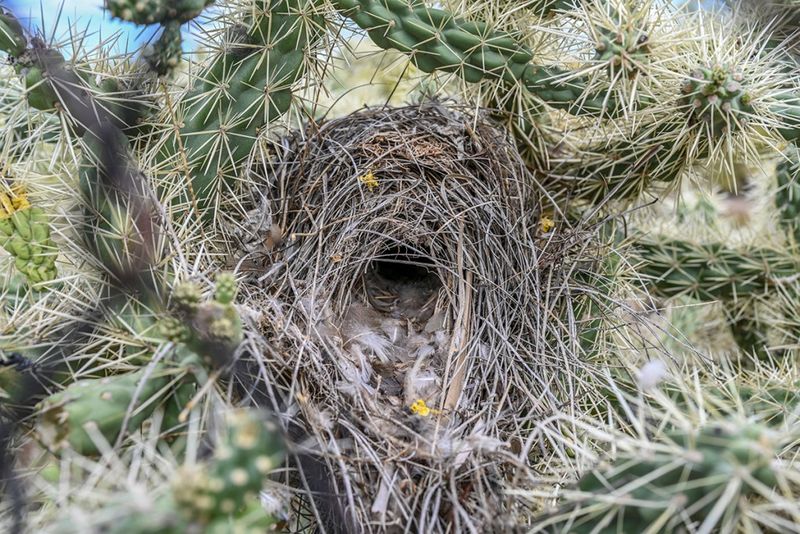
Pruning shears are handy, but a quick look first can save a bird’s home. Cactus wren nests can hide inside dense, spiny growth.
As Cornell’s life history account notes, wrens use nests for roosting outside the breeding season too. A nest that looks abandoned in October may still serve as a bedroom.
Before cutting, walk around the plant and look for a football-shaped ball of grass and sticks. Watch for birds coming and going.
If a nest looks occupied, leave that part alone.
Trim other plants when you can see clearly, and keep cuts modest. Careful maintenance keeps useful cover in place.
Place Spiny Plants With People and Pets in Mind
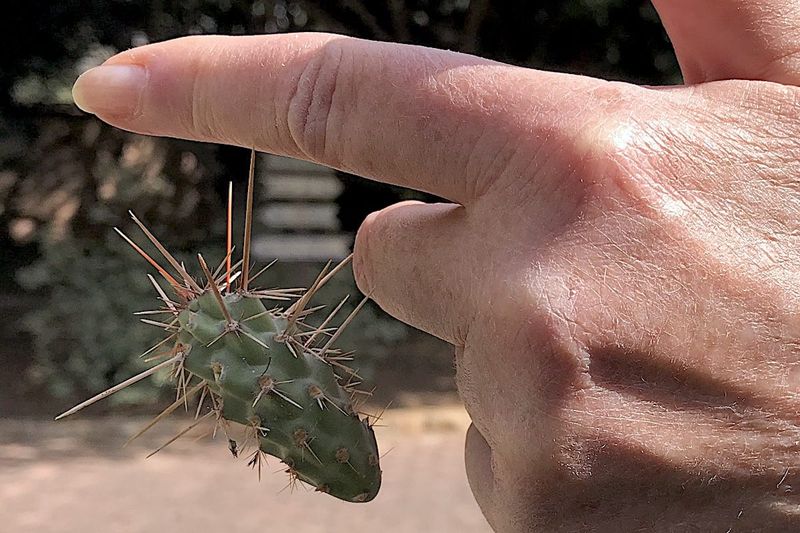
Cholla and prickly pear are great for wildlife, but they bite back. Cholla joints detach easily, and prickly pear pads carry fine, hard-to-see spines.
Keep them away from paths, play areas, and pet zones. Give each plant room to grow so no one brushes past it.
Wear thick gloves and use tongs when you handle them.
University of Arizona Cooperative Extension advises caution with cactus and notes that native cacti are subject to Arizona rules on removal, transport, and sale.
Skip casual digging of wild plants. Buy nursery-grown plants from a reputable source, and check current state and local requirements first.
Treat Birdbaths and Feeders as Optional
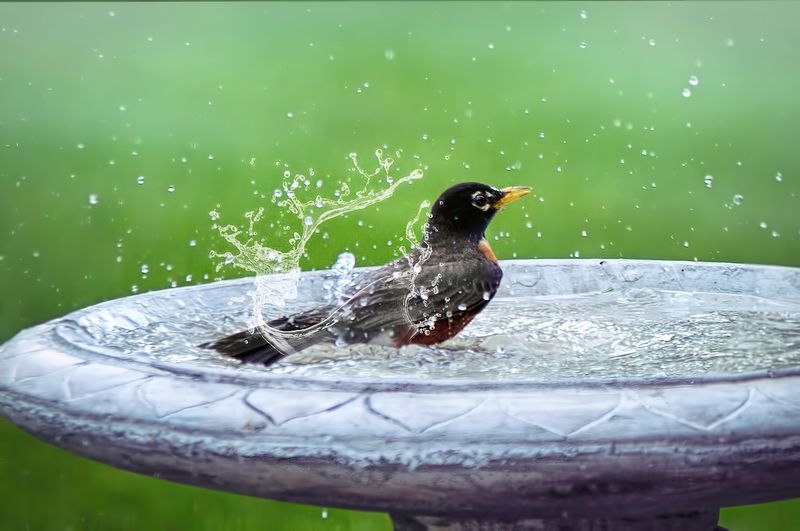
Plenty of gardeners buy a birdbath first. For cactus wrens, you can skip that step.
Cornell says wrens get most of their water from food and rarely drink free-standing water. They also sometimes visit sunflower or suet feeders, according to Cornell’s overview, but feeders are not a recommended way to keep them around.
If you keep a water feature for other wildlife, make it safe. University of Arizona wildlife guidance on landscaping for wildlife habitat recommends safe access and escape surfaces for small animals in deeper water, such as ramps or rough stones.
Clean any feature regularly. The plants and natural foraging matter more.
Make the Yard More Suitable, Not Guaranteed
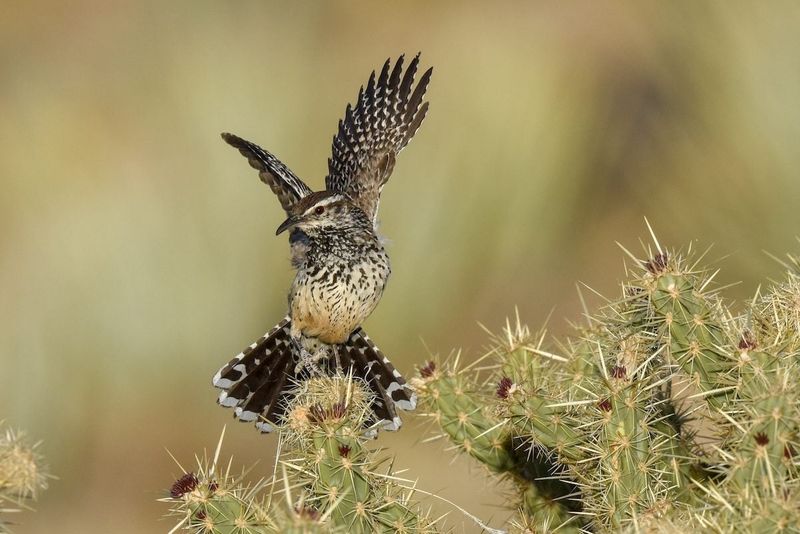
Thorny structure, natural foraging, and plants that fit your region work best as a team. No single cactus does the job alone.
As Arizona Game and Fish describes, wrens depend on broader desert habitat, and a yard cannot replace it. Cornell’s life history account shows how much their daily routine relies on natural surfaces.
Your yard can be one useful piece of that puzzle. A scratchy song from a cholla is a lovely reward when it comes.