How to Protect Your Low-Desert Arizona Citrus Trees on a Cold Night

One clear winter evening in Phoenix or Tucson can turn a thriving lemon tree into a sad, droopy mess. Citrus trees give us fruit and shade, so a little planning before a cold night is worth the effort.
You do not need fancy gear or a magic date on the calendar. You just need to know your yard, watch the forecast, and take a few simple steps in the right order.
Let your yard—not a calendar—set the cold alert
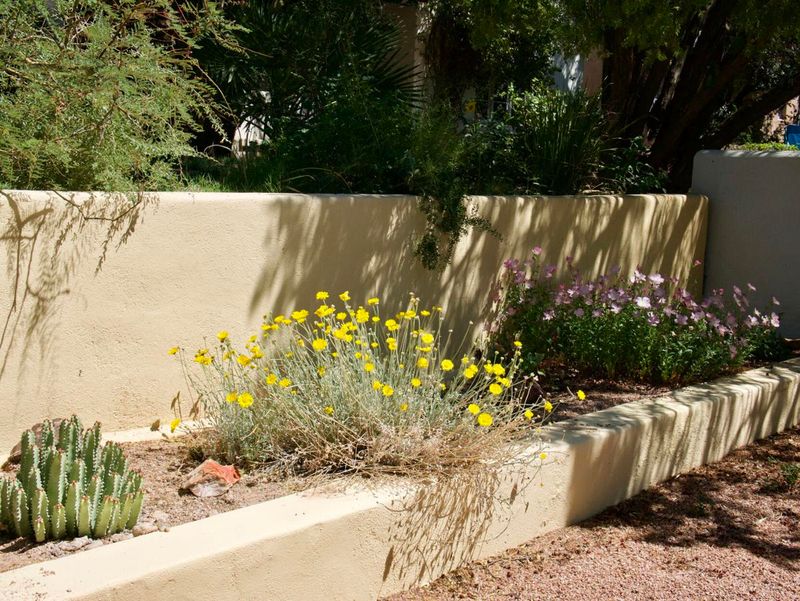
Ask three neighbors when the first frost hits and you may get three answers. Phoenix and Tucson have different cold histories, and even inside one city a low corner of a yard can run several degrees colder than the reading at the airport.
A calendar date is a weak guide for deciding when to act.
Start with the local forecast, then learn your own yard. Set a thermometer near your citrus on a few clear, calm nights and compare it with the temperature reported for your area.
If your spot keeps running colder, treat every forecast low as a little lower for your trees. Cold air settles into low spots and open areas, while the area beside a south-facing wall often stays milder.
Frost and freezing are also not the same thing. Frost can form on surfaces when the measured air temperature is still above 32°F, and a freeze can harm plants without a speck of visible frost.
So do not wait to see white leaves before you act. Let the forecast low, a clear and calm sky, and your yard’s own history tell you when it is time to get ready.
Protect young trees, lemons, and limes first
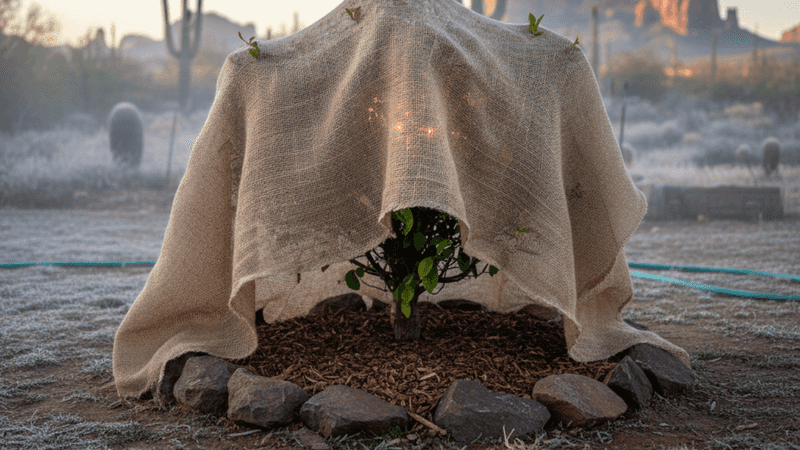
Not every citrus tree faces the same risk. Young trees have thin bark and small root systems, and any soft new growth that pushed out after a warm spell is the first tissue to suffer.
Put those at the top of your list when a cold night is forecast.
Variety matters too. Lemons and limes are among the least cold-tolerant citrus, while kumquats and Satsuma mandarins handle chill better.
Oranges and grapefruit tend to land somewhere in between. Published temperature figures for each type are rough guidance, not promises, so do not treat any single number as a safe line.
Several things shift the real risk: tree age, how well the tree has adjusted to cooling weather, how much tender growth is exposed, and how many hours the cold lasts. A tree in a sheltered corner may come through a night that scorches a neighbor’s tree in an open yard.
If your supply of cloth is limited, cover the youngest lemon or lime first, then work toward the sturdier trees.
Prepare dry soil before the cold arrives
A thirsty tree handles cold poorly. Soil in the low desert can dry out fast, even in winter, and a drought-stressed tree enters a cold night with less strength.
Your Arizona Garden Changes Every Week. Your Plan Should Too.
Gardening in Arizona changes quickly throughout the season. Every Friday you’ll receive a simple weekly plan showing exactly what to plant, prune, fertilize, harvest, and protect so you never miss the right timing.
Check the soil a few days before the forecast low arrives.
If the soil is dry, give the tree a deep, slow watering several days ahead. Moist soil absorbs warmth during the day and releases it slowly after sundown, which can soften the chill right around the tree.
Water out to the edge of the canopy, where the feeder roots are, rather than only at the trunk.
Think of this as setup work, not an emergency button. Watering on the afternoon of the cold night will not rescue a tree, and even well-timed irrigation does not guarantee protection.
It simply removes one avoidable weakness. Soil that is already damp from regular care needs no extra soaking, and overwatering in cold weather can cause its own trouble.
Pair this step with the other measures in this list, since dry-soil prep works best as a supporting player rather than the whole plan.
Cover small trees with cloth that reaches the ground
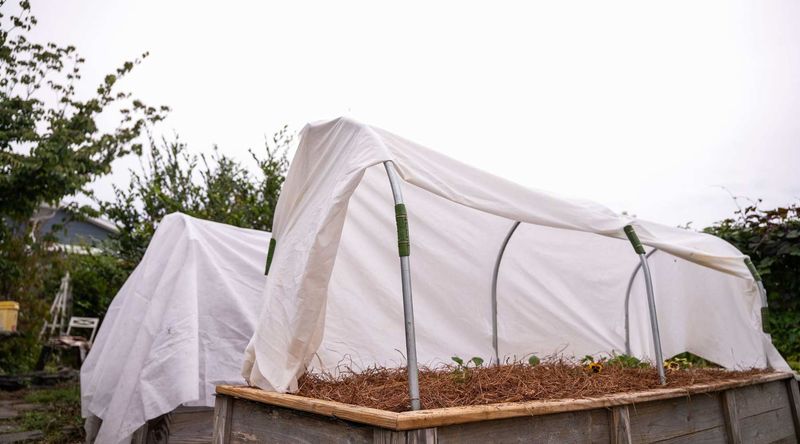
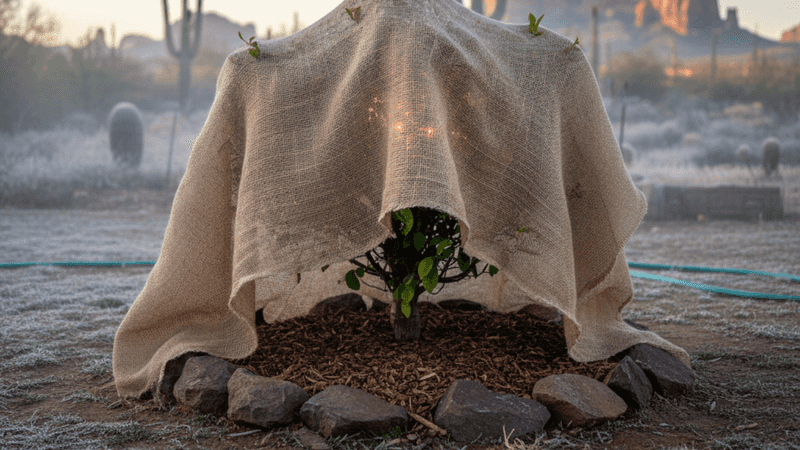
For a small tree, a cloth cover is the simplest tool you own. Use a bedsheet, a light blanket, or frost fabric, and drape it over the whole canopy so it falls all the way to the soil.
The ground gives off warmth through the night, and a cover that reaches it helps hold that heat around the branches.
Tying material around only the trunk leaves the leaves and fruit exposed, so skip that shortcut. Use a few stakes or a light frame to keep the cloth off the foliage if you can, and weigh the edges down with rocks or bricks so wind does not pull it loose.
Cover the tree late in the afternoon, before temperatures drop.
Choose cloth over plastic as your default here. Plastic can trap moisture and overheat the tree, and it conducts cold where it touches leaves.
Remove ordinary sheets and blankets in the morning so the tree can warm up and breathe.
Keep expectations realistic. A cover helps on a typical cold night, but it cannot promise protection through a prolonged or severe freeze.
Wrap the trunks of young citrus trees
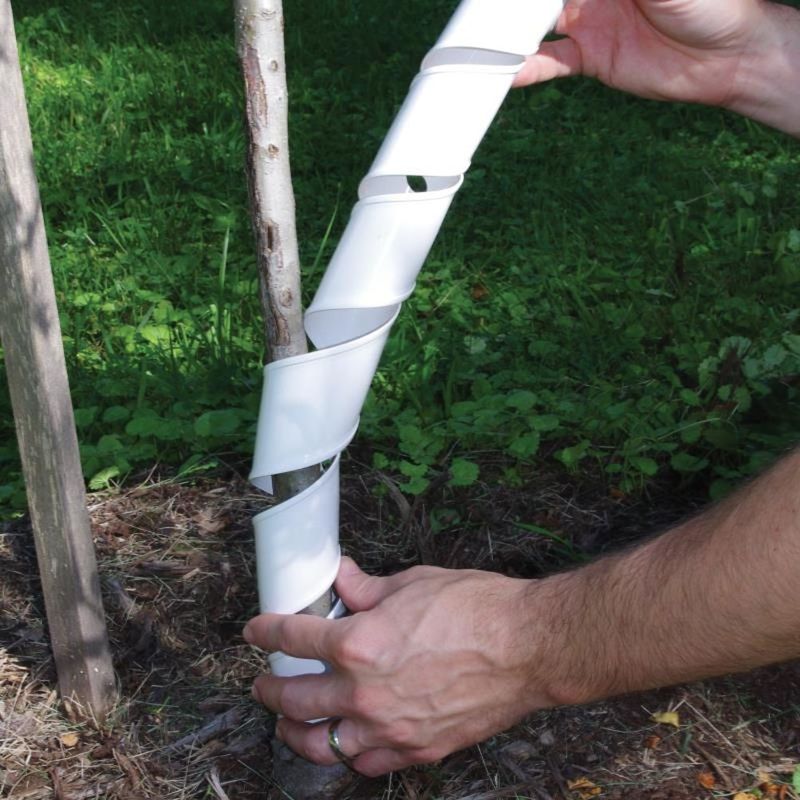
The lower stem of a young citrus tree is its lifeline. The bark there is thin, and damage to that vital stem area can threaten the whole tree, even if the upper branches look fine afterward.
That is why trunk wrapping is its own job, separate from covering the canopy.
Use insulating cloth or weatherproof paper. Start near the soil line and wrap upward past the first main branches, overlapping each turn like a bandage, then secure it loosely so it stays put without squeezing the bark.
Pull the wrap back a little in spring once cold nights are behind you, so moisture does not sit against the trunk.
Think of the two steps as layers. A cloth cover that reaches the ground shields the leaves and branches, while the trunk wrap protects the stem underneath.
Using both gives a young tree more of a buffer, but neither one is a guarantee against every freeze. Older trees with thick, rough bark need this step less, so put your wrapping time into the youngest ones first.
Avoid overnight sprinkling as a casual workaround
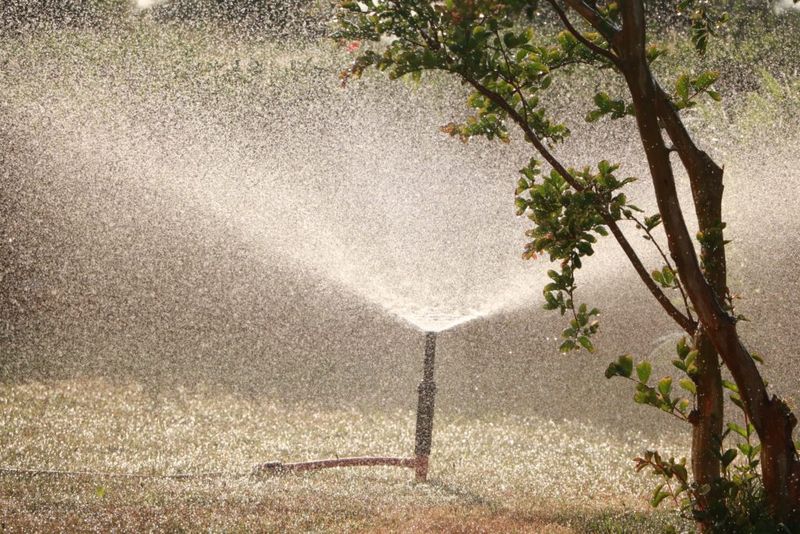
Spraying a tree with water all night sounds easy, and some commercial growers do it. But for a home routine, it is a risky shortcut.
Arizona growing guidance says the water must run continuously through the frost and until the temperature rises above 37°F.
That is a long commitment. If the sprinkler stops, the pump fails, or the pressure drops, the wet tree can end up colder than a dry one.
A gap in the schedule can turn a protective measure into a harmful one.
Ice adds another problem. As water freezes on branches, the weight builds, and heavy ice can snap limbs, especially on young or fruit-laden trees.
You would also need to watch the system through the coldest hours instead of sleeping.
For most homeowners, cloth is the calmer choice. A sheet or frost fabric goes on in the evening, stays quiet through the night, and comes off in the morning.
It does not need a pump, a timer, or constant attention. Save sprinkling talk for professional orchards with the equipment and crews to manage it.
Wait for spring growth before pruning cold-damaged wood
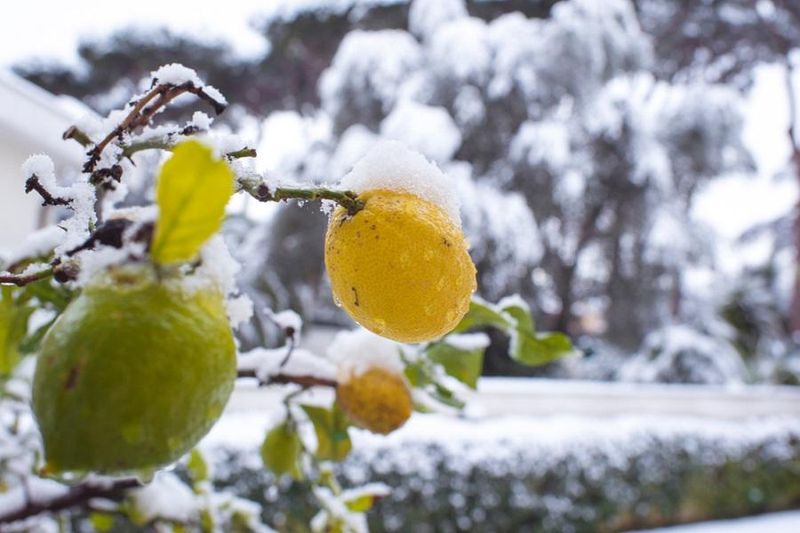
The morning after a hard cold night, a tree can look pretty rough. Leaves curl, turn brown, or drop, and it is tempting to grab the pruning shears.
Hold off on cutting woody growth.
Leaf damage shows up fast, but the real injury to branches is not clear yet. Many limbs that look lifeless in January push out new buds in spring, and early cuts can remove wood that was still alive.
Pruning also encourages tender new growth, which is exactly what the next cold snap will hit.
Wait until spring growth starts. Once buds break and new leaves open, you can see which branches are truly damaged.
Then cut back to healthy, green-tissue wood. Until then, leave the damaged leaves on, since they offer a little shade and insulation to the branches beneath.
Build all of this into a yearly habit: watch the local forecast, protect vulnerable trees when it calls for it, and reassess after winter ends. Citrus rewards patience, and the tree will show you the answer if you give it time.