How To Prune Cucumber Plants The Right Way In Georgia
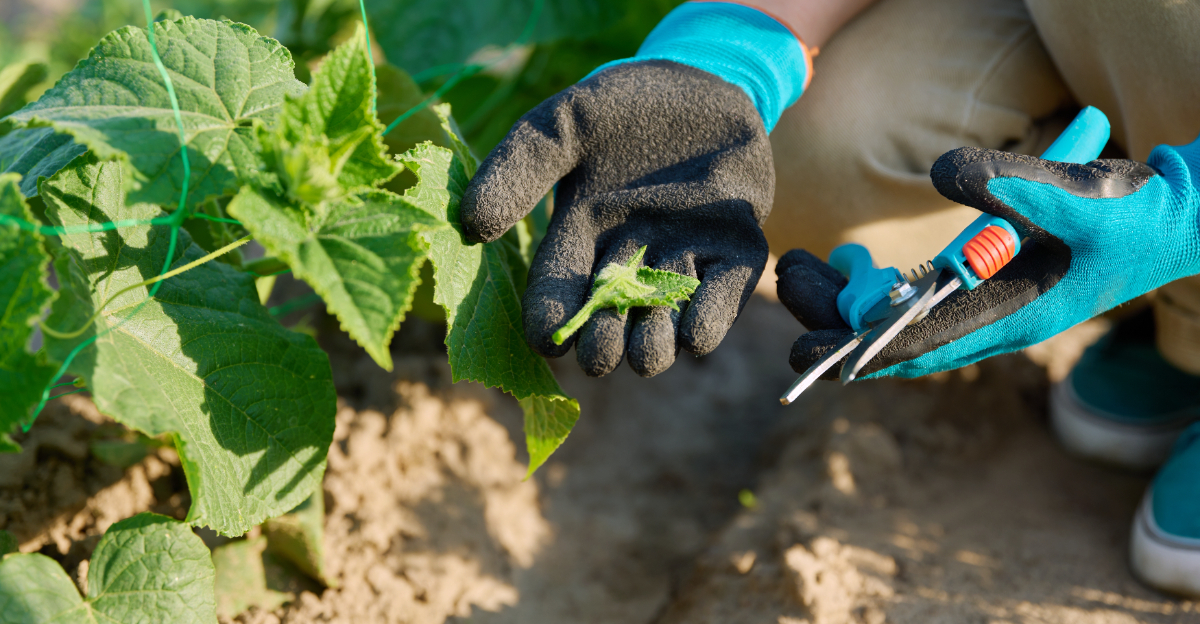
Cucumber plants in Georgia rarely stay neat for long once warm weather takes over. Vines start spreading fast, leaves grow thick, and gardens can turn crowded before many people even realize what happened.
Healthy growth may look impressive at first, but too much growth often creates problems hiding underneath all those leaves.
Poor airflow, tangled vines, and hard to reach cucumbers become much more common once plants start taking over nearby space. Plenty of gardeners hesitate to prune because cutting healthy growth feels wrong at first.
One small mistake can also leave plants stressed right when production should be increasing.
Proper pruning changes how cucumber plants grow, produce, and handle Georgia heat during the busiest part of the season.
Simple cuts made at the right time often lead to healthier vines, cleaner plants, and a much easier harvest once summer gets closer.
1. Start Pruning Once Cucumber Vines Become Thick And Crowded
Crowded vines are one of the fastest ways to ruin a cucumber harvest in Georgia. Once your plants start overlapping and tangling together, airflow drops, moisture gets trapped, and problems start showing up fast.
Knowing exactly when to step in makes a real difference.
Cucumber vines in Georgia can grow surprisingly fast during the peak summer months, sometimes putting out several inches of new growth in just a day or two.
When you notice the main vine getting thick and side shoots starting to pile up on top of each other, that is your signal to grab your shears and get to work.
Waiting too long only makes the job harder.
A good rule of thumb is to check your plants every three to four days during the growing season. Look for areas where leaves are overlapping heavily or where you cannot see through the plant at all.
Those dense spots are where you want to focus your trimming efforts first.
Pruning at the right time also keeps your plants from putting too much energy into vine growth instead of fruit production. When a cucumber plant is allowed to grow completely unchecked, it tends to focus on spreading out rather than developing cucumbers.
Catching that early keeps the plant pointed in the right direction.
2. Lower Leaves Should Be Trimmed Before Problems Spread

Yellow, wilting lower leaves are not just an eyesore. They are a warning sign that something needs attention on your cucumber plant right away.
Lower leaves on cucumber plants are usually the first to show signs of stress, especially in Georgia where high humidity and warm soil temperatures create favorable conditions for fungal issues.
Once a lower leaf starts turning yellow or developing spots, it stops contributing to the plant’s growth and starts becoming a liability.
Removing those leaves early prevents problems from moving up the vine.
Trimming lower leaves also improves airflow at the base of the plant, which is exactly where moisture tends to linger longest after rain or irrigation. Better airflow at the base means the soil can dry out a bit faster, which reduces the chances of fungal spores finding a place to settle and spread.
Your Georgia Garden Changes Every Week. Your Plan Should Too.
Gardening in Georgia changes quickly throughout the season. Every Friday you’ll receive a simple weekly plan showing exactly what to plant, prune, fertilize, harvest, and protect so you never miss the right timing.
In Georgia’s humid summer climate, that small step makes a noticeable difference.
When removing lower leaves, aim to clear everything within about six to eight inches from the ground. That zone tends to stay the dampest and gets the least sunlight, making it the most vulnerable part of the plant.
Keeping it clean and open is one of the simplest things you can do to protect your crop.
3. Clean Garden Shears Help Prevent Damage During Pruning
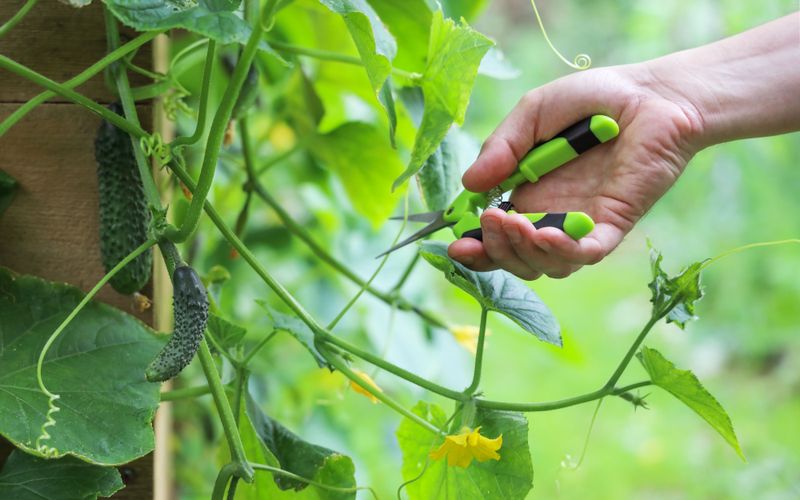
Dull, dirty shears are one of the most overlooked causes of plant problems in home gardens, and cucumber plants are especially vulnerable to the damage they leave behind.
When you cut a cucumber vine with a dull blade, the cut tends to crush or tear the tissue instead of slicing cleanly through it. That kind of rough cut takes longer to heal and leaves a larger wound that pathogens can easily enter.
In Georgia’s warm and often wet summer conditions, an unclean cut can become a starting point for disease within just a day or two.
Before you start pruning, wipe your shear blades with a cloth dampened with rubbing alcohol or a diluted bleach solution. Doing this between plants, not just at the start of a session, prevents you from accidentally moving any disease from one plant to another.
It takes only a few seconds and saves a lot of headaches down the road.
Sharp blades make the whole job easier, too. A clean, single-motion cut puts far less stress on the vine than sawing back and forth with a dull blade.
Keeping your shears sharp with a small whetstone is a simple maintenance habit that pays off every time you head out to the garden.
4. Overgrown Vines Become Harder To Harvest And Support
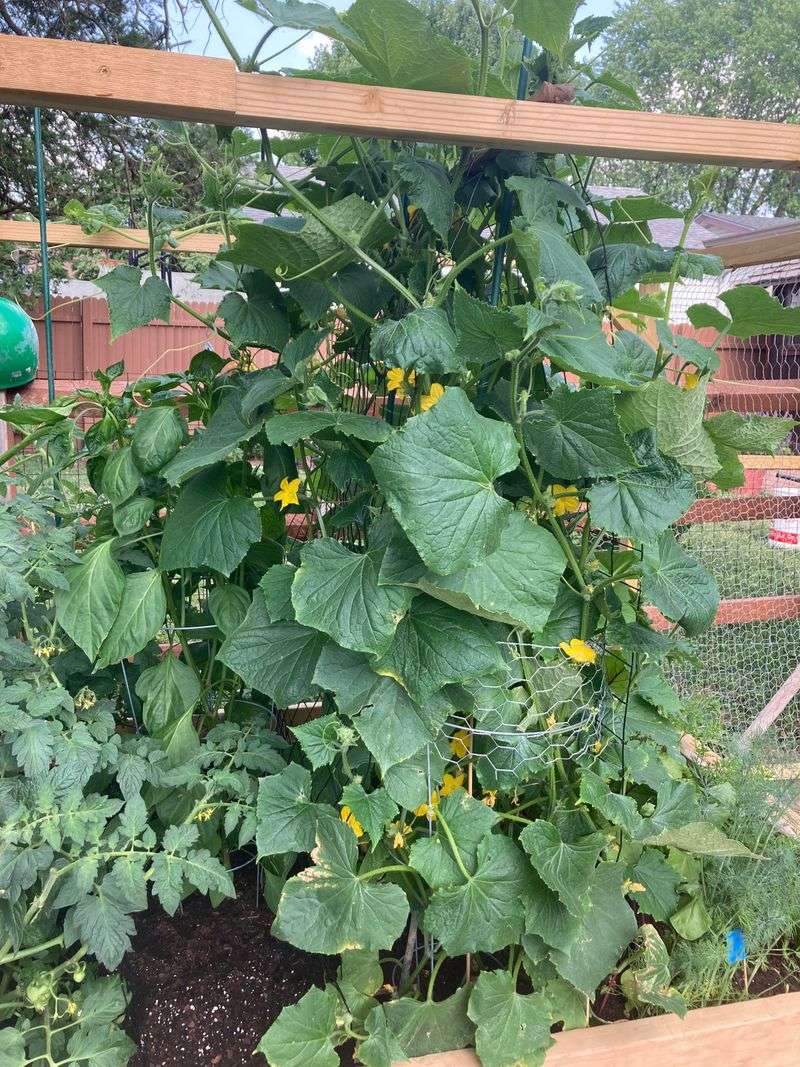
Missing a cucumber because it was buried under a pile of overgrown vines is more frustrating than most gardeners expect the first time it happens.
Once cucumber vines get out of hand, they stop being easy to work with. Fruits get hidden under layers of leaves, trellises start bending under uneven weight, and reaching into the plant to harvest becomes an awkward, time-consuming task.
In Georgia, where cucumbers can go from perfect to overripe in just a couple of days during peak summer heat, missing a fruit because of vine overgrowth is a real problem.
Overgrown vines also put uneven stress on whatever support system you are using. A trellis or stake that was set up for a reasonably managed plant can start leaning or pulling loose when a vine becomes much heavier than expected.
That kind of structural failure in the middle of the season is frustrating and hard to fix without damaging the plant.
Regular pruning keeps the plant’s weight distributed more evenly and makes it much easier to spot cucumbers as they develop.
When you can see clearly into the plant, you can harvest at the right time and avoid the overripe fruits that signal the plant to slow down production.
A well-pruned vine is a more productive vine, plain and simple.
5. Side Shoots Can Reduce Airflow Around The Main Vine
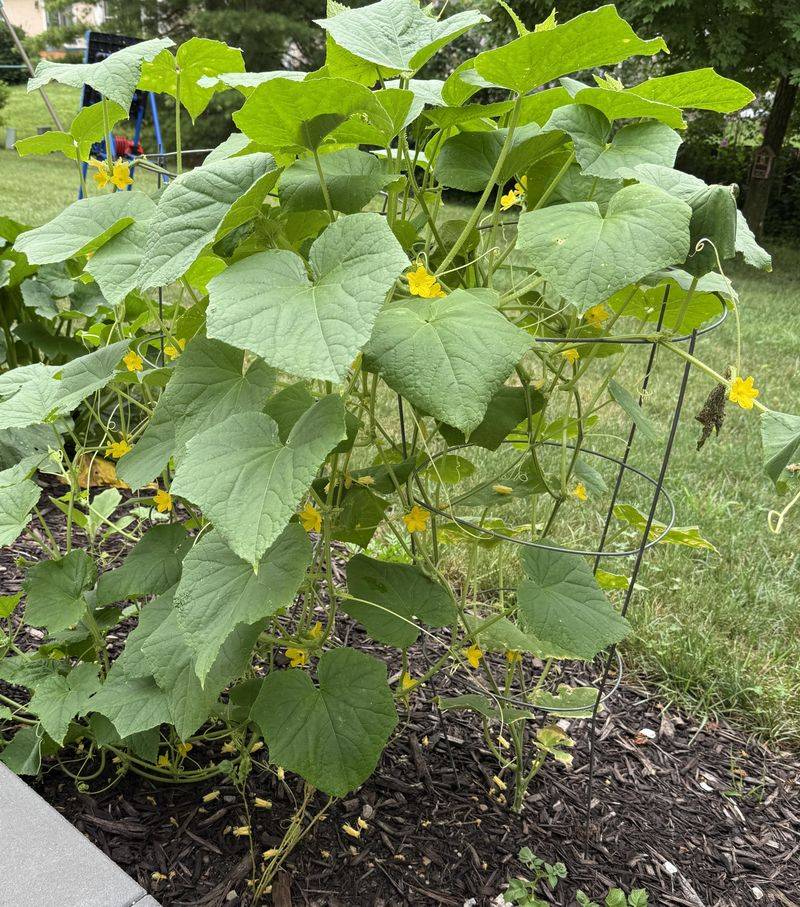
Side shoots look harmless at first, but they pile up fast and can quietly choke out the airflow your main vine needs to stay productive.
Every cucumber plant produces lateral shoots that branch off from the main stem. Left alone, these side shoots multiply quickly and create a dense wall of foliage that traps heat and moisture against the vine.
In Georgia, where summer temperatures regularly climb into the upper 80s and 90s, that trapped heat and humidity creates exactly the kind of environment where powdery mildew and other fungal issues thrive.
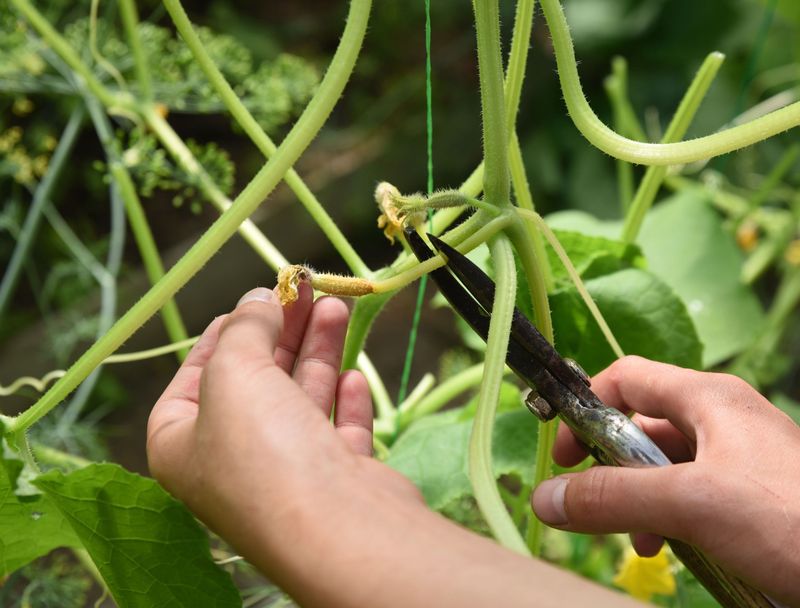
Pinching off side shoots, especially those growing below the first few fruit sets, helps the plant direct more of its energy toward producing cucumbers rather than generating extra foliage.
Most experienced Georgia gardeners remove side shoots that appear on the lower third of the main vine as a standard part of their routine.
It keeps things manageable and gives the plant a cleaner structure.
Not every side shoot needs to go, though. Shoots higher up on the vine can be left if they have a flower or a small cucumber forming on them.
The goal is balance, not stripping the plant bare. Removing too much foliage at once creates its own set of problems, which is worth keeping in mind.
6. Heavy Pruning At Once Can Stress Cucumber Plants
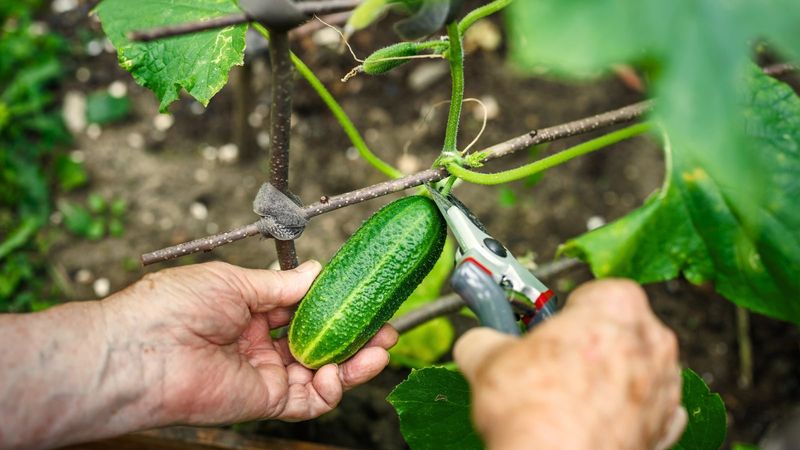
Taking off too much at one time sounds like it would speed things up, but it often sets your plants back instead of helping them move forward.
Cucumber plants respond to sudden, heavy pruning with noticeable stress. When a large portion of the foliage is removed all at once, the plant has to redirect a lot of energy toward recovering rather than producing fruit.
You might notice the remaining leaves looking slightly wilted or pale for a few days after a heavy session, which is a sign the plant is working hard to adjust.
A smarter approach is to spread your pruning work over several sessions rather than doing it all at once. Removing a few leaves and shoots every few days gives the plant time to adapt without going into recovery mode.
Georgia gardeners who follow this gradual approach tend to see their plants bounce back faster and continue fruiting without major interruptions.
There are times when heavier pruning feels necessary, like when a plant has been neglected for a couple of weeks and gotten seriously out of control. Even in those situations, try to limit yourself to removing no more than one-third of the plant’s foliage at a time.
Give it a few days before going back in for another round.
7. Regular Trimming Helps Cucumbers Stay More Productive
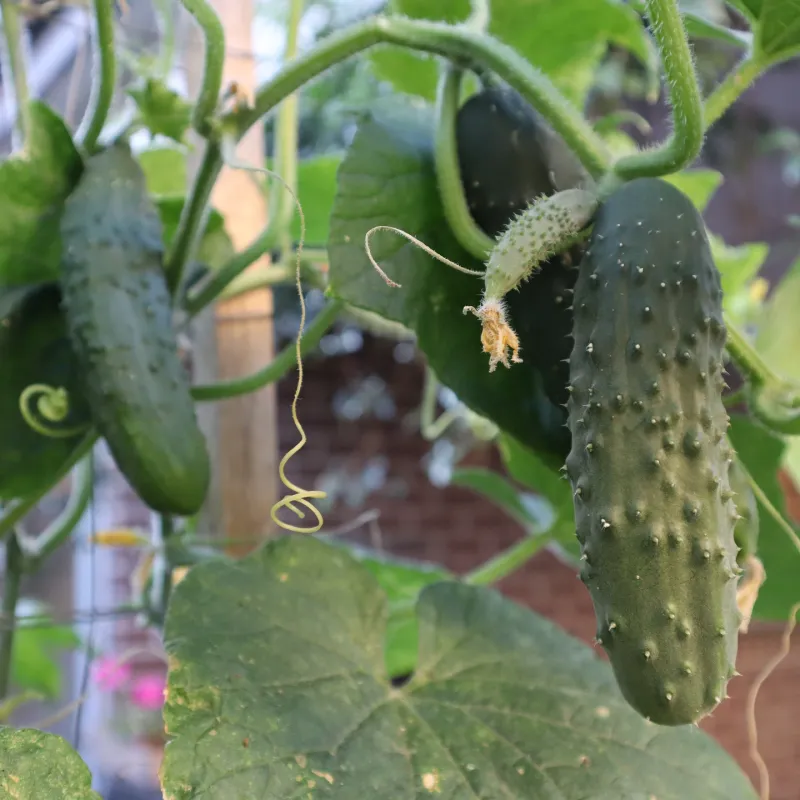
A cucumber plant that gets regular attention almost always outperforms one that gets pruned only when things look desperate. Consistency is what keeps production steady.
When you trim your cucumber plants on a regular schedule, you are essentially telling the plant where to focus its energy. Instead of spreading resources across dozens of extra shoots and dense foliage, the plant channels more into developing and ripening fruit.
Over a full growing season in Georgia, that difference in energy management adds up to a noticeably larger harvest.
Regular trimming also makes it easier to spot potential problems early. When you are out there every few days with your shears, you will notice things like early signs of pest damage, unusual leaf discoloration, or spots that could indicate a fungal issue before they get out of hand.
Catching those things early is always easier than dealing with them after they spread.
Experienced Georgia gardeners often describe their pruning routine as one of the most satisfying parts of maintaining a vegetable garden.
There is something straightforward and rewarding about spending fifteen minutes tidying up a plant and then seeing it respond with strong, healthy new growth a few days later.
It does not take long once you get into a rhythm.