How To Recognize Heat Stress In Arizona Citrus Trees
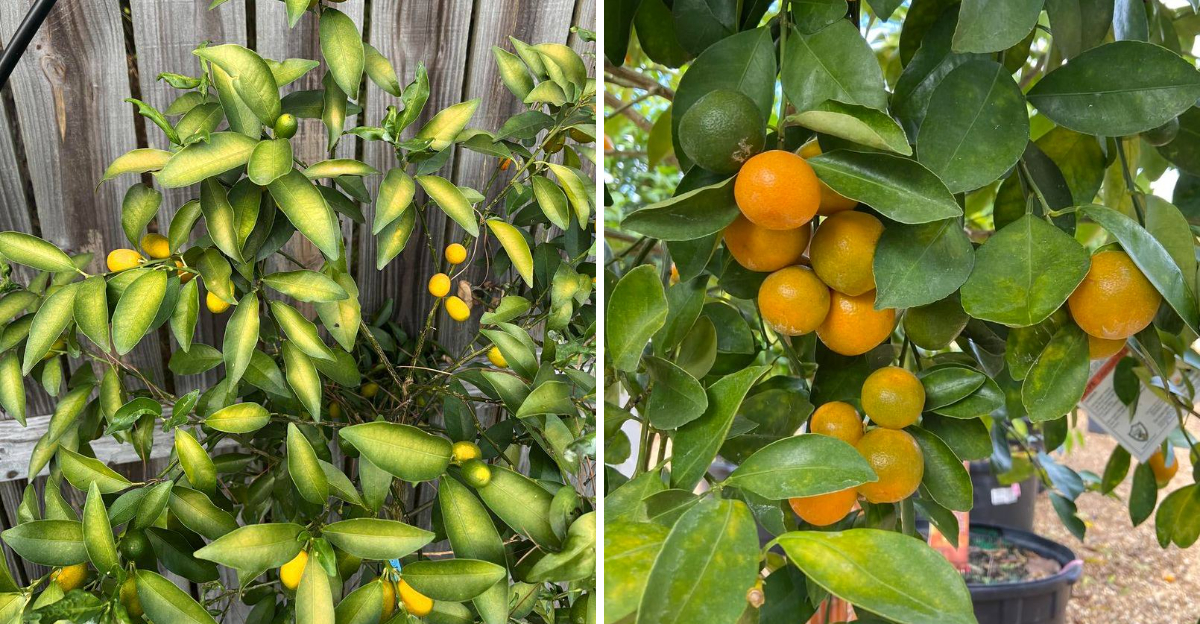
Healthy citrus trees can change surprisingly fast once extreme summer heat settles in. One week they look full of fresh green leaves, and the next something seems slightly different.
The leaves may not look quite as vibrant, new growth may slow down, or the tree simply seems less lively than before.
Those early changes are easy to brush off because they do not always look serious at first.
Heat affects citrus trees in ways that are not always obvious. Waiting until the damage becomes impossible to ignore often makes the problem much harder to correct.
Paying attention to the first warning signs gives you a much better chance to help the tree recover before the hottest weather takes an even bigger toll.
Arizona summers can be demanding, but citrus trees usually tell you when they need help. Learning to recognize those signals early can make a noticeable difference throughout the rest of the season.
1. Leaf Curl Is Often The First Warning Sign
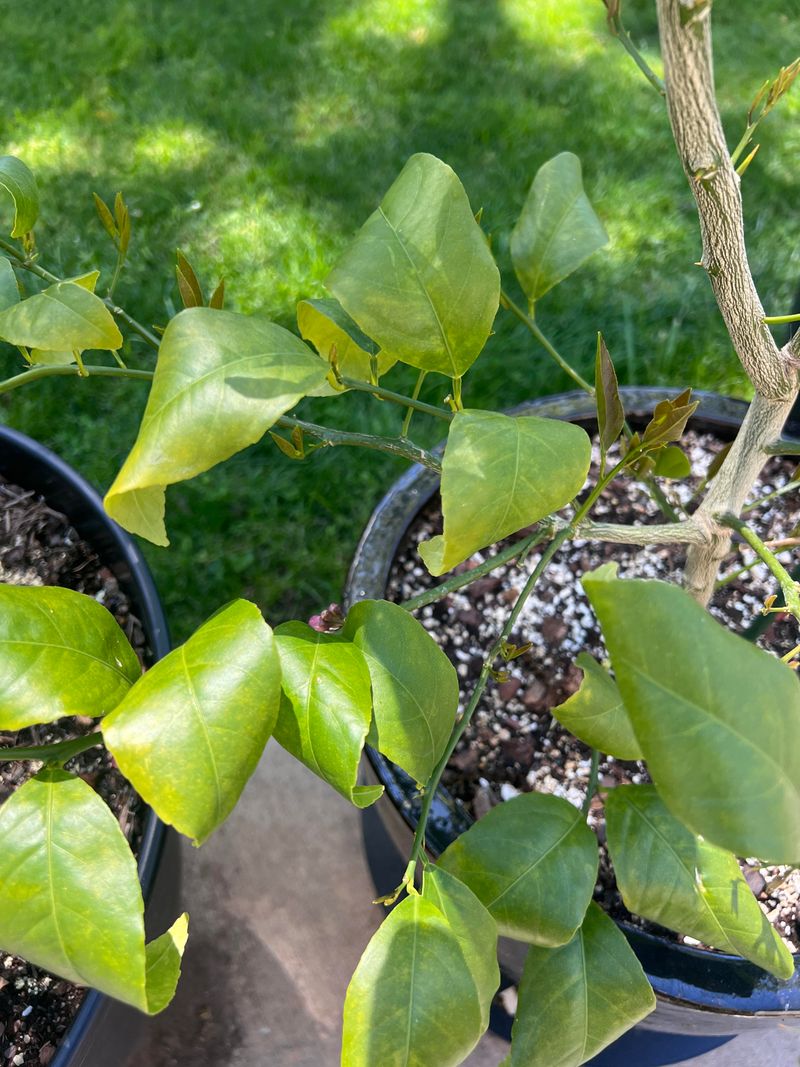
Curled leaves on your citrus are not random. When temperatures push past 105 degrees, citrus trees curl their leaves inward to reduce the surface area exposed to direct sun.
It is a survival response, not a disease.
Watch for leaves that roll lengthwise along the midrib. Both edges fold upward toward the center, creating a narrow tube shape.
Navel oranges and lemons tend to show this response faster than grapefruits.
Morning is the best time to check. If leaves are still curled an hour after sunrise, heat stress is likely the cause.
Leaves that uncurl once temperatures drop in the evening are reacting to heat, not a watering problem.
Consistent curling across multiple branches is a stronger signal than a few isolated leaves. Check the soil moisture before assuming the tree needs water.
Overwatering is a real risk in heavy clay soils common in many desert yards.
Younger trees with smaller root systems show leaf curl more quickly than mature trees. Newly planted citrus in full sun exposure are especially vulnerable during their first two summers in the ground.
2. Wilting That Lasts Into Evening Signals Trouble
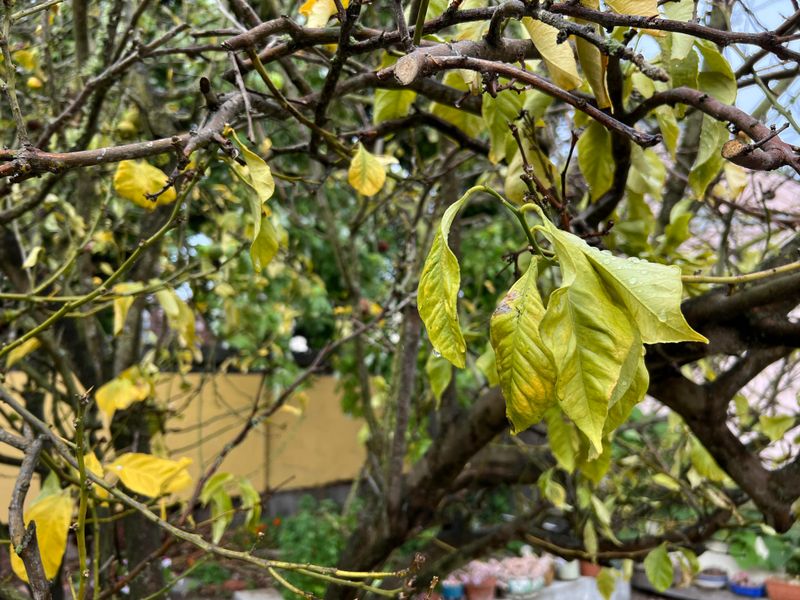
Most plants wilt during peak afternoon heat, then bounce back once the sun drops. Wilting that sticks around past sunset is a different story entirely.
When a citrus tree stays limp into the evening hours, it means the root system cannot move water fast enough to keep up with demand. Prolonged wilting like this strains the tree at a cellular level.
Repeated episodes weaken the overall structure over time.
Check your irrigation schedule before anything else. Drip systems often run at night or early morning, which can leave soil moisture too low by the time peak heat arrives in the afternoon.
Shifting one watering cycle to mid-morning can help buffer the afternoon stress window.
Soil temperature matters just as much as air temperature. Soil in full sun can reach 140 degrees Fahrenheit at the surface during summer afternoons in the low desert.
That level of heat shuts down root function even when moisture is present.
Your Arizona Garden Changes Every Week. Your Plan Should Too.
Gardening in Arizona changes quickly throughout the season. Every Friday you’ll receive a simple weekly plan showing exactly what to plant, prune, fertilize, harvest, and protect so you never miss the right timing.
A layer of organic mulch three to four inches deep around the base of the tree keeps soil temperatures significantly lower. Keep mulch pulled back a few inches from the trunk to avoid moisture buildup against the bark.
3. Sunburn Can Damage Both Leaves And Fruit
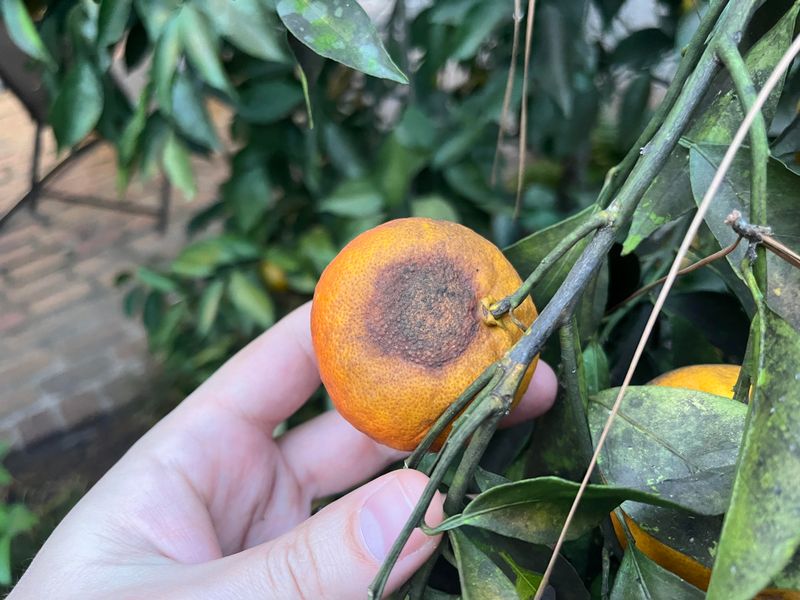
Sunburn on citrus looks like bleached, tan, or papery patches on fruit and leaves. It shows up on the side facing direct afternoon sun and does not spread like a fungal issue would.
Fruit exposed to prolonged afternoon sun is the most vulnerable. Grapefruit and navel oranges with thin canopies are hit hardest.
Once the outer rind bleaches and collapses, the fruit underneath softens and often drops early.
Leaves develop white or silvery patches in the same pattern. Affected leaf tissue is essentially cooked.
It will not recover, but the rest of the leaf can continue functioning if the damage is limited.
One practical fix is reflective whitewash or diluted interior white latex paint applied to exposed branches and trunks. This technique has been used by desert citrus growers for decades.
It reduces surface temperatures on bark and lowers the risk of sunscald on major limbs.
Avoid heavy pruning during late spring and summer. Removing interior branches opens up the canopy and suddenly exposes fruit and wood that was previously shaded.
Pruning is best done in late winter before the heat season begins in the low desert region.
4. Early Fruit Drop Points To Heat Stress
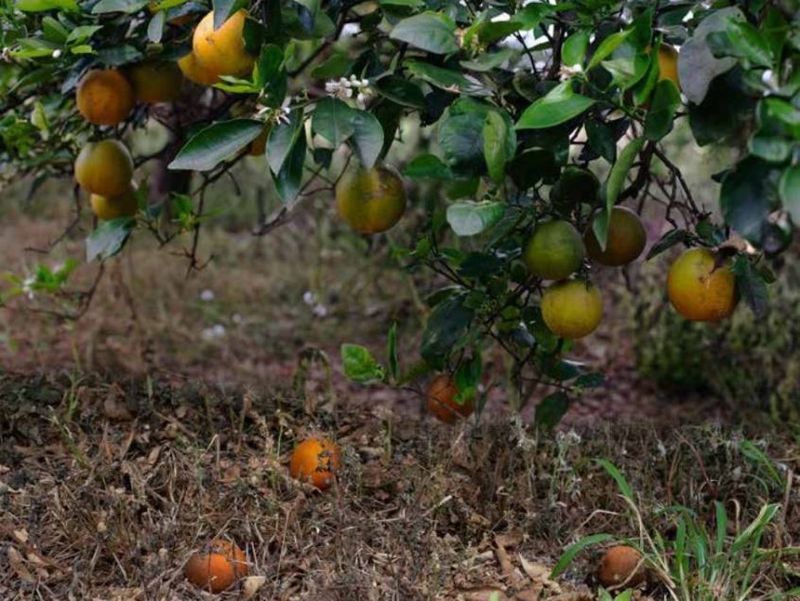
Finding a pile of small green fruit on the ground in July is not always a surprise out here. Some early fruit drop is natural, but heavy or sudden drop during extreme heat is a stress response worth paying attention to.
When temperatures stay above 110 degrees for several days in a row, citrus trees prioritize survival over fruit production. Dropping fruit reduces the water and energy demand on the tree.
It is a built-in triage system.
The timing matters. Natural June drop happens in late spring and involves mostly tiny, marble-sized fruit.
Heat-related drop in July and August tends to involve larger, more developed fruit and happens more suddenly.
Consistent deep watering helps reduce stress-related fruit drop. Shallow, frequent watering encourages surface roots that dry out fast.
Deep watering once or twice a week during peak summer pushes roots deeper where soil stays cooler and retains moisture longer.
Fertilizer timing also plays a role. Applying high-nitrogen fertilizer during extreme heat can push new growth that the tree struggles to support.
Hold off on feeding until temperatures cool below 100 degrees. Fruit drop from heat stress does not mean the season is lost.
5. New Growth Slows When Temperatures Stay High
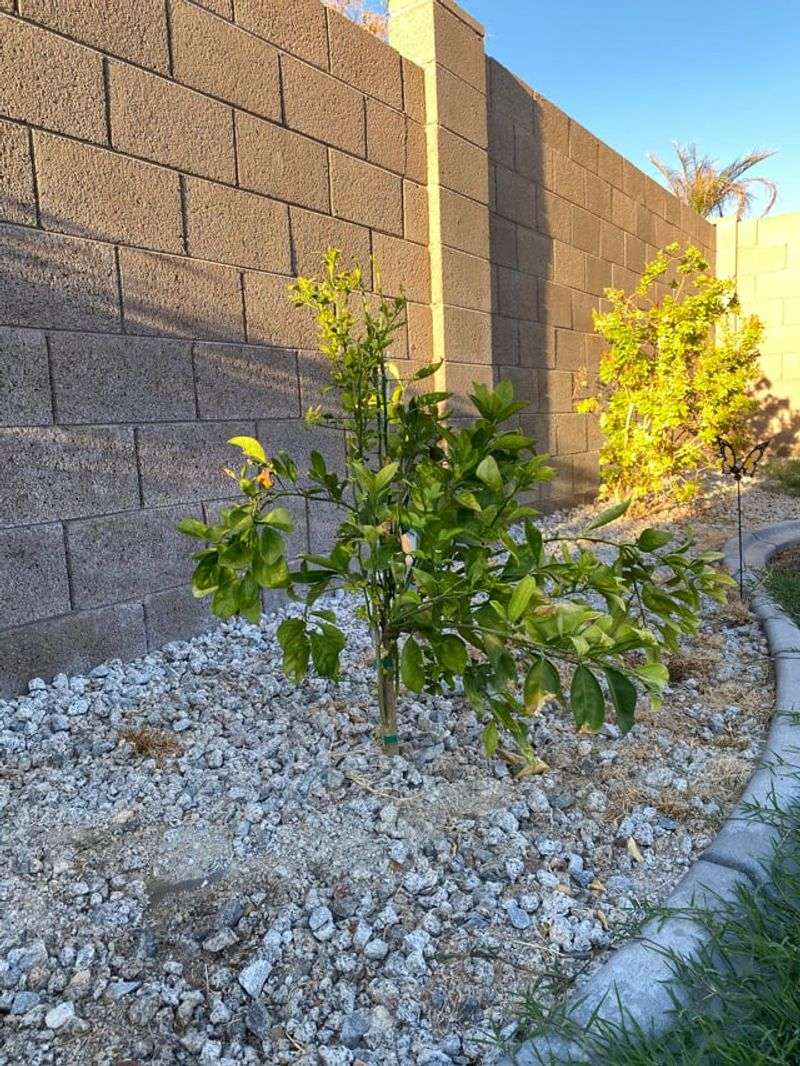
Citrus trees push out new flushes of growth in spring, late summer, and fall under normal conditions. When extreme heat settles in for weeks, that growth cycle stalls out noticeably.
New shoots that emerged in spring may stop elongating entirely by late June.
Leaf buds stay tight and do not open. Some partially opened leaves may show tip burn or curl before they ever fully develop.
Slowed growth is not a sign of permanent damage on its own. It is the tree conserving energy and water during a period when expansion would cost more than it returns.
Pushing growth with fertilizer during this window can actually backfire.
Root growth slows too, even though you cannot see it. Soil temperatures above 95 degrees Fahrenheit reduce root activity significantly.
Roots in that range absorb less water and fewer nutrients regardless of what is available in the soil.
Once overnight temperatures drop below 85 degrees consistently, usually in September across much of the low desert, trees typically resume active growth.
A late summer fertilizer application timed for early September can support that recovery flush effectively.
Watch for a burst of soft new growth as a sign the tree has moved past the heat stress period.
6. Scorched Leaf Edges Should Not Be Ignored
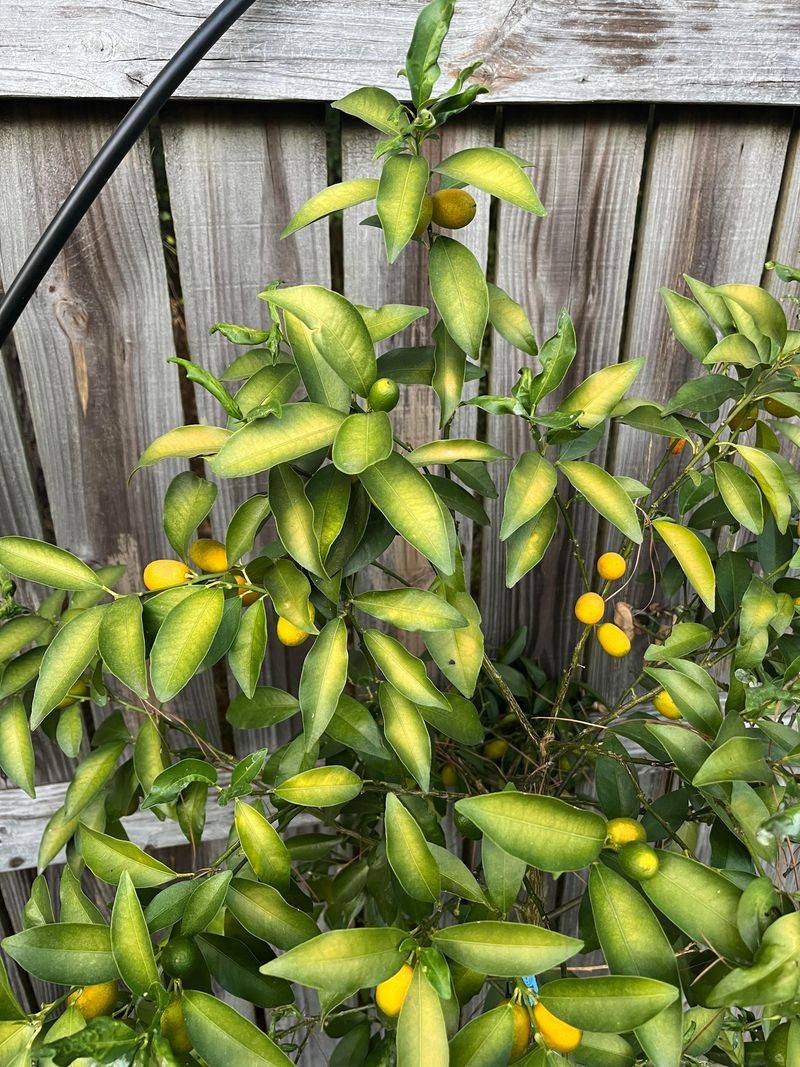
Brown, crispy leaf edges on citrus are easy to chalk up to fertilizer burn or drought, but heat is frequently the actual cause. Knowing the difference helps you respond correctly.
Heat scorch typically starts at the leaf tip and moves inward along the margins.
The damaged tissue turns light brown and feels dry and papery. Surrounding leaf tissue often stays green, which distinguishes it from a full nutrient deficiency pattern.
Leaves on the south and west sides of the tree show scorch first. Those sides catch the hottest afternoon sun from late spring through early fall.
Interior leaves protected by the canopy usually look fine even when outer edges are heavily damaged.
Scorched leaves will not recover. New growth can replace them once conditions improve, but the damaged leaves themselves stay brown.
Removing them is optional.
Leaving them on does not harm the tree, and they can actually provide minor shade to the branch below.
If scorch appears on leaves throughout the canopy, including shaded interior leaves, look beyond heat alone.
Widespread marginal burn combined with yellowing can indicate a salt buildup issue in the soil, which is common in desert regions with hard water.
A deep leaching irrigation once or twice a year flushes accumulated salts below the root zone.
7. Quick Action Can Prevent Lasting Damage
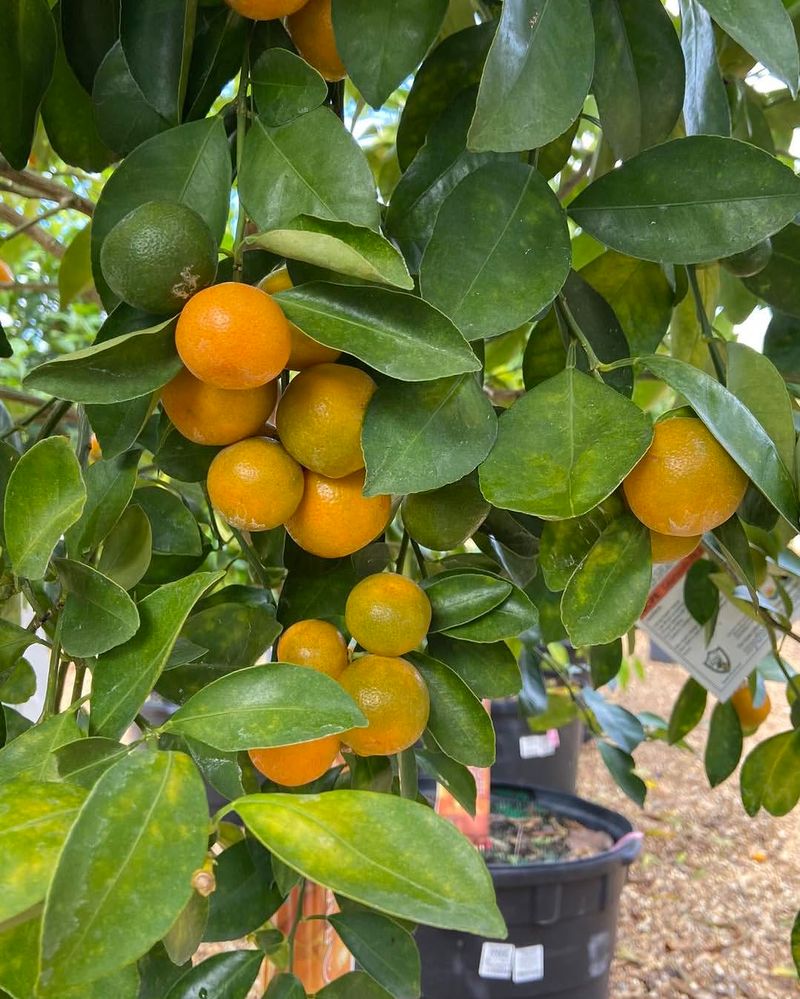
Catching heat stress early means you still have options. Waiting too long narrows what you can do without risking more harm than good.
Start with water. Confirm your drip emitters are working and delivering enough volume.
A mature citrus tree in peak summer may need 15 to 25 gallons per watering session depending on tree size and soil type. Low output emitters that worked fine in spring often fall short in July and August.
Add mulch if you have not already. Wood chip mulch from a local tree service works well and breaks down slowly.
Spread it three to four inches deep across the entire root zone, which extends well beyond the drip line on established trees.
Temporary shade cloth is worth the effort for young trees or trees showing severe stress signs.
A 30 to 40 percent shade cloth draped over the canopy during the hottest part of the day, roughly noon to 5 p.m., can reduce leaf temperature meaningfully.
Skip fertilizer until temperatures cool. Pushing growth during extreme heat adds stress rather than helping recovery.
Hold all nitrogen applications until overnight lows drop consistently below 85 degrees. Document what you observe each week.
Leaf curl, wilting, fruit drop, and slow growth often appear together during prolonged heat events.