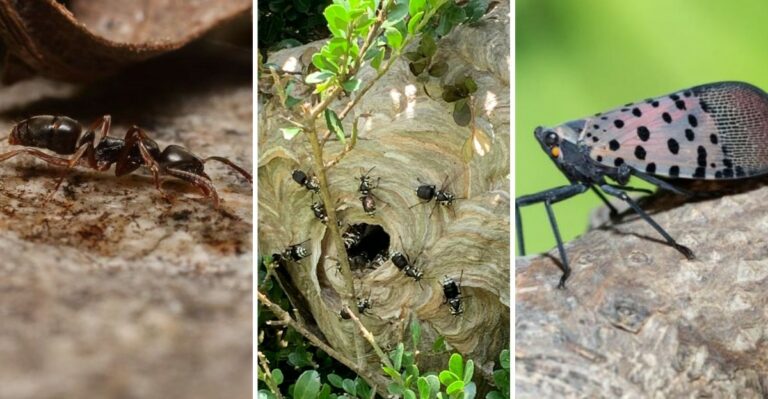
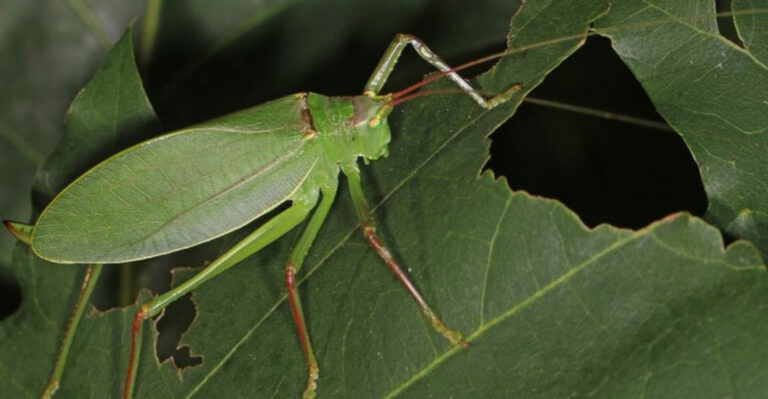
The Virginia Tree You Should Remove To Stop Spotted Lanternflies From Spreading
There’s a good chance the real culprit behind Virginia’s spotted lanternfly problem is standing in plain sight, and you’ve probably walked past it a hundred times without a second glance.
It grows fast, spreads easily, and blends right into fence lines, empty lots, and overgrown corners of the yard. But to spotted lanternflies, this tree is something close to irresistible.
They flock to it in numbers that seem almost unnatural, then use it as a home base before spreading out to feed on grapevines, maples, fruit trees, and garden favorites nearby.
One overlooked tree could be the reason your whole Virginia block is dealing with an infestation this season.
Figuring out what it is, and getting rid of it, might be the single most effective step you take to protect your yard.
Know this tree, and you take back control of your yard before the swarm ever gets the chance.
The Tree Behind Virginia’s Lanternfly Invasion
Spotted lanternflies did not show up in Virginia by accident. They followed a tree that had already been quietly taking over for decades.
That tree is Ailanthus altissima, commonly called the tree of heaven. It sounds lovely, but it is one of the most aggressive invasive plants in the eastern United States.
Originally from China, it arrived in the U.S. in the 1700s as an ornamental plant. Nobody knew back then that it would become a serious ecological problem.
The tree spreads fast, grows almost anywhere, and crowds out native plants. A single mature tree can produce as many as 300,000 seeds in a single year, though most produce far fewer.
When spotted lanternflies arrived in Pennsylvania around 2014, they found their favorite host already thriving across the mid-Atlantic region. The pest moved south quickly, and Virginia became a hotspot.
Spotted lanternflies feed heavily on tree of heaven throughout their life cycle. They also feed on grapes, apples, hops, and hardwoods, so the damage spreads far beyond one tree.
Removing tree of heaven from your yard directly weakens the lanternfly population nearby. Fewer host trees mean fewer insects completing their full life cycle in your area.
This connection between one invasive tree and one invasive insect is why state agencies across Virginia are urging homeowners to act. Your backyard decision can have a real neighborhood-wide impact.
Why This Species Is The Insect’s Favorite Host Plant
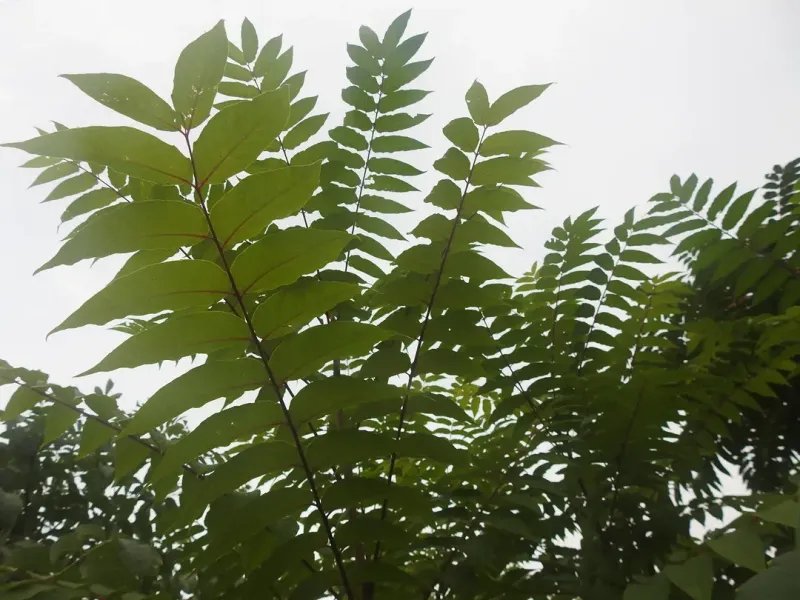
Spotted lanternflies are picky in the best possible way for tree of heaven. Out of dozens of possible host plants, this tree is their absolute favorite.
Scientists believe the insects are drawn to specific chemical compounds found in tree of heaven bark and sap. Those compounds signal a safe, rich feeding source.
Lanternflies feed by piercing plant tissue and sucking out the sugary sap inside. Tree of heaven produces sap in large quantities, making it an all-you-can-eat buffet for a growing colony.
Nymphs, the young wingless stage of the insect, gather on the lower trunk in spring. As they mature through summer, they move higher into the canopy to keep feeding.
Your Virginia Garden Changes Every Week. Your Plan Should Too.
Gardening in Virginia changes quickly throughout the season. Every Friday you’ll receive a simple weekly plan showing exactly what to plant, prune, fertilize, harvest, and protect so you never miss the right timing.
Adult lanternflies return to tree of heaven in late summer and fall. That is when they mate and lay their egg masses on the bark and nearby surfaces.
A single tree can host hundreds of egg masses over one season. Each egg mass contains 30 to 50 eggs, so the numbers add up quickly.
What makes this relationship so damaging is that the insects do not stay on one tree. After feeding on tree of heaven, they fly to vineyards, orchards, and gardens nearby.
Cutting off the source by removing tree of heaven reduces the local population before it can spread to your neighbors’ property or Virginia’s valuable agricultural land.
How To Identify A Tree of Heaven On Your Property
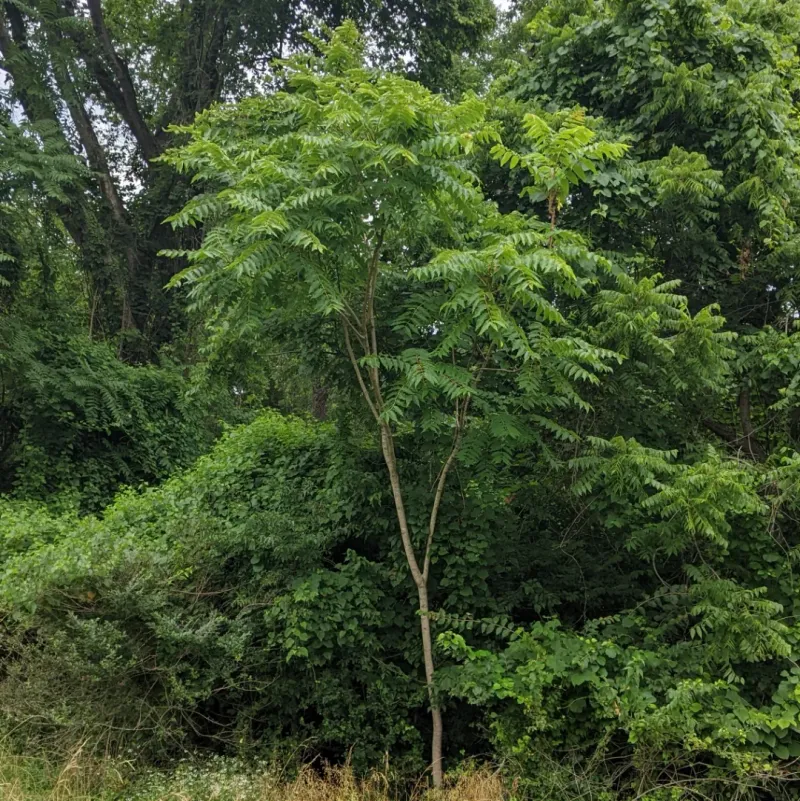
Knowing what to look for is half the battle. Tree of heaven has a few distinct features that set it apart from native lookalikes.
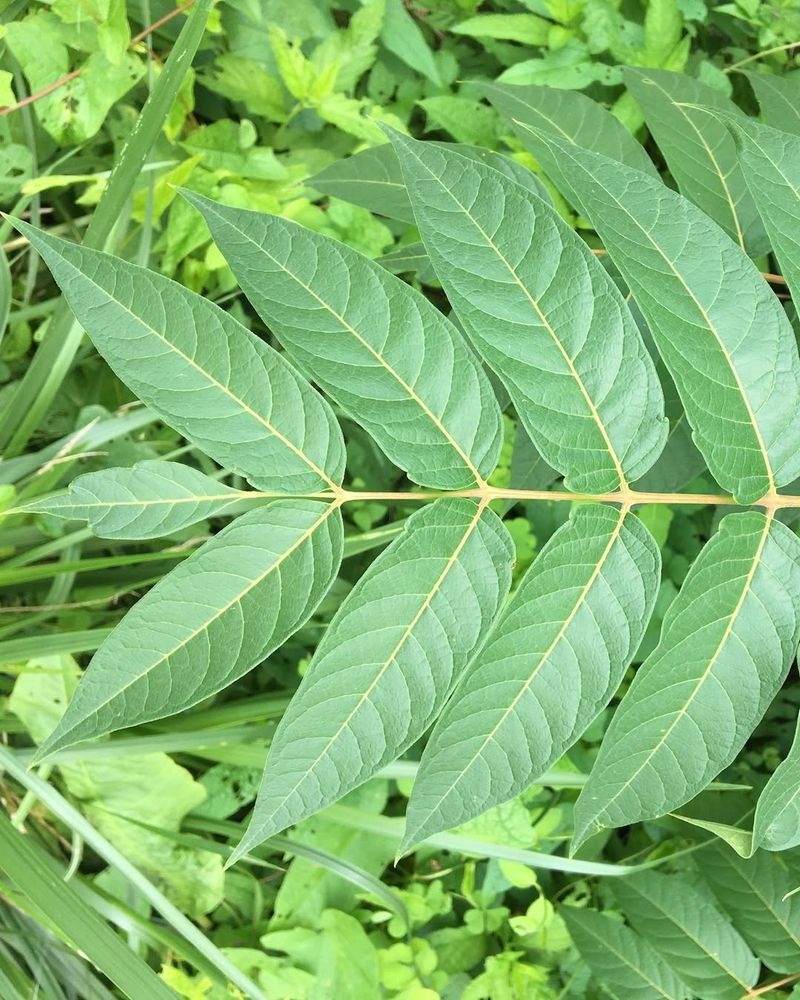
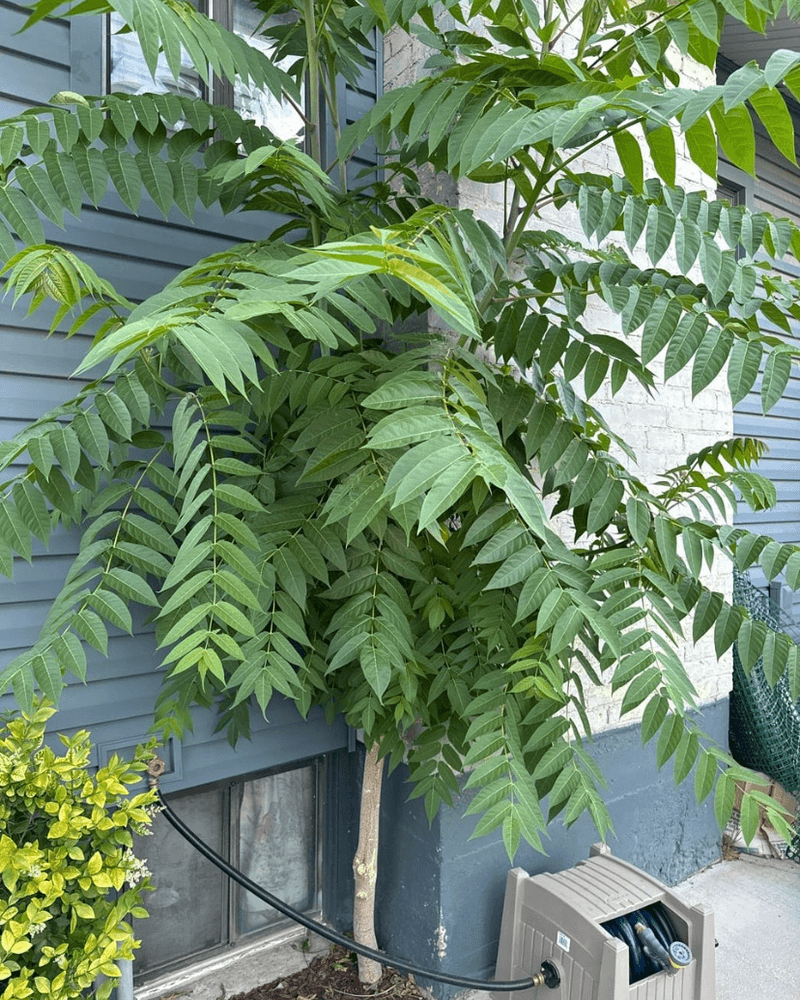
The leaves are large and feather-like, made up of 11 to 41 smaller leaflets arranged along a central stem. Each leaflet has one or two small notches near its base.
Those notched leaflets are a key identifier. Native trees like sumac and black walnut have similar leaf shapes, but they lack those distinctive base notches.
Crush a leaf between your fingers and take a sniff. Tree of heaven has a strong, unpleasant smell often described as rancid peanut butter or gym socks.
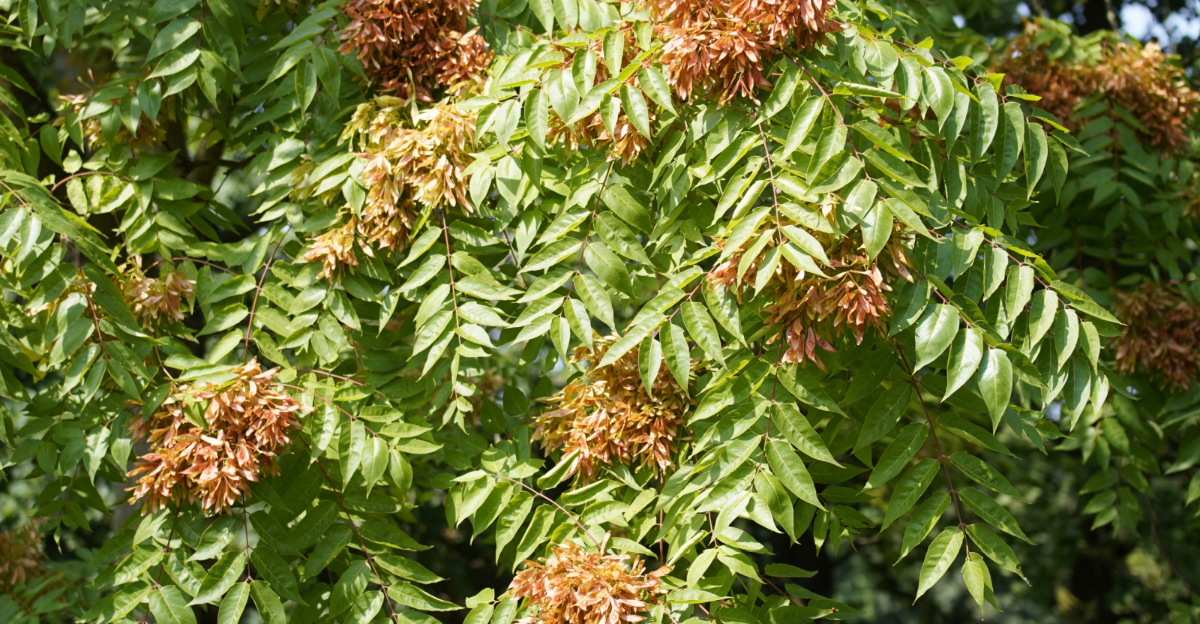
In summer, the tree produces large clusters of tan, papery seed pods that spin like helicopter blades when they fall. These clusters can be quite showy and are easy to spot from a distance.
The bark on young trees is smooth and gray-green. Older trees develop a rougher texture with shallow ridges, similar to the surface of a cantaloupe.
Tree of heaven grows extremely fast, sometimes adding six feet of height in a single season. If you see a tall, skinny tree shooting up near a fence, driveway, or building, take a closer look.
It also sprouts aggressively from the base and roots, so you may notice clusters of young shoots near an older tree. Catching it early makes removal much more manageable.
The Risks Of Leaving This Invasive Species Untreated
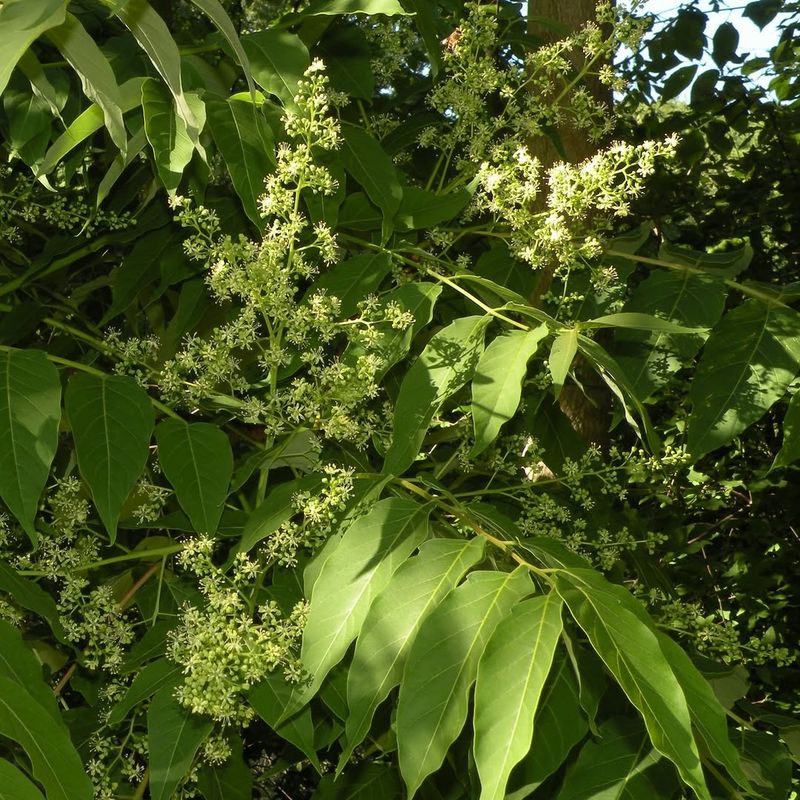
Leaving tree of heaven on your property is not a neutral choice. Every season you wait, the problem compounds in multiple directions at once.
On the structural side, this tree has an aggressive root system. The roots can crack foundations, sidewalks, and underground pipes as they search for water and nutrients.
The roots also release a chemical called ailanthone into the soil. That chemical suppresses the growth of native plants and garden crops nearby, making the surrounding soil less hospitable to other vegetation.
From a pest standpoint, an untreated tree becomes a reliable reproduction site. Spotted lanternfly egg masses laid on your tree will hatch and spread to neighboring properties in spring.
Your neighbors may be doing everything right, but if your tree is still standing, their efforts are significantly reduced. This is a community-level problem that starts with individual yards.
Virginia’s agricultural industry is also at stake. Grapes, apples, hops, and hardwood timber are all major economic products in the state, and spotted lanternflies threaten all of them.
The insect excretes a sticky substance called honeydew as it feeds. That honeydew promotes mold growth on plants, further damaging crops and ornamental trees in your landscape.
Waiting another season is not just risky for your property. It is a decision that affects your entire block, your local farms, and the broader ecosystem of the region.
An Easier Way To Handle This Tree
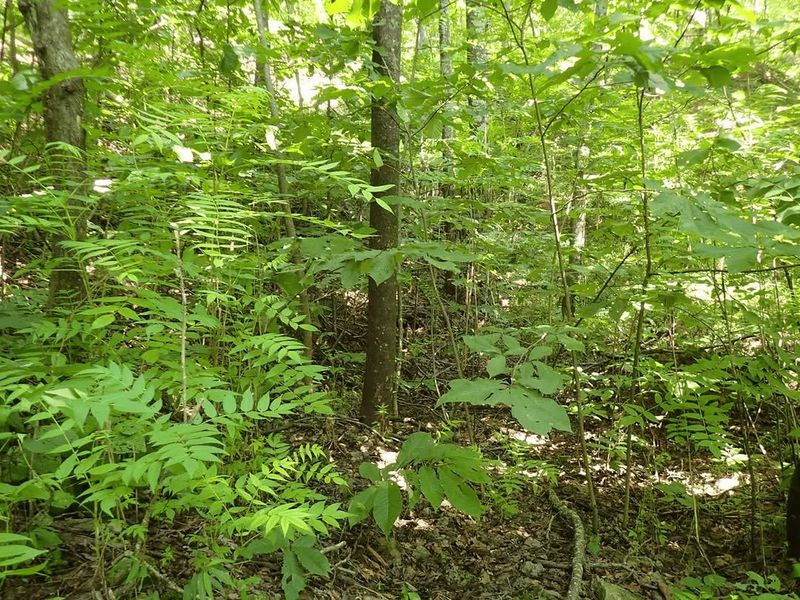
Rolling up your sleeves is the right instinct here. Getting rid of tree of heaven takes the right approach, but it is absolutely something most homeowners can handle.
Start by confirming the tree’s identity using the leaf and smell test described earlier. Removing the wrong tree is a waste of effort and bad for your yard.
For small trees under two inches in diameter, hand-pulling works well when the soil is moist. Grip as low as possible and pull out the root system to prevent regrowth.
For larger trees, cutting the trunk near the base is the first step. However, cutting alone is not enough because the stump will aggressively sprout new growth within days.
After cutting, apply an herbicide approved for invasive tree control directly to the fresh-cut stump surface. Doing this the same day you cut, ideally within a few hours, gives the best results.
The basal bark treatment method also works well for trees under six inches wide. Apply an oil-based herbicide to the lower 12 to 18 inches of bark without cutting first.
Check treated stumps and surrounding soil monthly for new sprouts. Pull or treat any new growth immediately before it re-establishes a root system.
For very large trees or those near power lines, hire a certified arborist. Safety always comes first, and professionals have the right equipment to handle big removals cleanly.
More Ways To Protect Your Property From Lanternflies
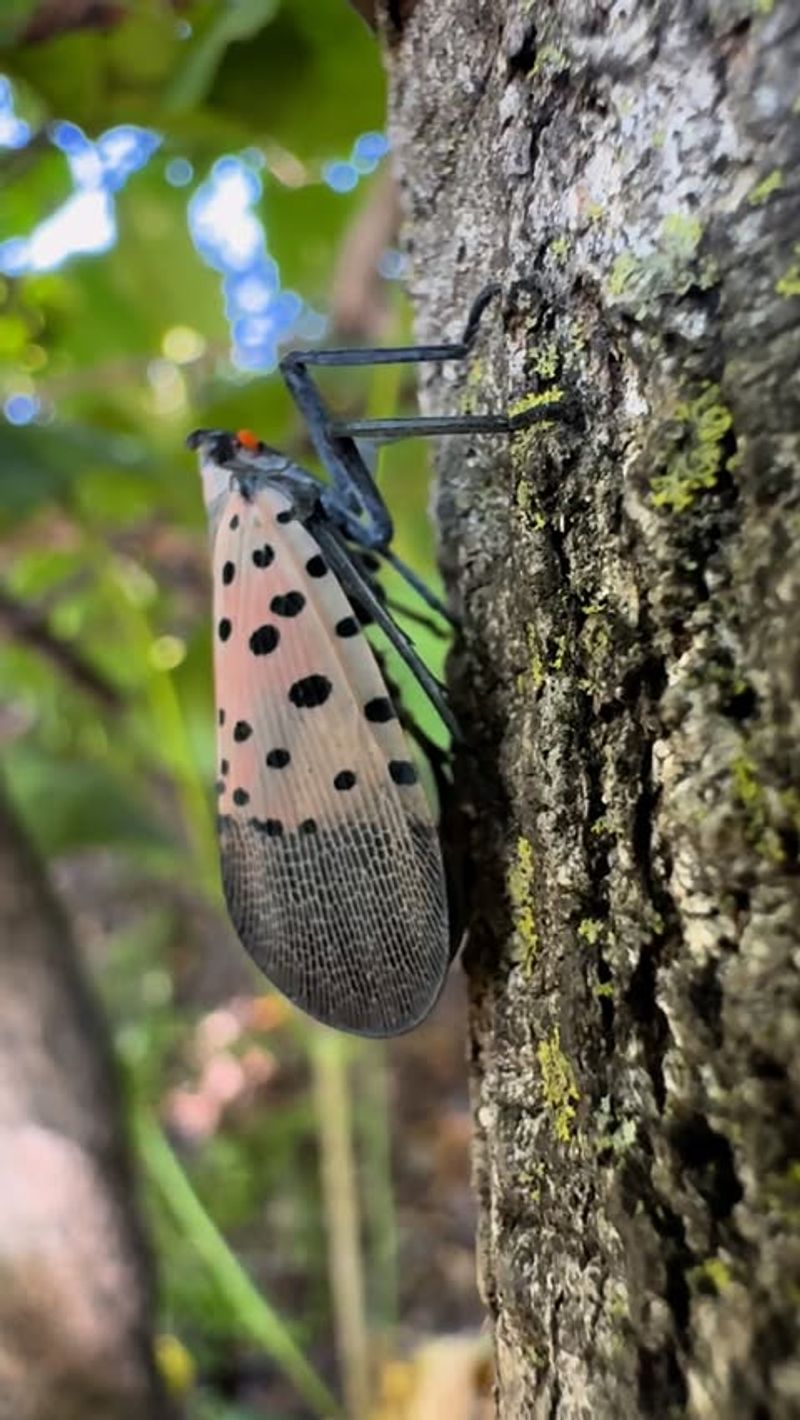
Taking down tree of heaven is a powerful first step. Pairing that action with a few other strategies gives your property the strongest possible defense.
Check all outdoor surfaces for egg masses each fall and winter. Spotted lanternflies lay eggs on tree bark, fences, patio furniture, stone walls, and even outdoor equipment.
Egg masses look like dried mud or putty smeared across a surface. Scrape them off with a plastic card or putty knife into a bag with hand sanitizer, then seal and trash it.
Circle traps placed around the trunks of fruit trees and hardwoods can catch nymphs as they crawl upward in spring. These traps are inexpensive and widely available online.
Sticky bands also work similarly, though they sometimes catch other wildlife by accident. Check them frequently and replace when full to keep them effective.
Report any new sightings to Virginia’s Department of Agriculture and Consumer Services. Your report helps officials track the spread and deploy resources to new areas faster.
Avoid moving firewood, outdoor furniture, or vehicles from high-infestation zones without inspecting them first. Egg masses hitchhike easily on smooth surfaces and can spread the insect to new regions.
Planting native trees and shrubs in place of removed invasives also helps long-term. A healthy native landscape is naturally more resistant to pest outbreaks and supports local wildlife beautifully.
When To Call A Professional And What To Expect
Some situations call for expert hands. Knowing when to step back and call a pro can save you time, money, and a headache or two.
If the tree of heaven on your property is taller than 20 feet, a professional removal is worth every penny. Large trees near homes, fences, or utility lines carry real fall risk.
Certified arborists are trained to assess structural hazards before making a single cut. They also carry liability insurance, which protects you if anything goes sideways during the job.
When hiring someone, ask specifically about their experience with invasive species removal. Not every tree service understands the regrowth problem that comes with cutting Ailanthus altissima.
A good arborist will treat the stump the same day as removal. Ask them upfront whether stump treatment is included in the quote or billed separately.
Expect a follow-up visit to be part of the plan. Professionals who know this species understand that one visit rarely solves the problem completely.
Some Virginia localities have offered cost-sharing programs or removal assistance for invasive trees in the past, so it’s worth checking current availability. Check with your local cooperative extension office to find out what help is available in your area.
Taking action against spotted lanternflies starts with removing the tree of heaven from your property. Every tree taken down is a real step toward protecting Virginia’s landscapes, farms, and neighborhoods for years ahead.