How To Tell If A Wild Rabbit Is Settling Into Your California Garden
Some garden visitors announce themselves loudly, while others prefer to leave quiet hints. A trimmed leaf here, a small clue near the fence there, and suddenly the vegetable bed looks lighter than it did the day before.
California hosts several shy, long-eared species, each with its own favorite haunts.
All of them share a fondness for tender greens and quiet corners.
Reading the signs early makes a difference, revealing who is visiting and how long they intend to stay.
Some clues point to a passing guest, while others suggest a new neighbor settling in.
With a sharp eye and a few humane adjustments, a garden can stay productive while its wild visitors find somewhere else to call home.
1. Round Pellets Mark The Rabbit’s Spot
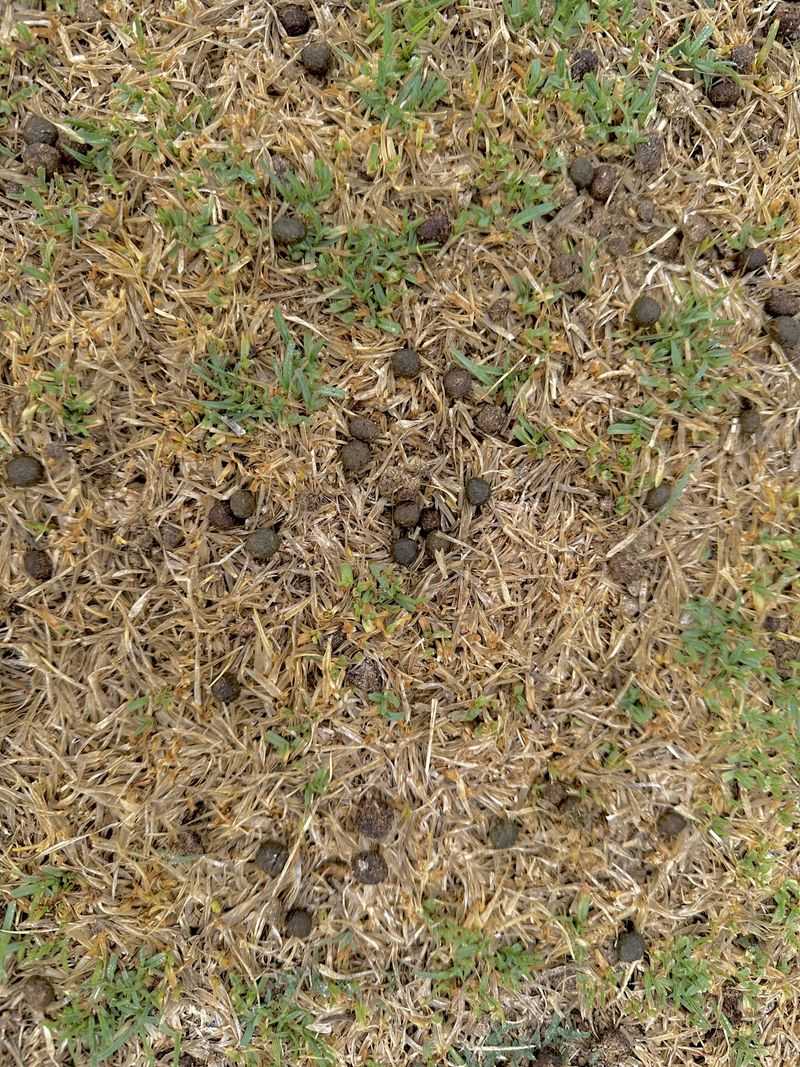
The ground usually tells the story first. Rabbit droppings are small, round, and slightly flattened, a bit like brown peas or cereal puffs.
California’s main species include brush rabbits along the coast and foothills, desert cottontails in valleys and dry inland areas, and black-tailed jackrabbits, which are actually hares, in open fields.
Cottontail pellets usually measure about a quarter inch across, while jackrabbit pellets run a bit larger.
Fresh pellets look greenish brown and feel soft. Older ones turn tan, dry, and crumbly after a few days in the sun.
Counting fresh piles over a week separates a one-time visitor from a regular guest.
Rabbits tend to leave pellets where they feel safe and well fed. Fence lines, garden bed edges, spots under shrubs, and lawn borders all deserve a look, and a large cluster often marks a favorite feeding or resting area.
Shape helps sort out suspects. Deer leave larger, oval pellets, often with a pointed tip, while rats and mice leave long, thin droppings with pointed ends.
A simple check reveals whether a rabbit is sticking around. Old pellets raked away from one area, followed by a fresh look two or three days later, show whether new piles keep appearing in the same spots.
Gloves make sense when handling droppings, followed by a thorough handwashing. A garden trowel scoops them neatly into the trash, keeping the area tidy for the next round of detective work.
2. Clean Angled Cuts Show Where It Fed
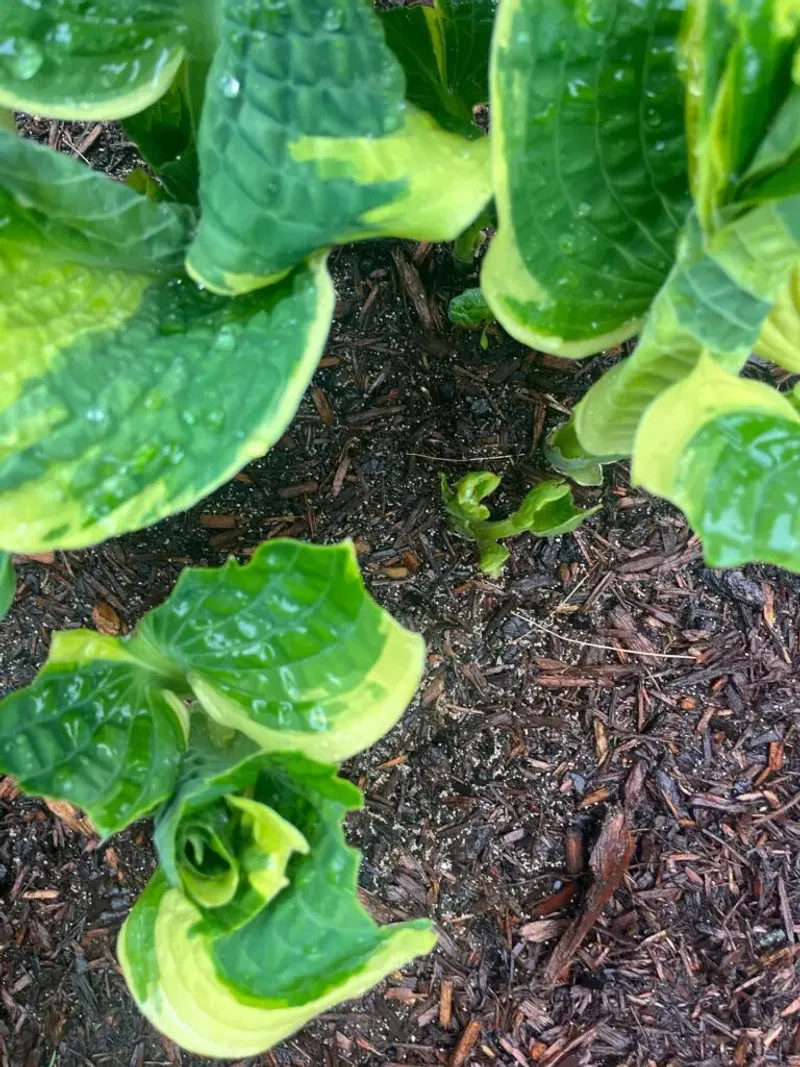
Bean seedlings standing tall one evening can become short green stubs with tidy, slanted tips by morning. That neat snip serves as a classic rabbit calling card.
Rabbits have sharp front teeth that work like garden pruners, biting through soft stems in one clean motion and leaving a smooth cut at about a 45-degree angle.
Deer, by contrast, lack upper front teeth, so they tear plants and leave ragged, shredded edges.
Height offers another clue. Rabbits usually feed within about two feet of the ground, though a jackrabbit can stretch a bit higher, while damage near shoulder height points to deer.
Favorite targets include lettuce, beans, peas, carrot tops, young broccoli, and many flowers. Tender new growth ranks as the top pick, which explains why seedlings disappear so fast.
Your California Garden Changes Every Week. Your Plan Should Too.
Gardening in California changes quickly throughout the season. Every Friday you’ll receive a simple weekly plan showing exactly what to plant, prune, fertilize, harvest, and protect so you never miss the right timing.
Fall vegetable plantings face the same risk, making October a key month for watchfulness. Some plants get eaten right down to the soil.
Timing helps confirm the culprit. Rabbits feed most in the early morning and evening, so damage often appears overnight.
Snails and slugs also feed at night, but they leave slimy trails and holes in leaves rather than clean, slanted cuts.
Quick action pays off once those angled snips appear. Floating row cover or a wire cage protects young plants until a sturdier fence goes up.
Even a few days of cover can carry seedlings past their most tempting stage.
3. Bark Gnawing Appears On Young Trees
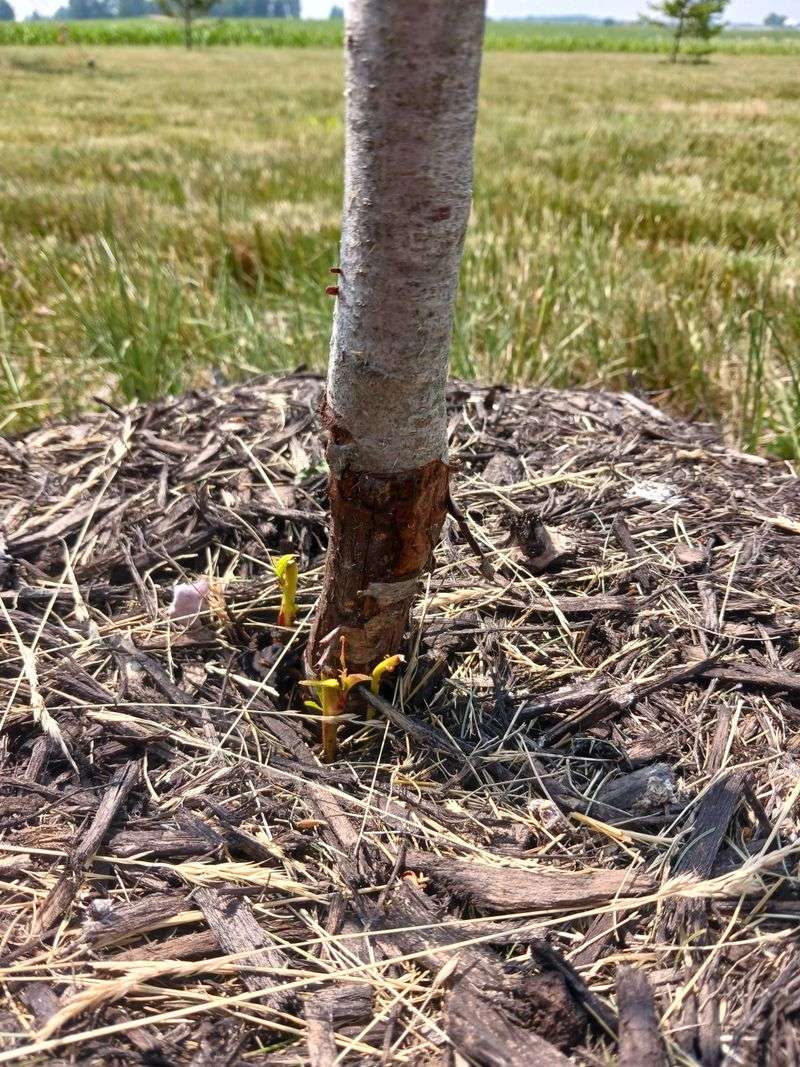
Fall and winter bring a different kind of snack. Once green plants dry out or grow scarce, hungry rabbits turn to the tender bark of young trees and shrubs, and fruit trees, young ornamentals, and new vines often take the hit.
The lower trunk deserves a close look. Rabbit gnawing usually appears within about 18 to 24 inches of the ground, or above the snow line in mountain areas.
Rough patches where outer bark has been scraped away, along with tiny paired tooth marks, confirm the culprit.
Small branches and shoots often get clipped with that same neat, angled cut. Jackrabbits show special fondness for young orchard trees and vineyard plants, and one busy hare can do surprising damage in a single night.
Bark damage runs deeper than it looks. Bark carries water and food up and down the tree.
When rabbits chew all the way around a trunk, a process called girdling, the tree can decline or struggle to recover.
Trunk guards offer the simplest fix. Cylinders of poultry wire or hardware cloth, set a few inches away from the bark so the tree can grow, wrap young trunks securely.
A bottom edge pushed a couple of inches into the soil, with a guard at least two feet tall, works well, and taller guards suit areas where jackrabbits roam.
Guards deserve a seasonal check, with loosening as trunks thicken. October makes an ideal time to install them before winter feeding begins in earnest.
4. Shallow Nests Hide In The Lawn
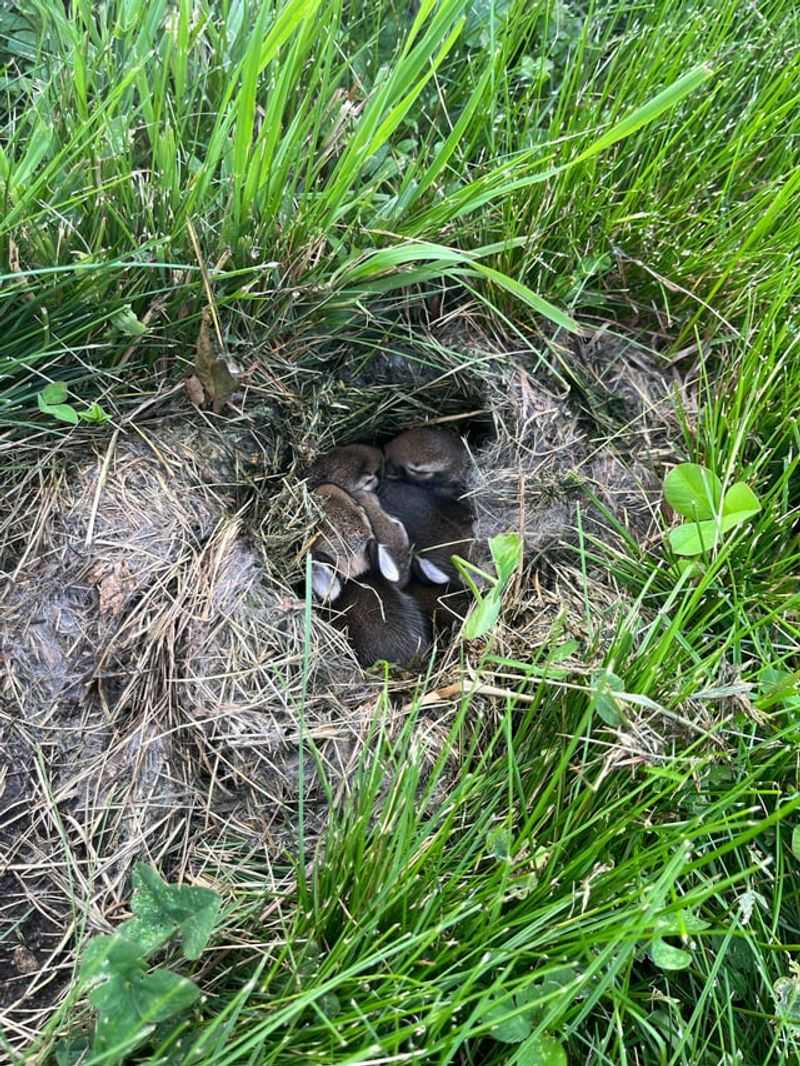
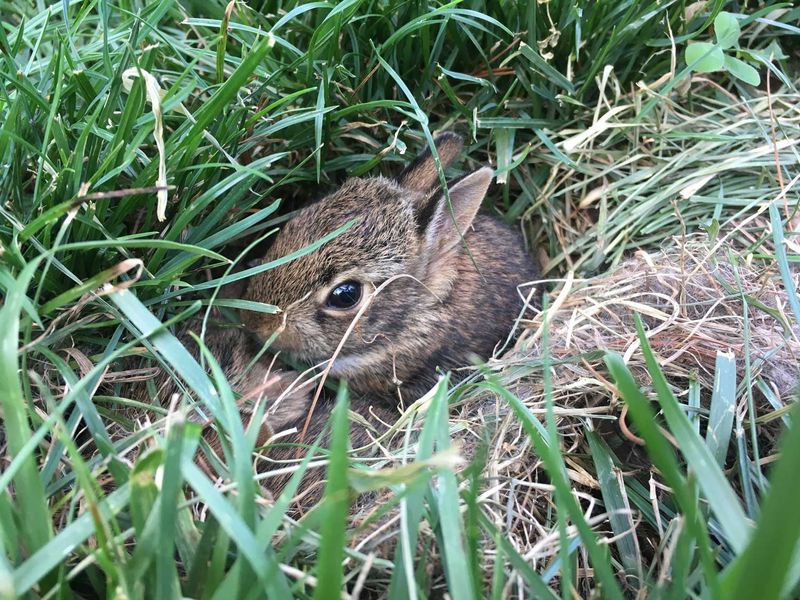
A small patch of dry grass that looks oddly fluffy can appear right in the mower’s path. That innocent-looking spot may be a cottontail nest, so a quick pause makes sense.
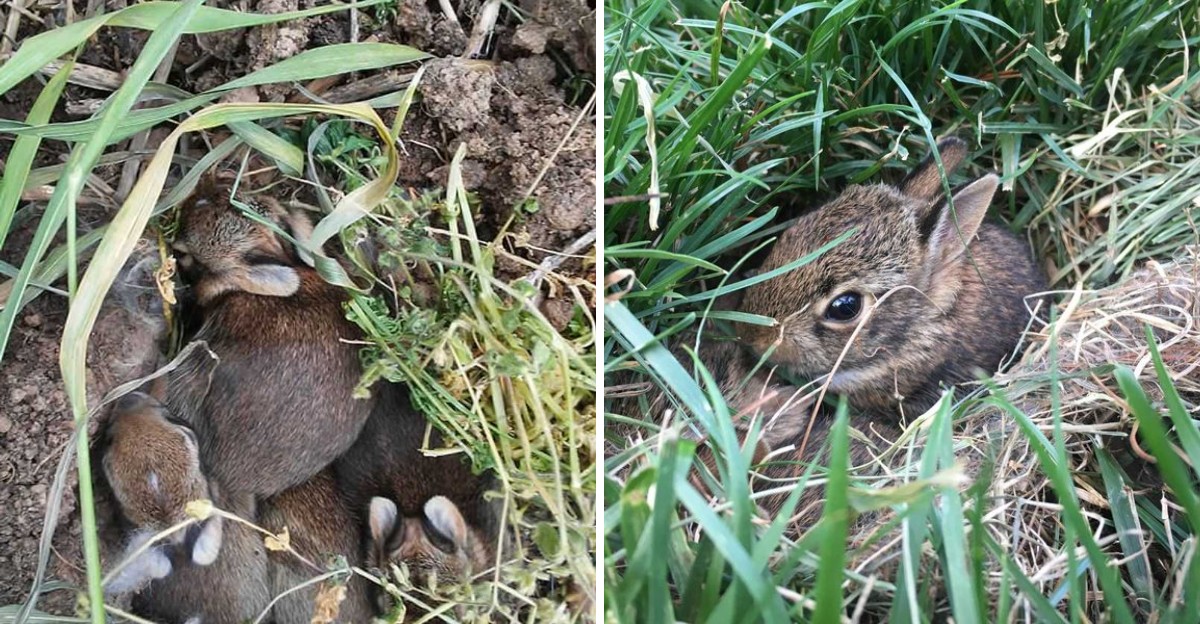
Mother cottontails dig a shallow hollow in the ground, often just a few inches deep and about the size of a hand. Lawns, garden edges, and spots beneath low plants make popular choices.
She covers the hole with dry grass and soft fur pulled from her own chest.
From above, the nest blends in almost perfectly, looking like a clump of dry grass or a patch of thatch. Many people discover one only by accident while raking, weeding, or letting the dog out.
A discovered nest is best left alone. Any grass moved can go gently back into place, and pets and children are best kept away.
A small stick or flag marking the spot prevents anyone from mowing over it.
Young cottontails grow fast and usually leave the nest within about three weeks, so the wait stays short. Mowing around the patch with a wide margin, or skipping it entirely for a while, protects the family.
In California, cottontails can breed during much of the year, so nests may turn up even in fall.
A nest also tells something useful. A mother rabbit chose the yard because it felt safe, with food and cover nearby.
Once the babies leave, a few changes can steer the next family toward a different address.
5. Fur Lined Depressions Hold Baby Rabbits
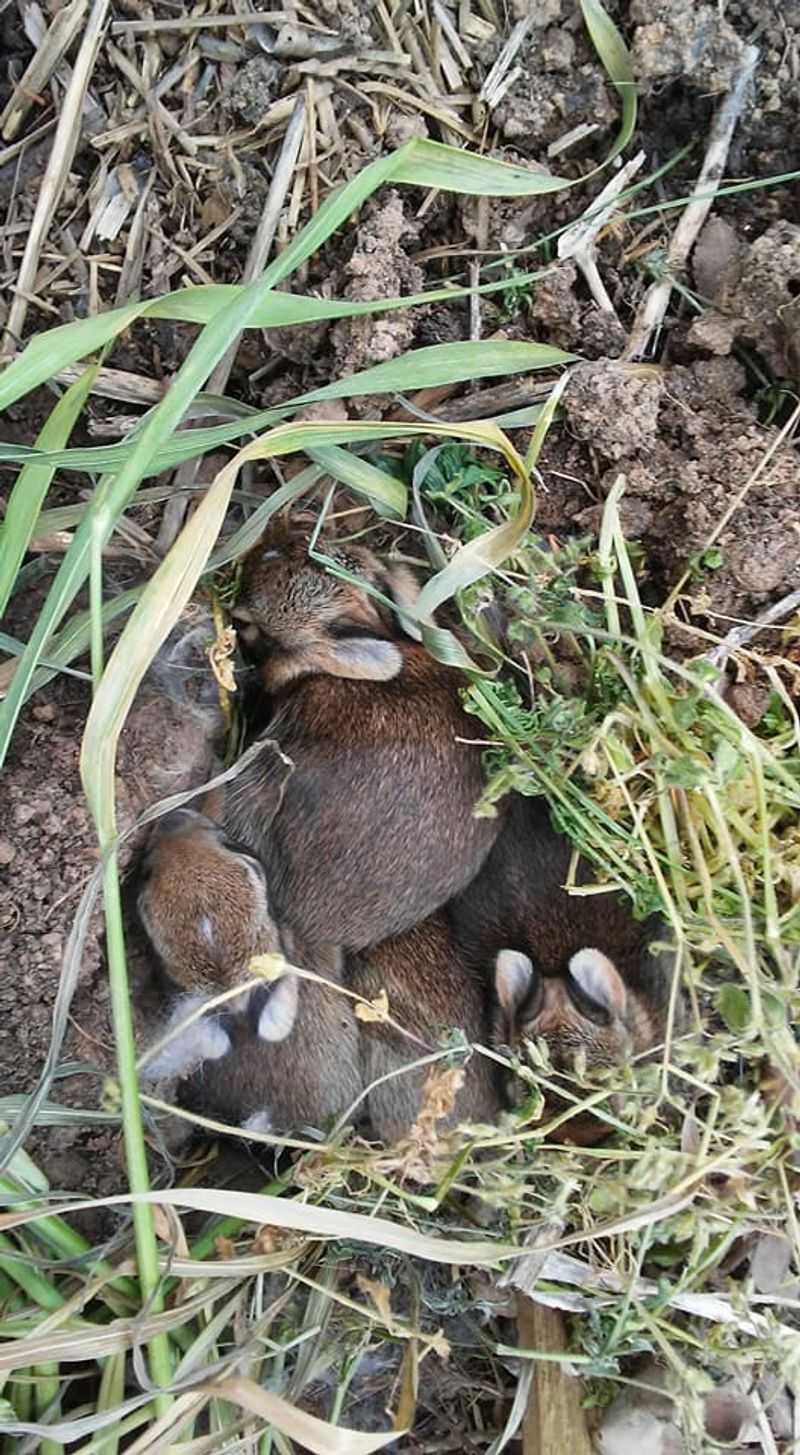
Many kind people make the same mistake. They find a nest of baby bunnies with no mother in sight and assume the little ones have been abandoned, when in most cases nothing could be further from the truth.
Mother cottontails stay away from the nest on purpose. Her scent and movement could lead predators such as foxes, coyotes, and cats straight to her babies.
Instead, she visits only briefly, usually around dawn and dusk, to nurse them for a few minutes.
Rabbit milk is very rich, so those short visits provide plenty. Between feedings, the babies stay quiet, tucked beneath their blanket of grass and fur, since stillness offers their best defense.
A simple check confirms whether the mother is returning. Two thin pieces of string or grass laid in an X over the nest at night will show movement by morning if she came back to feed.
Babies with full, round bellies and quiet behavior are doing fine.
A licensed wildlife rehabilitator becomes the right call only when babies look hurt, cold, thin, or covered in flies. The California Department of Fish and Wildlife lists licensed rehabilitation centers across the state.
Taking babies home or trying to raise them is best avoided. California law protects wildlife, and wild rabbits need specialized care that few households can provide.
Staying hands-off remains the kindest choice, even when it feels difficult. Most families move on naturally within a few short weeks.
6. Runways Wear Through Tall Grass
Habit rules a rabbit’s daily travels. The same routes get used again and again, much like a familiar path to the kitchen each morning, and over time those trips wear narrow trails into the landscape.
Skinny paths about four to six inches wide, cutting through tall grass, weeds, or low brush, mark these runways. Grass along the trail lies pressed flat or worn down to bare dirt.
Many runways connect a hiding place, such as a shrub or woodpile, to a feeding spot like a vegetable bed.
Brush rabbits rarely stray far from thick cover, so their runways often tunnel right through dense shrubs. Desert cottontails and jackrabbits may use more open trails across fields or dry grass.
Following a runway can reveal exactly where an animal enters the yard.
The ends of each trail deserve a close look. A gap under a fence, a hole in a hedge, or a pile of fresh pellets nearby can confirm the main entry point, and early morning dew makes these paths easier to spot.
That information becomes a tool. Grass kept trimmed near garden beds leaves rabbits less safe cover while traveling, and patched fence gaps cut off the shortcut to dinner.
A cleared, open zone around vegetables makes rabbits feel exposed. Fewer hiding spots often mean fewer nibbled greens, so a little trimming goes a long way.
Fall cleanup offers a perfect chance to trim runways and patch gaps before winter feeding picks up.
7. Burrow Holes Show Up Under Shrubs
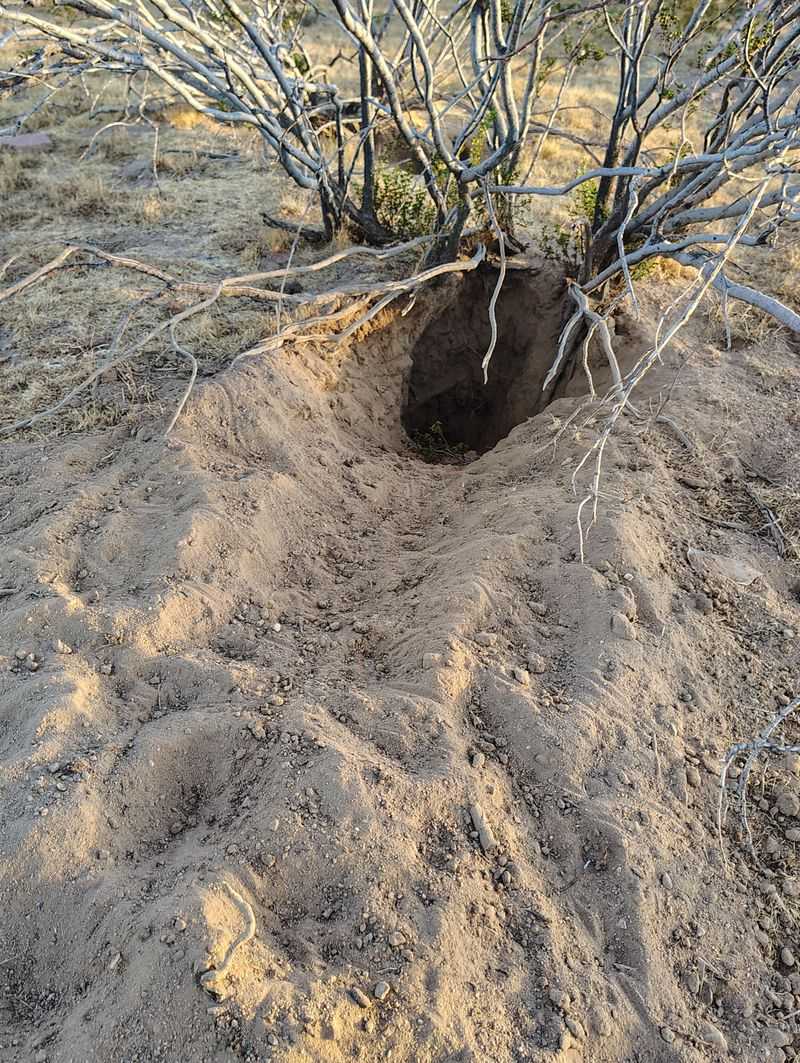
Surprisingly, most California rabbits skip digging deep burrows of their own. Cottontails and brush rabbits usually rest in shallow spots called forms, hidden within thick plants.
Still, a rabbit may move into an existing hole when it needs shelter. Desert cottontails often use burrows dug by ground squirrels or other animals, especially in hot, dry areas.
Jackrabbits, on the other hand, rarely use burrows, relying instead on speed and open ground.
Dense shrubs, decks, sheds, and porches deserve a search. A rabbit hole usually measures about four to six inches wide, often with pellets or tufts of fur close by.
Fresh digging, flattened soil, or a worn path leading to the opening all signal active use.
Not every hole belongs to a rabbit, though. Ground squirrels leave big mounds of dirt beside their burrows, and gophers push up fan-shaped soil mounds, usually with the hole plugged shut.
Rabbits tend to leave a neater opening with less soil piled up.
Watching the hole at dawn or dusk from a distance confirms the resident. Once the burrow sits empty, with no babies inside, sturdy wire mesh can seal gaps under decks and sheds, with the bottom bent outward and buried a few inches deep.
Relocating wildlife is restricted in California, making blocked access the better plan. With the doors closed, the rabbit will find new lodging elsewhere, and fall offers a quieter season for the work.
8. Fence Beds With Buried Wire Mesh
Good fences make good neighbors, even when the neighbor has long ears. Fencing offers the most reliable way to keep rabbits out of a garden, and it works without harming them.
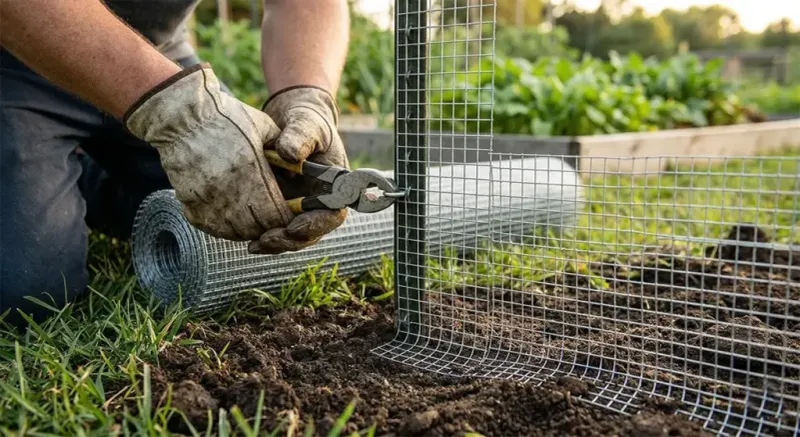
UC IPM suggests poultry wire or similar mesh with openings of one inch or smaller. A fence at least two feet tall works for cottontails and brush rabbits, while about 30 to 36 inches suits areas with jackrabbits, which jump higher.
The mesh holds up best pulled tight and secured with sturdy stakes.
Rabbits will try to squeeze or dig underneath. A bottom edge buried about six inches deep, or bent outward in an L shape along the ground and pinned down, stops sneaky diggers.
Habitat changes help a great deal, too. Clearing brush piles, rock piles, tall weeds, and dense groundcover near beds leaves fewer hiding places, making the yard feel risky enough that rabbits move on.
Wire trunk guards on young trees, plus cages or row covers over seedlings until they toughen up, add extra protection.
A weekly walk along the fence line catches gaps, chewed spots, or fresh digging early.
Poisons are best avoided, since they can harm pets, children, and other wildlife. Trapping and moving rabbits is also restricted under California rules.
Exclusion and smart yard care keep everyone safe and the harvest intact. October, with fall vegetables going in and winter feeding ahead, makes an ideal time to build that fence.