This Native California Shrub Is Replacing Privacy Fences In California Yards
Nobody dreams about their fence. Nobody walks outside, looks at a row of wood panels or vinyl slats, and thinks wow, that really makes the yard.
But a wall of Toyon? That is a different conversation entirely.
This California native evergreen is quietly becoming one of the smartest property boundary moves a homeowner can make, and once you understand what it brings to the table, it is pretty easy to see why.
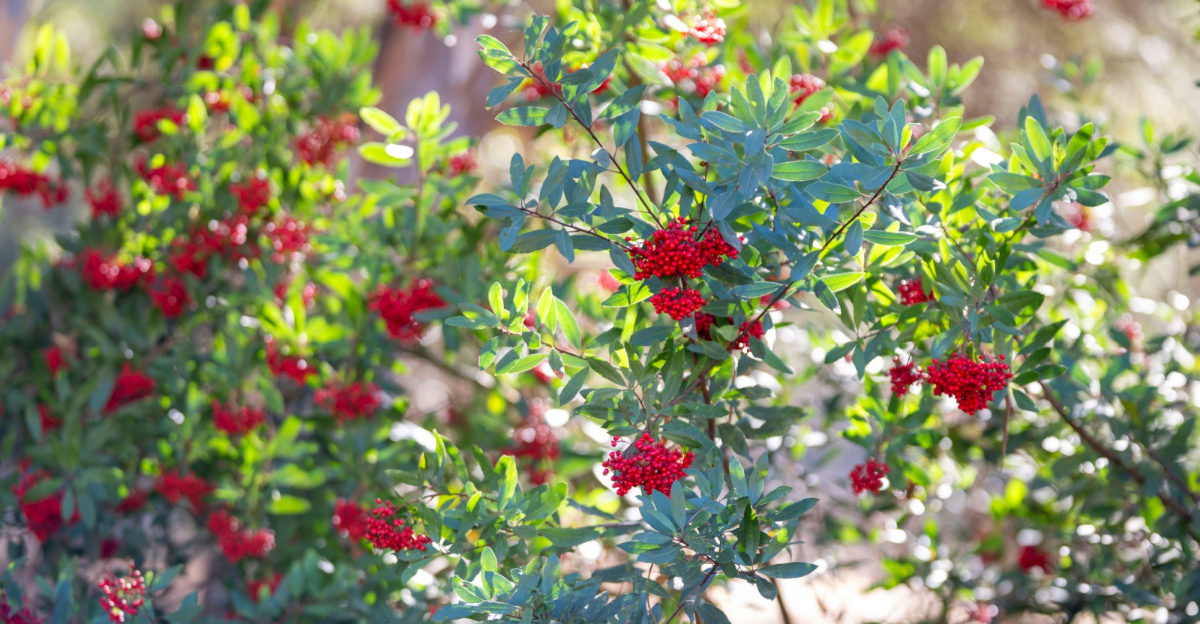
Toyon grows tall enough to block sightlines, stays lush and green all year, produces clusters of white flowers in summer, and then absolutely shows off in winter with bright red berries that turn your boundary line into a genuine wildlife destination.
It handles dry summers, fits beautifully into water-wise landscapes, and gets better looking every single year. A fence just sits there. Toyon actually does something.
1. Toyon Makes A Living Privacy Screen
Solid wood fences have done the job in California backyards for decades, but they block light, require regular upkeep, and never really feel like part of the garden. Toyon offers something different.
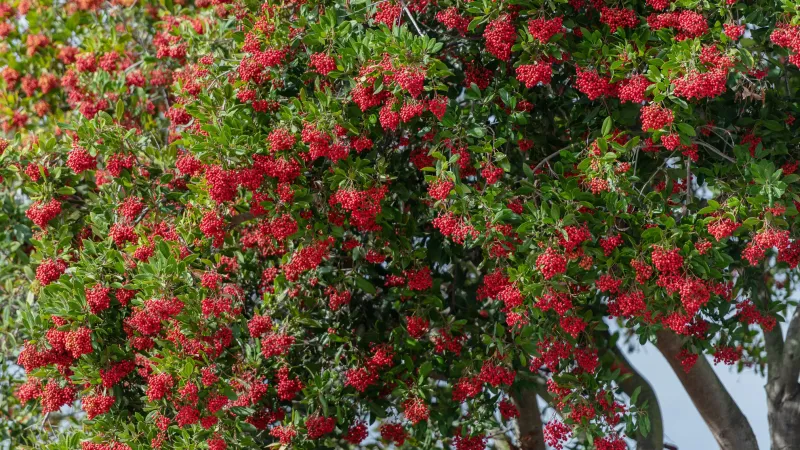
This native shrub can grow into a tall, multi-stemmed plant that screens sightlines without the hard, flat look of a fence panel.
Toyon, known botanically as Heteromeles arbutifolia, is native to California’s foothills, chaparral slopes, and coastal ranges.
In a home garden, it can reach heights of six to fifteen feet or more depending on conditions, making it tall enough to block views from neighboring yards or sidewalks.
Because it is multi-stemmed by nature, it tends to fill in horizontally as well as vertically over time.
Using Toyon as a living screen does require some patience. It is not an instant barrier, and a newly planted shrub will not replace a fence in the first season.
Most gardeners who use it as a hedge plant several shrubs in a staggered or straight row, spacing them close enough that their canopies eventually overlap.
The result is a screen that feels more like a natural edge than a built structure. California yards with enough depth along a property line, side yard, or back border are the best candidates for this kind of planting.
Toyon works especially well in yards that already lean toward a naturalistic or drought-tolerant style.
2. Evergreen Leaves Give Year-Round Cover
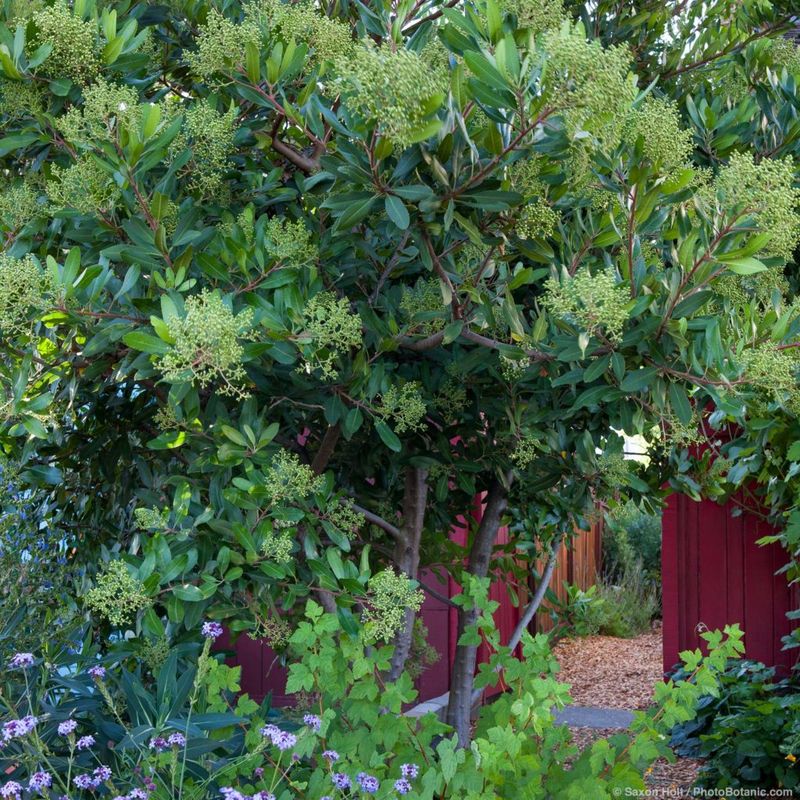
One of the most practical reasons gardeners reach for Toyon when thinking about privacy is simple: it keeps its leaves all year.
Unlike deciduous shrubs that drop their foliage in fall and leave a yard exposed through winter, Toyon holds onto its glossy, dark green leaves through every season.
The leaves themselves are leathery and slightly serrated along the edges, giving the plant a clean, structured look even without flowers or berries present.
In a mixed hedge or planted row, that consistent green texture creates a reliable visual backdrop that softens fences, walls, and neighboring structures throughout the year.
In coastal California gardens, where mild temperatures keep the plant comfortable, Toyon tends to maintain especially dense foliage.
In hotter inland areas, the leaves may look slightly stressed during peak summer heat, but the plant generally holds its cover without dropping leaves the way a drought-stressed deciduous shrub might.
Your California Garden Changes Every Week. Your Plan Should Too.
Gardening in California changes quickly throughout the season. Every Friday you’ll receive a simple weekly plan showing exactly what to plant, prune, fertilize, harvest, and protect so you never miss the right timing.
For homeowners who want privacy in every month, not just during the growing season, evergreen cover is a real advantage.
A row of Toyon along a back property line will screen the yard in January just as it does in July, which is something a bare-branched shrub simply cannot offer.
The evergreen quality also means less seasonal cleanup. Toyon does shed older leaves gradually, but not in the dramatic way that deciduous plants do, making it a lower-maintenance choice for California gardeners who prefer to spend less time raking.
3. White Flowers Add Summer Interest
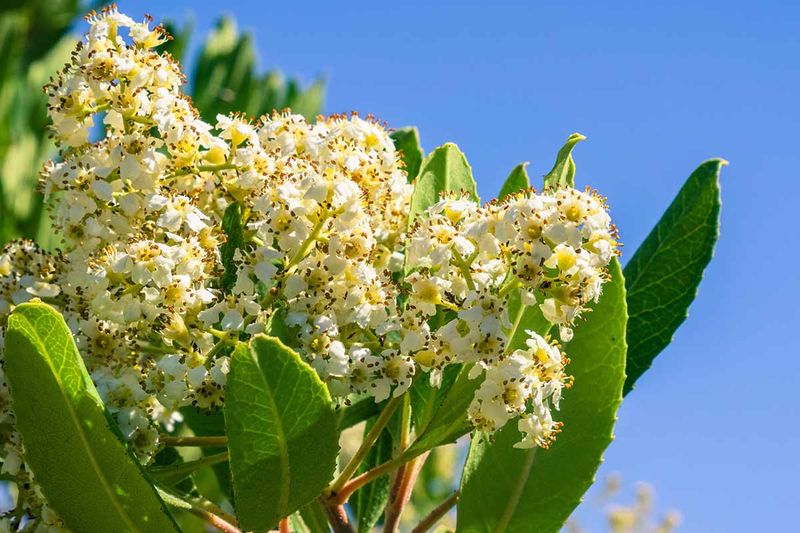
Most privacy hedges are purely functional, offering a green wall and not much else. Toyon breaks that pattern by producing flat-topped clusters of small white flowers in summer, typically from June through July in many California locations.
Those flower clusters, called corymbs, can cover the top of the shrub in a way that makes the whole plant look festive and alive during the warmest months.
The flowers are small individually, but the clusters are large enough to be noticeable from across a yard.
They have a faintly sweet scent that some gardeners find pleasant, and they attract native bees, butterflies, and other pollinators that are drawn to open, accessible flower structures.
For California yards that already include pollinator-friendly plants, Toyon fits right into that ecosystem approach.
Adding a flowering shrub along the property line means the privacy screen is doing double duty, providing cover while also feeding beneficial insects during a season when many other native plants have already finished blooming.
The white flowers also contrast nicely with the dark green foliage, giving the shrub a bright, clean appearance in midsummer.
In a hedge row, the blooming period creates a visual highlight that changes the feel of the yard without requiring any extra effort from the gardener.
After the flowers fade, the developing berries begin to form, so the interest does not end when the blooms drop. The summer flowering season transitions naturally into what becomes one of Toyon’s most recognized features heading into fall and winter.
4. Red Berries Bring Winter Color
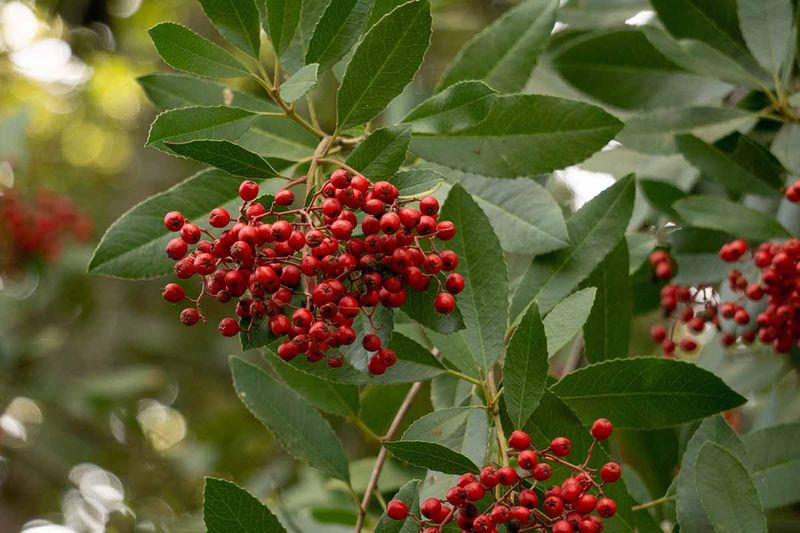
By late fall and into winter, Toyon transforms in a way that few privacy hedges can match.
The small green fruits that developed after the summer flowers slowly ripen into clusters of bright red berries, typically reaching their peak color from November through January.
That timing gives the shrub its common nickname, California Holly.
The red berry clusters can be quite dense on a mature plant, and against the dark green foliage, they create a striking seasonal display that adds genuine warmth to a winter garden.
In California, where many yards look dry and subdued after the summer heat, Toyon’s red berries stand out as a welcome burst of color during the cooler months.
Historically, Toyon berries were so popular as a holiday decoration in early twentieth-century California that harvesting them from wild plants became a problem.
California passed a law in 1909 protecting the plant from commercial cutting, which speaks to just how visually appealing those berry clusters can be.
For homeowners using Toyon as a privacy screen, the winter berry display is a bonus that no wooden fence can offer. Instead of staring at weathered fence boards through a kitchen window in December, a Toyon screen offers red, green, and life.
The berries also persist on the plant for several weeks, extending the color display well into the new year in many California locations.
5. Birds Benefit From The Fruit
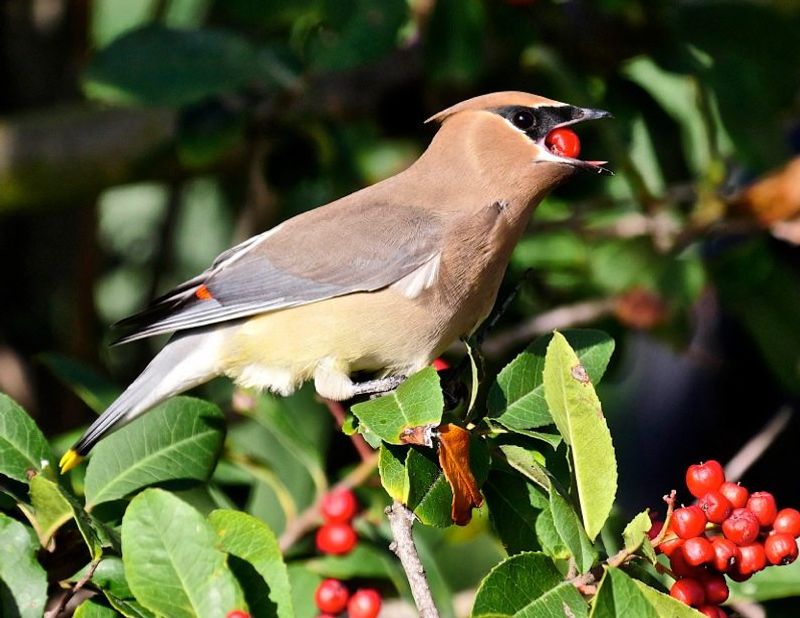
Watch a mature Toyon in winter and you will likely see birds before you see anything else.
The red berries that ripen from late fall through January are a reliable food source for several bird species that move through or overwinter in California, and a well-placed Toyon screen can turn a backyard border into a genuine wildlife corridor.
Cedar waxwings are among the most enthusiastic Toyon visitors, often arriving in flocks that strip a shrub of its berries within a day or two. American robins, hermit thrushes, mockingbirds, and Townsend’s thrushes also visit regularly.
The activity can be lively and entertaining, especially for gardeners who enjoy watching wildlife from a kitchen or living room window.
Beyond the berries, Toyon provides nesting habitat and shelter for birds throughout the year.
The dense branching structure offers good cover from predators, and the layered foliage gives smaller birds places to perch and rest during their daily movements through the garden.
For homeowners who want to support backyard biodiversity, Toyon is one of the more productive native shrubs available. It contributes to the food web in a way that a vinyl fence or a clipped boxwood hedge simply cannot.
Planting it along a property line means the privacy screen is also functioning as a wildlife-friendly edge habitat, which aligns well with the broader movement toward nature-supportive landscaping in California yards.
6. Pruning Helps Shape A Denser Hedge
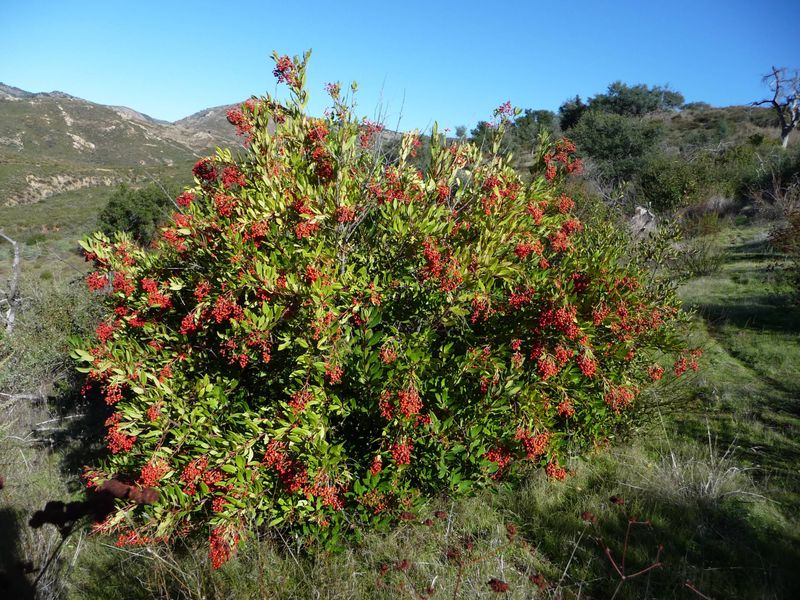
Left completely alone, Toyon grows as an open, somewhat irregular shrub with a natural, rounded silhouette.
That look works beautifully in a native plant garden or a naturalistic yard, but homeowners who want a denser, more defined privacy screen will get better results with some light, regular pruning.
The key is timing. Pruning Toyon after it finishes flowering but before the berries fully develop gives the plant a chance to push new growth that fills in gaps without sacrificing too much of the berry display.
In practice, a light shaping in late summer or early fall tends to work well in many California climates, though local conditions and timing can vary.
Hard pruning, meaning cutting branches back severely, is generally not recommended for Toyon if the goal is maintaining a healthy, attractive screen.
Light tipping, which means removing just the ends of branches to encourage branching, tends to produce a denser canopy over time without stressing the plant.
Repeated light pruning over several years can gradually transform a loose, open shrub into a fuller hedge.
Gardeners new to Toyon sometimes worry that pruning will reduce the berry display. Moderate shaping usually does not eliminate berries entirely, but it may reduce the quantity compared to an unpruned plant.
Finding the right balance between screen density and berry production is part of working with this shrub over time.
Toyon can also be trained against a fence or wall as an espalier-style backing plant, which can help establish a screen in a narrow side yard.
7. Established Plants Need Less Water
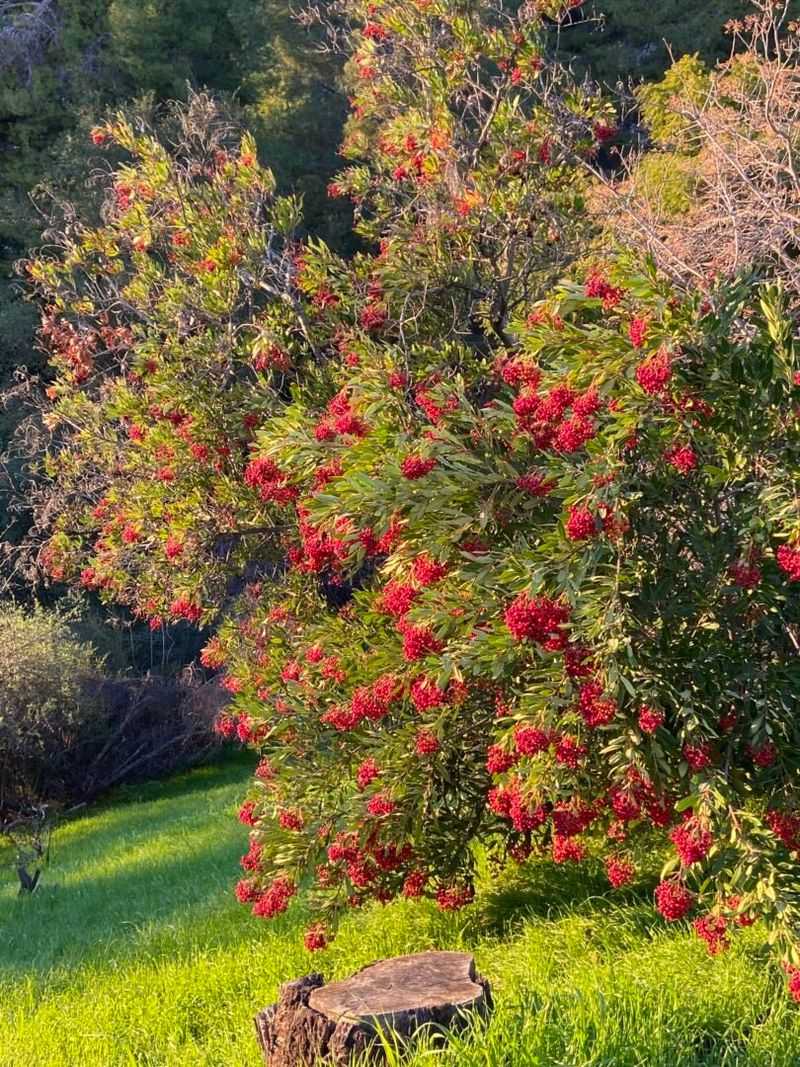
Water-wise landscaping has become a genuine priority across California, and Toyon fits that goal well once it moves past the establishment phase.
A newly planted Toyon needs regular watering through its first one to two summers to develop a root system strong enough to handle California’s dry season on its own.
After that, most established plants can get by with little to no supplemental irrigation in many California climates.
That shift from water-dependent to water-independent is one of Toyon’s most appealing qualities for homeowners who want to reduce outdoor water use without giving up a green, leafy yard.
A Toyon screen that has been in the ground for three or more years often looks its best with only occasional deep watering during extended dry spells, rather than frequent shallow irrigation.
In coastal California, where summer fog and moderate temperatures reduce the stress on plants, established Toyon may need almost no supplemental water at all.
In hotter inland areas, occasional deep watering during the driest months can help the plant maintain its foliage quality and berry production through summer and into fall.
Overwatering is actually a more common concern with established Toyon than underwatering.
Soggy soil or frequent irrigation in summer can lead to root problems, so well-drained soil and restrained watering habits tend to produce healthier plants over the long term.
Matching the irrigation approach to the local California climate and soil type makes a meaningful difference in how well the shrub performs as a privacy screen.
8. Enough Space Keeps Toyon Looking Natural
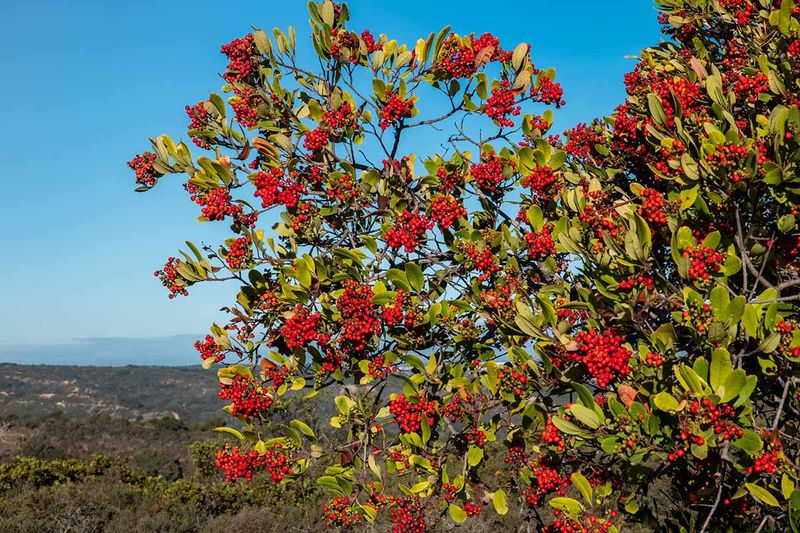
Cramped planting is one of the most common mistakes gardeners make when trying to create a fast privacy screen, and Toyon is a shrub that genuinely benefits from having enough room to grow into its natural form.
A mature Toyon can reach six to fifteen feet tall and spread nearly as wide, so planting it too close to a fence, wall, or pathway can lead to a plant that feels overcrowded and requires constant cutting to stay manageable.
For a privacy screen planting, spacing Toyon shrubs roughly six to ten feet apart allows each plant room to develop a full canopy while still growing close enough that the row eventually closes in and blocks sightlines.
Tighter spacing speeds up the screening effect but may require more pruning to prevent the plants from competing too aggressively with each other.
California yards with deep back borders or wide side yards tend to be the best settings for Toyon screens.
Narrow side yards between houses can work if the space is at least four to five feet wide, but the shrub may need more frequent shaping in tighter spots to keep it from pressing against structures.
Giving Toyon enough room also allows it to maintain the layered, somewhat irregular branching habit that makes it look like a natural part of the California landscape rather than a clipped hedge.
That relaxed, organic quality is part of what makes it a more visually interesting alternative to a standard fence in the first place.