How to Water a Christmas Cactus in a California Home During Dry Winter Weeks
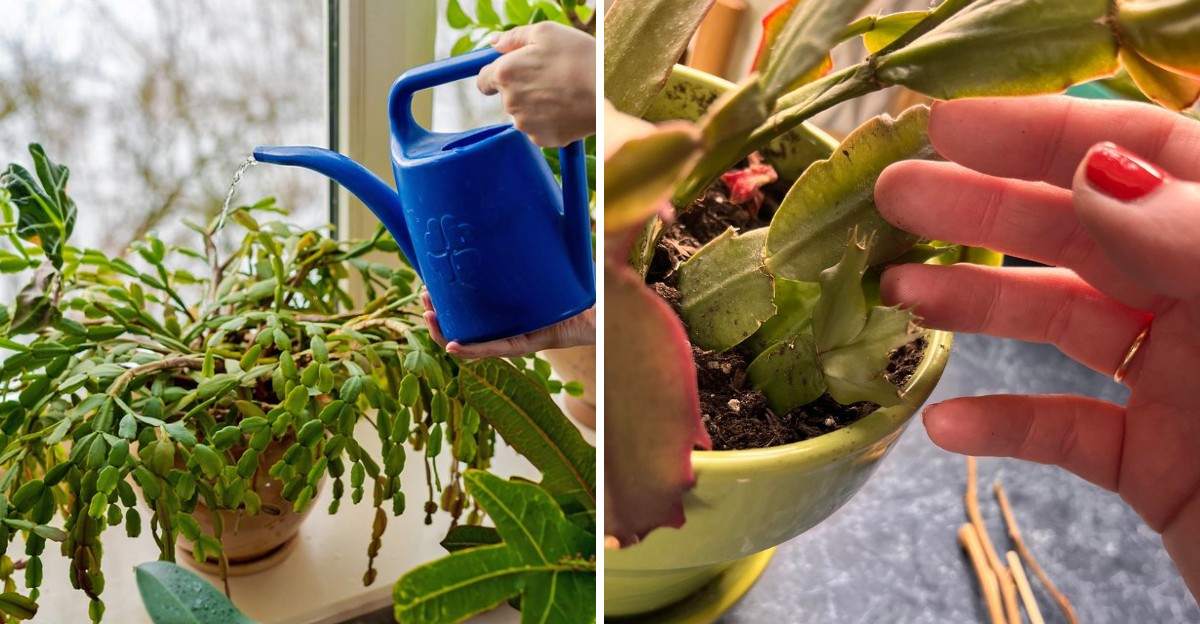
One of America’s favorite holiday houseplants grows wild on tree branches in the misty mountains of southeastern Brazil. Its roots cling to bark and soak up fog, rain, and fallen leaf litter.
Yet the plant still carries the word cactus in its name.
I find that mix-up fascinating, because it explains so many watering mistakes. Some people treat it like a desert plant and let it go bone dry.
Others drown it with holiday love.
Here in California, winter can play a sneaky trick. Santa Ana winds, sunny dry spells, and a humming furnace can pull moisture out of indoor air faster than you’d expect.
So how do you keep a cloud forest native happy when your living room feels more like a desert canyon?
I think the answer is simpler, and a bit more surprising, than most gardeners would guess.
1. That Christmas Cactus Is Secretly a Rainforest Tree Dweller
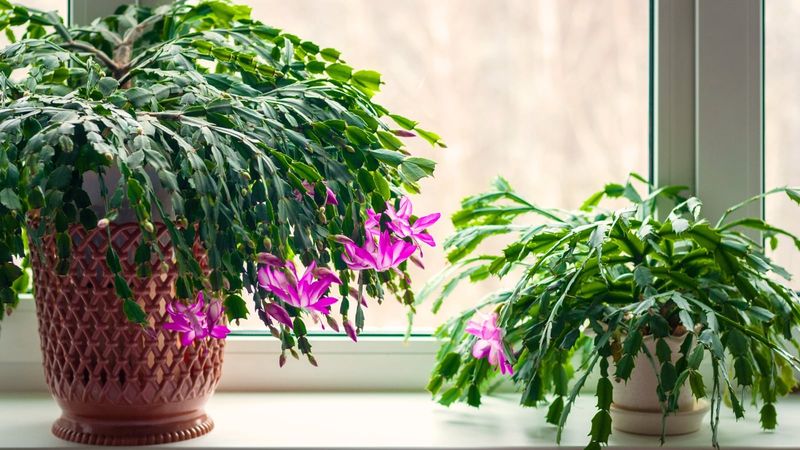
Schlumbergera, the plant we call Christmas cactus, comes from the coastal mountains of southeastern Brazil. There, it grows on tree branches and mossy rocks instead of in sandy ground.
Botanists call plants like this epiphytes.
I love this detail because it changes how you water. Desert cacti store water for months and handle long droughts.
Your holiday plant evolved in a place with frequent fog, rain, and humid air, so it expects steadier moisture.
Its roots are also built differently. In the wild, they wrap around bark and sit in pockets of decaying leaves that drain fast.
That means the roots like a drink often, but they dislike sitting in soggy, airless soil.
So the goal is a balance. You want soil that stays lightly moist, not wet, and not dusty dry for weeks.
Aim for the damp feel of a wrung-out sponge rather than a puddle.
Potting mix matters here too. A blend made for orchids or succulents, mixed with regular potting soil, gives the roots the airy feel they know from tree branches.
Most university extension guides also recommend a pot with drainage holes.
Once you see your plant as a tropical tree hugger, the rest of the watering advice starts to make sense. It wants rhythm and steady attention, not tough love or neglect.
2. The Finger Test Tells You Exactly When to Water Your Christmas Cactus
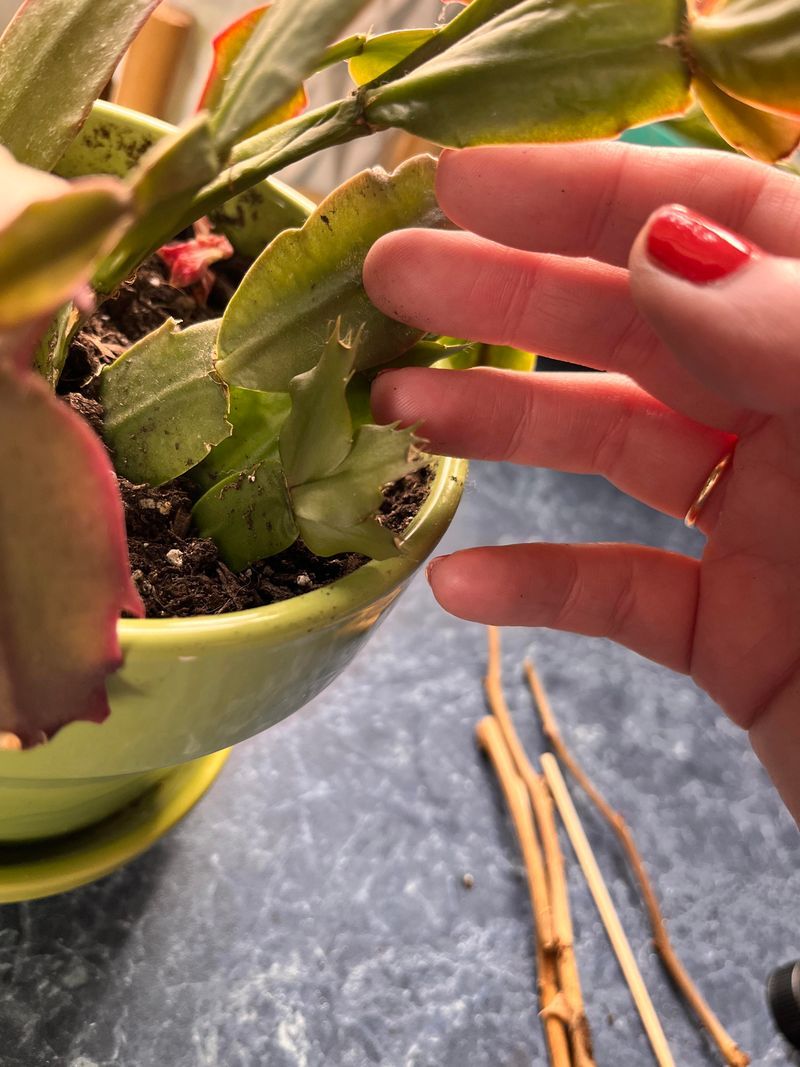
Your index finger is the best moisture meter you own, and it costs nothing. Push it into the soil up to the first knuckle, which is about one inch.
If that layer feels dry, it is time to water.
The University of Minnesota Extension and other experts suggest this same simple check for Christmas cactus. A calendar schedule sounds tidy, but homes differ too much for one rule to fit everyone.
A pot near a sunny window in Riverside dries far faster than one in a cool Eureka hallway.
During dry winter weeks, many indoor plants end up needing water about every one to two weeks. Some need it more often, especially in small clay pots.
Others in large plastic pots may go longer, so check twice a week and let the soil decide.
Timing matters during bloom season as well. Once buds form and flowers open, keep the soil evenly moist so the plant has enough water to support those blossoms.
Letting it swing from soaked to parched is a common reason buds fall off early.
A few extra clues help. A dry pot feels noticeably lighter when you lift it, and the soil surface often turns a paler color.
Over time, you will learn your plant’s habits just by picking it up.
I keep a sticky note by mine during December. It sounds silly, but jotting down watering days shows a pattern fast.
3. Soak the Pot Thoroughly, Then Empty the Saucer
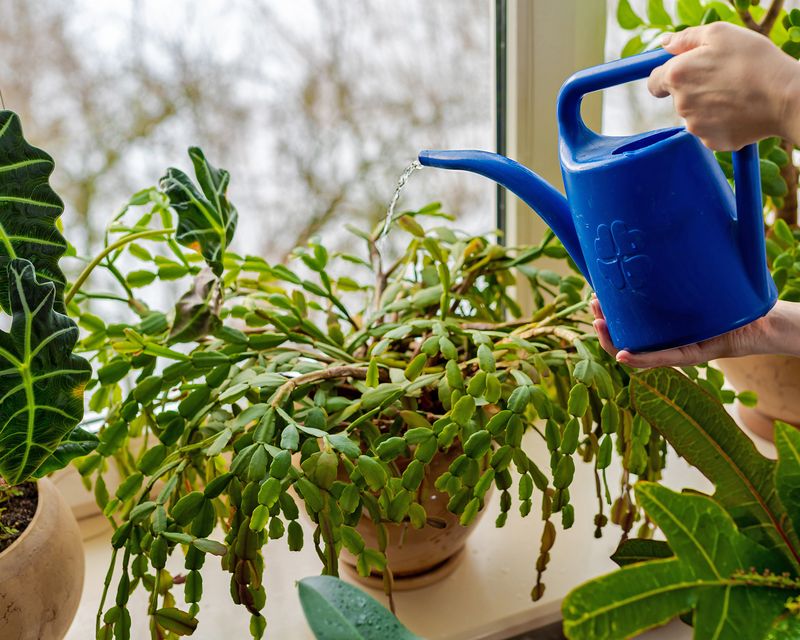
Little sips feel kind, but they often leave the bottom roots thirsty. When it is time to water, give the pot a full, slow soaking.
Pour room-temperature water over the soil until it flows out of the drainage holes.
That deep drink does two jobs. It wets the whole root ball evenly, and it helps flush out minerals that build up from fertilizer and tap water.
A quick splash only dampens the top layer.
Now for the step people skip. Wait about 10 to 15 minutes, then pour out any water left in the saucer or decorative pot cover.
Roots sitting in standing water can start to rot, and root rot is one of the most common problems with this plant.
Those shiny foil wraps from the grocery store deserve special attention. They look festive, but they trap water like a bathtub.
Poke holes in the bottom or slip the plant out of the foil when you water.
Some gardeners like bottom watering instead. You set the pot in a bowl of water for 15 to 20 minutes and let the soil wick moisture upward, then drain it well.
Mix in a top watering now and then to rinse out salts.
Temperature counts too. Very cold water straight from the tap can shock warm roots, so let it sit a bit first.
A gentle, lukewarm soak is the kind of treat this tropical plant enjoys.
4. Dry Furnace Air and Santa Ana Winds Change the Watering Schedule
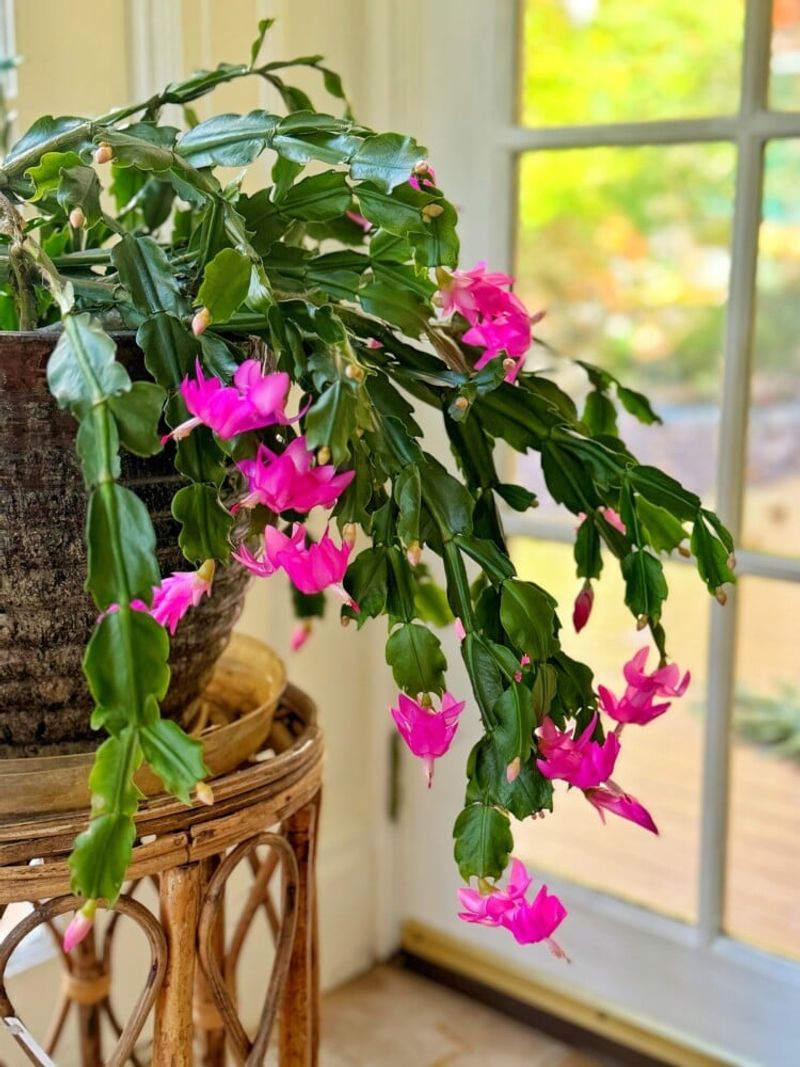
Southern California’s Santa Ana winds often blow from fall into winter, and they can drop outdoor humidity into the single digits. Inland valleys and desert towns feel it most.
Even coastal homes can get a sudden dry spell when those winds arrive.
Inside, a running furnace or wall heater makes things drier still. Warming the air lowers its relative humidity, so it pulls water from soil, leaves, and your skin.
Your Christmas cactus notices too. Its soil dries faster, and the flat segments lose water through their surface more quickly.
During these weeks, the pot that needed water every 10 days may need it every 5 or 6.
So keep an eye on the forecast. When a wind event or long sunny stretch shows up, check the soil a bit more often.
Once cooler, cloudier weather returns, scale back again.
Placement can help a lot. Move the pot away from heating vents, fireplaces, and drafty doors that open to dry outdoor air.
Bright, indirect light near an east window is ideal, without hot afternoon sun beating on the glass.
Northern California homes face a slightly different pattern. Winter rain can keep outdoor air damp, yet indoor heating still dries rooms.
Wherever you live, the room itself matters more than the weather map.
A cheap digital hygrometer, often under ten dollars, shows the real humidity in the room. Many gardeners are surprised to see numbers in the twenties or thirties.
5. Pebble Trays and Grouped Houseplants Add Moisture Around the Segments
A cloud forest plant in a dry living room could use a little help. Christmas cactus does best around 50 to 60 percent humidity, which is well above what many heated homes offer in winter.
Luckily, raising it is easy and cheap.
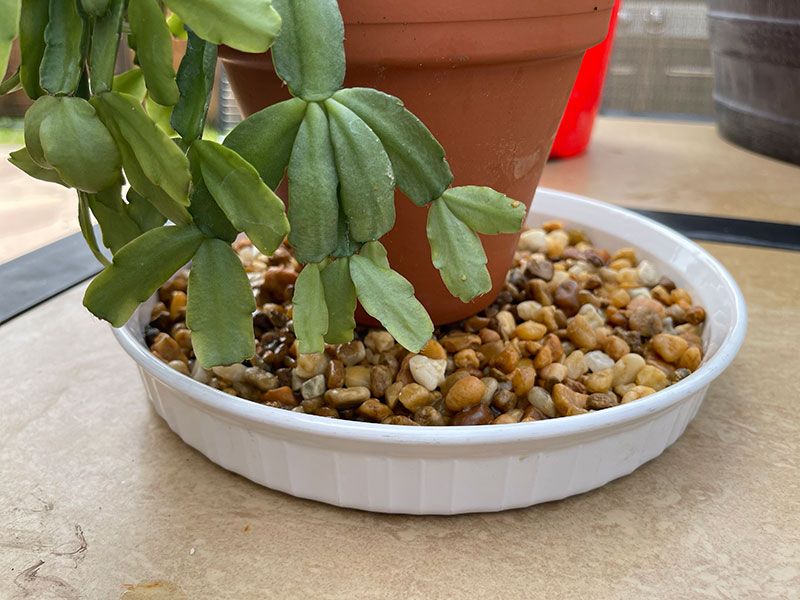
Start with a pebble tray. Fill a shallow tray with gravel or small stones, add water just below the top of the stones, and set the pot on top.
As the water evaporates, it creates a slightly moister pocket of air around the plant.
Keep the pot bottom above the waterline. If the drainage holes sit in water, the soil wicks it up and stays soggy.
Refill the tray every few days during dry spells.
Grouping plants is another friendly trick. Houseplants release water vapor through their leaves, so a cluster of pothos, ferns, and your cactus shares a little humidity.
It also makes a lovely holiday display.
Misting is popular, but I treat it as a bonus rather than a fix. The effect fades within minutes, and frequent misting in a cool room can encourage fungal spots.
A small cool-mist humidifier works much better for steady results.
One more thing to remember. Extra humidity does not replace watering the soil, since roots still need their drink.
Humid air works like a cozy blanket, helping the plant hold on to the water you give it.
6. Shriveled Segments and Mushy Stems Send Different Messages
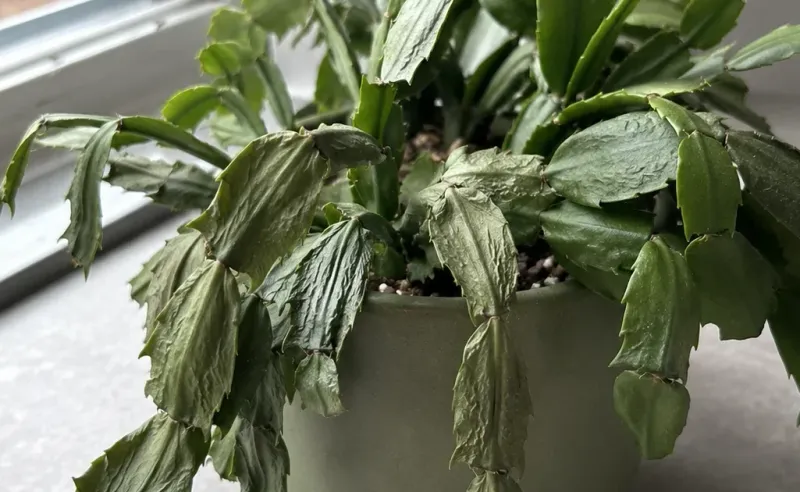
Plants cannot talk, but this one gives pretty clear hints. Thin, wrinkled, or limp segments usually mean the plant is thirsty.
Healthy segments feel firm and plump, a bit like a fresh green bean.
Too much water looks different, though it can be confusing at first. Overwatered plants may also go limp, because rotting roots cannot carry water up to the stems.
The key difference is softness at the base, mushy or darkened stems, and soil that stays wet for days.
Check the soil before deciding. If the plant looks droopy and the soil is bone dry, give it a good soak and watch the segments firm up over a day or two.
If it droops in wet soil, hold off on water.
Bud drop is the classic holiday heartbreak. Sudden swings in moisture, temperature, or light can make buds fall.
Moving the plant around a lot or letting it dry out hard during bloom often causes it.
Reddish or purple tints on the segments can show up too. That often points to stress from too much sun, cold, or roots that were kept too dry.
It usually fades once care steadies out.
For serious rot, act fast. Slide the plant from the pot, trim away brown, mushy roots, and repot in fresh, well-draining mix.
Healthy segments can also be rooted as cuttings, which is a nice backup plan.
7. California Tap Water Can Leave Crusty Salt on the Soil
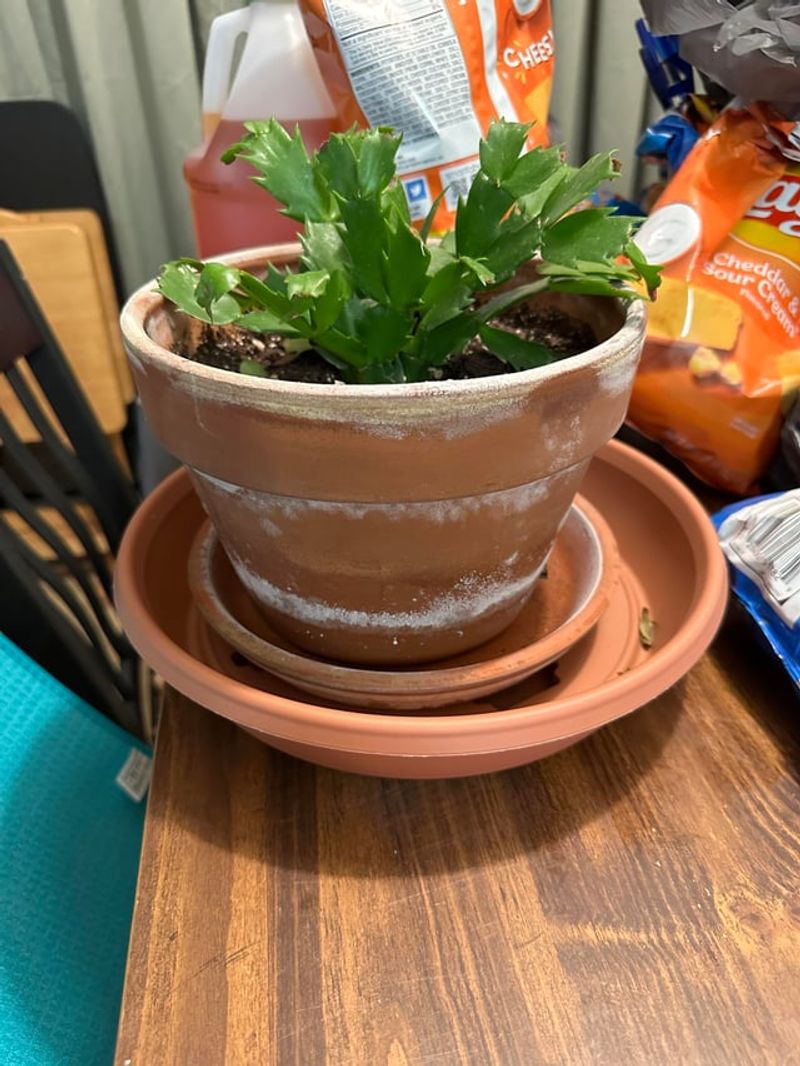
Much of California gets hard tap water, especially in the southern part of the state and the Central Valley. That water carries calcium, magnesium, and other dissolved minerals.
Over time, they can collect in potting soil and show up as a white crust on the surface or pot rim.
Christmas cactus prefers slightly acidic soil, and heavy mineral buildup is not its favorite thing. Salts in the soil can make it harder for roots to take up water.
You might see brown segment tips or slow growth as a result.
A few easy habits help. Water deeply enough that some drains out each time, which carries salts away.
Every month or two, flush the pot by running plain water through it for a minute or so.
Filtered water or collected rainwater makes a nice choice if you have it. Many homes also use water softeners, and you may want to skip that water for plants.
Softened water often contains sodium, which builds up in soil.
Letting tap water sit overnight lets chlorine escape and brings it to room temperature. It does not remove minerals or chloramine, which many cities now use, but most plants handle normal levels fine.
Still, it is a gentle habit that does no harm.
Repotting every few years with fresh mix also clears out old salts. Christmas cactus likes being a bit snug, so go up just one pot size.
Spring, after flowering, is the best time.
8. Ease Off the Watering Can After the Last Christmas Cactus Flowers Fade
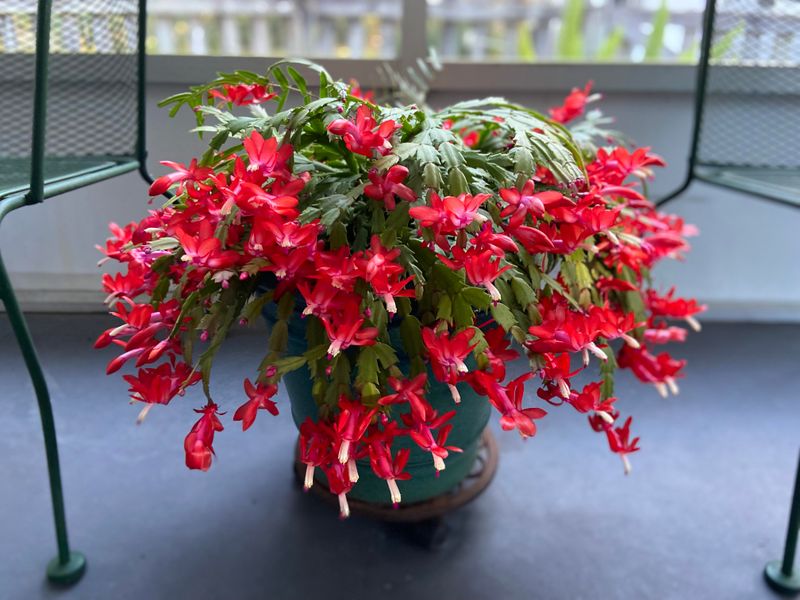
Once the last pink, red, or white flowers drop, your plant wants a short rest. Many experts suggest cutting back on water for about six weeks after blooming.
Let the top inch or two of soil dry a little more than usual between drinks.
Resting does not mean ignoring it. Keep it in bright, indirect light and water whenever the soil feels dry deeper down.
A plant that looks a bit tired after its big show is normal, so skip fertilizer during this quiet stretch.
Spring brings new growth, and that is when regular watering and a balanced houseplant fertilizer return. Fresh segments forming at the tips are your cue.
Summer care looks much like any tropical houseplant.
Planning for next year starts in early fall. Buds form when nights are long and cool, around 12 to 14 hours of darkness or temperatures near 50 to 55 degrees Fahrenheit.
Water a little less during this time, but do not let the segments shrivel.
The biggest lesson is simple. Watch the soil and the segments, not the calendar, and adjust when dry winds or the heater kick in.
Your plant will tell you what it needs if you check in often.
Plenty of families pass these plants down for decades, and some are older than the people caring for them. With steady, thoughtful watering, yours could bloom for many holiday seasons to come.