How California Gardeners Get Christmas Cactus To Bloom Despite Dry, Warm Indoor Air
Greek words meaning water vessel gave one beloved summer shrub its name, and it lives up to the title. Even while it rests through winter, its roots and buds still need a little moisture between storms.
Honestly, its sense of timing blows me away. Many popular types tuck next summer’s flowers into plump buds at the stem tips by fall.
Those buds ride out the cool months on last year’s stems, waiting for spring. One eager snip can quietly erase the show.
My clippers stay on a short leash this month. The shrub looks a bit like a scruffy teddy bear right now, papery old flower heads and all. You might be staring at a shaggy one too, pruners twitching.
Some stems look plain and boring, with no old blooms at all. Is the plainest stem in your yard secretly the most valuable one?
That Holiday Cactus On Your Windowsill Has A Rainforest Secret
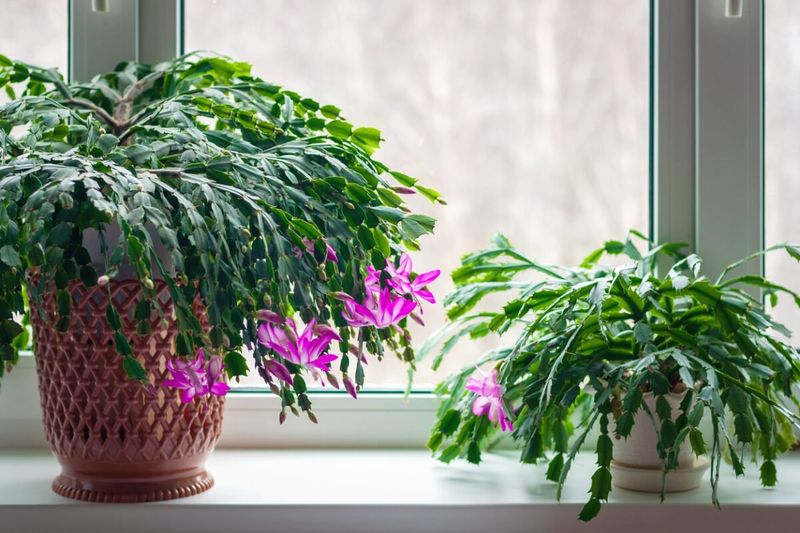
Here is a fun twist on a familiar plant. Christmas cactus, along with its look-alike cousin the Thanksgiving cactus, belongs to the genus Schlumbergera, and its wild relatives grow in the coastal mountain forests of southeastern Brazil.
Out there, these plants live as epiphytes. That means they perch on tree branches and mossy rocks instead of sitting in desert sand. They catch moisture from fog and rain, and they feed on bits of leaf litter collected in the bark.
So a sun-baked spot and bone-dry soil are not what it craves. Treat it like a desert cactus, and it often sulks for years.
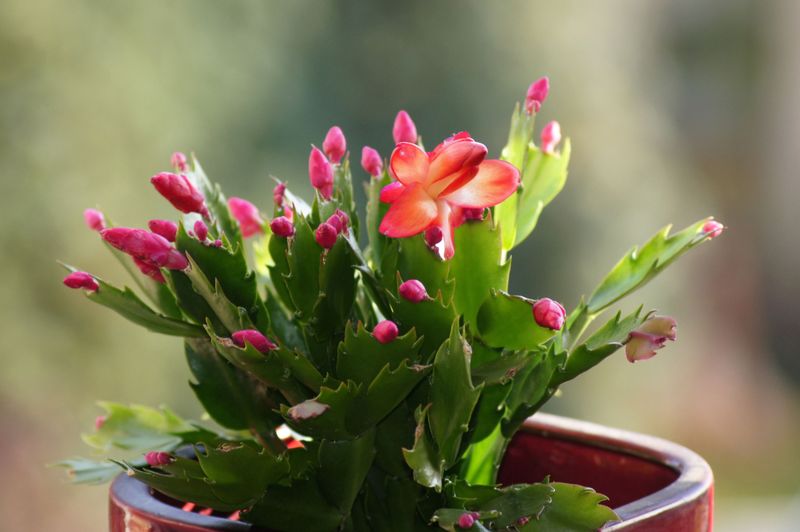
Many plants sold as Christmas cactus are actually Thanksgiving cactus, Schlumbergera truncata. You can tell by the stem edges. Pointy, claw-like teeth mean Thanksgiving type, while smooth, rounded scallops point to the true Christmas cactus, Schlumbergera x buckleyi.
The Thanksgiving kind usually blooms a few weeks earlier, often in November. Luckily, both respond to the same flowering triggers, so the tips ahead work for either one.
Once you see your plant as a cool-forest native, its needs start to make sense. Every bloom trick in this guide flows from that one idea.
Long Dark Nights Flip The Christmas Cactus Bloom Switch
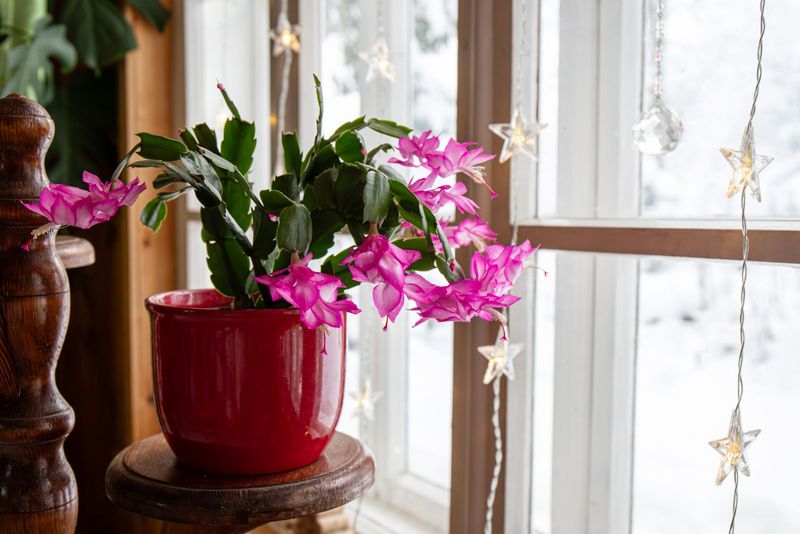
Flower buds on this plant form in response to two things. Long nights and cool temperatures are the triggers, and you can control both at home.
Starting in mid-September or early October, give your plant about 12 to 14 hours of uninterrupted darkness every night. Keep this going for roughly six weeks, or until you see tiny buds at the stem tips.
Indoor lighting is the sneaky problem. A table lamp, a TV glow, or a bright streetlight through the window can confuse the plant and stall bud formation.
An unused bedroom works well. So does a closet, as long as you move the plant back into bright indirect light during the day. Some folks simply drape a dark cloth over the pot each evening, which feels a bit like tucking in a pet bird.
Cool nights matter just as much. University extension guides note that nights around 50 to 55 degrees Fahrenheit can set buds even without strict darkness.
When nights stay above roughly 65 to 70 degrees, blooms become much less likely. That is why a warm, well-lit California living room so often leaves this plant all leaf and no flower.
A Cool Porch Or Garage Corner Can Do Wonders For Bud Set
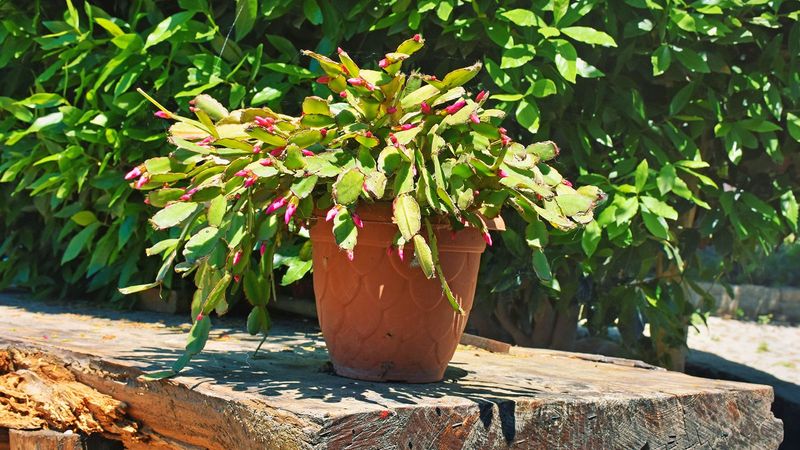
Ever wonder why grandma’s plant bloomed like crazy on the back porch? Cool autumn air was doing most of the work.
In much of California, fall nights naturally drop into the 50s, especially inland and in foothill areas. You can use that for free.
A covered patio, a shaded porch, or a bright, unheated sunroom can give your plant the chill it wants. Just keep it out of direct afternoon sun, which can scorch the stems.
Watch the forecast carefully. Bring the plant indoors before nights fall much below 50 degrees, and get it inside well ahead of any frost. In mountain and high-desert towns, that can mean early October.
Coastal gardeners have a different challenge. Mild nights near the ocean may hover around 55 to 60 degrees, which helps but sometimes needs a little extra darkness to finish the job.
A garage with a window can also work, as long as it stays above about 45 degrees and gets daytime light. Avoid spots near car exhaust or stored chemicals.
Once buds reach about the size of a grain of rice, find the plant a permanent indoor home for the show.
A Pebble Tray Fights Back Against Dry Indoor Air
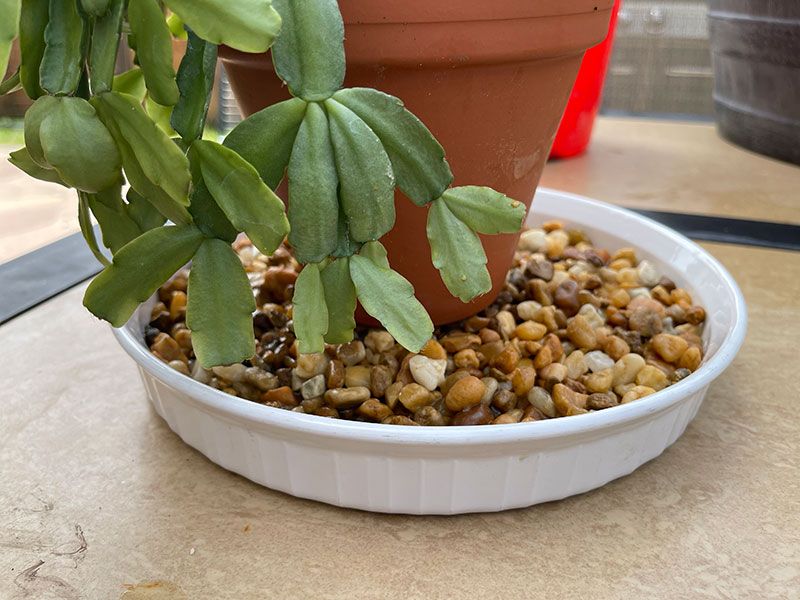
Dry winter air feels rough on our skin, and it bothers this cloud forest plant too. Furnaces and wall heaters can push indoor humidity well below 30 percent, especially in inland California homes.
Many growers aim for around 50 percent humidity. You do not need a greenhouse to get closer to that number.
A pebble tray is the easiest trick. Fill a shallow saucer with gravel, add water just below the top of the stones, and set the pot on top so the roots stay out of standing water.
As water evaporates, it lifts the moisture around the plant. Grouping several houseplants together adds even more of that cozy, damp pocket of air.
A small cool-mist humidifier nearby works best of all if your home is very dry. A cheap hygrometer helps you see what is really happening.
Misting is popular, though it raises humidity for only a few minutes. If you enjoy it, mist in the morning so the stems dry by evening.
Shriveled, limp segments can signal dry air, but they also show up with root trouble. Check the soil before blaming humidity alone.
Keep That Christmas Cactus Far From Heater Vents And Fireplaces
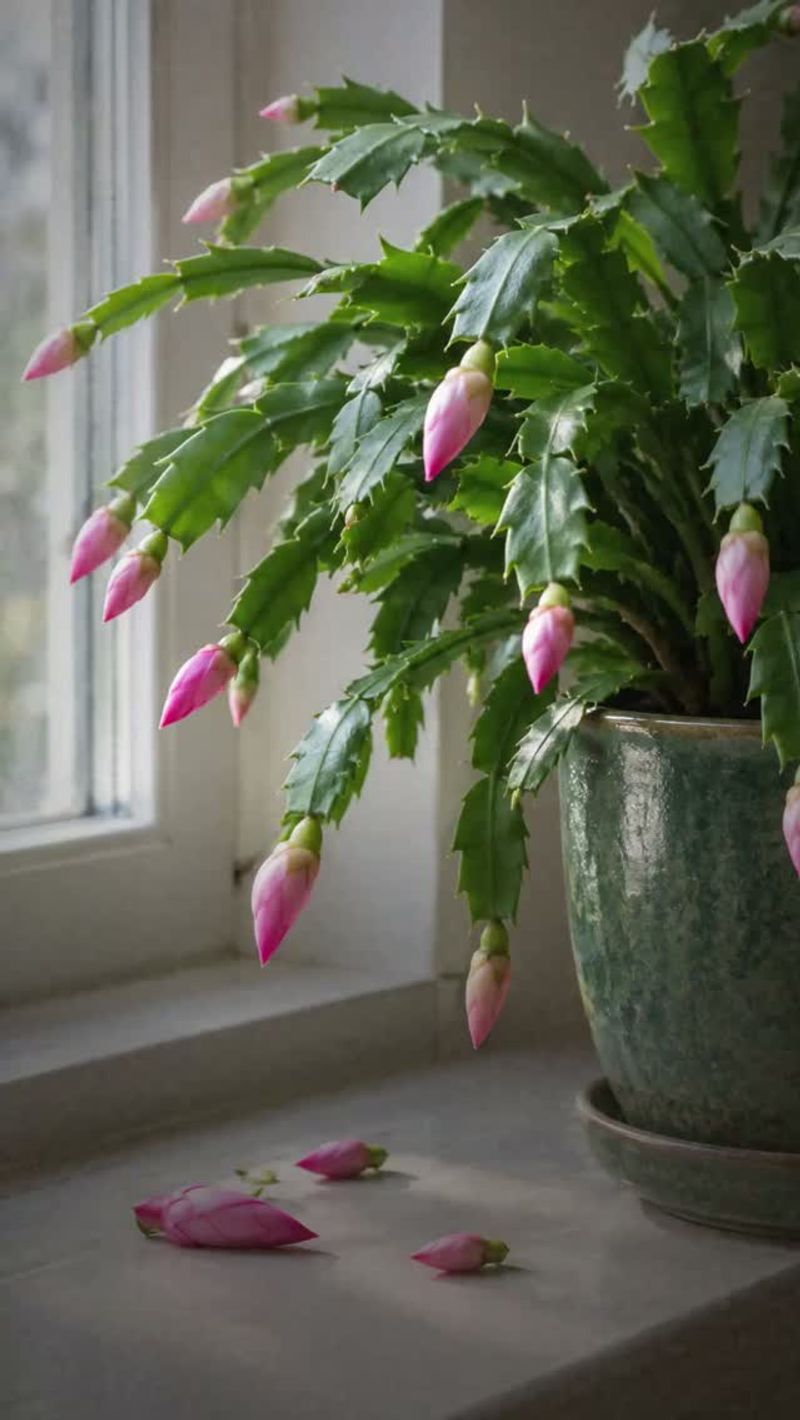
Few things sting like watching plump buds hit the tabletop one by one. Bud drop is a classic Christmas cactus complaint, and heat sources are frequent culprits.
Warm, dry air blasting from a floor vent stresses developing buds fast. A sunny spot beside the fireplace or on top of the TV can cause the same trouble.
Cold drafts are no friend either. A plant near a front door that swings open on chilly evenings feels sudden temperature swings that can trigger bud loss.
Aim for steady conditions once buds appear. Daytime temperatures in the 60s to low 70s and slightly cooler nights tend to keep flowers coming.
Resist the urge to move or rotate the plant much at this stage. Buds orient toward the light, and big location changes can upset them.
A spot near an east-facing window, or a few feet back from a south or west window, gives bright indirect light without baking the stems.
Feel the air with your hand near the plant. If you notice warm air from a vent or a draft from a window, nudge the pot somewhere calmer before buds form.
Smart Watering Keeps Christmas Cactus Roots Happy And Buds Plump
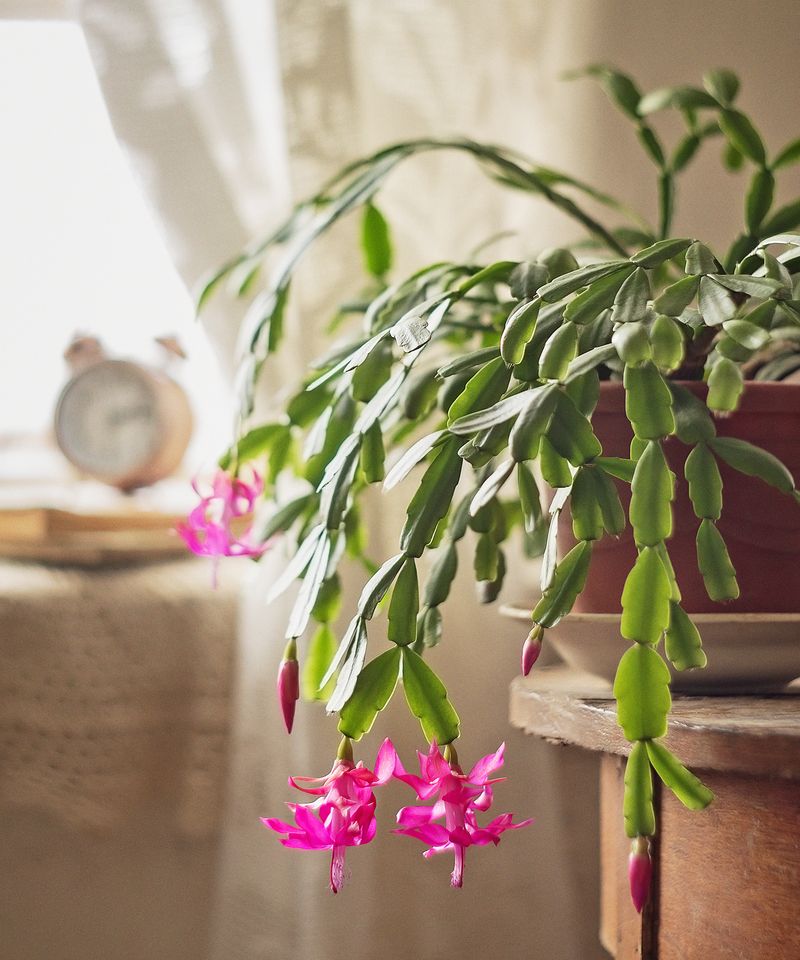
Watering this plant is a bit like making toast. Too little and nothing happens, too much and you have a mess.
During spring and summer growth, water thoroughly when the top inch of soil feels dry. Let extra water drain out, and empty the saucer so roots do not sit wet.
In early fall, ease off a little. Letting the soil dry slightly more between drinks helps the plant shift from growing stems to setting buds.
Once buds show, go back to steadier watering. Soil that swings from soggy to bone dry can cause buds to drop.
Warm, dry homes may need water more often than you expect. Still, test the soil with your finger first instead of watering on a strict calendar.
Root rot is a common problem with this plant. A loose, fast-draining mix, such as potting soil blended with perlite or orchid bark, matches its tree-dwelling roots.
A pot with drainage holes is a must. Pretty pots without holes can trap water around the roots and quietly cause rot.
Room-temperature water is gentler than cold tap water, especially during bloom season.
Cut The Fertilizer Before Those Flower Buds Form
Plant food feels like a kindness, yet timing changes everything with this one. Feeding at the wrong moment can push leafy growth instead of flowers.
From spring through summer, a balanced houseplant fertilizer at half strength about once a month supports strong new segments. Healthy stems give you more tips, and more tips mean more places for buds.
Around late summer or early fall, stop feeding. Pausing fertilizer as nights lengthen helps the plant focus on bud formation.
Hold off through the blooming season too. You can start again in spring when fresh green growth appears.
Some growers like an occasional dose of Epsom salt for magnesium. Research support for this is limited, so a quality balanced fertilizer is usually plenty.
Watch for crusty white buildup on the soil or pot rim. That often means salts from fertilizer and hard water, which is common across much of California.
Flushing the pot with plain water a few times a year helps clear those salts. Pour slowly until water runs freely out the bottom, then let it drain well.
Less really can mean more blossoms here.