How To Wrap Boxwoods And Evergreens Before Winter Burn Sets In In Pennsylvania
The brown scorch on your shrubs in March usually started weeks earlier, on a bright and frozen February afternoon. Leaves kept losing water to sun and wind, while roots sat locked in frozen soil far below.
Pennsylvania winters love this sneaky trick, especially when snow reflects extra sunlight back onto tender green foliage.
Penn State Extension notes the damage often appears on the south and west sides of plants first.
I skipped fall prep one year, and my front walk hedge looked like toasted cereal by early April. You might notice the same patchy bronze color on your own hedges after a windy, sunny stretch.
A little planning in late fall gave my shrubs a much better chance at greeting spring looking fresh.
Which simple tricks actually work in Pennsylvania yards, and which ones just look nice on social media?
1. Deep Watering Your Evergreens Before The Ground Freezes
I water my yews on Thanksgiving weekend, and my family thinks I have finally lost my mind. Those hoses come out for a reason, because evergreens keep using water steadily all winter long.
Unlike maples, boxwoods and pines hold their leaves, so they lose moisture on every sunny or breezy day. Once the soil freezes, roots cannot replace that water, and the foliage starts to brown and curl.
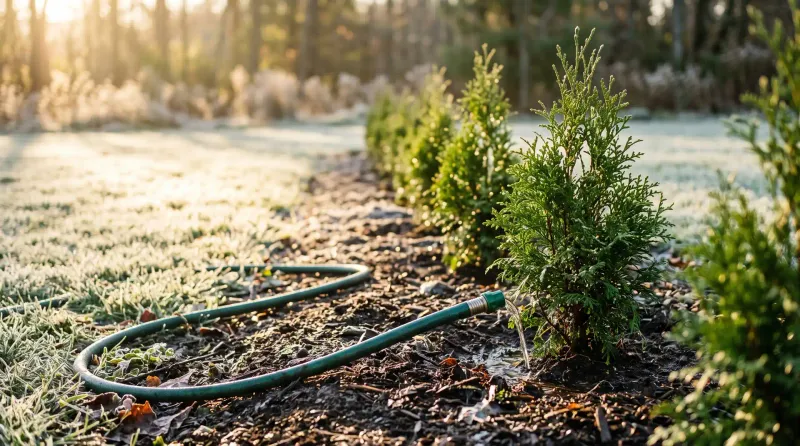
Penn State Extension recommends watering evergreens thoroughly through autumn until the ground freezes solid for the season. A slow soak that reaches about a foot deep does far more good than a quick sprinkle.
I like laying a soaker hose around the drip line and letting it run for an hour or two. Afterward, push a screwdriver or trowel into the soil to see how far the moisture traveled.
Newly planted shrubs need the most attention, since their small root balls dry out much faster than older ones. Anything planted within the last year or two deserves an extra drink every week of a dry fall.
Winter thaws give you another chance, so watch for mild days when the air climbs above 40 degrees. If the top few inches of soil feel dry and unfrozen, give your plants a slow, deep drink.
Water early in the day so the moisture soaks in before temperatures drop again at night. Then drain and store your hose, because a split hose in spring is its own kind of heartbreak.
2. Spreading Shredded Bark Mulch Around Boxwood Roots
Mulch is basically a cozy winter blanket for roots, and boxwoods happen to have very shallow ones. Their fine feeder roots sit close to the surface, where cold snaps and dry spells hit first.
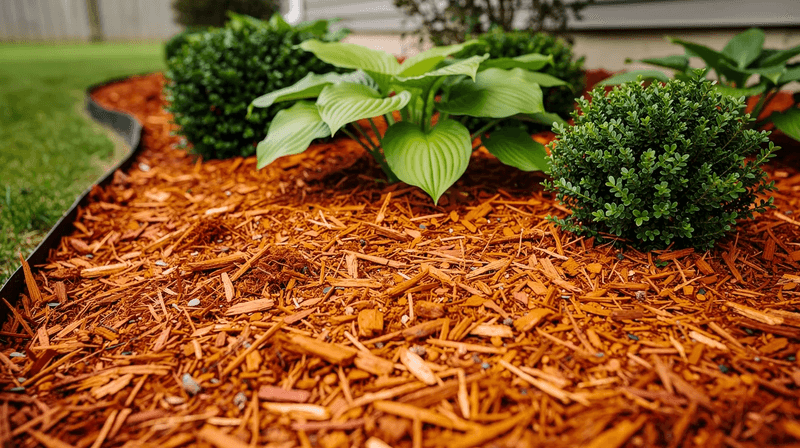
A layer of shredded bark or pine needles slows down moisture loss from the soil below. It also keeps ground temperatures steadier, so roots face fewer wild swings between hard freezing and sudden thawing.
Penn State and most other extension services suggest a layer about two to three inches deep around shrubs. More is not better here, since thick piles can hold too much water and invite hungry rodents.
I learned that lesson after voles tunneled happily through a giant mulch mountain around my favorite holly. They chewed the bark all winter, and I found the damage only when the snow finally melted.
Keep the mulch pulled back a few inches from the main stems, like a donut instead of a volcano. That small gap lets bark stay dry and gives fewer hiding spots to hungry little critters.
Spread the mulch wide, ideally out to the drip line, because roots reach farther than most people expect. Timing matters too, and late fall after a good watering is a smart window for the job.
Fallen leaves from your own yard work nicely once shredded, and they cost you nothing at all. Run them over with the mower a couple of times so they do not mat into soggy sheets.
3. Building A Burlap Windbreak On Wooden Stakes
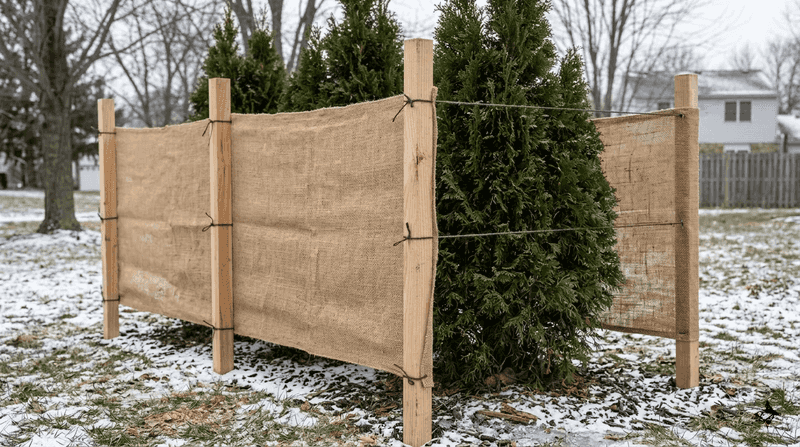
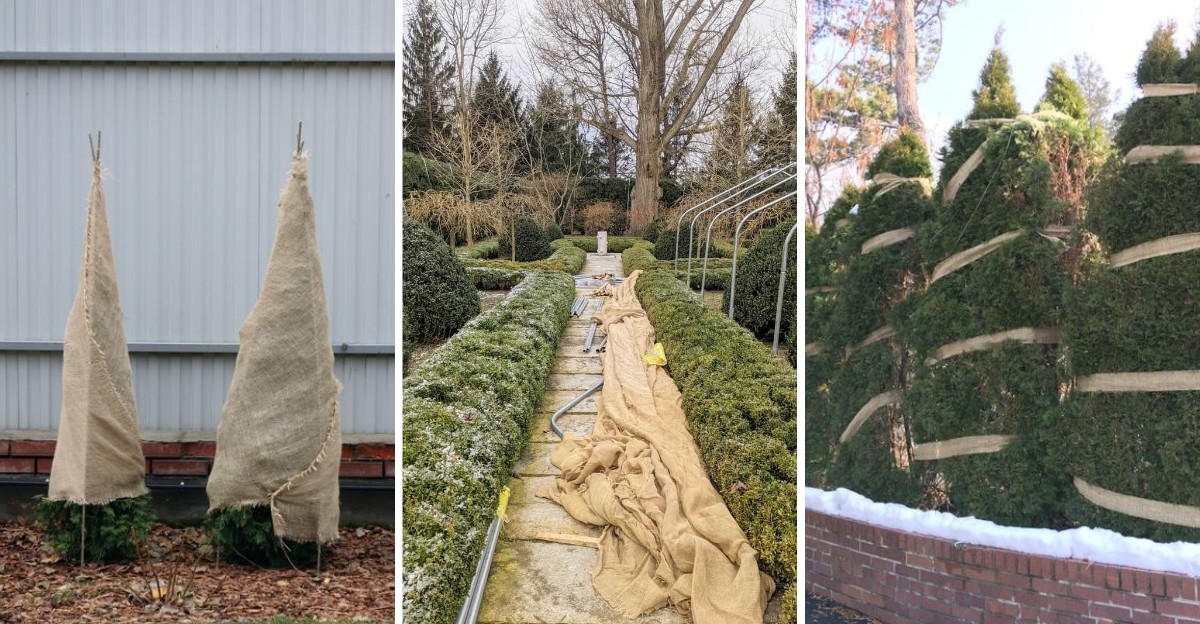
Winter wind is sneakier than cold, because it pulls moisture from leaves faster than roots can refill them. A simple burlap screen breaks that wind, and it looks surprisingly charming once you get used to it.
In much of Pennsylvania, the harshest winter winds tend to blow from the northwest and the west. Stand in your yard on a blustery day and notice which side of your shrubs takes the hit.
Pound sturdy wooden stakes into the ground before it freezes, setting them a foot or so from the plant. Then staple or tie burlap to the stakes, stretching it tight so it does not flap around.
Leave space between the fabric and the foliage, because air still needs to move freely around the branches. Burlap that rubs against needles all winter can scuff them and trap damp patches against the leaves.
I prefer natural burlap over plastic sheeting, since plastic holds heat and can actually cook foliage on sunny days. Burlap breathes and lets light filter through, which keeps the plant from sitting inside a sweaty bubble.
Screens help most for plants beside open lawns or tight corners where wind funnels between houses. A shrub tucked against a sheltered wall may need nothing more than a good fall watering.
Take the screen down in early spring once harsh winds settle and new growth starts to wake up. Roll up the burlap and store it dry, and it should serve you for another winter or two.
4. Loosely Wrapping Small Shrubs In Burlap
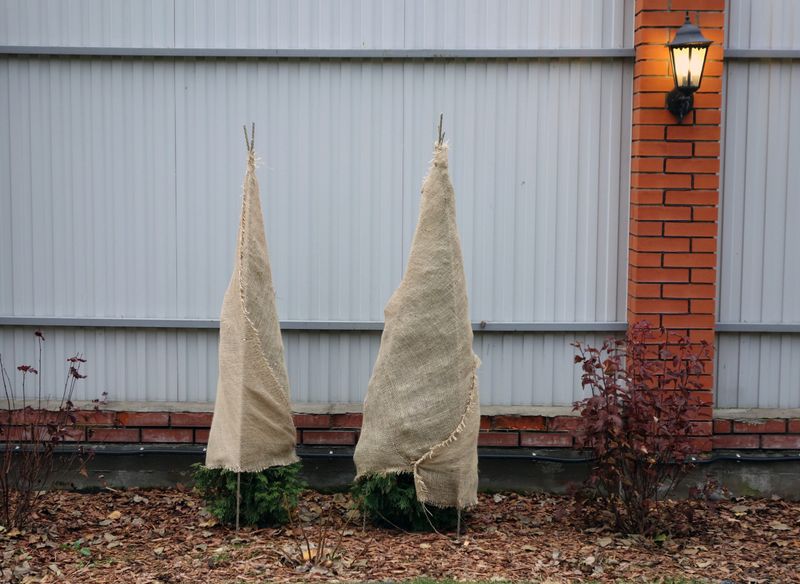
Wrapping a small shrub in burlap feels a little like tucking a kid into bed on a snowy night. I find it oddly relaxing, and my young boxwoods look far better each spring for the effort.
Full wrapping works best for small or newly planted evergreens sitting in exposed spots with lots of winter sun. It blocks drying wind and shades the foliage, which reduces the bright glare that bounces off fresh snow.
Start at the base and spiral the burlap upward, overlapping each turn by a few inches as you go. Keep it loose enough that you can slide a hand inside, since snug wraps can trap moisture.
Before wrapping, gently guide the branches upward so they sit closer to the center of the plant. Branches folded upward handle heavy wet snow much better than branches pushed down or bent sideways.
Many gardeners leave the very top slightly open, so a bit of light and air can reach inside. Secure the wrap with soft twine rather than wire, which can cut into bark as stems sway.
Skip the plastic tarps and garbage bags here, because they hold heat and moisture against the needles. Natural burlap breathes, and it also biodegrades if a loose scrap blows off into the garden bed.
Unwrap in early spring, ideally on a cloudy day, so the foliage can adjust to sunlight slowly. Pulling the wrap off during a bright warm spell can shock leaves that spent months in the shade.
5. Framing A Burlap Teepee Around Tender Evergreens
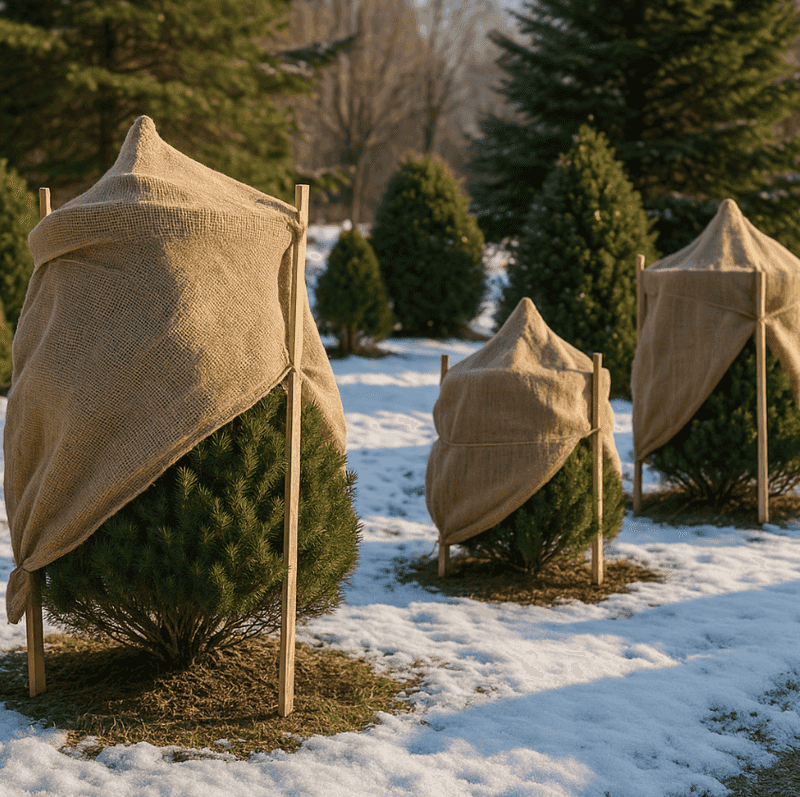
My yard looks like a tiny campground every December, with little burlap teepees standing guard over the shrubs. Passing drivers slow down to stare, but those funny shelters do a surprisingly good job all winter.
A teepee frame starts with three or four sturdy stakes pushed into the soil around your plant. Lean the tops together and tie them, so the frame stands a few inches above the foliage.
Wrap or staple burlap around the outside of the frame, leaving the very top open for airflow. Some gardeners cover only the windy and sunny sides, which still gives plenty of protection in milder spots.
The frame carries the weight of snow and ice instead of the branches, which is a huge bonus. Shrubs near roof edges benefit the most, since sliding snow can crush an unprotected plant in seconds.
For foundation plantings, a simple A-frame of boards over the shrub works on the same idea. Snow slides off the slanted roof, and your boxwood stays upright instead of splitting open down the middle.
Build the frames in late fall while the ground is still soft enough to drive stakes easily. Trying to hammer wood into frozen Pennsylvania clay in January is a lesson I learned the hard way.
Bamboo garden stakes are cheap and light, though thicker wooden stakes handle heavy snow loads much better. Label each frame piece in spring, and next fall you can set them up in minutes.
6. Spraying Anti-Desiccant On Broadleaf Evergreen Leaves
Spraying a clear coating on leaves sounds like science fiction, yet garden centers sell it by the gallon each fall. These products, called anti-desiccants or anti-transpirants, form a thin waxy film that slows water loss from foliage.
I will be honest, because research results on these sprays are mixed and somewhat debated among experts. Some studies show modest benefits, while others found the film wears off before the worst late winter weather.
Broadleaf evergreens such as boxwoods and hollies tend to respond better than most needled conifers do. Their wide leaves lose a lot of water, so even a small reduction can make a difference.
Apply the spray on a calm, dry day when temperatures sit above 40 degrees and stay there for hours. The coating needs time to dry before freezing, or it may not stick to the leaves properly.
Most labels suggest spraying in late fall after plants go dormant, then again during a mild midwinter spell. Spraying too early can interfere with the natural hardening process that helps plants handle the cold.
Skip blue-needled plants like Colorado blue spruce, since the spray can dull their pretty silvery coating. Read the label carefully, because some products list specific plants that should not be treated at all.
I treat these sprays as a backup plan rather than the main event for winter protection. Deep fall watering and smart placement still do the heavy lifting, and the spray simply adds extra insurance.
7. Tying Up Arborvitae And Boxwood Branches With Twine
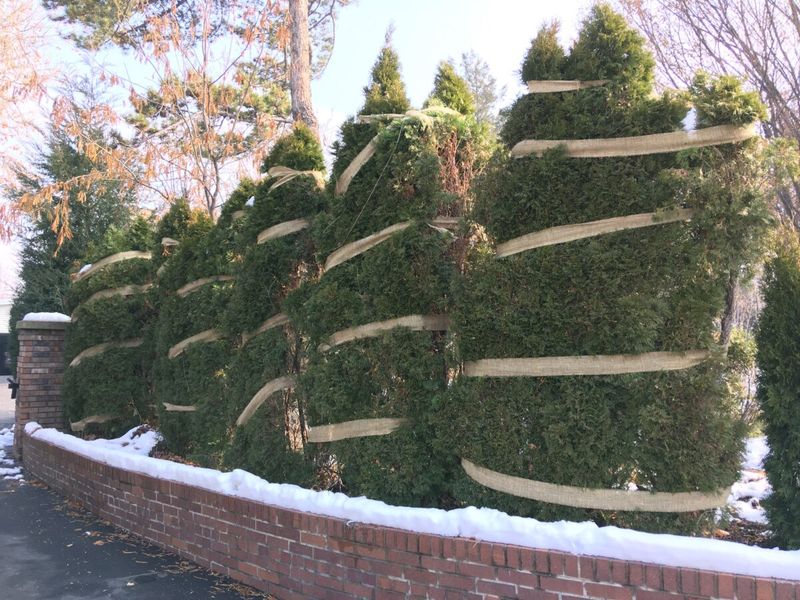
One heavy March snowstorm can turn a perfect upright arborvitae into something that resembles a cracked open banana. Wet snow piles inside the branches, and the weight pushes them outward until they splay or snap.
Tying the branches together before winter gives the plant a narrow shape that sheds snow much more easily. Multi-stemmed shrubs like upright arborvitae and larger boxwoods benefit the most from this simple support trick.
Start at the bottom, tying soft twine or strips of old fabric to a sturdy lower branch. Spiral upward around the plant, snugging the branches gently inward without squeezing them into a tight bundle.
Garden centers sell stretchy tree tape that grips without biting into bark, and I love it for this job. Old pantyhose work too, and they stretch nicely as branches shift around in the winter wind.
Avoid thin wire or fishing line, because both can cut into stems as the plant sways. Damaged bark invites decay, and you might not notice the problem until branches start to brown next summer.
Between storms, use a broom to gently push snow upward and off the branches instead of knocking downward. Leave ice alone, though, because frozen branches are brittle and can break if you try to clear them.
Remove the ties in spring once heavy snow is unlikely, which is often by early April in much of Pennsylvania. Forgotten ties can girdle growing stems, so set a phone reminder now and thank yourself later.
8. Choosing A Sheltered Planting Spot For New Evergreens
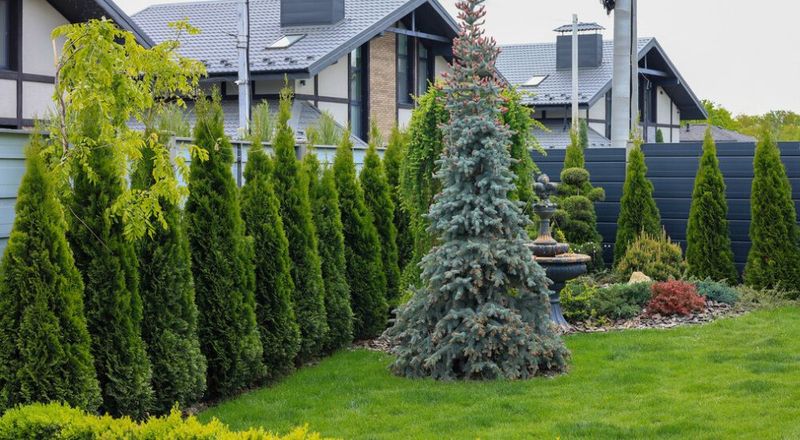
The easiest winter wrap is the one you skip, because the shrub already sits in a sheltered spot. After years of hauling burlap around, I now plan for winter weather before the shovel hits the dirt.
South and west exposures get the strongest winter sun, which warms foliage while roots stay frozen below. Spots open to northwest winds add drying air on top of that, creating a tough combination for evergreens.
Eastern exposures often work beautifully, since plants get gentle morning sun and afternoon shade during the cold months. Boxwoods especially appreciate that setup, and many experts suggest it for gardens with harsh winter conditions.
Fences and taller shrubs can act as natural windbreaks when they stand on the windward side of a bed. Even a row of native American holly or white pine can soften gusts for smaller plants nearby.
Pay attention to snow reflection too, since a bright white lawn can bounce extra sunlight onto low shrubs. Light-colored walls and pavement do something similar, so plant a few feet away from them when possible.
Road salt is another sneaky problem along driveways and sidewalks, since spray and runoff can brown nearby foliage. Keep sensitive boxwoods and white pines back from the curb, and choose salt-tolerant plants for those edges instead.
Pennsylvania spans roughly USDA zones 5 through 7, so pick evergreens rated comfortably for your own local zone. A hardy plant in the right spot handles winter far better than a fussy one wrapped in burlap.