Hummingbird Predators And Pests You Don’t Want Near Your Texas Feeders
Every fall, Texas becomes one of the busiest hummingbird highways in the country. Thousands of tiny travelers pass through on their way south, and many stop to refuel before crossing the Gulf of Mexico.
Some will fly more than 500 miles without a single break. Your feeder could be one of their most important pit stops.
Unfortunately, hummingbirds aren’t the only ones who notice it. Sugar water draws in a crowd of uninvited guests, from swarming insects to ants that turn feeders into their personal snack bar.
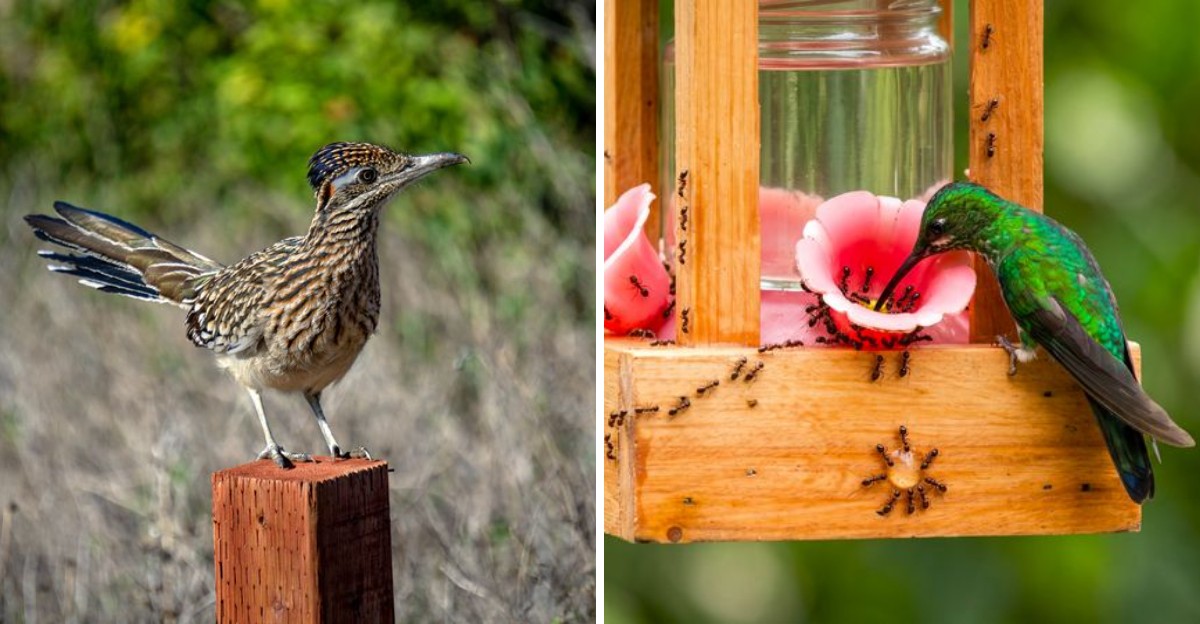
Some visitors are more than just a nuisance. A few surprising hummingbird hunters live right in Texas backyards. One of them is a bird you’ve probably seen darting across the road.
Keeping these threats away can make a real difference during migration, when these tiny birds need all the energy they can get.
1. Outdoor Cats
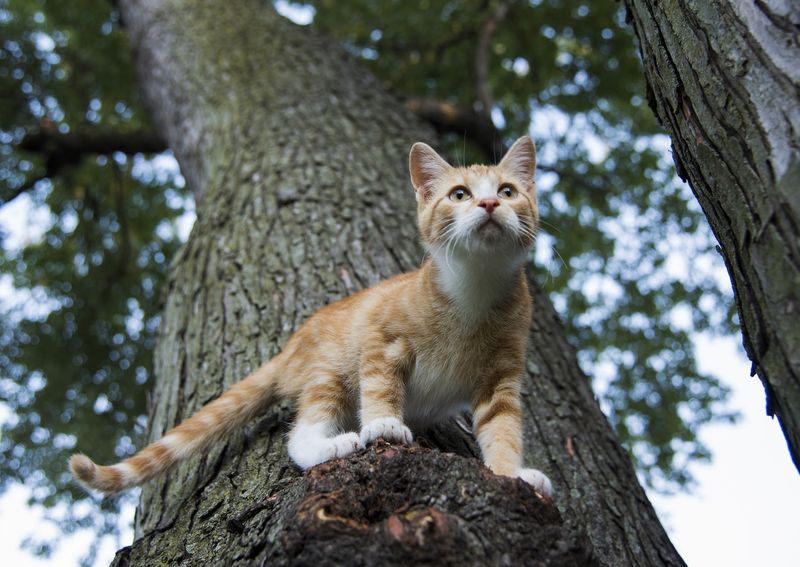
Your sweet, purring house cat might be the most skilled hunter in the whole neighborhood. Experts estimate that free-roaming cats catch billions of birds in the United States every year.
Hummingbirds are small, quick, and brave, but they are not always fast enough. Cats are patient. They can sit still under a bush for a long time, waiting for the perfect moment.
Hummingbirds often rest on low branches or zip down to sip from flowers near the ground. That is exactly when a hidden cat can pounce.
Even a well-fed pet will hunt. Hunting is an instinct, not a sign of hunger. So a full food bowl will not stop your cat from stalking the feeder. Bells on collars help a little, but many cats learn to move quietly anyway.
The best fix is simple. Keep your cat indoors, especially in the early morning and evening when birds feed the most. Indoor cats also tend to live safer lives, with fewer fights, cars, and diseases to worry about.
If neighborhood cats wander into your yard, think about feeder placement. Hang feeders at least five feet off the ground.
Keep them about ten to twelve feet away from thick shrubs, woodpiles, or tall grass where a cat could hide.
You can also plant low, prickly plants under the feeder area. Many cats dislike walking on rough or thorny ground. Some Texans use native plants like agarita for this job.
A catio is another fun option. It is a screened outdoor space where your cat can enjoy fresh air and bird watching without causing harm. Everyone wins, including your feathered guests.
2. Chinese Mantises
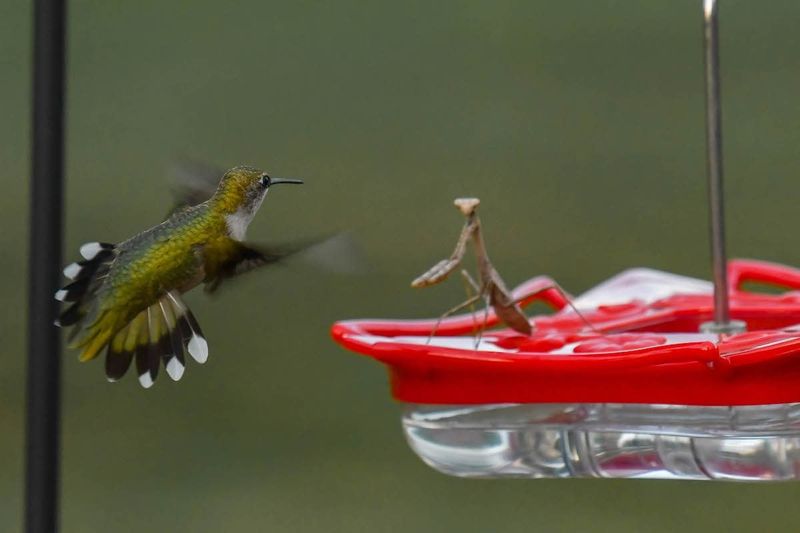
Bird lovers are often shocked to learn that an insect can catch a hummingbird. Yet scientists have recorded mantises grabbing hummingbirds in many parts of the world.
The Chinese mantis is one of the biggest offenders in the United States. Chinese mantises are not native here.
They were brought over in the late 1800s to help control garden pests. Some grow to about four inches long, which is longer than many hummingbirds.
A mantis does not chase its food. Instead, it waits. It sits very still on a feeder or a nearby flower, blending in like a twig or leaf. When a hummingbird hovers close to sip, the mantis strikes with its spiked front legs.
Your Texas Garden Changes Every Week. Your Plan Should Too.
Gardening in Texas changes quickly throughout the season. Every Friday you’ll receive a simple weekly plan showing exactly what to plant, prune, fertilize, harvest, and protect so you never miss the right timing.
Here is a fun fact. A mantis can turn its head almost all the way around, which helps it spot moving prey. That sharp eyesight makes it a sneaky feeder guest.
So what should you do? Check your feeders every day, especially in late summer and fall when mantises are fully grown. Look at the top, the hanger, and the feeding ports.
If you spot one, do not panic. Wear gloves or slide a stick under it so it climbs aboard. Then move it to a far corner of your yard, away from feeders and nectar flowers. Mantises still eat lots of bugs, so they can be helpful elsewhere.
Avoid buying mantis egg cases for pest control. Native insects and birds can handle garden bugs just fine. Fewer mantises means a calmer, safer place for your hummingbirds.
3. Greater Roadrunners
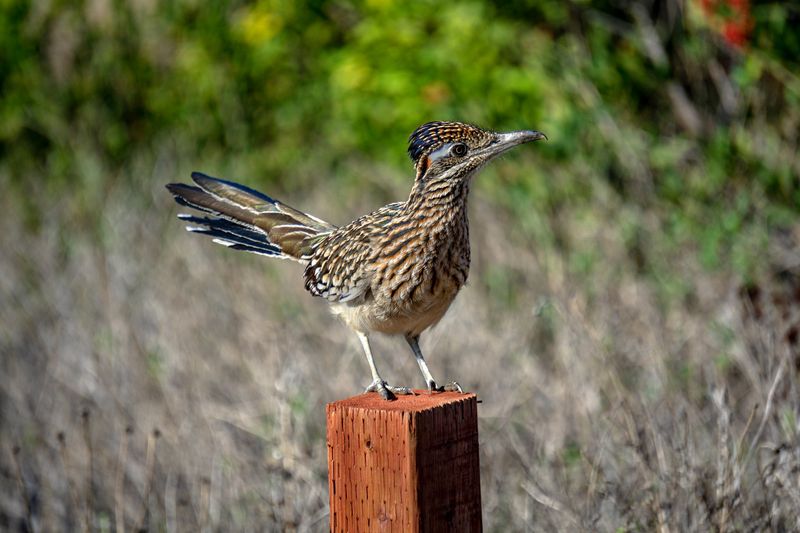
Beep beep! Most people know the roadrunner from cartoons, but the real bird is far tougher than its silly TV cousin.
Greater roadrunners can run about fifteen to twenty miles per hour. They live all across Texas, from the desert west to the brushy south.
Roadrunners are part of the cuckoo family. They eat almost anything they can catch, including insects, scorpions, lizards, and even rattlesnakes. Small birds are on the menu too.
Bird watchers have seen roadrunners hiding near feeders and leaping up to snatch hummingbirds.
They are smart and patient. Once a roadrunner learns that a feeder brings easy snacks, it may come back again and again.
That does not mean roadrunners are bad. They are a native Texas treasure and a big part of our wild heritage. You just want to make their hunting a little harder.
Start by raising your feeders. A roadrunner can jump surprisingly high, so aim for at least six feet off the ground. Hanging feeders from a tree branch or tall shepherd’s hook works well.
Next, look around for low perches. Fence posts, short walls, birdbaths, and patio chairs can all give a roadrunner a launch pad. Move feeders away from these spots when you can.
You might also add a second or third feeder in a different area. Spreading out your feeders gives hummingbirds more choices and less risk at any one spot.
If a roadrunner keeps showing up, enjoy watching it from a distance. Just keep your feeders high and open so your tiny flyers can see trouble coming.
4. Orb-Weaver Spiders
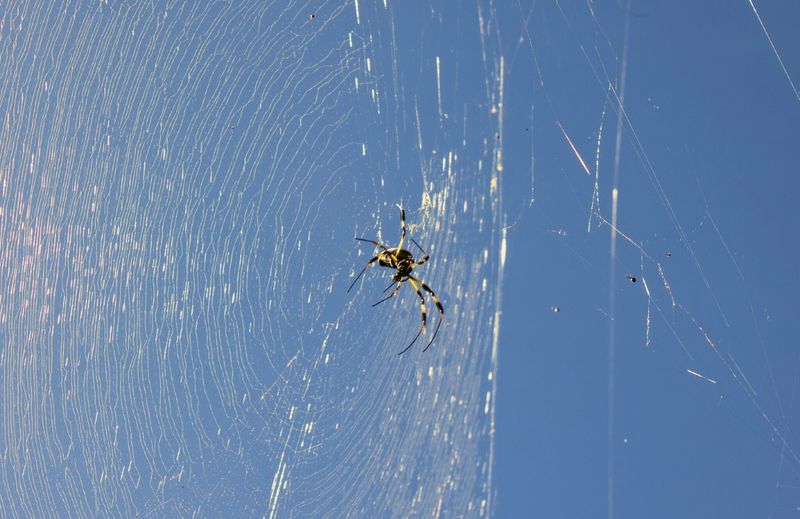
Early morning dew can turn a spider web into a sparkling work of art. But for a hummingbird, that same web can become a sticky trap. Large orb-weaver spiders build some of the strongest webs in Texas gardens.
Two common types are the yellow garden spider and the golden silk orb-weaver. The garden spider has bold yellow and black markings and a zigzag pattern in its web. The golden silk orb-weaver spins golden threads that shine in the sun.
Did you know? Golden silk is so tough that people have tried weaving it into cloth. That strength is great for catching big insects. Sadly, it can also hold a small hummingbird that flies into it by mistake.
Hummingbirds actually use spider silk to build their nests. They gather tiny strands to hold their cup-shaped homes together. So they visit webs on purpose, which can sometimes lead to trouble with large ones.
Your best plan is a quick daily walk around your feeders. Look between plants, porch rails, and tree branches. Pay extra attention in late summer and early fall, when orb-weavers grow their biggest.
If you find a large web near a feeder, gently knock it down with a broom or stick. The spider will usually move and build somewhere else. You do not need to harm it.
If you ever find a hummingbird caught in a web, stay calm. Carefully cup the bird and slowly pull away the silk with tweezers. Then let it rest in a quiet spot before it flies off.
5. Ants
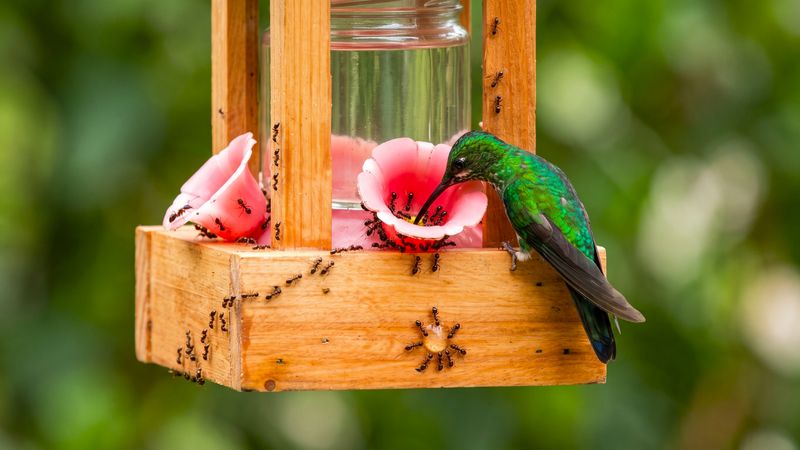
Sugar water is a treat, and ants know it. A single scout ant can find your feeder and lead hundreds of friends there within hours. Before long, the feeding ports can be packed with tiny crawling bodies.
In Texas, fire ants are a big concern. They are aggressive and sting hard. Other kinds of ants also march up feeder poles looking for a sweet snack.
Ants do not usually hunt hummingbirds at feeders. The problem is that they spoil the nectar and block the ports.
Hummingbirds will often skip a feeder that is crawling with bugs. Some ants also fall into the nectar, making it cloudy and dirty.
Luckily, the fix is cheap and easy. An ant moat is a small cup that hangs between the hook and the feeder. You fill it with plain water. Ants cannot swim across, so they cannot reach the sugar.
Many feeders now come with a built-in moat. You can also make one at home with a bottle cap and some glue. Just refill the water every few days, since Texas heat dries it out fast.
Skip oils, sprays, and sticky products on the hanger. These can get on birds’ feathers and cause real harm. Plain water is the safest option.
A few extra tips help too. Check feeders for leaks, because drips on the ground attract ants. Clean feeders every few days in hot weather. Also, trim back branches that touch the feeder, since ants use them like bridges.
6. Wasps and Yellowjackets
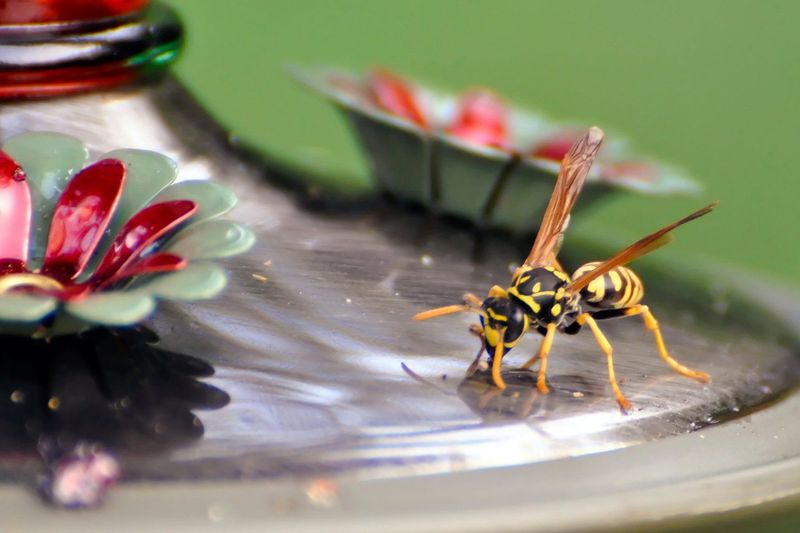
Late August in Texas can feel like the feeder has been taken over by a buzzing gang. Wasps and yellowjackets often show up in big numbers as summer winds down. Their colonies are large by then, and natural food starts to run low.
These insects crave sugar. They crowd around feeding ports and guard them like bouncers at a club.
Hummingbirds may get chased off or simply give up and fly elsewhere. During fall migration, that lost meal really matters.
So how do you win the battle without harsh poisons? Start with the right feeder. Saucer-style feeders keep the nectar level low, far below the ports. A hummingbird’s long tongue can reach it, but most insects cannot.
Color matters too. Yellow attracts many wasps and bees. Pick feeders that are all red, with no yellow flowers or trim on the ports. Here are a few more tricks that work well.
Use a normal four-to-one water and sugar mix. Sweeter nectar draws more insects. Fix any leaks so sticky drips do not call in extra visitors.
Try moving the feeder a few feet. Wasps can get confused, while hummingbirds find the new spot quickly.
Some people hang fake paper wasp nests nearby, since wasps tend to avoid rival colonies. Results vary, but it is worth a try.
Always be careful. Yellowjackets can sting more than once. If you find a nest near your home, call a pest professional instead of handling it yourself.
7. Bullfrogs
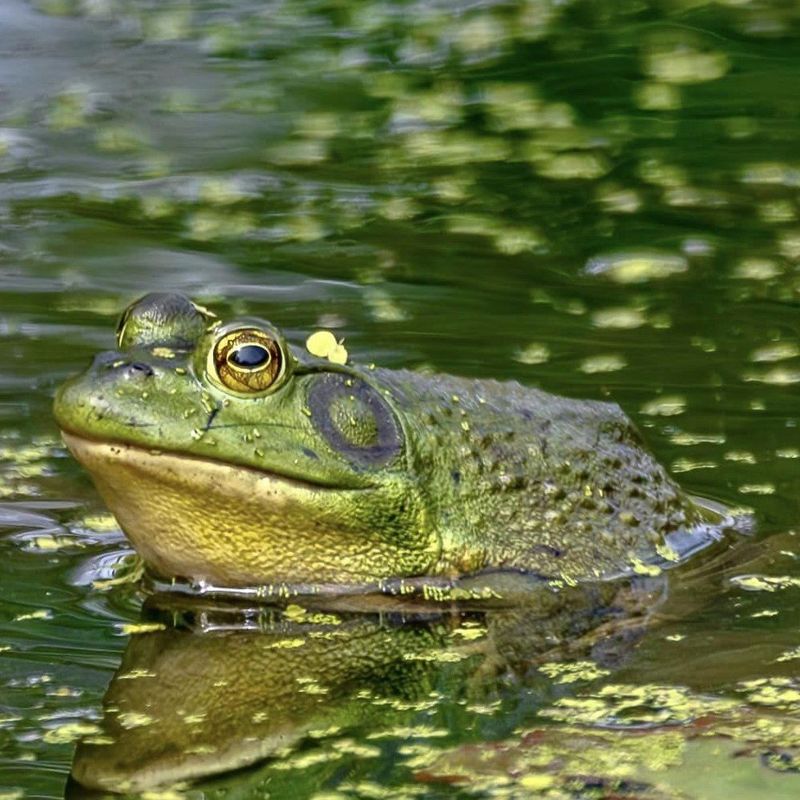
Ponds bring a peaceful sound to a yard, with croaking frogs and splashing water. But one of those frogs could be a surprise hunter. The American bullfrog is the largest frog in North America, and it lives in ponds all over Texas.
Bullfrogs can grow up to eight inches long, not counting their legs. Their deep call sounds a bit like a cow saying “jug-o-rum.” That is part of how they got their name.
Their appetite is legendary. Bullfrogs will gulp down insects, crayfish, mice, snakes, other frogs, and even small birds.
People have recorded bullfrogs leaping up to grab hummingbirds that fly low over water. One quick jump and a wide mouth do the job.
Hummingbirds like water too. They sip from drips, bathe in misters, and chase bugs over ponds. That brings them close to where bullfrogs wait.
If you have a water garden, a few simple changes help. Hang your feeders well away from the pond’s edge, at least ten to fifteen feet if you can. Avoid placing nectar flowers right along the shoreline.
Add a mister or a shallow bubbler on the other side of the yard. Hummingbirds love flying through fine spray, and it keeps them away from deeper water.
Keep tall plants around the pond trimmed so frogs have fewer hiding spots near flight paths.
You can still enjoy your frogs and their nighttime songs. A little space between the pond and the feeders lets both kinds of wildlife share your yard safely.