Hungry Plants In New Jersey Bogs Quietly Catch Insects Along The Boardwalk
Some leaves in the swampy corners of New Jersey show ultraviolet patterns, a signal insects can see and we cannot. That pattern works like a neon sign for bugs. Many visitors get lured in, and very few ever leave.
I first learned this while kneeling on a soggy boardwalk with wet socks and a cheap magnifying glass. A tiny gnat sat stuck to a sparkly red leaf no bigger than my thumbnail. I stared at it for ten minutes and forgot about my socks.
Turns out these hunters grow in places where the soil offers almost nothing to eat. So they found another menu, and it crawls, flies, and swims.
You could walk past a whole patch of them and see only moss and puddles. The real question is how many hungry little traps you have already strolled right by in New Jersey.
Something Sneaky Is Growing in the Soggy Sphagnum Moss
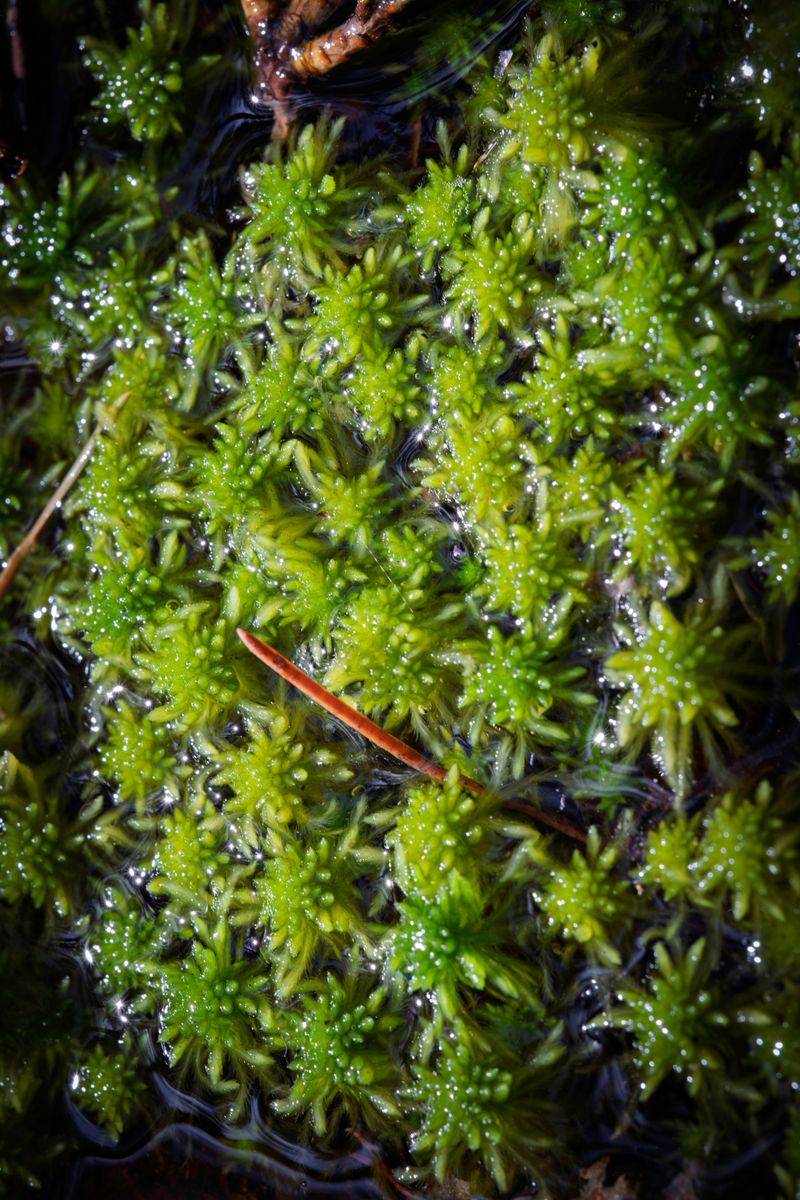
Bogs look sleepy from a distance, but plenty of action happens at ankle height. Tucked into the spongy sphagnum moss of New Jersey wetlands are plants that trap and digest small animals for extra nutrients.
The state hosts three main groups of these hunters. You will find pitcher plants, sundews, and bladderworts, and each one uses a different kind of trap. One drowns, one glues, and one vacuums.
Most of them live in the Pinelands, a huge stretch of sandy, acidic land in the southern half of the state.
A few also turn up in northern wetlands, like Kuser Bog in Sussex County, where cooler bog conditions suit them nicely. So why do so few people notice? Size plays a big role.
Many sundews are smaller than a quarter, and most bladderworts float underwater with no obvious leaves at all. Even the larger pitcher plants sit low, tucked among grasses and shrubs that pull the eye away.
Color helps them hide too. Their reds and greens blend right into the moss, which itself shifts from lime to rusty orange through the seasons. A patch that looks obvious in one month can look completely different in the next.
Once you train your eyes, though, a plain bog turns into a busy hunting ground. I promise it changes how you see every wet patch of ground after that first sighting.
Start by looking for repeating shapes, such as little rosettes, tiny red dots, or upright green tubes. Once one pops out, the rest tend to follow.
Starved Bog Soil Turned These Plants Into Bug Eaters
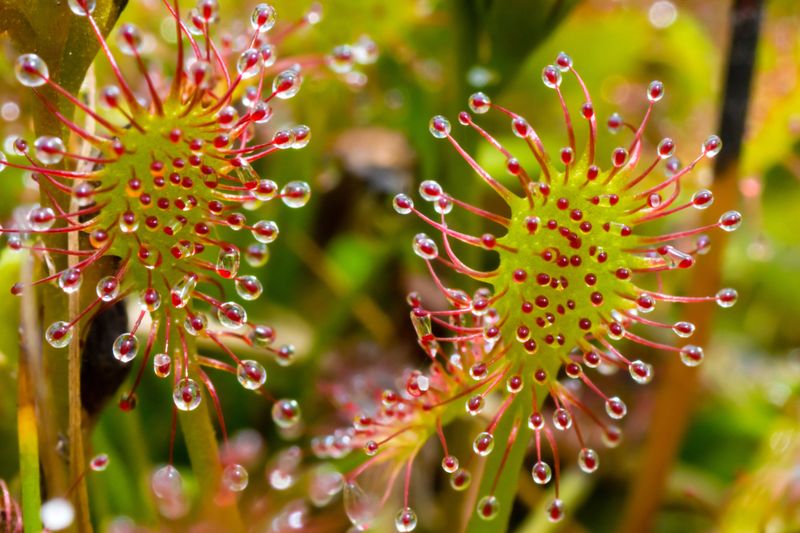
Picky eaters these plants are not. Their homes simply leave them no choice. Bog soil stays wet, very acidic, and low in nutrients, especially nitrogen.
Ordinary garden plants rely on nitrogen to build leaves and grow strong, so most of them struggle badly in a place like this.
Carnivorous plants solved the problem in a clever way. They still make food from sunlight like any other green plant. Insects work more like a vitamin pill, supplying nitrogen and phosphorus the soil cannot give.
That detail surprises a lot of folks. These plants do not need bugs for energy, and they can grow slowly without them.
Think of the bugs as a boost that lets the plant build more leaves, flowers, and traps than it could on poor soil alone.
The Pine Barrens make a perfect setting for this trick. Sandy soil drains minerals away quickly, and the streams there run tea-colored from tannins released by plants and moss.
That dark water is low in nutrients, which is exactly the kind of habitat these plants have adapted to. Fun fact for your next hike: sphagnum moss actually helps keep the water acidic, which keeps competing plants out.
The moss and the meat eaters basically share a quiet partnership. Fewer rivals mean more sunshine and more elbow room for the hunters.
Knowing this also explains why fertilizer harms them. Rich food that helps your tomatoes can burn the roots of a bog plant built for hunger. It is a good reminder that a hungry habitat is not a broken one.
Purple Pitcher Plants Set a Slippery Rainwater Trap
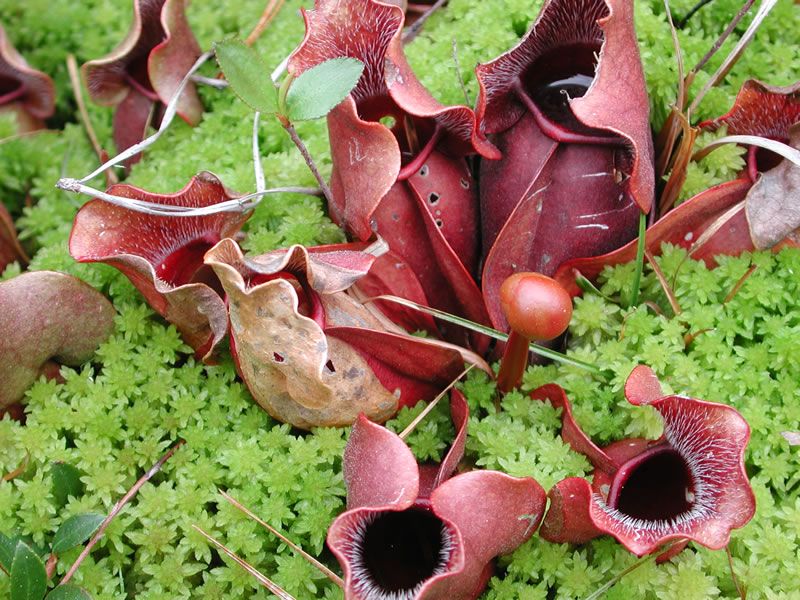
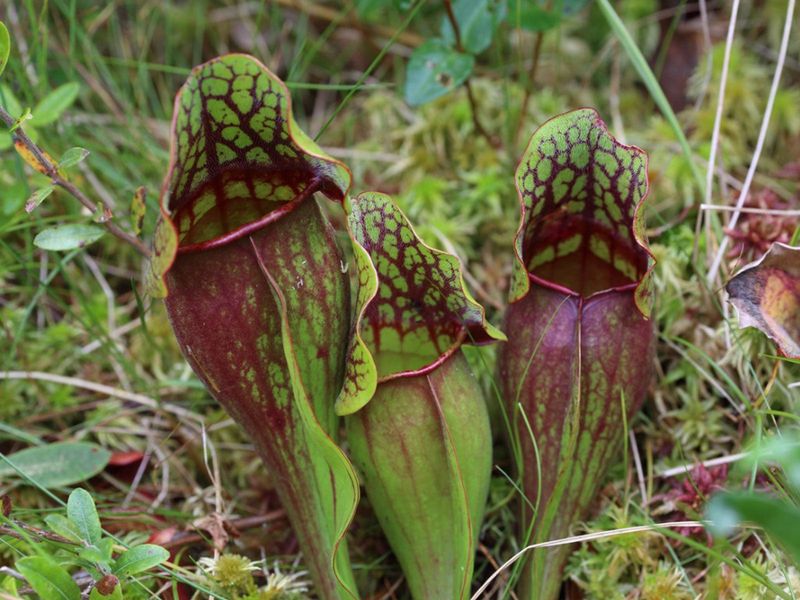
Chunky, red-veined leaves shaped like little vases make the purple pitcher plant the easiest bog hunter to spot. Its scientific name is Sarracenia purpurea, and it grows across much of the Pinelands.
Each leaf curls into a tube that fills with rainwater. Insects come for nectar near the lip, and research has shown some pitcher plants also display ultraviolet patterns that bugs can likely see.
The nectar acts like a welcome mat, and the visitor rarely notices how steep the next step is. The rim gets slick, especially when damp. A misstep sends the visitor sliding into the water below.
Inside, stiff downward hairs make climbing back out very hard. Digestive enzymes and a crowd of tiny organisms then break the prey down for the plant to absorb.
That little pool holds its own mini world. Mosquito and midge larvae that specialize in pitcher plants live there safely and help process the trapped meals.
It is a tiny ecosystem inside a single leaf, and it keeps running long after the plant has caught its dinner.
Look for odd, nodding red flowers on tall stalks from about May into June. They resemble upside-down umbrellas and stand well above the leaves. Holding the flower high above the leaves may help keep pollinators away from the traps.
My favorite tip is to crouch low and peek into a pitcher without touching it. You may spot floating ants, beetles, and even a spider or two.
Take your time, because every pitcher tells a slightly different story about what passed through that week.
Sticky Sundew Leaves Sparkle Like Morning Dew
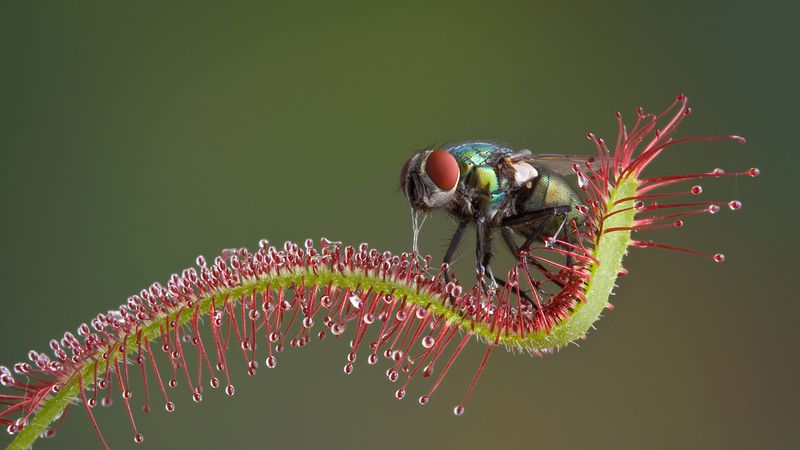
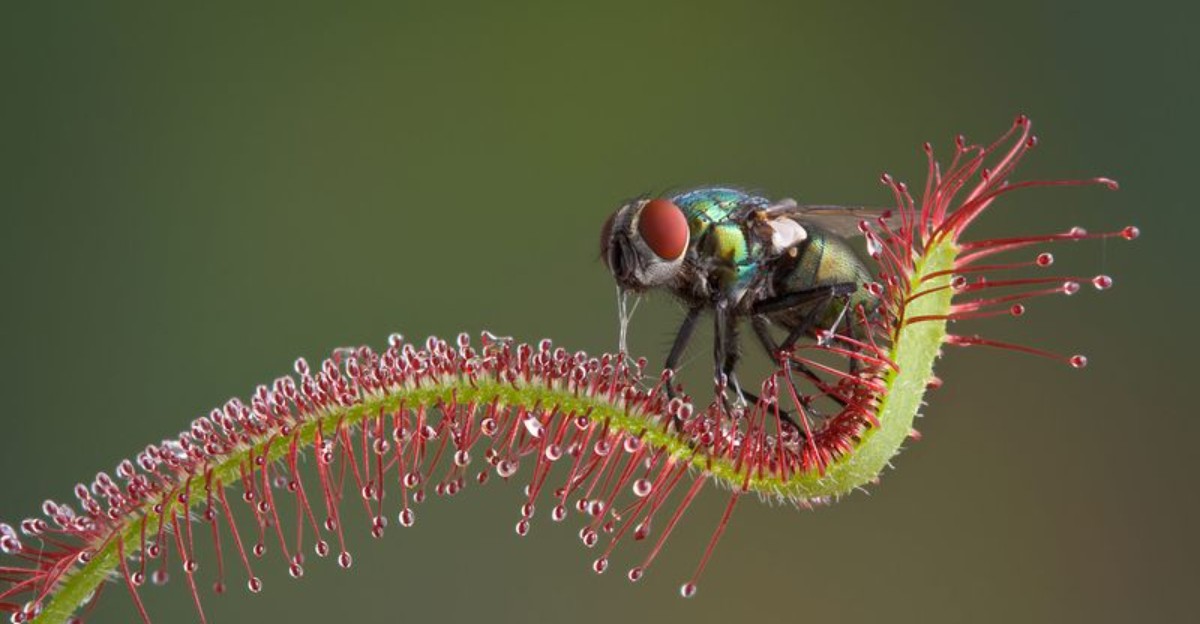
Tiny gnats make a big mistake when they land on a sundew. Those shiny droplets look like water or nectar, but they are glue.
Sundews belong to the genus Drosera. New Jersey has several native kinds, including the roundleaf, spatulate-leaf, and threadleaf sundews, and they often form reddish patches across wet sand and moss.
Every leaf carries hairs tipped with sticky mucilage. Once a bug gets stuck, nearby tentacles slowly bend inward, pressing the prey against the leaf for digestion. The more the insect struggles, the more firmly it is held.
The movement takes minutes to hours. If you return to the same plant later in the day, you might catch the leaf folded around its meal.
Once the plant finishes, the leaf opens again and the glistening droplets return, ready for the next visitor.
Size is the tricky part. A roundleaf sundew rosette can be smaller than a coin, so it is easy to miss unless the sun hits those droplets just right. Scanning low and slowly works much better than looking for a big, bold shape.
Bright mornings give you the best shot at a sighting. Sunlight makes the glands twinkle, and the reds glow against green moss. Cloudy light flattens the effect, so a sunny day makes the whole patch pop.
Small white or pinkish flowers bloom on thin stalks in summer, often June through August. Bring a hand lens and enjoy one of the coolest close-up views in nature.
Yellow Bladderwort Flowers Reveal Tiny Underwater Vacuums
Some of the fastest movements in the plant world belong to a plant most people never notice. Bladderworts, in the genus Utricularia, catch prey faster than you can blink.
New Jersey supports over ten species. Most float in shallow water or grow in saturated soil, and they have no true roots.
They drift and tangle through the water like loose green thread, which makes them easy to mistake for algae.
Along their thin stems sit tiny bladders, many barely visible to the eye. Each one holds low pressure inside, kind of like a squeezed bulb.
When a water flea or tiny larva brushes trigger hairs, a trapdoor swings open. Water rushes in, carrying the prey with it, and the door shuts in a fraction of a second.
The victim never gets a chance to react. The whole trap resets within an hour or so. It is one of the fastest movements known in plants.
A single stem can carry many bladders, so the plant is working constantly while the surface looks perfectly calm.
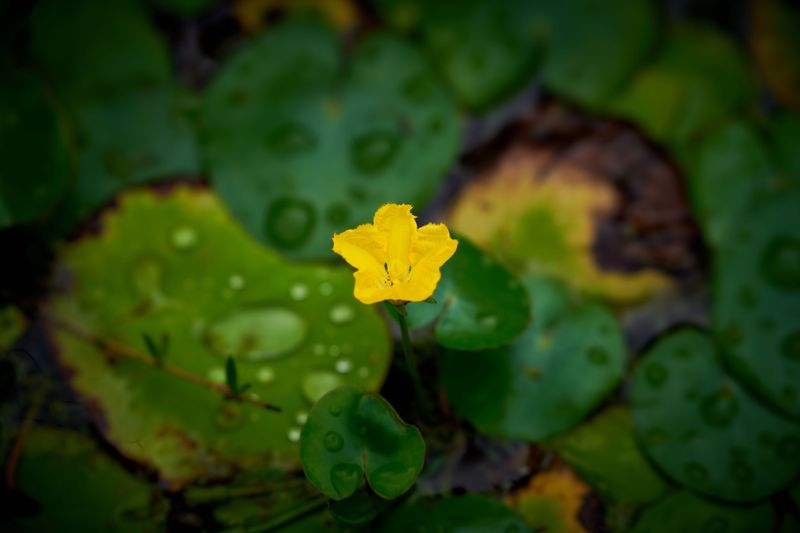
Since the traps hide underwater, flowers are your best clue. Watch for small, snapdragon-like blooms, mostly yellow, poking above ponds and ditches in mid-summer.
Some species bloom purple instead, which makes a fun challenge for curious hikers. Scoop nothing and pull nothing, though, because a quiet look with binoculars or a phone zoom shows plenty.
Bog Boardwalks Like Webb’s Mill Are the Best Places to Look
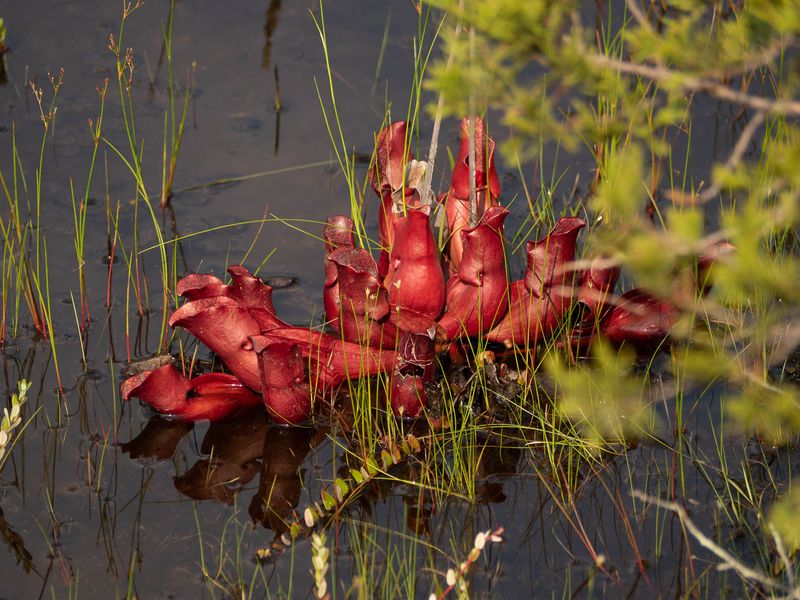
Good news for your knees: you do not need to wade through muck to see these hunters. A few boardwalks put them right below your feet.
Webb’s Mill Bog in Ocean County is a famous spot. Its raised boardwalk crosses a cedar bog where sundews and pitcher plants grow, part of the Greenwood Forest Wildlife Management Area.
Walking it slowly is the easiest way to see a real bog without getting your feet wet. Other Pinelands spots, like trails in Wharton State Forest, offer wet edges worth scanning. Up north, Kuser Bog inside High Point State Park has a short boardwalk through a natural bog.
Check current trail conditions and access before you go, since boardwalks and parking can change. Timing helps a lot. Late spring through late summer brings flowers, while sundews stay easiest to spot on sunny mornings.
Bring bug spray, water, and a hand lens. Wear shoes that can get muddy, and check for ticks once you get home.
A small notebook or a phone for photos also helps you compare what you see from one visit to the next.
Move slowly and scan the moss at the boardwalk edges. Many first-timers stare far out across the bog and miss the plants inches from the wood.
Visiting on a weekday morning often means quieter trails. You get more time to crouch, look closely, and snap photos without blocking anyone.
Leave Those Wild Pitcher Plants Right Where They Grow
Please resist the urge to take a souvenir. Digging up wild carnivorous plants hurts fragile populations, and removing plants from state parks, forests, and wildlife areas breaks the rules.
Bogs recover slowly. A single footprint in soft sphagnum can crush seedlings and leave a dent that lasts for a long time.
That is why boardwalks exist, and why stepping off them, even for a better photo, does real damage.
Collecting has harmed carnivorous plants in many parts of the country. Some New Jersey species are already rare, and the state tracks several on its endangered and special concern plant lists.
Habitat loss creates even bigger trouble. Drained wetlands, development, fertilizer runoff, and fire suppression all reduce the open, sunny, nutrient-poor spots these plants need. Even a healthy-looking bog can slowly lose its hunters if the surrounding land changes.
Here is what helps instead. Stay on boardwalks and trails, share photos without exact locations for very rare plants, and report damage to park staff.
You can also support groups that protect the Pinelands. Volunteer days and donations help keep these wet places wild.
Even a single cleanup morning makes a difference to a habitat this delicate. I treat every bog visit like a museum trip. Look closely, take pictures, and leave everything for the next curious person to discover.
A Sunny Bog Garden Pot Lets You Grow Your Own Bug Catchers
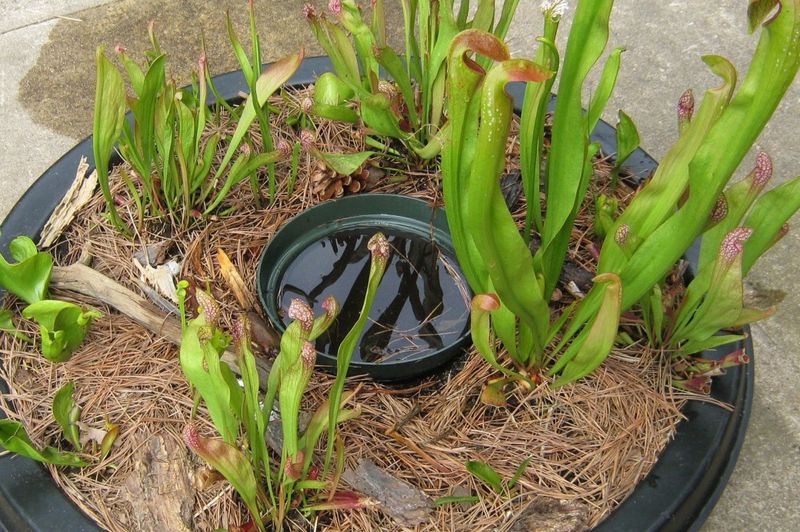
Falling for these plants is easy, and growing a few at home is very doable. The trick is copying the bog, not treating them like ordinary houseplants.
Start with a plastic pot or bowl without fertilizer-rich soil. Mix peat moss with clean silica sand or perlite, and keep the mix constantly wet. A pot with drainage holes, set in a shallow tray of water, helps hold that steady moisture.
Water matters most. Use rainwater or distilled water, since minerals in tap water often build up and harm roots. A rain barrel or a few jugs of distilled water from the store will cover a small pot easily.
Give them full sun, ideally six hours or more. Purple pitcher plants and many native sundews also need a cold winter rest, so they do best outdoors through the seasons in most of the state.
Bringing them inside for winter can leave them weak by spring. Skip fertilizer and skip feeding them hamburger. Outdoor plants catch plenty of bugs on their own.
Buy only from nurseries that sell seed-grown or lab-grown plants. That way your hobby does not pull plants from wild bogs. Ask the seller where the plants came from if the label does not say.
A small bog pot near a patio makes a great conversation piece. Kids especially love checking the pitchers for trapped flies, and you get your own little window into one of the strangest habitats around.