Idaho’s Driest Native Shrub Is Bursting Into Bloom Right When Everything Else Fades
Your garden is fading, but Idaho still holds a final trick. Everything else in your yard looks worn and spent.
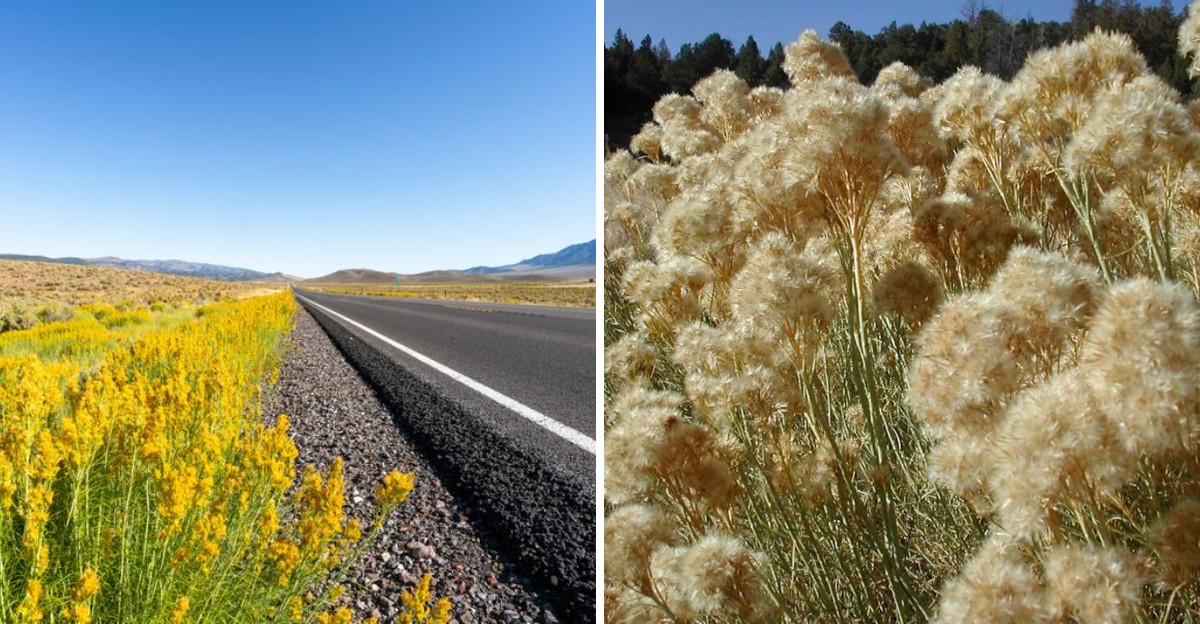
Bees keep working long after your blooms give up. Dust coats the roadside while gold suddenly takes it over.
Wind batters fragile stems, yet this native barely flinches. Silver foliage catches your eye across dry foothills and highway ditches. Water rarely touches this plant, and it thrives anyway.
Heat cannot slow it down or dull its bright color. Highway shoulders turn gold before you even notice the shift.
Plant it, and you rarely think about it again. Grow it here, and you will trust its loyalty for years to come.
This is not another needy bloom chasing your attention. Idaho gave you this plant long before nurseries caught on.
Pollinators depend on it when other flowers disappear for the season. You need to know exactly what this plant is.
The Golden Latecomer Of The High Desert
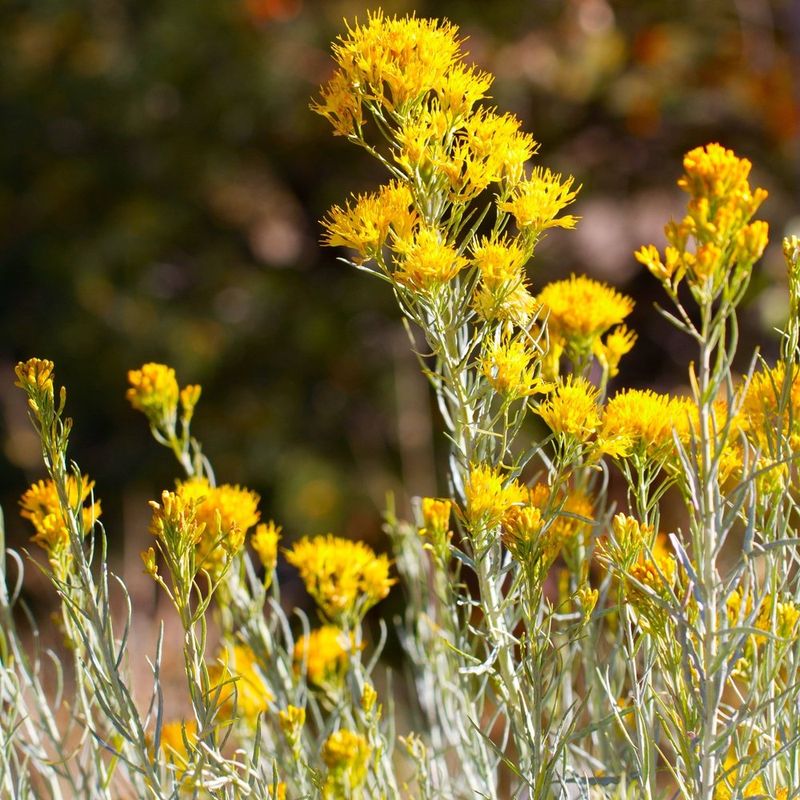
Locals sometimes call it chamisa, and once you learn the name you start seeing it everywhere. Rubber rabbitbrush, known to botanists as Ericameria nauseosa, is the shrub painting Idaho roadsides gold in late summer.
Growth habit is rounded and loose, usually two to five feet tall and about as wide. The stems are pale gray-green and slightly fuzzy, giving the whole plant a soft, dusty look even before the flowers arrive.
Then September rolls around. Flat-topped clusters of tiny yellow blooms cover the branch tips so thickly that the foliage nearly disappears underneath.
The common name comes from two sources. The plant is associated with rabbit habitat, and its milky sap contains small amounts of natural latex, which researchers studied as a rubber source during wartime shortages.
You will find it growing wild across the Snake River Plain and into the foothills, often in soil that other plants refuse.
Elevation range is wide, generally spanning much of the state’s high desert and foothill terrain. That flexibility makes it useful for gardeners in Boise, Twin Falls, Idaho Falls, and mountain towns alike.
Scent is part of the experience too. Crushed leaves smell sharp and herbal, a little like turpentine mixed with sage, which is exactly what the high desert smells like after rain. For a plant this tough, the flower show feels almost generous.
Why September Is Its Moment To Shine
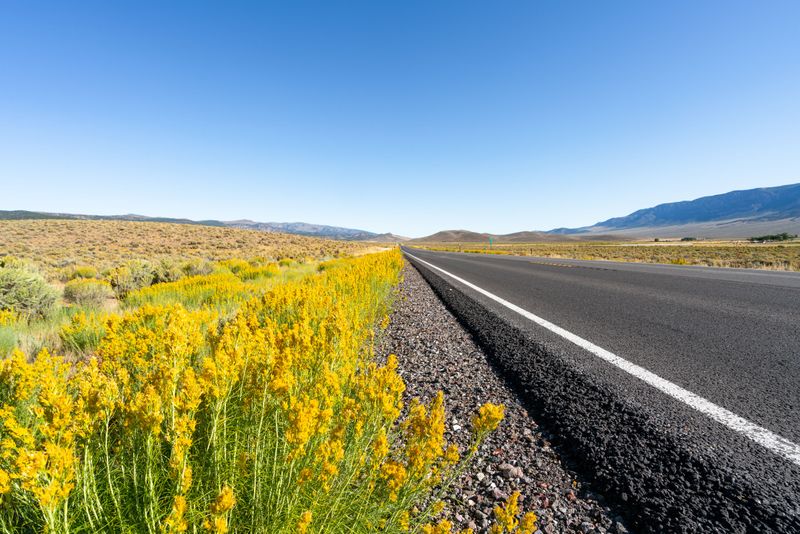
Timing is the whole trick here. While coneflowers are slumping and daisies have gone to seed, rabbitbrush is only getting started.
Bloom typically begins in late August and runs through late September or into October, depending on elevation and moisture. Higher, cooler sites tend to run a week or two behind the plains.
Plants like this are called short-day bloomers. Shrinking daylight hours trigger flowering, which is why the display arrives so reliably as summer loosens its grip.
From a design standpoint, that late timing is gold in more ways than one. A yard that looked crisp and brown suddenly has a glowing centerpiece.
Pair it with purple asters or blue mist spirea and the color contrast becomes visually distinct. Ornamental grasses catching low autumn light behind it make the effect even better.
Your Idaho Garden Changes Every Week. Your Plan Should Too.
Gardening in Idaho changes quickly throughout the season. Every Friday you’ll receive a simple weekly plan showing exactly what to plant, prune, fertilize, harvest, and protect so you never miss the right timing.
Another bonus is how long the show lasts. Even after the yellow fades, the spent flower heads dry into fluffy, silvery-tan tufts that hold their shape into winter.
Snow settling on those seed heads is one of those quiet garden pleasures people do not expect. Birds pick through them on cold mornings looking for seed.
Gardeners who plan for four-season interest should take note. Few Idaho natives carry visual weight from August all the way to March. Plant one, then watch your neighbors ask what that glowing shrub is every single fall.
A Late-Season Buffet For Bees And Butterflies
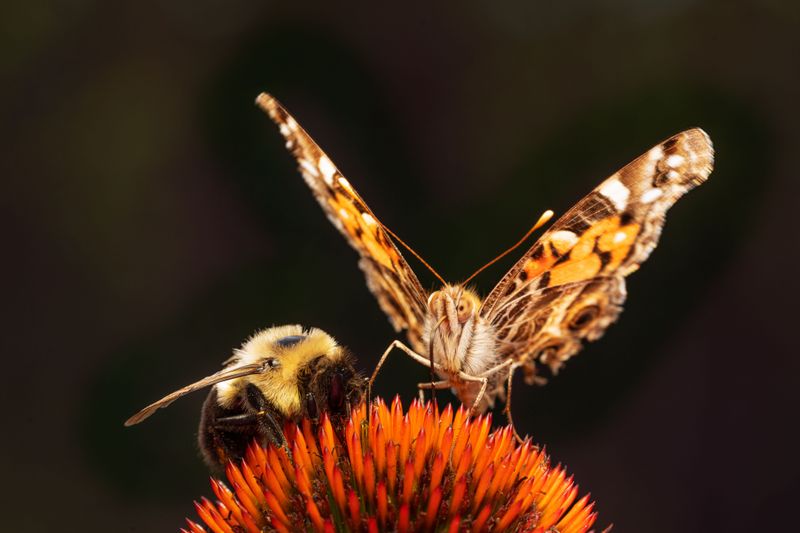
Stand next to a blooming rabbitbrush on a warm September afternoon and you will hear it before you see the action. The whole shrub hums.
Native bees, honeybees, wasps, beetles, and butterflies pile onto the flowers because by early fall there simply is not much else offering nectar. Timing turns this shrub into a critical fueling station.
Monarch butterflies passing through Idaho on their fall migration will visit rabbitbrush when it’s in bloom. So do painted ladies, which sometimes arrive in surges that coat a single shrub.
Bumblebee queens are another important visitor. They need heavy late-season nectar and pollen to build fat reserves before overwintering underground, and rabbitbrush helps fill that tank.
It is widely recognized as one of the more valuable fall nectar sources for arid-region pollinators. That is a strong resume for a shrub most people mow down as roadside scrub.
Beyond insects, small birds visit for seed once flowers dry. Rabbits and small mammals use the dense base as cover from hawks.
If you want to help pollinators, planting three shrubs instead of one makes a noticeable difference. Clusters are easier for insects to find and reduce their travel energy.
Skip pesticides anywhere near it, since the whole point is inviting insects in. A shrub covered in bees is doing exactly what it should.
Sit nearby with coffee some morning and just watch. It’s a rewarding way to spend a quiet morning.
Water Needs That Are Remarkably Low
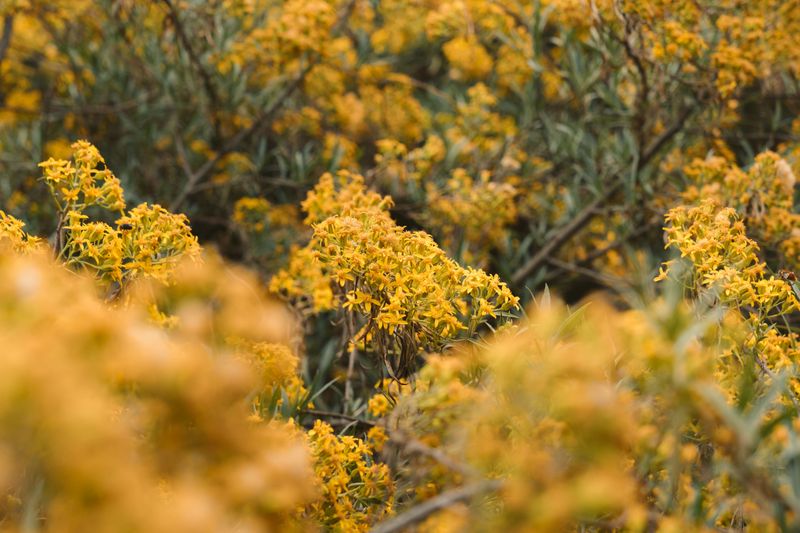
Here is the part that appeals to water-conscious gardeners. Once established, rabbitbrush can live on natural rainfall alone in much of Idaho.
Roots go deep, often reaching several feet down to find moisture that shallow-rooted plants cannot touch. That deep anchoring is why it survives extended dry periods on exposed, sun-baked slopes.
Establishment still matters. For the first growing season, give a deep soak every week or two so roots can push downward before winter.
After that first year, you can taper watering to once a month during extreme heat, or stop entirely in average years. Plants in unirrigated beds often look better than pampered ones.
Overwatering is the biggest risk by far. Too much moisture produces floppy, leggy growth, fewer flowers, and root rot in heavy clay.
Keep it out of lawn irrigation zones. Spray heads hitting it regularly will shorten its life and ruin that tidy mounded shape.
Water restrictions have become a normal part of Idaho summers, and plants like this make those rules painless.
Idaho water providers have increasingly promoted xeric natives, and rabbitbrush appears on plenty of recommended lists. Some Idaho water utilities offer rebates for replacing turf with xeric plantings, though programs vary by location.
Fewer gallons, more flowers, and a shrub that looks right at home in Idaho. That combination is hard to beat.
Picking The Right Spot In Your Yard
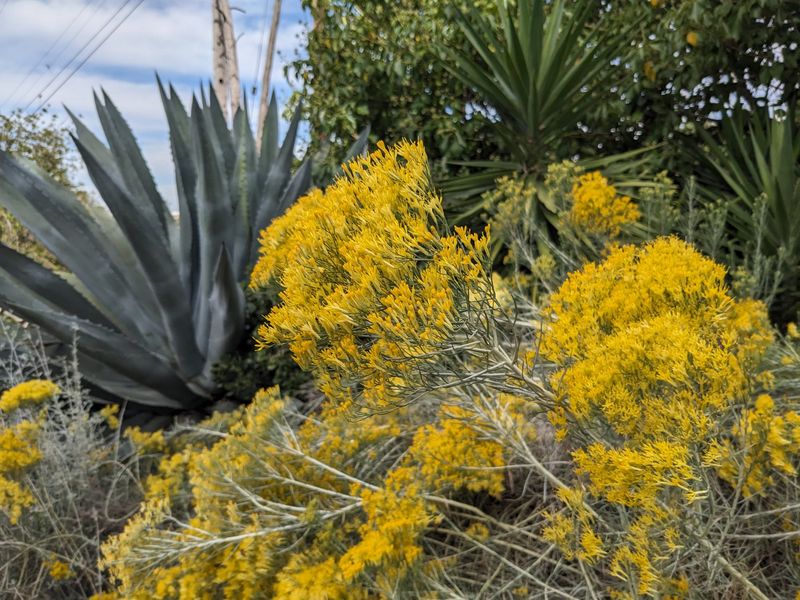
Sun is non-negotiable with this one. Six or more hours of direct light produces the fullest bloom and the sturdiest branches.
Shady placement leads to sparse, stretched growth and a disappointing flower count. Morning shade from a tall fence is usually the difference between a good shrub and a mediocre one.
Soil preference leans lean and gritty. Sandy, rocky, or decomposed granite soils are ideal, and heavy clay works only if drainage is decent.
Slopes and berms suit it beautifully because water drains away quickly. Planting on a slight mound is a smart trick in clay-heavy Idaho yards.
Skip the compost and rich amendments. Fertile soil encourages soft, floppy growth that flops open in the middle by midsummer.
Give each plant room to spread, ideally four to five feet from neighbors. Crowding reduces airflow and hides the rounded silhouette that makes it attractive.
Parking strips, driveway edges, and those baked corners near south-facing walls are perfect candidates. Reflected heat that fries other plants barely registers here.
Gravel mulch beats wood mulch for this shrub. Rock keeps the crown drier and mimics the natural habitat where it thrives.
One caution worth mentioning: pollen can bother allergy-sensitive folks, though the effect is often blamed unfairly since sagebrush releases pollen at the same time.
Plant it away from windows and doorways if anyone in the house is sensitive. Right spot, right plant, minimal fuss.
Pruning Tricks That Keep It Tidy
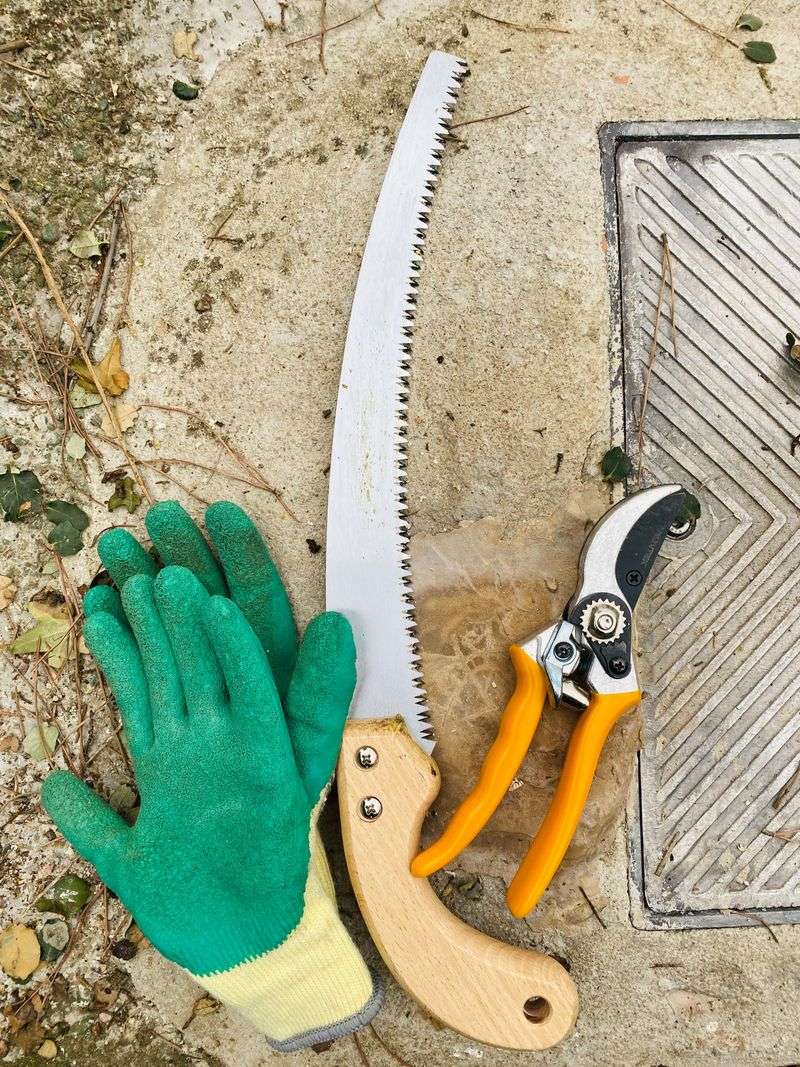
Left alone, rabbitbrush can sprawl into a shaggy, open mess by its fourth or fifth year. A little annual attention fixes that entirely.
Best timing is late winter or very early spring, usually March in most of Idaho. Cut stems back hard, leaving roughly six to twelve inches of woody framework above the ground.
Sounds drastic, but the plant responds with dense, fresh growth and a much tighter shape. Skipping this step is the main reason older shrubs look scraggly.
Wait until the worst cold has passed so new shoots are not nipped by a hard freeze. Cutting in fall removes the winter seed heads that birds and snow scenes benefit from.
Use clean, sharp bypass pruners or loppers for thicker stems. Gloves help, since the sap is sticky and the crushed foliage leaves a strong scent on your hands.
If you prefer a softer look, shorten only the longest one-third of the branches. That lighter touch maintains some structure while preventing total flop.
Fertilizer is unnecessary and mostly counterproductive. Feeding produces lush stems that lean outward and flower less impressively.
With regular renewal cuts, it can remain productive and attractive for many years. When a plant finally declines, seedlings often appear nearby as natural replacements.
Fifteen minutes of pruning each spring buys you a full season of tidy, golden-topped good looks. That is a pretty fair trade.
Growing More From Seed And Cuttings
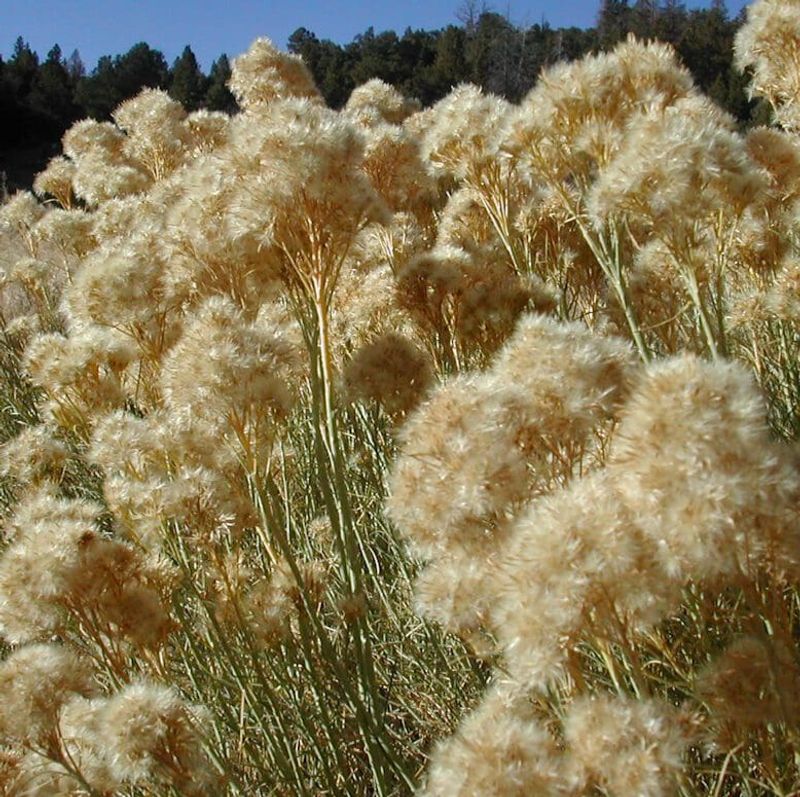
Growing new plants from seed costs nothing, and rabbitbrush makes multiplication easy. Those fluffy seed heads that follow the gold are packed with viable seed.
Collect them in late October or November once the tufts feel dry and pull away with a light tug. Store the material in a paper bag somewhere cool and dry.
Seeds do not require long cold treatment, though a few weeks in the refrigerator can improve germination rates. Sow shallowly, barely covering them, because light helps trigger sprouting.
Scattering seed directly onto prepared ground in late fall works well too. Winter moisture and natural freeze cycles handle the rest.
Germination usually happens quickly in spring, sometimes within two weeks of warm weather. Seedlings grow fast and may flower in their second or third year.
Softwood cuttings taken in early summer are another option. Dip the cut end in rooting hormone, stick it in coarse sand, and keep it lightly moist but not soggy.
Transplant young plants in spring rather than fall so roots have a full season to settle in. Small container plants establish more reliably than large ones.
Local native plant sales through University of Idaho Extension programs and conservation districts often stock it at low prices. Buying regionally sourced stock means better adaptation to your specific conditions.
Share extras with neighbors and you may start a whole block-wide gold streak next September. Idaho gardens can use more of it.