If A California Tree Falls On A Neighbor’s Property Who Is Legally Responsible
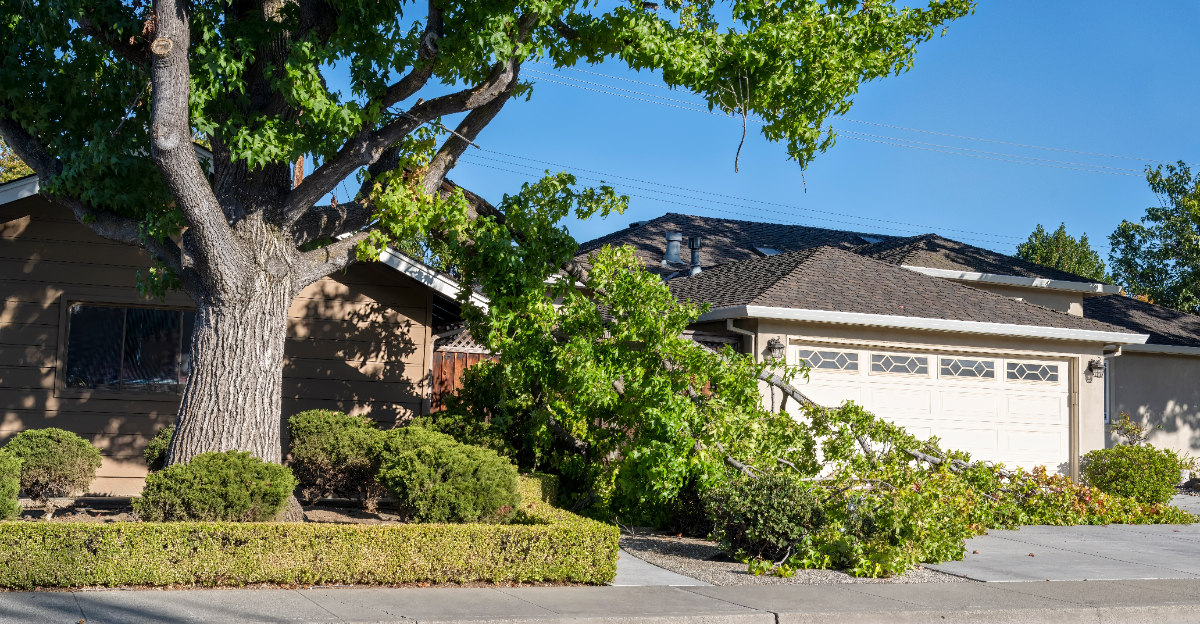
A fallen tree can turn a quiet California neighborhood into a stressful situation fast. One minute it is just part of the landscape.
The next, it is across a fence, driveway, or roof, and everyone wants to know who has to handle it. The answer is not always as simple as whose yard the tree came from.
A healthy tree brought down by a storm may be treated very differently than one with clear warning signs. What the owner knew before it fell can matter a lot.
So can local rules and insurance details. Before neighbors argue or start cleanup, it helps to understand the basic legal idea behind tree responsibility. A little clarity can make a tense conversation much easier.
Responsibility Depends On Why The Tree Fell
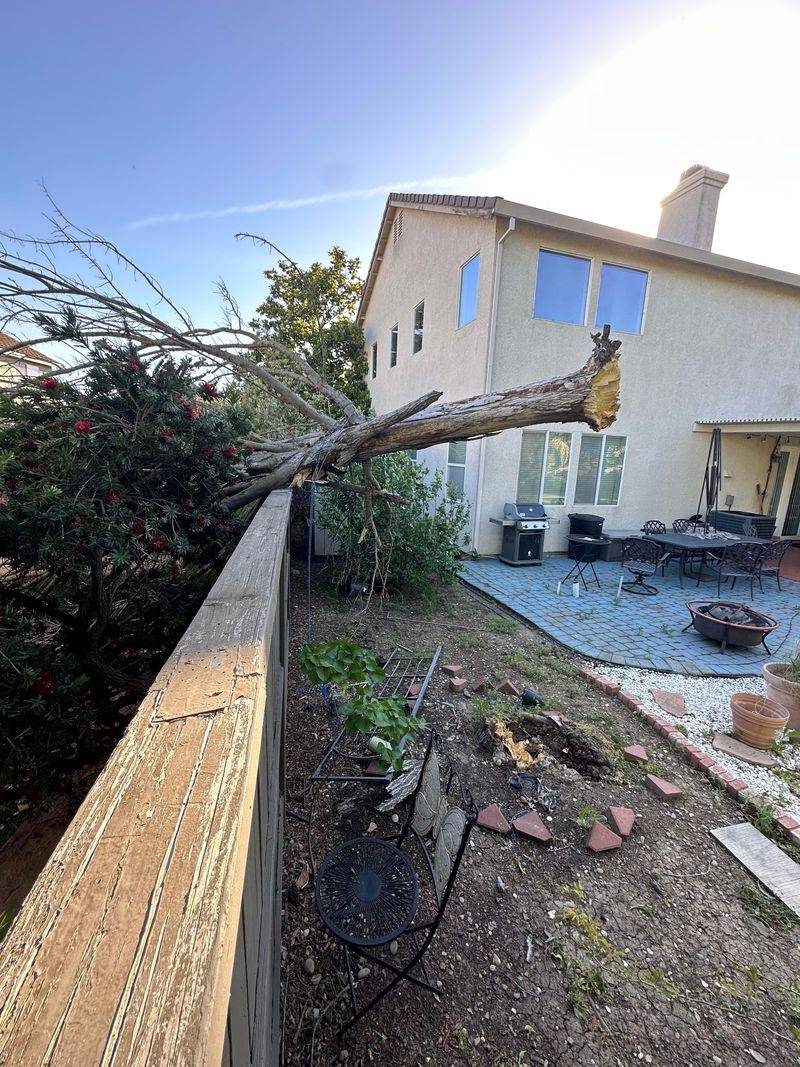
Not every fallen tree leads to the same legal outcome. The reason a tree fell matters just as much as where it landed.
Courts in California look closely at the cause of the fall before deciding who is responsible for the damage.
If a tree fell because the owner never maintained it and let it rot over time, that owner is more likely to be held responsible.
But if a healthy tree fell because of a sudden windstorm, the situation changes completely.
Natural events are treated very differently from negligence under the law.
Many people assume that if the tree belongs to their neighbor, the neighbor automatically pays for all the damage. That is not always true.
Ownership alone does not equal automatic liability in our state.
The courts want to know if the tree owner acted responsibly. Did they trim the tree regularly?
Did they notice signs of disease and ignore them? These questions help determine fault.
A tree owner who took good care of their tree is usually not held liable when the tree falls unexpectedly.
Understanding the cause of the fall is the first step in figuring out who pays. Before calling a lawyer, try to gather as much information as possible about the tree’s condition before it fell. That information will be very useful later on.
Healthy Trees Are Usually Treated Differently
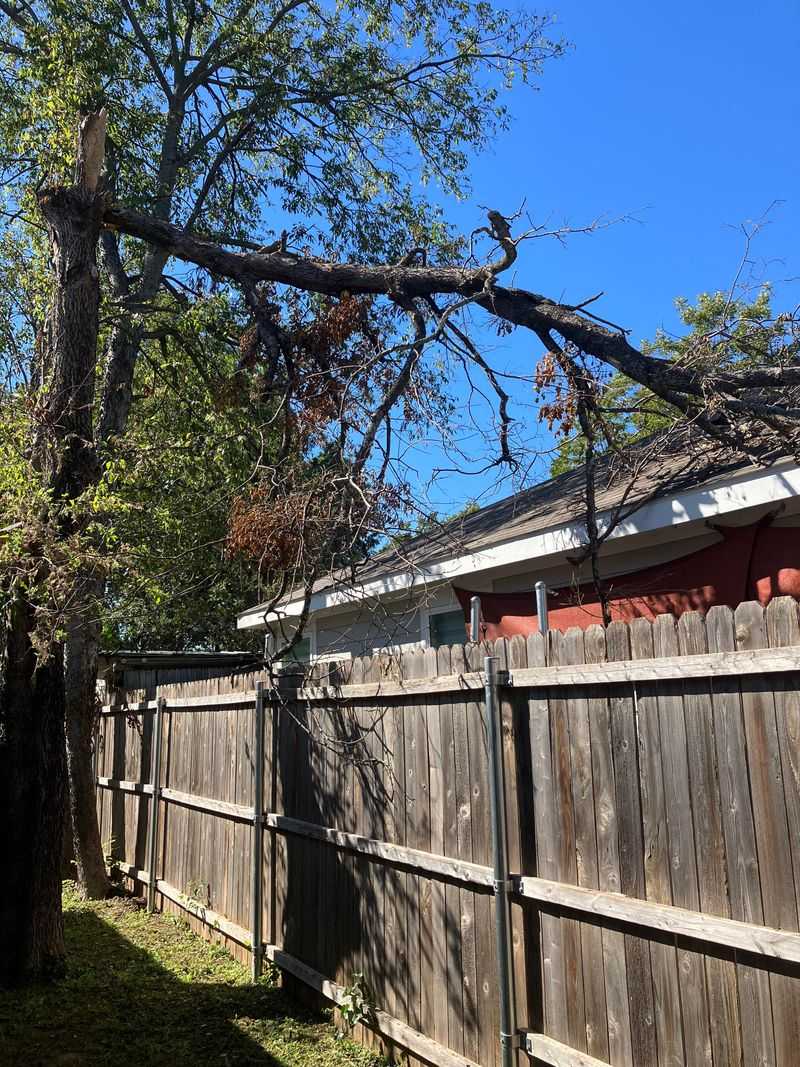
When a perfectly healthy tree gets knocked over by a powerful storm, the legal rules shift in a big way.
California generally does not hold a tree owner responsible for damage caused by a healthy tree that fell due to an act of nature.
Think of it this way: if you did everything right and your tree was in great shape, you should not have to pay for what the weather did. That is the basic idea behind how healthy tree cases are handled here.
In most situations like this, the neighbor whose property was damaged would need to file a claim with their own homeowner’s insurance. The tree owner’s insurance may not be involved at all.
Each homeowner’s policy typically covers damage to that specific property, regardless of where the tree came from.
This surprises a lot of people. Many neighbors expect the tree owner to cover everything, but that is rarely how it plays out legally.
Your California Garden Changes Every Week. Your Plan Should Too.
Gardening in California changes quickly throughout the season. Every Friday you’ll receive a simple weekly plan showing exactly what to plant, prune, fertilize, harvest, and protect so you never miss the right timing.
A healthy tree that falls due to wind, rain, or lightning is usually considered an unforeseeable accident.
Of course, every case is a little different. Some insurance companies investigate further before making a final decision.
If you are unsure about your situation, speaking with a local attorney who handles property law can help you figure out the best path forward quickly and clearly.
Storm Damage May Fall Under The Neighbor’s Insurance
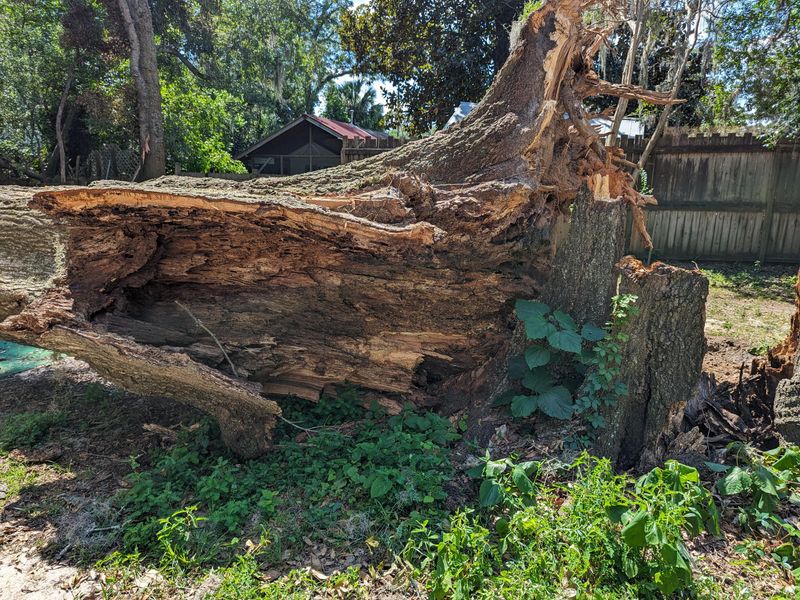
Storms can cause serious damage fast, and sorting out the insurance side of things afterward can feel overwhelming.
Here is something many homeowners in our state do not realize until it is too late. Storm damage from a fallen tree may actually be covered by the damaged neighbor’s own insurance policy.
Homeowner’s insurance typically covers sudden and accidental damage to your property, even when the source of that damage comes from next door.
So if your neighbor’s tree lands on your roof during a heavy rainstorm, your policy may step in to cover the repairs.
Filing a claim with your own insurer does not mean you are giving up your right to pursue the tree owner later. It simply gets the process moving faster.
Waiting around for the other party to accept responsibility can take months, and your home needs to be repaired right away.
The insurance company may also investigate whether the tree owner was negligent. If they find evidence of neglect, your insurer might seek reimbursement from the tree owner’s insurance through a process called subrogation.
You would not have to manage that part yourself. Always report the damage quickly and take photos before anything is cleaned up.
The more evidence you have, the smoother the claims process will be. Acting fast is one of the smartest things you can do after storm damage hits your property.
Neglected Or Diseased Trees Can Create Liability
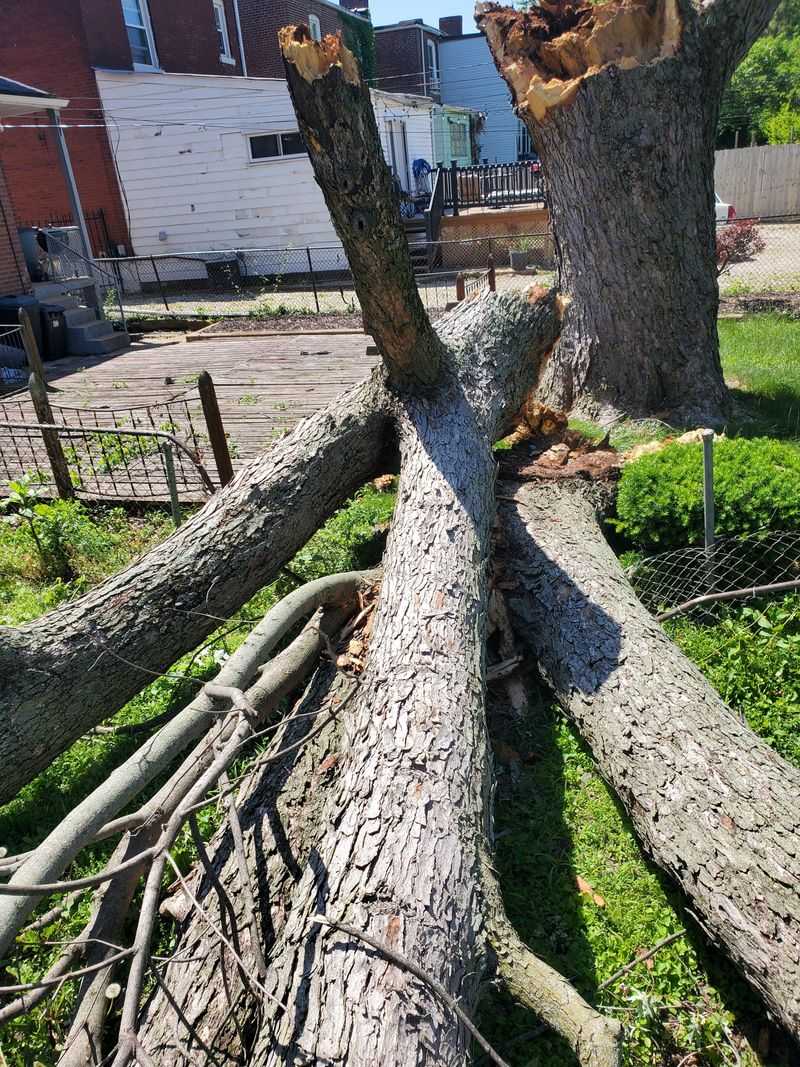
A rotting tree is not just an eyesore. It can become a serious legal problem for the person who owns it.
When a tree shows clear signs of disease or decay and the owner does nothing about it, that neglect can lead to real liability if the tree eventually falls and causes damage.
Courts in California take a hard look at whether the tree owner knew or should have known about the problem.
Fungal growth at the base, hollow trunks, withered branches, and leaning are all warning signs that a tree may be unstable. Ignoring those signs is risky business.
If a diseased tree falls onto a neighbor’s car, fence, or home, the neighbor has a strong case for holding the tree owner financially responsible. The argument is simple: a reasonable person would have noticed the problem and taken action before it became dangerous.
Getting a professional arborist to evaluate a questionable tree is one of the best things a homeowner can do. An arborist can give you a written report about the tree’s condition and recommend next steps.
That report also protects you legally if anything goes wrong later.
Removing a diseased tree before it falls is almost always cheaper than dealing with the legal and financial fallout after it does. Being proactive about tree care is not just smart, it is one of the best ways to protect yourself and your neighbors from costly surprises.
Prior Warning Makes A Big Difference
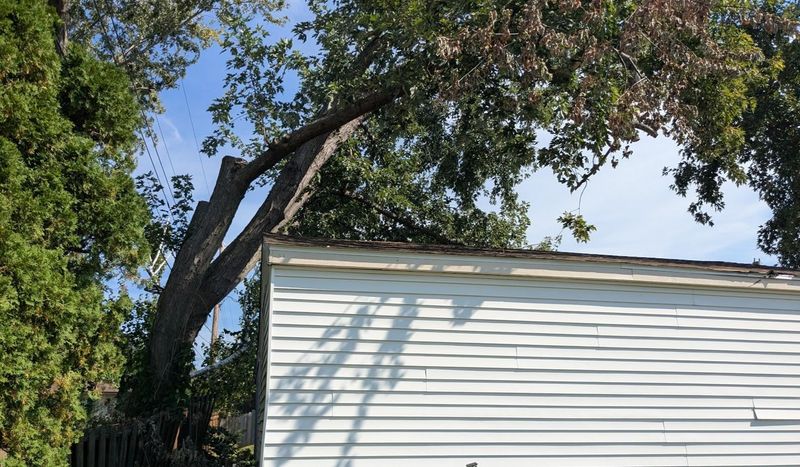
Few things shift legal responsibility faster than a written warning. If a neighbor told you in writing that your tree looked dangerous and you did nothing about it, that letter could be used against you in court.
Prior warning is one of the most powerful pieces of evidence in tree liability cases.
Our state’s courts pay close attention to whether the tree owner had notice of a potential problem. If someone warned you and you ignored it, you can no longer claim you had no idea the tree was a risk.
That changes everything about how liability is decided.
On the flip side, if you are the neighbor worried about a dangerous tree next door, sending a written notice is one of the smartest things you can do. Keep a copy for yourself.
Send it by certified mail so there is a record that it was received.
A simple, polite letter explaining your concerns is enough. You do not need to use legal language or make threats.
Just describe what you observed and ask the owner to have the tree inspected by a professional. That small step can make a huge difference later.
Even verbal warnings can matter, but written ones are far more useful in legal situations. Text messages and emails can also serve as documentation.
The key is to create a clear record that the tree owner was made aware of the problem and had a fair chance to fix it.
Photos And Arborist Reports Help Prove Neglect
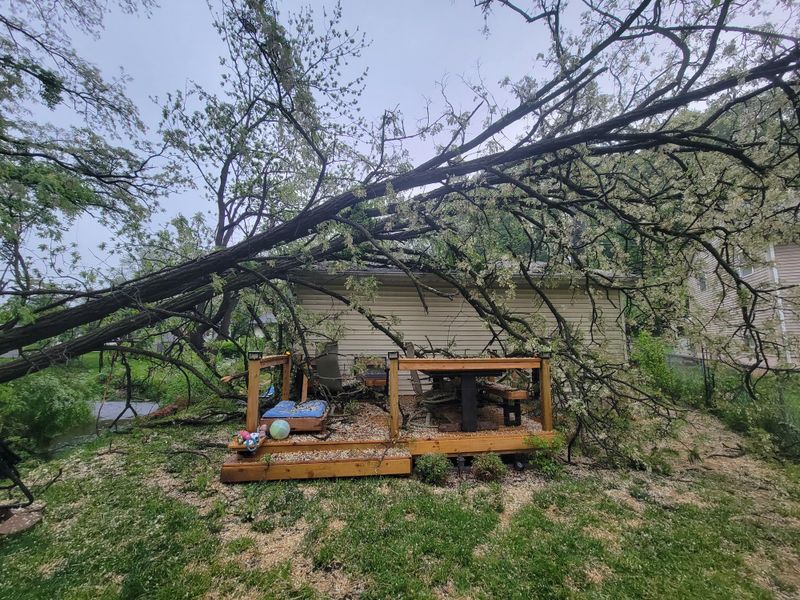
Evidence is everything when it comes to tree liability disputes. If you believe your neighbor’s neglected tree caused damage to your property, you need more than just your word to back it up.
Photos and professional arborist reports are the two most powerful tools you can use.
Start taking pictures of the tree long before anything happens, if you can. Capture the damaged branches, the leaning trunk, the fungal growth at the base.
Date-stamped photos show a clear timeline of how the tree’s condition changed over time. That kind of evidence is hard to argue against.
An arborist is a trained tree expert who can evaluate the health and stability of a tree. Their written report carries significant weight in legal proceedings.
If they confirm that the tree was in poor condition before it fell, that report can be the key piece of evidence in your case.
Getting an arborist involved early is a good move even if you are the tree owner. A clean report showing your tree was healthy protects you from false claims.
It shows you were responsible and took your duties seriously as a property owner.
Keep all of your documents organized in one place. Save emails, letters, photos, and reports together.
If the situation ever ends up in small claims court or with an insurance adjuster, having everything ready to go will make the process much smoother and less stressful for everyone involved.
Cleanup Costs Are Not Always Shared
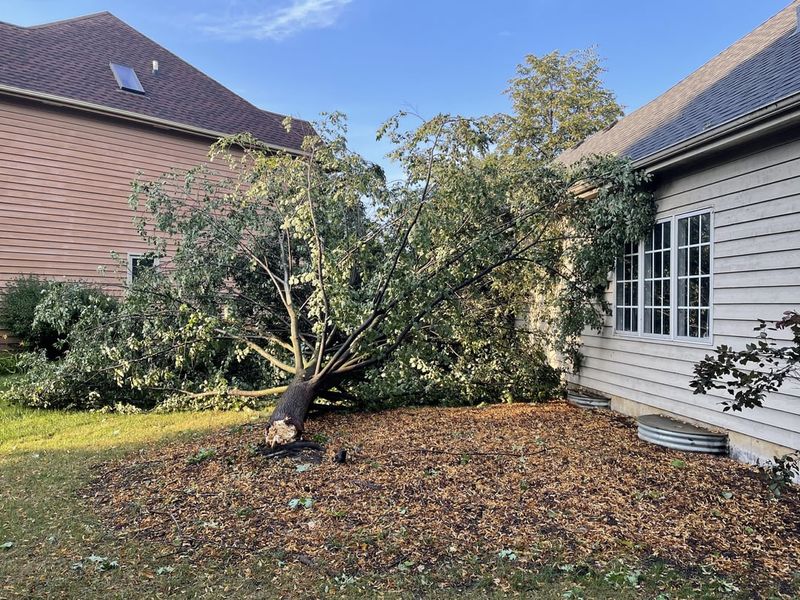
After a tree falls, the question of who cleans it up can quickly become just as heated as the question of who pays for the damage.
Cleanup costs are not automatically split down the middle, and many homeowners are caught off guard by this reality.
Generally speaking, each property owner is responsible for removing the parts of the tree that landed on their own land.
So if a tree from your yard falls and lands partly on your side and partly on your neighbor’s side, each of you handles your own portion. That is the basic rule in most situations.
However, if the tree owner was negligent and caused the damage, they may be required to cover all cleanup costs, including the portions on the neighbor’s property.
Negligence changes the equation significantly. It is not just about where the tree pieces landed anymore.
Hiring a tree removal company can be expensive, especially for large trees. Getting multiple quotes before committing to one company is always a smart idea.
Some companies also work directly with insurance adjusters, which can simplify the billing process.
Do not assume your neighbor will split the bill with you out of goodwill. Have a clear conversation and put any agreements in writing.
If the two of you cannot agree, your insurance company or a local mediator can help sort things out without turning it into a full legal battle that costs everyone more time and money.
Property Damage Is Different From Leaf Litter
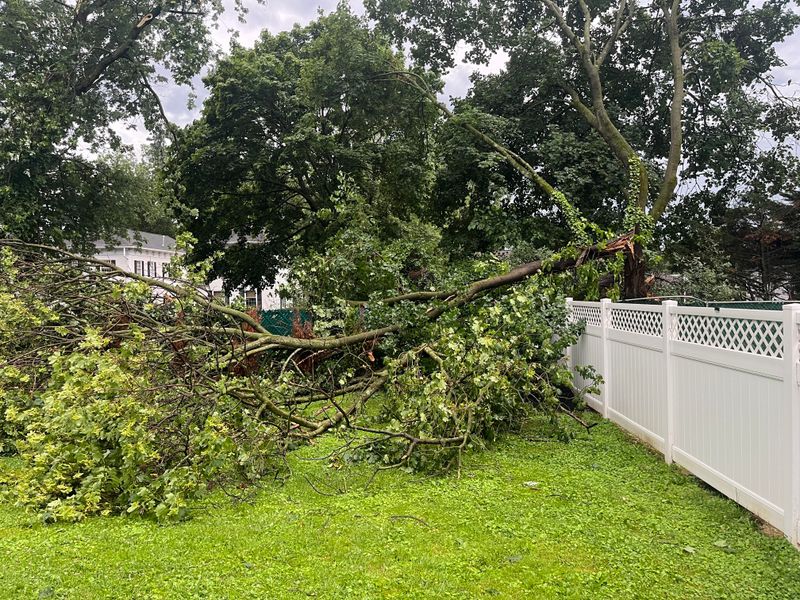
There is a big legal difference between a tree dropping leaves into your yard and a tree crashing through your fence. Many neighbors mix up these two situations, but the law treats them very differently.
Nuisance complaints about leaves, seeds, or fruit are generally not grounds for making a neighbor pay.
California follows what is sometimes called the Massachusetts Rule when it comes to natural conditions like falling leaves, acorns, and shallow roots.
Under this approach, natural tree debris that drifts onto a neighboring property is considered a normal part of living near trees. The affected neighbor is expected to deal with it on their own.
Physical damage is a completely different story. When a branch crashes through a greenhouse, a trunk flattens a garden wall, or roots crack a driveway, that goes beyond simple nuisance.
At that point, you are dealing with actual property damage that may create legal liability for the tree owner.
Some neighbors try to use leaf complaints as a way to pressure the tree owner into cutting down a perfectly healthy tree.
That strategy rarely works legally and can create unnecessary conflict in the neighborhood.
Knowing the difference between nuisance and damage keeps expectations realistic.
If you are unsure whether your situation counts as property damage or just a natural inconvenience, consult with a local property attorney.
A short consultation can clarify your rights and help you decide if it is worth pursuing the matter further with your neighbor or their insurance company.