7 Invasive Plants Pennsylvania Homeowners Should Remove Before Spring
A single thorny shrub growing along a Pennsylvania fence line can leave seeds that sprout up to twenty years later. That patient little trick explains why so many backyard weeds return each year, no matter how hard we tug.
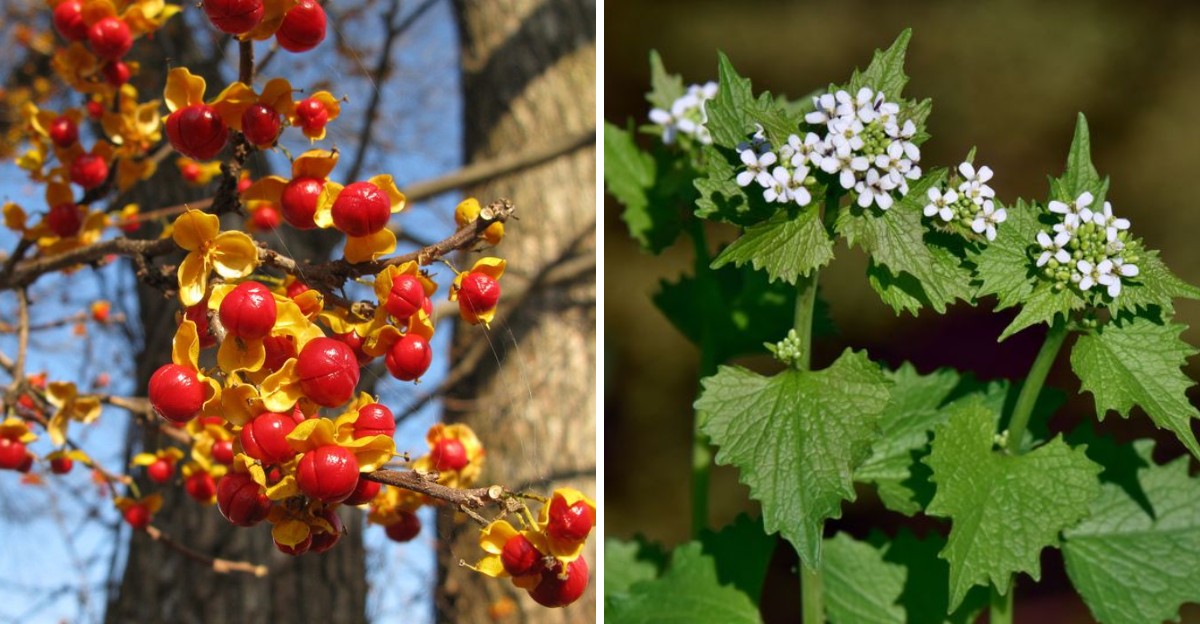
Several of the worst offenders arrived as pretty garden shrubs, sold for their red berries and blazing autumn leaves. Birds gobble those berries in winter and then plant the seeds in woods far from your yard.
I have to admit that I once admired a few of these plants before learning what they do. You might recognize some of them in your own beds, hiding in plain sight beside the mailbox.
Late winter is a smart window across Pennsylvania, since bare branches reveal the culprits before new leaves hide them. So which familiar faces in your yard deserve a pink slip before the first spring buds open?
1. Japanese Barberry
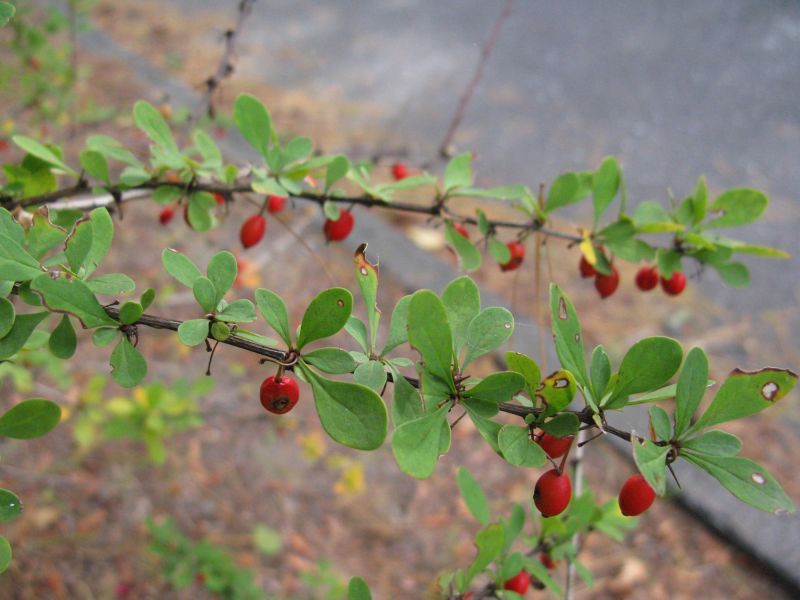
Run your gloved hand along a barberry stem and you will feel a sharp spine poking out at every node. Those tiny needles make this ornamental shrub a fortress, and ticks seem to love hiding inside it.
Researchers in Connecticut found more black-legged ticks carrying Lyme bacteria in dense barberry thickets than in cleared areas. The shrub traps humidity near the ground, which helps those ticks stay comfortable and active longer.
Japanese barberry, or Berberis thunbergii, usually grows two to eight feet tall with small, rounded leaves in clusters.
Some cultivars sport purple or gold foliage, and bright red berries dangle from the stems well into winter.
Birds carry those berries into nearby woods, where the shrub crowds out native wildflowers and young tree seedlings. Pennsylvania added it to the state noxious weed list, so new sales have been phased out.
Personally, I like tackling barberry in late winter because it leafs out early and stands out against bare woods. Small plants pull up easily from moist soil, especially after a soaking rain loosens the shallow roots.
Bigger shrubs respond well to a weed wrench or a sturdy shovel, so you lift out the whole root crown. Leftover root pieces can resprout, so check the spot again in summer for any fresh green shoots.
Wear thick leather gloves and long sleeves, because those spines will snag thin fabric with surprising ease. Native ninebark or winterberry makes a lovely replacement that birds and pollinators can actually use all year.
2. Multiflora Rose
Back in the 1930s, farmers were encouraged to plant this rose as a living fence for livestock and soil control.
Nobody expected those sweet-smelling white flowers to turn into a thorny tangle across so many open hillsides.
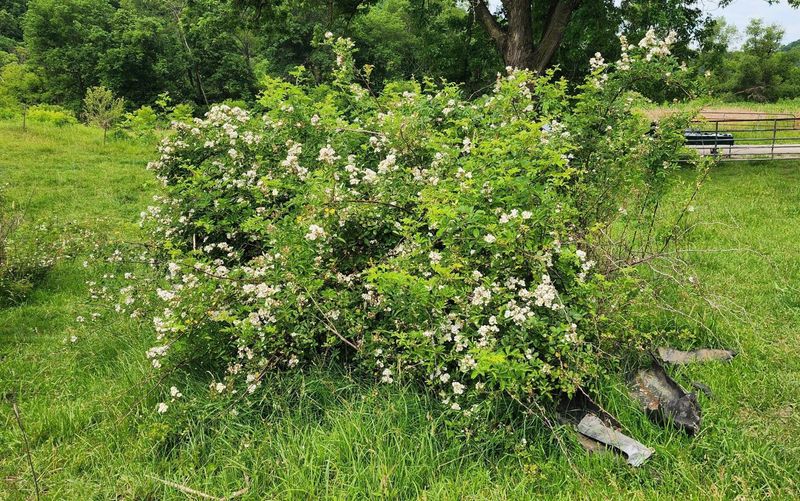
Multiflora rose, Rosa multiflora, forms arching mounds six to fifteen feet tall and can scramble up into trees. Look for feathery fringed stipules at the base of each leaf stalk, a handy clue for quick identification.
One large plant can produce hundreds of thousands of seeds, and birds spread the small red hips everywhere. Those seeds can stay viable in soil for up to twenty years, which keeps new seedlings popping up.
It is listed as a noxious weed in Pennsylvania, so selling or planting it is against state law. I believe that rule says plenty about how much trouble this shrub causes in pastures and woods.
The plant leafs out earlier than most native shrubs, so late winter gives you a clear view. Green canes and red hips stand out nicely against brown leaves, which makes spotting young plants much easier.
Dig small plants out with a shovel, taking the root crown along with as many roots as possible. For big thickets, cut canes near the ground first, then dig or treat the crown afterward.
Repeated mowing or cutting several times a season can also weaken stubborn plants over a few years. Grab your heaviest gloves, because those hooked prickles grab skin and sleeves like tiny curved fishhooks.
3. Oriental Bittersweet
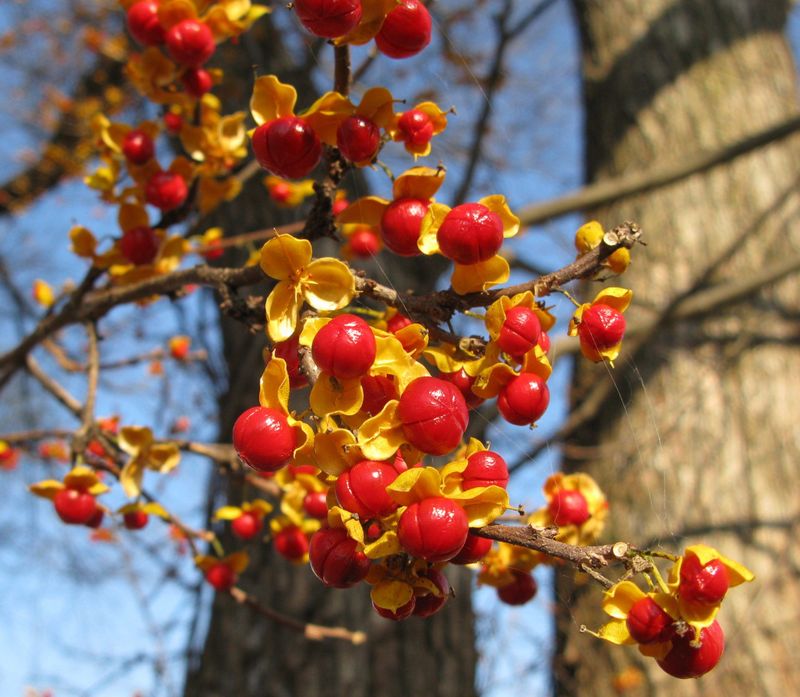
Those cheerful orange and red berries in holiday wreaths often come from a vine that strangles trees in the woods. I used to think it looked festive, until I saw a young maple twisted like a corkscrew.
Oriental bittersweet, Celastrus orbiculatus, is a woody vine that can climb sixty feet and grow several inches thick. It wraps tightly around trunks and over time it girdles the tree and adds weight that snaps branches.
Its round, finely toothed leaves turn bright yellow in fall, and yellow capsules split open to show red fruit. Birds eat those berries all winter, so new vines keep sprouting along forest edges and roadsides.
The most interesting part involves a native cousin, American bittersweet, which grows wild in our forests too. The invasive vine can crossbreed with it, and many experts worry about the native plant’s future.
To tell them apart, check flower and fruit placement along the stem rather than only at tips. Oriental bittersweet carries fruit in small clusters where leaves join stems, while the native fruits at branch ends.
Before spring leaf-out, cut thick vines near the ground and again at waist height to remove a section. Leave the upper vine hanging in the tree, since yanking it down can tear limbs and harm the host.
Cut stumps resprout eagerly, so many extension guides suggest treating them right away with a labeled herbicide. Please bag those berry-covered vines for the trash instead of the compost pile or a holiday wreath.
4. Japanese Knotweed
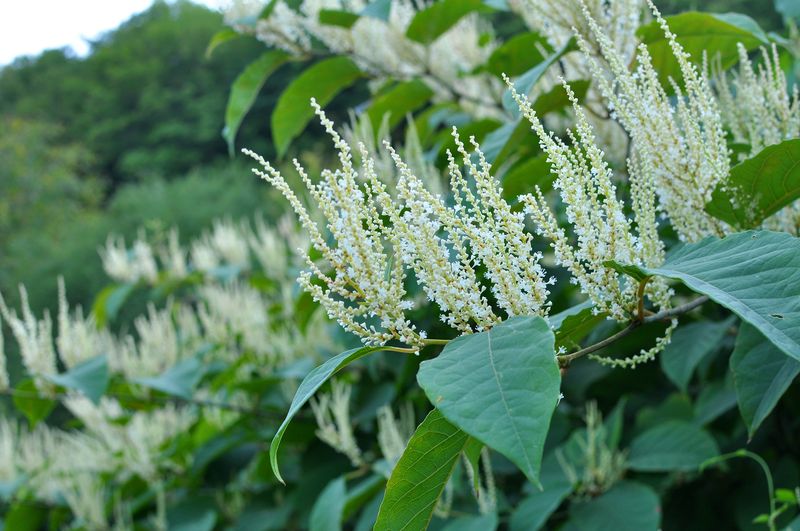
Hollow, jointed stems that look like bamboo can push up through asphalt cracks and even tiny gaps in foundations.
Japanese knotweed, Reynoutria japonica, is the bully behind that trick, and I find its toughness almost unbelievable.
The plant shoots up three to ten feet tall each season, with broad, spade-shaped leaves on zigzag stems. Lacy sprays of tiny creamy white flowers appear in late summer, buzzing with bees for a few weeks.
Its real power hides underground, where thick rhizomes can spread many feet sideways from the parent clump. A small piece of rhizome, sometimes only a fraction of an ounce, can grow into a brand new plant.
Along Pennsylvania streams, dense stands shade out native plants and leave banks bare and prone to erosion in winter. Floodwater also carries broken stems downstream, which helps this plant hitchhike to new spots along the water’s edge.
During these colder weeks, last year’s tall reddish brown canes stand out clearly, so mark each patch before new shoots appear.
Pulling or digging rarely works on large patches, because leftover rhizome pieces sprout back with gusto.
Cutting stems to the ground every few weeks through the growing season can slowly weaken the roots over years. Penn State Extension notes herbicide treatments in late summer or early fall tend to work best for big stands.
Bag every cut stem and root scrap for the trash, since compost piles can turn into knotweed nurseries.
Patience matters here, and steady effort over several seasons usually pays off nicely for determined home gardeners.
5. Garlic Mustard
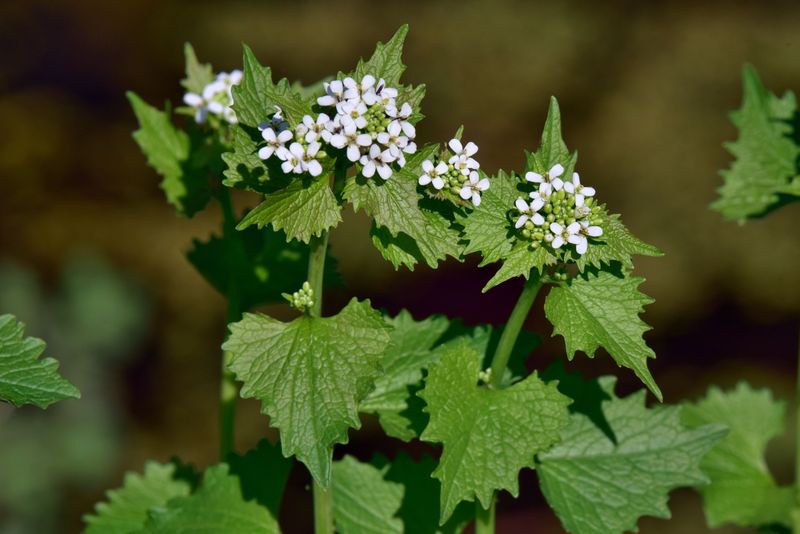
Crush a leaf between your fingers and a sharp garlic smell pops out, which surprised me the first time. That scent belongs to garlic mustard, Alliaria petiolata, a sneaky herb that loves shady woods and garden edges.
As a biennial, it spends its first year as a low rosette of rounded, scalloped leaves that stay green. In its second spring, it sends up flower stalks topped with small white blooms that have four petals.
Those evergreen rosettes are easy to spot in late winter, when most other plants on the forest floor look brown. I like scouting on mild days, because that bright green practically waves at you from under the trees.
Garlic mustard releases chemicals that interfere with helpful soil fungi that many native wildflowers and trees rely on.
It also fools the West Virginia white butterfly into laying eggs on it, and the caterpillars struggle to survive.
Each plant can make hundreds of seeds, and those seeds may wait in the soil for several years. That long waiting game means you should expect fresh seedlings to keep appearing for a few seasons.
You’ll love how easy this one is, since the shallow taproot slides out of damp soil with a gentle tug. Grab low on the stem and pull slowly so the top of the root comes up too.
Bag pulled plants instead of composting them, because flowering stems can still ripen seeds after they leave the ground. Some folks even toss young leaves into pesto, which turns weeding into a tasty little reward.
6. Burning Bush
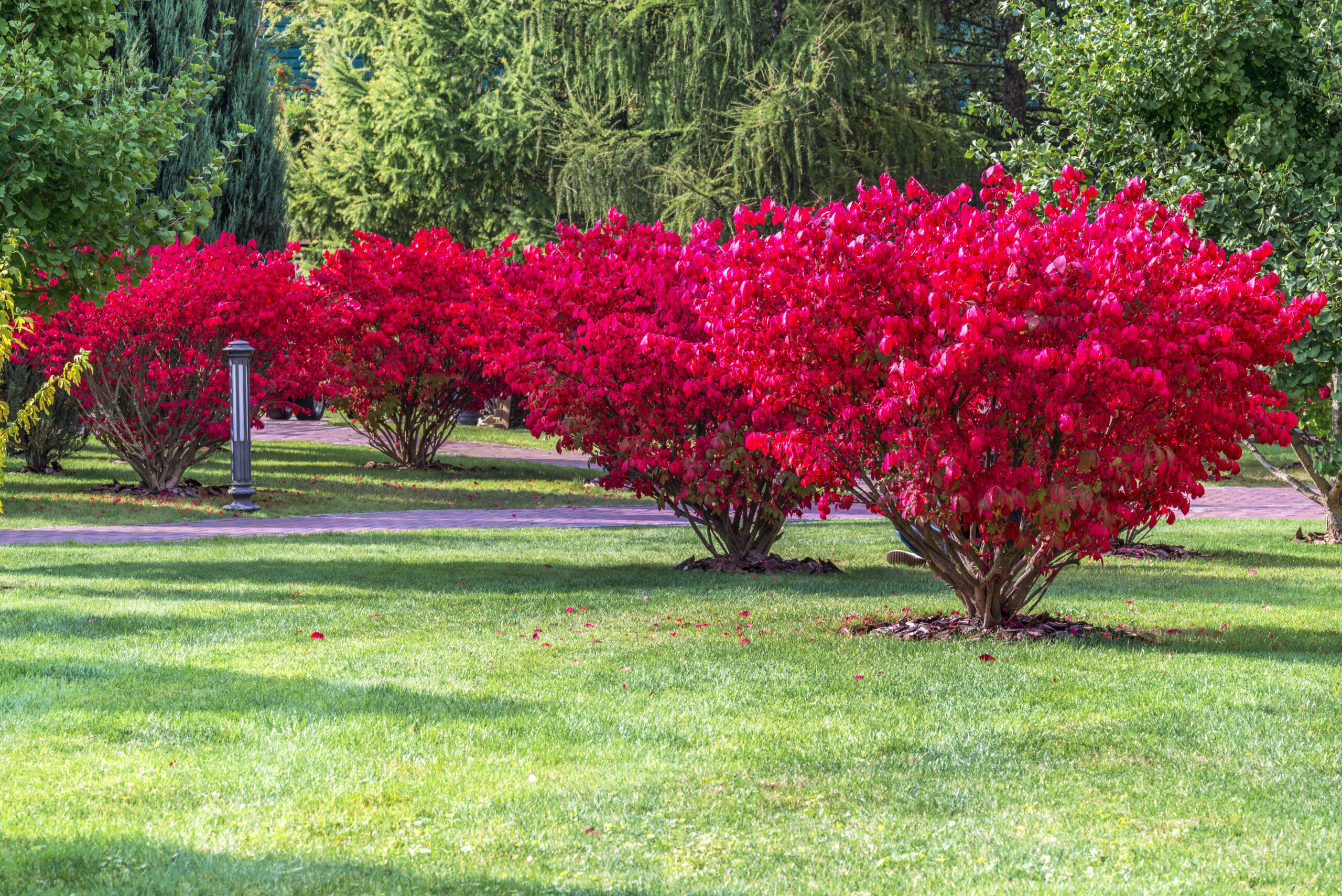
Every October, neighborhoods glow with the fiery red leaves of this shrub, and I understand why people planted it.
Burning bush, Euonymus alatus, looks tidy by the driveway, but its seedlings are quietly creeping into nearby forests.
Take a closer look at the twigs and you will see flat, corky wings running along the stems. Those odd ridges explain its other name, winged euonymus, and they make winter identification pretty simple.
Wild shrubs can reach fifteen to twenty feet tall, with smooth oval leaves arranged in opposite pairs. Small orange red fruits dangle in fall, and birds carry the seeds far beyond your property line.
What surprises me most is how well it handles deep shade, which lets it spread across forest understories. Dense seedling carpets can crowd out native shrubs and wildflowers that wildlife depend on for food.
Pennsylvania’s natural resources agency lists it as invasive, even though garden centers have sold it widely for decades.
Even compact cultivars like Compactus can produce plenty of seeds, so they are not a safe swap.
Seedlings pull up easily from moist soil, so tackle them during a mild thaw before leaves emerge. Larger shrubs need a good shovel and some elbow grease to lift the root ball out.
Fresh stumps tend to push up new shoots, so watch the spot and clip any sprouts quickly. For gorgeous fall color without the guilt, try native highbush blueberry or red chokeberry in that same sunny spot instead.
7. Callery Pear
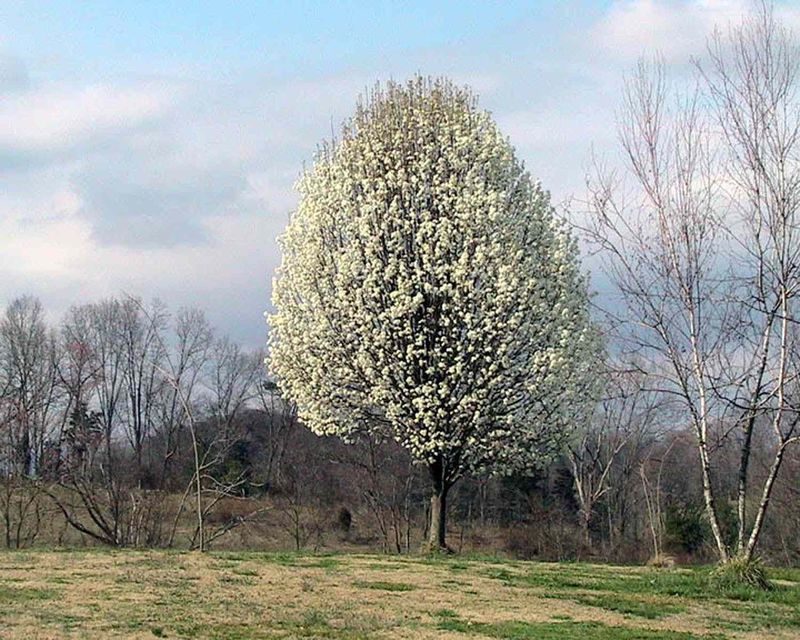
That fishy smell drifting across parking lots in April often comes from clouds of white Callery pear blossoms. Most of us know it as Bradford pear, the tidy street tree that once seemed perfect for every subdivision.
Callery pear, Pyrus calleryana, came from China and was promoted widely as an ornamental starting in the 1960s.
Single cultivars could not set much fruit alone, but different varieties planted together began cross-pollinating with each other freely.
Those crosses produced small hard fruits that birds spread, and wild thickets now fill old fields and roadsides. Wild offspring often grow long, sharp thorns that can puncture boots and even some tractor tires.
Pennsylvania added Callery pear to its noxious weed list, which phases out sales of this popular tree statewide. I can’t imagine a clearer sign that this pretty bloomer has worn out its welcome in our towns.
Mature trees reach about thirty to forty feet tall, with glossy oval leaves that have wavy, finely toothed edges.
Weak branch angles mean many older trees split apart during storms, which often lands limbs on cars and roofs.
Late winter is a fine time to pull small seedlings, since their roots loosen easily in soft, thawed soil. Cutting a big tree before bloom stops this year’s fruit, but stumps and roots usually resprout vigorously.
Treat fresh stumps with a labeled herbicide, or hire a certified arborist for large trees near your house.
Native serviceberry makes a charming swap, with white spring flowers and sweet berries that songbirds adore in early summer.