7 Low-Growing Florida Border Plants That Stay Tidy With Less Trimming All Summer
You can tell a lot about a Florida yard just by looking at the edges. Clean, defined borders make everything feel finished, like the space was planned with intention.
But give it a few weeks of summer weather and those same edges start to blur, soften, and creep into places they were never meant to go.
It is not a lack of care. It is the pace of growth here.
Warm nights, steady moisture, and long days keep plants moving nonstop, and anything that grows a little too freely will show it fast.
That is why the smartest borders are built with restraint in mind. Low-growing plants that stay compact can keep lines crisp without constant trimming, even through the most active stretch of the season.
With the right choices in place, edges stop shifting all over the map and start holding steady, giving the whole yard a cleaner, more settled look.
1. Elliott’s Lovegrass Keeps Sunny Borders Light And Neat
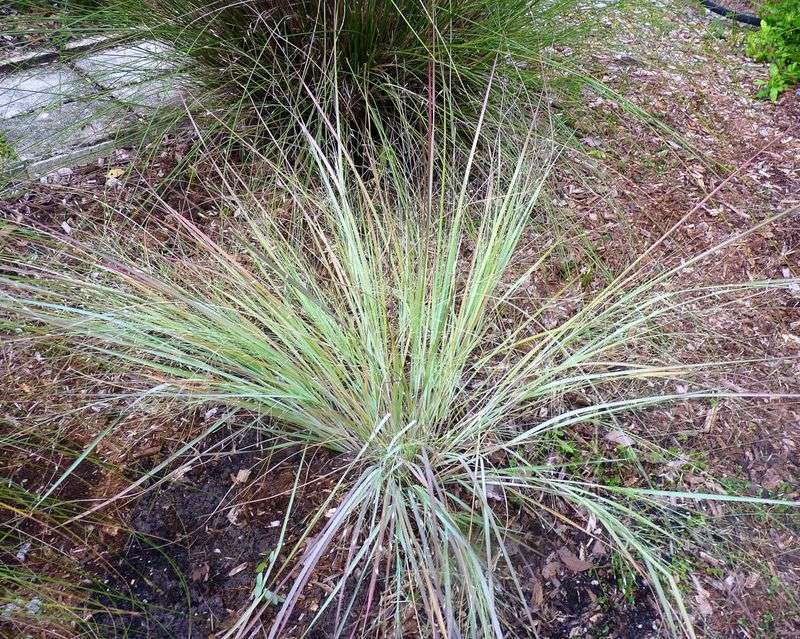
Few border plants handle a hot, sunny Florida yard with as much quiet elegance as Elliott’s lovegrass. This native grass, known botanically as Eragrostis elliottii, produces slender blue-green foliage that arches softly outward, creating a light and airy mound that rarely looks unkempt.
It is not a stiff, blocky plant. It has a natural grace that makes a border feel considered rather than overcrowded.
What makes it especially practical for summer borders is that it does not require constant trimming to keep its shape. The mound stays relatively compact, usually reaching around one to two feet tall, and the fine texture keeps it from ever looking heavy or overgrown.
In late summer, thin delicate seed heads rise above the foliage and catch the light beautifully, adding an extra visual layer without any extra work from you.
Elliott’s lovegrass performs best in full sun and is well-adapted to the well-drained, often sandy soils found across many parts of Florida.
UF/IFAS recognizes it as a native grass with strong landscape value, particularly in low-input settings where watering and maintenance need to stay minimal.
Once established, it handles Florida’s summer heat and periodic drought without complaint.
It works especially well along the front edge of a sunny border or as a repeated accent plant along a path or driveway edge. Spacing several plants together creates a soft, rhythmic border that looks intentional without looking clipped.
Because the foliage is so fine and the form so naturally tidy, it rarely needs cutting back during the growing season. A light trim in late winter or early spring is usually all it takes to keep it refreshed and ready for another Florida summer.
2. Purple Lovegrass Adds A Soft Native Edge Without Looking Wild
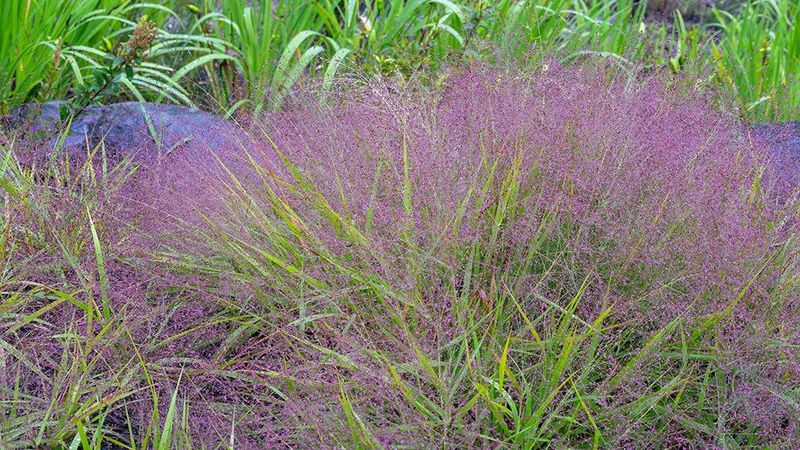
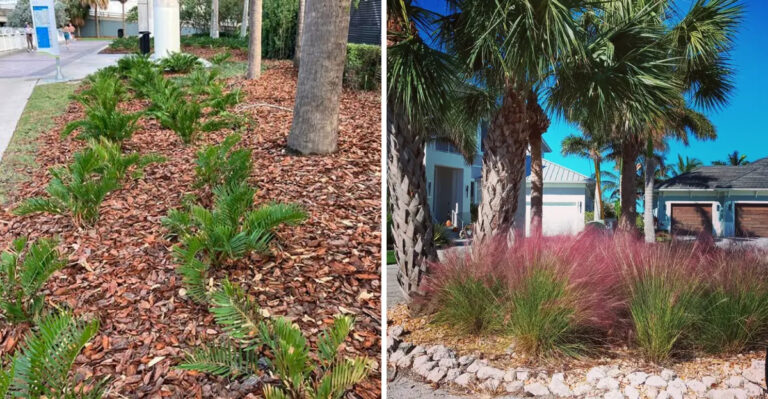
There is a moment in late summer when purple lovegrass practically glows. The plant, known as Eragrostis spectabilis, sends up a billowing haze of reddish-purple seed heads that seem to float above the foliage like a soft cloud.
From a distance, a border planted with purple lovegrass looks warm, textured, and alive without ever looking messy or out of control.
Your Florida Garden Changes Every Week. Your Plan Should Too.
Gardening in Florida changes quickly throughout the season. Every Friday you’ll receive a simple weekly plan showing exactly what to plant, prune, fertilize, harvest, and protect so you never miss the right timing.
Unlike some native grasses that can read as weedy if placed carelessly, purple lovegrass has a naturally ornamental quality.
The foliage stays relatively low and fine-textured, and the overall plant tends to stay compact enough for a border edge without spreading aggressively into surrounding areas.
That combination of soft color and restrained form is exactly what makes it useful for homeowners who want something natural-looking but still visually polished.
Purple lovegrass is native to parts of Florida and is recognized by UF/IFAS as a native species with real landscape value. It performs best in full sun to very light shade and is comfortable in the sandy, lower-fertility soils that are common across many Florida properties.
It does not need rich soil or heavy fertilizing to look its best, which keeps maintenance simple through the summer growing season.
The ornamental effect is most striking when several plants are grouped together along a border edge, allowing the seed heads to create a layered, flowing visual rather than isolated dots of color.
Because the plant naturally stays lower and does not sprawl in a distracting way, it rarely needs intervention during summer.
The seed heads eventually dry to a warm tan that continues to look attractive into fall. For a border that needs softness, movement, and a distinctly Florida-native feel, purple lovegrass delivers all of that without asking for much in return.
3. Sunshine Mimosa Works Best In Sunny Low Traffic Borders
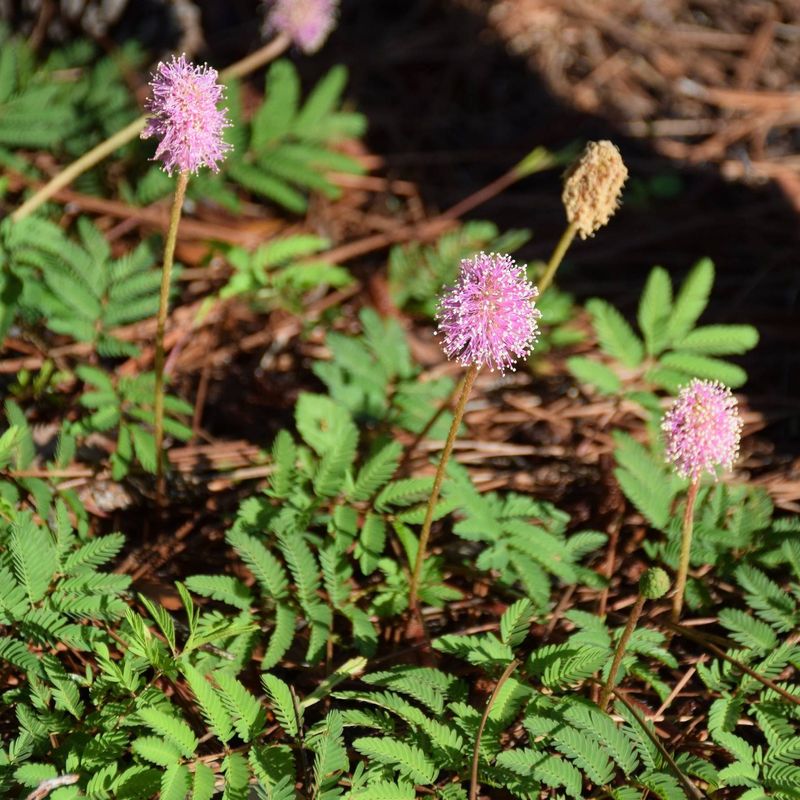
Sunshine mimosa has a quirky charm that sets it apart from most border plants. Touch the delicate compound leaves and they fold inward almost immediately, a response that makes kids and adults alike stop and look twice.
But beyond that novelty, Mimosa strigillosa is a genuinely useful native plant for sunny, low-traffic Florida border spaces where you want a lower, spreading layer that softens an edge without needing constant clipping.
The plant grows low to the ground and spreads outward rather than upward, forming a mat-like layer that stays well under a foot tall. Small, fluffy pink flowers appear through much of the warmer months, adding cheerful color at ground level.
Because it grows horizontally rather than vertically, it naturally fits border spaces where a taller, bulkier plant would feel out of scale.
UF/IFAS notes sunshine mimosa as a native Florida plant with value in low-input landscapes, particularly in sunny, well-drained sites. It is comfortable in sandy soils and handles heat and periodic dry spells without significant decline.
It does not require summer trimming to maintain its low profile, which is exactly what makes it practical for borders that need to look neat without demanding weekly attention.
The low-traffic requirement matters here. Sunshine mimosa can handle occasional light foot traffic, but repeated heavy use will wear it down.
Placing it along a border edge that people admire rather than walk through regularly gives it the best chance to perform well.
It works particularly well along sunny driveway borders, along fence lines, or at the front edge of a planting bed where its spreading habit fills in space attractively.
Keep in mind that its native range is not statewide, so checking local suitability before planting is a smart step.
4. Twinflower Fits Partly Shaded Borders In Warm Florida Gardens
Not every Florida border sits in blazing full sun. Many yards have a tree line, an overhang, or a structure that creates a zone of softer, dappled light, and that is exactly where twinflower can shine.
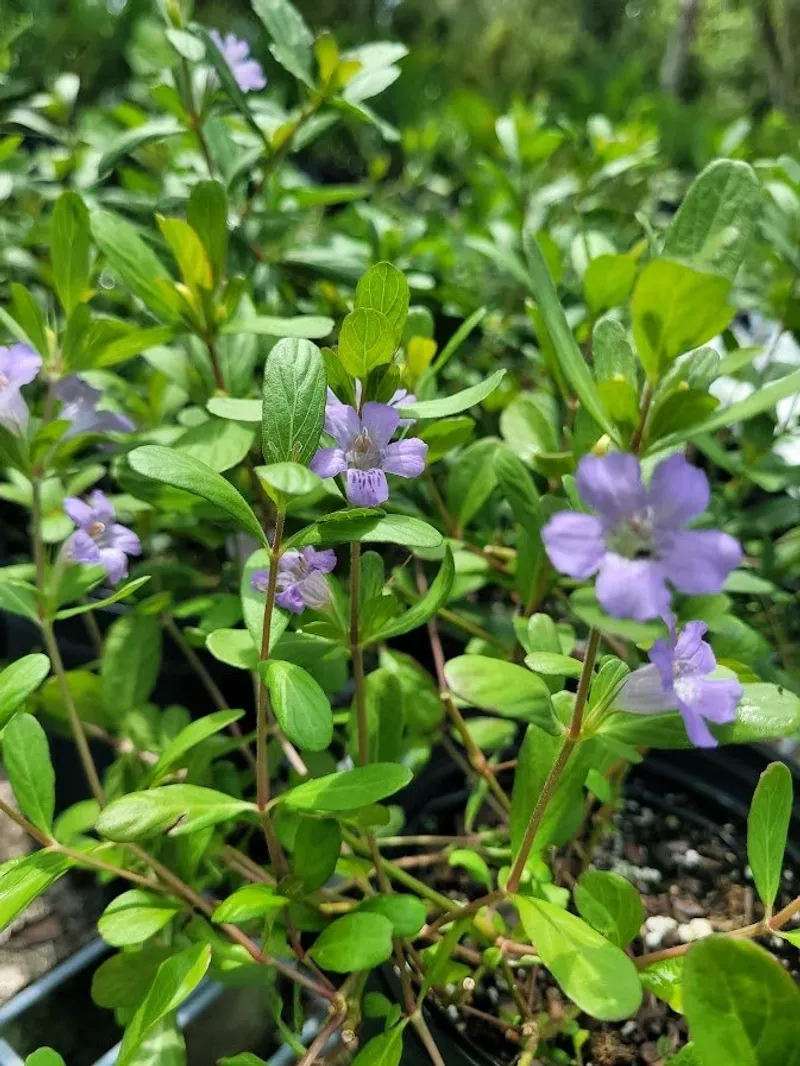
Dyschoriste oblongifolia is a low-growing native Florida plant that fits naturally into partly shaded border spaces, producing small lavender-blue flowers that add quiet color without demanding the kind of attention that more dramatic plants require.
The plant stays low and spreading, typically reaching just a few inches to around a foot in height depending on conditions. Its small, rounded leaves form a soft, informal layer that works well as a border filler in lightly shaded spots.
The flowers appear in clusters and continue to show up through much of the warmer season, which means the plant earns its place visually without requiring any intervention to keep blooming.
UF/IFAS recognizes twinflower as a native species with genuine landscape utility in warm Florida gardens. It fits best in partly shaded, moist to moderately moist sites rather than in harsh full sun or extremely dry conditions.
That makes it a practical answer for the shaded side of a house, along a fence where trees filter the afternoon light, or beneath the canopy edge of a larger planting where the ground often stays cooler and slightly more humid.
It is not the right plant for a stiff, formal edging situation. The form is soft and naturalistic rather than crisp, which actually works in its favor for the kind of relaxed, partly shaded border that many Florida gardens have.
Twinflower also supports native bees and other pollinators, which adds another layer of value beyond its tidy, low-maintenance habit. For warm, partly shaded Florida borders, it is a genuinely underused option worth considering.
5. Beach Sunflower Brightens Hot Dry Coastal Edges
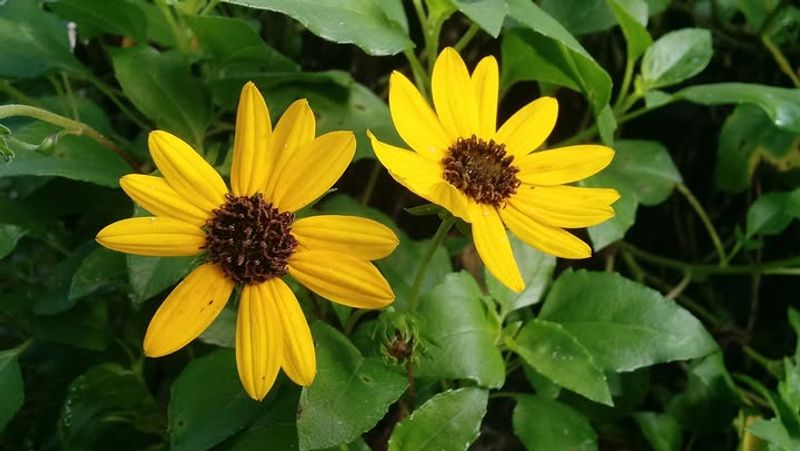
Along Florida’s coast, the combination of sand, salt air, intense sun, and relentless heat rules out most conventional border plants before they even get started. Beach sunflower, or Helianthus debilis, is built for exactly that environment.
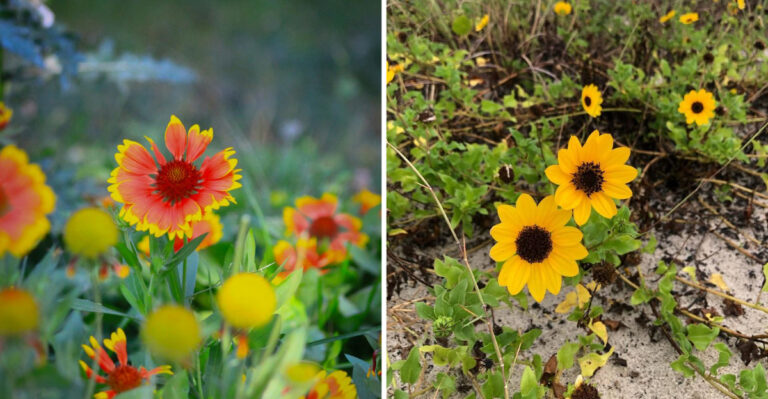
Cheerful yellow flowers with dark centers bloom almost continuously through the warm season, bringing a burst of color to coastal edges where most other plants struggle to survive, let alone look attractive.
The plant spreads low and wide, staying relatively close to the ground while filling in sandy border areas with dense green foliage. That spreading habit is part of what makes it so effective in coastal settings.
It covers ground efficiently, reduces erosion on sandy slopes or edges, and keeps the border looking full without requiring regular trimming to maintain its shape.
The flowers come back reliably without deadheading, which keeps the visual payoff high and the labor low.
UF/IFAS highlights beach sunflower as a native Florida plant with strong performance in coastal and inland sites with well-drained, sandy soils and full sun exposure.
It is drought-tolerant once established and handles salt exposure better than most plants, which makes it a practical first choice for seaside borders rather than an afterthought.
It also attracts native bees and butterflies, supporting local pollinators while doing its landscape job.
Away from the coast, beach sunflower can still work in hot, dry, sandy inland sites that share similar conditions. The key is full sun and sharp drainage.
Wet, heavy soils are not its friend.
For coastal homeowners dealing with a tough, exposed border edge where beauty and resilience both matter, beach sunflower offers a genuinely satisfying solution that holds up through the entire Florida summer without asking for constant care or trimming.
6. Gopher Apple Works Best In Dry Sandy Border Spots
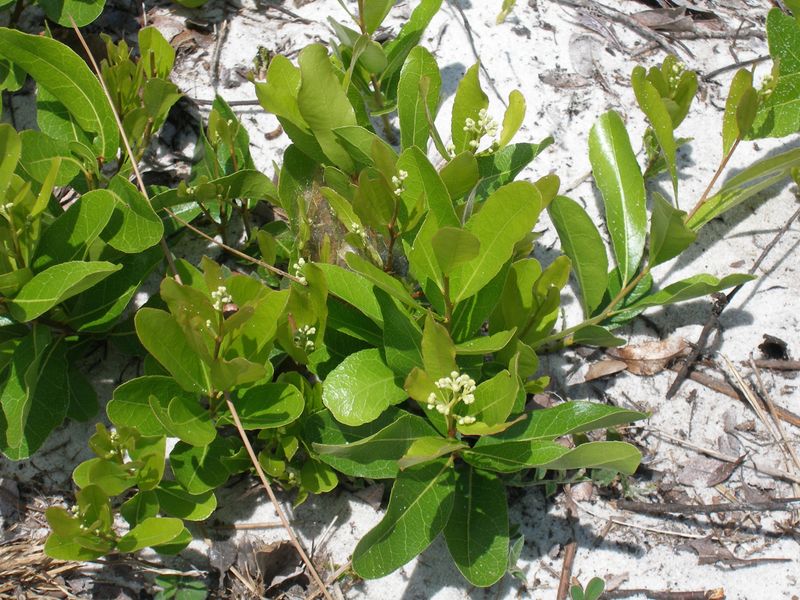
Sandy, dry border spots are one of the most frustrating landscaping challenges in Florida. Grass thins out, conventional plants wilt, and the area ends up looking neglected no matter how much effort goes in.
Gopher apple, known botanically as Licania michauxii, is one of the few native plants genuinely built for those conditions.
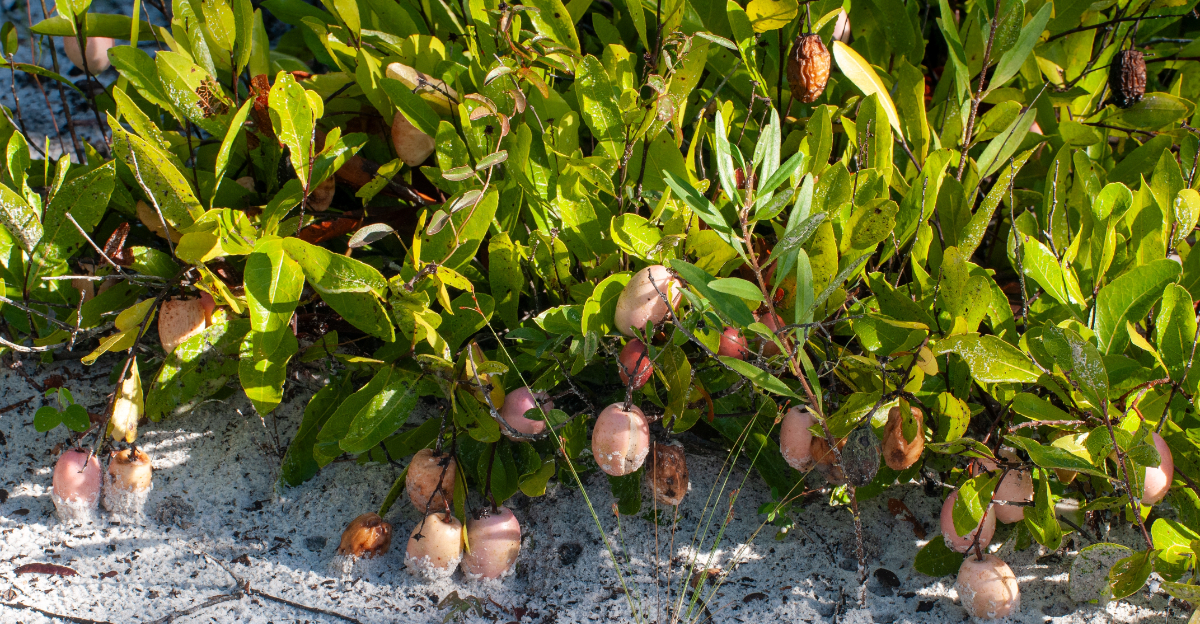
It is a low-growing, spreading plant that forms a dense mat of small, glossy leaves close to the ground, thriving in exactly the kind of dry, nutrient-poor, sandy soil that defeats most other options.
The plant spreads slowly through underground stems, gradually filling in sandy border areas without becoming invasive or unmanageable.
It stays low, typically well under a foot tall, and the dense leaf coverage gives a border edge a full, finished look even in the toughest spots.
Small white flowers appear in spring and are followed by small fruits that wildlife, particularly gopher tortoises, find attractive. That ecological connection is part of what makes gopher apple genuinely interesting rather than just functional.
UF/IFAS recognizes gopher apple as a native Florida plant well-suited to scrub, flatwoods edges, and other dry, sandy habitats. It is not a universal border solution and should not be treated as one.
It performs best in open, sunny, low-input sites with excellent drainage and is not the right choice for richer, moister soils where other plants would outcompete it easily.
Setting realistic expectations matters with gopher apple. It fills in slowly, and it will not produce a lush, formal-looking border edge.
What it does produce is a reliable, low-maintenance native layer in sandy spots where almost nothing else holds on through a Florida summer without extra irrigation or regular attention. For the right site, that kind of dependability is genuinely valuable.
7. Railroad Vine Solves Tough Coastal Border Problems
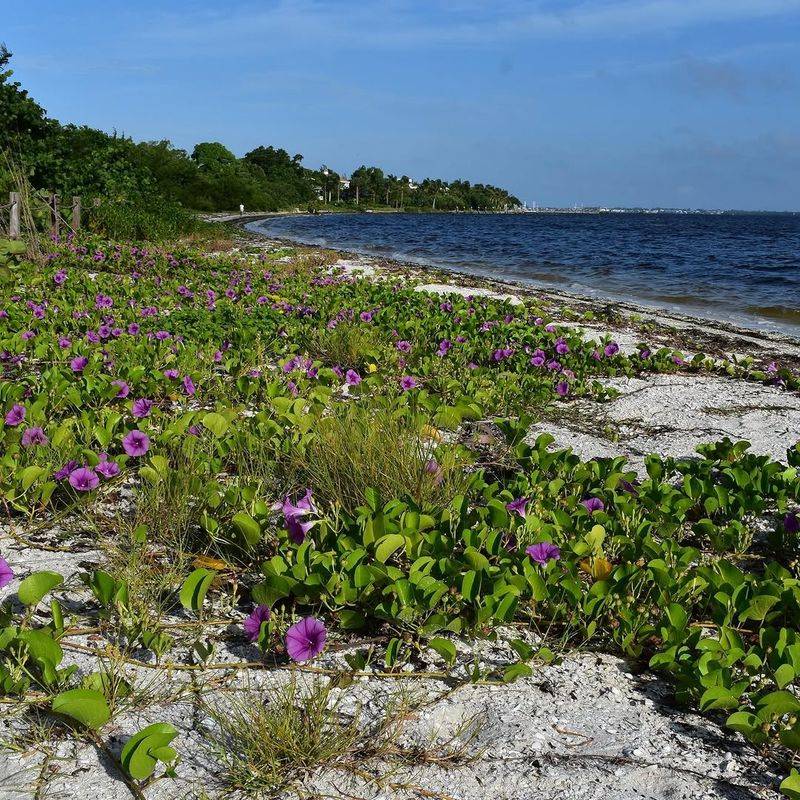
Some coastal border spots do not need a delicate solution. They need something tough, something that can handle blowing sand, salt spray, intense reflected heat, and soil that is more beach than garden.
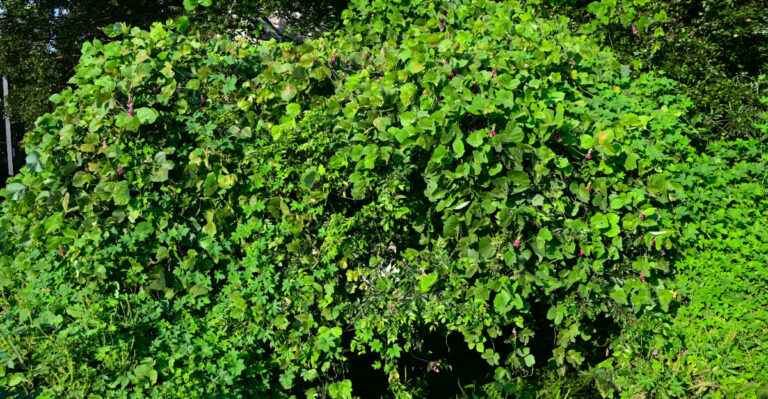
Railroad vine, or Ipomoea pes-caprae, is exactly that kind of plant. It runs long and low across sandy coastal ground, anchoring itself as it spreads and producing large, showy lavender-pink flowers that look almost too cheerful for the harsh conditions they grow in.
The plant spreads by long trailing stems that root at intervals, which is what makes it so effective at stabilizing sandy coastal edges. It does not pile up or grow tall, so it stays naturally low along a border without needing to be cut back.
The thick, rounded leaves are adapted to handle salt and intense sun, and the flowers open reliably through the warm season, giving a coastal border real visual interest rather than just bare ground or struggling grass.
UF/IFAS recognizes railroad vine as a native Florida coastal plant with strong performance in beach and dune environments. It is genuinely built for sandy, salty, exposed sites and performs far better in those conditions than most conventional border plants ever could.
The key is understanding that it is a coastal and near-coastal solution, not a general-purpose edging plant for every Florida yard.
In a typical inland garden with richer soil and more moisture, railroad vine can spread more aggressively and may not behave as tidily.
But on a coastal property where the border meets sand, salt, and sun, it fills a role that almost nothing else handles as naturally or as confidently.
For homeowners dealing with a tough coastal edge that just needs something reliable, attractive, and genuinely native, railroad vine is one of the most practical answers available in Florida landscaping.