Low-Growing Native Plants That Make North Carolina Garden Borders Look Finished
Low growing native plants add a polished, intentional look to North Carolina garden borders without demanding much extra maintenance.
Green and gold spreads steadily along edges, offering cheerful yellow blooms that brighten borders through much of spring and summer.
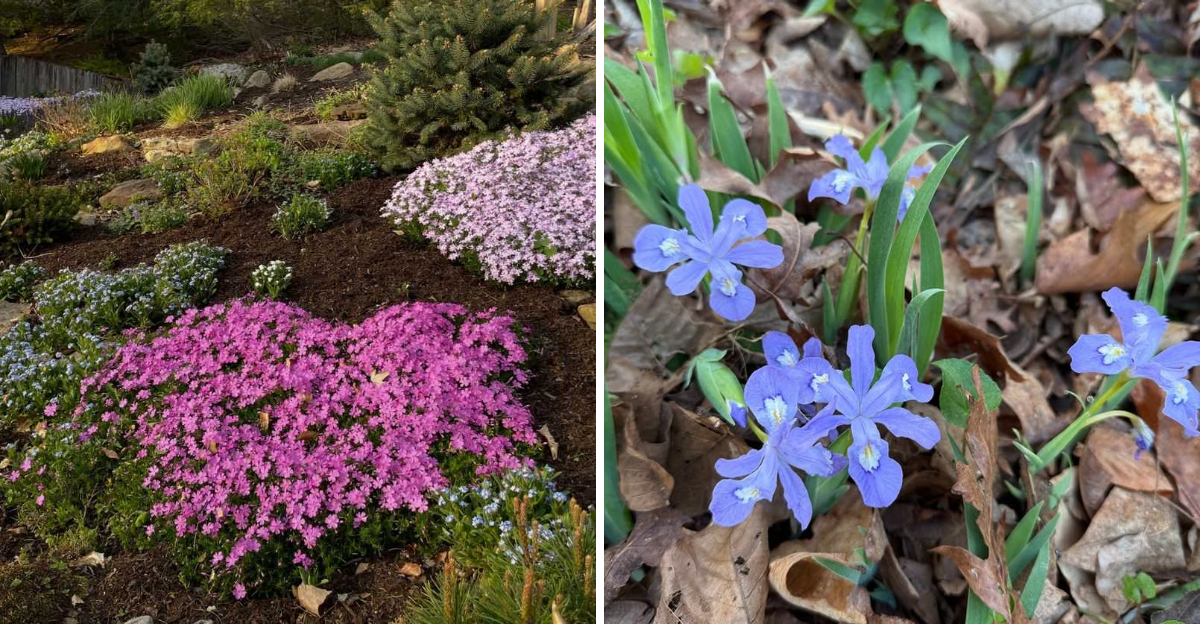
Creeping phlox provides a similar low profile while adding vibrant color during its blooming season each year. Wild ginger works especially well in shaded borders, bringing attractive, textured foliage that fills space naturally over time.
Pennsylvania sedge offers a soft, grass like appearance that pairs nicely alongside flowering natives for added contrast.
These plants share a natural ability to knit together as they mature, creating a cohesive border rather than scattered individual plants.
Their native status also means better resilience against North Carolina’s heat, humidity, and unpredictable rainfall. Combining a few of these options gives borders a finished, professionally designed appearance with surprisingly little upkeep.
1. Green And Gold Creates A Neat Shaded Edge
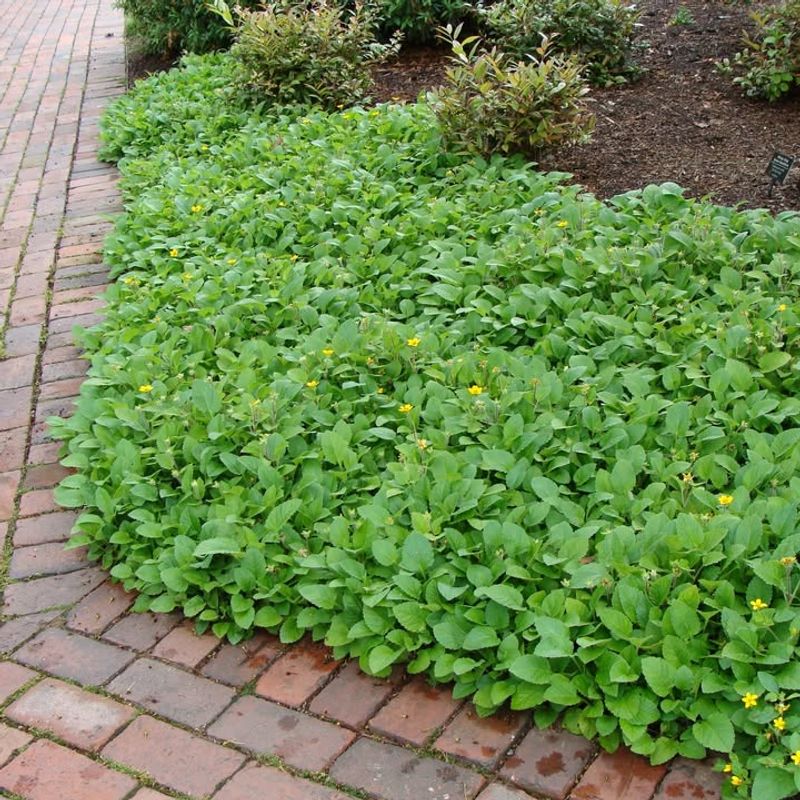
Few native plants can match the cheerful reliability of Green and Gold, known botanically as Chrysogonum virginianum.
This low-growing charmer forms a dense, leafy mat of dark green foliage that hugs the ground and spreads steadily through creeping stems.
When spring arrives, bright yellow daisy-like flowers pop up above the leaves, lighting up shaded spots that most plants ignore.
Green and Gold performs best in partial shade, though it can handle a bit more sun if the soil stays consistently moist. Well-drained soil rich in organic matter is ideal.
Mature plants typically reach about 6 to 12 inches tall and spread 12 to 24 inches wide, making them a smart choice for the front of woodland borders, path edges, and the spaces beneath large shrubs.
When planting, space plants about 12 inches apart to allow room for natural spreading. Water regularly during the first season to help roots establish, then ease back as the plant becomes self-sufficient.
Pollinators, especially native bees, visit the flowers readily from spring into summer, adding extra life to shaded corners of the yard.
Maintenance is wonderfully simple. A light trim after the main bloom period encourages fresh growth and tidier coverage.
Before planting, remove existing weeds thoroughly from the area, since established weeds can slow early spreading.
Once Green and Gold fills in, it naturally shades out most weed competition on its own, leaving your border looking clean, lush, and beautifully finished with almost no extra effort required.
2. Plantain Pussytoes Adds Soft Silver Foliage
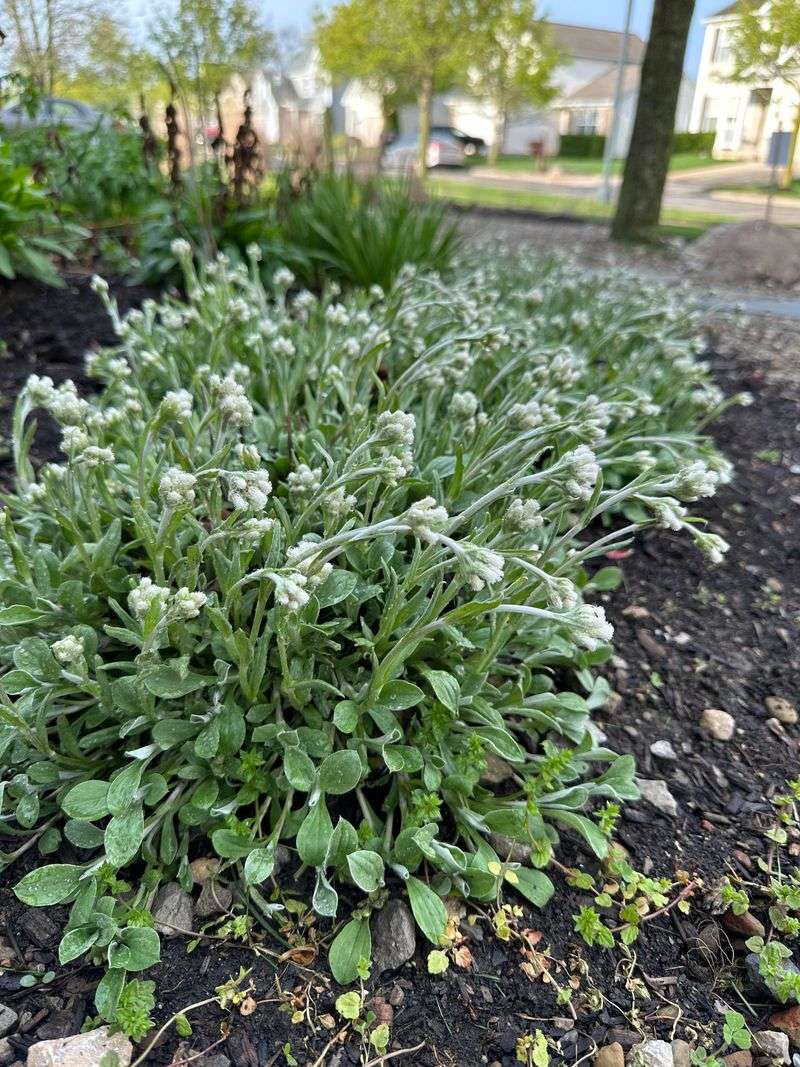
There is something unexpectedly elegant about a plant with fuzzy silver leaves spreading quietly across a dry, sunny border. Plantain Pussytoes, or Antennaria plantaginifolia, is one of North Carolina’s most underappreciated native ground covers.
Its woolly gray-green foliage creates a soft, velvety texture that contrasts beautifully against darker mulch or stone edging.
This plant thrives in conditions that would stress most others. Full sun to partial shade and lean, well-drained soil, whether sandy, rocky, or gravelly, suit it perfectly.
Rich soil and heavy fertilizer actually work against it, causing weak, floppy growth. Consistent moisture is also a problem, so avoid planting it in low spots or areas with poor drainage.
Your North Carolina Garden Changes Every Week. Your Plan Should Too.
Gardening in North Carolina changes quickly throughout the season. Every Friday you’ll receive a simple weekly plan showing exactly what to plant, prune, fertilize, harvest, and protect so you never miss the right timing.
Mature plants stay low, typically reaching just 4 to 8 inches tall, with spreading horizontal stems forming a tidy mat over time.
In early spring, short flowering stems rise above the foliage, topped with small, fuzzy white flower clusters that give the plant its quirky name.
These flowers attract early pollinators and serve as an important host plant for the American Lady Butterfly, making Pussytoes a genuine wildlife asset in any border.
Spacing plants about 12 inches apart gives them room to spread without crowding. Once established, this native practically takes care of itself.
Skip the fertilizer, reduce watering after the first season, and simply enjoy the silver shimmer it adds to dry, challenging spots where other plants struggle.
For rock gardens, gravel paths, and sunny border fronts with poor soil, Plantain Pussytoes is a genuinely outstanding native choice.
3. Wild Strawberry Fills Sunny Border Gaps
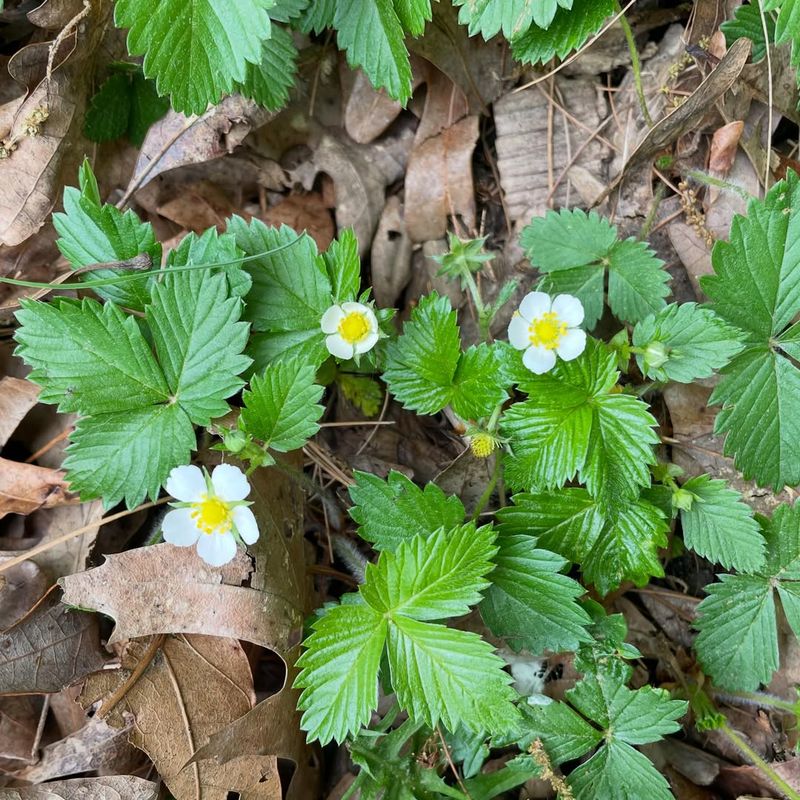
Wild Strawberry brings something special to the garden that goes beyond good looks.
Fragaria virginiana is a native ground cover that produces cheerful white flowers in spring, small but genuinely edible red fruit in early summer, and attractive trifoliate foliage that shifts to warm red and orange tones in fall.
It is a plant that earns its place across multiple seasons. Runners are how Wild Strawberry expands.
Each horizontal stem eventually roots where it touches soil, producing a new plant and gradually filling in open gaps along sunny or partly shaded border edges.
This spreading habit makes it especially useful on gentle slopes, informal bed fronts, and anywhere bare soil tends to invite weeds. Spacing transplants about 12 to 18 inches apart gives runners room to spread naturally without immediate crowding.
Average to slightly sandy, well-drained soil suits this plant well. It handles both full sun and light shade, though fruiting is heaviest in sunnier spots.
Water consistently during the first season to support establishment. After that, Wild Strawberry is fairly self-sufficient, though it appreciates occasional watering during dry spells.
Pollinators, particularly native bees, visit the flowers reliably in spring. Birds and small mammals enjoy the fruit too, adding real wildlife value to your border.
One thing to keep in mind is that intense summer heat and humidity can cause the foliage to look a bit tired by midsummer. Spring and fall are when Wild Strawberry truly shines.
Trim runners that wander beyond the intended border area to keep growth neat and contained without much trouble.
4. Woodland Stonecrop Finishes Rocky Border Fronts
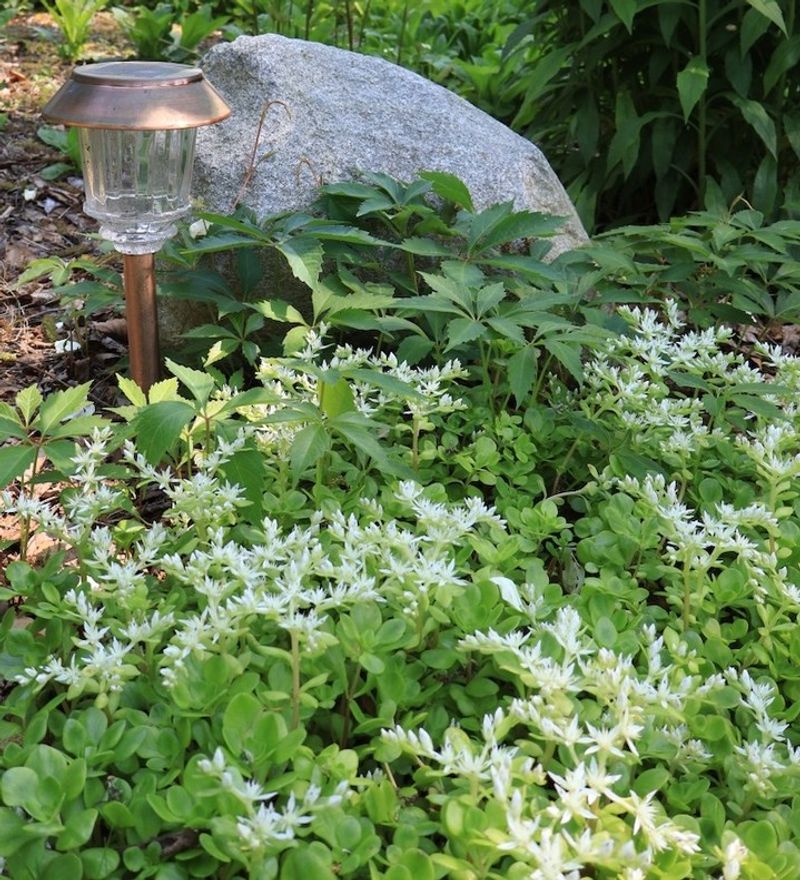
Rocky edges and shallow soils that frustrate most gardeners are exactly where Woodland Stonecrop feels right at home.
Sedum ternatum is a native succulent that creeps along the ground, weaving between stones and filling in tight spaces with whorls of small, rounded, bright green leaves.
When spring arrives, clusters of delicate white star-shaped flowers cover the plant, creating a soft, luminous effect along the border front.
Unlike many sedums, this one actually prefers partial shade rather than blazing sun, which makes it particularly useful beneath deciduous trees, along the north-facing side of rock walls, or between larger shade plants.
It tolerates shallow, rocky, and lean soils with ease, as long as drainage is good. Soggy or consistently saturated soil is the one condition to avoid, since excess moisture around the roots causes serious problems for this plant.
Mature plants typically reach 3 to 6 inches tall and spread 12 inches or more over time. Plant them 8 to 12 inches apart for relatively quick coverage.
Water during the first season while roots establish, then reduce watering as the plant settles in. Propagation is easy through stem cuttings, which root readily in moist soil during spring or early summer.
Pollinators, including small native bees and flies, visit the flowers during the spring bloom period. After flowering, the foliage remains attractive through the growing season, providing consistent texture and color along rocky border fronts.
Woodland Stonecrop is one of those quiet, reliable natives that simply looks better every year as it gradually fills in around stones and mulched edges.
5. Creeping Phlox Brings Spring Color To Bed Edges
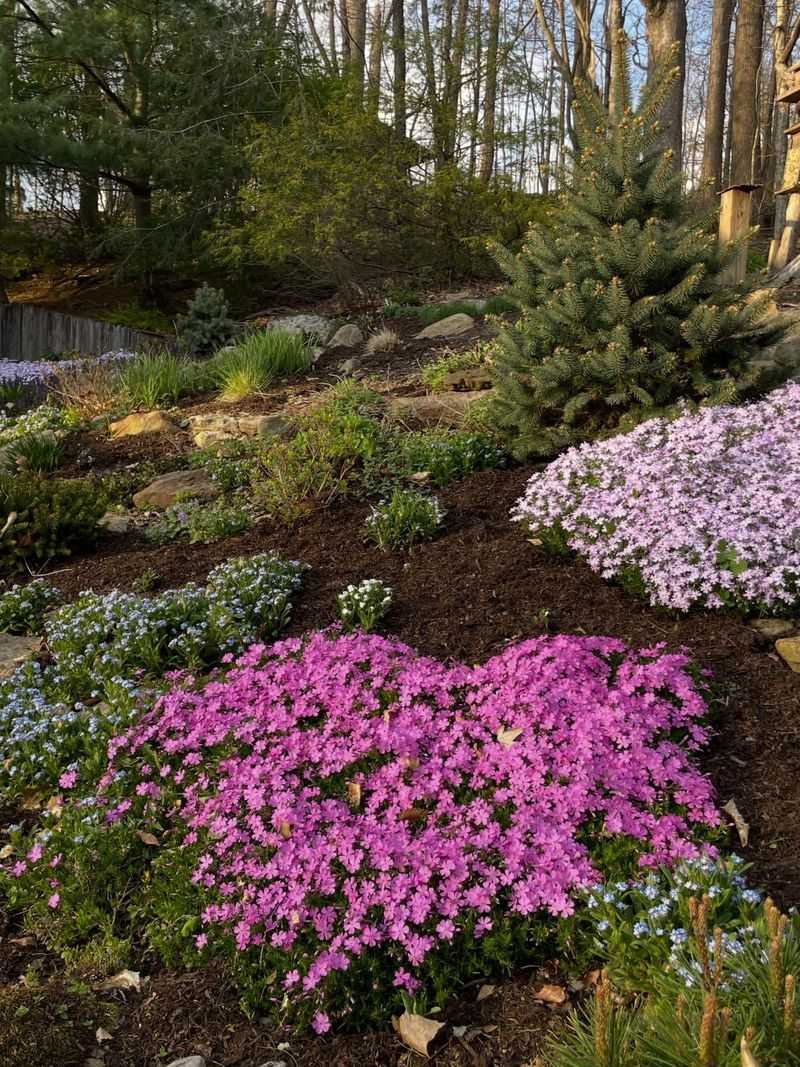
Few sights in a spring garden are more satisfying than a border edge blanketed in blooming Creeping Phlox.
Phlox stolonifera is a native woodland plant whose above-ground stems spread outward and root as they go, building a low, dense mat of soft foliage.
Come spring, that mat disappears beneath a wash of flowers in shades of pink, lavender, and white, depending on the variety you choose.
This plant adapts well to full sun or partial shade, though it tends to perform most reliably in spots with morning sun and afternoon shade in North Carolina’s warmer regions. Moist, well-drained, slightly acidic soil is ideal.
Good air circulation around the plants helps prevent fungal issues during humid summers, so avoid planting in tight, enclosed spots with poor airflow.
Mature Creeping Phlox stays low, typically reaching 6 to 12 inches tall and spreading 12 to 18 inches wide over time. Space transplants about 12 inches apart for relatively quick border coverage.
Water consistently through the first season, then reduce frequency once the plants are established and spreading well on their own.
Butterflies and native bees visit the flowers enthusiastically during the spring bloom period, making this plant a genuine pollinator magnet when it counts most. After flowering, trim the stems lightly to encourage tidy, compact regrowth.
Creeping Phlox can handle light foot traffic along a border edge, though it grows best when positioned where people are not regularly walking across it.
For a finished, colorful border front that returns reliably each spring, this native is a standout performer worth planting generously.
6. Partridgeberry Forms A Polished Woodland Carpet
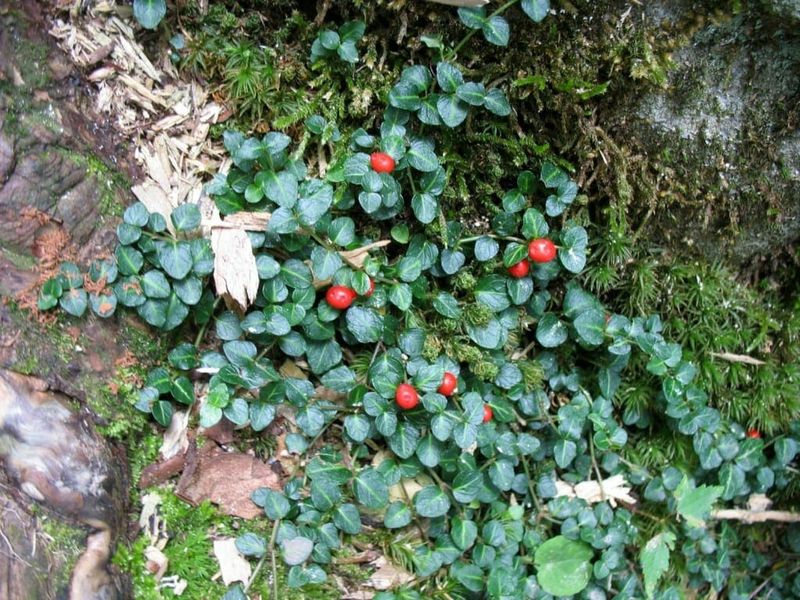
Walk through almost any mature North Carolina woodland and you might spot Partridgeberry threading quietly along the forest floor, its tiny glossy leaves catching the light beneath tall trees.
Mitchella repens is one of those natives that looks almost too refined to be wild. The paired leaves stay green all year, the small white flowers are lightly fragrant, and the bright red berries that follow add a cheerful pop of color through fall and winter.
This plant grows best in partial to full shade with moist, humus-rich, acidic soil and reliable drainage. Beneath deciduous trees, along protected woodland paths, and at the front of shaded borders are all ideal placements.
The trailing stems spread slowly along the soil surface, rooting as they go and gradually weaving into a tight, polished carpet that looks intentional and elegant.
Patience is genuinely required with Partridgeberry. It spreads slowly compared to more aggressive ground covers, and new plants may look modest during their first year or two.
Space plants about 6 to 12 inches apart and keep the soil consistently moist during establishment. Mulching with shredded leaves helps retain moisture and mimic the natural forest floor conditions this plant prefers.
Wildlife value is real and meaningful. Birds including grouse, wild turkeys, and thrushes eat the berries, while the flowers attract small native bees.
For a shaded border that needs year-round texture and a refined, finished appearance, Partridgeberry rewards patient gardeners with something genuinely beautiful.
It is not the fastest option, but it may well be the most quietly stunning native ground cover on this entire list.
7. Dwarf Crested Iris Defines Shady Border Edges
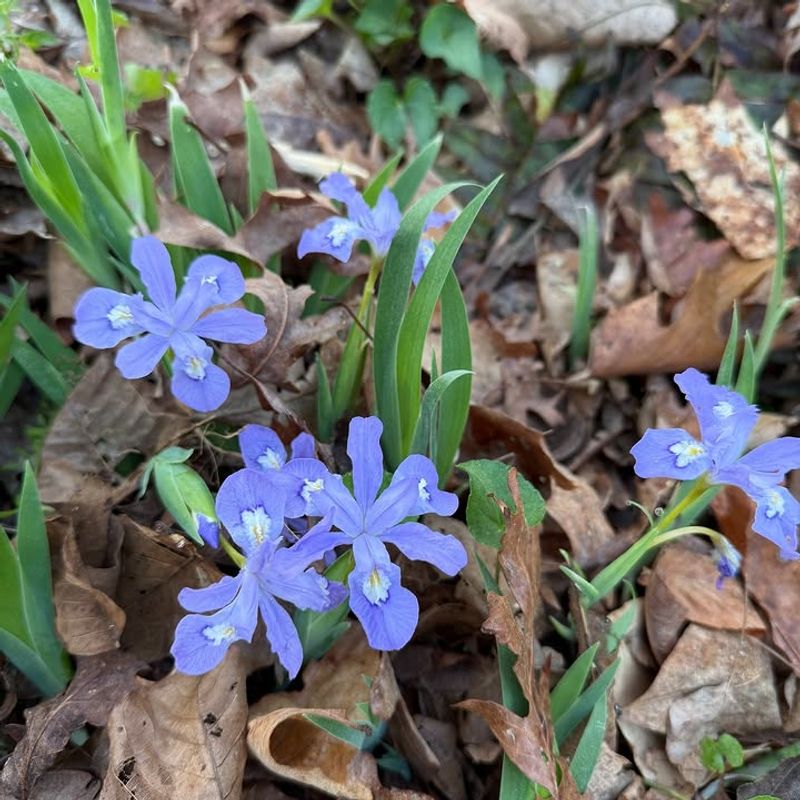
Picture a cluster of blue-violet flowers rising just a few inches above the ground in a shaded border, their petals marked with delicate yellow and white crests that look almost painted on.
That is Dwarf Crested Iris, Iris cristata, and it is one of North Carolina’s most beloved native wildflowers for good reason.
Small in stature but enormous in visual impact, this plant stops visitors in their tracks every spring.
Short, sword-shaped leaves emerge from shallow rhizomes and spread gradually outward, forming a low, tidy foliage mat that remains attractive well after the flowers fade.
Plants typically reach only 4 to 9 inches tall, making them perfectly scaled for border fronts and woodland path edges.
Over several seasons, established clumps can grow into a soft, spreading groundcover that defines a shaded edge beautifully.
Partial shade is the sweet spot for Dwarf Crested Iris. Rich, well-drained, consistently moist soil with a slightly acidic pH supports the best growth and flowering.
Plant the rhizomes shallowly, just barely beneath the soil surface, since burying them too deep reduces flowering significantly.
Space rhizomes 6 to 12 inches apart, and divide clumps every few years after blooming to maintain vigor and encourage continued spreading.
Combining Dwarf Crested Iris with native ferns, Wild Ginger, or Green and Gold creates a layered, naturalistic shade planting that looks cohesive and intentional throughout the growing season. Pollinators, including native bees, visit the flowers in spring.
For shaded North Carolina borders that need structure, seasonal color, and a genuinely native character, Dwarf Crested Iris is simply one of the finest choices available.