Pennsylvania Native Ground Covers That Replace Pine Straw And Look Better Through Every Season
Bare soil has a way of making even a well-planned garden look unfinished, and Pennsylvania yards seem to have it in all the most inconvenient places.
Under the big oak where nothing wants to grow, along that shaded border where mulch keeps washing into the lawn, on the dry sunny slope that defeats every plant you try.
Pine straw and wood mulch buy some time, but they break down, shift around, and need replacing more often than anyone wants to admit.
Living ground covers are a genuinely better long term answer, and Pennsylvania native plants bring something mulch never could: real foliage, seasonal flowers, wildlife value, and texture that actually improves year after year.
The trick is matching the right plant to the right spot, and once you do, bare soil starts feeling like a problem you used to have.
1. Pennsylvania Sedge Softens Shady Ground
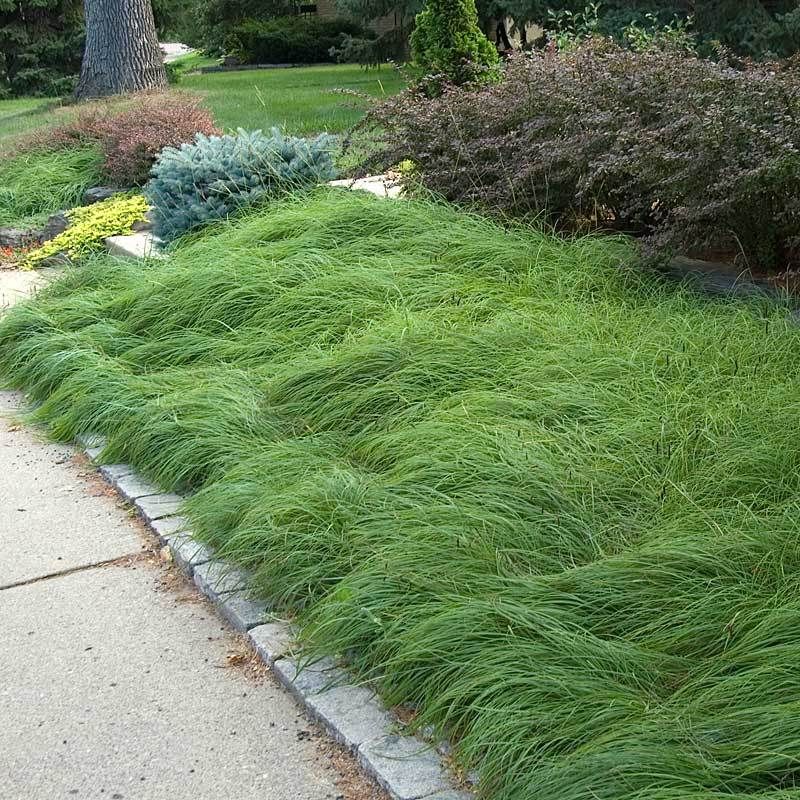
Beneath the canopy of mature oaks or maples, where grass refuses to grow and pine straw keeps sliding off sloped roots, Pennsylvania sedge quietly does something remarkable.
This fine-textured, grass-like native plant forms low, arching clumps that knit together over time to create a soft, carpet-like layer across shaded ground.
It is one of the most reliable options for difficult spots in gardens where light barely reaches and soil tends to stay dry under tree roots.
Unlike turf grass, Pennsylvania sedge does not demand full sun or frequent watering once it settles in. It stays semi-evergreen through much of the winter, holding its green color when many other plants have gone dormant.
That quality alone makes it worth considering for shaded beds where bare soil would otherwise be visible for months at a time.
Spacing plants about 12 inches apart and letting them fill in naturally tends to give the best results. Occasional trimming in early spring can refresh the look before new growth emerges.
Pennsylvania sedge pairs well with spring ephemerals and shade-tolerant native perennials, making it a useful layer in woodland-style plantings. Foot traffic tolerance is low, so it works best in areas where people are not regularly walking through the bed.
2. Wild Ginger Covers Woodland Shade
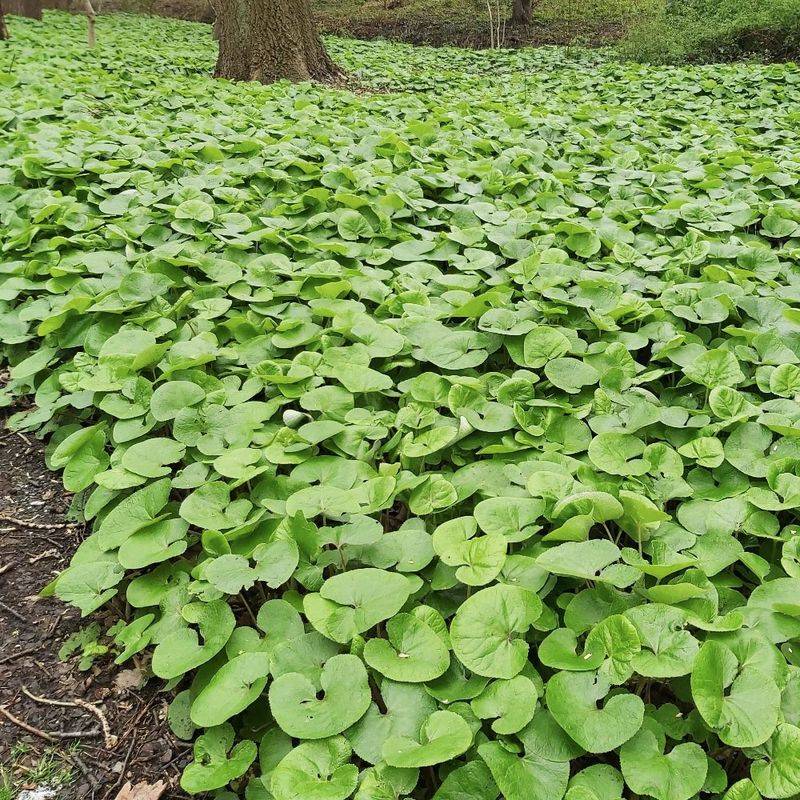
Few plants create that lush, deeply planted woodland look quite as well as wild ginger. The large, heart-shaped leaves overlap generously, forming a dense mat that shades out weeds and covers soil with a rich, dark green that holds through much of the growing season.
For Pennsylvania gardens with moist, humus-rich soil under trees or along shaded slopes, wild ginger brings the kind of textured coverage that pine straw simply cannot replicate.
Wild ginger spreads slowly by underground rhizomes, gradually expanding its footprint without becoming aggressive or difficult to manage.
That measured growth makes it a thoughtful choice for gardeners who want coverage that fills in over a few seasons rather than taking over the bed.
Planting it alongside ferns, trilliums, or native gingers in a layered woodland border can create a naturally finished appearance that feels intentional rather than accidental.
Your Pennsylvania Garden Changes Every Week. Your Plan Should Too.
Gardening in Pennsylvania changes quickly throughout the season. Every Friday you’ll receive a simple weekly plan showing exactly what to plant, prune, fertilize, harvest, and protect so you never miss the right timing.
Shade and consistent moisture are the two conditions wild ginger genuinely needs to perform well. It can handle dry shade once established, though it tends to look its best with some soil moisture during summer.
The small, cup-shaped flowers appear in early spring at soil level beneath the leaves and are easy to miss but interesting up close.
Wild ginger does contain compounds that may cause skin sensitivity in some people, so wearing gloves when handling it is a reasonable habit.
3. Moss Phlox Brightens Dry Sunny Spots
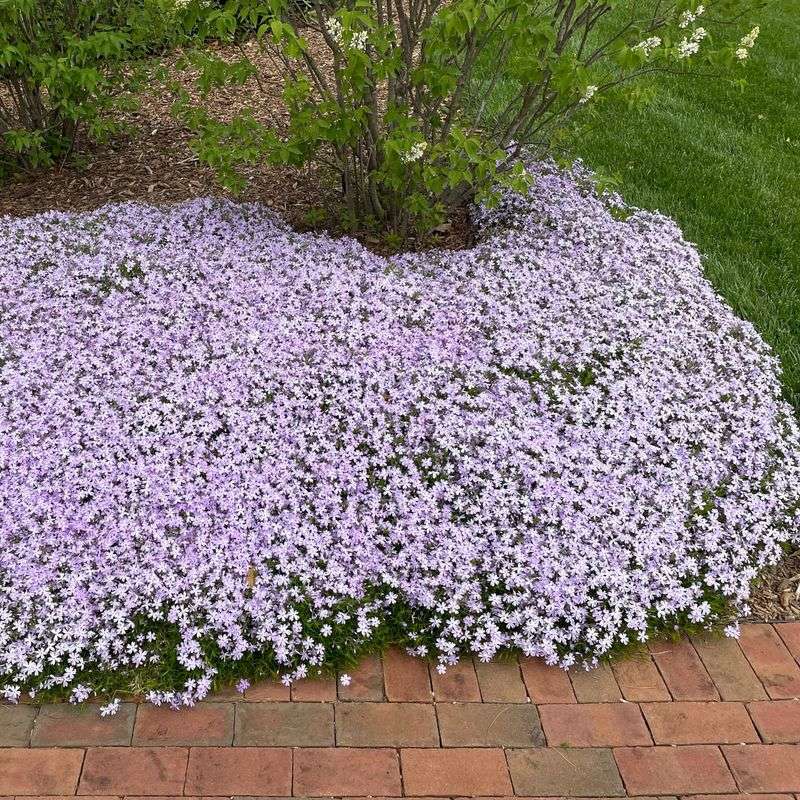
Rocky slopes, dry sunny edges along driveways, and south-facing banks that bake in summer heat are spots where most ground covers struggle.
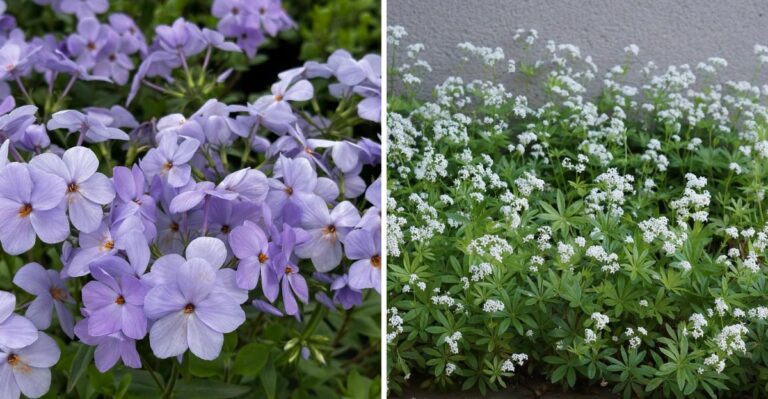
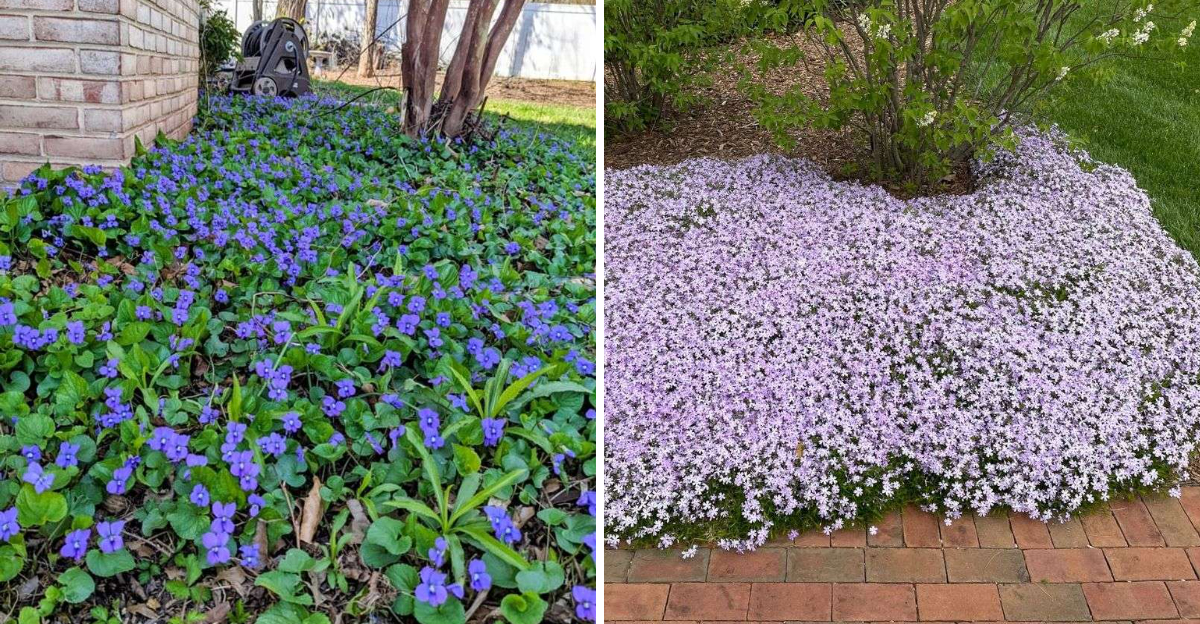
Moss phlox, also called creeping phlox or mountain phlox, thrives in exactly those conditions, spreading into a low, dense cushion of needle-like evergreen foliage that erupts into a carpet of color each spring.
The flowers can range from white and soft lavender to vivid pink, making early spring beds in Pennsylvania look almost electric after a long winter.
One of the most appealing things about moss phlox is how little it needs once it is established in a well-drained spot. It handles dry, lean soil without complaint and does not require regular fertilizing or supplemental watering in most Pennsylvania growing seasons.
The evergreen foliage stays low and tidy through winter, giving beds a finished look even when nothing else is actively growing.
Planting moss phlox along the front edge of a border, at the base of a stone retaining wall, or cascading over a raised bed gives it room to spread naturally without crowding taller plants.
Light trimming after flowering can encourage denser growth and keep the mat looking neat.
Pollinators, including early bees and butterflies, are drawn to the spring blooms, adding a layer of ecological value to a plant that already earns its place through ornamental performance alone.
4. Creeping Phlox Spreads Under Light Shade
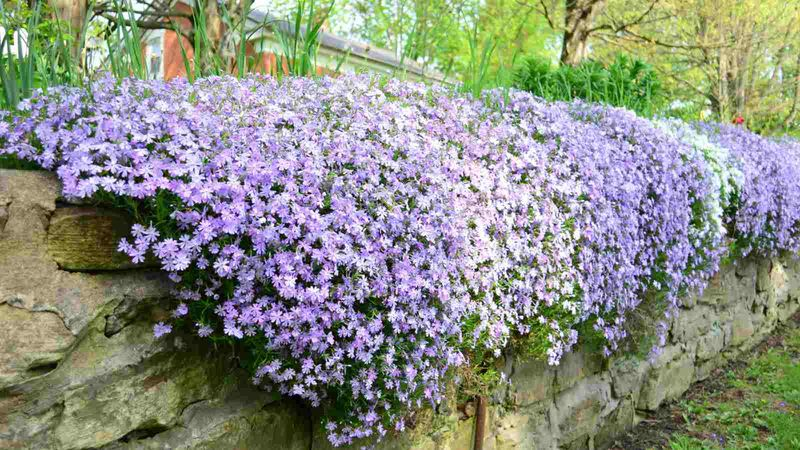
Along the edge of a tree line where sunlight filters through but never quite reaches full intensity, creeping phlox finds a comfortable home.
While moss phlox tends to prefer fully open, dry, sunny sites, creeping phlox handles a bit more shade and slightly moister soil, making it a useful option for transition zones in Pennsylvania gardens where light conditions shift throughout the day.
The spring flowers are a genuine highlight, covering the spreading mat in soft pink, lavender, or white blooms that attract early pollinators and add color to beds that might otherwise look bare and brown after winter.
After flowering ends, the foliage continues to provide low, semi-evergreen coverage that suppresses weeds and keeps soil from washing away on gentle slopes.
Creeping phlox works well planted along shaded walkway edges, at the base of foundation shrubs, or tucked beneath the outer canopy of trees where grass thins out.
It spreads at a moderate pace, filling gaps over a couple of growing seasons without becoming invasive or hard to contain.
Giving it decent drainage and some organic matter in the soil at planting tends to help it establish more quickly. Once settled in, it asks for very little attention beyond occasional trimming to keep the mat dense and tidy through the season.
5. Foamflower Adds Texture Under Trees
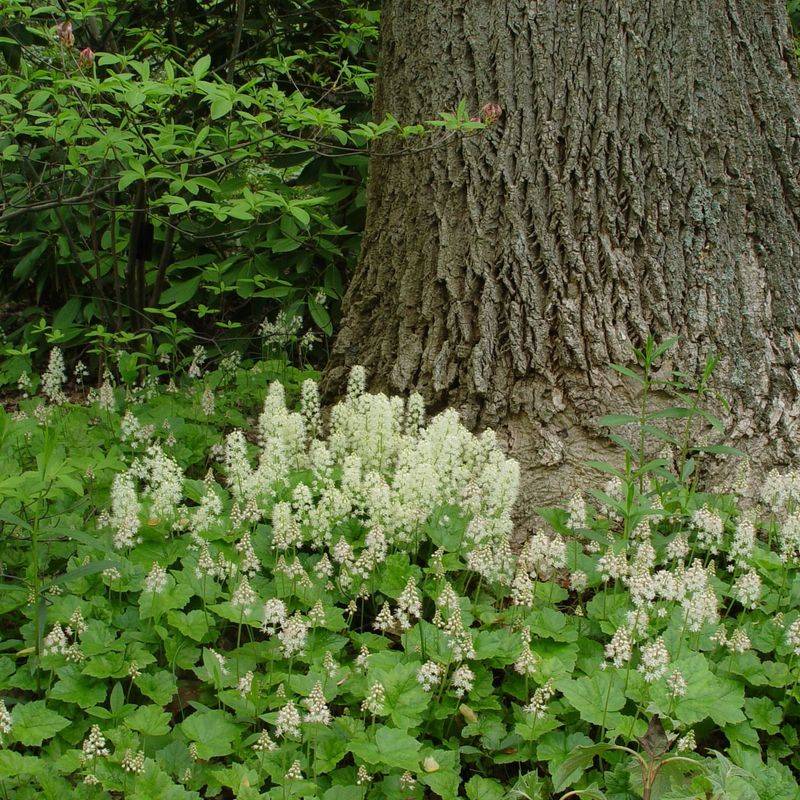
Gardeners who have ever struggled to find something interesting enough to plant under large shade trees will appreciate what foamflower brings to the table.
The lobed, maple-like leaves form attractive clumps that hold their shape from spring through fall, and the delicate white to soft pink flower spikes that rise in mid-spring are genuinely eye-catching in a shaded bed.
Foamflower earns its name from those frothy-looking blooms that seem to float above the foliage on slender stems.
Native to Pennsylvania woodlands, foamflower thrives in the kind of moist, humus-rich, shaded conditions found under established trees.
It spreads by stolons, sending out runners that root and form new clumps nearby, gradually filling a bed without aggressive spreading.
That measured expansion makes it manageable in mixed native plantings where you want coverage without one plant taking over everything else.
Pairing foamflower with wild ginger, Pennsylvania sedge, or native ferns creates a layered woodland floor that looks both naturalistic and well-planned.
The foliage of some varieties develops reddish markings or deeper coloration as temperatures drop in autumn, adding a second season of visual interest beyond the spring blooms.
Keeping the soil consistently moist during dry summer stretches helps foamflower maintain its best appearance. It is a plant that rewards attention to placement and soil preparation more than ongoing maintenance.
6. Common Blue Violet Fills Bare Garden Patches
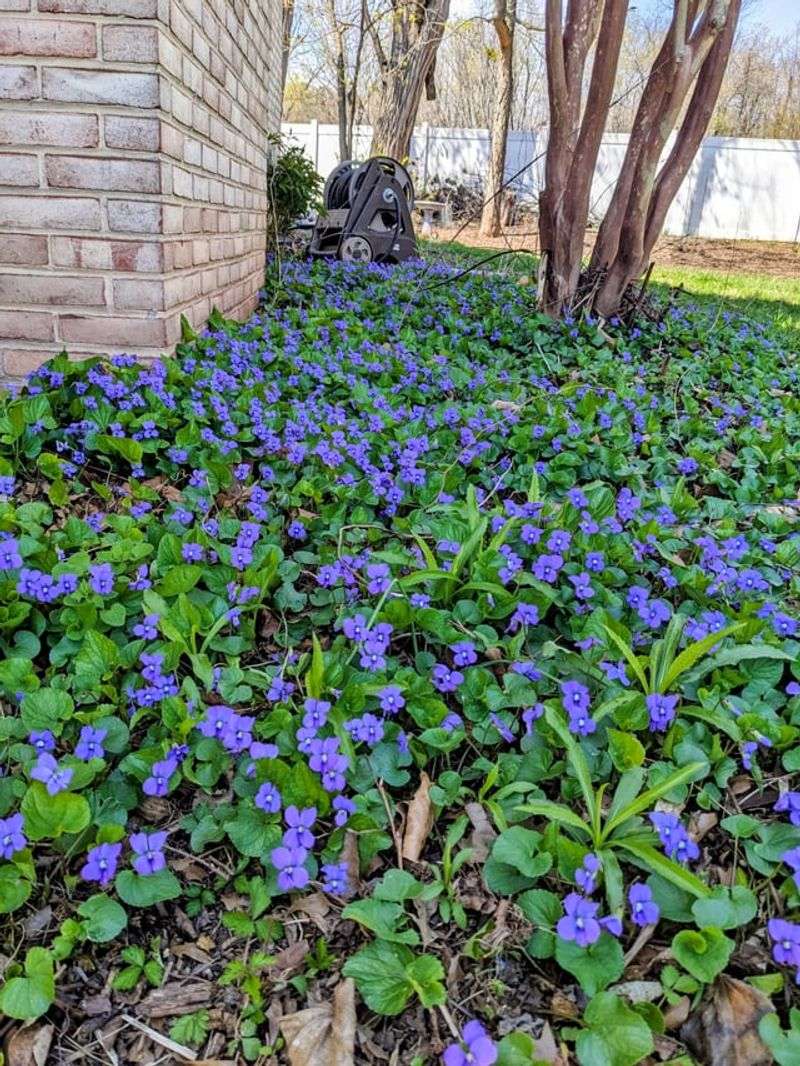
Bare patches along garden borders and open soil under shrubs often end up filling with weeds before anything intentional gets planted there.
Common blue violet has a way of stepping into those gaps on its own terms, spreading cheerfully through self-seeding and underground rhizomes to create informal, low-growing coverage that feels more like a natural meadow edge than a planted bed.
In Pennsylvania, it shows up in lawns, woodland borders, and shaded garden beds where it tends to be underappreciated.
The spring flowers are small but vivid, ranging from soft blue-violet to deeper purple, and they appear reliably in early to mid-spring when color is still scarce in the garden.
Beyond the blooms, common blue violet hosts the caterpillars of several native fritillary butterfly species, making it a meaningful ecological addition to any garden that values supporting local wildlife.
Managing common blue violet is a matter of deciding how much spreading you are comfortable with. In a wilder, naturalistic border or a meadow-style bed, its tendency to self-seed freely is an asset.
In more structured plantings, pulling seedlings where you do not want them keeps it in check without much effort.
It tolerates a range of light conditions from full shade to partial sun, handles average to moist soil well, and asks very little in return for reliable spring color and consistent ground coverage through the growing season.
7. Green-And-Gold Brings Low Evergreen Cover
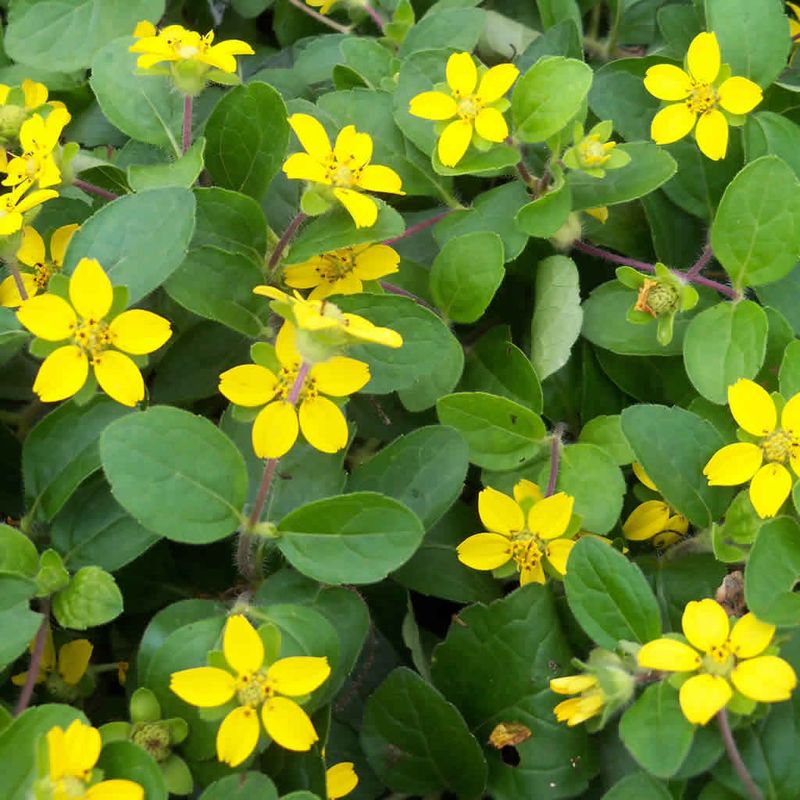
Bright yellow flowers in spring are not something most people expect from a low, spreading ground cover, but green-and-gold delivers exactly that.
The cheerful, star-shaped blooms appear in spring and often continue sporadically through summer and into fall, making this native plant one of the longer-blooming ground covers available for Pennsylvania gardens.
The dark green, slightly textured leaves form a dense, low mat that stays semi-evergreen in milder winters.
Green-and-gold grows well in partial shade to light shade, fitting nicely into the transition zone between a sunny border and a deeper woodland edge.
It handles average to moist, well-drained soil and spreads by stolons to fill in gaps over time without becoming difficult to manage.
That spreading habit makes it useful for covering bare soil along shaded foundation beds, under the canopy of deciduous trees, or along pathways where you want low coverage that will not require constant attention.
One of the more practical qualities of green-and-gold is its tolerance for a range of conditions once it is established. It tends to perform well in Pennsylvania gardens with minimal supplemental watering after the first growing season.
Pollinators visit the yellow flowers regularly, and the plant mixes well with taller native perennials or shrubs in a layered border.
Cutting back any sprawling stems in early spring helps keep the mat tidy and encourages fresh growth as the season gets underway.
8. Barren Strawberry Adds Color Through The Seasons
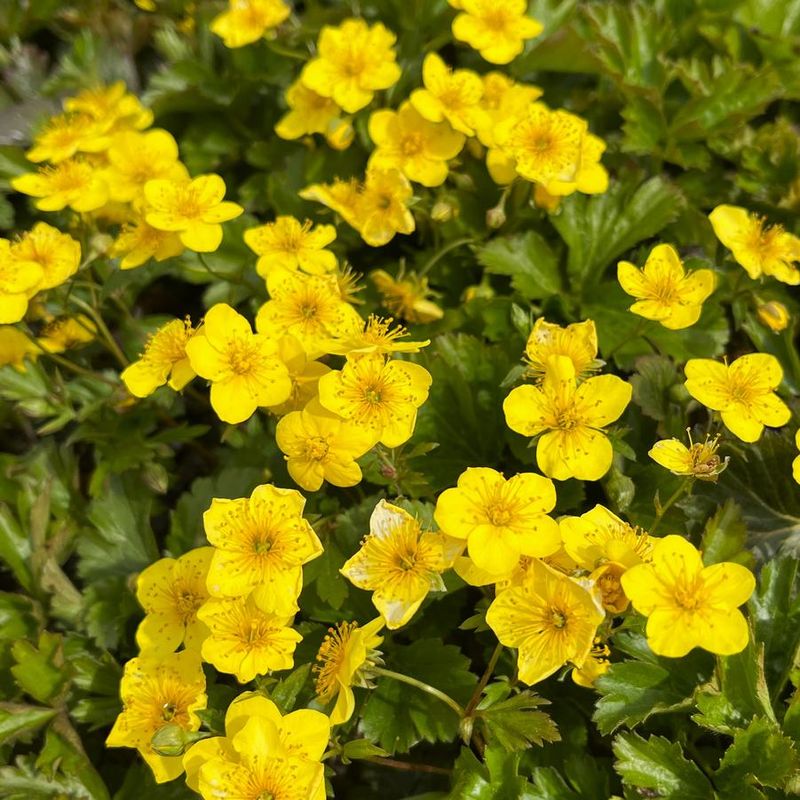
Glossy, strawberry-like leaves and cheerful yellow flowers in spring make barren strawberry one of the more visually interesting low-growing natives available to Pennsylvania gardeners.
Despite the name, it does not produce edible fruit, but what it lacks in berries it more than makes up for in reliable, low-maintenance ground coverage.
The semi-evergreen foliage holds through much of the winter, turning bronzy in cold months before greening up again as temperatures rise in spring.
Barren strawberry spreads at a moderate pace through stolons, forming a dense mat that shades out weeds reasonably well once it fills in.
It handles partial shade to light shade most comfortably, though it can manage more sun if the soil stays reasonably moist.
Planting it under the outer edges of trees, along shaded slopes, or in front of native shrub borders tends to give it the conditions it needs to establish and spread without stress.
For gardeners looking for something that offers more seasonal interest than a static mulch layer, barren strawberry checks several boxes at once.
Spring flowers, summer foliage texture, and winter bronze tones give the planting a sense of change through the year.
It mixes well with other native ground covers like foamflower or Pennsylvania sedge in layered woodland-style beds. Once established, it generally needs little more than occasional clearing of fallen leaves to keep the mat visible and growing well.