Missouri Bearded Irises Still Have Time To Divide Before Frost
There is a stretch of Missouri weather that fools everyone. Mornings arrive cool and damp, then the afternoon turns warm enough for shirtsleeves again.
The garden reads that shift better than we do. Roots keep working underground while the leaves above look tired and finished for the season.
Most gardeners assume the window for outdoor projects has quietly closed. The soil says otherwise, holding summer heat long after the calendar suggests it should have let go.
That gap between what the calendar says and what the soil is still doing is exactly where an old, tangled clump still has some life left in it. All it’s waiting on is a sharp knife and a free afternoon.
The Missouri Frost Window Is Wider Than Most Gardeners Think
Missouri gardeners usually see the first light frost somewhere between mid October and early November, earlier near Kansas City and later down toward the Bootheel. That date matters less than what the soil is doing underneath.
Even after air temperatures dip, garden soil holds warmth for several more weeks. Bearded iris rhizomes take advantage of that stored heat and push out new feeder roots.
Those roots are the whole point of dividing now. A rhizome that anchors itself before the ground stiffens will sail through winter without heaving up out of the bed.
The practical rule is simple. Aim to replant divisions at least four to six weeks ahead of your average first frost date, which puts most of Missouri in a comfortable September through mid October range.
Missed that mark by a week or two? All is not lost. Gardeners in Missouri’s warmer zones, 6a through 7a, regularly plant later and still get solid results, especially during a mild autumn.
Watch the ten day forecast instead of the calendar. A run of highs in the sixties and seventies with soil that still feels warm to the touch means you have room to work.
What you want to avoid is planting into cold, soggy ground during a rainy stretch in November. Rhizomes sitting in chilly moisture without root growth are the ones that struggle.
Grab a Saturday afternoon while the weather cooperates. Your irises will settle in faster than you expect.
Crowded Clumps And The Bloom Slowdown They Cause
Ask any Missouri gardener why their irises quit blooming and you will usually hear the same puzzled answer. Same spot, same care, fewer flowers every spring.
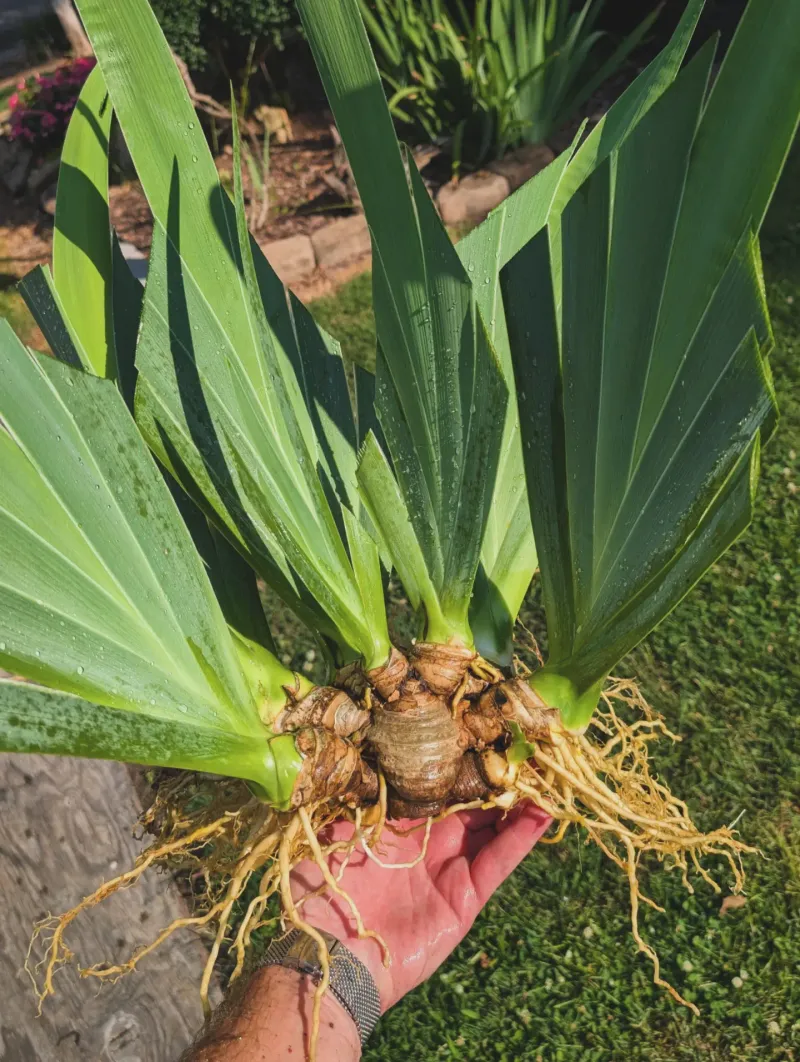
The culprit is almost never the weather. Bearded iris rhizomes multiply outward each season, and after three or four years they form a dense mat with nowhere left to expand.
The rhizomes packed in the center get shaded, starved, and squeezed. They stop producing bloom stalks and simply hold on, sending up leaves without flowers.
Air movement suffers too. Packed foliage traps humidity, which Missouri summers already supply in generous amounts, and that damp pocket invites leaf spot and soft rot.
Look for the telltale signs before you dig. Rhizomes stacked on top of each other, bare woody centers, leaves that flop instead of standing upright, and blooms only around the outer edge.
Your Missouri Garden Changes Every Week. Your Plan Should Too.
Gardening in Missouri changes quickly throughout the season. Every Friday you’ll receive a simple weekly plan showing exactly what to plant, prune, fertilize, harvest, and protect so you never miss the right timing.
Dividing solves all of it at once. You thin the crowd, restore airflow, and give each rhizome its own patch of soil and sunlight to work with.
Most established plantings need this reset every three to four years. Vigorous varieties sometimes call for it sooner, and a clump that doubled in size last summer is telling you something.
The reward shows up in April and May. Expect noticeably more bloom stalks the second spring after dividing.
Lifting Clumps Without Bruising The Rhizomes
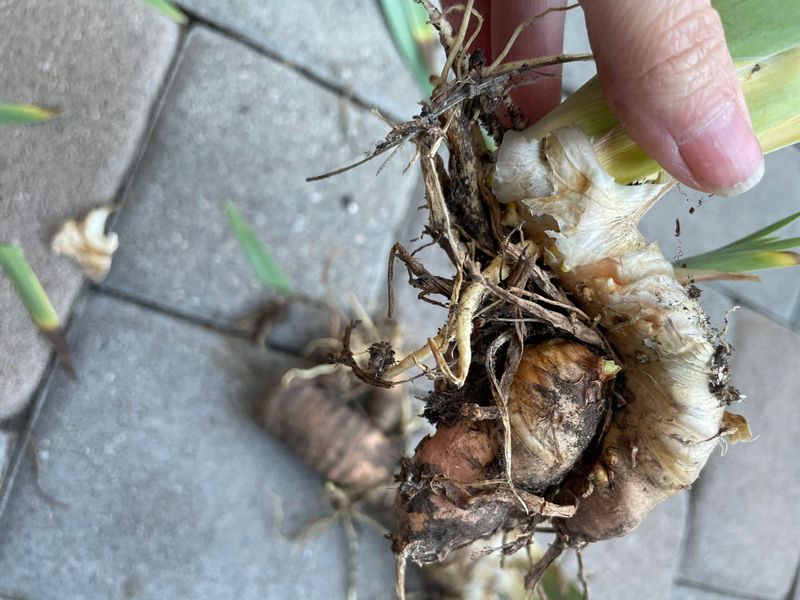
A spade seems like the obvious tool. It is also the fastest way to slice a healthy rhizome in half without meaning to.
Reach for a garden fork instead. The tines slide between roots rather than through them, and you keep far more of the plant intact.
Start by trimming the foliage down to about six inches in a fan shape. Shorter leaves reduce water loss and make the whole clump easier to handle once it is out of the ground.
Work your fork in about six inches away from the outer rhizomes. Push down, rock gently backward, then repeat all the way around the clump before lifting.
Loosening the entire perimeter first makes an enormous difference. The clump lifts as one unit instead of tearing apart under its own weight.
Once it is free, shake off loose soil and set the clump on a tarp or an old feed sack. Missouri clay likes to cling, so a quick rinse with the hose helps you see what you are working with.
Rinsing serves a second purpose. Clean rhizomes let you spot soft spots, tunnels from iris borers, and rot that hides under caked mud.
Work in the shade if the day is bright. Rhizomes tolerate a few hours out of the ground just fine, but baking them on hot concrete does no favors.
Take your time here. A careful lift means fewer wounds, and fewer wounds means fewer problems next spring.
Sorting Keepers From Spent Rhizomes
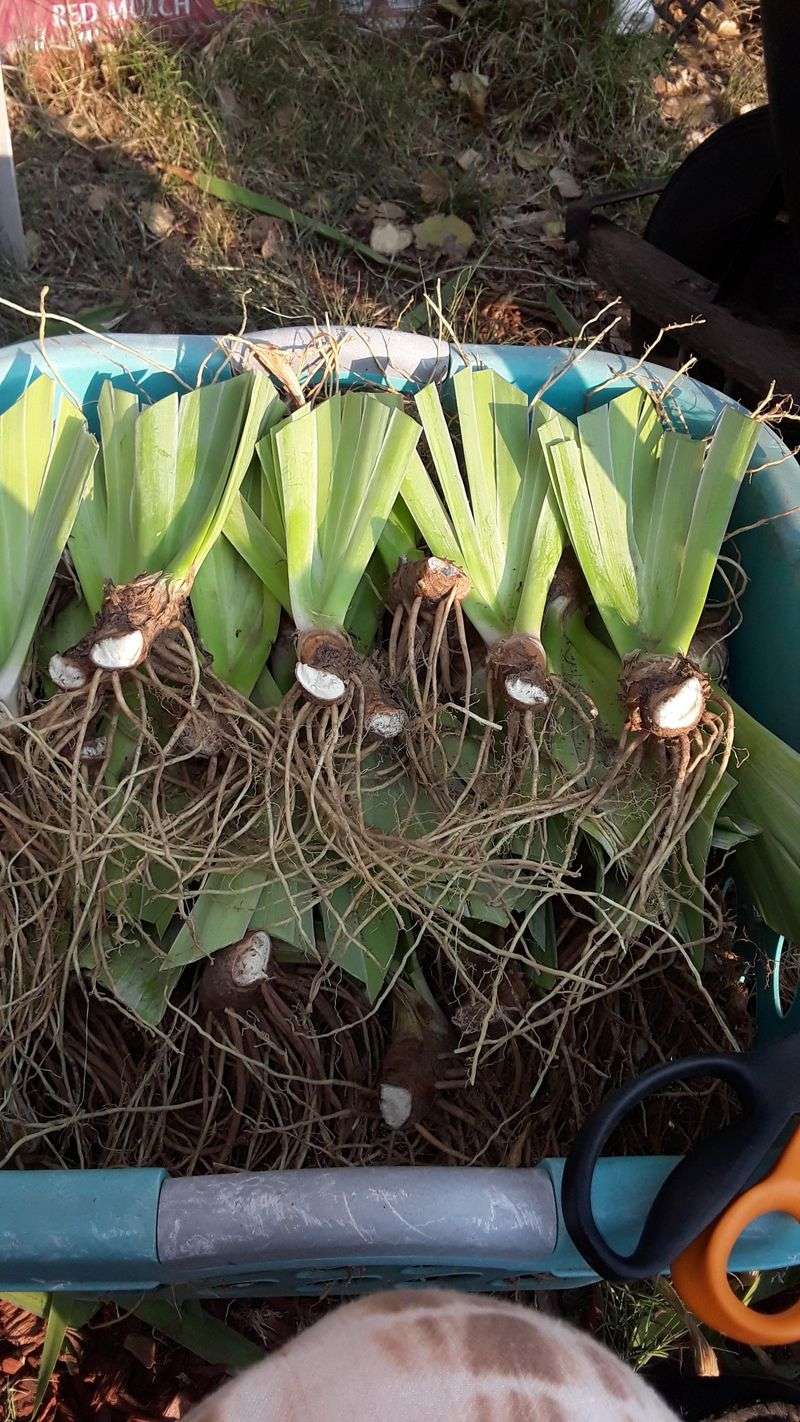
Here comes the part that trips people up. Not every piece of that clump deserves a spot back in the bed.
Firm is the word to remember. A keeper rhizome feels solid like a raw potato, has a healthy fan of leaves attached, and shows plump white roots along the bottom.
Old center rhizomes tell a different story. They are usually woody, leafless, hollow, or mushy, and they have finished their productive years.
Bearded iris rhizomes bloom once and then send their energy into offsets. The mother piece will not flower again, so composting it costs you nothing.
Snap or cut divisions apart where they naturally join. Many separate with a gentle twist, and stubborn ones respond to a clean cut with a sharp knife.
Sanitize your blade between plants with an isopropyl solution or a diluted bleach solution. Soft rot spreads easily on dirty tools, and Missouri humidity gives it every advantage.
Aim for divisions three to four inches long with one strong fan each. Bigger is not better here, since oversized pieces often carry older tissue along for the ride.
Check for iris borer damage while you sort. Tunnels, sawdust like frass, and a foul smell all point to trouble, and those pieces belong in the trash rather than the compost pile.
Let cleaned divisions air dry in shade for a few hours. A slightly calloused cut surface resists rot much better once planted.
Watering And Mulch Choices For The Weeks Ahead
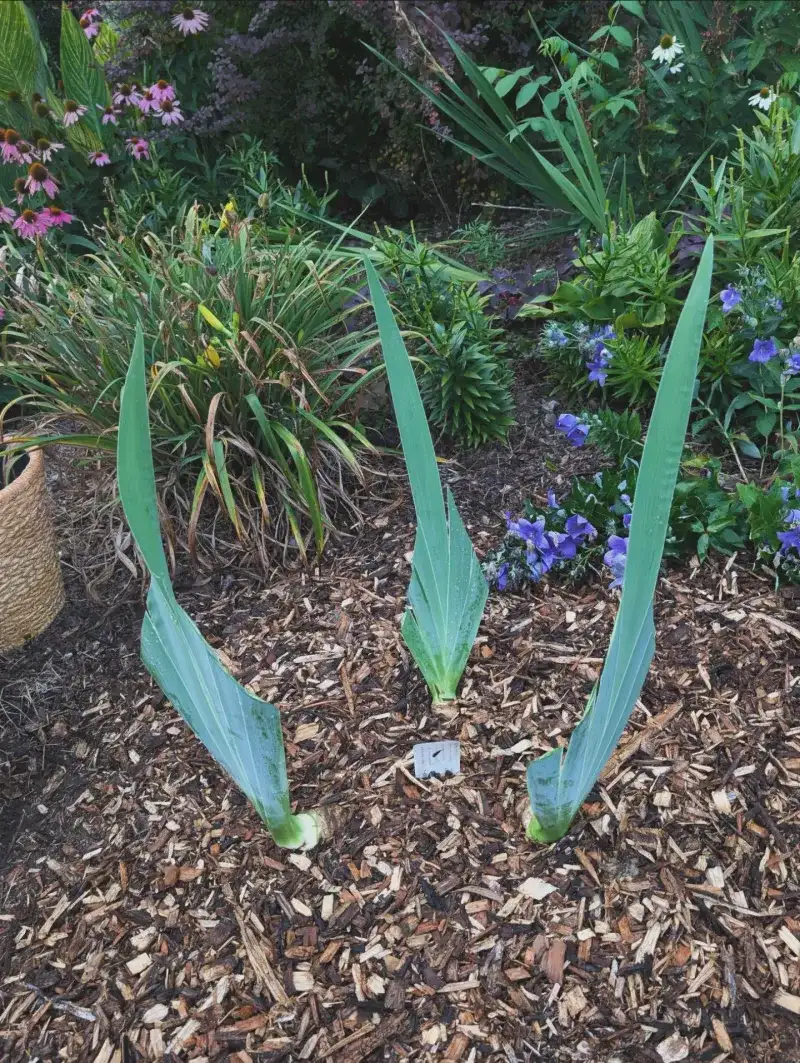
Freshly divided irises want a drink, then they want to be left alone. That balance confuses well meaning gardeners every autumn.
Water thoroughly once right after planting to settle soil around the roots. After that, hold off unless a week passes with no rain.
Missouri autumns often deliver plenty of moisture on their own. Adding more on top of a rainy stretch pushes rhizomes toward rot rather than root growth.
Check with your finger before reaching for the hose. Soil that feels damp two inches down needs nothing from you.
Mulch requires equal restraint. Piling shredded bark or leaves directly over rhizomes traps moisture exactly where you do not want it.
Keep organic mulch pulled back several inches from each rhizome. Better yet, use a thin layer of pea gravel around the crowns, which sheds water and reflects a little warmth.
Late planted divisions benefit from one exception. Once the ground has frozen in December, a loose covering of evergreen boughs or straw over the bed reduces frost heaving.
Pull that winter covering off in early spring as soon as growth stirs. Leaving it in place invites the same damp problems you worked to avoid.
Skip fall fertilizer. A light scattering of low nitrogen fertilizer in early spring gives far better results, and heavy nitrogen at any time encourages soft, rot prone growth.
The Payoff Waiting In Next Spring’s Beds
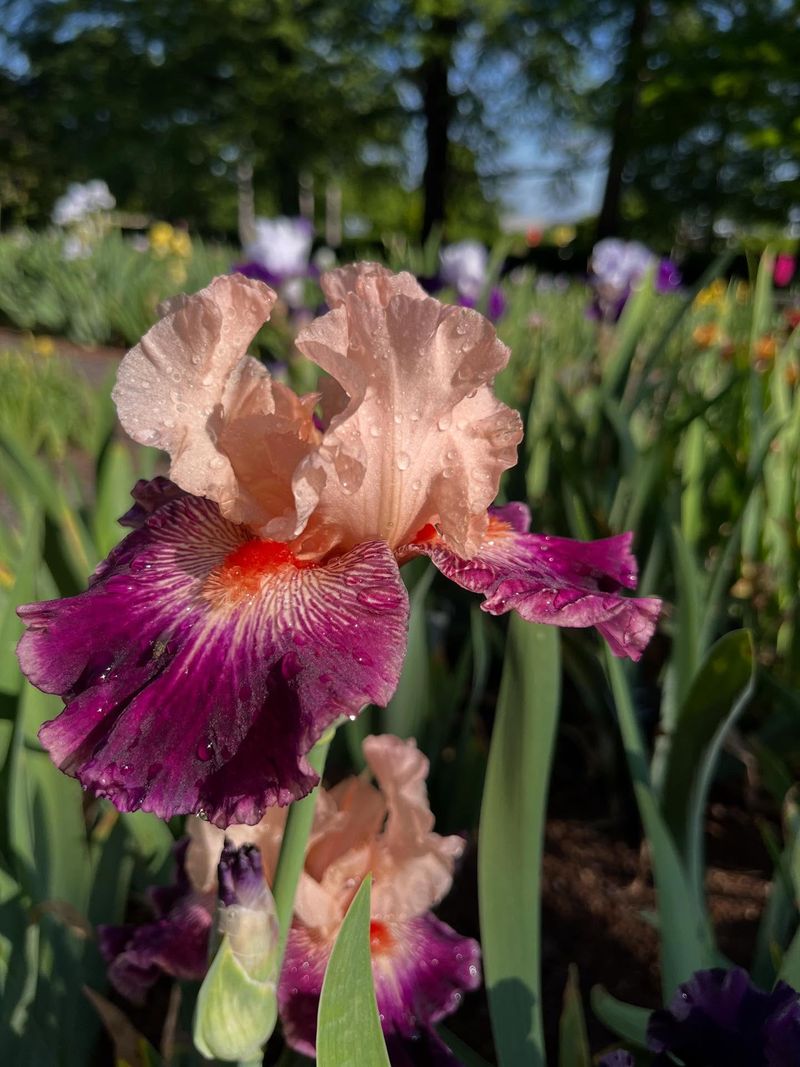
Patience is the price of admission with divided irises. Some divisions bloom the very next May, and others take a season to build strength first.
Neither outcome means you did anything wrong. Smaller rhizomes spend their first year growing roots and increasing size before they commit to a flower stalk.
By the second spring, the difference is hard to miss. Clumps that were tired and flowerless send up multiple stalks with blooms stacked along each one.
Fall division also pays off in ways beyond flower count. Thinned plantings breathe better, resist leaf spot more successfully, and give iris borers fewer hiding places.
Extra divisions turn into currency of a sort. Missouri garden clubs, plant swaps, and neighbors with empty fence lines rarely turn down a bag of labeled rhizomes.
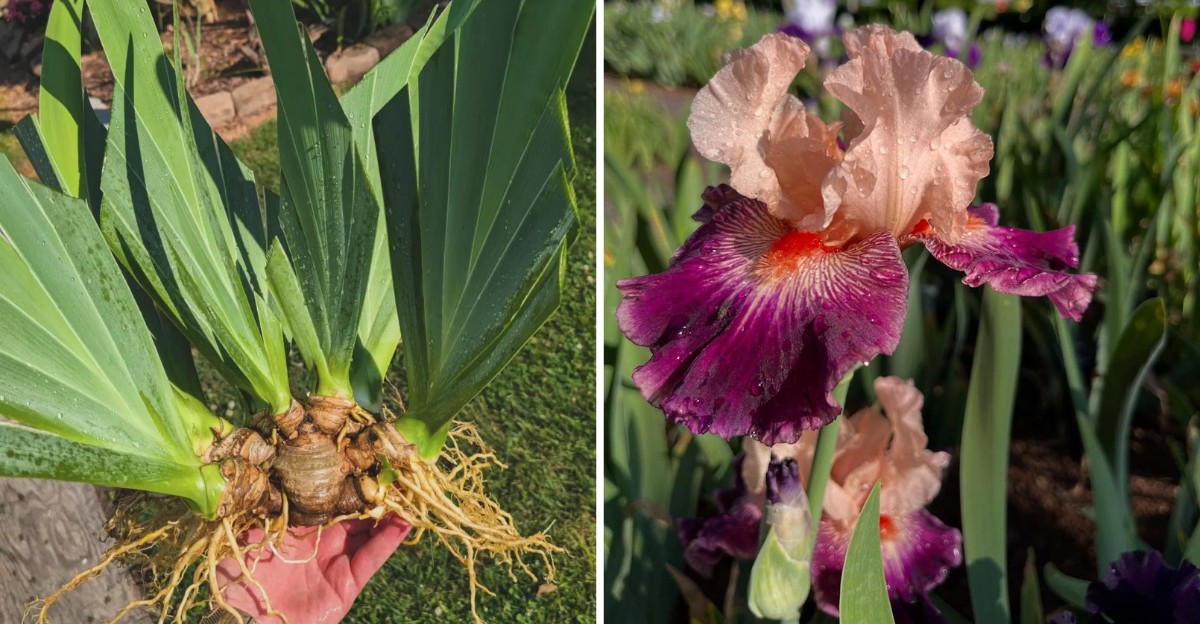
Write those labels before you forget. A permanent marker on a plastic tag saves you from wondering which variety produced that ruffled apricot bloom.
Keep a simple record of when you divided each bed. Three years from now that note tells you exactly which clump is due for attention.
Some Missouri gardeners have passed the same iris varieties along for decades, moving divisions from one family garden to the next.
That continuity is part of the charm. One afternoon of digging this fall keeps a piece of garden history moving forward.