Mistakes Oregon Gardeners Make With Fuchsias That Turn Baskets Leggy Before Summer Ends
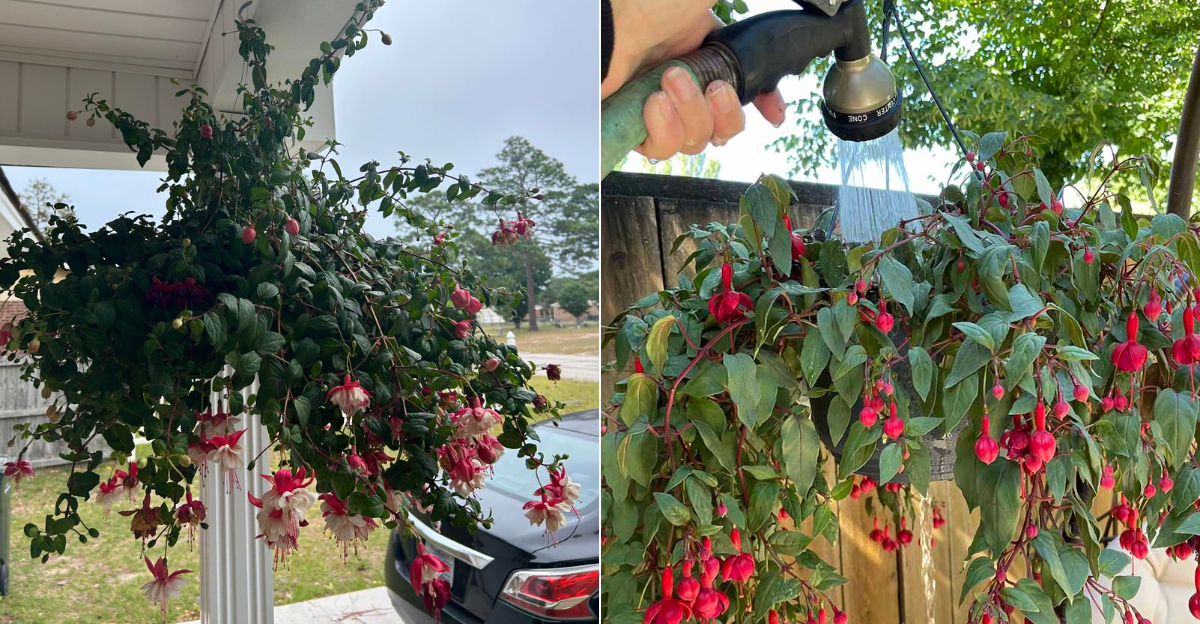
Fuchsia baskets can go from porch perfection to stringy chaos with rude speed. One week they are dripping with color, and the next they look like they joined a bad haircut contest.
In Oregon, mild mornings can fool gardeners into thinking those baskets are low drama. Then summer heat, skipped pinching, weak feeding, poor watering, or too much shade starts stretching them out fast.
The annoying part is that legginess often creeps in before the basket looks truly bad. By the time the stems are long, thin, and bloom-shy, the plant is already begging for a reset.
The good news is that fuchsias are not hopeless divas. Most just need better timing, steadier care, and a few smart trims before they spend the rest of summer sulking above the porch.
1. Dry Baskets Turn Fuchsias Leggy Fast
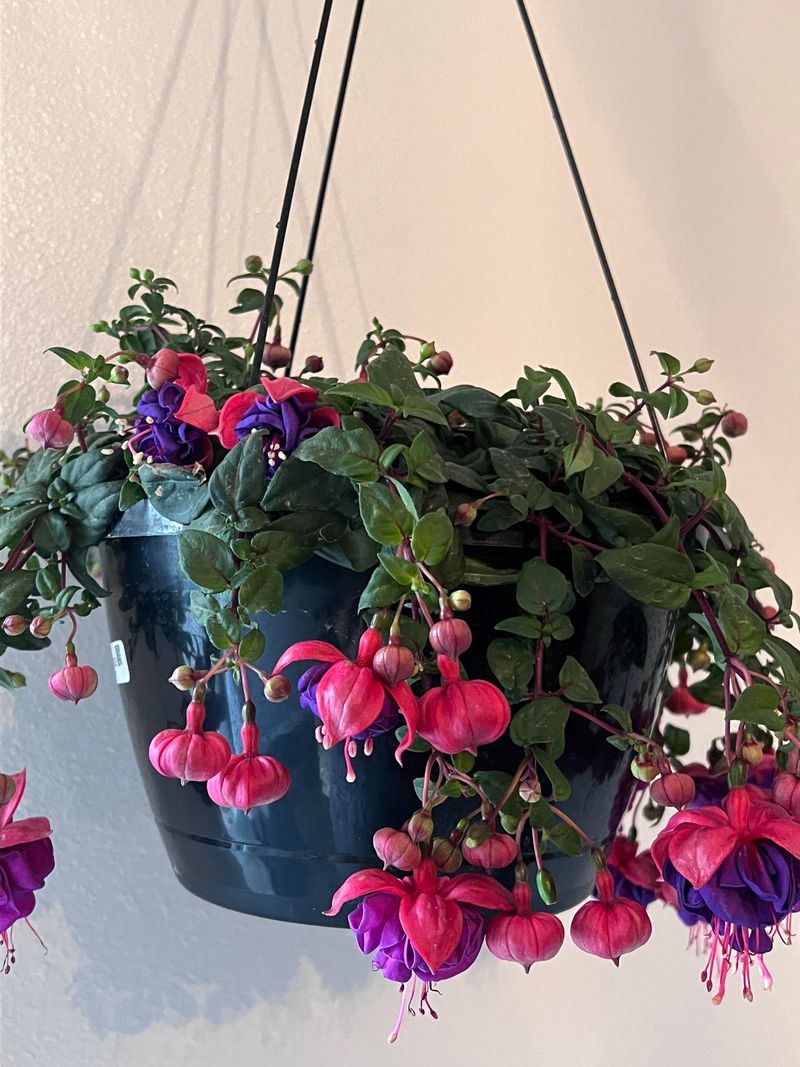
A fuchsia basket that dries out too often will start sending out long, weak stems instead of staying bushy and full. When the roots run short on water, the plant shifts its energy away from producing flowers and new side shoots.
Instead, it pushes growth upward and outward in a desperate stretch for resources, and that is exactly what makes baskets look leggy.
Oregon gardeners sometimes assume the cool, overcast weather means their baskets do not need much water. That is a costly mistake.
Even on cloudy days, hanging baskets lose moisture quickly because they are exposed to air on all sides. The roots dry out faster than you might expect, sometimes within a single day during a light breeze.
Check the basket daily by pushing your finger about an inch into the soil. If it feels dry at that depth, it is time to water.
Water slowly and thoroughly until it drains from the bottom of the basket. Rushing through watering or just sprinkling the top does not reach the roots where it matters most.
Consistent moisture keeps the plant focused on blooming and branching rather than surviving. A well-watered fuchsia stays compact, produces more flowers, and holds its shape longer into the season.
Setting a daily watering routine, especially during warmer or windier stretches, is one of the simplest ways to prevent legginess before it ever starts.
2. Afternoon Sun Stresses Hanging Fuchsias
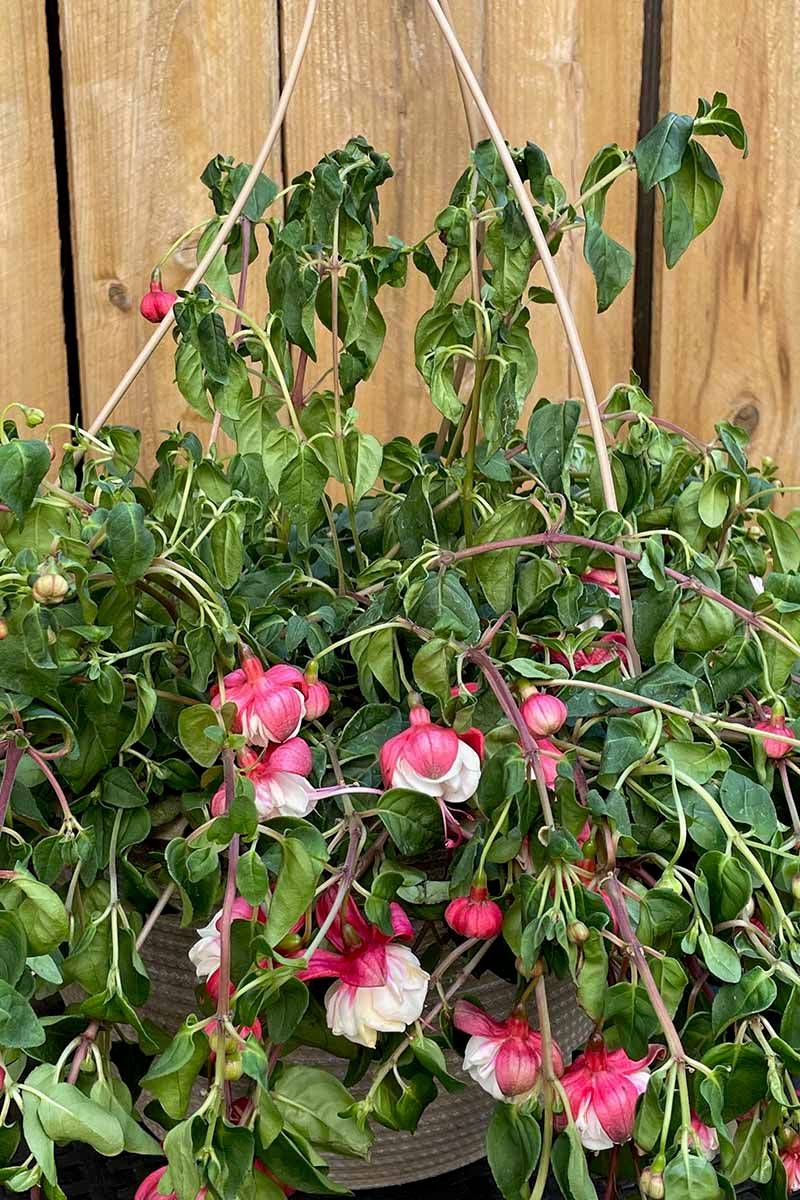
Most gardeners know that fuchsias prefer shade, but many still hang their baskets in spots that get blasted by afternoon sun without realizing how damaging it can be.
Direct sun during the hottest part of the day scorches the leaves, dries out the roots fast, and pushes the plant into stress mode.
A stressed fuchsia stops branching and starts stretching, which leads directly to leggy growth.
Oregon gets more sun than people expect during July and August, especially in the Willamette Valley and southern parts of the region.
A spot that feels perfectly shaded in May can turn into a sun trap by midsummer as the sun angle shifts. That change catches a lot of gardeners off guard.
The sweet spot for fuchsias is morning sun with afternoon shade. A few hours of gentle early light encourages strong growth and good flower production without the stress of intense midday heat.
Your Oregon Garden Changes Every Week. Your Plan Should Too.
Gardening in Oregon changes quickly throughout the season. Every Friday you’ll receive a simple weekly plan showing exactly what to plant, prune, fertilize, harvest, and protect so you never miss the right timing.
East-facing spots or areas shaded by trees in the afternoon tend to work really well.
If your basket is already in a sunny location, try moving it to a shadier spot and see how it responds within a week or two. You will likely notice less wilting, more new growth, and a fuller appearance as the plant recovers.
Choosing the right location from the start saves a lot of trouble and keeps baskets looking healthy all summer long.
3. Skipped Pinching Leaves Bare Stems
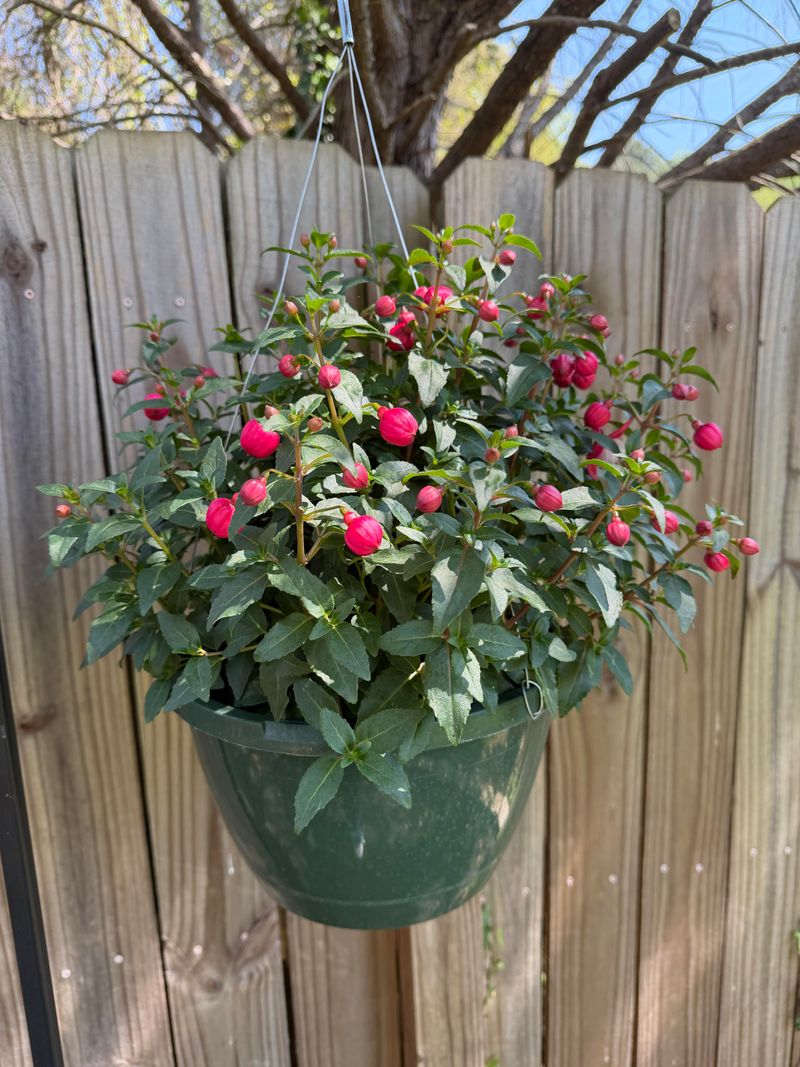
Pinching is probably the most overlooked step in fuchsia care, and skipping it is one of the fastest ways to end up with a leggy basket.
When you pinch the growing tips of young stems, you signal the plant to branch out and produce more side shoots.
Each pinched tip turns into two or three new stems, which means more flowers and a much fuller basket overall.
Many gardeners buy a new fuchsia, hang it up, and just let it grow without ever touching the stems.
It looks fine at first, but over time the plant keeps reaching outward with just a few long stems instead of filling in with dense, bushy growth.
By midsummer, those baskets often look sparse and stretched.
Start pinching early in the season, right after you bring your basket home or as soon as new growth appears in spring. Pinch just above a set of leaves using your fingers or small, clean scissors.
Repeat the process every few weeks through late spring and into early summer to keep encouraging new branches.
Stop pinching about six to eight weeks before you want peak bloom so the plant has time to set buds. Many gardeners in our region aim to stop pinching by late June for beautiful late-summer color.
It takes a little patience, but the payoff is a basket so full and round it barely looks like the same plant you started with in the spring.
4. Old Blooms Keep Plants From Reblooming
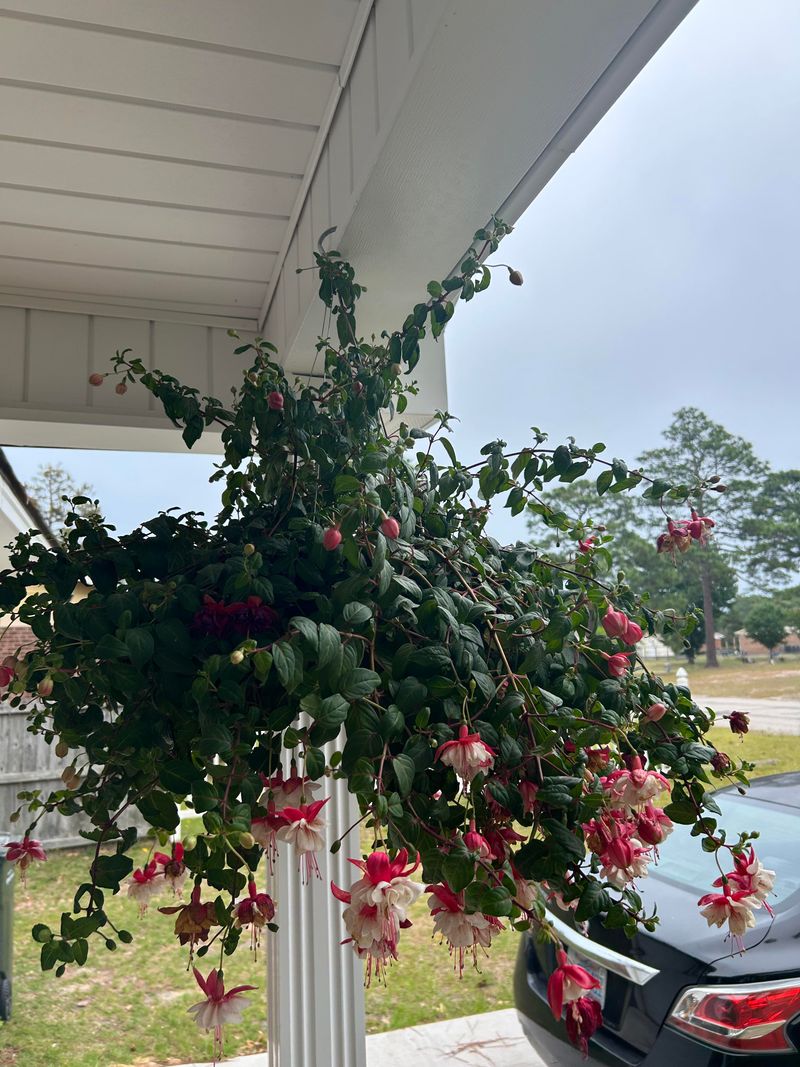
Leaving spent blooms on a fuchsia basket is a quiet mistake that sneaks up on gardeners. Once a flower fades and falls, a small seed pod often forms in its place.
The plant then pours energy into developing that seed pod instead of producing new flower buds.
Over time, this habit slows down blooming and contributes to the stretched, tired look that plagues baskets by late summer.
Deadheading, which just means removing old flowers and their swollen base, redirects that energy back into fresh growth and new blooms. It is a simple task that takes only a few minutes during your regular watering routine.
The difference in bloom production between a trimmed plant and one left alone can be dramatic.
Look closely at the stem just behind each spent flower. You will usually see a small, round, or oval swelling forming.
Pinch or snip that off along with the withered petals. Do this every few days to stay ahead of seed pod development and keep the plant focused on what you actually want, which is more flowers.
Some fuchsia varieties drop their blooms cleanly on their own, but most benefit from a little help.
Getting into the habit of checking for old blooms every time you water makes the job feel easy and manageable.
Oregon gardeners who cut back regularly almost always end up with fuller, longer-blooming baskets compared to those who skip this step throughout the season.
5. Weak Feeding Leads To Thin Growth
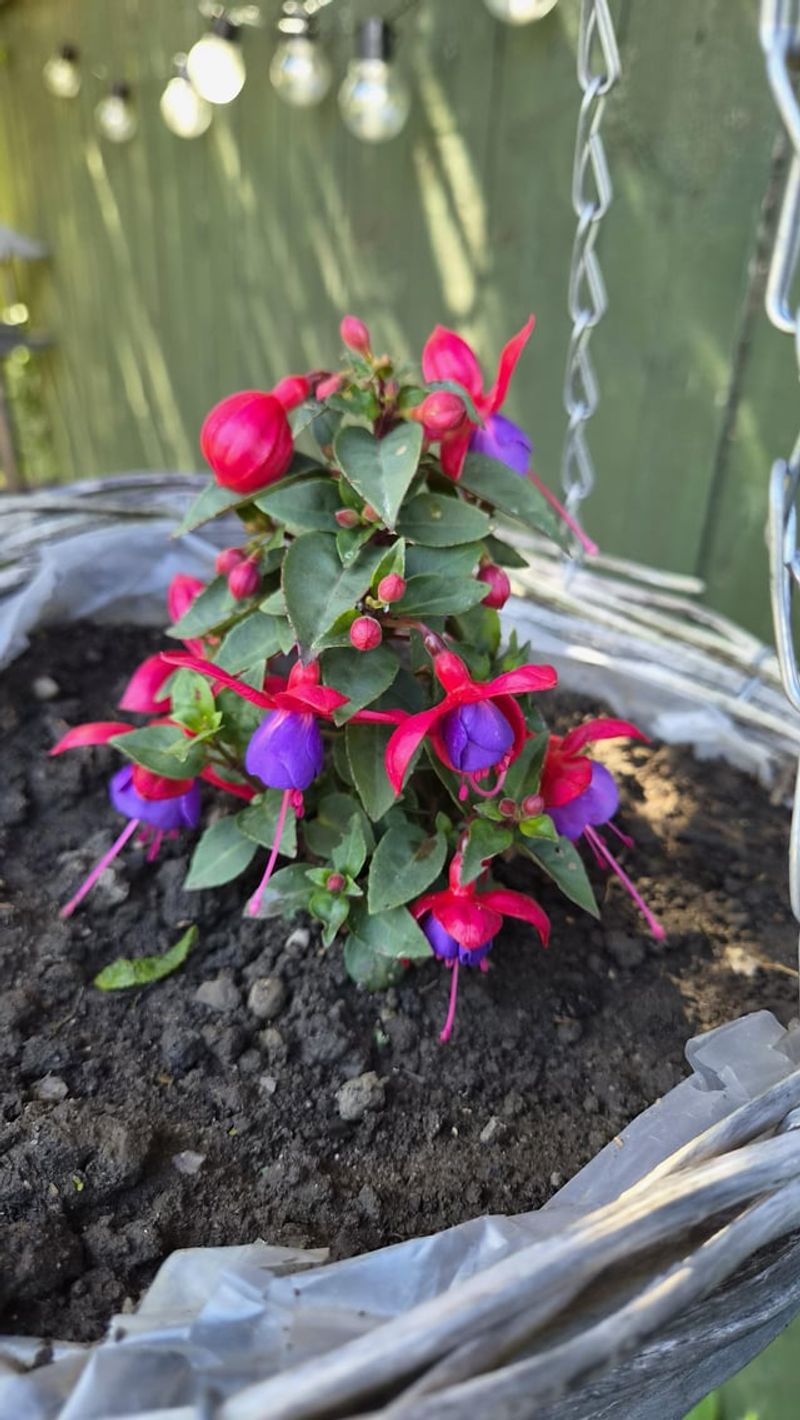
Fuchsias are heavy feeders, and that surprises a lot of new Oregon gardeners. Because they grow in small containers with limited soil, the nutrients they need get used up or washed away quickly with regular watering.
When feeding is skipped or done too lightly, the plant runs low on fuel and the stems grow thin, pale, and weak instead of thick and branching.
A nitrogen-rich fertilizer encourages leafy, full growth early in the season. As the plant matures and starts setting buds, switching to a fertilizer higher in phosphorus and potassium supports stronger blooms and better stem structure.
Using the right formula at the right time makes a real difference in how the basket fills out over the summer.
Liquid fertilizers work especially well for hanging baskets because they absorb quickly and deliver nutrients right where the roots can use them. Feed your fuchsia every one to two weeks throughout the growing season.
Consistency matters more than any single heavy feeding, so build it into your routine alongside watering.
Gardeners who fertilize regularly tend to notice thicker stems, deeper leaf color, and a much fuller basket shape compared to those who feed only occasionally.
If your basket already looks thin or pale, start a feeding schedule right away and give it a few weeks to respond.
You will likely see new, stronger growth starting to fill in within two to three weeks of consistent feeding.
6. Tiny Baskets Dry Out Too Quickly
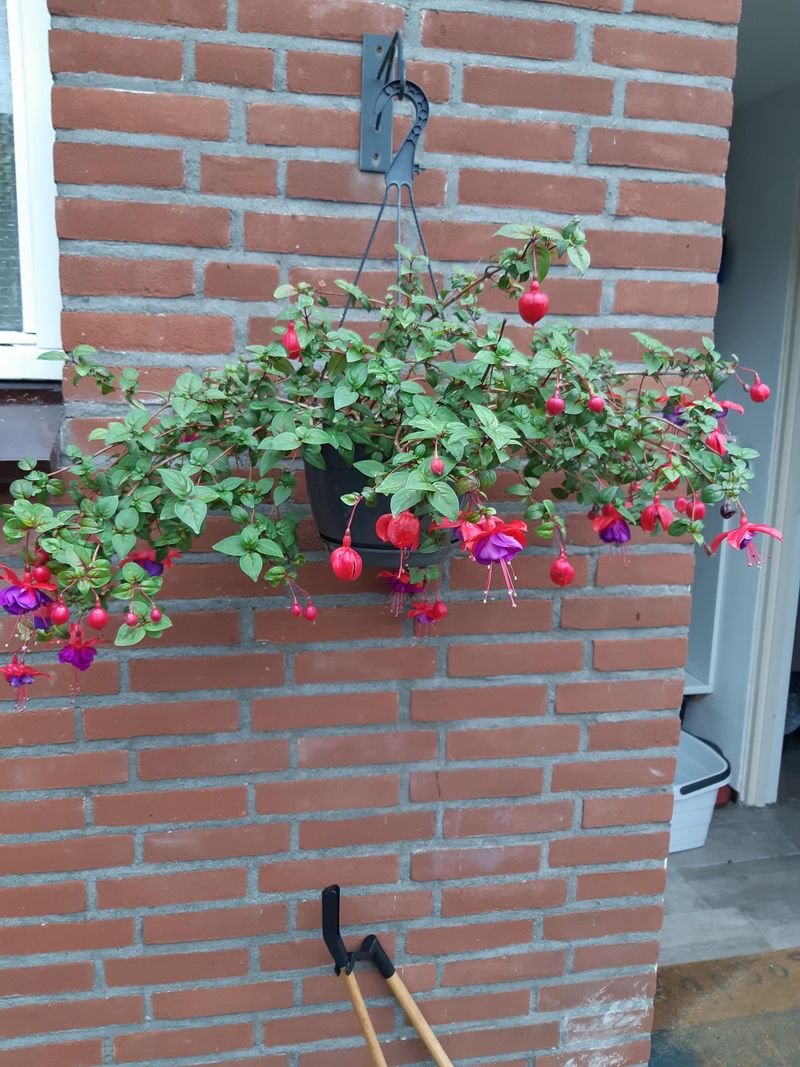
Basket size matters more than most people realize when it comes to keeping fuchsias healthy all season. Small baskets, especially those under ten inches in diameter, hold very little soil and dry out incredibly fast.
When the root zone dries out repeatedly, growth slows down, stems stretch out in stress, and the plant never develops the full, rounded shape that makes fuchsia baskets so eye-catching.
Larger baskets, fourteen inches or more, hold more soil volume and stay moist longer between waterings.
That extra buffer gives roots a more stable environment, which translates directly to stronger, bushier plant growth.
The plant spends less energy coping with drought stress and more energy producing new stems and flowers.
When shopping for baskets, resist the temptation to go with the smallest or cheapest option. A slightly larger basket costs a little more upfront but saves a lot of frustration throughout the season.
Coconut coir liners also help retain moisture better than plain wire baskets, making them a smart choice for our often-windy coastal and valley locations.
If you already have small baskets and notice they are drying out daily even with regular watering, consider repotting into a larger container mid-season. It is a bit of work, but it can turn a struggling plant around quickly.
Adding a water-retaining gel to the potting mix at planting time is another easy trick that helps small baskets hold moisture a little longer between waterings.
7. Light Sprinkling Misses The Root Ball
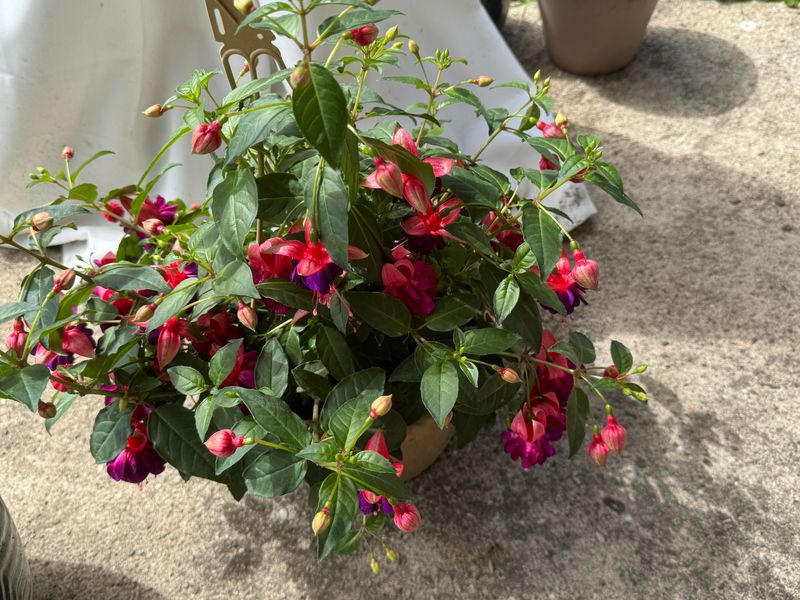
Quick, light watering is one of the sneakiest mistakes fuchsia growers make. It looks like you are doing the right thing, but if the water does not fully soak the root ball, the plant is still struggling beneath the surface.
The top layer of soil may feel damp while the center and bottom of the basket remain completely dry. Roots living in dry soil cannot absorb nutrients or support healthy growth.
Hanging basket soil, especially mixes with a lot of peat or coir, can actually become water-repellent when it dries out completely.
Water will run straight down the sides of the root ball and out the bottom without ever soaking in.
You might think you have watered thoroughly, but most of the moisture never reached the roots at all.
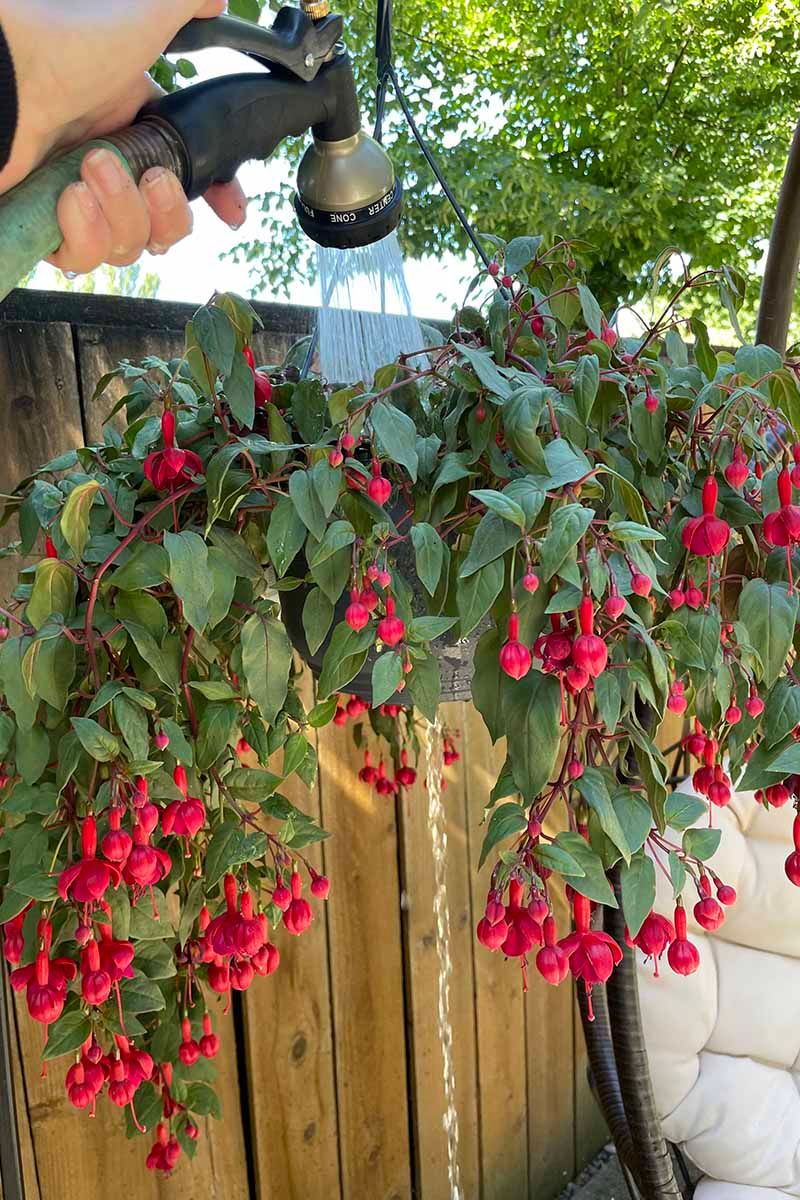
To fix this, water slowly and in multiple passes. Let the water soak in for a few seconds, then add more.
Repeat until water drips steadily from the drainage holes at the bottom of the basket. That consistent drip tells you the entire root ball has been saturated, not just the surface.
Some Oregon gardeners also find it helpful to submerge the entire basket in a bucket of water for ten to fifteen minutes once a week. This method guarantees the root ball gets fully rehydrated, especially during dry stretches.
Proper deep watering leads to stronger root systems, thicker stems, and a basket that stays full and blooming well into the later weeks of summer.
8. Windy Porches Stress Soft Growth
Wind is an underestimated enemy of fuchsia baskets, especially along the coast and in open valley locations where breezes can be surprisingly strong. Fuchsias have soft, moisture-rich stems and leaves that lose water rapidly in moving air.
Constant wind exposure dries out the basket faster, damages tender new growth, and leaves the plant looking ragged and sparse long before summer is over.
Windburn on fuchsias often looks similar to sun scorch, with browning leaf edges and shriveled young shoots. Oregon gardeners blame the heat or the light when wind is actually the main culprit.
If your basket is in a spot where it swings and spins on breezy days, that physical stress alone can slow growth and reduce blooming significantly.
Choosing a sheltered location makes a big difference. A porch with a solid wall on one or two sides, a spot under a deep overhang, or a corner tucked behind a fence can dramatically reduce wind exposure.
Even moving a basket just a few feet can take it out of a wind channel and into a much calmer microclimate.
If a sheltered spot is not available, try using a heavier basket that does not swing as much. Watering more frequently also helps offset the extra moisture loss caused by wind.
Gardeners who pay attention to wind patterns on their property and adjust basket placement accordingly tend to end up with much fuller, more resilient fuchsias that hold their shape all the way through the end of the season.