Florida Coastal Fence Line Plants That Don’t Corrode Metal Or Rot Wood Like Everything Else Does
Florida coastal fence lines have a short list of enemies and salt air is at the top of it. Metal corrodes faster than the warranty suggests.
Wood rots before anyone expected. And most plants that looked fine at the nursery turn brown, drop leaves, and give up within a season of being asked to perform anywhere near the coast.
The plants that actually hold up along a coastal Florida fence line are not the ones filling the standard garden center benches. They are adapted to salt spray, wind, and the kind of relentless humidity that breaks down everything it touches over time.
A fence line planted with the right coastal natives does not just survive those conditions. It thrives in them, fills in densely, and removes the need to keep replacing whatever failed last season.
Florida’s coastline has native plants built for exactly this situation. Most homeowners have never been pointed toward them.
1. Silver Buttonwood Handles Salt Without Smothering Fences
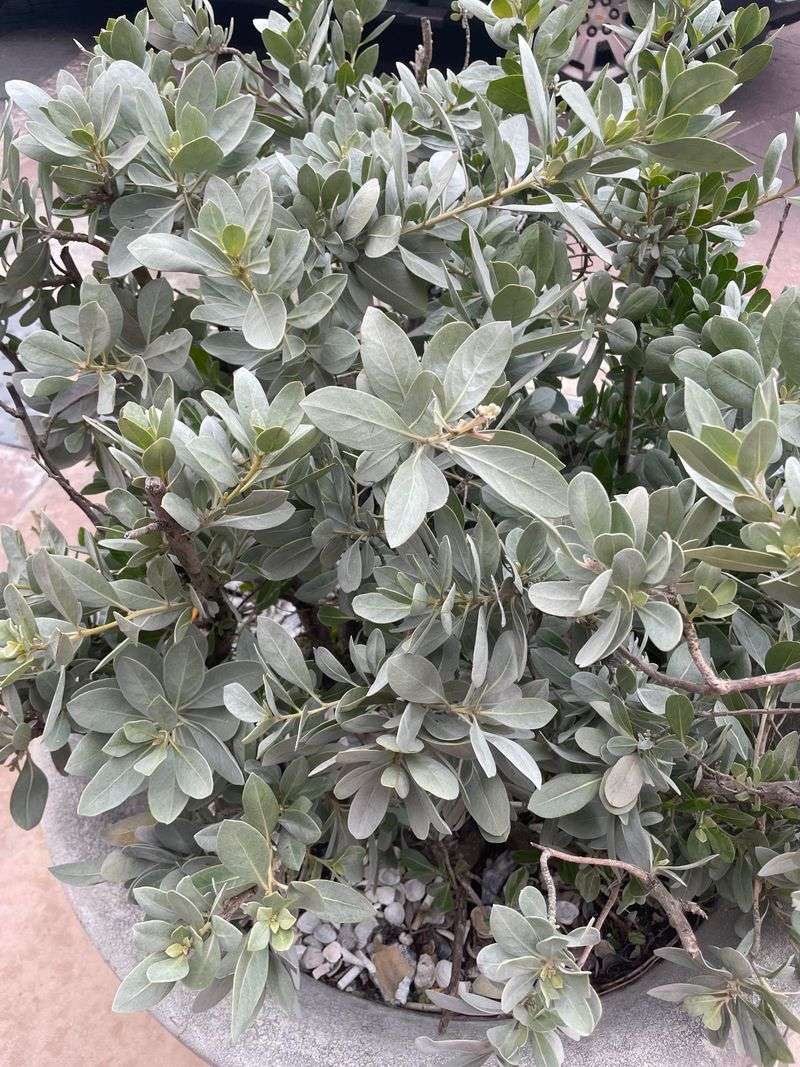
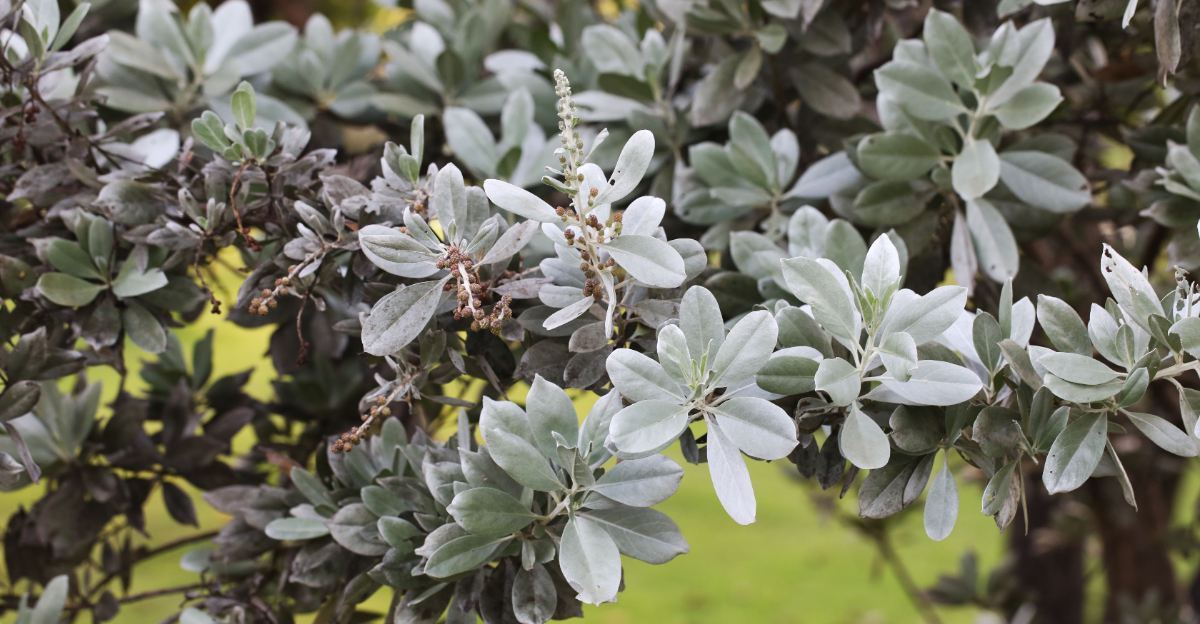
Walk along almost any salt-exposed neighborhood near the Florida coast, and you may spot a shrub with silvery, almost frosted leaves catching the afternoon light.
That is silver buttonwood, and its tolerance for salt spray makes it one of the more reliable choices for coastal fence lines.
Silver buttonwood can grow as a large shrub or small tree, reaching roughly 15 to 20 feet if left unpruned. For fence-line use, most homeowners keep it trimmed to a manageable height that provides privacy without blocking every breeze.
Its upright structure means it does not sprawl across the fence surface the way a vine or a loose, floppy shrub might.
Even so, branches that press against metal or wood can create wear points over time. Rubbing contact traps moisture and holds debris, which is exactly the kind of condition that shortens fence life.
Keeping a spacing gap of at least 18 to 24 inches between the plant and the fence allows air to move through freely.
Pruning once or twice a year helps maintain that gap and prevents the canopy from becoming so dense that wet leaves pile up against the fence after rain.
Silver buttonwood is not maintenance-free, but its structure gives you more control than an aggressive climbing plant.
For coastal privacy screens where salt tolerance and a clean appearance both matter, it earns its place along the fence line.
2. Cocoplum Creates Privacy With Room To Breathe
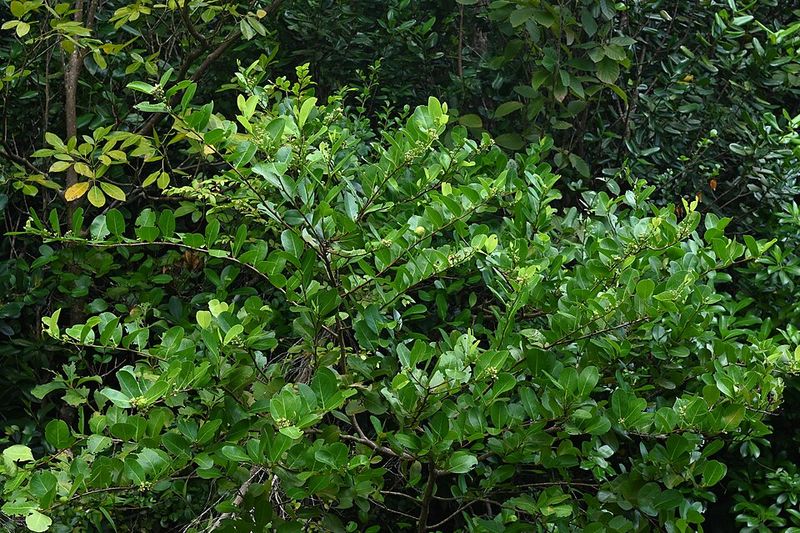
Few hedges in warm coastal landscapes fill in as reliably as cocoplum. Its dense, rounded leaves create a solid privacy screen.
It also tolerates salt air well enough to stay healthy in beachside yards where other shrubs struggle through storm season.
Cocoplum is native to southern regions of the state, and it responds well to shearing, which makes it easier to keep at a consistent height and width along a fence line. Birds are drawn to its small fruit, so planting it near the fence also adds quiet wildlife value to the yard.
Your Florida Garden Changes Every Week. Your Plan Should Too.
Gardening in Florida changes quickly throughout the season. Every Friday you’ll receive a simple weekly plan showing exactly what to plant, prune, fertilize, harvest, and protect so you never miss the right timing.
The key mistake homeowners make with cocoplum is planting it flush against the fence. When a hedge grows tight to wood or metal, damp leaves, trapped humidity, and rubbing stems create conditions that wear down fence materials over time.
A setback of at least 18 inches allows airflow behind the hedge and makes it easier to reach the fence for inspection, cleaning, or repairs.
In central and southern regions, cocoplum handles mild cold well. Farther north along the coast, a hard freeze can cause damage, so check with a local extension office before planting in areas that see occasional frost.
Pruning two or three times a year keeps the shape tight and prevents stems from leaning into the fence. Cocoplum is a solid privacy option, but it rewards homeowners who stay on top of its upkeep.
3. Saw Palmetto Stays Tough In Salty Wind
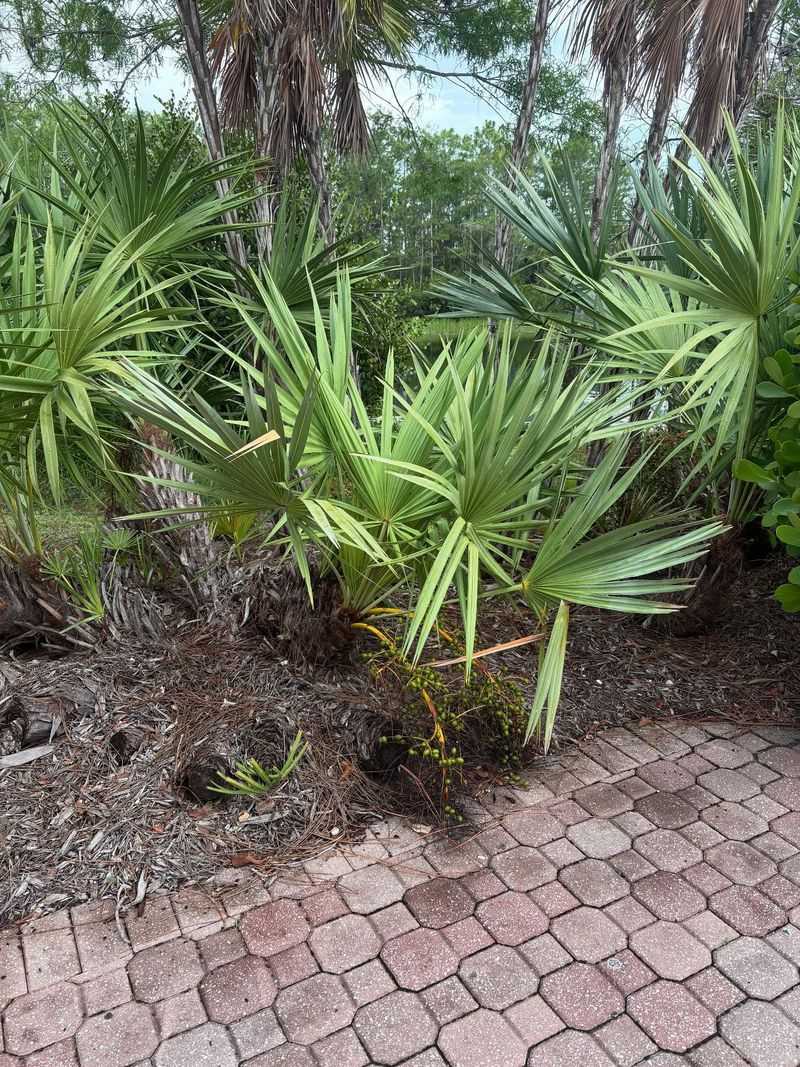
Coastal wind tears through a lot of ornamental shrubs, but saw palmetto barely flinches. This native plant has earned its reputation as one of the toughest species in the Florida landscape.
It thrives in sandy soil, salt wind, and dry spells that would stress most nursery plants into poor shape.
Saw palmetto grows low and wide, typically reaching 5 to 10 feet in height with a spread that can match or exceed that. Its fan-shaped fronds have stiff, serrated edges that give the plant its name.
They also make it a poor choice for narrow fence corridors, gate areas, or pathways where people pass closely. The sharp leaf stems are not something you want brushing against you or catching on clothing.
For fence-line use, saw palmetto works best where there is generous space and a natural, informal look fits the property. It is not a plant you shear into a tidy hedge.
Its growth habit is wild and spreading, which means it needs room to expand without being jammed against the fence.
Fronds that press against metal or wood hold moisture and can scrape surfaces with wind movement. Planting it several feet out from the fence and letting it grow naturally keeps those contact points from forming.
Saw palmetto adds real coastal character to a yard, and when placed thoughtfully, it provides a windbreak effect that even benefits nearby plants. Just respect its size and its edges.
4. Dwarf Yaupon Holly Keeps The Fence Line Tidy
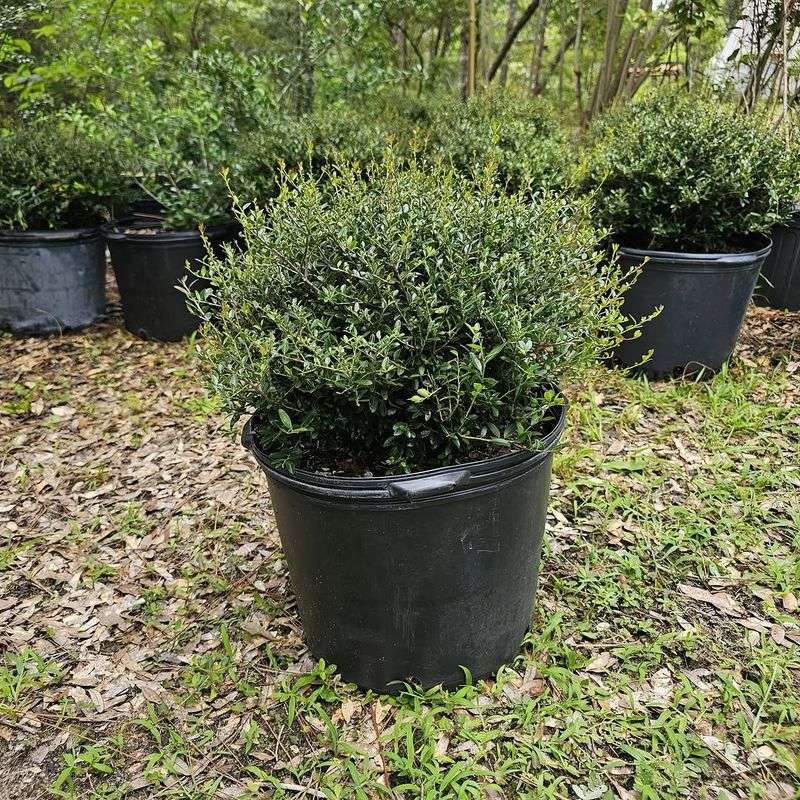
Sometimes the best fence-line plant is simply the one that stays small enough to manage without constant effort. Dwarf yaupon holly fits that description well.
It is a compact, evergreen shrub that responds nicely to pruning and holds its shape through the heat and humidity of coastal summers.
Yaupon holly is native to the southeastern United States and tolerates a range of soil conditions, including sandy coastal soils.
It handles some salt exposure and grows in full sun to partial shade, which gives it flexibility along fence lines that shift between shaded and open sections.
The small leaves and dense branching make it easy to shear into a neat, uniform hedge.
Its value near fences comes from scale and control. A dwarf variety typically stays under 3 to 5 feet tall and wide, which means it does not tower over the fence or send heavy branches leaning into the structure.
Keeping a gap between the plant and the fence still matters, because even small stems can trap moisture against wood or metal when pressed tight over time.
Irrigation spray is a common problem along fence lines. Pointing sprinkler heads away from the fence surface reduces the amount of water hitting wood or metal directly.
Birds visit yaupon holly for its small white berries, adding seasonal wildlife activity to the yard. For homeowners who want a polished, low-profile fence line in a coastal setting, dwarf yaupon holly is a reliable and practical choice.
5. Seagrape Works Best With Serious Space
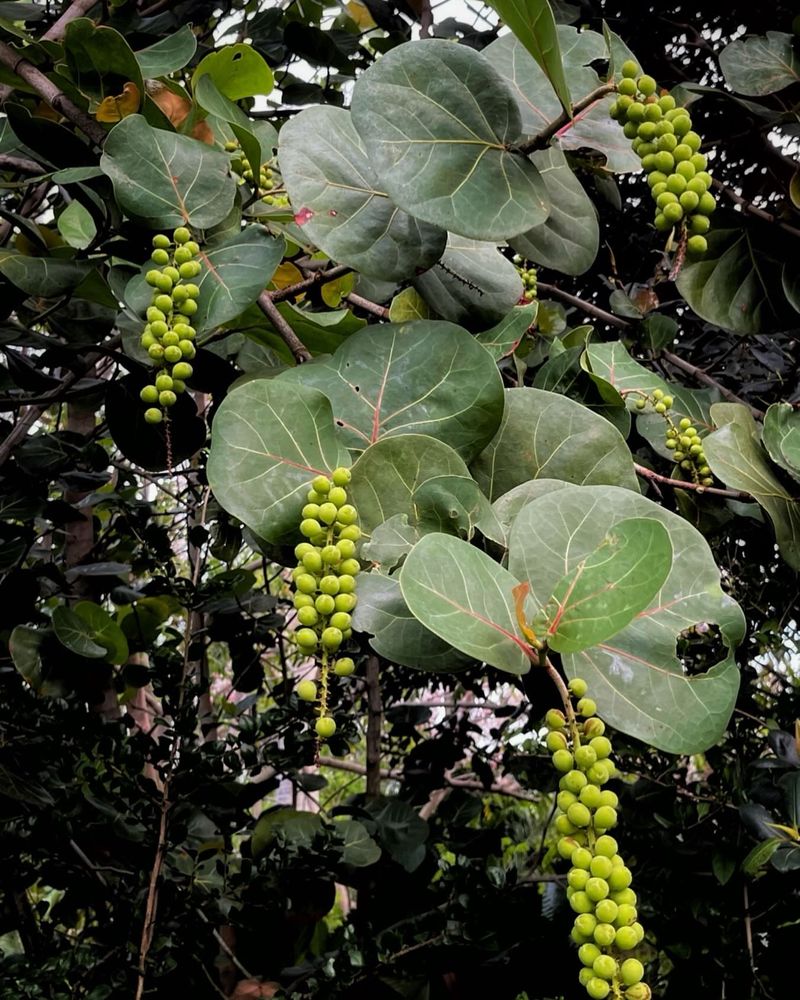
Bold, round leaves the size of dinner plates and a silhouette that reads unmistakably tropical, seagrape is one of the most recognizable coastal plants in the state.
It handles salt spray and sandy soil with ease, and a mature specimen can create a dense, impressive screen along a property line.
The catch is size. Seagrape can reach 25 to 35 feet tall when allowed to grow freely, and its spread can be equally generous.
That makes it a serious commitment for a fence line. Planting it in a narrow side yard or tight fence corner almost always leads to problems.
Branches may press against the fence, leaves may pile up against wood or metal, and roots may eventually push into the ground near posts.
Where space allows, seagrape can be kept at a more manageable size through regular pruning. Local rules in some coastal communities restrict how seagrape can be trimmed, particularly near the beach, because of its role in dune stabilization.
Checking with local codes before planting or pruning is a smart step.
Gates and rooflines also need clearance from a mature seagrape. Branches that rub metal hardware or overhang roofing surfaces create wear and debris buildup.
For wide, open fence lines with enough setback room, seagrape delivers a striking tropical screen that handles the salt-air environment better than most plants. For tight spaces, a smaller option will serve the yard better in the long run.
6. Simpson’s Stopper Adds Screening Without Aggressive Vines
One of the quieter advantages of using a non-vining native shrub along a fence is that it screens the yard without wrapping itself around the structure.
Aggressive vines grip fence boards, pull at metal rails, and create thick mats of wet foliage that hold moisture against surfaces for days after rain.
Simpson’s stopper does none of that.
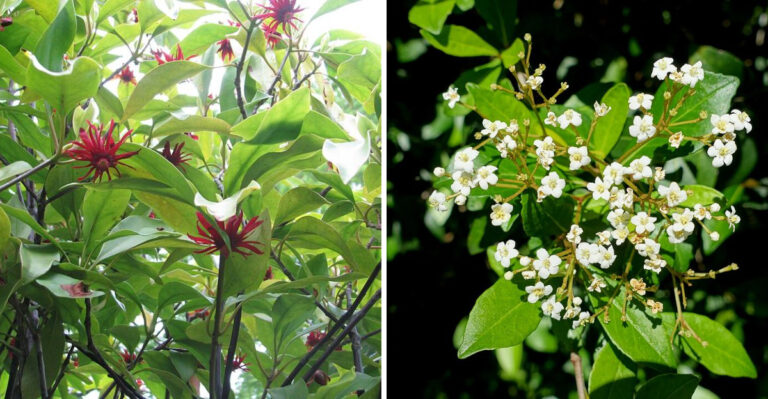
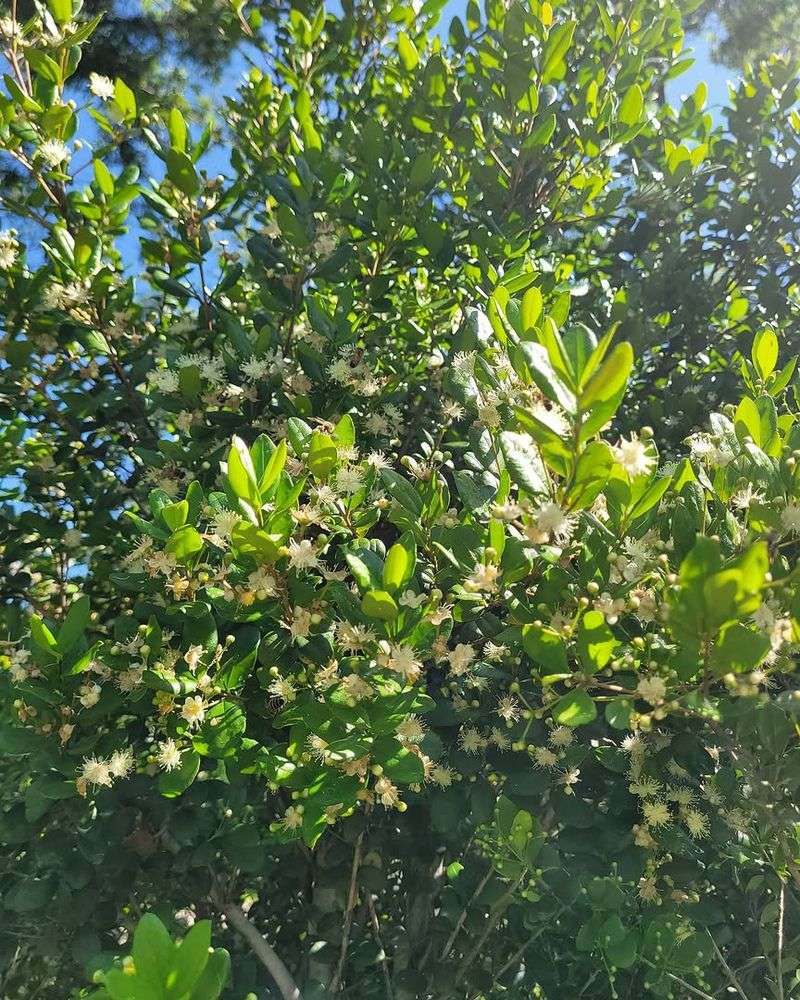
Simpson’s stopper is a Florida native shrub or small tree that grows in an upright, multi-stemmed form. It produces small white flowers with a spicy fragrance and red berries that attract birds.
That makes it a favorite among homeowners who want the yard to feel alive with wildlife activity. Its evergreen leaves stay on through the year, providing consistent screening along the fence line.
Salt tolerance is moderate, and it performs best in sheltered coastal locations rather than directly on the dune line. In more exposed yards, pairing it with a taller windbreak plant on the ocean side can help it stay healthy.
Mature height ranges from about 10 to 20 feet depending on growing conditions. Checking the expected spread before planting helps avoid crowding the fence as the plant matures.
Spacing it 24 to 36 inches from the fence gives the plant room to branch naturally and allows easy access for inspection and cleaning behind the screen. Pruning once or twice a year keeps the canopy from pushing back into the fence.
For coastal homeowners who want privacy without a fence-swallowing vine, Simpson’s stopper is a low-drama, high-reward option.
7. Coontie Fills Low Gaps Without Climbing Wood
The base of a fence line is often the most neglected part of the yard. Bare soil collects debris, holds moisture against posts, and invites weeds to fill the gap.
Coontie offers a much better solution for that low zone, staying close to the ground without ever climbing the fence or leaning heavily on the structure above.
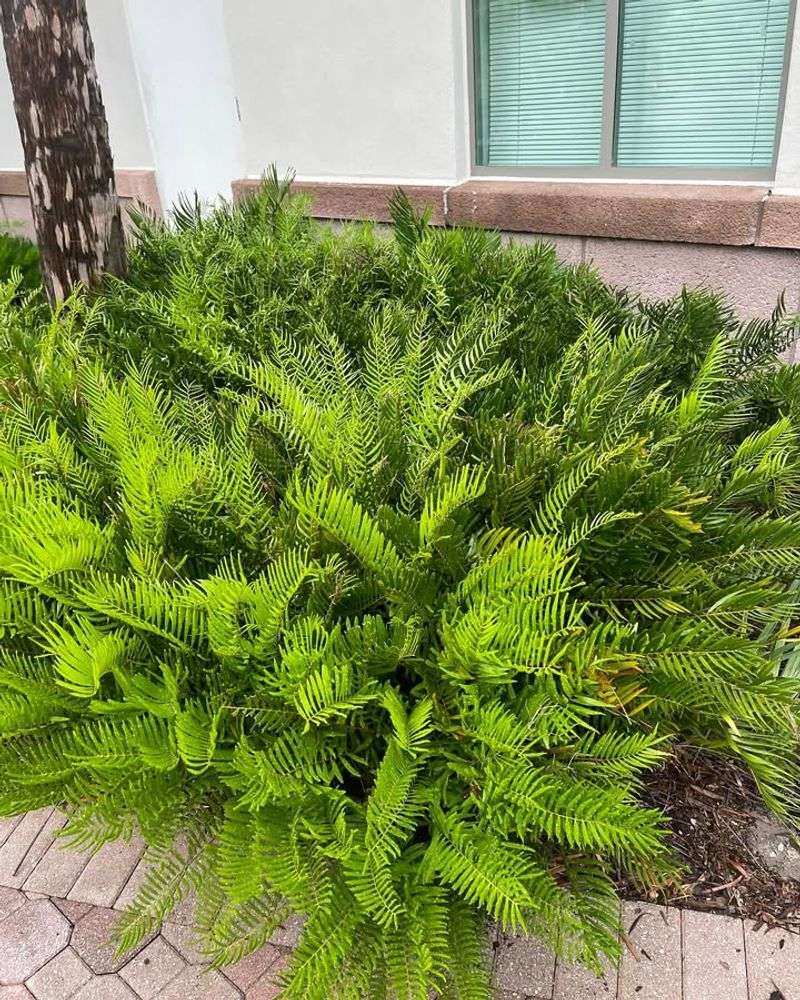
Coontie is a native cycad that looks a bit like a small fern or palm. It belongs to an ancient plant family that has been part of the Florida landscape for thousands of years.
It grows slowly to about 2 to 3 feet tall with a similar spread, forming a tidy, dark green mound of arching fronds. Its compact structure stays in place year after year without needing aggressive pruning to keep it off the fence.
Salt tolerance is reasonable for a sheltered coastal yard, though it performs best when not fully exposed to constant ocean spray.
Drought tolerance is a real strength, which means it can thrive in the sandy, fast-draining soil common along coastal fence lines without demanding heavy irrigation.
Coontie also serves as the host plant for the Atala butterfly. This native species was once nearly gone from the state and has made a recovery partly because of native plantings like this one.
Keeping mulch pulled away from the base of fence posts matters even when coontie is nearby. Organic material pressed against wood holds moisture and speeds up wear.
Give coontie a few inches of clearance from the fence and it will hold that low zone beautifully.
8. Muhly Grass Softens Metal Fences Without Holding Wet Weight
Soft, feathery plumes swaying in a coastal breeze make muhly grass one of the most visually satisfying plants along a fence line in fall.
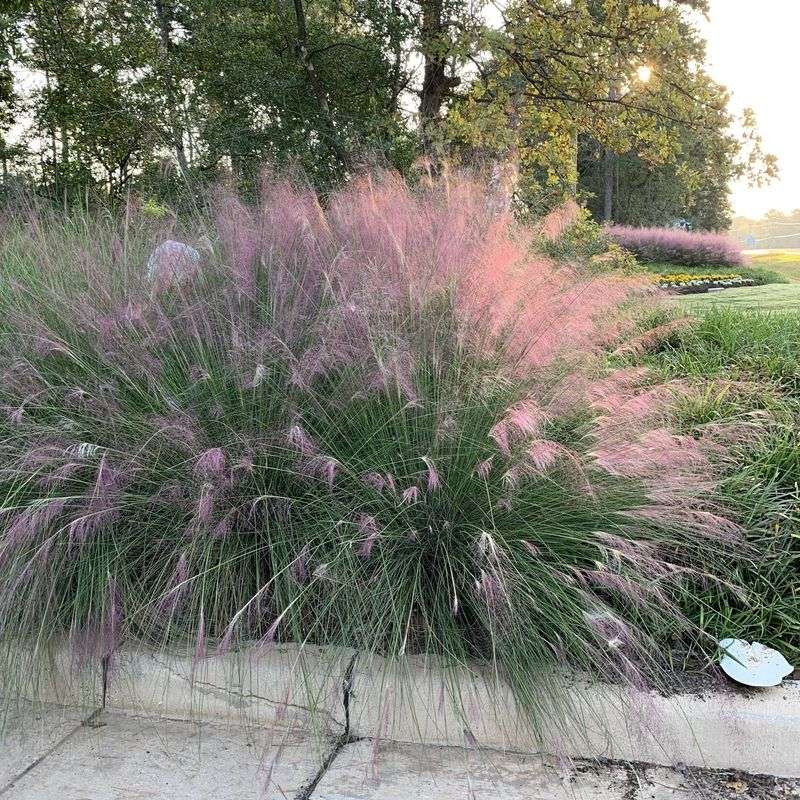
The pink to purple plumes emerge in late summer and carry through autumn, turning a plain metal fence into something that actually catches the eye from the street.
Unlike dense shrubs or vines that press heavy, wet foliage against fence surfaces, muhly grass has an open, airy habit. The thin blades and loose plumes do not form a solid mat when grown close to the fence.
When spaced correctly, air moves through the clumps freely, which is a meaningful advantage compared to plants that trap humidity against metal rails or wood posts.
Salt tolerance for muhly grass is generally considered good, and it performs well in sunny, well-drained sites, which describes most coastal fence lines. Soggy or low-lying spots are not a good match.
Wet soil causes the clumps to flop and can lead to rot at the base, which then means the grass leans heavily into the fence for support.
Clumps should be spaced at least 18 inches from the fence to maintain that airflow advantage. Crowding several clumps tight against the rail removes the open character that makes muhly grass a smart fence-line choice.
Cutting clumps back in late winter or early spring refreshes the plant and keeps the base from becoming a dense tangle. For sunny coastal fence lines, muhly grass adds seasonal beauty without the weight or moisture problems that come with heavier plants.