More Great Horned Owls Near Your Ohio Home Means Fewer Rats (Here’s How To Attract Them)
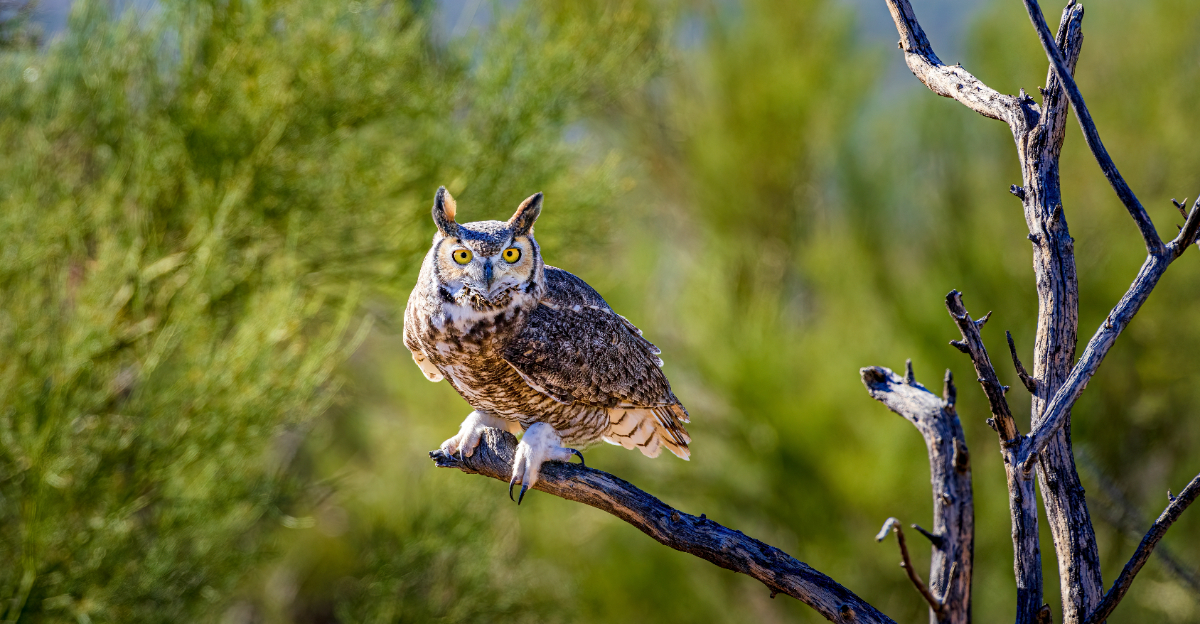
Rats around the garage, shed, compost pile, or chicken coop can make an Ohio yard feel a little less like home. Traps and cleanup may help, but nature already has a skilled night hunter built for the job.
Great horned owls are powerful, silent predators that hunt rodents across neighborhoods, farms, woodlots, and tree-lined properties throughout the state. A yard with mature trees, quiet cover, and fewer nighttime disruptions can become part of their hunting route.
That does not mean bait, food scraps, or risky shortcuts. It means less poison, more habitat, and a property that gives owls a reason to patrol nearby.
For homeowners tired of rat activity after dark, this bird may be one of the most impressive allies overhead.
1. Keep Mature Trees Where Great Horned Owls Can Perch
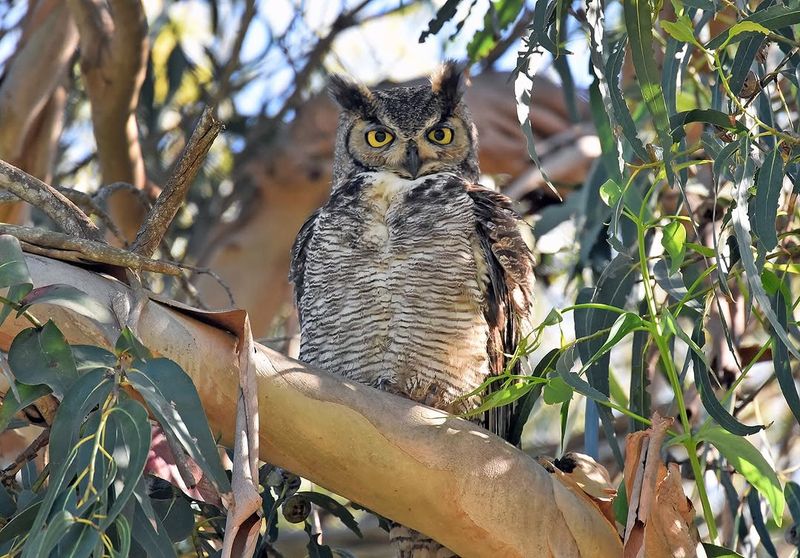
A tall oak limb at the edge of a yard does more than provide shade. Great horned owls rely on high, sturdy perches to scan wide areas before dropping toward prey.
A mature tree with broad, horizontal branches is exactly the kind of structure these birds seek out in suburban and rural landscapes.
Before removing any large tree near your home, get a professional arborist to assess it. A tree that looks rough on the outside may still be structurally sound.
If it is safe to keep, it is worth keeping, especially at the yard’s edge or near an open area where owls could hunt.
Mature trees also support a wider backyard food web. Insects, small mammals, and songbirds all use layered canopy cover.
That activity brings more prey into the area, which makes the space more appealing to hunting raptors over time.
Great horned owls also use large tree cavities and abandoned raptor nests for roosting and raising young. A yard with several mature trees of different species gives these birds more options.
Even one or two tall trees near a quieter corner of your property can serve as reliable lookout points throughout the year.
2. Leave Quiet Edges For Nighttime Hunting
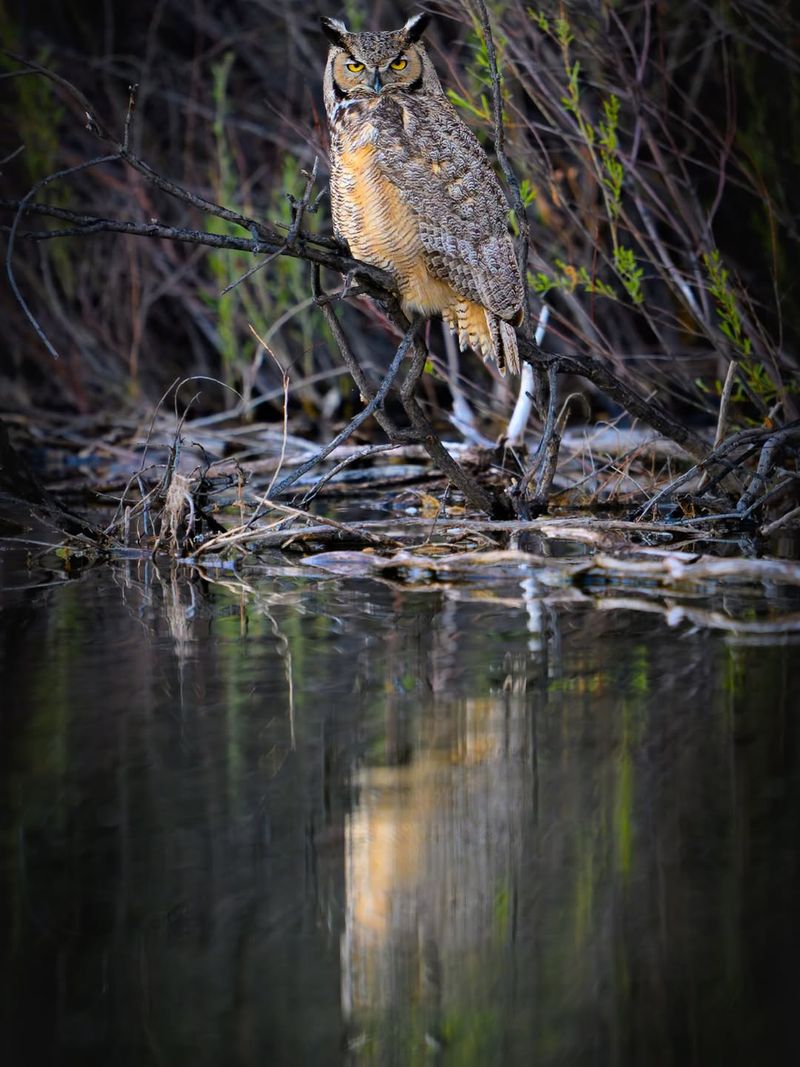
A dark fence line where mowed lawn meets brushy cover is exactly the kind of edge great horned owls prefer when hunting after sunset. These birds are most active from dusk through the early morning hours.
They work the boundaries between open ground and thicker cover, listening and watching for movement below.
Suburban and semi-rural properties often have corners, back borders, or strips of unmowed ground that get ignored through most of the season. Those forgotten edges are actually some of the most useful parts of a yard for nocturnal wildlife.
Leaving them alone, or letting them grow into a natural transition zone, can increase the hunting value of your space.
Field edges, hedgerows, and wooded borders allow small mammals to move through the landscape. Owls learn these travel routes and return to productive areas regularly.
A property that consistently offers good hunting cover may see repeat visits over weeks or even months.
Keep realistic expectations in place. Owl activity depends on territory size, prey availability, and the level of disturbance in an area.
Your Ohio Garden Changes Every Week. Your Plan Should Too.
Gardening in Ohio changes quickly throughout the season. Every Friday you’ll receive a simple weekly plan showing exactly what to plant, prune, fertilize, harvest, and protect so you never miss the right timing.
Reducing noise, foot traffic, and bright light along back edges makes those areas more useful to hunting birds. No specific change guarantees an owl visit, but quieter edges make your property a better candidate for one.
3. Avoid Rodent Poison That Can Harm Owls
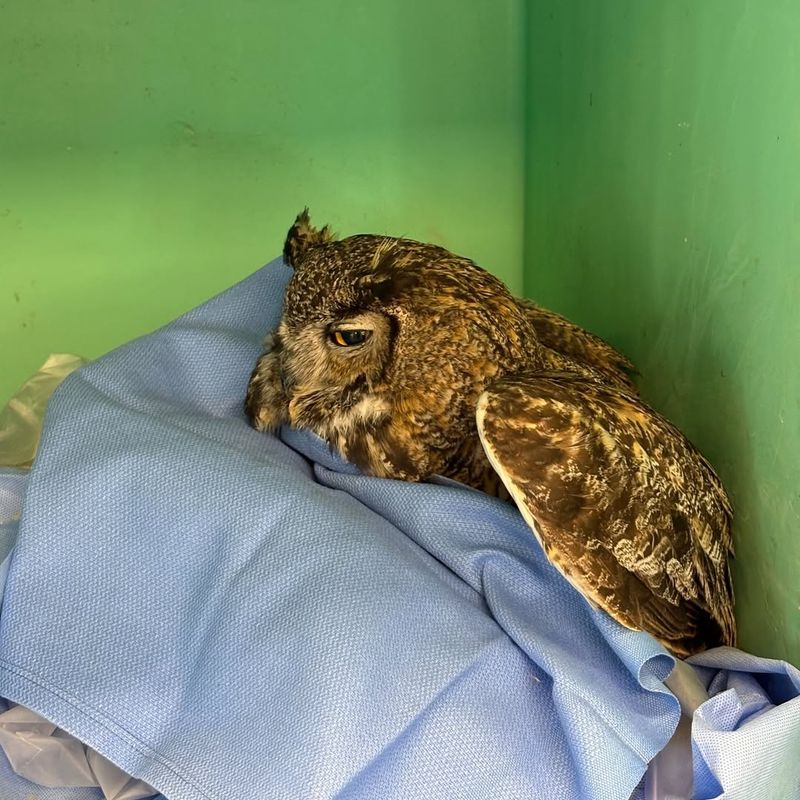
Locked trash bins and sealed entry points do more for long-term rodent control than routine poison use. Rodenticides, especially second-generation anticoagulants, can move through the food web when a predator eats an affected animal.
Great horned owls that regularly hunt rats and mice are directly exposed to that risk.
Wildlife researchers and veterinary toxicologists have documented raptor poisoning linked to rodenticide exposure across North America. An owl does not need to eat poison directly.
Eating one or more affected rodents over a short period can be enough to cause serious harm. Barn owls, red-tailed hawks, and great horned owls are among the species most frequently affected.
Ohio State University Extension and other land-grant university programs recommend integrated pest management as the first line of rodent control.
That approach includes sealing gaps in foundations, securing food sources, removing harborage near structures, and using snap traps when mechanical control is needed.
If a rodent problem is serious or persistent, consulting a licensed pest professional is the right move. Ask specifically about methods that reduce risk to non-target wildlife.
Keeping poison out of the food web protects owls, hawks, foxes, and other predators. Those animals naturally help keep rodent populations in check across rural and suburban landscapes.
4. Reduce Bright Lights Around Hunting Areas
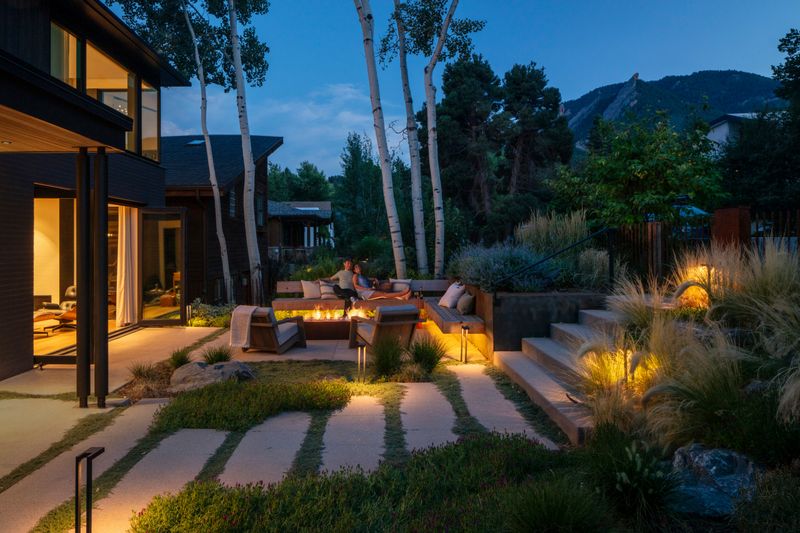
A porch light blazing all night across an open backyard does not just waste electricity. It disrupts the darkness that nocturnal animals, including great horned owls, depend on for effective hunting.
Prey animals like mice and voles tend to avoid brightly lit open areas, which shifts hunting activity away from well-lit zones.
Reducing unnecessary outdoor lighting is one of the easier adjustments a homeowner can make. Motion-sensor fixtures keep lights off when no one is moving around.
Shielded or downward-facing fixtures direct light where it is needed without spilling across wide areas of yard. Warmer-toned bulbs cause less disruption to nocturnal wildlife than cool white or blue-spectrum LEDs.
Focus lighting changes on back edges, garden borders, and areas away from doors and walkways where safety lighting is genuinely needed. Keeping those outer zones darker gives hunting raptors more useful ground to work with.
Even modest reductions in light pollution can make a noticeable difference in how much wildlife activity a yard supports after dark.
Neighbors and community members sometimes coordinate on outdoor lighting to reduce overall light pollution in a neighborhood. Groups like the International Dark-Sky Association offer practical guidance for homeowners.
Darker nights benefit more than just owls. Migrating songbirds, fireflies, and many insects also rely on natural darkness to navigate and thrive.
5. Let Brushy Borders Support A Natural Food Web
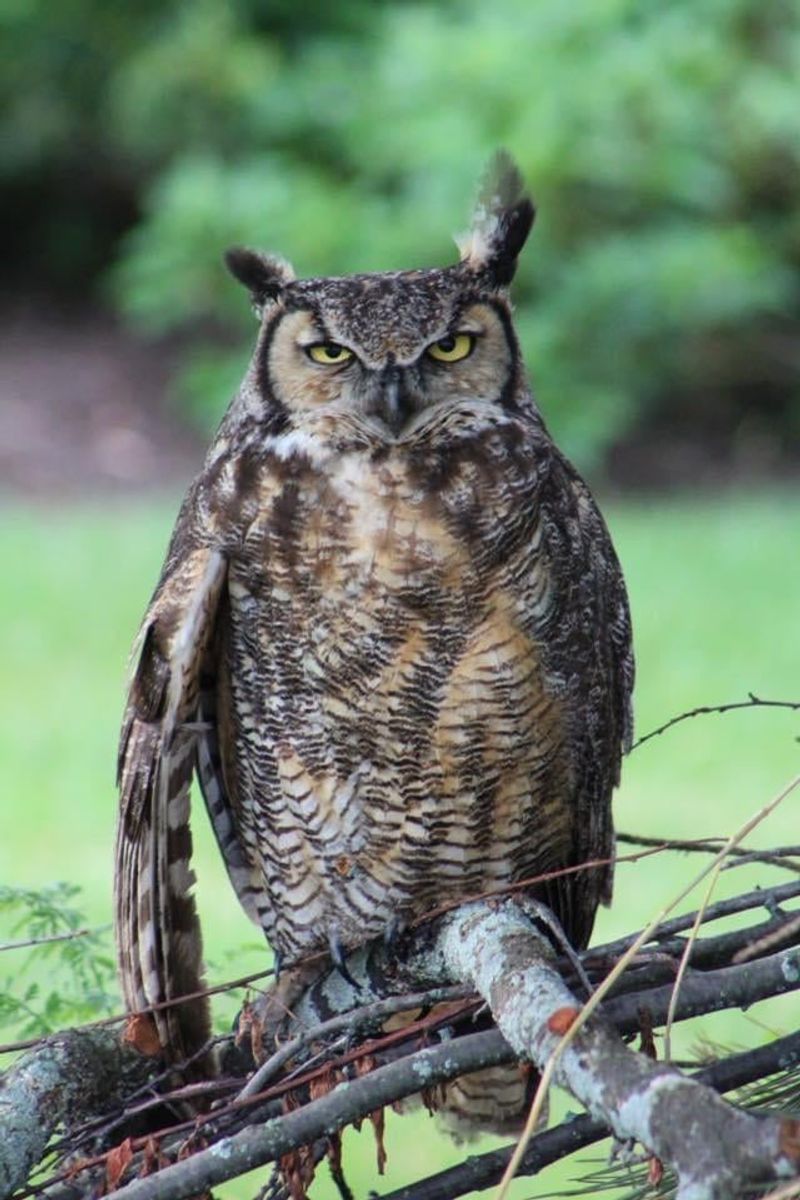
Along a quiet backyard edge, a strip of native shrubs and leaf litter does something a mowed lawn simply cannot. It creates layered habitat that supports insects, small mammals, and ground-nesting birds.
That activity builds the kind of food web that attracts larger predators, including raptors, over time.
Native plants like elderberry, dogwood, and viburnum provide cover and structure at different heights. When combined with leaf litter in low-use areas, they support the small-mammal populations that make a property interesting to hunting owls.
A brushy border does not need to be large to be useful. Even a narrow strip along a fence or back property line can serve as a movement corridor for wildlife.
Balance matters here. Brushy cover near doors, foundation vents, sheds, or compost bins can create harborage for rodents close to your home.
Keep dense planting away from structures and focused on outer edges where wildlife activity is less likely to cause problems. A thoughtful layout separates habitat from access points.
Cornell Lab of Ornithology and the Audubon Society both recommend native plantings as a foundation for Ohio backyard wildlife support. Choosing plants native to this state helps ensure the habitat functions as part of the broader regional ecosystem.
That layered, connected landscape is far more useful to a hunting owl than a flat, manicured lawn with nothing growing at the edges.
6. Protect Small Pets When Owls Are Active
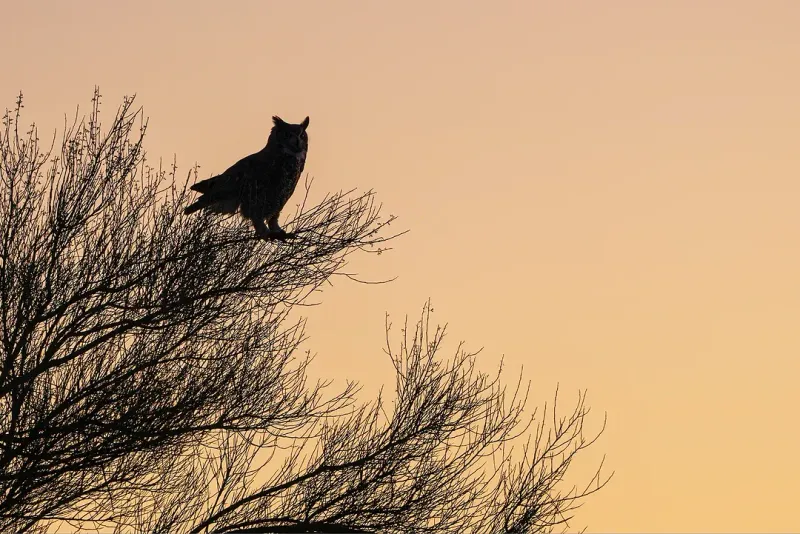
A small-pet check before heading outside after dark is a simple habit that can prevent a serious incident. Great horned owls are among the most powerful raptors in North America.
They regularly take prey larger than themselves and have been documented taking animals the size of small domestic cats, rabbits, and young poultry.
Small dogs under roughly ten pounds, outdoor cats, backyard chickens, and pet rabbits are most at risk. Dawn, dusk, and the hours just after sunset are peak hunting times for great horned owls.
Those are the moments when supervision and secure enclosures matter most. Leaving a small pet unattended outside during those windows increases the risk considerably.
Enclosed chicken coops with hardware cloth roofs and secure latches provide strong protection for backyard poultry. Small dogs should be leashed and accompanied by an adult when outside at night.
Outdoor cats face risk from multiple predators, and keeping them indoors after dark is the safest approach for both the cat and local wildlife.
Encouraging owls does not mean accepting unmanaged risk to pets or livestock. The two goals can coexist with reasonable precautions in place.
Knowing that great horned owls are active in your area should prompt a quick review of how pets and poultry are secured, not cause alarm. A few structural upgrades and supervision habits go a long way toward keeping everyone safe.
7. Skip Baiting And Let Habitat Do The Work
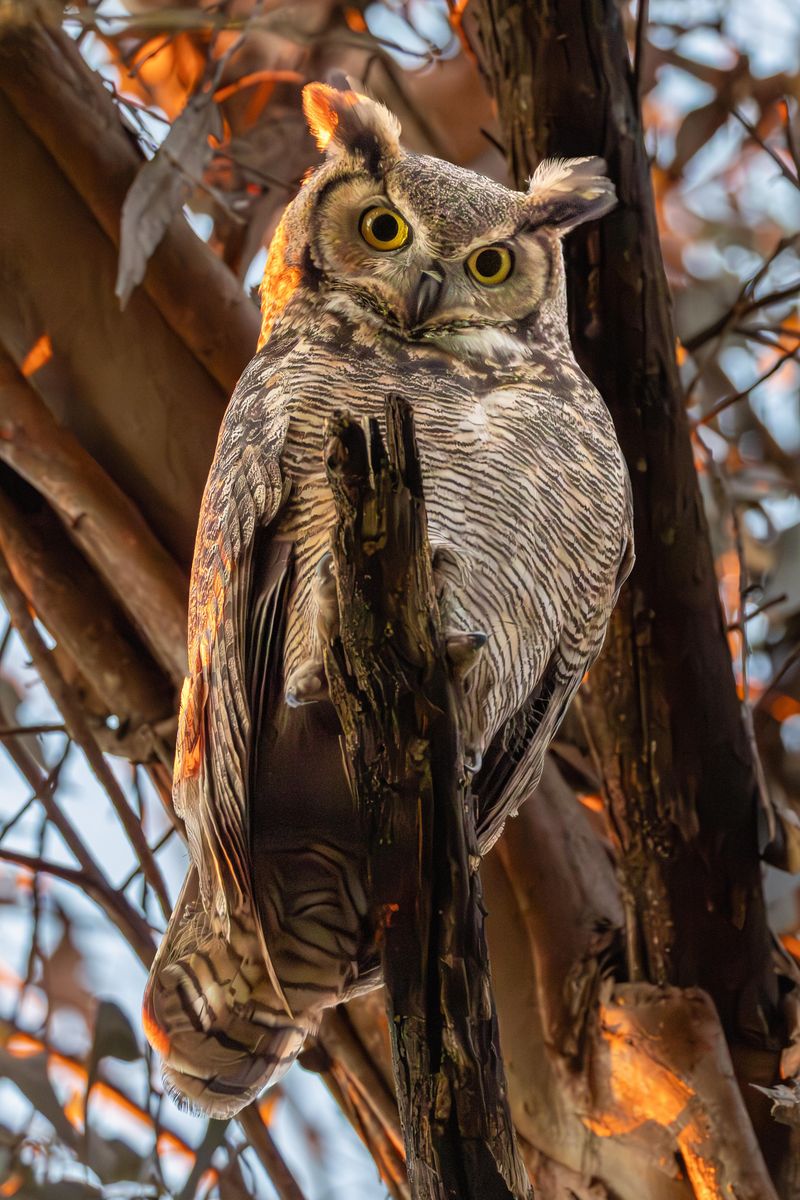
Releasing rodents to attract owls is not a strategy. It is a problem waiting to happen.
Intentionally creating or maintaining a rodent population to lure raptors can increase pest pressure near your home. It can also introduce disease risk and put both the owls and your household in a worse position than before.
No reputable wildlife organization recommends it.
Leaving pet food outside, letting trash overflow, or keeping unsecured compost near the house creates the same kind of unintended bait station. Those conditions attract rodents to the wrong places, right next to your foundation and entry points.
They do not draw predators to open hunting grounds where the activity is actually useful.
The better approach removes human food attractants from around structures while allowing natural habitat to develop at the yard’s edges. Owls that move through an area are looking for reliable hunting opportunities, not handouts.
A yard that consistently offers cover, darkness, and prey movement along its outer edges has a much better chance of seeing regular raptor activity. That is more useful than simply having a rodent problem near the back door.
Wildlife laws in this state and across the country protect great horned owls under the Migratory Bird Treaty Act. Interfering with their behavior, disturbing active nests, or attempting to handle them is illegal and unsafe.
Let habitat do the work, follow official wildlife guidance, and give owls the space to operate on their own terms.
8. Make Your Ohio Yard Useful After Dark
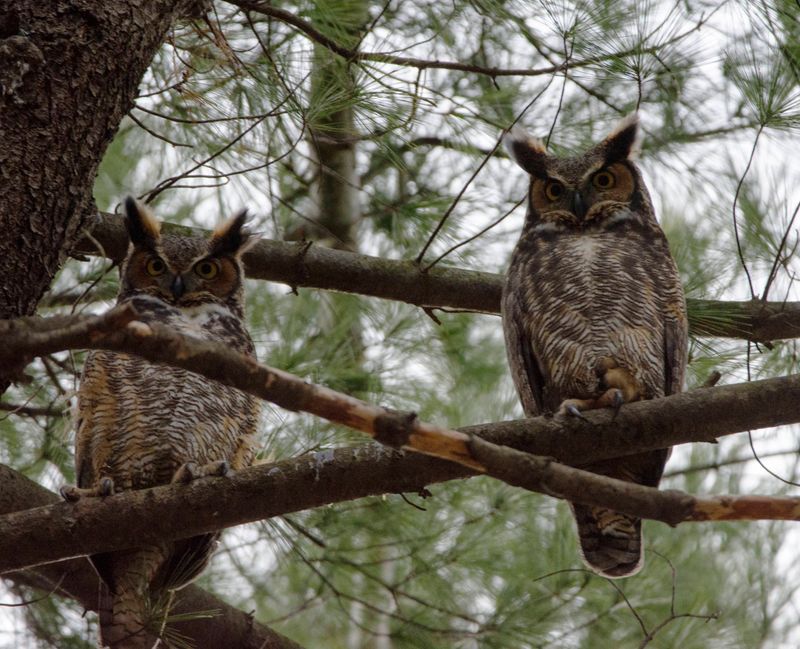
After the porch light goes off and the yard settles into quiet, that is when a well-designed outdoor space really starts working. A yard that offers perches, darkness, low disturbance, and a healthy food web becomes part of the larger nighttime landscape.
Great horned owls travel through that landscape during their nightly hunting routes.
Pulling together everything covered in this article creates a picture of what an owl-friendly yard actually looks like. Mature trees stand at the edges.
Brushy borders provide layered cover without crowding structures. Lights are minimal and shielded.
Trash is secured. Rodent poison is off the table.
Pets are supervised at dusk and dawn.
None of these steps guarantees a great horned owl will show up. These birds choose their own routes based on territory, prey availability, and how safe an area feels over time.
A yard that consistently checks those boxes simply has a better chance of being part of their regular circuit.
Owls are wild animals with their own schedules and priorities. Respecting that independence, giving them space, and avoiding disturbance near any nest or roost site is the most important thing a homeowner can do.
The Ohio Department of Natural Resources and the Cornell Lab of Ornithology both offer additional guidance for supporting native raptors.
A quieter, darker, more natural yard is worth building for its own sake, and the possibility of a late-night hoot from the trees is a genuine reward.