Move these tender Wisconsin bulbs to the basement now or the frost will turn them to mush
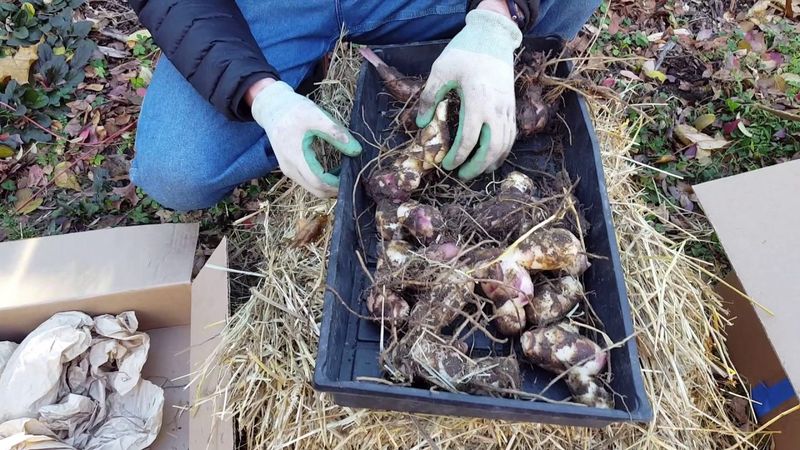
Fall gardening in Wisconsin comes with a deadline you can feel in the air, and if you grow dahlias, cannas, or gladiolus, that deadline matters. These colorful plants cannot survive a Wisconsin winter in the ground, so digging and storing them properly each fall is the only way to see them bloom again next summer.
The good news is that one light frost does not automatically ruin everything underground, and you have more control over the timing than the title suggests. Watch your local forecast, get your tools ready, and follow a plan built around what each plant actually needs.
Prepare now, but let Wisconsin’s forecast set the digging date
Fall comes faster in some parts of Wisconsin than others, and that difference matters when you are deciding whether to reach for a digging fork. Wisconsin climate data shows that average first fall freezes range from roughly September 23 to 25 in northern and western parts of the state to October 8 to 11 in some southern areas.
A single statewide calendar date cannot tell every Wisconsin gardener when to dig, so the local forecast, your garden’s exposure, and the condition of your plants are the real guides.
Before any frost arrives, gather your tools and line up your storage containers so you are not scrambling when the temperature drops. Keep an eye on the overnight lows and understand what the weather service is actually saying.
National Weather Service frost and freeze definitions place frost risk near 36 degrees Fahrenheit, a freeze at 32 degrees or below, and a hard freeze around 28 degrees or below. These are weather thresholds, not exact survival cutoffs for every plant in every Wisconsin garden.
A light frost can blacken the foliage of dahlias and cannas while leaving the underground structures largely intact. The practical concern is not one cool night but what happens afterward: leaving frost-damaged plants sitting in cold, wet Wisconsin soil for several days raises the risk of rot working its way down from the damaged stems.
Wisconsin’s “tender bulbs” are tubers, rhizomes, and corms
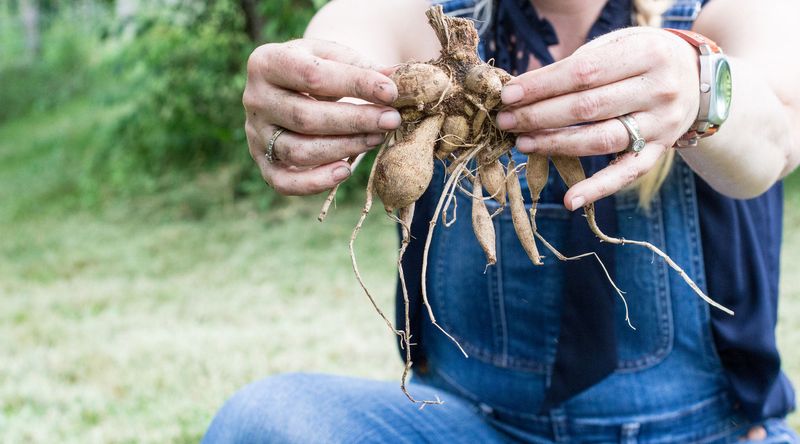
Walk into any Wisconsin garden center in spring and you will find dahlias, cannas, and gladiolus sold side by side under the label “tender bulbs.” That grouping is convenient, but the underground structures are actually three different things, and understanding the difference helps explain why each one needs slightly different care come fall. UW-Madison Extension identifies all three as non-winter-hardy in Wisconsin and recommends digging and indoor storage for each of them.
Dahlias grow from tubers, which are swollen stem tissue packed with stored energy. Cannas produce rhizomes, which are thick horizontal stems that spread underground and can form large clumps over a single growing season.
Gladiolus grow from corms, which are compressed, solid stem bases that look a bit like flattened onions and produce smaller cormels around the base as the season progresses.
What all three share is a complete inability to survive a Wisconsin winter in unprotected ground. None of them will simply go dormant and bounce back in spring the way a hardy perennial does.
Your Wisconsin Garden Changes Every Week. Your Plan Should Too.
Gardening in Wisconsin changes quickly throughout the season. Every Friday you’ll receive a simple weekly plan showing exactly what to plant, prune, fertilize, harvest, and protect so you never miss the right timing.
Beyond that shared vulnerability, however, the three crops respond differently to frost, require different curing times, and perform best at different storage temperatures and in different packing materials. Treating all three exactly the same way is one of the most common mistakes Wisconsin gardeners make, and the sections that follow will walk through what each one actually needs from the moment the digging fork goes into the ground through the long months until spring planting returns.
A careful Wisconsin dig limits wounds and storage problems
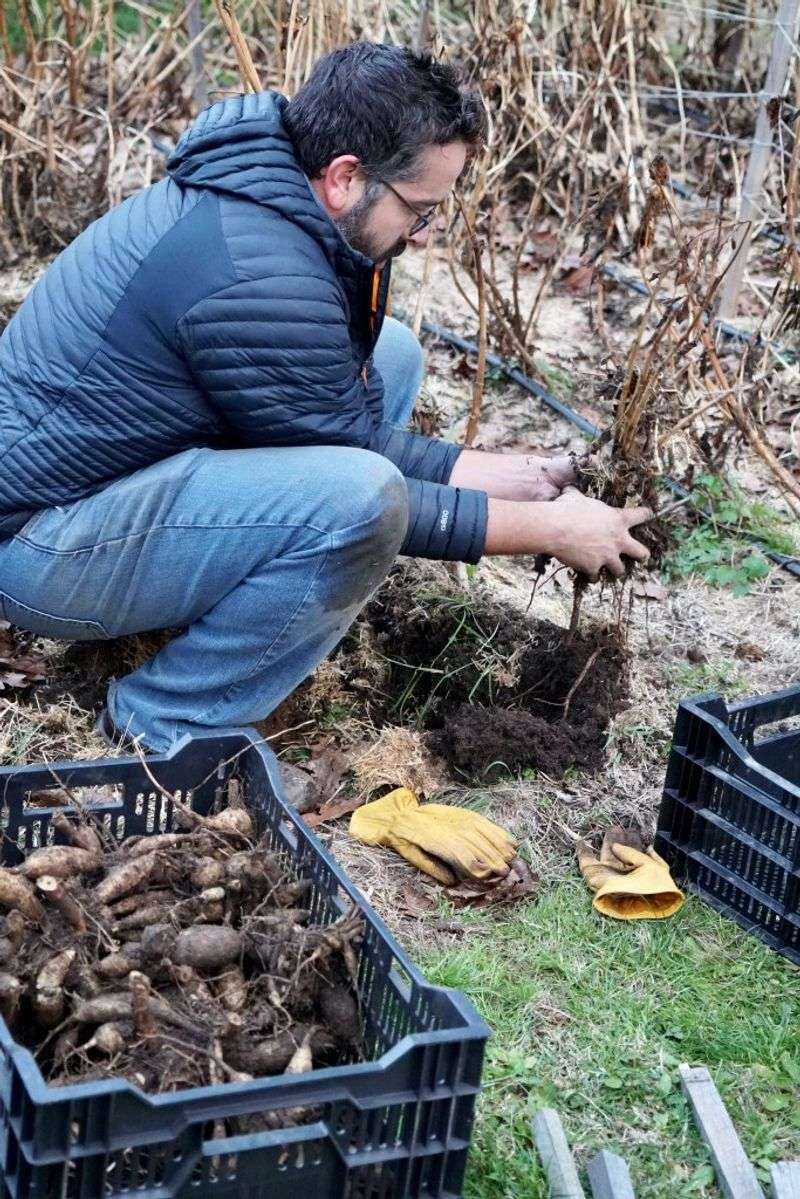
How you pull plants out of the ground in October often determines whether they make it through to April. In Wisconsin gardens, the soil can shift quickly from workable to firm and cloddy as temperatures drop, so plan to dig on a dry day when the ground is not saturated.
Wet soil clings to underground structures and makes it harder to see what you are working with.
Start by loosening the soil several inches away from the base of the plant rather than pushing straight down next to the stem. UW-Madison Extension guidance on lifting tender bulbs emphasizes avoiding cuts, bruises, and scraped surfaces during digging because damaged tissue gives rot-causing organisms a direct entry point.
Work around the plant in a wide circle, gently rocking the fork to loosen the root zone before lifting. Once the clump is free, set it on the ground carefully rather than dropping or tossing it.
Shake off the loose soil by hand rather than banging clumps against a hard surface, which risks breaking tubers or corms. Any structure that is visibly diseased, soft, or badly damaged should be discarded at this stage rather than carried into storage where it can spread problems to healthy material.
Wisconsin gardeners sometimes try to salvage borderline pieces, but a single rotting tuber packed next to healthy ones can ruin an entire container by late January.
Delay dividing clumps until spring whenever possible. Fresh cuts made in fall become open wounds during the long storage period, and in a Wisconsin basement where conditions may fluctuate, those wounds can let rot establish before you notice any problem.
Let the clumps rest intact through winter and divide just before replanting when healing is fast and conditions favor recovery.
Dahlias need gentle lifting and moderate Wisconsin storage
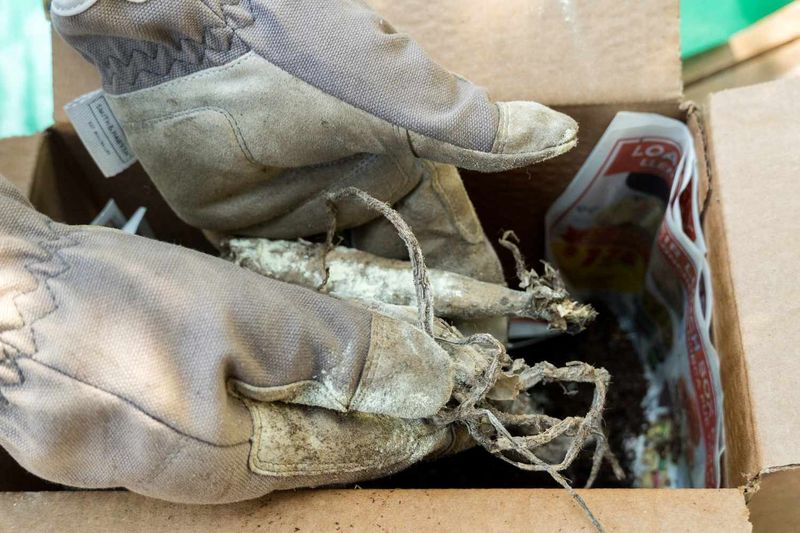
Dahlias are rewarding plants to grow in Wisconsin, producing months of blooms right up until frost cuts them down, but they are also among the most bruise-prone structures you will dig each fall. A light frost may blacken the tops completely while leaving the tubers underground in reasonable condition, but that does not mean you should wait.
UW-Madison Extension advises lifting frost-damaged dahlias within a few days and always before a hard freeze reaches the Wisconsin garden, because cold, wet soil accelerates decay in any tissue that the frost has already weakened.
Use a digging fork rather than a spade to reduce the chance of slicing through tubers. Work at least a foot away from the main stem, loosen the soil in a full circle, and lift the clump slowly.
Dahlia tubers are fragile at the neck, the narrow connection between the tuber and the old stem, and a broken neck means that tuber cannot sprout next year. Lay the clumps on a dry surface and allow them to dry for several hours before packing.
Pack clumps in paper bags, cardboard boxes, or a dry packing medium such as vermiculite, perlite, or dry peat moss. Avoid sealing them in airtight plastic, which traps moisture and promotes rot.
Check stored dahlias once a month through the Wisconsin winter. Remove anything that has become soft or shows signs of mold.
If a tuber feels noticeably shriveled and papery, a very light misting of water on the packing medium, not directly on the tuber, can help prevent dehydration. Most Wisconsin gardeners find that properly packed dahlias need little intervention until spring arrives and dividing time comes.
Cannas can remain as clumps in suitable Wisconsin storage
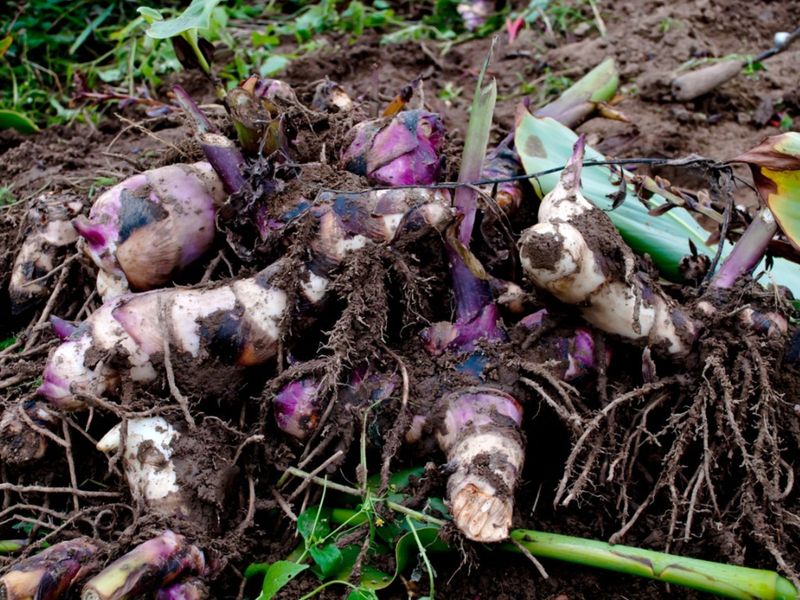
Cannas are vigorous growers that can fill a Wisconsin garden bed with bold tropical foliage and bright flowers all summer, but their rhizomes are just as vulnerable to a hard Wisconsin freeze as any other tender structure. UW-Madison Extension confirms that cannas are not winter-hardy in Wisconsin and should be dug after the growing season, dried, and moved to a cool, frost-free storage space at approximately 40 to 50 degrees Fahrenheit.
After digging, shake off loose soil and allow the rhizomes to dry in a sheltered Wisconsin space, such as a garage or covered porch, for a day or two before packing them away. Good air circulation during this drying period helps reduce surface moisture that could otherwise lead to mold in storage.
Canna rhizomes may be stored as clumps when that arrangement suits your space and containers, but they still require the same ventilation, dryness, and periodic inspection that apply to any stored structure.
Place the dried rhizomes in open-topped containers, shallow crates, or cardboard boxes with a breathable packing medium. Do not stack them deeply or pack them so tightly that air cannot move between the pieces.
Wisconsin basements that stay in the 40 to 50 degree range and remain dry are generally suitable, but a basement that runs warm or stays damp needs to be ruled out before you rely on it. Check canna rhizomes every few weeks and remove any that feel soft, smell off, or show visible rot, because one compromised rhizome can spread quickly to its neighbors in a tightly packed container.
Gladiolus needs a longer, cooler Wisconsin cure
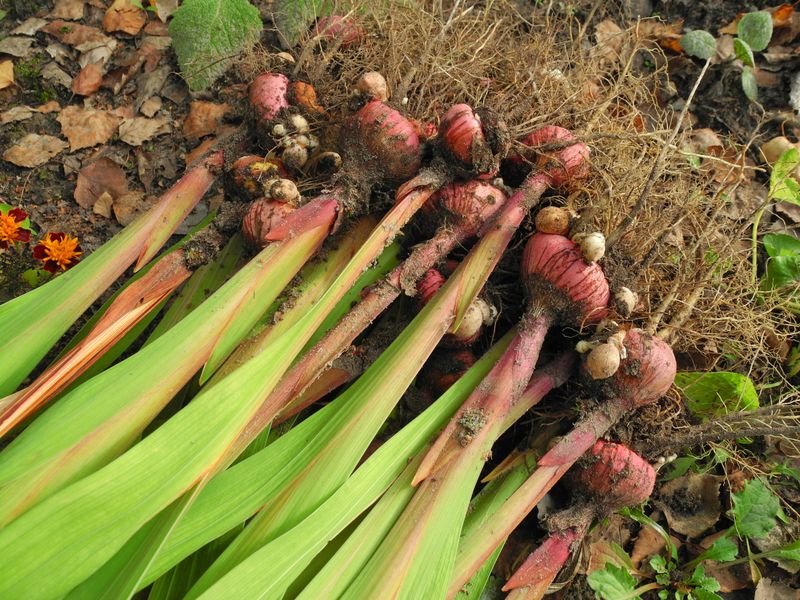
Of the three crops Wisconsin gardeners commonly dig each fall, gladiolus has the most distinct handling requirements, and treating corms like dahlia tubers is one of the most reliable ways to lose them before spring. Timing the lift is straightforward: dig when the foliage yellows naturally or within a few days of the first frost, whichever comes first.
In Wisconsin, that window often falls in September or early October depending on your location in the state.
After lifting, shake the soil off the corms by hand rather than rinsing them under water. UW-Madison Extension specifically recommends leaving gladiolus corms unwashed until after the drying period is complete, because surface moisture at this stage raises the risk of decay.
Cut the stems back to about one to two inches above the corm, then spread the corms in a single layer in a dry, shaded, well-ventilated Wisconsin space to cure.
The curing period for gladiolus runs roughly two to three weeks, considerably longer than the few hours needed for dahlias. Once cured, Wisconsin gardeners should store gladiolus corms at approximately 35 to 45 degrees Fahrenheit in mesh bags or another well-ventilated arrangement that allows air to circulate freely around each corm.
That cooler, drier storage range is meaningfully different from the 45 to 50 degrees that suits dahlias and cannas, and the difference matters over a long Wisconsin winter. A storage space that works perfectly for your dahlia clumps may be slightly too warm for gladiolus corms, so check your thermometer and adjust placement within the basement or storage room accordingly.
Remove any corms that feel soft or show dark spots during periodic checks, and peel away the old dried husks from the outside of each corm before inspecting more closely.
Choose a Wisconsin basement that stays dry and breathable
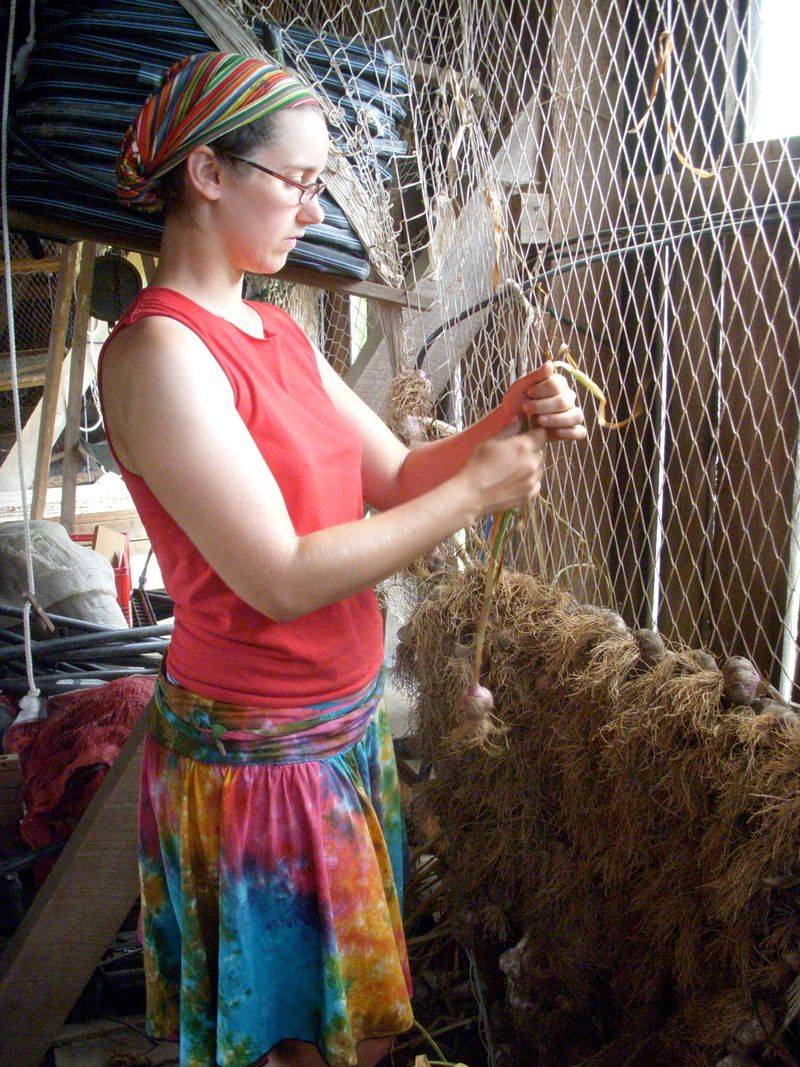
Not every Wisconsin basement is automatically a good place to store tender bulbs, and assuming otherwise is one of the most common reasons gardeners open their boxes in March to find mush. The right storage space is cool, dry, frost-free, and ventilated.
Those four conditions work together, and dropping even one of them creates a different problem.
Penn State Extension places a general storage range for many tender plants at 45 to 55 degrees Fahrenheit, while UW-Madison commonly recommends 45 to 50 degrees for dahlias and cannas and Iowa State targets 35 to 45 degrees specifically for gladiolus corms. A Wisconsin basement that sits at 60 degrees or warmer through winter is too warm for most of these crops and can encourage early sprouting that exhausts the stored energy before planting time.
A basement corner that drops below freezing during a January cold snap creates the opposite problem.
For containers, choose paper bags, cardboard boxes, mesh bags, shallow crates, or open-topped bins rather than sealed plastic tubs. Airtight storage traps moisture against the surface of tubers, rhizomes, and corms and creates the humid, still-air environment where mold and rot thrive.
Suitable dry packing materials include vermiculite, perlite, dry peat moss, sand, or dry newspaper layered between structures. Do not pile stored material deeply, because the weight and reduced airflow in the lower layers can crush or suffocate what is underneath.
Each storage risk has a specific cause worth understanding. Excess moisture combined with poor ventilation is the primary driver of mold and rot in Wisconsin basement storage.
Excessive warmth promotes early sprouting that drains stored energy before the plant ever reaches the garden. Excessively dry conditions, usually less common in Wisconsin basements but possible near a furnace, can cause tubers or rhizomes to shrivel and dehydrate beyond recovery.
Inspect stored material every few weeks, remove anything soft or moldy immediately, and keep a thermometer in the storage area so you know what your Wisconsin basement is actually doing through the coldest months.
Use this Wisconsin winter checklist before spring planting
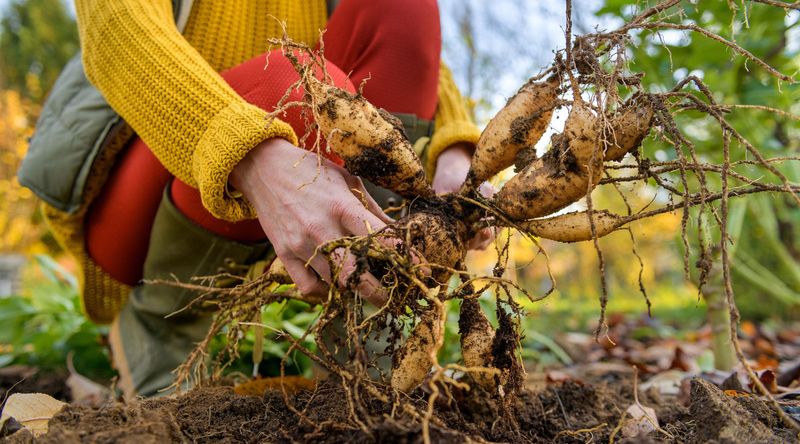
Pulling everything together into a clear sequence makes the fall routine much easier to repeat year after year in a Wisconsin garden. Start by checking the local forecast as temperatures begin to drop in September or October, and have your digging tools, containers, and packing materials ready before frost arrives.
Waiting until the night before a predicted hard freeze to gather supplies is a reliable way to make avoidable mistakes.
Lift each crop before a hard freeze or before the ground freezes solid, following the timing and digging method that fits the specific plant. Cure each structure according to its own schedule: a few hours for dahlia clumps, a day or two for canna rhizomes, and roughly two to three weeks for gladiolus corms.
Label every container clearly with the plant name, variety if you know it, and the storage date, because Wisconsin winters are long and memory is shorter than you expect. UW-Madison Extension guidance supports storing each crop in the appropriate conditions and inspecting periodically through winter.
Plan to divide clumps in spring rather than fall, giving wounds the best chance to heal quickly. Outdoor overwintering under mulch is not a dependable statewide method for these crops in Wisconsin, and a suitable basement, one that is cool, dry, frost-free, and ventilated, is not the same as simply any basement.
The gardeners who replant the healthiest Wisconsin dahlias, cannas, and gladiolus each May are usually the ones who spent twenty careful minutes on a dry October afternoon digging, labeling, and storing well. Spring blooms are earned in fall.