Native Florida Plants To Grow Instead Of Confederate Jasmine On Trellises
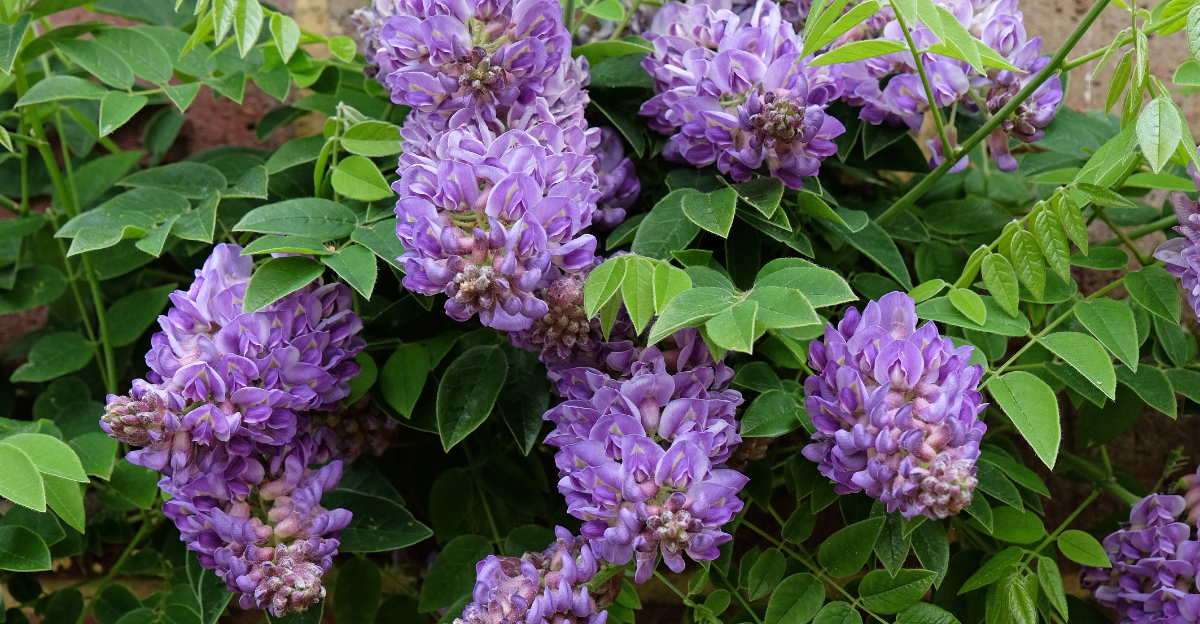
Confederate jasmine smells remarkable in spring. That fragrance has sold more Florida trellises than any marketing campaign ever could.
It has also distracted a lot of homeowners from what the plant does the other eleven months of the year. It spreads.
It roots where nobody asked it to. It turns a trellis into a management project that never quite ends.
Florida native vines do not come with that arrangement. Several climb just as well, bloom longer, and support wildlife that Confederate jasmine never attracted in any meaningful way.
The fragrance is the one thing natives cannot fully replace. Every other argument Confederate jasmine makes, coverage, speed, visual impact, native vines make just as convincingly.
A trellis that looks good, stays manageable, and earns its place in the Florida ecosystem is not a compromise. It is just a better starting point than most people consider before the jasmine goes in.
1. Coral Honeysuckle Turns A Trellis Into A Hummingbird Stop
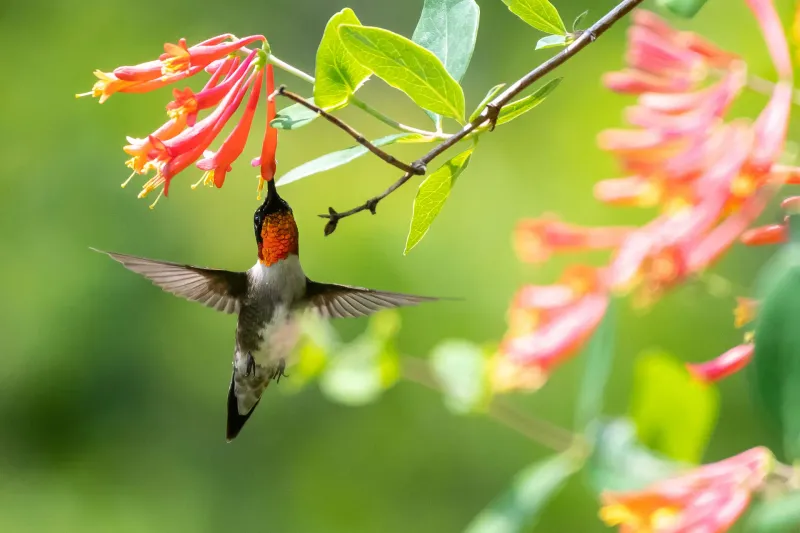
Ruby-throated hummingbirds find coral honeysuckle before most Florida gardeners even notice it has started blooming.
Lonicera sempervirens produces clusters of slender, coral-red tubes from late winter through fall, and hummingbirds hover at each one with obvious purpose.
Swallowtail butterflies visit as well, drawn by the same tubular shape that keeps short-tongued insects out.
This vine twines its stems around a support rather than gripping with adhesive disks or tendrils. A trellis with horizontal bars or a wire fence gives it plenty to wrap around.
Mature plants typically reach 10 to 15 feet, which suits most residential trellises without overwhelming them.
Plant it in full sun to light shade and give it average moisture once established. It behaves as an evergreen in South and Central regions, but may drop leaves during cold winters further north.
That is normal and not a sign of trouble.
Annual trimming after the heaviest bloom flush keeps the vine tidy and encourages fresh flowering wood. Do not confuse coral honeysuckle with Japanese honeysuckle, which is invasive and carries a very different fragrance.
Coral honeysuckle has little to no scent, so fragrance lovers should know that upfront. Source plants from a native nursery for the best results.
2. Crossvine Covers Tall Supports With Fiery Spring Trumpets
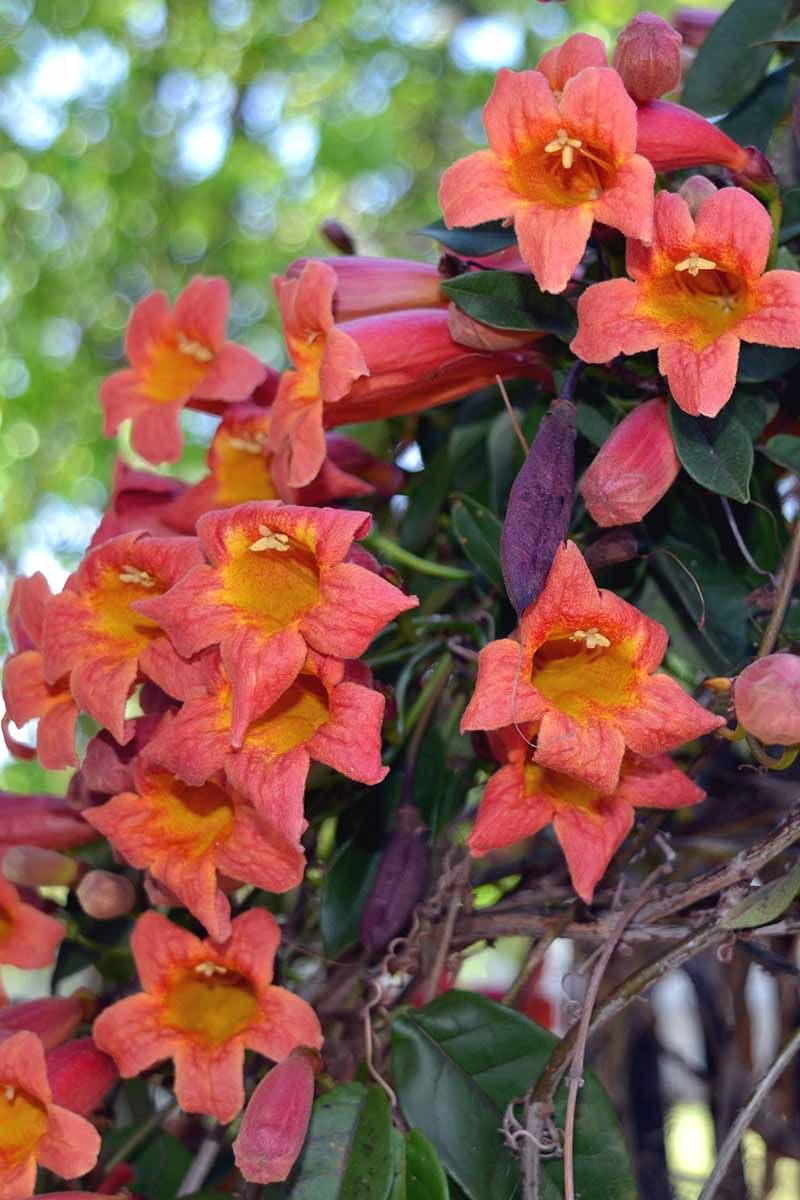
Few sights in a spring garden stop traffic like a wall of orange-and-yellow trumpets blazing against a sunny sky. Bignonia capreolata delivers exactly that with clusters of flared, two-toned flowers.
Depending on the cultivar, the colors range from deep brick-red to golden yellow. Bloom time peaks in spring, typically March through May in North and Central regions.
Crossvine is a strong climber that uses tendrils tipped with adhesive disks. Those disks let it grip smooth masonry, wooden beams, and metal supports with real authority.
Mature vines can reach 30 to 50 feet, which means a small decorative trellis is not the right match. A sturdy pergola, tall fence, or masonry wall suits it far better.
Give it full sun to partial shade and moderate moisture. It performs best in North and Central regions of Florida and is less reliable as a landscape vine in the southern tip.
Your Florida Garden Changes Every Week. Your Plan Should Too.
Gardening in Florida changes quickly throughout the season. Every Friday you’ll receive a simple weekly plan showing exactly what to plant, prune, fertilize, harvest, and protect so you never miss the right timing.
Fast growth is one of its greatest strengths, but that same energy demands regular pruning in small spaces.
Left unchecked, crossvine can engulf nearby shrubs or structures. Plan its space carefully before planting.
Nursery-grown plants establish more predictably than wild-collected specimens, and several named cultivars offer richer flower color.
3. Carolina Jessamine Brings Golden Color Before Spring Arrives
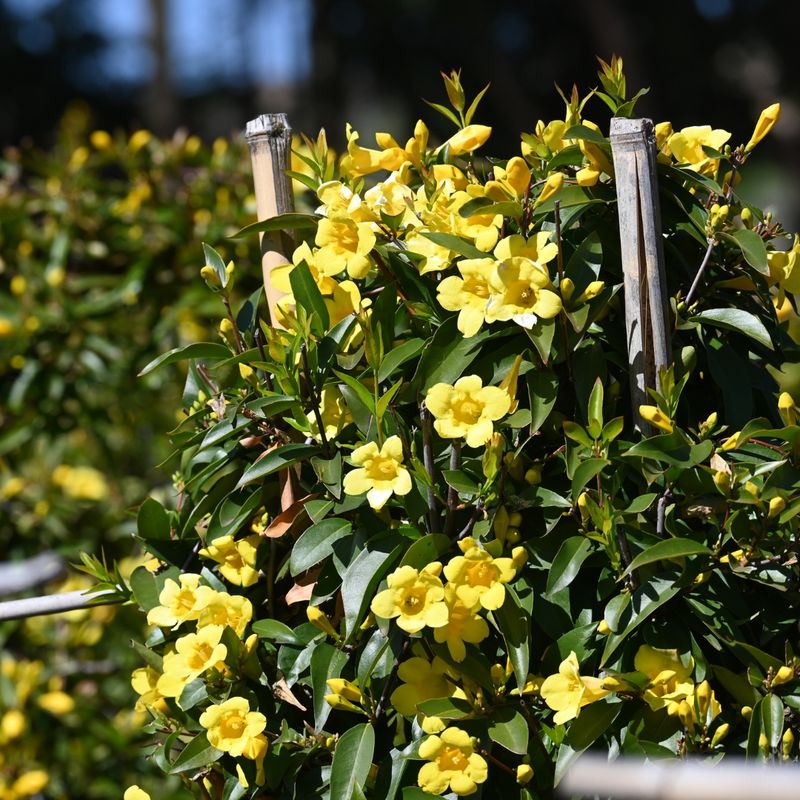
In late January or February, most vines are still dormant. Carolina jessamine, however, opens its bright yellow trumpets like a quiet announcement that winter is losing its grip.
Gelsemium sempervirens blooms earlier than almost any other native vine, which makes it genuinely useful for gardeners who crave early-season color on a fence or arbor.
The vine twines and scrambles rather than gripping with adhesive disks. A trellis, wire fence, or arbor with something to wrap around works well.
Mature plants typically grow 10 to 20 feet long and stay evergreen in mild winters across Central and North regions. Further south, it can struggle in the heat and humidity of summer.
Plant Carolina jessamine in full sun to partial shade and give it well-drained, slightly acidic soil. It tolerates dry spells once established but looks best with consistent moisture during its first season.
Every part of this plant is toxic if eaten, including the flowers and roots. That is not a minor footnote.
Households with young children or pets that chew plants should weigh this seriously before planting. Never confuse it with Confederate jasmine; the two look nothing alike up close.
Buy from a reputable native nursery and enjoy one of the earliest blooms the native palette offers.
4. American Wisteria Delivers Cascading Blooms Without The Exotic Vine
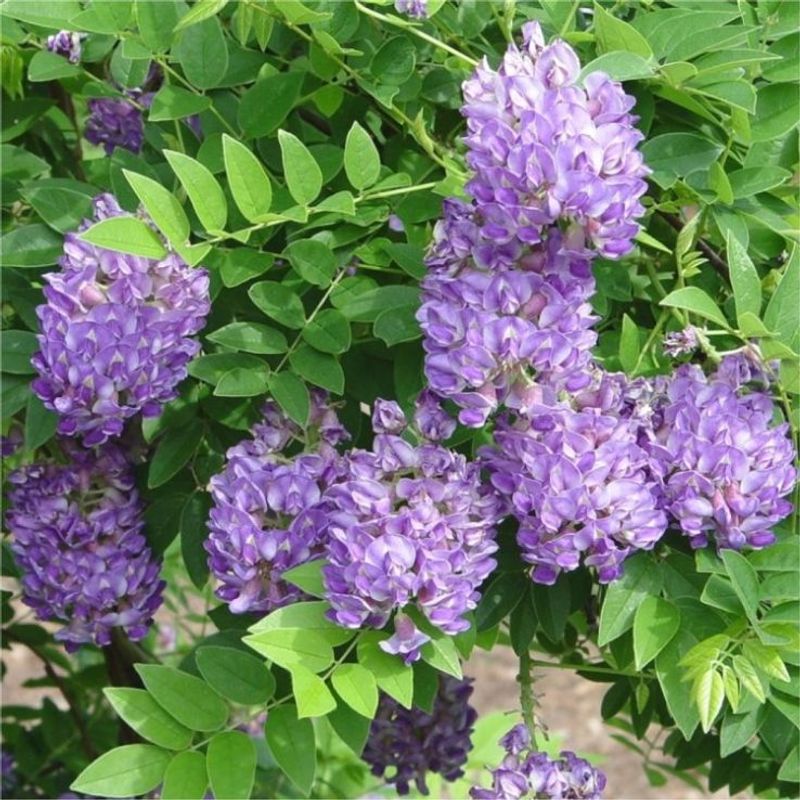
Drooping clusters of lavender flowers hanging from a pergola beam look like something from a dream garden. American wisteria delivers that image without the ecological headache of its Asian relatives.
Wisteria frutescens is the native species to seek out. It is genuinely different from Chinese and Japanese wisteria, both of which are invasive in many parts of the Southeast.
American wisteria produces shorter flower clusters, usually 4 to 6 inches long, in shades of lavender, purple, or white. The fragrance is mild compared to Asian species.
Bloom time typically falls in spring, with some repeat flowering in summer if conditions cooperate. Mature vines can reach 20 to 30 feet, so the support must be heavy and deeply anchored.
Full sun produces the most flowers. Moist, well-drained soil suits it well.
Pruning twice a year, once after the main bloom and again in late summer, keeps growth in check and encourages more flowering wood to develop.
Seed-grown plants may take five or more years to bloom, so buy grafted or cutting-grown plants from a nursery when possible. American wisteria is not a maintenance-free vine.
It rewards consistent pruning with better displays each year. Regional suitability covers most of Florida, though extreme South conditions may limit performance.
5. Maypop Packs Purple Drama Into A Smaller Climbing Space
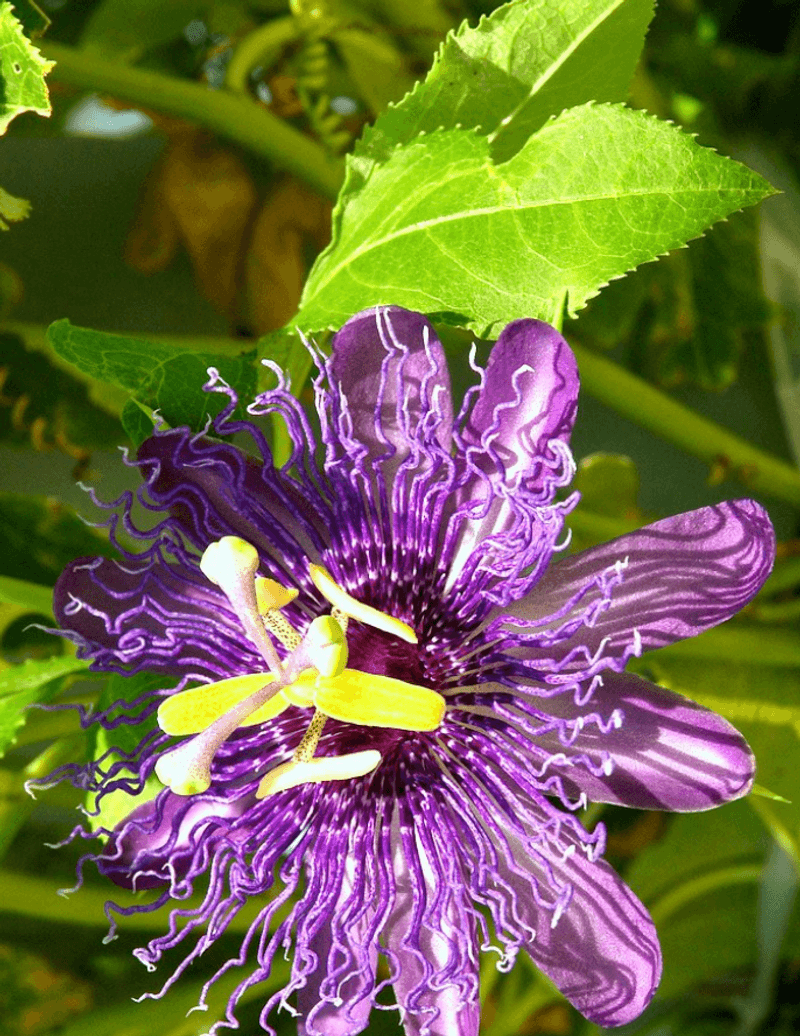
No native vine produces a flower quite as visually complex as the maypop. Passiflora incarnata opens blooms with fringed purple-and-white coronas that look hand-assembled rather than grown.
Each flower lasts only a day, but a healthy vine opens new ones steadily from late spring through summer, giving the trellis a rotating display of intricate color.
Maypop climbs using curling tendrils that grip wire, string, and thin bars easily. A modest trellis or wire panel works well because mature vines typically reach 6 to 15 feet in a season.
That size is manageable, but the plant spreads underground through rhizomes and can send new shoots several feet away from the original planting.
That spreading habit is the most important thing to understand before planting. Maypop is not a tidy, contained vine.
Shoots can pop up through mulch, between pavers, or near neighboring plants. Regular monitoring and removal of unwanted growth keeps it from becoming a nuisance.
Gulf fritillary and zebra longwing butterflies use it as a host plant, which is a genuine wildlife benefit. Plant it in full to partial sun and give it average to dry soil.
It goes fully dormant in winter and returns reliably in spring. Source plants from a native nursery rather than collecting from roadsides.
6. Swamp Leatherflower Hangs Lavender Bells From Compact Supports
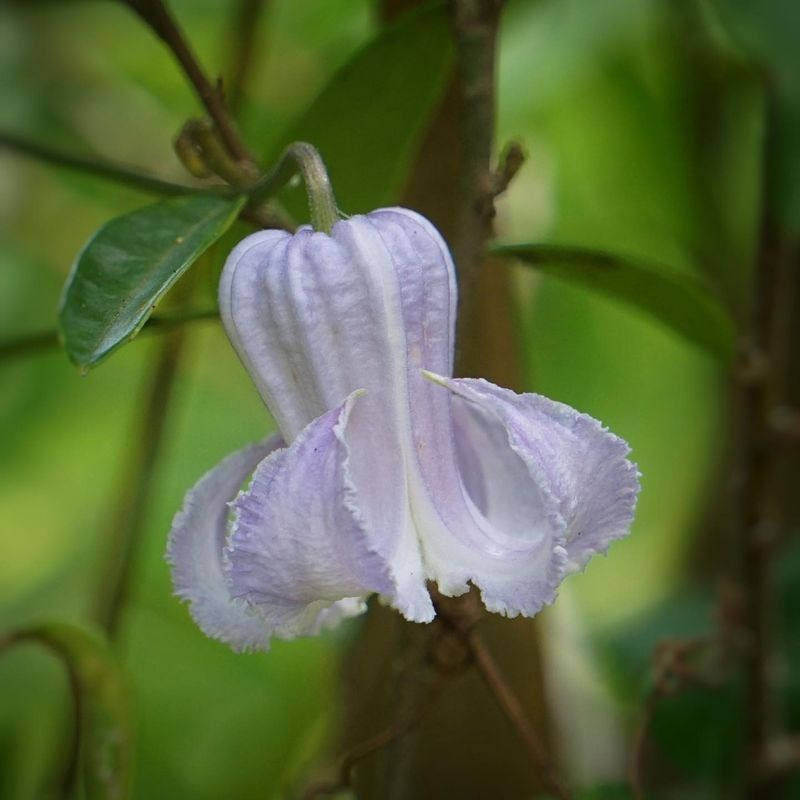
Nodding lavender bells that twist slightly at the tips give swamp leatherflower one of the most elegant flower shapes among Florida native vines.
Clematis crispa is a quieter plant than crossvine or wisteria, and that restraint is exactly what makes it useful in smaller garden spaces where a vigorous climber would quickly take over.
This vine climbs by twining its leaf stalks around a support, which means it grips thin structures like wire panels, string trellises, and plant stakes very effectively.
Mature plants typically reach 4 to 6 feet, making them a natural fit for a compact trellis near a porch or along a garden path.
Partial shade and consistently moist soil match its native habitat in swampy woodlands and stream edges. It performs well across North and Central regions and goes dormant in winter, returning from the roots in spring.
Old stems may need occasional thinning to keep the vine looking fresh.
One caution worth mentioning: like other clematis species, swamp leatherflower contains compounds that can irritate skin and cause internal problems if ingested. Handle pruned material with gloves.
Bloom time runs from spring into summer, and the nodding flowers attract native bees. Buy from a native plant nursery and give it a moist spot where other flowering vines might struggle.
7. Virginia Virgin’s-Bower Throws A White Cloud Across The Trellis
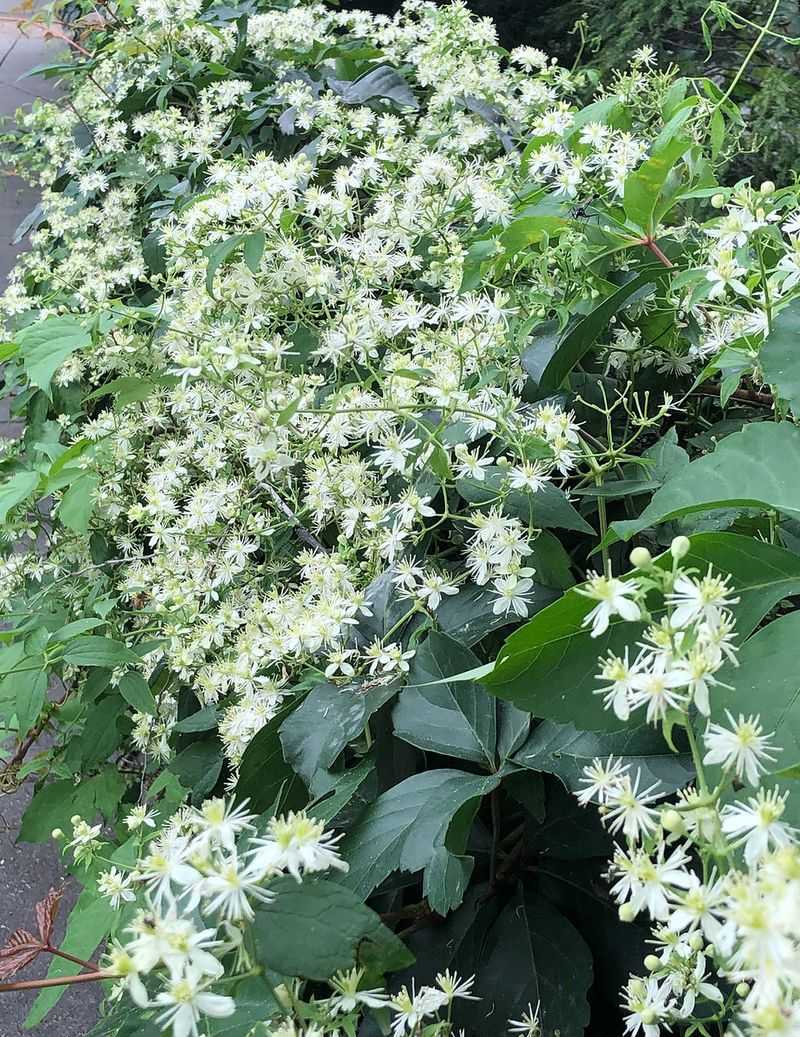
Late summer is when most flowering vines have already peaked, but Virginia virgin’s-bower is just getting started.
Clematis virginiana opens thousands of small, creamy white flowers in August and September, turning a trellis or fence into what looks like a cloud that decided to stay put for a few weeks.
The vine climbs by twisting its leaf stalks around supports, similar to swamp leatherflower but on a much larger scale. Without pruning, mature plants can spread 15 to 20 feet or more.
A sturdy fence, large trellis, or arbor handles that size better than a lightweight decorative panel.
Moist to average soil and full sun to partial shade suit it well. It grows naturally along stream banks and forest edges across North and Central regions, and gardeners in those areas will find it the most reliable.
This is a deciduous vine that drops its leaves in winter, so do not expect a year-round screen.
After flowering, the seed heads develop a feathery, silvery look that carries visual interest into fall. Do not confuse this plant with sweet autumn clematis, Clematis terniflora, which is a nonnative species that spreads aggressively.
Male and female plants differ slightly in seed production. Source plants from a native nursery to be sure you have the correct species.
8. Climbing Hydrangea Takes The Show Into Shadier Corners
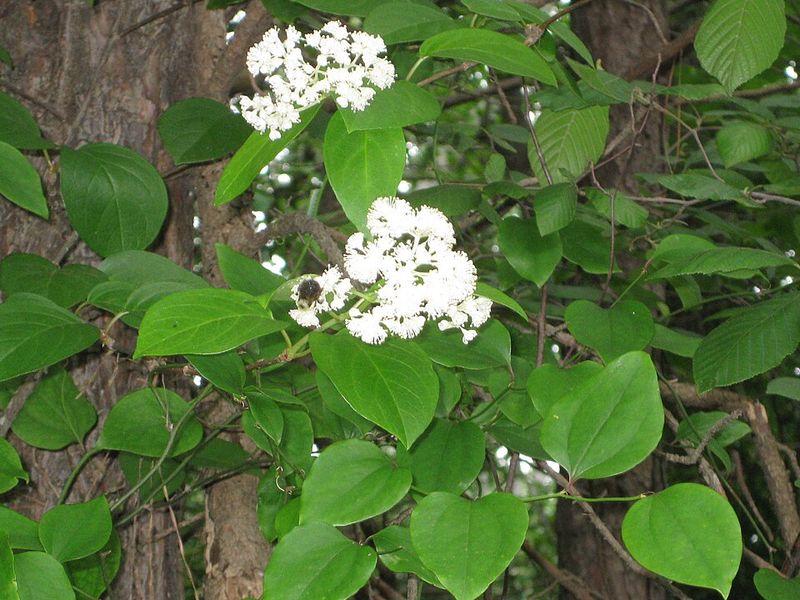
Shady spots on a trellis or structure are where most flowering vines simply give up, producing sparse growth and almost no bloom. Decumaria barbara, known as climbing hydrangea or cowitch-vine, fills that gap with genuine confidence.
It is not the Asian climbing hydrangea sold widely in garden centers; it is a true native with a different growth habit and regional fit.
This vine climbs by producing aerial rootlets along its stems, similar to the way English ivy grips a wall. Those rootlets attach firmly to wood, masonry, and rough bark, so the vine can scale a structure without any tying or guidance once it gets going.
Mature plants can reach around 30 feet, so the support needs to be solid and well-anchored.
Flat-topped clusters of small white flowers appear in spring, typically April through June, and carry a mild, pleasant fragrance. The vine performs best in part shade with consistently moist, well-drained soil.
It grows naturally in floodplain forests and moist woodlands across North and Central regions.
Growth can be slow in the first year or two while roots establish, but the vine picks up speed once settled. Pair it with a shaded pergola, a north-facing fence, or a woodland trellis.
Match the vine to the support and the region, and it rewards patience with a lush, long-lived display.