The Florida Wildflowers That Feed Monarchs Passing Through This October
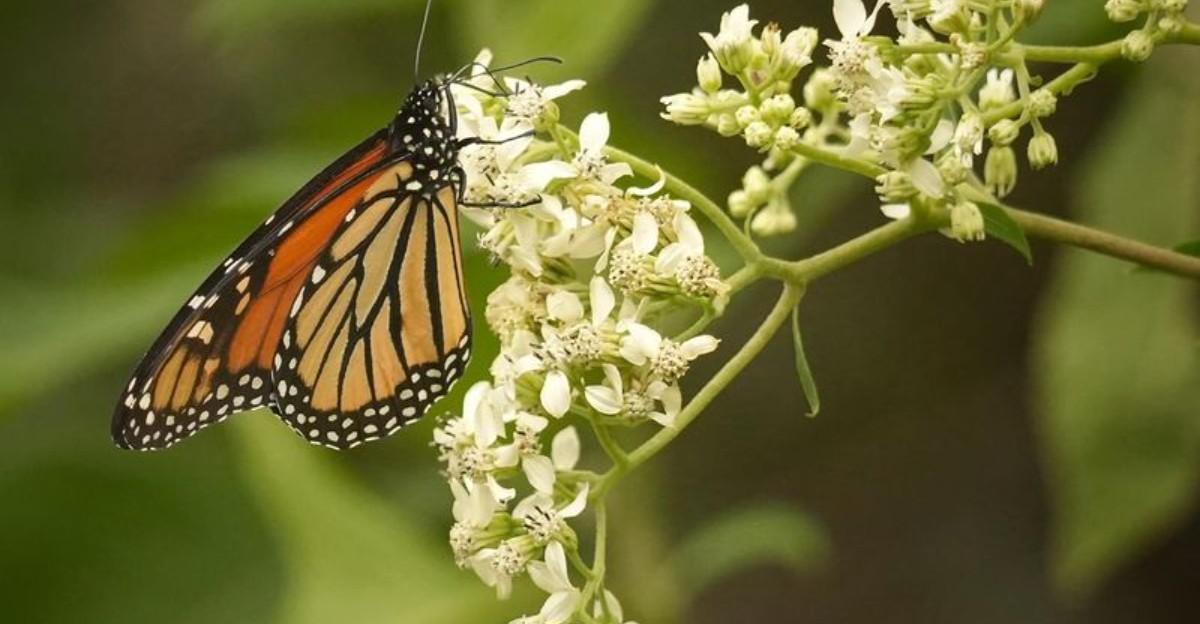
Many monarchs passing through Florida this time of year aren’t stopping to raise a family. They’re stopping to refuel, and most yards along their route have nothing on the menu.
Milkweed gets all the attention, but migrating adults have a different need on this stretch of the journey. What these butterflies need now is nectar, and a handful of fall-blooming wildflowers do that job long after most native milkweeds have finished flowering.
Here’s where most gardens fail without realizing it: color in summer means nothing to a monarch flying through in October if the blooms are already spent by the time it arrives.
Walk your yard and check what’s actually open right now, not what was open two months ago. That timing gap is the difference between a rest stop and a flyover.
1. Narrow-Leaved Sunflower Fuels Fall Migrants
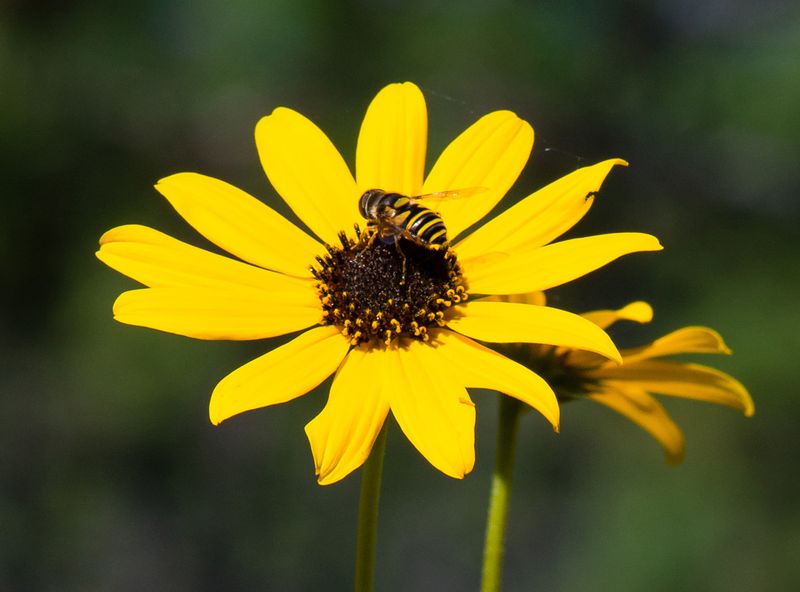
Picture a ditch so bright with yellow that drivers slow down to stare. That scene is the work of narrow-leaved sunflower, one of the last sunflowers to bloom each year.
Its flowers open in fall, just as monarchs roll through Florida. Each bloom has golden petals around a dark, chocolate-colored center packed with nectar.
Hungry butterflies treat these flowers like a gas station on a long highway. One plant can hold dozens of blooms, so a single clump feeds many visitors at once.
The leaves are long and skinny, which is how the plant got its name. Stems can reach five or six feet tall, so give it room near the back of a garden bed.
Native to the Southeast, this sunflower loves wet spots. Low areas, rain gardens, and soggy corners of a yard suit it nicely.
Full sun keeps the stems strong and the flowers plentiful. In shade, plants tend to flop over and bloom less.
Here is a handy trick for a tidier look. Trim the stems by about half in early summer, and the plant grows bushier with more flower buds.
Bees, small butterflies, and seed-eating birds join the party too. Leave the seed heads standing after bloom, and goldfinches may stop by for a winter treat.
2. Seaside Goldenrod Feeds Monarchs Along The Coast
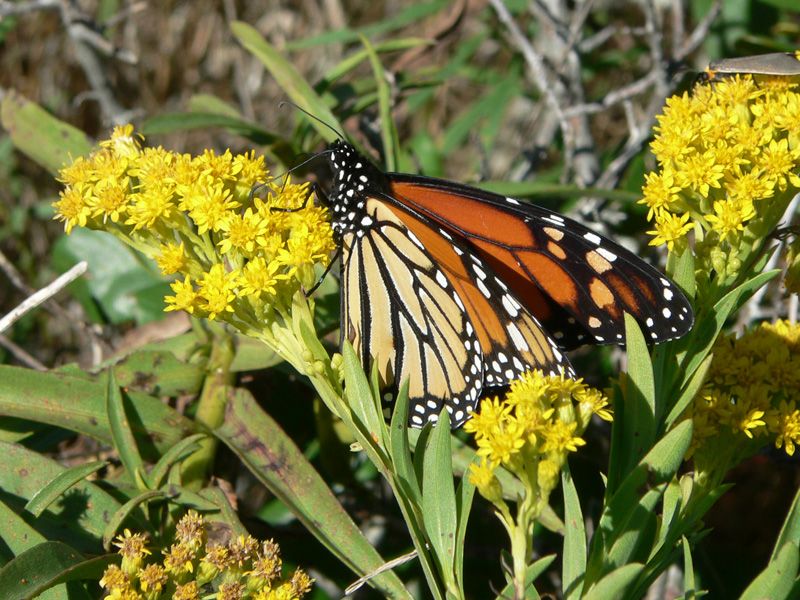
Salty wind, blowing sand, and blazing sun would wear out most flowers. Seaside goldenrod shrugs it all off and keeps blooming like a beach lifeguard on duty.
Many monarchs follow Florida’s coastline as they head south. Along the dunes, this plant is often the biggest snack bar for miles.
Its flowers form tall, golden plumes made of tiny blossoms. Butterflies can land and sip from many little cups without moving far.
Fun fact: goldenrod gets blamed for fall allergies, but it is mostly innocent. Its pollen is heavy and sticky, so it rides on insects instead of floating in the air.
The real sneeze maker is usually ragweed, which blooms at the same time. Goldenrod simply gets noticed because its flowers are so bright.
Seaside goldenrod grows in moist, sandy soil and handles salt spray with ease. That makes it a smart pick for coastal yards where fussy plants struggle.
Your Florida Garden Changes Every Week. Your Plan Should Too.
Gardening in Florida changes quickly throughout the season. Every Friday you’ll receive a simple weekly plan showing exactly what to plant, prune, fertilize, harvest, and protect so you never miss the right timing.
The thick, waxy leaves help it hold water during dry spells. Plants can stretch three to six feet tall when they flower.
If you live near the beach, try planting a small group together. A wide patch of gold is easier for passing butterflies to spot from the air.
Bees will thank you as well, since fall nectar gets scarce along the shore.
3. Frostweed Is A Top Monarch Nectar Plant
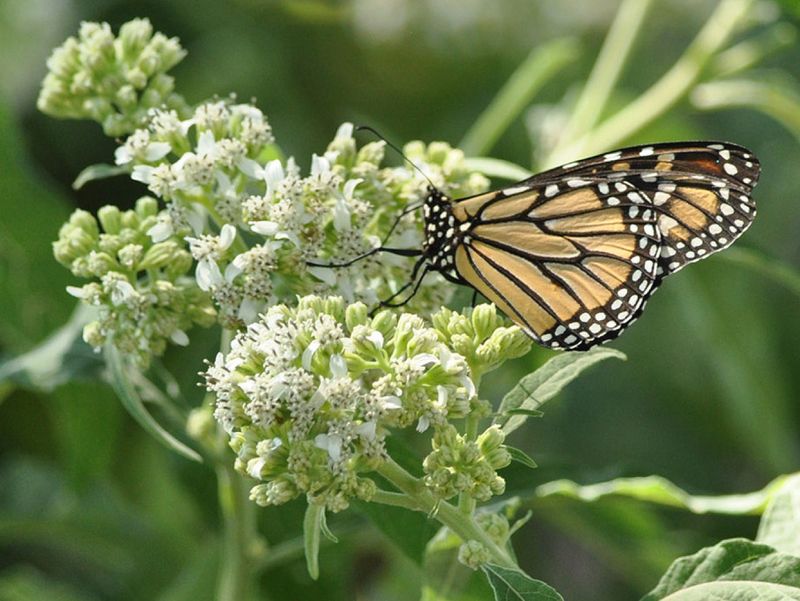
Ask butterfly watchers about their favorite fall plant, and many will say frostweed right away. Monarchs seem to agree, crowding its white flowers like kids around an ice cream truck.
The blooms come in dense, fluffy clusters that look a bit like snow. Flowering runs from August into November, matching peak migration almost perfectly.
So where does the funny name come from? On the first freezing morning, sap leaks from the stems and freezes into curly ribbons of ice.
These frozen shapes look like delicate white sculptures. Spotting one feels like finding a little winter surprise in the woods.
Unlike many butterfly plants, frostweed does not demand full sun. Dappled to moderate shade suits it well, making it great under tall trees.
It grows in dry or moist soil and is native across the Southeast and Texas. Plants can reach six feet tall with big, broad leaves.
Over time, frostweed spreads into natural-looking groups. Give it a woodland edge or a shady corner, and it will fill in nicely.
Gardeners who struggle with shady yards often feel stuck with few flower choices. Here is one that solves that problem while feeding monarchs at the busiest time of year.
Keep a camera handy in October, because the butterfly crowds can be spectacular.
4. Spiked Blazing Star Draws Butterflies And Hummingbirds
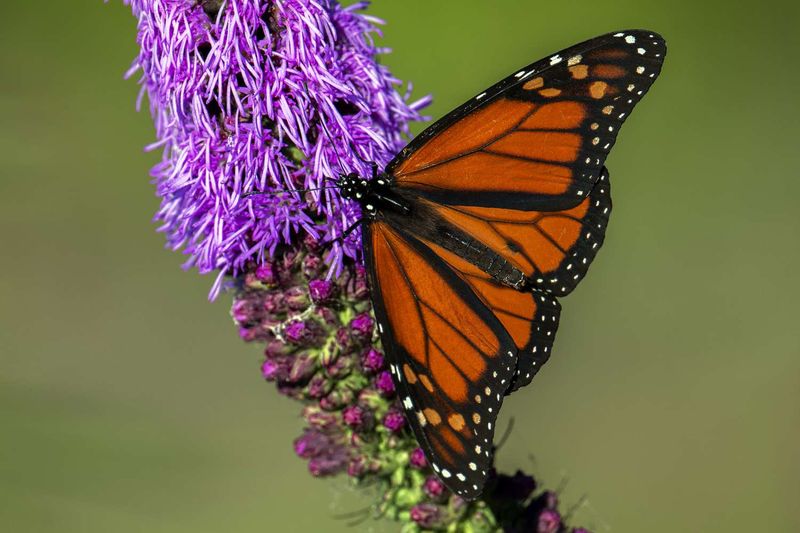
Imagine a row of purple torches lit up in a sunny garden. Spiked blazing star looks exactly like that, with fuzzy flower spikes pointing straight at the sky.
One odd detail makes it stand out from other flowers. The spikes bloom from the top down, while most flowers open from the bottom up.
Monarchs love landing on these tall wands to sip nectar. Bees buzz around them too, and hummingbirds zip in for a quick drink.
Watching all three visitors at once is like having a live nature show. Kids especially enjoy counting how many guests stop by in an hour.
Blazing star grows from a round bulb-like root called a corm. Plant corms in spring, and they return year after year with little fuss.
Full sun and soil that stays a bit moist help plants thrive. Spikes usually reach two to four feet, perfect for the middle of a flower bed.
Planting in small groups of five or more creates a bold purple splash. That color helps butterflies find your yard from a distance.
The flowers also look lovely in a vase if you want to bring some inside. Just leave plenty outdoors for the hungry travelers passing through.
Once blooms fade, birds may nibble the fluffy seeds.
5. Azure Blue Sage Thrives In Dry Soil
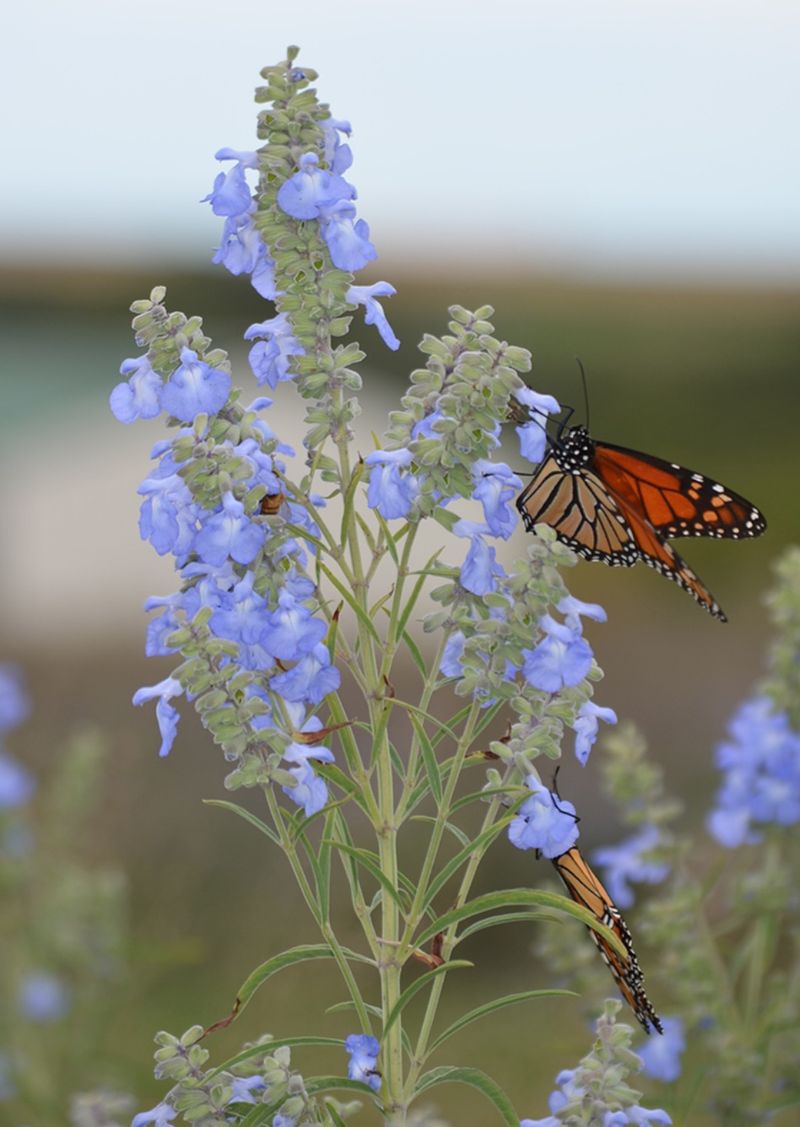
Some plants sulk when the hose stays coiled up for weeks. Azure blue sage is the opposite, happily blooming in dry, sandy soil that would stress other flowers.
Its color is the real showstopper. The flowers are a clear sky blue, a shade that is surprisingly rare in gardens.
Monarchs passing through Florida in fall stop to sip from these blooms. The long flowering season gives them a steady food source when other plants slow down.
Each flower has a lower lip that works like a tiny landing pad. Bees and butterflies settle right on it to reach the nectar inside.
Plants grow on thin stems that can stretch three to five feet tall. In windy spots, they may lean, so tuck them near sturdier neighbors for support.
Full sun is a must for strong growth and lots of flowers. Too much water or rich soil can make the stems weak and floppy.
That makes this sage great for busy families or forgetful gardeners. Once it settles in, it asks for very little care.
Try pairing it with yellow flowers like goldenrod for a bright color combo. Blue and gold together look striking against a fall sky.
Your monarch visitors will enjoy the variety, and your neighbors will notice too.
6. Blue Mistflower Blooms From Summer Into Fall
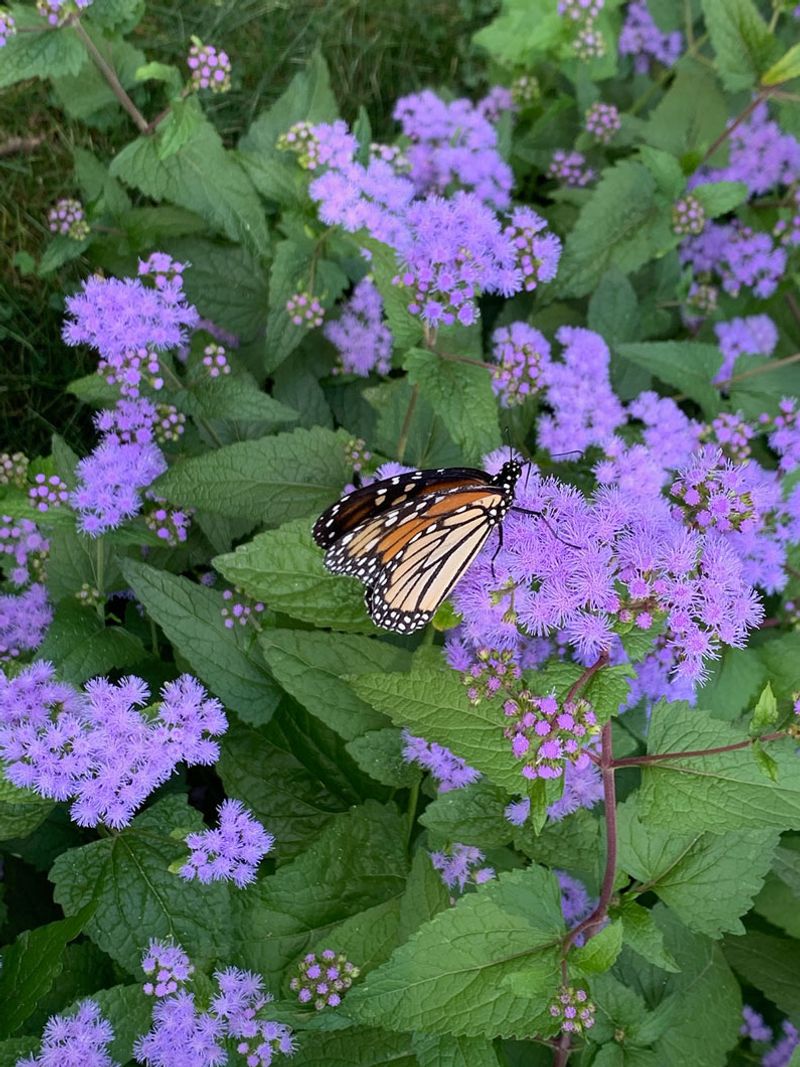
Walk past a damp ditch in early fall, and you might see a soft cloud of blue. Up close, that haze turns out to be hundreds of fuzzy blue mistflower blooms.
Each flower head looks like a tiny powder puff. Some folks call the plant hardy ageratum because it resembles a popular garden annual.
Butterflies cannot resist it. Monarchs, skippers, and many smaller species gather on the blooms from late summer until the first frost.
That long season matters a lot during migration. Travelers arriving late in fall still find a meal waiting.
Blue mistflower prefers moist, rich soil like streambanks and low spots. Even so, it adapts to sandy soil and regular garden beds fairly well.
Here is something to know before planting. It spreads by underground stems, so a small start can turn into a big patch in a few seasons.
For a wild area, that spreading habit is a bonus. In a tidy bed, pull extra shoots in spring to keep it in its space.
The plant usually stays one to three feet tall. It works well along paths, ponds, or the front edge of a larger garden.
Pair it with white or yellow flowers, and the blue really pops for passing butterflies.
7. Climbing Aster Keeps Flowering Into Winter
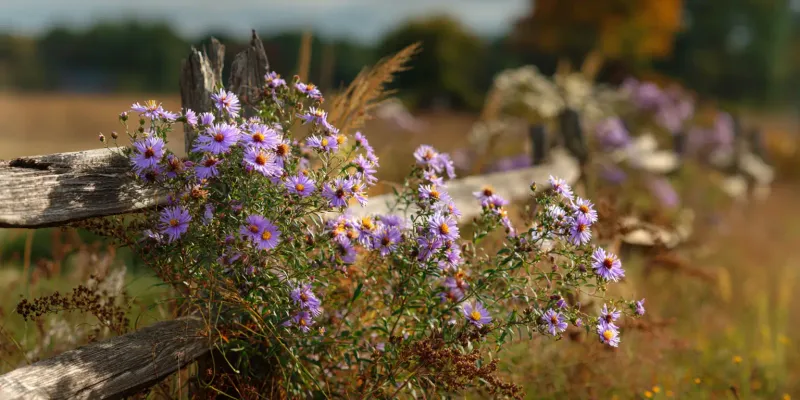
By December, most gardens look tired and bare. Climbing aster picks that moment to throw a party, covering fences in lavender and pink blooms.
This plant is a sprawling, vine-like shrub that leans and climbs on nearby supports. Left alone, it can scramble over shrubs, railings, or a sturdy trellis.
The flowers smell sweet and range from lavender to violet. Each one has a cheerful yellow-orange center that turns reddish with age.
Monarchs visit often, especially stragglers moving through late in the season. Bees and other insects also rely on it when food is hard to find.
Climbing aster is native throughout Florida, which helps it handle local weather. It grows in full sun or partial shade with little trouble.
Soil can be sandy, loamy, or rich, and moderately dry to moist. That flexibility makes it a good match for many different yards.
A quick tip from experienced gardeners: give it something to grab. A fence, arbor, or porch rail turns it into a living wall of flowers.
Trim it back after flowering ends in winter to keep it neat. New growth in spring will set up another great show.
Think of it as the friendly neighbor who keeps the porch light on for late travelers.
8. Spanish Needles Bloom All Year
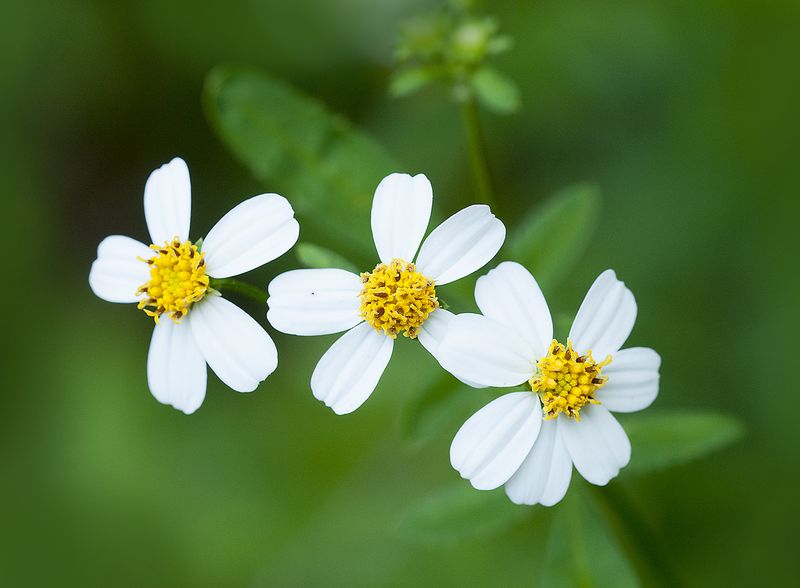
Most Floridians have met Spanish needles, even if they did not know its name. Those clingy little seeds stuck to your socks after a walk came from this plant.
Plenty of people call it a weed. Butterflies, however, see it as one of the best restaurants in the state.
The small white flowers have sunny yellow centers and bloom all year in Florida. That steady supply means monarchs can count on a meal in October and beyond.
Here is a surprising stat. Spanish needles ranks as the second most important nectar source for honeybees in the state.
The plant grows almost anywhere with sunshine. Rich soil, poor soil, wet ground, or dry ground all seem fine to it.
Because it spreads so easily, you may not need to plant it at all. Letting a few volunteers grow in a sunny corner can be enough.
Those famous seeds have tiny barbs that hook onto fur and clothing. Animals and people carry them to new places without even noticing.
To keep it from taking over, trim plants before many seeds form. You still get flowers while controlling the spread.
Leaving a small wild patch is one of the easiest ways to help pollinators. Sometimes the best garden helper is the one already growing nearby.
9. Plant Native Milkweed, Not Tropical Milkweed
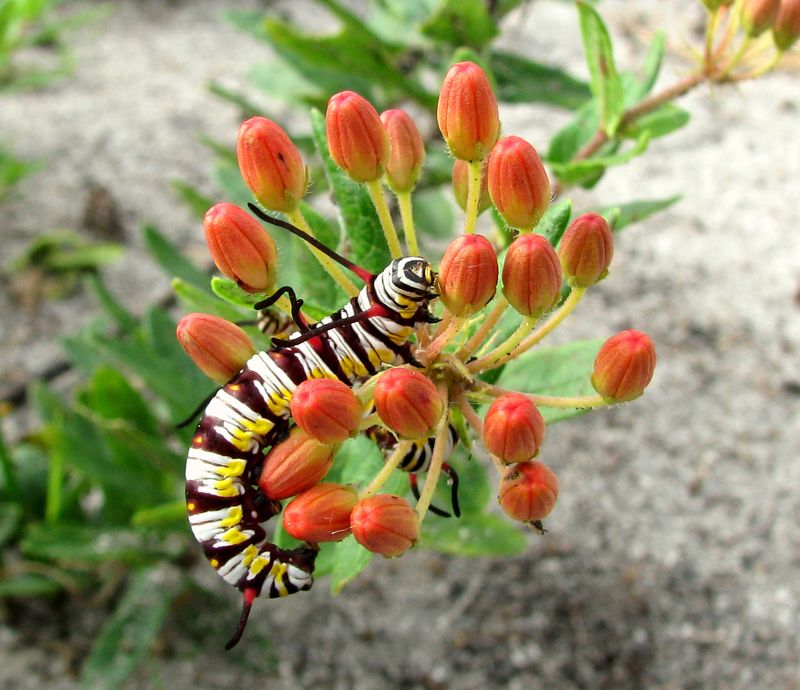
Nectar flowers feed adult monarchs, but caterpillars have a much pickier diet. Milkweed is the only plant monarch caterpillars can eat.
That makes choosing the right milkweed a big deal. Many garden centers sell tropical milkweed, which looks pretty but causes real problems in the state.
Tropical milkweed is not native here. The Florida Invasive Species Council lists it as a Category II invasive plant.
In Florida’s mild weather, it can bloom all year long. Monarchs may stop migrating and keep breeding on it instead of moving south.
That nonstop activity lets a parasite called OE build up on the leaves. Infected butterflies can end up weak, misshapen, or unable to fly well, with shorter lives.
Native milkweeds behave differently. They rest during winter, which breaks the parasite’s cycle and keeps monarch habits on track.
Good choices include aquatic milkweed, swamp milkweed, and butterfly milkweed. Aquatic and swamp types like wet soil, while butterfly milkweed prefers dry, sunny spots.
If you already have tropical milkweed, consider swapping it for a native type. Cutting it back to the ground in fall and winter can help in the meantime.
Ask local native plant nurseries for help finding the right species. A little planning now gives future generations of monarchs a healthier start.