Native Georgia Ground Covers That Replace The Bark Mulch You Rebuy Around Every Shrub Bed
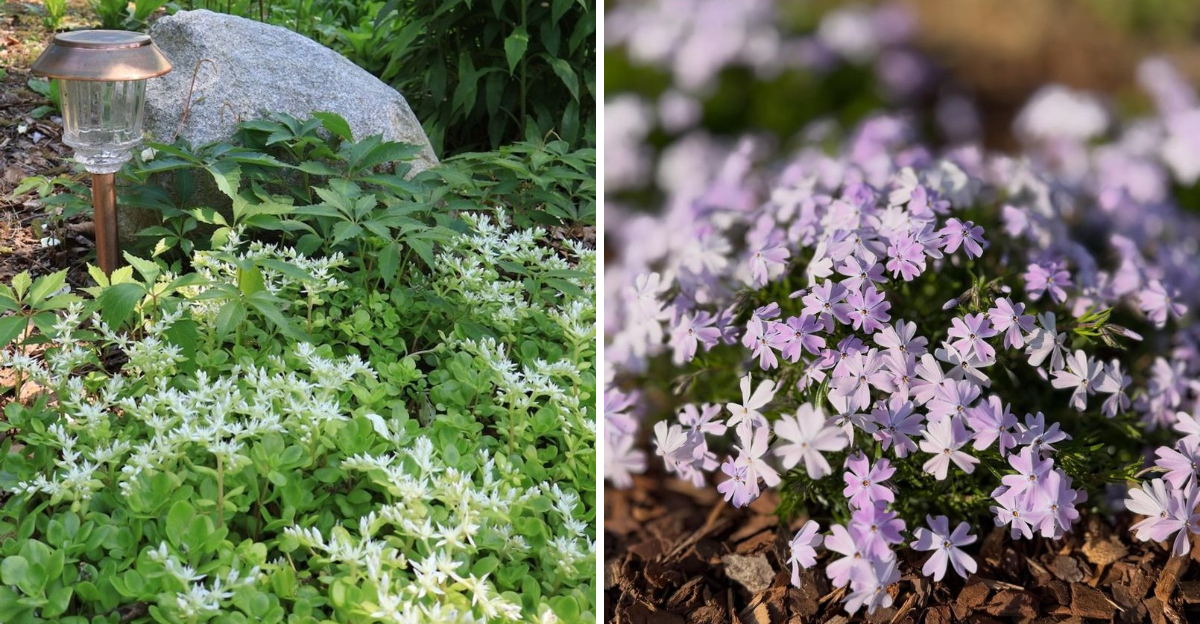
Buying fresh bags of bark mulch every year becomes an expensive routine for many homeowners. The cycle repeats season after season, even though there are other ways to keep shrub beds looking attractive.
Living ground covers offer something mulch never can. They spread, fill empty spaces, and keep working long after they become established.
Choosing the right plant can completely change how a landscape is maintained. Once it settles in, there is often much less to replace from year to year.
Native ground covers are becoming a popular choice in Georgia for exactly that reason. They fit naturally into the landscape while adding beauty instead of simply covering bare soil.
There is another option worth considering before buying more mulch.
Replacing bark with the right living ground cover can create a landscape that looks fuller, stays attractive longer, and asks for much less ongoing upkeep.
1. Green And Gold Spreads Into A Thick Living Carpet
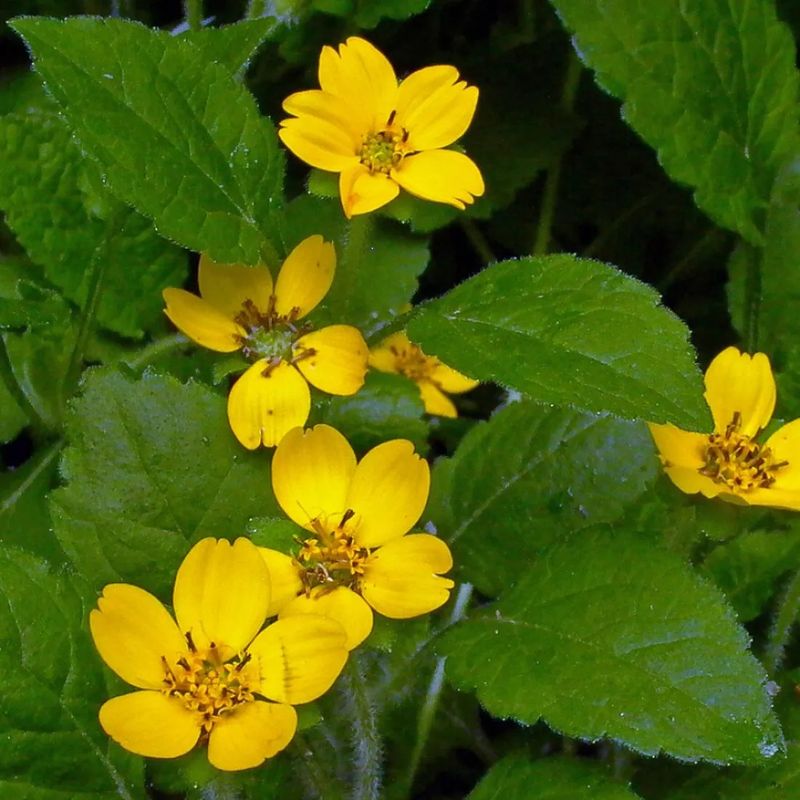
Green and Gold earns its spot fast. It spreads by runners and fills bare soil with a low, tight mat of foliage that stays attractive most of the year.
Yellow flowers pop up in spring and often return in fall. Between blooms, the dark green leaves hold their color well, even in dry spells.
Plant it in partial to full shade beneath azaleas or hollies. It handles Georgia clay with some organic matter mixed in, but does not need perfect soil to perform.
Spacing plants about 12 inches apart gives them room to knit together within one or two growing seasons. Once established, very little care is needed.
Weeds struggle to push through a mature patch of Green and Gold. That weed suppression is one of the main reasons gardeners reach for it as a bark mulch replacement.
It does best with consistent moisture during its first summer. After that, it handles short dry periods on its own without much trouble.
Green and Gold works well along borders, under trees, and around foundation shrubs where mulch tends to wash away after heavy rain.
As the patch thickens, exposed soil becomes less noticeable and the bed takes on a cleaner, more finished look. Its low growth also makes it easy to use around larger shrubs without competing for attention.
2. Allegheny Spurge Grows Well Under Established Shrubs
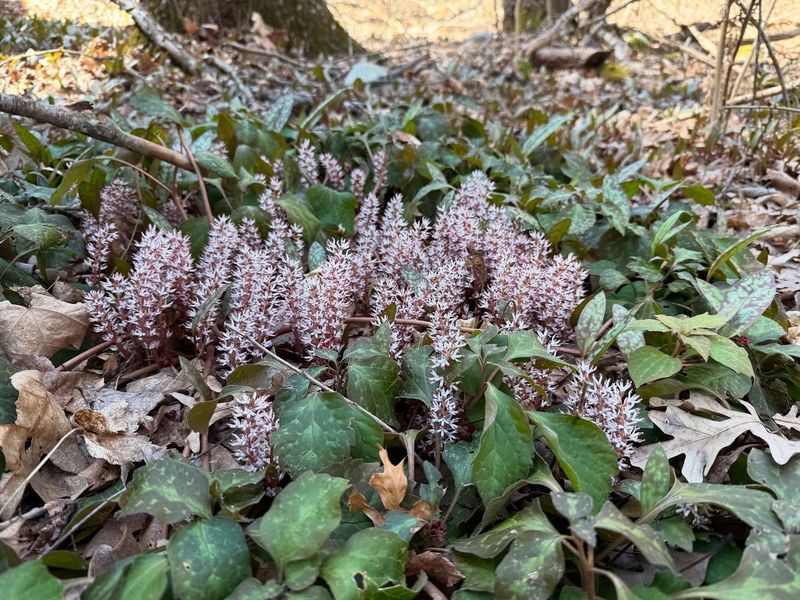
Most plants struggle under a crowded shrub canopy. Allegheny Spurge does not seem to mind at all.
Native to the Southeast, this low-growing perennial spreads slowly into a dense mat of mottled, silver-marked leaves. It looks handsome even without flowers.
Fragrant white flower spikes appear in early spring before the new leaves fully emerge. Pollinators visit them, which is a nice bonus in a spot that often gets ignored.
It prefers shade and moist, well-drained soil with good organic content. Under established shrubs, leaf litter naturally improves the soil over time, which actually helps this plant settle in.
Growth is slower than some other ground covers, so patience matters in the first season or two. By year three, a well-placed patch can look thick and tidy.
Your Georgia Garden Changes Every Week. Your Plan Should Too.
Gardening in Georgia changes quickly throughout the season. Every Friday you’ll receive a simple weekly plan showing exactly what to plant, prune, fertilize, harvest, and protect so you never miss the right timing.
Allegheny Spurge is a native alternative to the commonly planted Japanese Pachysandra. It supports local insects better and blends naturally with other woodland plants.
Spacing transplants about 10 to 12 inches apart and keeping them watered through the first dry summer gives the best results. After that, maintenance drops significantly.
Once the plants fill in, they help cover exposed soil and reduce the need for repeated mulch applications.
The evergreen foliage also keeps shaded beds looking full and polished through much of the year.
3. Golden Ragwort Covers Bare Soil With Ease
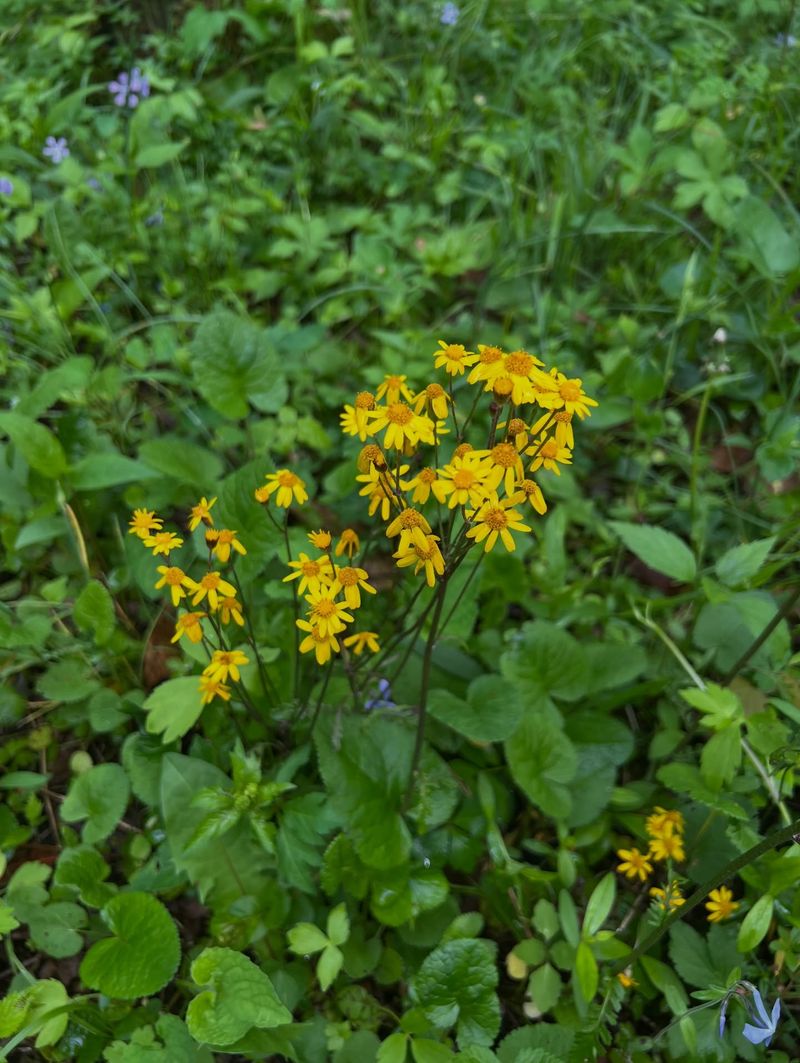
Bare soil under shrubs is an open invitation for weeds. Golden Ragwort closes that door quickly.
It spreads by both seeds and runners, filling gaps in a bed faster than most native ground covers. In a spot with decent moisture, a small planting can expand noticeably within two seasons.
Bright yellow flowers rise on tall stems in mid-spring, attracting early pollinators including native bees and small butterflies. After bloom, the basal foliage stays low and leafy through the growing season.
Golden Ragwort tolerates a wide range of conditions. It grows in full shade, part shade, and even spots with morning sun, as long as soil moisture is reasonable.
In low areas where water collects after rain, it performs especially well. Few other ground covers handle wet feet as graciously as this one does.
Mixing it with other native plants like Wild Ginger or Foamflower creates a layered look that feels natural rather than planted.
Planting in fall gives roots time to establish before the heat of summer arrives. Consistent moisture in the first season makes a noticeable difference in how quickly it fills in.
Once established, its spreading foliage helps cover exposed soil and keeps planting beds looking fuller with less dependence on bark mulch.
4. Wild Ginger Thrives In Cool Shaded Beds
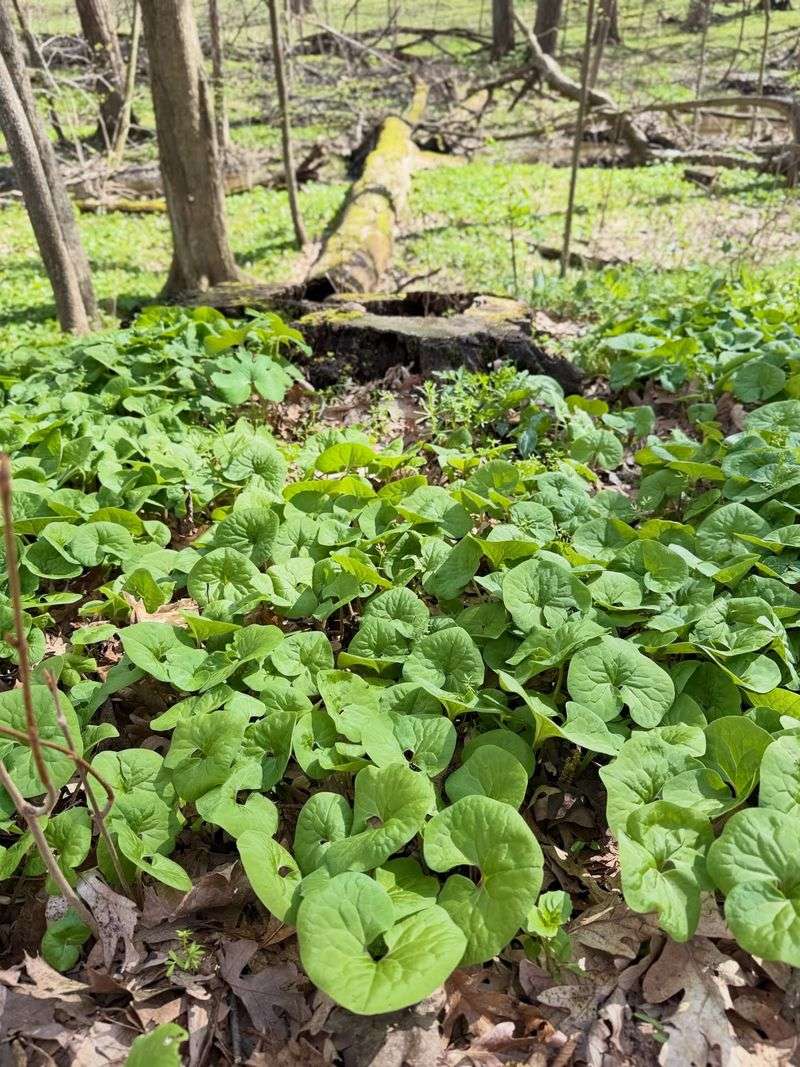
Few ground covers look as lush and polished as Wild Ginger in a shaded bed. Those big, heart-shaped leaves create a clean, layered look that bark mulch simply cannot match.
It spreads slowly by rhizomes, forming a dense colony over time. Slow growth means less maintenance and fewer worries about it overtaking nearby plants.
Wild Ginger grows best in rich, moist, well-drained soil with plenty of organic matter. Under deciduous shrubs where fallen leaves break down naturally, conditions are usually close to ideal.
Small, brownish-purple flowers hide under the foliage in early spring. Most people never notice them, but native insects do find them useful.
Dry summers can stress this plant, especially in its first year. Supplemental watering during dry stretches helps it survive and continue spreading through the bed.
Once established, Wild Ginger handles moderate drought better than its lush appearance suggests. A mulched pathway nearby helps retain soil moisture in adjacent areas.
Pairing it with ferns or Foamflower creates a layered woodland floor that looks intentional and requires very little upkeep once plants knit together.
As the colony expands, its broad leaves shade the soil beneath them and gradually reduce the amount of open ground where weeds can take hold.
5. Foamflower Brightens Woodland Beds Each Spring
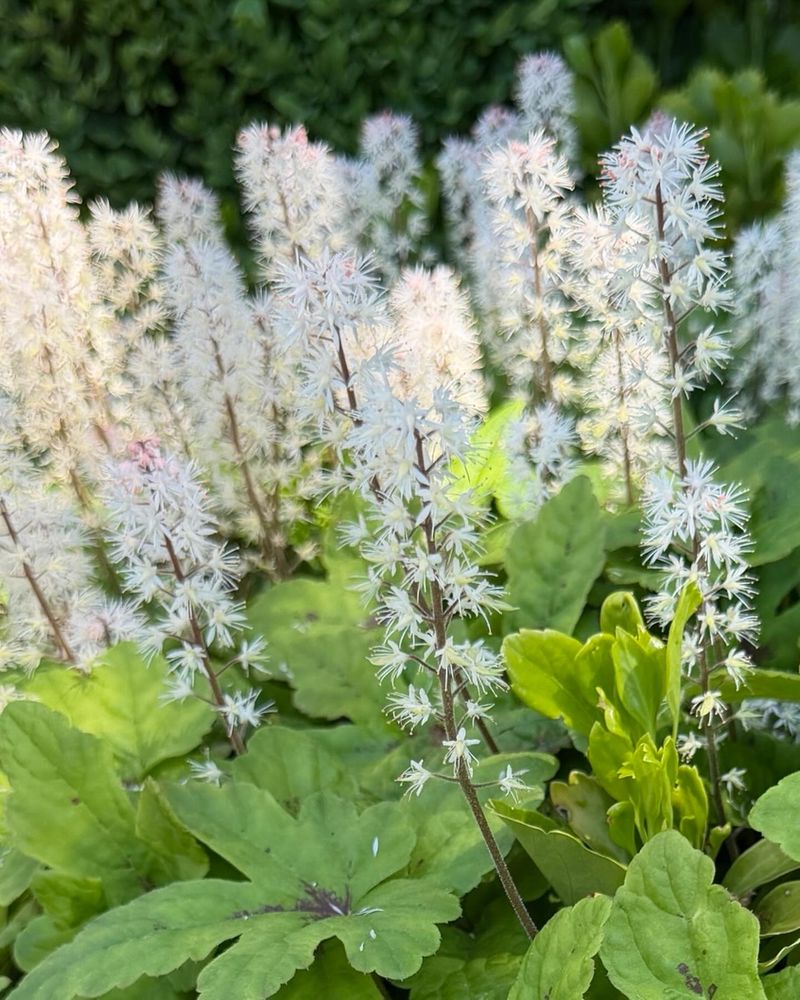
Spring blooms in a shaded shrub bed are rare. Foamflower delivers them reliably, and the show is worth waiting for.
Fluffy white or pale pink flower spikes rise above deeply lobed leaves in April and May. Even after blooms fade, the foliage holds interest through the rest of the growing season.
Foamflower spreads by stolons, sending out runners that root where they touch soil. A small planting can fill a bed edge within two or three seasons without becoming aggressive.
It prefers moist, rich soil in part to full shade. Under azaleas or native shrubs where moisture stays consistent, it tends to establish quickly and spread steadily.
Leaf color varies by cultivar. Some selections offer dark burgundy markings that make the foliage pop even on cloudy days, adding visual interest beyond just the bloom period.
Slugs can be a problem in very wet spots, but healthy, well-spaced plants tend to bounce back from minor feeding damage without lasting harm.
Planting Foamflower alongside Wild Ginger or Allegheny Spurge creates a mixed ground cover layer that covers soil from multiple angles, reducing bare patches significantly over time.
6. Partridgeberry Stays Evergreen Through Every Season
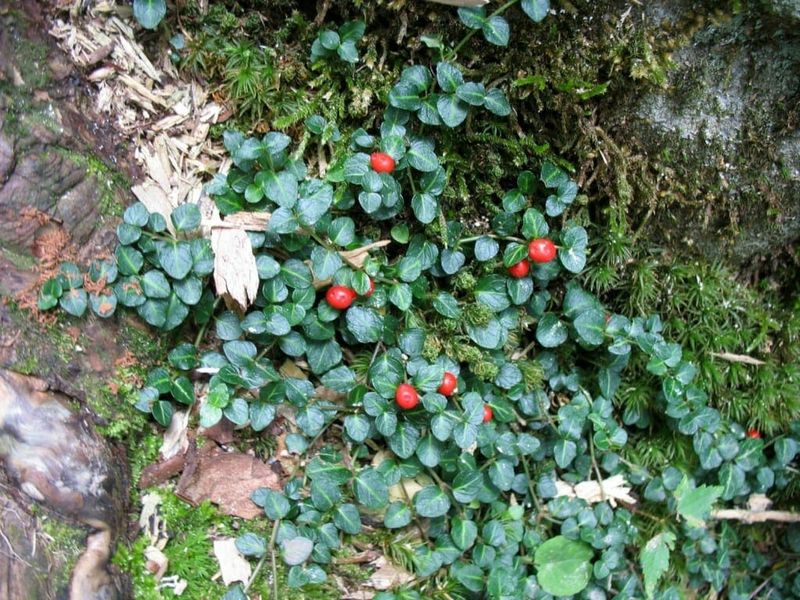
Winter is when most ground covers disappoint. Partridgeberry holds its color when nearly everything else in the bed has gone brown and bare.
Small, glossy, paired leaves stay green year-round, making this trailing native one of the best options for beds that need visual interest in cold months.
Red berries appear in fall and often persist into winter, adding color at a time when the garden needs it most. Birds may eventually eat them, which is a reasonable trade.
Partridgeberry grows naturally on forest floors across the eastern United States, including shaded areas throughout Georgia. It is adapted to low light, acidic soil, and moderate moisture.
Growth is slow and low, rarely exceeding three inches in height. That low profile makes it useful as a filler between taller ground covers or along the edges of a shaded bed.
It does not tolerate prolonged drought well, especially in sandy soil. Consistent moisture and a light layer of leaf litter around new plantings help roots establish more successfully.
Pairing Partridgeberry with taller plants like Golden Ragwort creates a layered bed that provides year-round coverage at multiple heights, which cuts down on bare soil significantly.
7. Woodland Stonecrop Tolerates Dry Shade Better Than Many Perennials
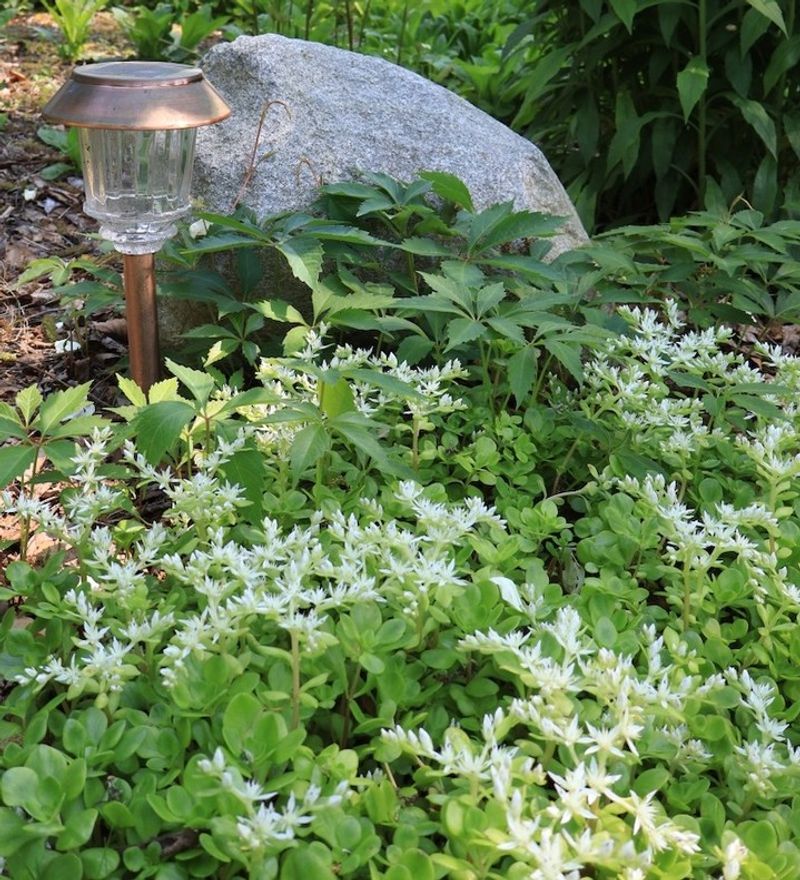
Dry shade is one of the toughest spots in any garden. Woodland Stonecrop handles it better than almost anything else you can plant in a native bed.
Thick, succulent-like leaves store moisture, which helps this plant push through dry stretches that would stress most other ground covers. It stays low, spreading in loose mats across the soil surface.
White star-shaped flowers appear in spring, usually around April. They are small but numerous, giving the planting a bright, airy look for a few weeks.
Woodland Stonecrop grows naturally on rocky outcrops and shaded slopes in the eastern United States. It is genuinely built for low-moisture, low-fertility conditions that challenge other plants.
Under large shrubs with dense root systems that pull moisture from the soil, this plant holds its own where others tend to struggle and thin out over time.
Spacing plants about 12 inches apart in well-drained soil works well. Avoid heavy clay without amendment, as standing water can cause root problems in wet winters.
Mixing it with Pennsylvania Sedge creates a textured ground cover combination that handles both dry shade and moderate moisture, covering a wider range of conditions across one bed.
8. Pennsylvania Sedge Softens Open Spaces Around Shrubs
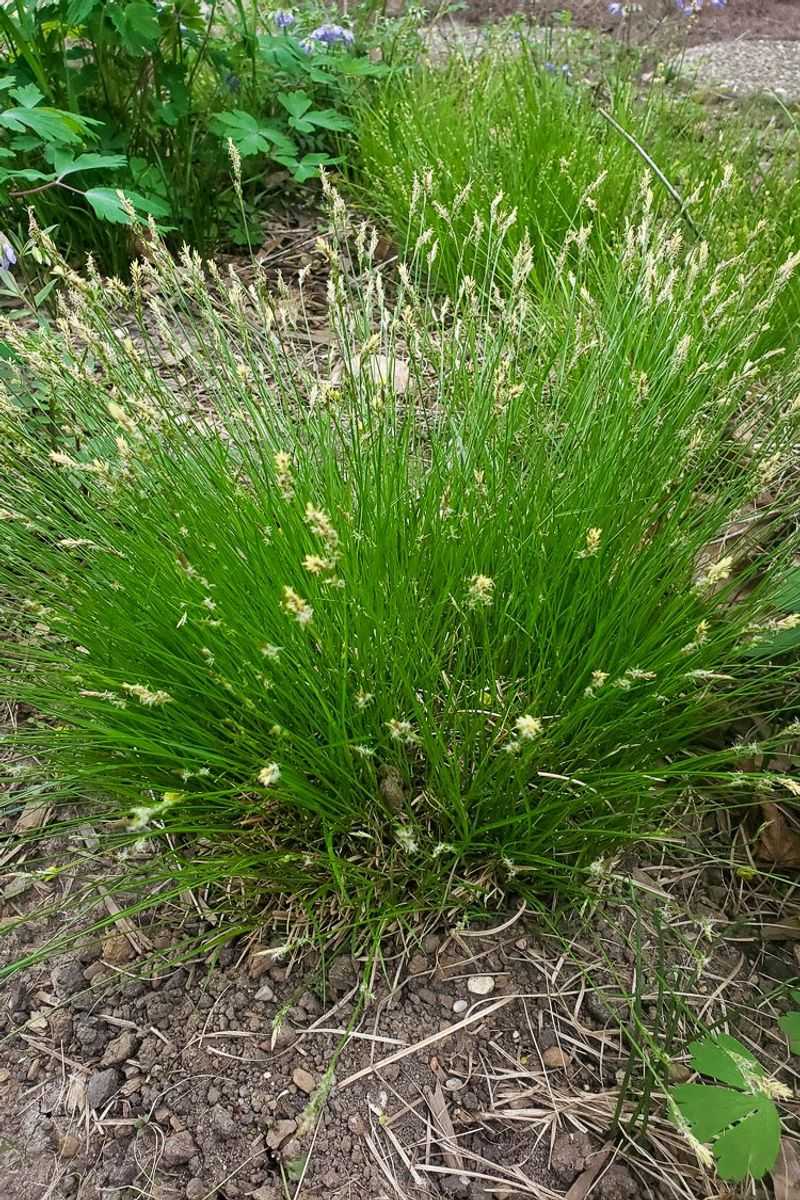
Bark mulch looks flat and lifeless. Pennsylvania Sedge brings movement and texture to the same space, and it does it without needing much attention.
Fine, arching blades grow 6 to 10 inches tall, creating a soft, grass-like look around shrubs and along bed edges. It forms slow-spreading clumps that gradually fill in open areas.
Pennsylvania Sedge handles part shade to full shade well. Under oaks and other large trees, it often performs better than traditional lawn grasses, which struggle in those low-light conditions.
It is fairly drought-tolerant once established, though the first summer requires consistent watering to help roots settle in. After that, it tends to manage on its own through most dry periods.
Mowing or cutting it back lightly in late winter refreshes the planting before new growth emerges in spring. That one simple step keeps it looking tidy without much effort.
Planting it in drifts rather than straight lines creates a natural, relaxed look that suits informal garden styles well. Mixing it with broader-leaved plants adds contrast that makes both plants stand out more.
In Georgia, it works across a range of soil types, though good drainage helps it perform at its best through wet winters.
9. Creeping Phlox Forms A Living Mat In Shaded Beds
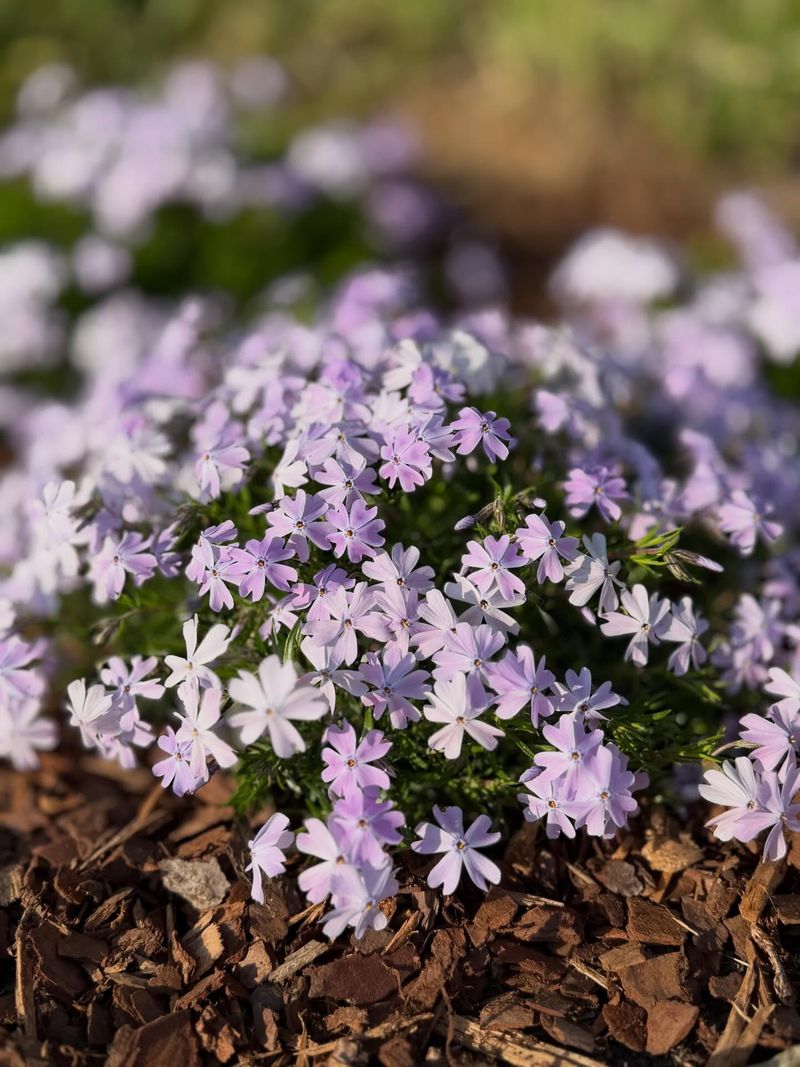
Creeping Phlox works especially well where shrub beds receive filtered light and stay moderately moist. This Georgia native spreads by stolons, forming a low mat of semi-evergreen foliage that gradually covers exposed soil.
Unlike bark mulch, the plant keeps growing instead of needing seasonal replacement. Its spreading stems root as they move across the ground, helping the planting become fuller over time without creating a tall or bulky layer around shrubs.
Creeping Phlox prefers partial shade and moist, well-drained soil. Woodland edges, shaded borders, and areas beneath established shrubs can provide the conditions it needs, especially when the soil contains plenty of organic matter.
Fragrant lavender flowers rise above the foliage during its bloom period, adding color while the leafy mat continues covering the ground below. Different selections may offer additional flower colors for gardeners who want more variety.
Give new plants consistent moisture while their roots become established. Avoid placing them in hot, drought-prone sites or strong full sun, where performance can decline.
Once settled into the right location, Creeping Phlox creates attractive living coverage that helps reduce exposed soil while bringing a softer, more natural look to shrub beds.
It works nicely beside ferns and other woodland natives.