Native Georgia Vines That Give You The Same Lush Look As Wisteria Without Taking Over Everything
A fence covered in flowers can completely change the feel of a yard. Bare structures suddenly become part of the landscape, and empty vertical spaces start looking full of color, texture, and life.
It is easy to understand why vines remain such a popular choice for creating that effect.
Wisteria is often the first plant that comes to mind because of its dramatic blooms and cascading growth. The problem is that its beauty can come with challenges that become harder to ignore as the years pass.
What starts as an attractive addition can eventually demand far more attention than expected.
That is one reason native vines continue gaining interest in Georgia. Many offer the same sense of abundance and seasonal beauty while fitting more naturally into the landscape.
The result is a garden that still feels lush and colorful without constantly worrying about aggressive growth. Some of these native options deserve a much closer look than they usually get.
1. American Wisteria Brings The Same Cascading Flowers
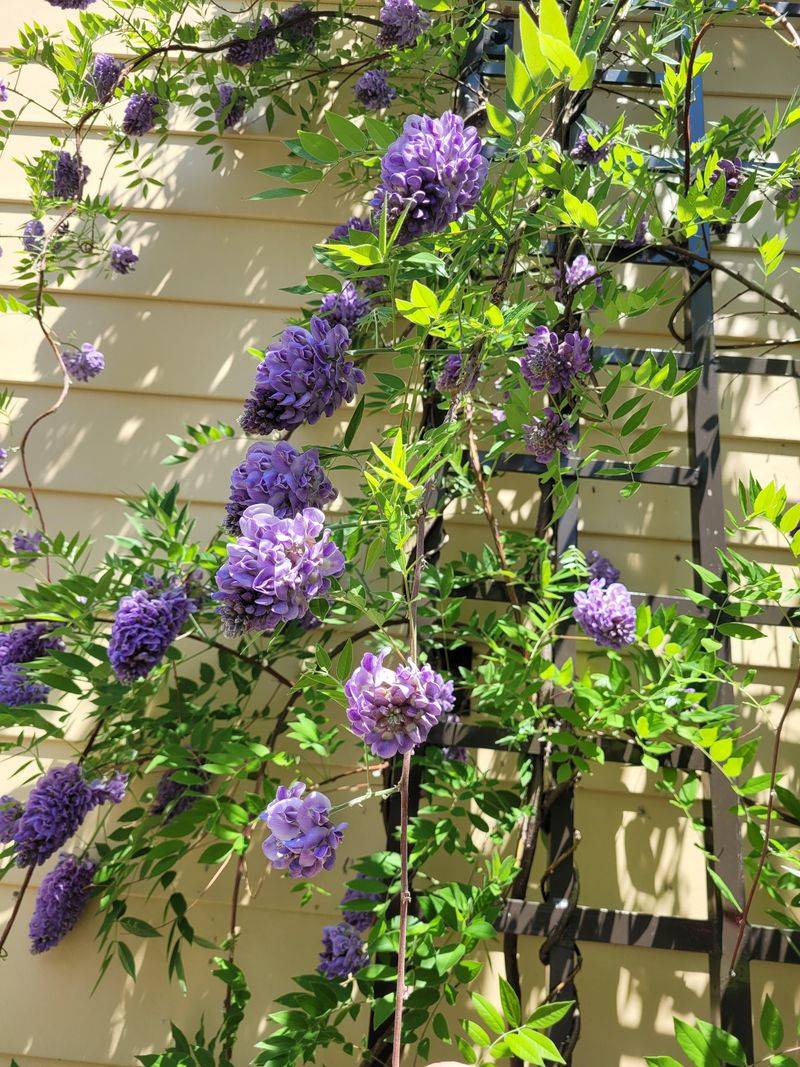
Not all wisteria is a nightmare to manage. American wisteria, native to the southeastern United States, gives you those dreamy purple flower clusters without the aggressive root system that makes its Asian cousins so problematic.
Blooms appear in late spring and carry a light, sweet fragrance. Flower clusters are slightly shorter than Asian varieties, but they are still full and showy enough to stop people in their tracks.
Plant it on a sturdy pergola or arbor. It does need support and occasional pruning, but it responds well to trimming and will not sneak under your foundation or strangle nearby trees the way invasive types do.
Wisteria frutescens, the species name, performs well across most of Georgia. It prefers full sun and moist, well-drained soil.
Once established, it handles heat and humidity without complaint.
Pollinators go wild for the blooms. Bees especially love it, and you may notice hummingbirds checking it out during peak flower time.
Giving it a hard prune after flowering keeps it tidy and encourages better blooms next season.
Some gardeners worry it will behave like the invasive types. With consistent pruning once or twice a year, it stays well within bounds.
It is a vine you can actually trust.
It also fits more easily into smaller landscapes where aggressive vines can quickly become a problem.
2. Coral Honeysuckle Climbs Without Becoming A Nuisance
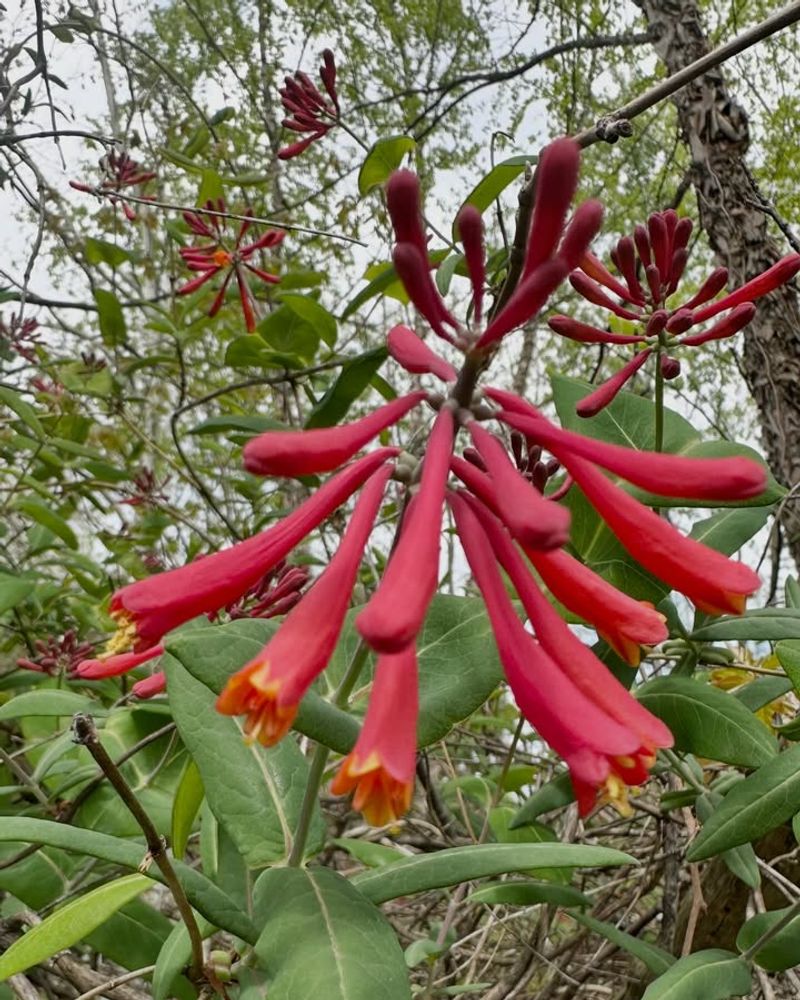
Forget everything you know about the invasive Japanese honeysuckle. Coral honeysuckle is a completely different plant, and it plays by the rules.
Lonicera sempervirens stays manageable on fences, trellises, and mailbox posts. It twines upward without sending runners across the ground or smothering nearby shrubs.
That alone makes it worth growing.
Blooms are tubular, bright red to coral-orange, and hummingbirds absolutely cannot resist them. Flowering starts in spring and often continues in waves through fall, especially with regular watering during dry spells.
It tolerates a range of soil types and handles partial shade reasonably well, though it blooms best with at least six hours of direct sun. In shadier spots, expect fewer flowers but still decent coverage.
Your Georgia Garden Changes Every Week. Your Plan Should Too.
Gardening in Georgia changes quickly throughout the season. Every Friday you’ll receive a simple weekly plan showing exactly what to plant, prune, fertilize, harvest, and protect so you never miss the right timing.
After the flowers fade, small red berries appear. Birds eat them quickly, so you get the bonus of wildlife activity without a mess on the ground.
The plant does not spread aggressively by seed the way invasive species do.
Light pruning in late winter keeps the shape clean and encourages fresh growth. If it gets leggy over time, cutting it back hard usually brings a strong flush of new stems.
Coral honeysuckle is low-fuss, genuinely beautiful, and a reliable performer across most of the Southeast.
3. Crossvine Covers Structures With Showy Spring Blooms
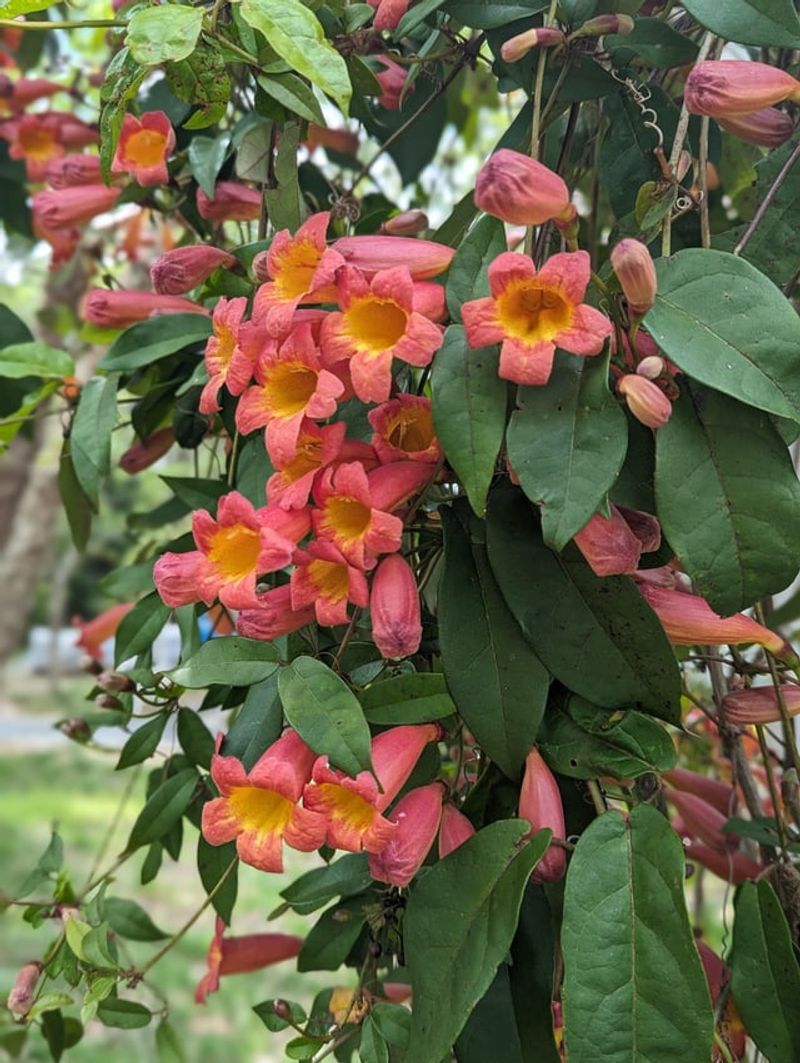
Crossvine earns its spot on any fence or wall the moment it blooms. The flowers are trumpet-shaped, orange with yellow throats, and they appear in such large numbers that the whole structure can look painted in spring color.
Bignonia capreolata is a semi-evergreen vine, meaning it holds its leaves through most of winters in mild climates. That matters if you want year-round coverage on an arbor or trellis without gaps during the cold months.
Attachment is handled by tendrils with small adhesive pads. It grips brick, wood, and stone without needing wire or ties.
On rough surfaces, it can climb several stories, though most home garden structures keep it well contained.
Sun exposure matters for blooming. Full sun produces the most flowers.
In partial shade, you still get a leafy vine, but the flower count drops noticeably. Plant it where it gets morning sun at minimum.
Hummingbirds visit the blooms consistently during spring migration, making it a double-purpose plant. After flowering, the vine settles into steady leafy growth for the rest of the season with no fuss required.
Pruning right after bloom keeps the size manageable. It can get vigorous on ideal sites, so checking in once a year with a trim prevents it from outgrowing its space.
Overall, it is a reliable, striking native worth planting.
4. Passionflower Adds An Exotic Look Without Aggressive Spread
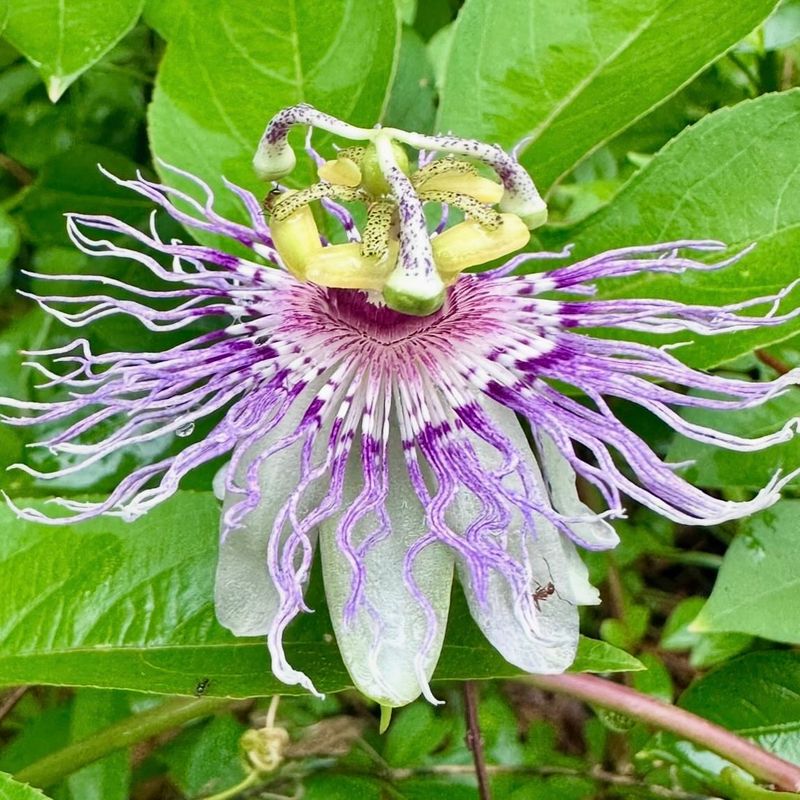
Few native plants look as otherworldly as passionflower. The blooms have layers of fringe, petals, and color that make people stop and ask what it is every single time.
Passiflora incarnata grows naturally across the Southeast and handles Georgia summers without any extra coddling. It prefers well-drained soil and full to partial sun.
Sandy or average soil suits it fine. Rich, heavily amended soil can push it toward more foliage and fewer flowers.
Spread is worth understanding upfront. Passionflower does send up root sprouts in nearby soil, which can surprise new gardeners.
Pulling unwanted sprouts when they are small keeps it contained easily. It is not the kind of takeover you see with invasive plants.
Butterflies rely on it heavily. Gulf fritillary and zebra longwing caterpillars feed almost exclusively on passionflower leaves.
Planting it means actively supporting those butterfly populations in your yard, which is a real ecological contribution.
Yellow-orange fruits follow the flowers in late summer. They are edible and taste like a mild, tropical blend.
Wildlife eats them readily, but you can also pick them for yourself before they fully ripen and fall.
Cut stems back in late fall after frost. New growth returns from the roots each spring with impressive speed.
It looks dramatic but behaves sensibly with just a little attention throughout the growing season.
5. Virgin’s Bower Produces Masses Of Delicate Flowers
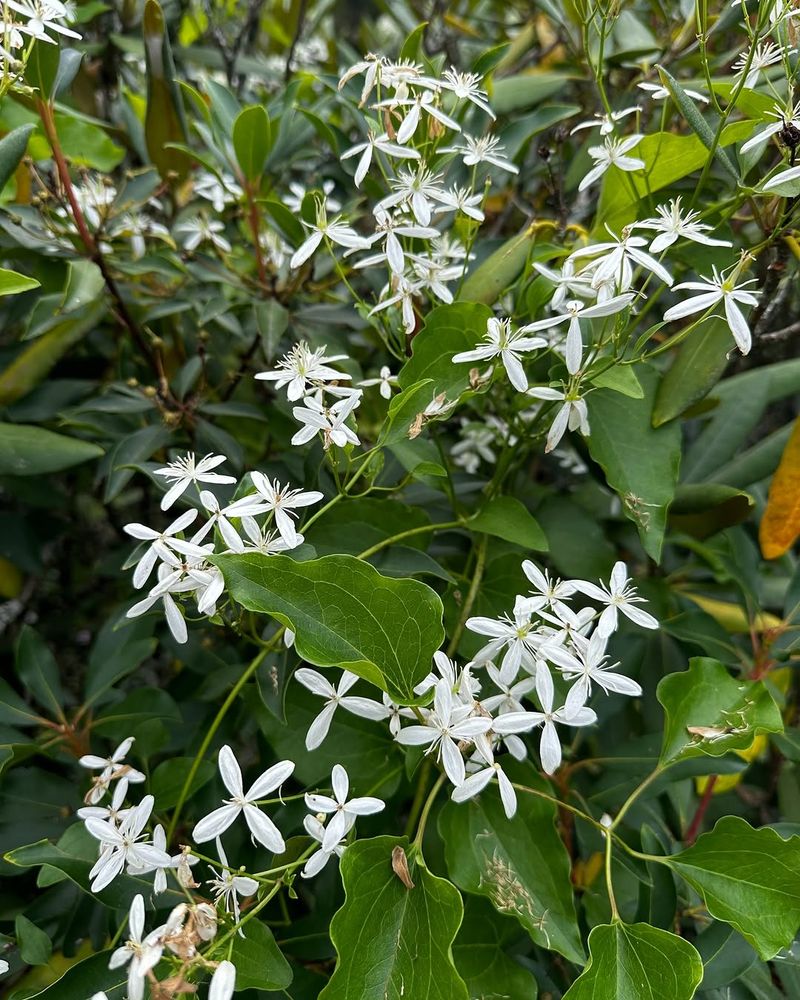
White and wispy, Virgin’s bower is the kind of vine that makes a fence look like something from a cottage garden painting. Bloom time comes in late summer, which is exactly when most other flowering vines have gone quiet.
Clematis virginiana is the native species, distinct from the many ornamental clematis varieties sold at garden centers. It grows vigorously but stays manageable with annual pruning.
Cutting it back hard in late winter keeps it from getting too woody or tangled.
Flower clusters are small individually, but they appear in such numbers that the whole vine looks frosted. After blooming, silvery seed plumes follow, adding another round of visual interest well into fall.
It prefers moist soil and tolerates partial shade better than most flowering vines. Spots near a creek, rain garden, or low area of the yard suit it especially well.
In full sun with consistent moisture, growth is faster and more floriferous.
Birds use the fluffy seed heads as nesting material in spring. Planting it near a fence or shrub border gives them easy access while keeping the vine in a defined area.
Bees and small butterflies visit the blooms regularly during the late summer flush.
One honest note: on very fertile, moist sites it can get quite large. Checking the size once a season and trimming as needed keeps it well within the space you have set aside for it.
6. Climbing Aster Supports Pollinators Late In The Season
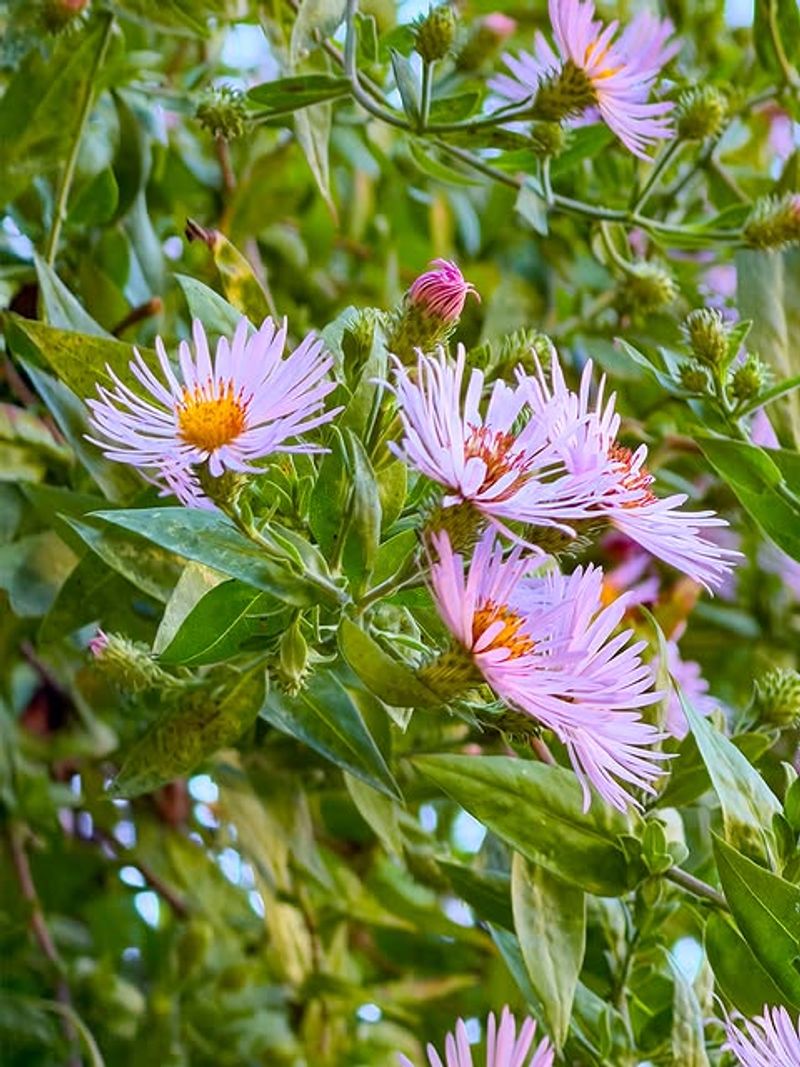
Most flowering vines are done by midsummer. Climbing aster shows up just as the garden starts winding down, and pollinators treat it like a lifeline.
Ampelaster carolinianus, sometimes listed as Symphyotrichum carolinianum, blooms from October into November. Lavender, daisy-like flowers cover the scrambling stems in large numbers right when native bees and butterflies need late-season nectar most.
Timing alone makes it worth growing.
Calling it a true vine is a slight stretch. Climbing aster is more of a scrambler, meaning it leans and weaves through shrubs and fences rather than gripping with tendrils or adhesive pads.
Give it something to lean against and it fills in beautifully.
It tolerates wet conditions better than most vines. Low spots, rain garden edges, or areas near a downspout work well.
Average to moist, well-drained soil in full sun brings the strongest bloom display each fall.
Size can reach eight to ten feet in ideal conditions. Cutting it back by half in early summer keeps the plant more compact without reducing fall flowering.
Skipping that trim means a more sprawling plant, which some gardeners actually prefer for a wilder, naturalistic look.
Monarch butterflies passing through during fall migration frequently stop at climbing aster blooms. Planting it near other late-blooming natives creates a real refueling station for migrating insects.
For late-season garden interest, it fills a gap that almost nothing else covers.
7. Muscadine Vine Delivers Dense Summer Coverage
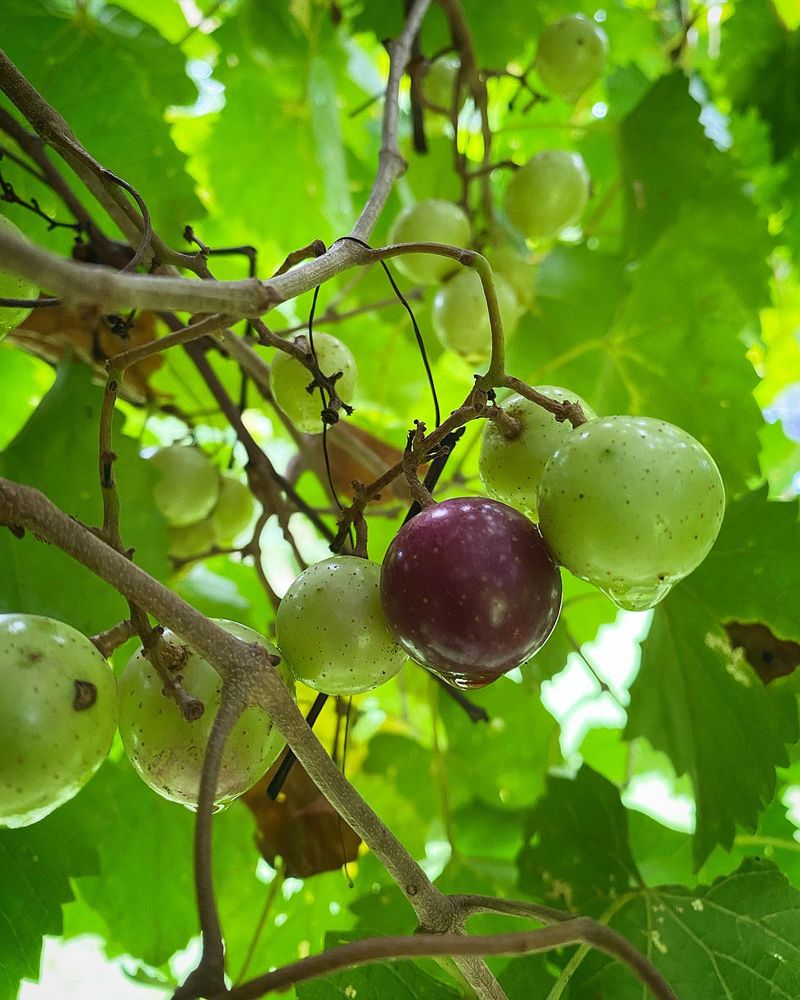
Muscadine is not just a food plant. As a structural vine, it creates some of the densest, most impressive coverage you can get from any native climber during summer months.
Vitis rotundifolia grows vigorously once established and covers a pergola, arbor, or large trellis with broad, textured leaves that block sun and create genuine shade underneath. That makes it functional in a way that purely ornamental vines cannot match.
Fruit production adds another layer of value. Clusters of large, dark grapes ripen in late summer and attract birds, foxes, raccoons, and a range of other wildlife.
If you want the fruit for yourself, harvest before the wildlife beats you to it.
Full sun is strongly preferred. In partial shade, the vine grows but produces far less fruit and thinner coverage overall.
Well-drained soil and good air circulation reduce the chance of fungal issues, which muscadine can be prone to in humid conditions.
Pruning in late winter is essential. Muscadine fruits on new wood, so cutting back the previous year’s growth encourages both fresh coverage and better fruit production.
Left unpruned for several years, it becomes a dense tangle that is harder to manage.
Native bees and other insects visit the small flowers in spring before the grapes form. For gardeners in the Southeast who want shade, wildlife value, and actual edible fruit from one plant, muscadine delivers on all three without needing much fuss.
8. Carolina Jessamine Creates A Wall Of Golden Blooms
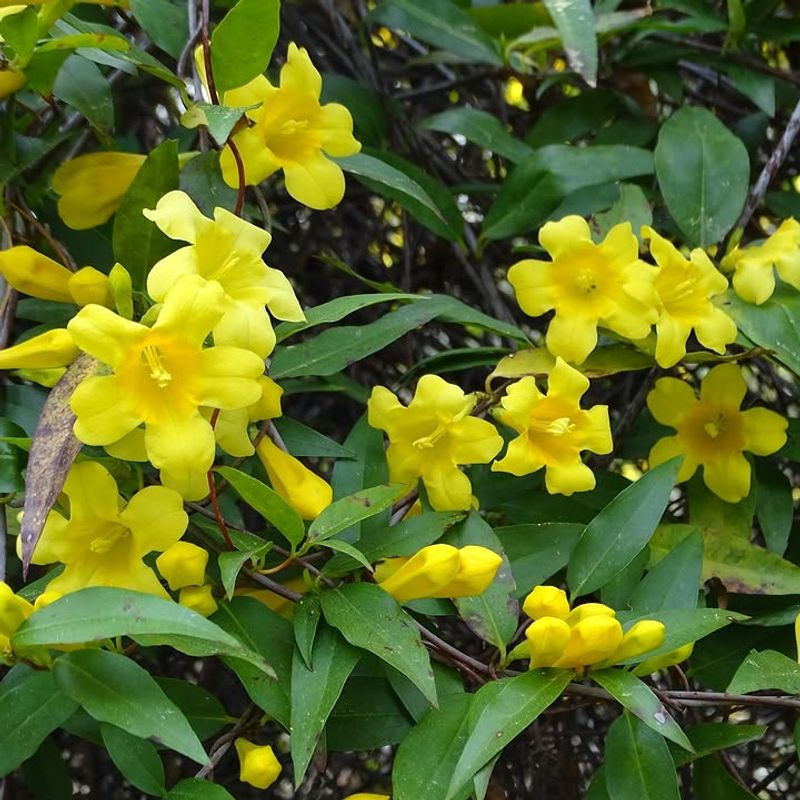
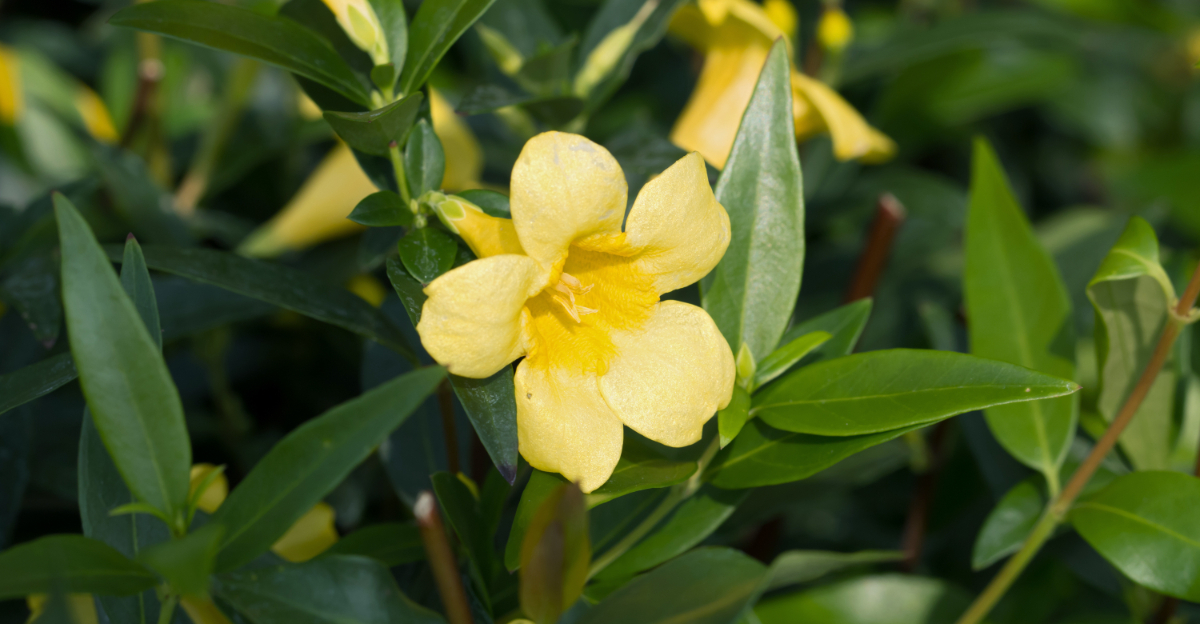
Walk past a Carolina jessamine in late winter and you will smell it before you see it. Bright yellow, tubular flowers cover the vine in late February through March, often while everything else is still bare and brown.
Gelsemium sempervirens is the official name, and it is one of the most dependable flowering vines in the Southeast. It handles heat, drought once established, and even brief cold snaps without losing its composure.
That reliability is rare in a flowering vine.
Growth habit is twining and dense. On a fence or trellis, it builds up a thick, glossy green curtain of foliage that looks attractive even when not in bloom.
Privacy coverage comes faster than you might expect in a sunny location.
Full sun produces the most flowers. Partial shade still gives you a healthy vine, but bloom count reduces noticeably.
Soil drainage matters more than soil richness. Average, well-drained ground suits it better than heavy clay.
One important note for households with children or pets: all parts of Carolina jessamine are toxic if ingested. Plant it thoughtfully, away from areas where young children play unsupervised or where pets graze on vegetation.
Pruning right after bloom keeps the shape tidy and prevents it from swallowing a fence post entirely. Light shaping once a year is genuinely all it needs.
For early spring color, very few native vines compete with it.