7 Native Michigan Shrubs That Work Better Than Privet Along Property Lines
Privet has long been a popular choice for property line hedges, but several native Michigan shrubs offer better performance with far fewer drawbacks.
Ninebark provides dense, attractive foliage along with seasonal blooms that privet simply cannot match in terms of visual interest.
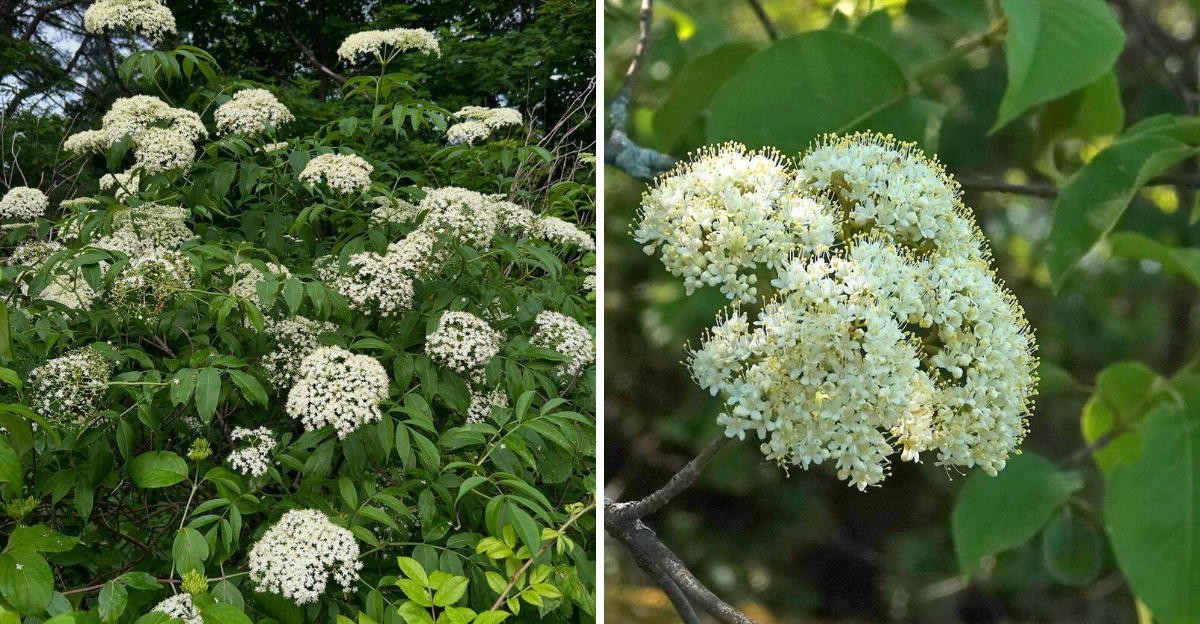
Arrowwood viburnum offers similar screening ability while producing berries that support local birds throughout fall and winter.
Red twig dogwood adds striking winter color, keeping property lines visually interesting even after leaves have dropped.
American hazelnut creates a fuller, more natural looking barrier while also producing nuts that attract wildlife.
Serviceberry works well for slightly shorter property lines, offering spring blooms and fall color privet lacks entirely.
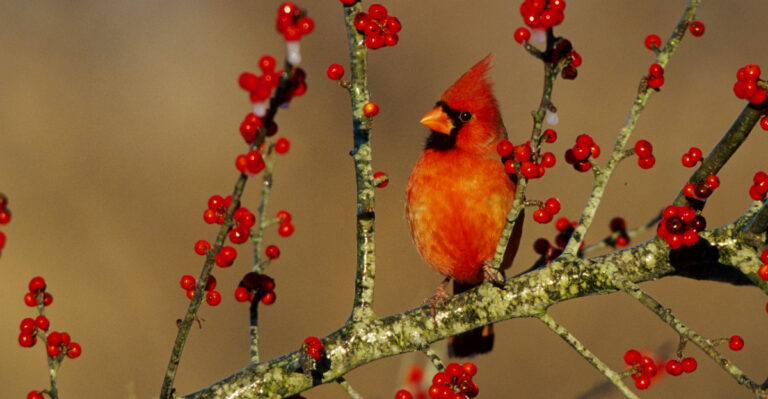
Winterberry holly provides dense growth along with bright red berries that persist through the coldest months.
Choosing any combination of these natives creates a property line hedge that supports local ecosystems far better than privet ever could.
1. Common Ninebark Handles Difficult Property Line Conditions
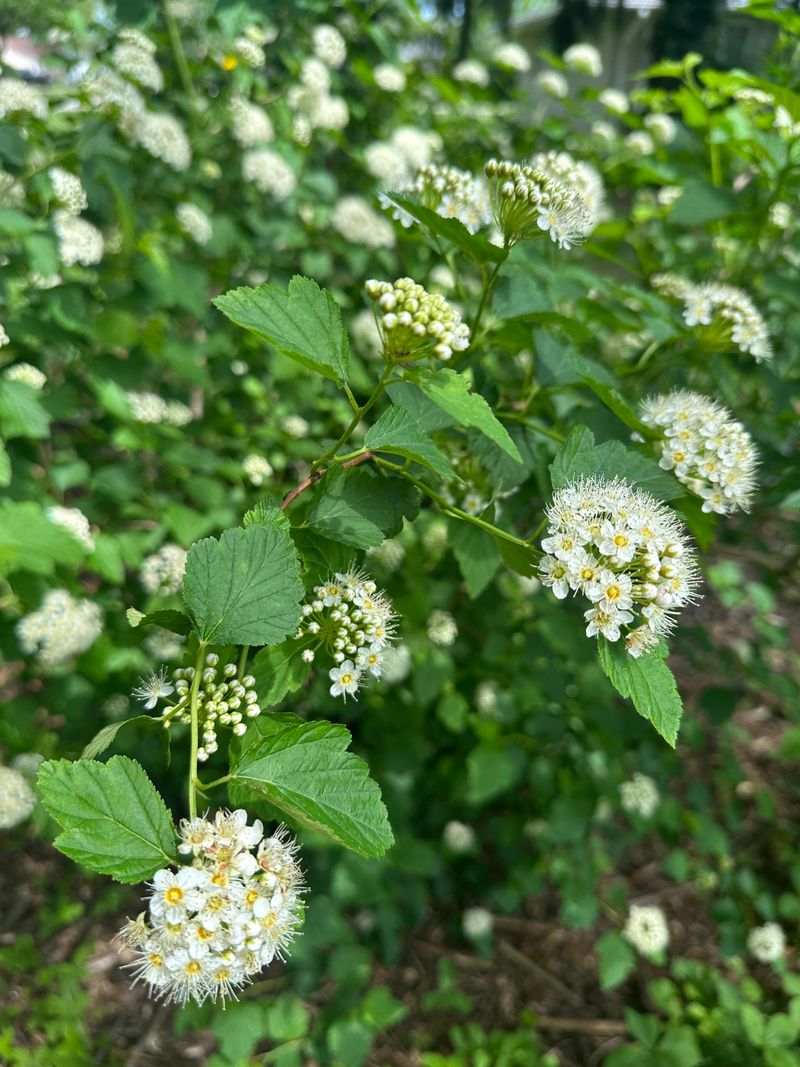
Few shrubs can match the toughness of Common Ninebark, and that reputation is completely earned.
Physocarpus opulifolius grows six to nine feet tall and handles full sun, partial shade, clay soil, sandy soil, and everything in between without complaint.
That kind of flexibility makes it a standout choice for Michigan property lines where conditions are rarely perfect.
In late spring and early summer, the plant covers itself in rounded clusters of small pink-white flowers that attract native bees and other pollinators in impressive numbers.
After the flowers fade, reddish papery fruit capsules take their place, adding texture and color through the warmer months.
Birds find those fruit clusters useful, and the dense branching provides excellent nesting cover throughout the season.
As the shrub matures, its bark begins to peel in thin layers, revealing coppery tones underneath. That peeling texture gives the plant its name and adds winter interest when the garden is otherwise quiet.
Spacing plants six to eight feet apart allows each one enough room to reach its full natural width without crowding.
First-season watering is important while roots establish, but once settled in, Common Ninebark rarely needs much attention. Gardeners should resist the urge to shear it into a tight formal shape.
Allowing the natural arching form to develop creates a far more effective and attractive screen than any clipped hedge could provide.
For anyone needing a reliable, adaptable, and genuinely beautiful informal screen along a property line, Common Ninebark belongs at the top of the list.
2. American Hazelnut Creates A Broad Wildlife Friendly Hedge
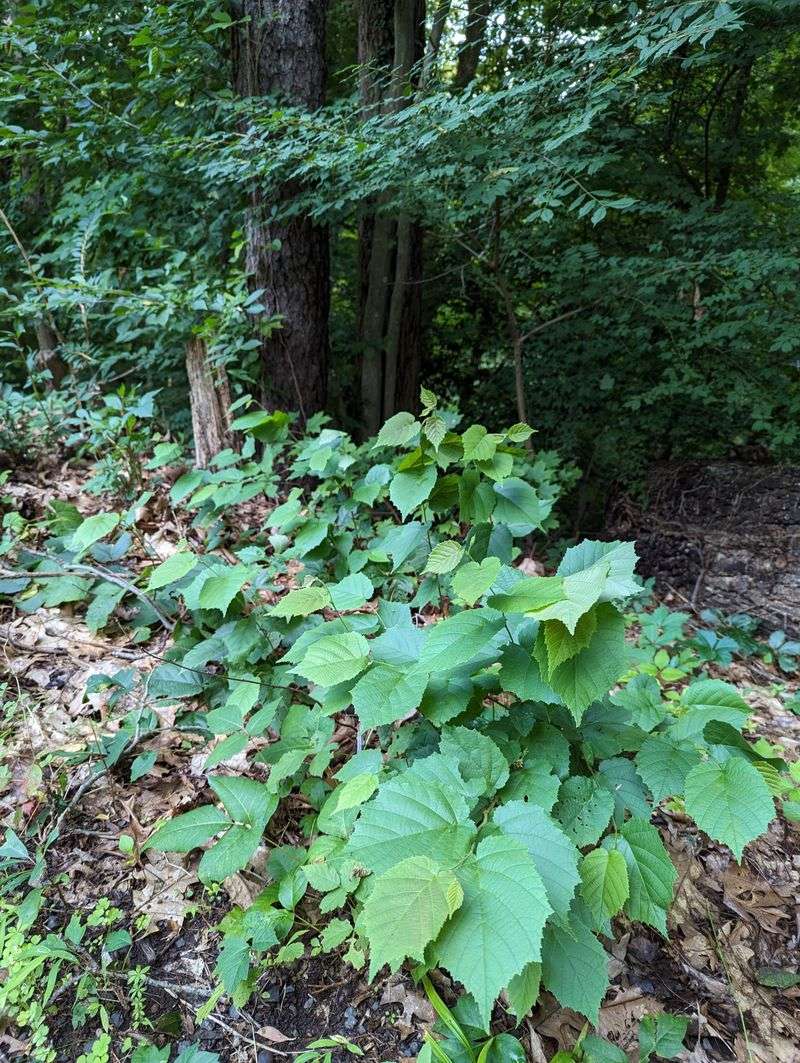
American Hazelnut is the kind of shrub that earns its place in the landscape by doing everything at once.
Corylus americana grows as a multi-stemmed, rounded shrub reaching eight to twelve feet tall and often just as wide, producing broad leaves that turn warm shades of yellow, orange, and red each fall.
That seasonal color alone makes it worth planting along a property line. Beyond the looks, this shrub is a genuine wildlife magnet.
The edible hazelnuts ripen in late summer and attract squirrels, deer, turkeys, and a wide range of songbirds.
Your Michigan Garden Changes Every Week. Your Plan Should Too.
Gardening in Michigan changes quickly throughout the season. Every Friday you’ll receive a simple weekly plan showing exactly what to plant, prune, fertilize, harvest, and protect so you never miss the right timing.
Nesting birds appreciate the dense branching structure, and the broad foliage provides shelter throughout the warmer months.
Homeowners hoping to harvest nuts for themselves should know that wildlife tends to gather much of the crop before it can be collected, so planting multiple shrubs improves the odds of a shared harvest.
One important trait to plan for is American Hazelnut’s habit of spreading through underground suckers.
Over time, a single plant can expand into a broad colony, which works beautifully where a naturalized hedge is the goal. Spacing plants eight to ten feet apart gives them room to fill in gradually.
Removing suckers that creep into paths, neighboring beds, or fence lines keeps the colony manageable without reducing the screening effect.
Partial shade is tolerated well, but full sun produces stronger growth and better nut production.
This is a shrub built for gardeners who want a productive, wildlife-rich, low-fuss hedge that looks and feels genuinely at home in Michigan.
3. Gray Dogwood Forms A Dense Informal Boundary
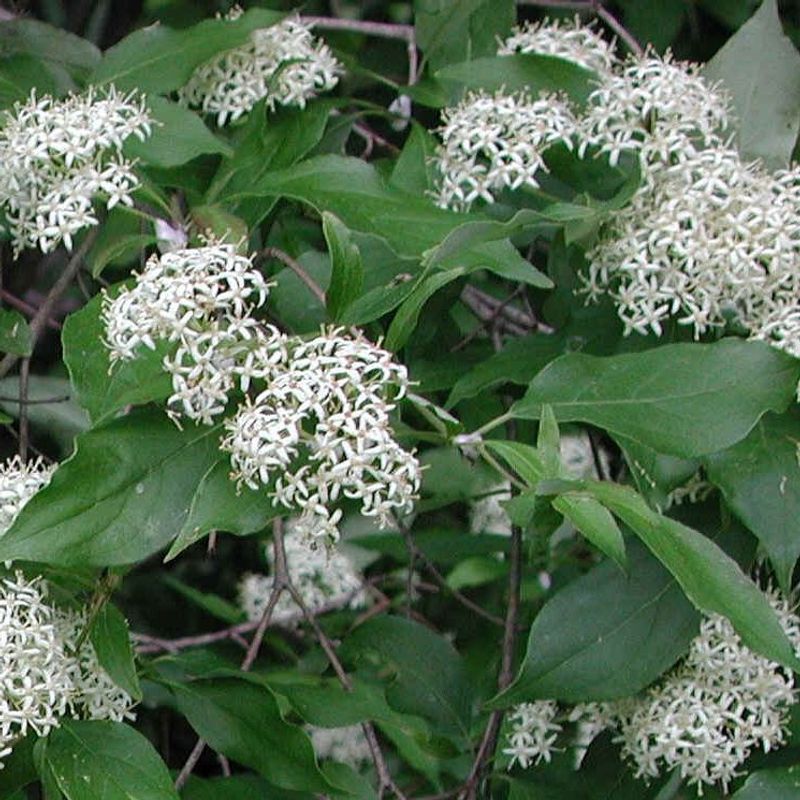
Walk past a Gray Dogwood in autumn and you will stop in your tracks.
Cornus racemosa puts on one of the most striking fall displays of any native Michigan shrub, with white berries held on vivid red stems against reddish-purple foliage that seems to glow in the late season light.
That combination of color and texture is genuinely hard to beat. During summer, the shrub produces creamy white flower clusters that draw in pollinators before the berries develop.
Birds absolutely love those white fruits, and species including robins, catbirds, and several warblers visit regularly during migration.
The dense branching structure provides excellent cover and nesting sites, making this shrub a true ecosystem contributor along any property line.
Gray Dogwood grows six to ten feet tall in full sun or partial shade and tolerates a wide range of soil moisture conditions, from fairly dry to periodically wet. Its one major consideration is its spreading nature.
The shrub moves through rhizomes and suckers to gradually form a colony, which is perfect for a broad naturalized boundary but not well suited to a narrow or formal bed.
Spacing plants six to eight feet apart and monitoring for unwanted suckering near paths or garden edges keeps things manageable.
Removing a portion of unwanted stems each season preserves the screening effect while controlling spread.
For gardeners who want a dynamic, wildlife-rich, four-season boundary plant that requires minimal intervention once established, Gray Dogwood delivers a level of seasonal interest and ecological value that privet never could.
4. Red Osier Dogwood Brightens Moist Property Lines
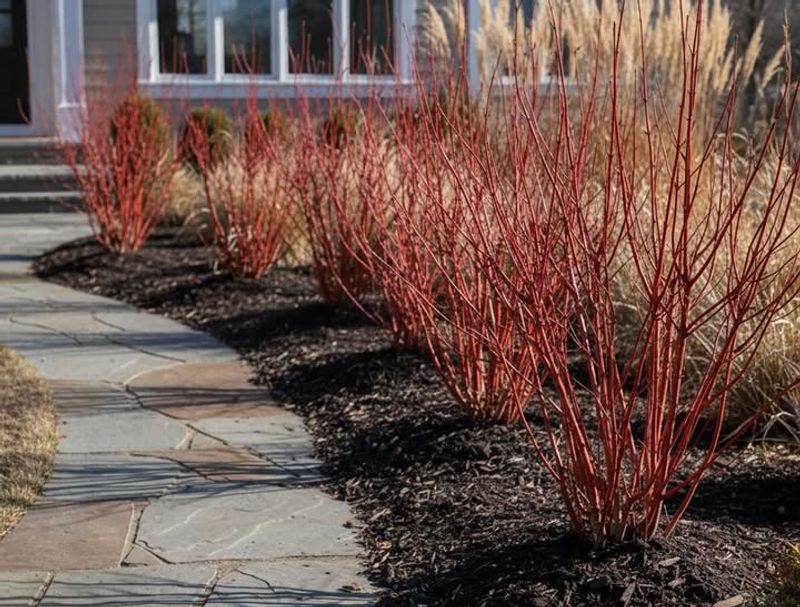
Red Osier Dogwood is the shrub that refuses to disappear into the background, even in the middle of January.
When the leaves fall and the garden goes quiet, the young stems blaze a vivid red-orange that stands out brilliantly against snow, gray skies, or a weathered fence line.
That winter color is the feature most gardeners notice first, but it is far from the only reason to plant this native along a property line.
Cornus sericea grows as a multi-stemmed, spreading shrub reaching six to ten feet tall with a similar or greater spread.
In late spring, flat-topped clusters of small white flowers open above the foliage, attracting native bees and other pollinators.
The pale fruit that follows is a reliable food source for birds, including many species that visit during fall migration.
The shrub’s dense structure also offers excellent nesting cover through the warmer months. This is a plant that genuinely thrives in moisture.
Low spots, rain gardens, areas near ponds or drainage swales, and sections of a yard that stay consistently damp are exactly where Red Osier Dogwood performs at its best.
Very dry or droughty boundaries are not a good match for this shrub, and choosing a drier-tolerant species makes more sense in those situations. Renewal pruning is the key to keeping those signature red stems at their most vibrant.
Removing roughly one-third of the oldest, woodiest stems at the base each year encourages fresh new growth that carries the brightest color.
Spacing plants six to eight feet apart allows the natural spreading form to develop into a full, effective screen over time.
5. Arrowwood Viburnum Adds Flowers Fruit And Screening
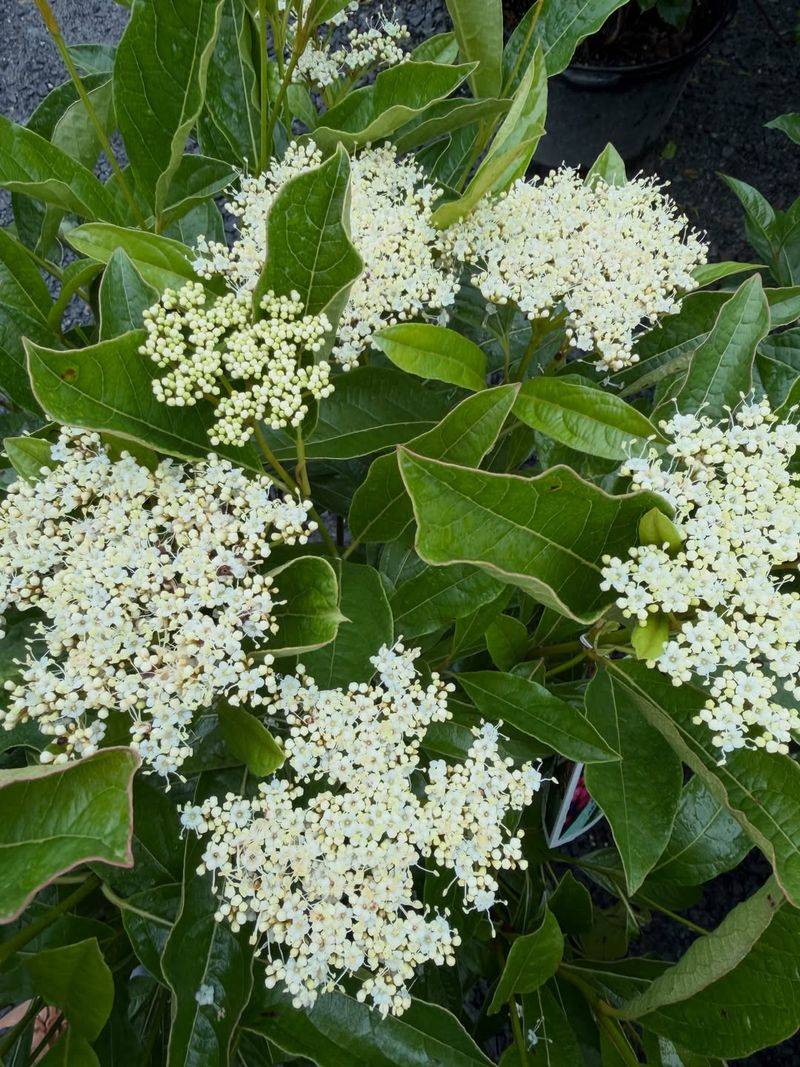
Arrowwood Viburnum has a lot going on across all four seasons, and that makes it one of the most satisfying native shrubs a Michigan gardener can plant along a property line.
Viburnum dentatum grows as an upright, multi-stemmed shrub typically reaching six to ten feet tall with a spread that can match or exceed its height. The glossy, toothed leaves are attractive from the moment they emerge in spring.
In late spring, flat-topped clusters of small white flowers appear above the foliage and attract an impressive variety of native bees, beetles, and other visiting insects.
Those flowers transition into clusters of blue-black fruit by late summer, which birds begin harvesting almost immediately.
Fall foliage shifts through shades of yellow, orange, and burgundy red, giving the shrub one final burst of color before winter sets in.
Arrowwood Viburnum adapts well to full sun or partial shade and handles a range of soil types without much fuss.
Spacing plants six to eight feet apart based on their expected mature width creates a natural screen that fills in beautifully over a few seasons.
Allowing the shrub to keep its natural arching form produces a far more effective screen than repeated shearing, which reduces flowering and fruiting.
One practical note for Michigan gardeners is to monitor plants for Viburnum Leaf Beetle activity, an invasive pest that can cause significant foliage damage if populations go unchecked.
Catching infestations early makes management much easier. Gardeners should also confirm that any plant they purchase is a true native species appropriate for their region of Michigan before planting along a permanent boundary.
6. Nannyberry Creates A Tall Native Privacy Screen
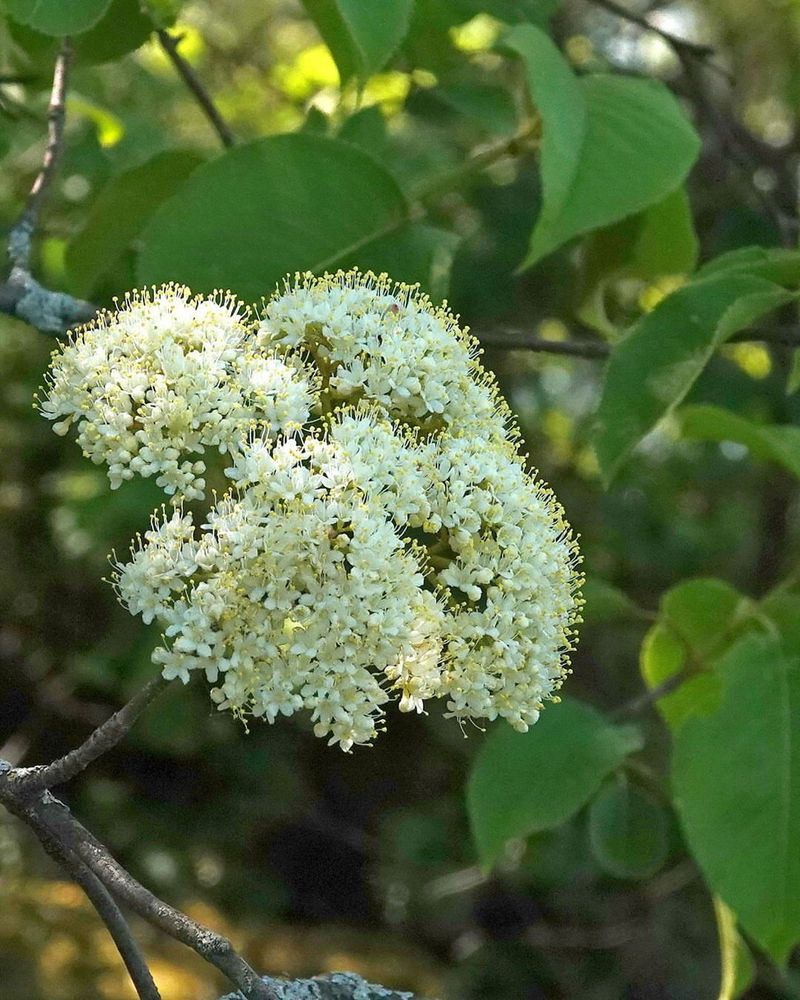
When a property line needs serious height, most native shrubs cannot quite get there. Nannyberry is the exception.
Viburnum lentago grows fifteen to twenty feet tall over time, developing into a large multi-stemmed shrub or small tree that provides genuine privacy screening and windbreak capacity along spacious boundaries.
Its scale alone sets it apart from most shrubs on this list. Each spring, the plant produces broad, flat-topped clusters of creamy white flowers with a light fragrance that pollinators find irresistible.
By late summer, those flowers develop into clusters of blue-black fruit that birds absolutely flock to, including thrushes, waxwings, and several other species that rely on high-calorie fall fruit during migration.
The glossy green foliage transitions to shades of purplish-red in fall, adding one more layer of seasonal interest before the leaves drop.
Nannyberry grows well in full sun to partial shade and prefers soil with reasonable drainage, though it tolerates occasional moisture fluctuations better than many shrubs.
Spacing plants eight to twelve feet apart gives each one room to develop its full natural spread, which can reach ten to fifteen feet wide at maturity.
Gardeners should think carefully about placement, because this shrub’s eventual size makes it a poor choice beneath utility lines or beside narrow walkways where growth would need constant restriction.
The shrub also occasionally produces suckers from the base, which can be removed to keep the form clean or left to develop a more colony-like screen.
For open, spacious property lines where height and privacy are the priority, Nannyberry delivers a level of presence and ecological value that few other native shrubs can match.
7. American Elderberry Fills Moist Sunny Boundaries Quickly
Speed matters when you want a new hedge to actually look like a hedge within a reasonable amount of time.
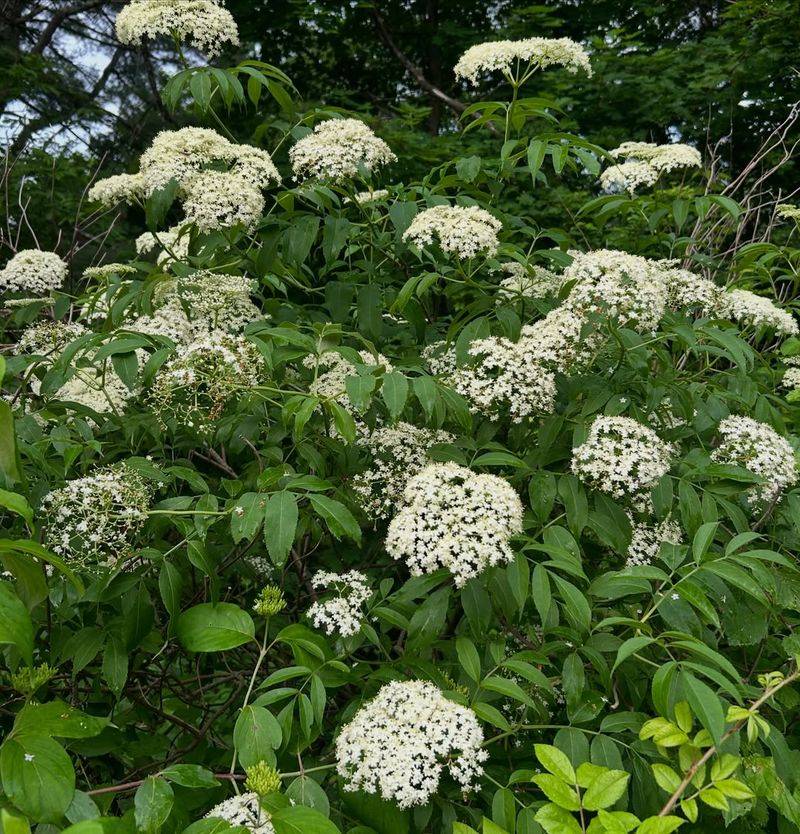
American Elderberry is one of the fastest-growing native shrubs available to Michigan gardeners, commonly reaching five to twelve feet tall within just a few seasons under good growing conditions.
That rapid establishment makes it a genuinely exciting option for anyone starting a property line from scratch.
Sambucus canadensis produces broad, flat-topped clusters of creamy white flowers in early summer that are spectacular in their own right and attract a remarkable variety of native bees, flies, and other beneficial insects.
The dark purple-black fruit that follows in late summer is valuable to more than thirty species of birds and supports a wide range of wildlife through the fall season.
The spreading multi-stemmed habit fills in quickly to create a lush, informal screen. This shrub performs best with plenty of sunlight and consistently moist, well-drained soil.
Low areas, rain gardens, and spots near drainage features suit it well. Spacing plants six to ten feet apart allows the natural spread to develop while leaving enough room for airflow between plants.
First-season watering during dry spells helps roots establish quickly, and removing unwanted suckers from the edges keeps the colony from expanding beyond its intended boundary.
Fruit production tends to be stronger when two or more genetically different compatible plants grow nearby, so planting a small group rather than a single specimen is a smart strategy.
Any fruit intended for human use should be correctly identified and properly prepared beforehand, as raw unripe fruit can cause stomach upset.
For moist, sunny property lines, American Elderberry fills the space with energy and purpose.