Native North Carolina Ground Covers That Suppress Weeds Better Than Pine Straw Under Trees
The ground under trees might be the most overlooked and underachieving corner of a North Carolina yard. Patchy, shady, full of competing roots, and perpetually dry in spots, it is basically a welcome mat for weeds.
Pine straw helps, sure, but refreshing it every single season gets old fast and it still does not actually fill in those stubborn bare patches over time. That is where native ground covers come in, and honestly they deserve a lot more attention than they typically get.
Once established, these plants can soften shady beds, cover exposed soil, and quietly crowd out the open space weeds love to colonize.
For North Carolina gardeners who want something genuinely low maintenance and good looking under their trees, native ground covers might just be the smartest planting decision you make all year.
1. Green-And-Gold Covers Bare Shade
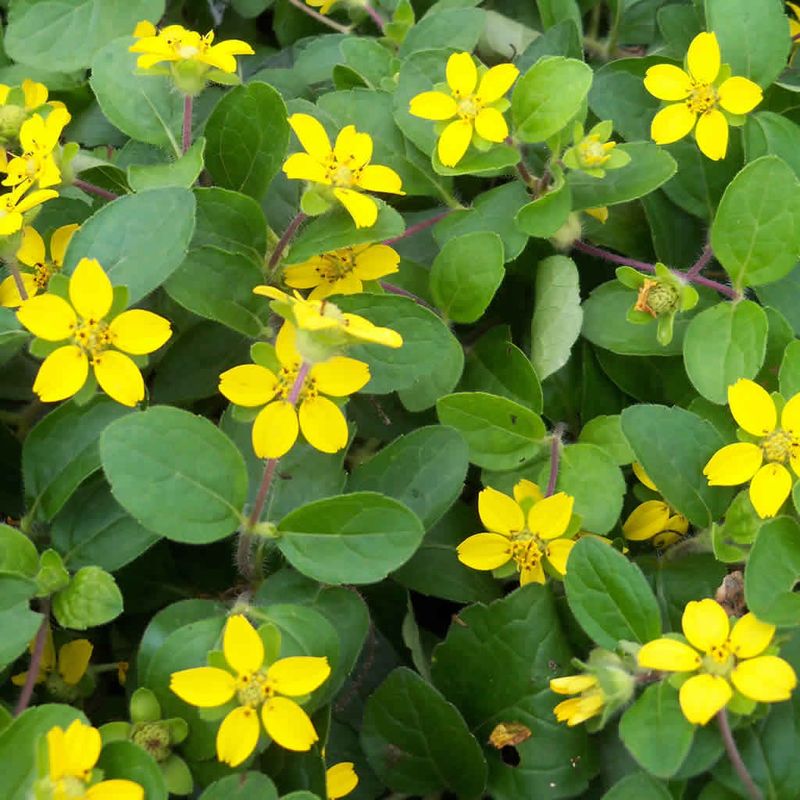
Bare patches under large trees can feel almost impossible to fill, but green-and-gold has a quiet way of proving that wrong.
This cheerful native perennial, known botanically as Chrysogonum virginianum, spreads low across the ground and produces small golden-yellow flowers that brighten even the shadiest corner of a North Carolina yard.
It is one of those plants that genuinely earns its place.
Green-and-gold grows well across much of North Carolina, from the Piedmont to the foothills, and handles both partial and full shade without much complaint.
It tends to stay low, usually reaching only six to nine inches tall, which makes it practical under shrubs and trees where taller plants would look out of place.
The foliage stays semi-evergreen in milder winters, offering some year-round coverage.
Weed suppression comes from the dense mat of foliage this plant forms over time. Young plantings may still need a thin layer of mulch between them and some hand weeding while they fill in.
Once established, the spreading habit helps crowd out many common weeds without much intervention. Watering during dry summer stretches will help new plants settle in more quickly.
For gardeners tired of raking and refreshing pine straw every season, green-and-gold offers a more lasting solution beneath North Carolina trees.
2. Mountain Pachysandra Forms A Leafy Mat
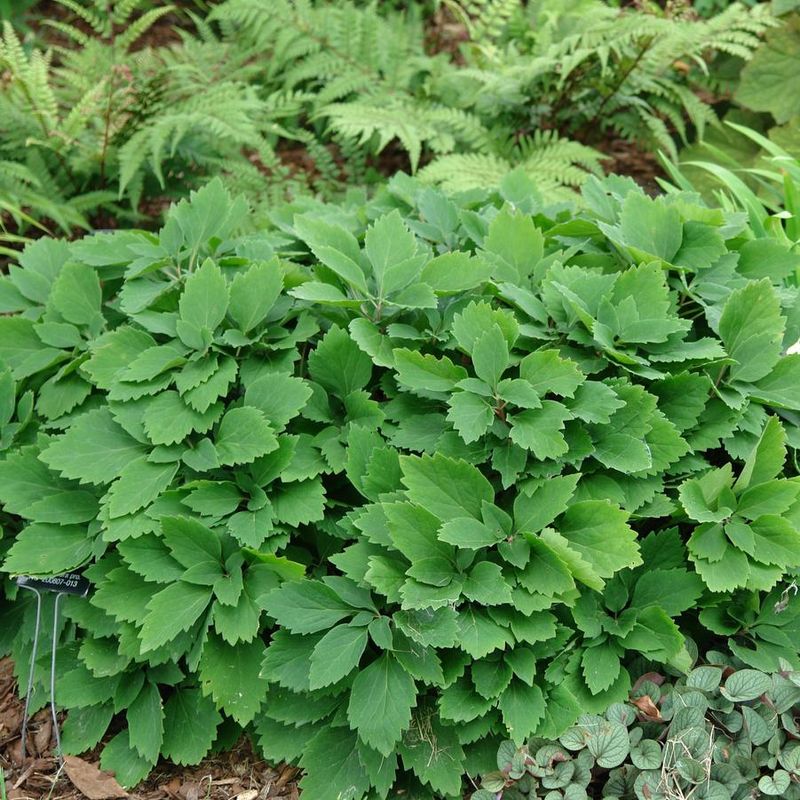
Woodland floors in the North Carolina mountains often have a look that gardeners spend years trying to recreate in their own yards. Mountain pachysandra, or Pachysandra procumbens, captures that natural woodland feel without the fuss.
Unlike its Asian cousin that shows up in many conventional landscapes, this native species belongs here and behaves more responsibly in naturalized areas.
The foliage is one of the most attractive features of this plant.
Leaves are mottled with silvery markings that shift in appearance as the seasons change, and the plant produces small white flower spikes in late winter or early spring before the tree canopy fills in overhead.
That timing makes it especially rewarding for gardeners who want something interesting happening in the garden during the quieter months.
Mountain pachysandra spreads slowly by underground stems, gradually filling in bare patches under trees where grass refuses to grow. It prefers moist, well-drained soil rich in organic matter and performs best in moderate to deep shade.
Your North Carolina Garden Changes Every Week. Your Plan Should Too.
Gardening in North Carolina changes quickly throughout the season. Every Friday you’ll receive a simple weekly plan showing exactly what to plant, prune, fertilize, harvest, and protect so you never miss the right timing.
In drier spots, it may spread more slowly, so watering during summer dry spells helps new plantings get established. A thin layer of pine straw between young plants can protect the soil while the mat fills in.
Over time, the dense coverage does a reasonable job of shading out many common weeds in North Carolina shade beds.
3. Wild Ginger Spreads Under Trees
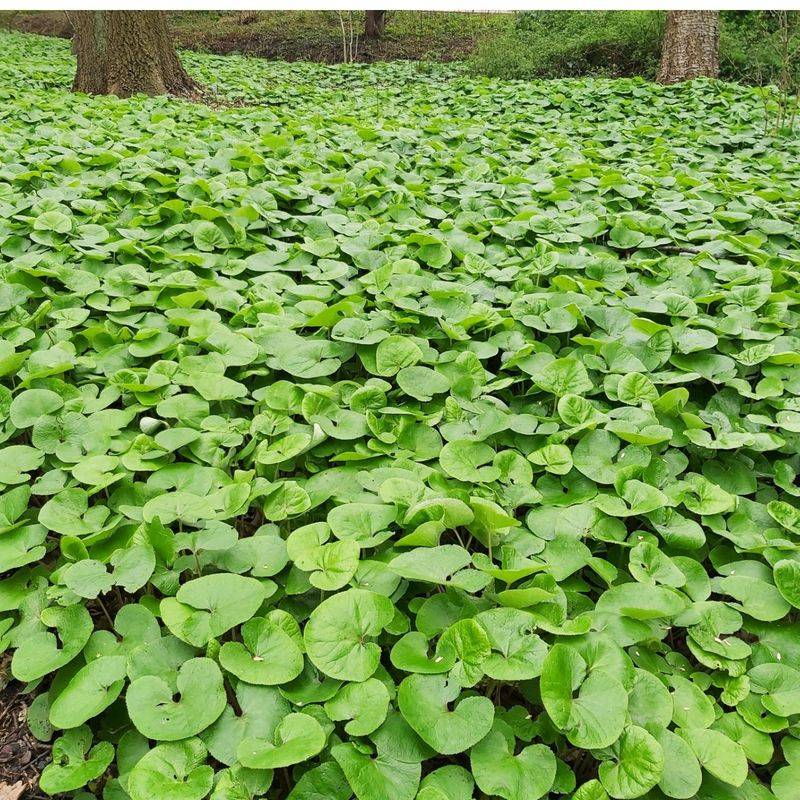
Few native plants bring the same rich, lush look to a shady tree bed as wild ginger.
Asarum canadense spreads by underground rhizomes to form a dense, knee-height carpet of large, heart-shaped leaves that overlap generously, leaving very little open soil for weeds to find.
The effect feels more like a woodland floor than a typical garden bed, which is exactly what many homeowners are after.
Wild ginger grows across a wide range of North Carolina, from the mountains through the Piedmont, and it handles dry shade reasonably well once it gets established.
The plant is deciduous, so it loses its leaves in winter, but the coverage during the growing season is dense enough to suppress a good number of common weeds.
Gardeners who plant it under large oaks or maples often find it one of the more satisfying choices for difficult shady spots.
Establishment takes a little patience. New plantings spread slowly at first and benefit from consistent moisture and some mulch between plants while they fill in.
Hand weeding during that first season or two keeps competition in check. The hidden flowers, which bloom close to the ground in early spring, are a quirky bonus that many gardeners never even notice until they crouch down for a closer look.
Wild ginger rewards the patient gardener with a ground cover that genuinely improves over time.
4. Foamflower Softens Shady Beds
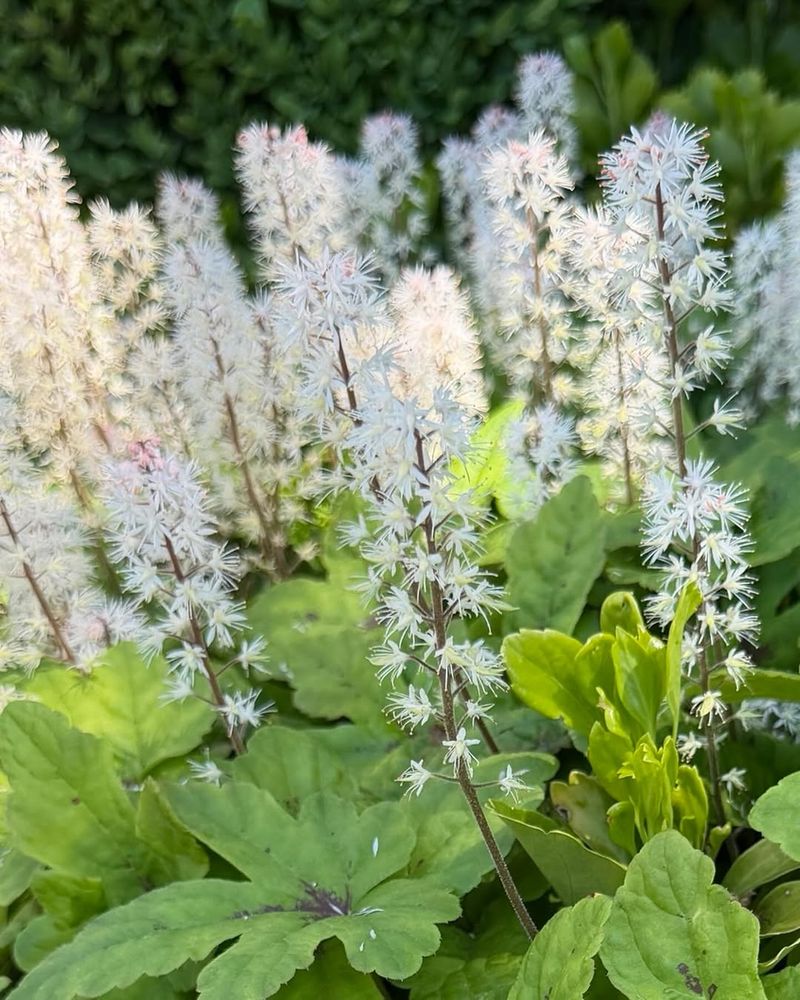
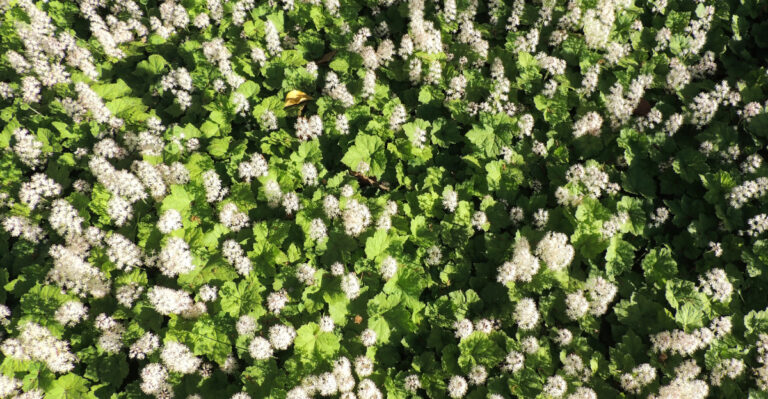
Something about foamflower in full spring bloom stops people in their tracks. Tiarella cordifolia sends up airy white flower spikes in mid-spring that look almost like foam floating above the foliage, which is how the plant earned its name.
In North Carolina shade gardens, those blooms arrive just when the landscape needs a lift after a long winter.
Beyond the flowers, foamflower forms a spreading mat of attractive lobed leaves that provides solid ground coverage under trees. Many selections have interesting burgundy or bronze markings on the foliage, adding visual interest even when the plant is not in bloom.
It spreads by stolons, which are short horizontal stems that root as they travel, gradually filling in bare patches in a way that feels natural rather than aggressive.
Foamflower performs best in moist, humus-rich soil with moderate to full shade, conditions that are fairly common under the canopy of mature trees in North Carolina yards.
It tends to struggle in very dry spots, so gardeners in drier parts of the Piedmont may need to water during summer dry spells, especially during the first year or two after planting.
A thin layer of organic mulch around new plants helps retain soil moisture while the colony expands. Once established, the dense foliage coverage makes it harder for common weeds to find enough light and space to get started in the bed.
5. Partridgeberry Creeps Through Cool Shade
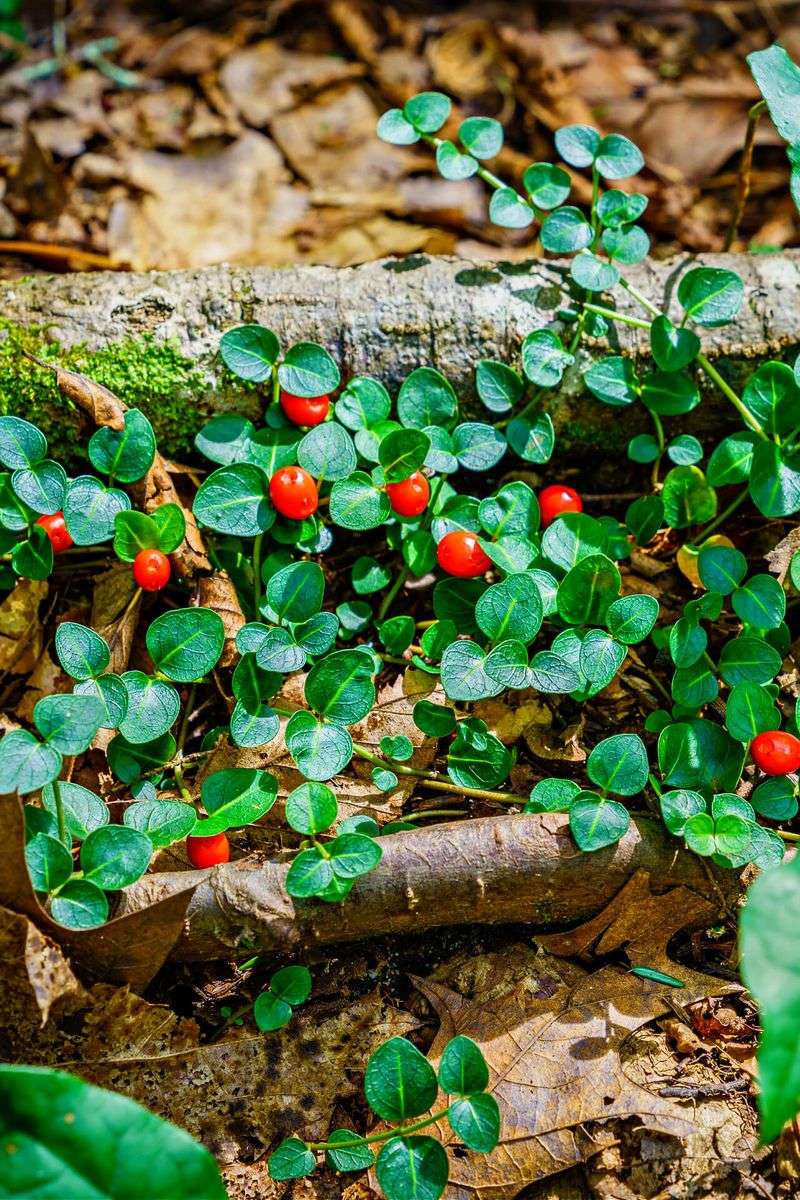
Tucked along shady woodland edges across North Carolina, partridgeberry is one of those plants that feels like a discovery every time you spot it.
Mitchella repens is a low-growing, creeping evergreen that hugs the ground closely, weaving through leaf litter and around tree roots with a quiet persistence that makes it genuinely useful in difficult shady spots.
The plant produces pairs of small white tubular flowers in late spring or early summer, followed by bright red berries that persist through winter and attract birds.
The glossy, dark green leaves stay on the plant year-round, which gives partridgeberry an advantage over deciduous ground covers when it comes to providing consistent soil coverage during the cooler months.
That evergreen habit helps suppress winter annual weeds that tend to move into bare spots during fall and early spring in North Carolina.
Partridgeberry spreads slowly by trailing stems that root where they touch the soil, so patience is necessary. It works best in cool, moist, acidic soils under deciduous or evergreen trees, conditions found in many North Carolina mountain and upper Piedmont landscapes.
Gardeners planting it in drier spots should plan on regular watering through the first growing season.
Because it grows so slowly, mulching between plants with pine straw or shredded leaves during establishment helps manage weeds while the colony fills in.
The result over time is a fine-textured, low mat that holds the ground beautifully.
6. Pennsylvania Sedge Fills Dry Shade
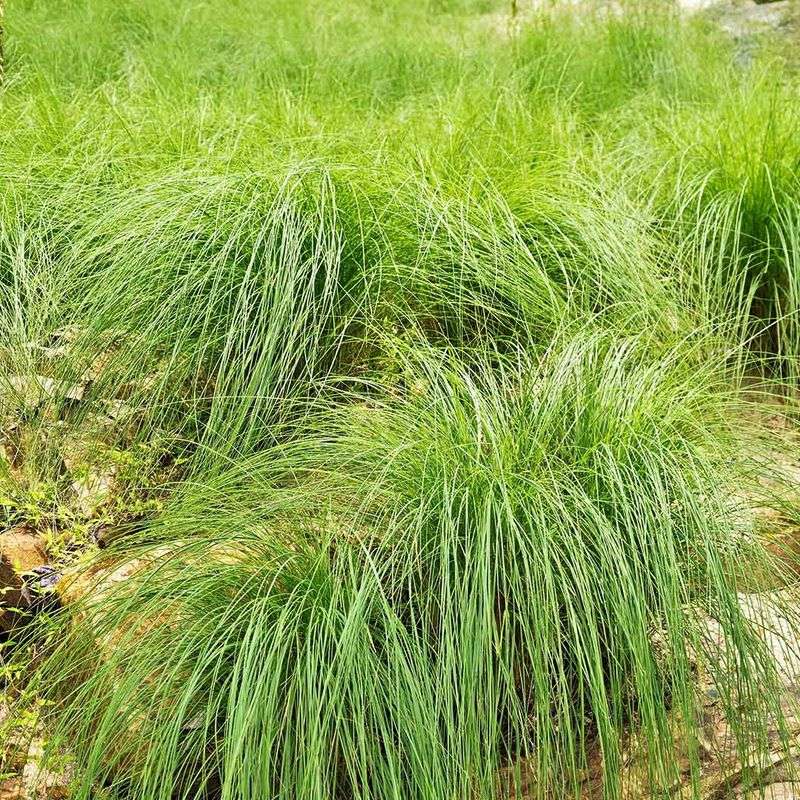
Dry shade under large trees is one of the most frustrating gardening challenges in North Carolina, and Pennsylvania sedge handles it better than most plants are willing to.
Carex pensylvanica is a fine-textured, low-growing sedge that forms a soft, turf-like mat in spots where grass has long since given up.
It has a relaxed, slightly arching appearance that looks natural in woodland settings.
One of the most practical qualities of Pennsylvania sedge is its tolerance for root competition and low moisture once established. Under mature oaks and other large trees where soil dries out quickly during summer, this sedge holds its own reasonably well.
It stays semi-evergreen in North Carolina, providing year-round coverage that helps keep bare soil shaded and less hospitable to weeds.
The plant spreads slowly by rhizomes, gradually knitting together into a cohesive mat.
Gardeners sometimes mow Pennsylvania sedge once a year in late winter to tidy the planting before new growth emerges in spring, though mowing is not required. During establishment, some irrigation and hand weeding help the young colony compete.
A light layer of pine straw or shredded leaf mulch between new plants reduces weed pressure while the sedge fills in.
For homeowners dealing with the classic problem of bare, weedy soil under large shade trees, Pennsylvania sedge is one of the more reliable native options available without requiring a lot of ongoing maintenance.
7. Golden Ragwort Spreads With Spring Blooms
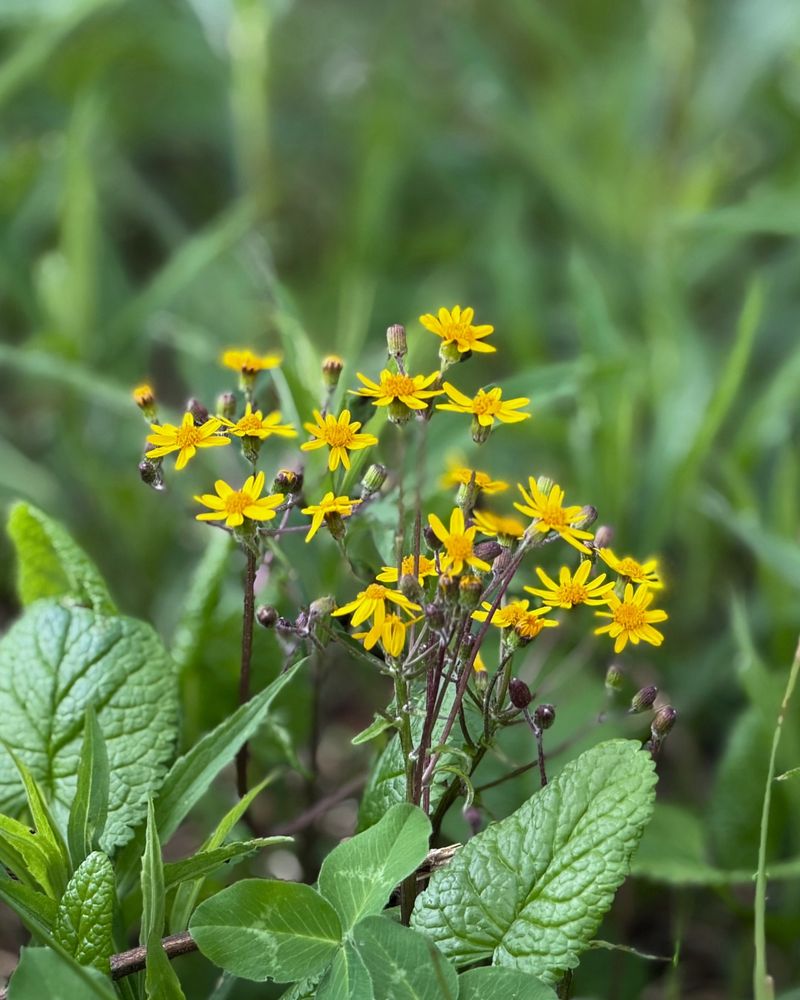
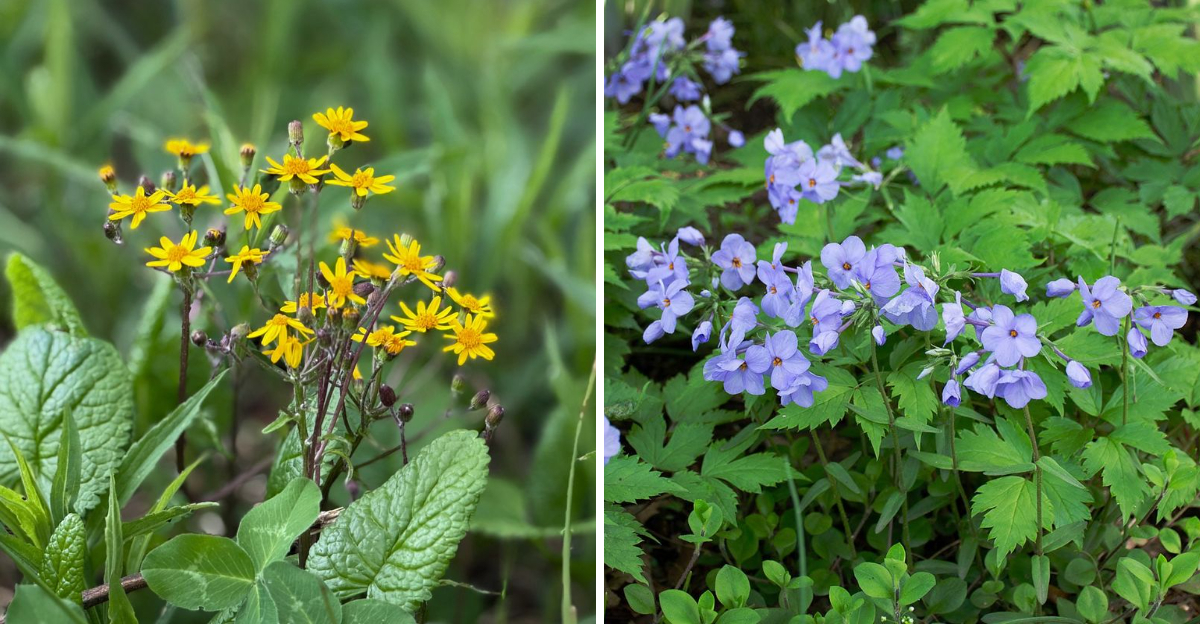
Spring comes alive in a North Carolina shade bed when golden ragwort bursts into bloom. Packera aurea produces clusters of vivid yellow, daisy-like flowers in mid-spring that rise well above the foliage and create a striking display in spots that often feel dark and quiet.
The blooms are a welcome source of early nectar for pollinators emerging in the warming weather.
What makes golden ragwort especially valuable as a ground cover is its basal foliage, which forms a year-round carpet of heart-shaped, dark green leaves. Even after the flowers fade, the foliage remains and helps shade the soil, reducing open space for weeds to establish.
The plant spreads both by seed and by short stolons, which means a well-sited planting can expand into a substantial colony over a few seasons.
Golden ragwort adapts to a range of conditions but performs especially well in moist, partially shaded areas, such as along stream edges, under trees near rain gardens, or in low spots in the North Carolina landscape where water collects after rain.
It is more tolerant of wet conditions than many other native ground covers, which makes it useful in spots that other plants find challenging.
New plantings benefit from some mulch and consistent moisture during the first season. Over time, the spreading habit and dense foliage make golden ragwort one of the more effective native options for reducing bare soil and weed pressure under trees.
8. Creeping Phlox Covers Ground With Color
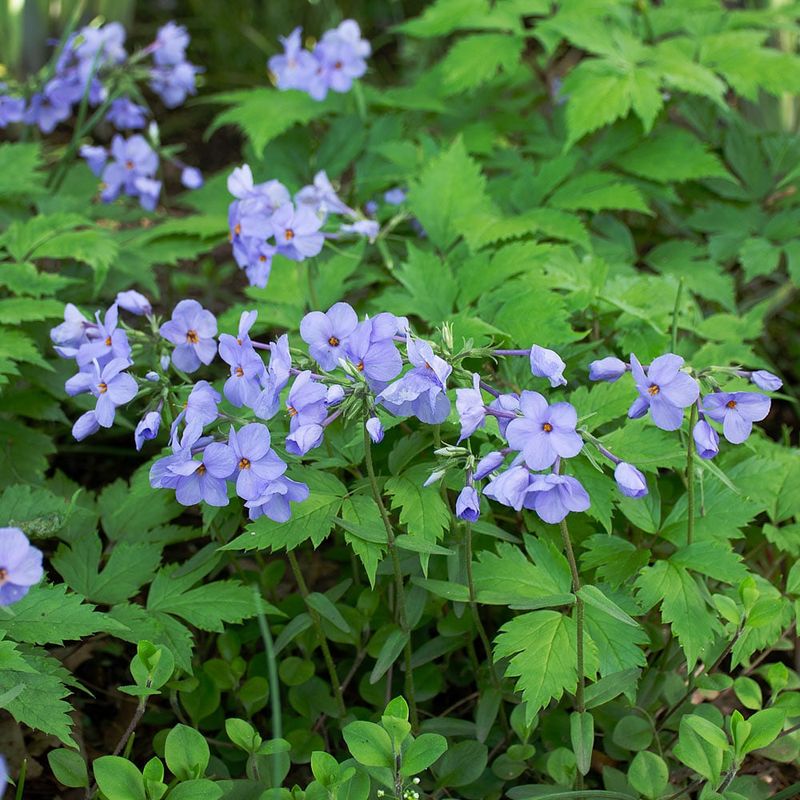
Color in a shady tree bed can feel like a rare luxury, and creeping phlox delivers it generously in spring.
Phlox stolonifera, the woodland species native to eastern North America including North Carolina, spreads low across the ground and covers itself with clusters of small flowers in shades of lavender, pink, and white during mid-spring.
The show only lasts a few weeks, but the dense foliage earns its place the rest of the year.
Unlike moss phlox, which prefers sunny, dry slopes, creeping phlox is well suited to shaded conditions under deciduous trees. It spreads by rooting stems that travel along the soil surface, gradually filling in bare patches with a low, semi-evergreen mat.
That coverage helps reduce the open ground that weeds need to get started, especially in the shaded beds of North Carolina home landscapes where pine straw alone may not be enough.
Creeping phlox grows best in moist, well-drained soil with a good amount of organic matter.
It tends to perform well in the mountain regions and upper Piedmont of North Carolina, where summers are slightly cooler, but it can adapt to other areas with proper site preparation.
New plantings need consistent watering through the first growing season and benefit from a light mulch layer between plants.
Once the colony fills in, maintenance drops considerably, and the plant rewards gardeners with reliable spring color and steady ground coverage year after year.