8 Native Ohio Herbs That Self-Seed In Backyard Gardens
Some of the best plants in an Ohio garden come back without a reminder, a seed packet, or much help from you. Native herbs can take that idea even further.
Once established, certain species drop seed and quietly create new plants nearby, which can make a backyard feel fuller each season with very little effort. That does not mean your beds have to turn wild or messy.
The right plants can spread with charm, fill small gaps, and add fresh texture without demanding constant attention. For gardeners who love a natural look, this is one of the easiest ways to let the landscape do part of the work.
You may even spot new plants in places you never planned, tucked beside a path or between established perennials. A few native Ohio herbs are especially good at this, and each one brings something useful to the garden beyond its ability to return on its own.
1. Wild Bergamot Seeds Its Own Lavender Drifts
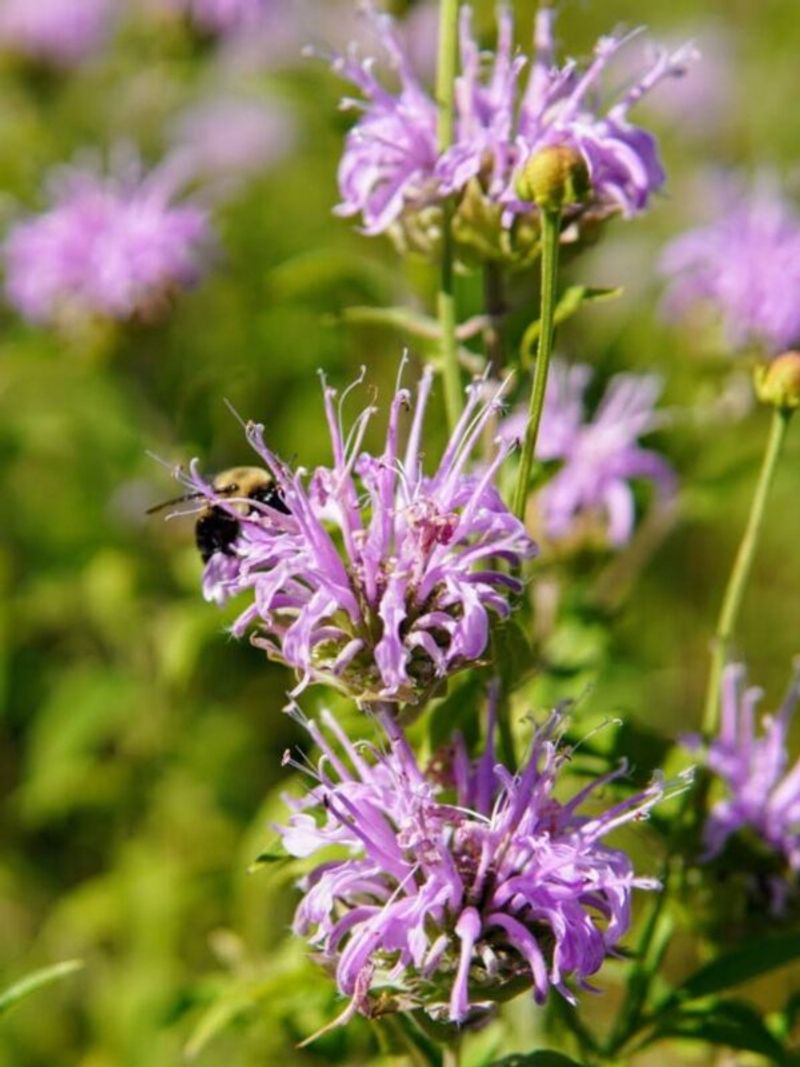
Few sights in a native garden compare to a patch of soft lavender flower heads swaying in a summer breeze. Wild Bergamot, known botanically as Monarda fistulosa, is a native herbaceous perennial found growing across Ohio in open fields, roadsides, and woodland edges.
Its tubular lavender to pale pink flowers bloom from June through August and attract bees, butterflies, and hummingbirds. The foliage is strongly aromatic when crushed.
After flowering, the round seed heads mature and can drop seed into the surrounding soil. Volunteer plants may appear nearby when soil conditions, moisture, and light are right.
Leaving some spent flower heads standing through fall gives seed the best chance to reach bare ground naturally. Not every seed will sprout, but patient gardeners often find new plants appearing around established clumps the following spring.
Wild Bergamot prefers full sun to partial shade and dry to medium, well-drained soil. It shows good tolerance for dry periods once established, according to Ohio State University Extension resources.
The plant may also spread gradually through short rhizomes, so not every new stem is necessarily a seedling. Still, its reseeding habit can create natural-looking drifts over time.
Avoid cutting plants back too early in fall if you want seed to mature fully before cleanup.
2. Nodding Onion Drops New Plants Into Sunny Beds
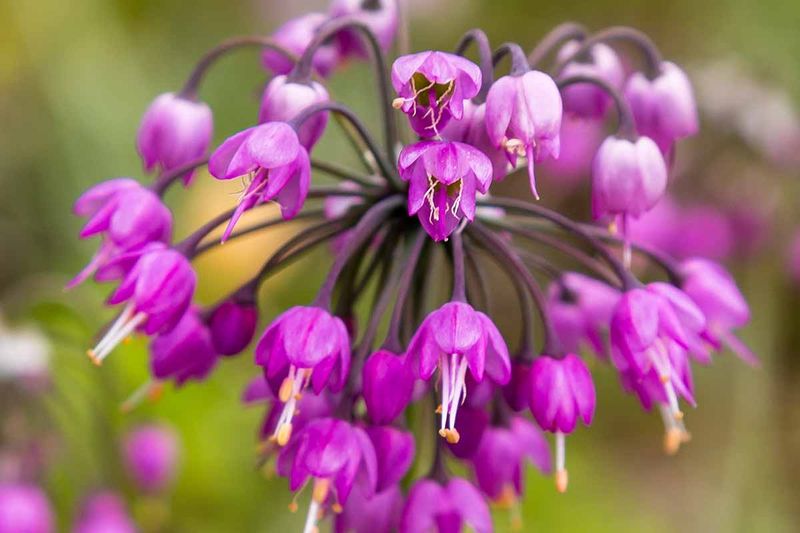
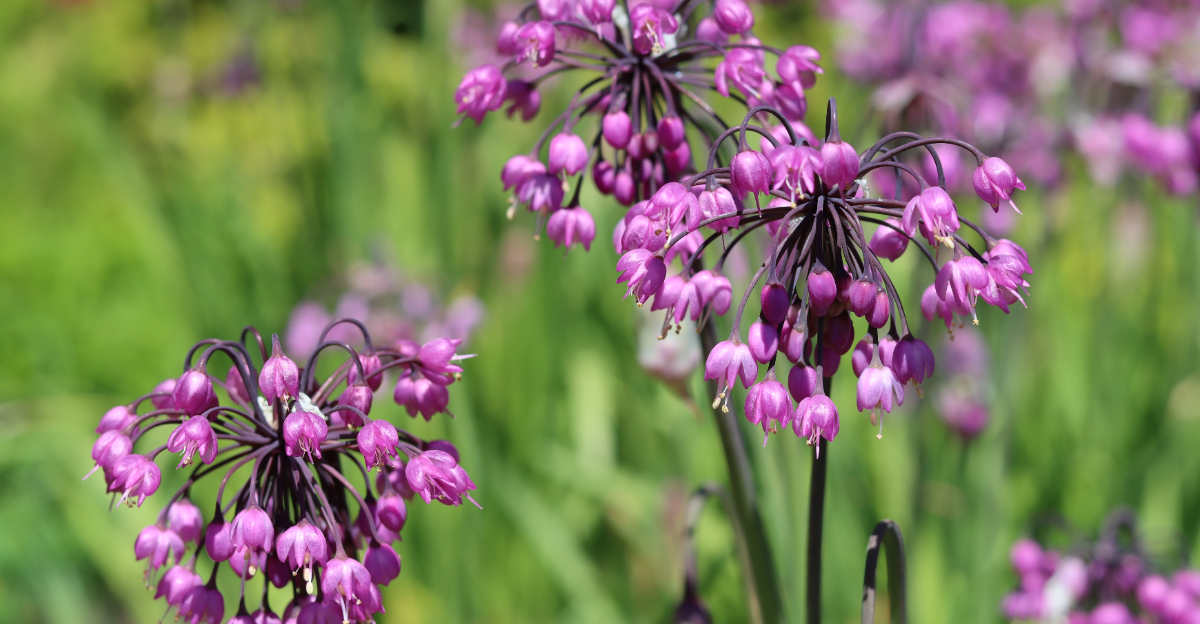
Those drooping clusters of pink to lavender flowers are hard to miss once you know what to look for. Nodding Onion, Allium cernuum, gets its name from the way its flower clusters hang downward on arching stems.
It is a native herbaceous perennial found in Ohio in rocky or sandy open woods and sunny slopes. The flowers bloom from July into August and draw in bees and other pollinators reliably.
After the blooms fade, small seed capsules form within those nodding clusters. As the seed matures and the stems dry, seed can drop to the ground below or nearby.
In a sunny bed with well-drained soil, volunteer seedlings may appear in the seasons following a mature plant’s bloom. Seedlings tend to be small at first and may take a couple of years to reach flowering size.
Your Ohio Garden Changes Every Week. Your Plan Should Too.
Gardening in Ohio changes quickly throughout the season. Every Friday you’ll receive a simple weekly plan showing exactly what to plant, prune, fertilize, harvest, and protect so you never miss the right timing.
Nodding Onion performs best in full sun with lean, well-drained to dry soil. It does not like heavy, wet ground.
The narrow, grass-like foliage has a mild onion scent when bruised. Do not confuse this native species with the many ornamental Allium varieties sold in garden centers, which are not native to the region.
Leaving the flower stalks standing through late summer gives seed the best window to fall naturally. A few established plants can gradually populate a sunny dry bed over several years without any replanting.
3. Yellow Giant Hyssop Comes Back From Fallen Seed
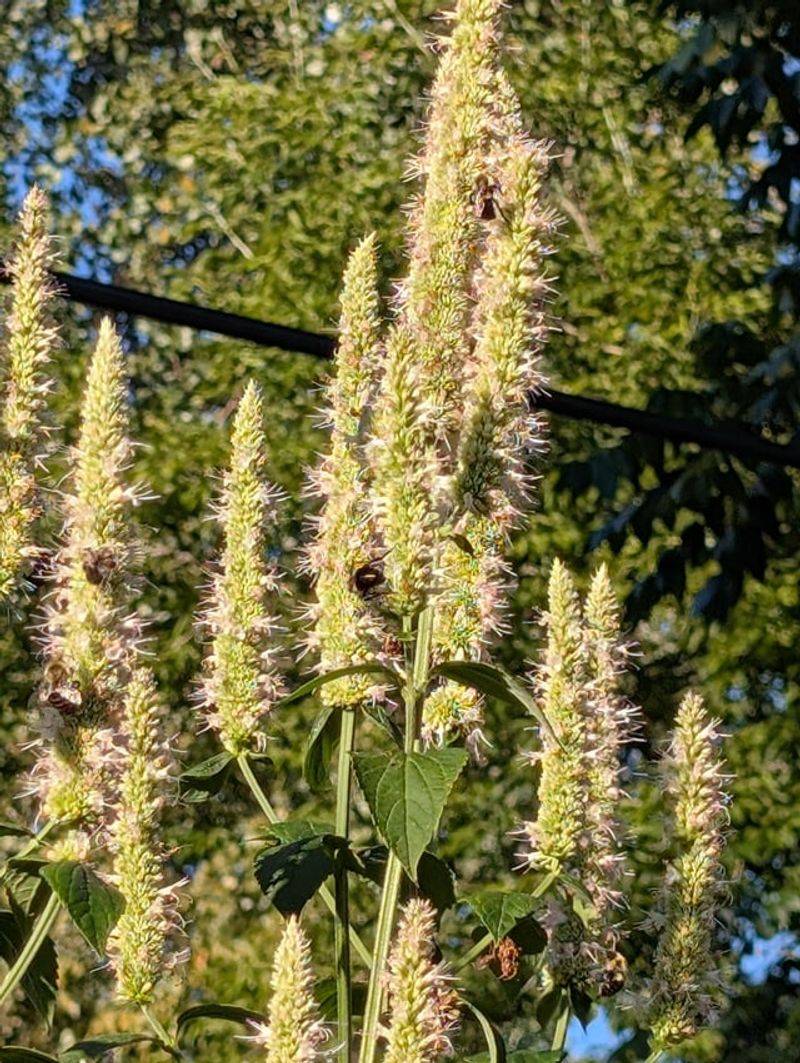
Tall plants with interesting flower spikes earn their place at the back of a naturalistic garden bed. Yellow Giant Hyssop, Agastache nepetoides, fits that role well.
This native herbaceous perennial can reach four to six feet in height, making it a structural plant that draws the eye upward.
Its flower spikes are pale yellow to greenish white, blooming from July through September, and they attract bumblebees and other long-tongued pollinators.
Agastache nepetoides is native to Ohio, found in rich woods, woodland edges, and disturbed areas with moist to medium soil. Fallen seed from mature flower spikes can produce volunteer seedlings where conditions allow.
Bare or lightly covered soil near the base of an established plant gives dropped seed the best contact it needs to germinate. A dense colony is unlikely to appear in a single season, but new plants can gradually build a naturalistic grouping over time.
Do not confuse Yellow Giant Hyssop with hybrid ornamental hyssops or other Agastache species sold at nurseries. Those are different plants with different growing habits.
Yellow Giant Hyssop prefers partial shade to full sun and moist to medium, rich soil. Leaving the tall seed heads standing through fall benefits both seed drop and overwintering insects.
At the back of a planting bed, this plant offers height, late-season interest, and a quiet return the following year from its own fallen seed.
4. Sweet Goldenrod Sows Its Own Fall Color
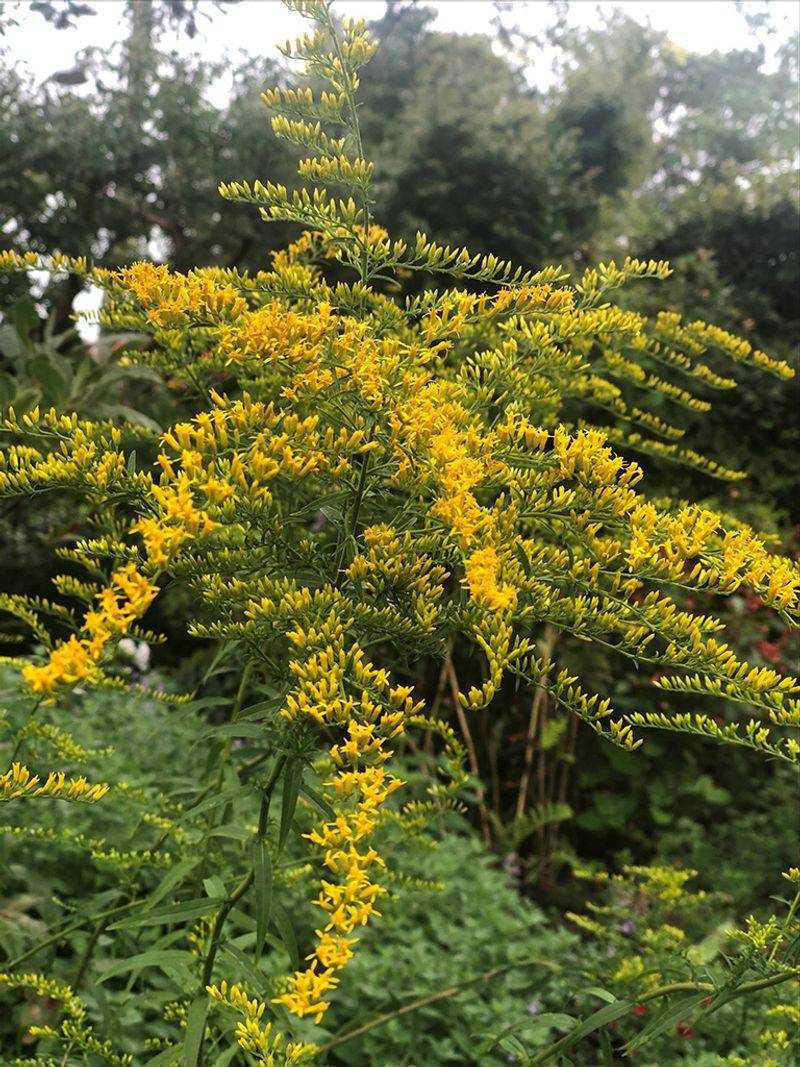
Fall arrives in the garden with a burst of yellow when goldenrod comes into bloom. Sweet Goldenrod, Solidago odora, is a native herbaceous perennial found in dry, open woods and sandy fields across parts of the eastern United States, including Ohio.
Its small bright yellow flowers appear on arching stems from August into October, providing late-season color when many other plants have finished blooming.
Sweet Goldenrod can spread through rhizomes underground, so not every new shoot in the area came from seed. However, the plant does produce seed that can disperse and establish new plants under suitable conditions.
Bare, dry soil in a sunny spot gives naturally dropped seed a reasonable chance to germinate. Do not describe every new shoot as a seedling, since rhizome spread is also a factor with this species.
A quick note on allergies: goldenrod is often blamed for fall hay fever, but its heavy, sticky pollen is carried by insects rather than wind. Ragweed, which blooms at the same time, is the more common culprit.
Sweet Goldenrod prefers full sun and dry to medium, well-drained soil with low fertility. Rich, moist soil tends to produce floppy stems.
Its anise-scented foliage sets it apart from many other goldenrod species. Letting the flower heads stand through fall allows seed to mature and scatter naturally into the surrounding garden.
5. Golden Alexanders Fill Gaps With Spring Seedlings
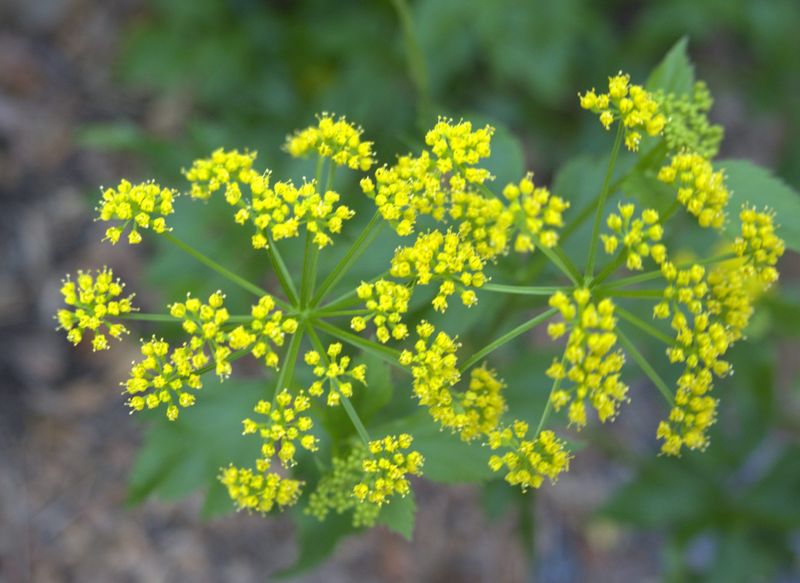
Tiny seedlings appearing between established plants in spring are one of the quiet pleasures of a naturalistic garden. Golden Alexanders, Zizia aurea, is a native herbaceous perennial that blooms early in the season, typically from April through June.
Its flat-topped clusters of bright yellow flowers are among the first to appear in a native garden. They also provide an early food source for native bees and other beneficial insects.
After flowering, Zizia aurea produces small green seed that matures by midsummer. Dropped seed can establish volunteer plants in the spaces between existing clumps over the following seasons.
This gradual filling of gaps gives a planting a natural, relaxed look without any deliberate spreading on the gardener’s part. Do not expect a solid groundcover from reseeding alone, as results depend on soil contact, moisture, and competition from nearby plants.
Golden Alexanders grows well in full sun to partial shade and adapts to a range of soil moisture levels, from medium to moderately wet. It is a good fit for rain garden edges or moist borders.
Black swallowtail butterfly caterpillars use Zizia aurea as a host plant, which adds another layer of wildlife value to this species. Leave the seed heads in place through midsummer instead of cutting the plants back early.
This gives naturally dropped seed the best chance to reach the soil and establish nearby.
6. Blue Vervain Reappears In Moist Garden Corners
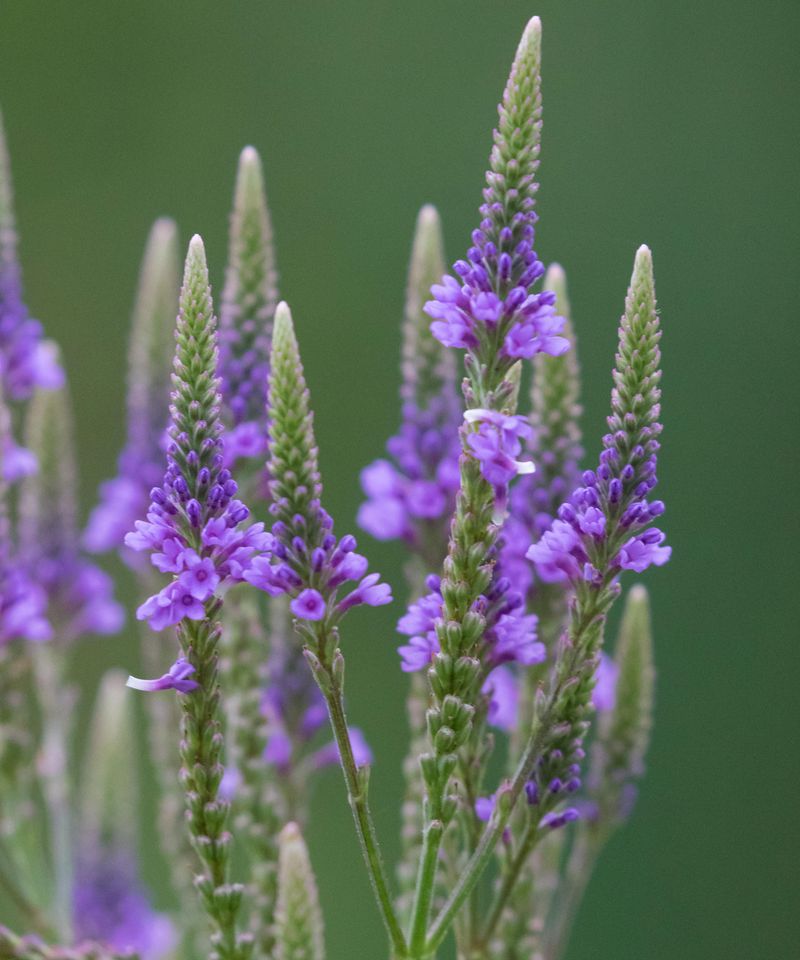
A damp corner of the garden that stays wet after rain is not wasted space. Blue Vervain, Verbena hastata, is a native herbaceous perennial that thrives in exactly those conditions.
Tall branching stems rise two to five feet and carry narrow spikes of small purple-blue flowers. The blooms open progressively from the bottom upward from July through September.
The effect is slender and vertical.
Blue Vervain is native to Ohio and found naturally along stream banks, wet meadows, and marshy edges. It can produce seed that drops to the ground at the end of the season.
In a moist garden spot with good seed-to-soil contact, volunteer plants may appear the following spring. Seedlings are more likely where the soil stays reliably damp and is not smothered by heavy mulch or dense competition from other plants.
Do not place Blue Vervain in a dry spot and expect it to reseed successfully. Moisture is not optional for this species.
Rain gardens, wet borders near downspouts, and low areas that collect runoff are all appropriate placements. Its flower spikes attract small native bees and other pollinators during the long bloom window.
Leaving the stems standing through winter also provides some seed for birds. Gardeners who work with the wet conditions in their yard rather than against them will find Blue Vervain a reliable returning presence over time.
7. Lyreleaf Sage Turns Bare Soil Into New Rosettes
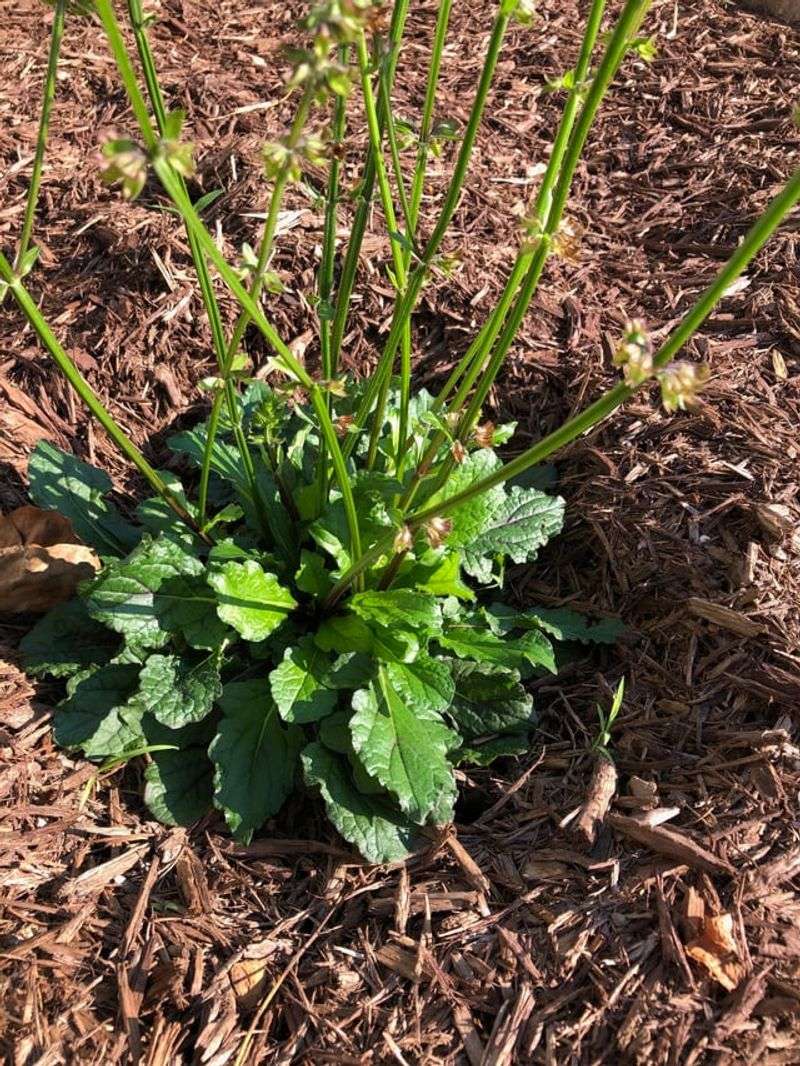
A small cluster of dark green, wavy-edged leaves appearing where nothing was planted is often the first sign that Lyreleaf Sage has decided to move in.
Salvia lyrata is a native herbaceous perennial found in open woods, roadsides, and disturbed ground across much of the eastern United States, including parts of Ohio.
It begins its life as a basal rosette, which is simply a low, flat cluster of leaves that grows directly from the base of the plant at soil level.
From that rosette, flower stalks rise in spring, reaching one to two feet tall and producing blue to violet tubular flowers from April through June. After flowering, seed matures on the stalks and can drop to bare or lightly covered soil nearby.
Open ground gives naturally dropped seed the best chance to make soil contact and germinate. Thick mulch can reduce those chances significantly, though removing mulch entirely is not necessary or advisable.
Lyreleaf Sage adapts to full sun, partial shade, or even fairly heavy shade, and it tolerates dry to medium soil reasonably well. Do not confuse it with nonnative ornamental Salvia species sold at garden centers.
Those are different plants. Volunteer seedlings from Lyreleaf Sage tend to appear as small rosettes in late summer or fall after seed has dropped.
Spotting those low clusters early helps gardeners decide which ones to keep and which to move before they become established.
8. Partridge Pea Returns From Its Own Seed
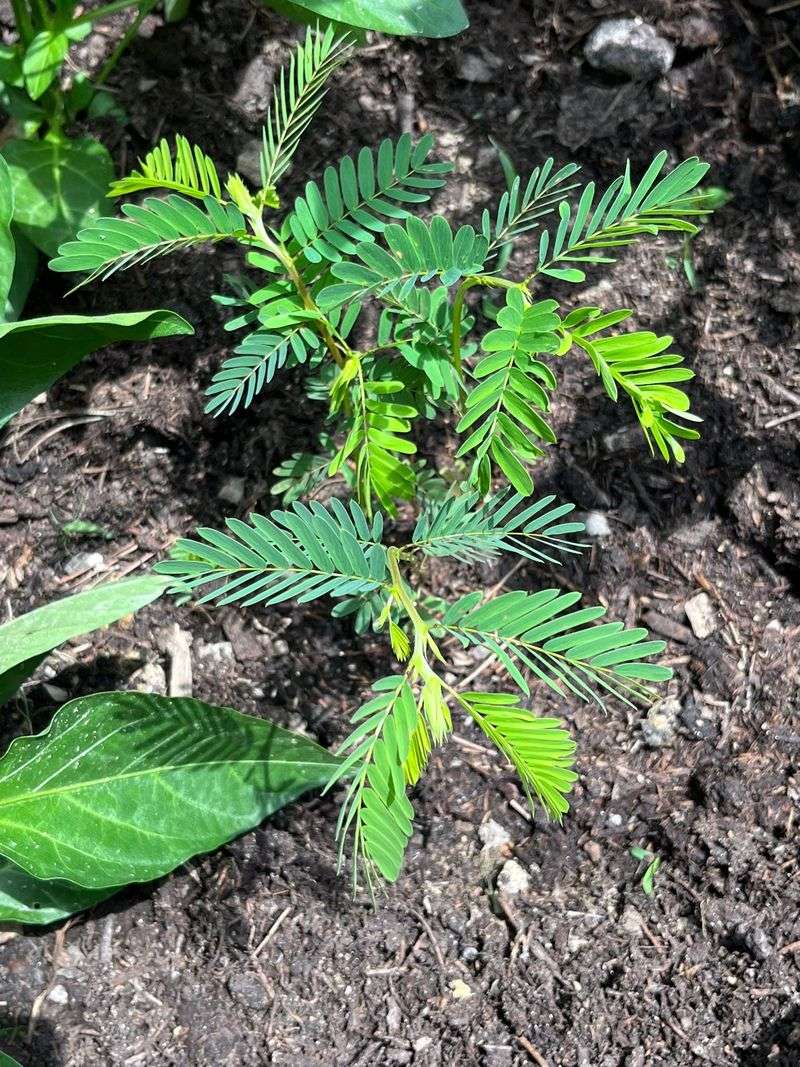
Unlike most of the plants in this article, Partridge Pea is not a perennial. Chamaecrista fasciculata is a native herbaceous annual, meaning each individual plant completes its entire life cycle within a single growing season.
The plant germinates, grows, flowers, sets seed, and finishes by fall. But here is what makes it worth including: it can return from its own seed the following year if conditions allow.
Partridge Pea produces bright yellow flowers with distinctive dark centers from July through September. Those flowers are followed by flat, narrow seed pods that mature and split open as the season ends.
Seed that falls to bare or lightly covered soil in a sunny spot has a reasonable chance of germinating the next spring. The returning seedlings are a new generation of plants, not the original plant coming back.
That distinction matters for setting realistic expectations.
Full sun and dry to medium, well-drained soil suit Partridge Pea best. Sandy or gravelly sites work well.
It is native to Ohio and valued for its flowers, which attract bumblebees and specialist native bee species. The foliage is also a larval host for several sulfur butterfly species.
Leaving mature pods on the plant rather than cutting them off gives seed the best chance to fall naturally. In a sunny dry garden, Partridge Pea can build a self-sustaining population over several seasons if a few pods are always left to ripen fully.