The Fast-Growing Pennsylvania Native That Screens A Yard By Next Summer
Privacy is one of the most consistent landscaping goals Pennsylvania homeowners have, and patience is usually the one thing in shortest supply when pursuing it.
The standard recommendation to plant something native and wait several years for meaningful screening is good advice in theory but genuinely unsatisfying when your yard feels exposed right now and next summer feels like it should be enough time to fix that.
There is a native Pennsylvania plant that takes that frustrating timeline and cuts it down significantly.
This fast growing native creates meaningful visual screening within a single solid growing season, reaching the kind of height and density that most privacy plantings take years to achieve.
Planted now, during the fall establishment window when Pennsylvania natives develop their strongest root systems before winter, it will be delivering real coverage by next summer rather than a hopeful suggestion of future privacy.
It’s ecologically valuable, well suited to Pennsylvania’s climate and soil conditions, and dramatically faster than most native alternatives.
American Elderberry Grows Fast Enough To Build Privacy Quickly
Few native shrubs can match the sheer hustle of American elderberry when it comes to putting on size. Sambucus canadensis is known among gardeners and naturalists alike for its remarkable ability to shoot upward in a single growing season.
Under good conditions, a young plant can gain four to eight feet of new growth in just one year.
That kind of speed is rare in the shrub world, and it makes elderberry a go-to choice for homeowners who want results fast. You do not have to wait three or four years just to see a hint of screening.
By the end of the first full growing season after planting, you will already notice a meaningful difference in your yard’s privacy.
Starting with healthy, container-grown plants from a native plant nursery gives you the best jump. Plants that are already one or two years old tend to settle in quickly and begin pushing new growth within weeks of planting.
Bare-root plants work well too, especially when planted in early spring before the growing season kicks off.
Elderberry responds well to a little extra care in that first year. Watering consistently during dry spells and adding a layer of mulch around the base helps the roots establish faster.
Once roots are settled, the plant basically takes care of itself and focuses all its energy on growing up and outward.
If you plant a row of elderberry shrubs in spring, do not be surprised to look out your window by late summer and see a green wall rising where there was nothing before. Speed is one of elderberry’s greatest gifts.
Its Multi-Stemmed Habit Creates A Dense Screen
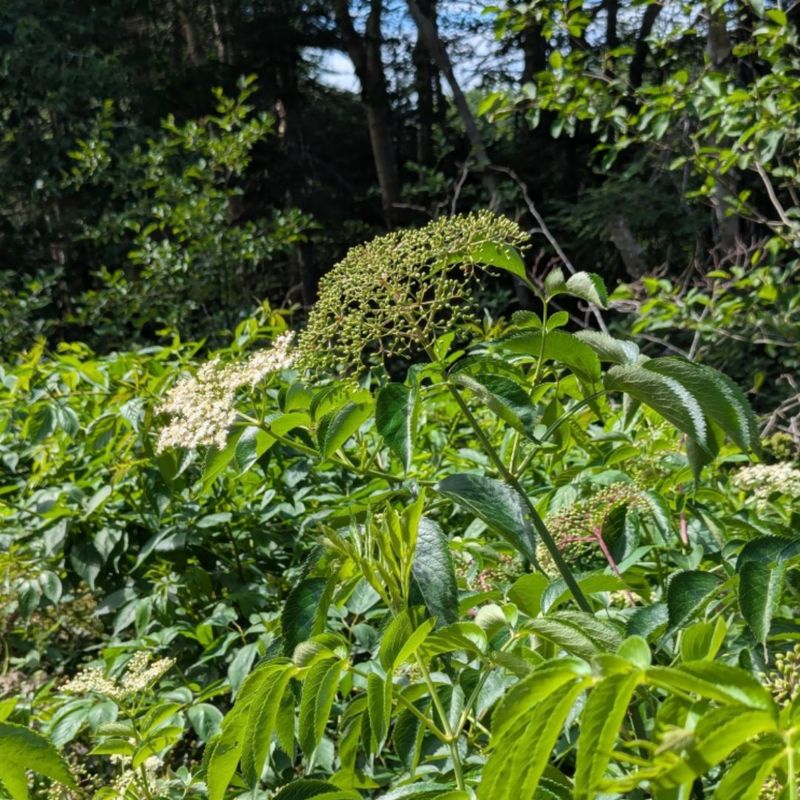
One of the things that makes American elderberry so effective as a privacy screen is the way it naturally grows. Unlike a single-trunk tree that leaves gaps at the bottom, elderberry pushes up multiple stems from the base.
Each plant becomes a broad, bushy clump that fills in from ground level all the way to the top.
Your Pennsylvania Garden Changes Every Week. Your Plan Should Too.
Gardening in Pennsylvania changes quickly throughout the season. Every Friday you’ll receive a simple weekly plan showing exactly what to plant, prune, fertilize, harvest, and protect so you never miss the right timing.
That low-to-the-ground fullness is exactly what you want when you are trying to block a neighbor’s view or hide an ugly fence. Many fast-growing plants get tall quickly but stay thin and leggy near the base.
Elderberry avoids that problem entirely because of how its stems branch and layer over each other as the shrub matures.
When you plant several elderberry shrubs in a row, the effect multiplies. Each plant spreads outward through a process called suckering, where new shoots emerge from the roots near the base of the parent plant.
Over time, those suckers fill in the gaps between individual plants and create one continuous, unbroken wall of green.
Spacing plants about five to six feet apart when you first put them in gives each shrub enough room to grow while still allowing the row to knit together within a season or two.
Tighter spacing creates faster coverage, while wider spacing gives each plant more room to express its full, rounded shape.
Pruning is optional but can be helpful. Cutting the oldest stems back to the ground every few years encourages younger, more vigorous growth to take over. That keeps the screen looking full, fresh, and healthy rather than woody and thin over time.
It Handles Moist Pennsylvania Soils Especially Well
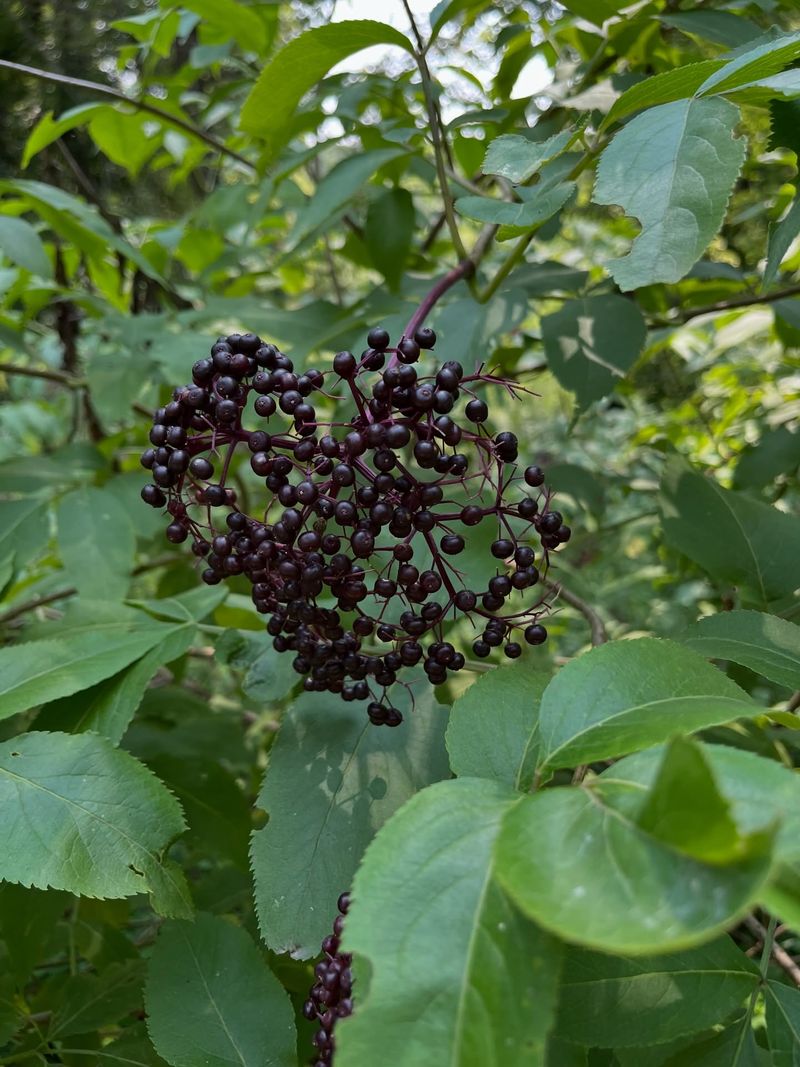
Pennsylvania is no stranger to wet, soggy ground. Whether it is a low spot that collects runoff after every rainstorm or a yard edge that stays damp for days at a time, many homeowners struggle to find plants that can handle that kind of moisture without suffering.
American elderberry was practically made for those conditions. In the wild, you often find elderberry growing along stream banks, the edges of wetlands, and in low-lying meadows where water tends to sit.
It has adapted over thousands of years to thrive in exactly the kind of moist, fertile soil that gives other shrubs fits.
Rather than struggling with wet feet, elderberry actually puts that moisture to work by fueling faster, lusher growth.
That makes it a smart pick for rain gardens, bioswales, or any planting area designed to capture and filter stormwater runoff. Elderberry’s deep, spreading root system helps hold soil in place along slopes or near drainage channels where erosion can be a problem.
It is doing real environmental work while also looking great. Even in average garden soil, elderberry does just fine as long as it gets regular moisture during its first season. It is not picky about soil pH and tolerates a fairly wide range of conditions.
Slightly acidic to neutral soils common across much of Pennsylvania suit it well without any amendments needed.
If you have a corner of your yard that stays wet and you have given up on planting anything there, elderberry is worth a serious look. It turns a problem area into a productive, beautiful, and wildlife-friendly privacy screen with very little fuss.
Full Sun Produces The Strongest Growth
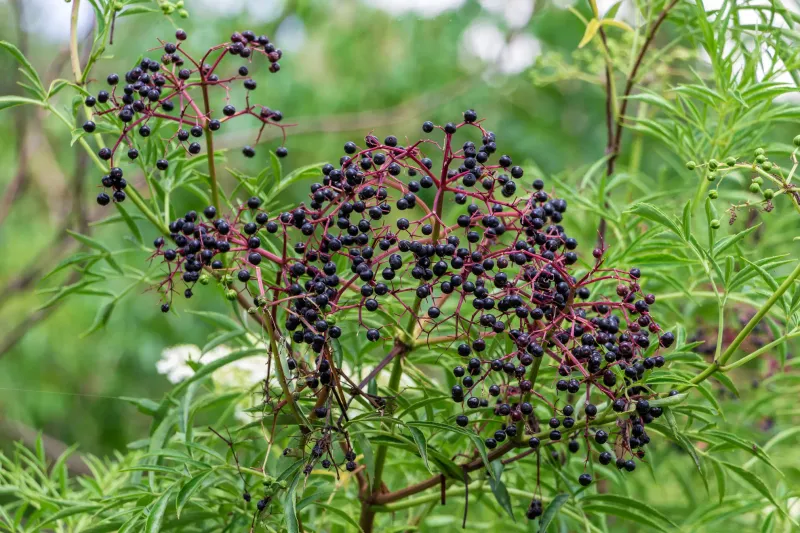
Sunlight is one of the biggest factors in how well American elderberry performs as a privacy screen.
While the plant is flexible enough to handle partial shade, it truly shines when it gets six or more hours of direct sunlight each day. Full sun brings out the best in this shrub in almost every way.
Plants growing in full sun tend to push more stems, develop fuller branching, and produce denser foliage compared to those growing in shadier spots. That translates directly into a thicker, more effective privacy screen.
If blocking views is your main goal, choosing the sunniest spot available on your property gives you the fastest and most satisfying result.
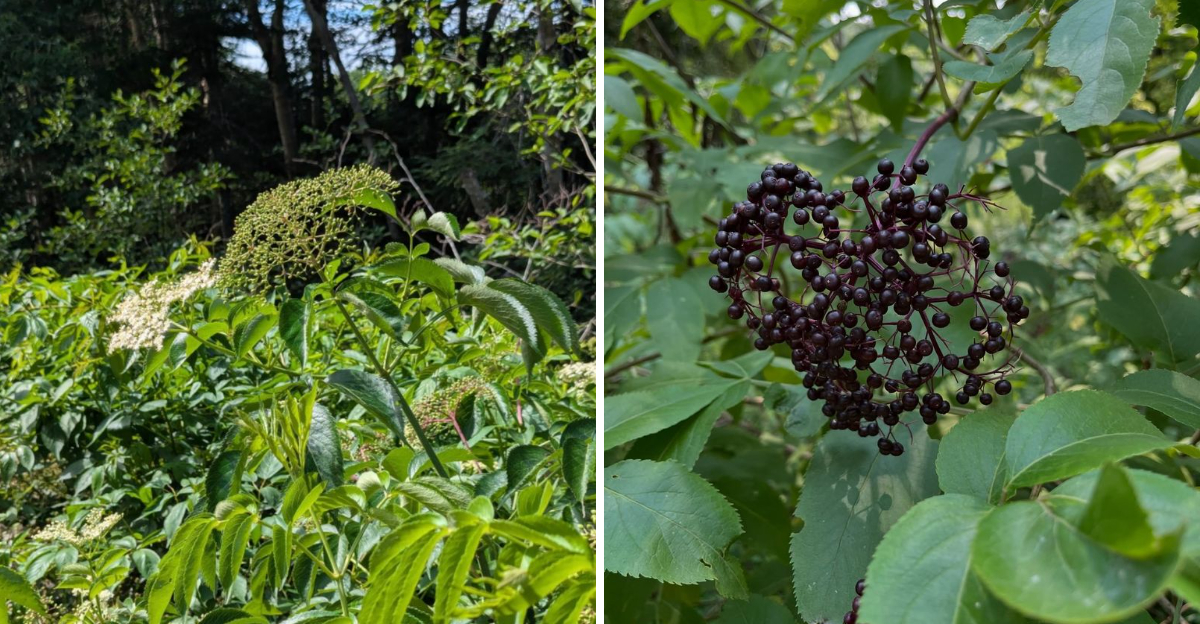
Flower production also goes up significantly in full sun. Those large, flat-topped clusters of white blooms that appear in early summer are far more abundant on plants that get plenty of light.
More flowers mean more berries later in the season, which is great news for the birds, butterflies, and other wildlife that depend on elderberry as a food source.
Partial shade is not a deal-breaker, especially if full sun is not available in your yard. Elderberry planted under light tree canopy or along the shadier side of a building will still grow and screen reasonably well.
Just expect somewhat slower growth and a slightly less dense habit compared to plants in open sunny conditions.
One practical tip: if you are planting along a fence or property line, observe how the sun moves across that area throughout the day before you plant.
Even a few extra hours of sun exposure can make a noticeable difference in how quickly and fully your elderberry screen fills in.
Flowers And Berries Add Wildlife Value
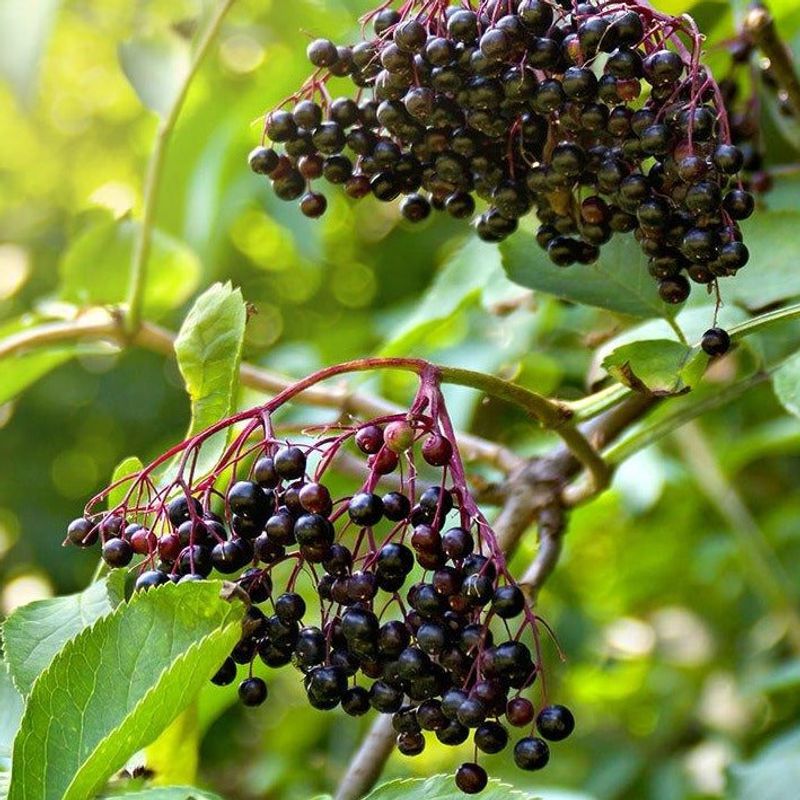
Picture this: it is a warm June morning, and your elderberry hedge is absolutely buzzing. Flat-topped clusters of tiny white flowers cover nearly every branch, and native bees, butterflies, and other pollinators are moving from bloom to bloom in a constant, cheerful swirl of activity.
That is the kind of backyard moment elderberry delivers every single summer. American elderberry is considered one of the top native shrubs for supporting pollinators in the eastern United States.
Its flowers produce abundant nectar and pollen that attract dozens of native bee species, including bumble bees, sweat bees, and mason bees.
Butterflies and moths visit regularly too, making the shrub a genuine hub of pollinator activity during its bloom period.
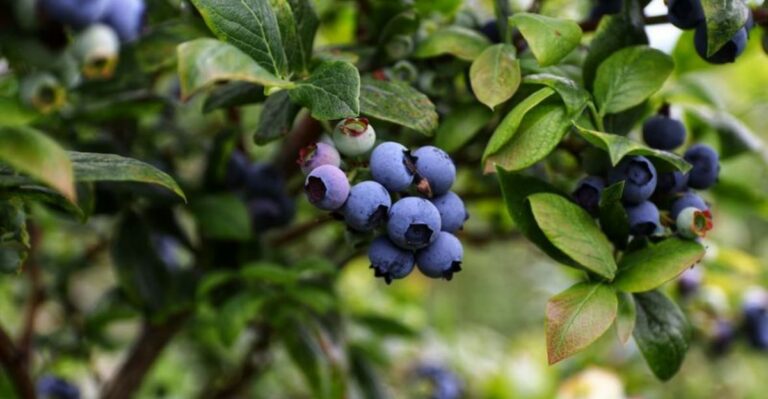
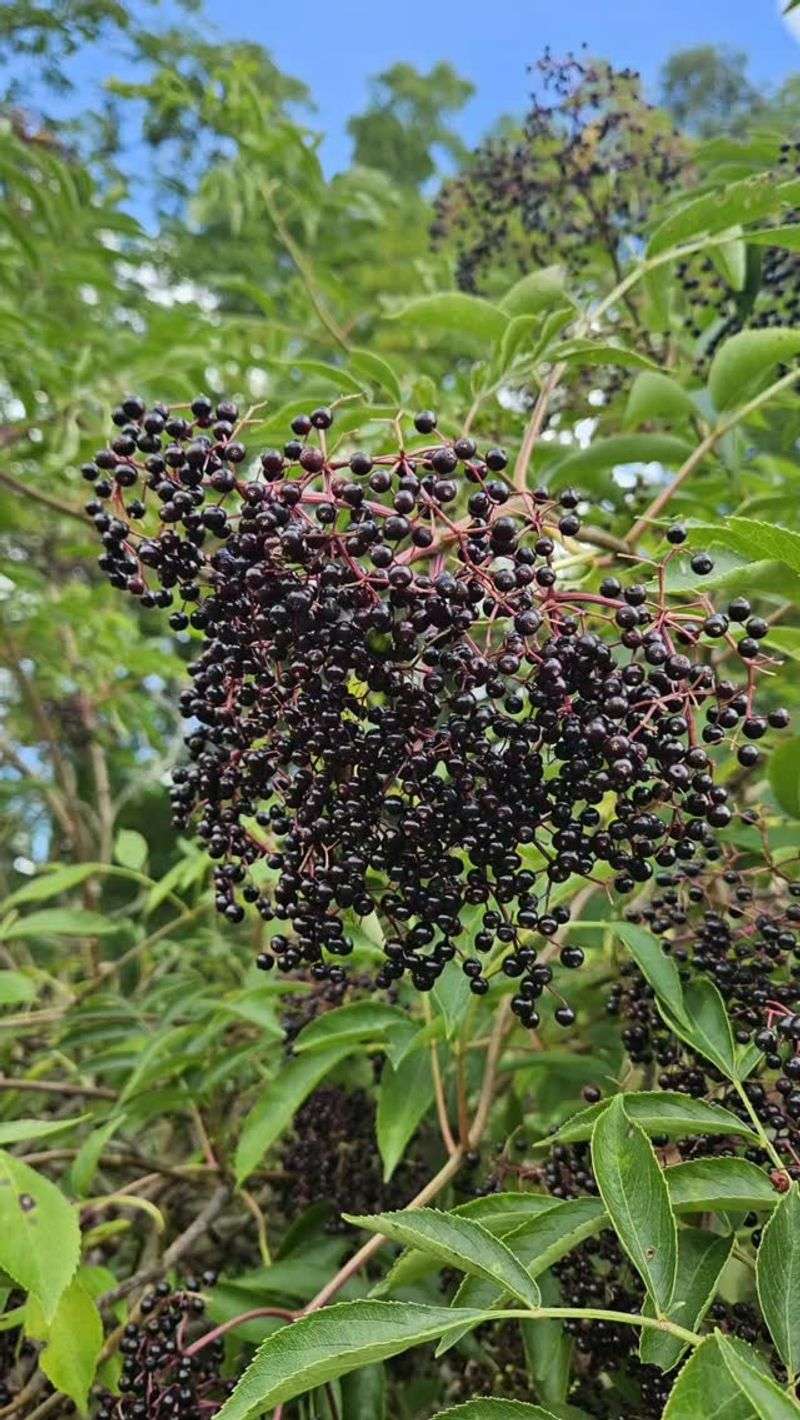
By late summer, those flower clusters transform into heavy drooping bunches of small, dark purple-black berries. That is when the birds show up in force.
Cedar waxwings, American robins, gray catbirds, and many species of migratory songbirds descend on elderberry plants to feast on the ripe fruit. A well-established hedge can feed dozens of birds in a single day during peak migration season.
Beyond birds and bees, more than 50 species of wildlife are known to use American elderberry in some way, whether for food, shelter, or nesting. That makes it one of the most ecologically valuable shrubs you can plant in a Pennsylvania yard.
For people, the berries have a long history of use in jams, syrups, and elderberry wellness preparations.
Just make sure to cook the berries before eating them, as raw elderberries can cause stomach upset. The flowers are also edible and sometimes used to make elderflower cordial or fritters.
Give It Room To Spread
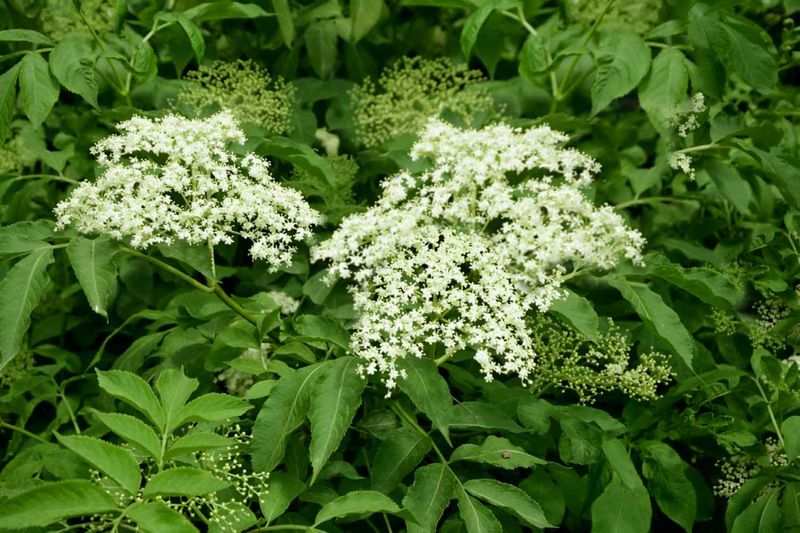
American elderberry is not a shrub that likes to stay in one neat, tidy spot. Over time, it spreads by sending up new shoots, called suckers, from its root system.
Those suckers pop up around the base of existing plants and gradually widen the colony. For a natural, informal privacy screen, that spreading habit is actually a feature, not a problem.
Giving elderberry enough space to do its thing makes all the difference. Planting it along a back fence line, a property boundary, or the edge of a wooded area allows it to spread freely without crowding out garden beds or getting too close to structures.
A strip of ground that is at least eight to ten feet wide gives the shrubs plenty of room to grow and sucker without causing headaches.
If spreading does become an issue in a more formal part of your yard, managing suckers is simple. Young shoots can be cut off at ground level or pulled up by hand when they appear.
Doing this once or twice a season keeps the colony contained without harming the parent plants.
Mowing around the outside edge of your elderberry planting regularly is another easy way to limit spread. The lawn mower takes care of any suckers that venture beyond the designated area, and you never have to think about it twice.
Elderberry works beautifully in naturalized areas, rain gardens, wildlife corridors, or along the back edges of larger properties where a relaxed, spreading shrub is exactly what the space calls for.
Let it do what it does naturally, and it will reward you with a lush, living screen that grows richer and fuller with every passing year.