The Shrub Ohio Birds Help Spread Every Time They Eat Its Fall Berries
Every bird that stops by your Ohio yard this fall might be doing you a favor and causing a problem at the exact same time.
One shrub produces berries birds can’t resist, and that popularity comes with a catch most homeowners never connect. Birds eat, fly off, and drop seeds far from your yard, often into forests and natural areas where this plant takes hold without any help from you.
What looks like a simple feeding stop turns into free transportation for a shrub spreading well past property lines.
You might love watching birds flock to your yard each October, unaware that the very shrub pulling them in is quietly expanding its reach with every visit.
Take a closer look at what’s feeding those birds this fall. The shrub you planted for color might be doing a lot more traveling than you realize.
1. Meet Burning Bush, Ohio’s Invasive Berry Shrub
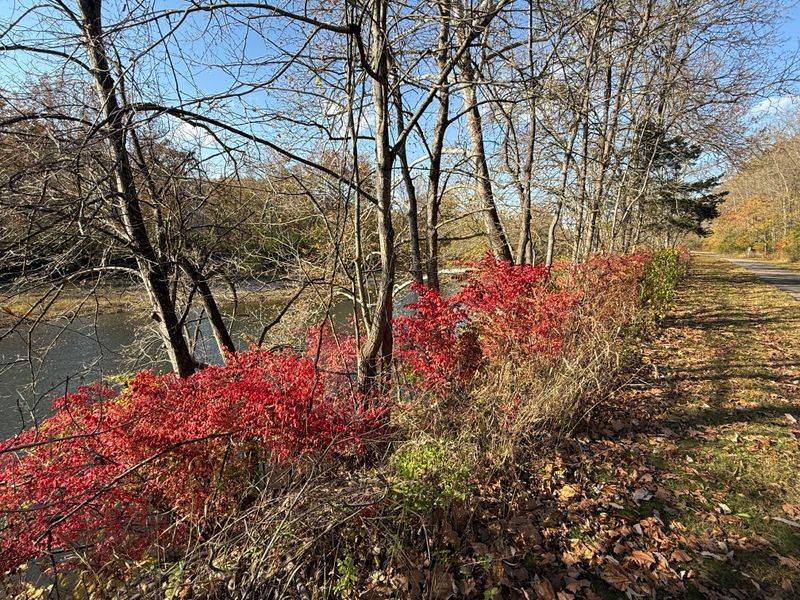
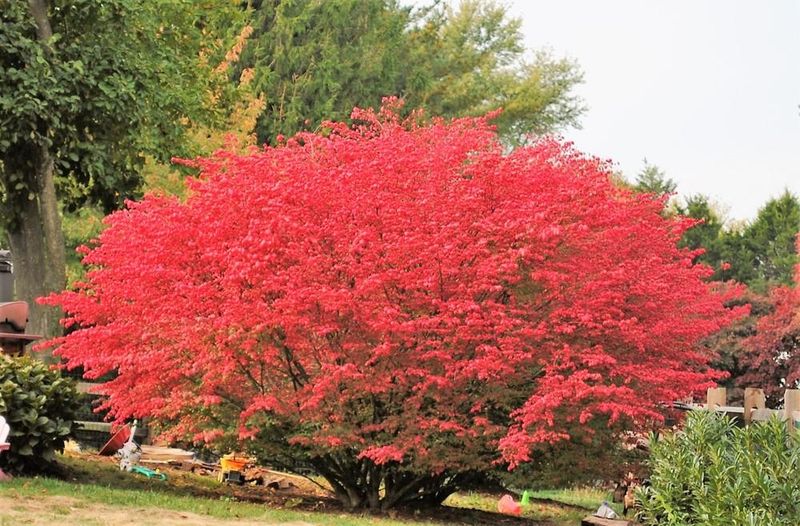
Gardeners fell hard for this shrub, and it is easy to understand why. Euonymus alatus turns a fire-engine red every October that makes neighbors slow their cars.
Native to central China and Korea, it arrived in North America in the 1860s purely for looks. Nurseries loved how tough it was, since it shrugs off poor soil, heavy clay, sun, and shade alike.
Size varies quite a bit depending on the variety and the spot. Plants can reach anywhere from 5 to 15 feet tall and spread about as wide, which surprises folks who planted a tidy little foundation shrub.
Want to identify one for sure? Check the twigs.
Corky ridges, often called wings, run lengthwise along the green-to-brown stems, and that feature gives the plant its winged euonymus nickname. Leaves grow in pairs, look oval, and have fine teeth along the edges.
Here is the twist. Ohio and several other eastern and midwestern states list this shrub as invasive, yet as of 2025 it can still be purchased at garden centers here.
The Ohio Invasive Plants Council has flagged its strong potential to keep spreading. Knowing what grows in your landscape is the first practical step toward making a smarter choice.
2. See Why Birds Feast On Its Fall Fruit
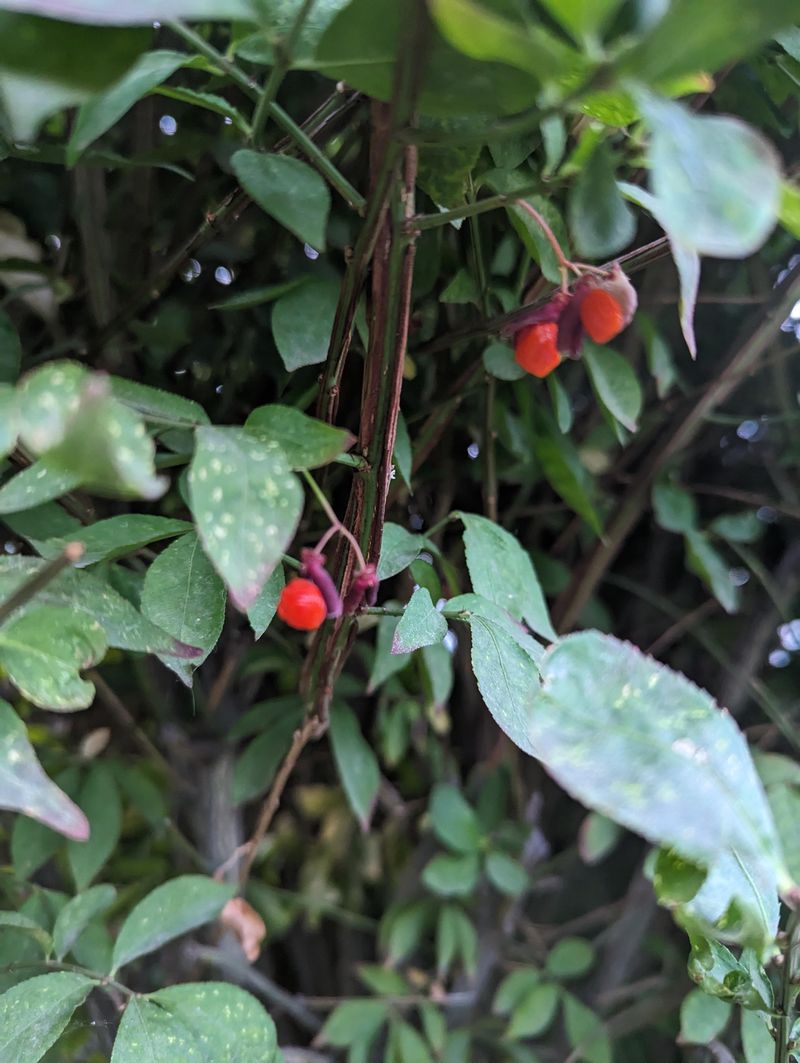
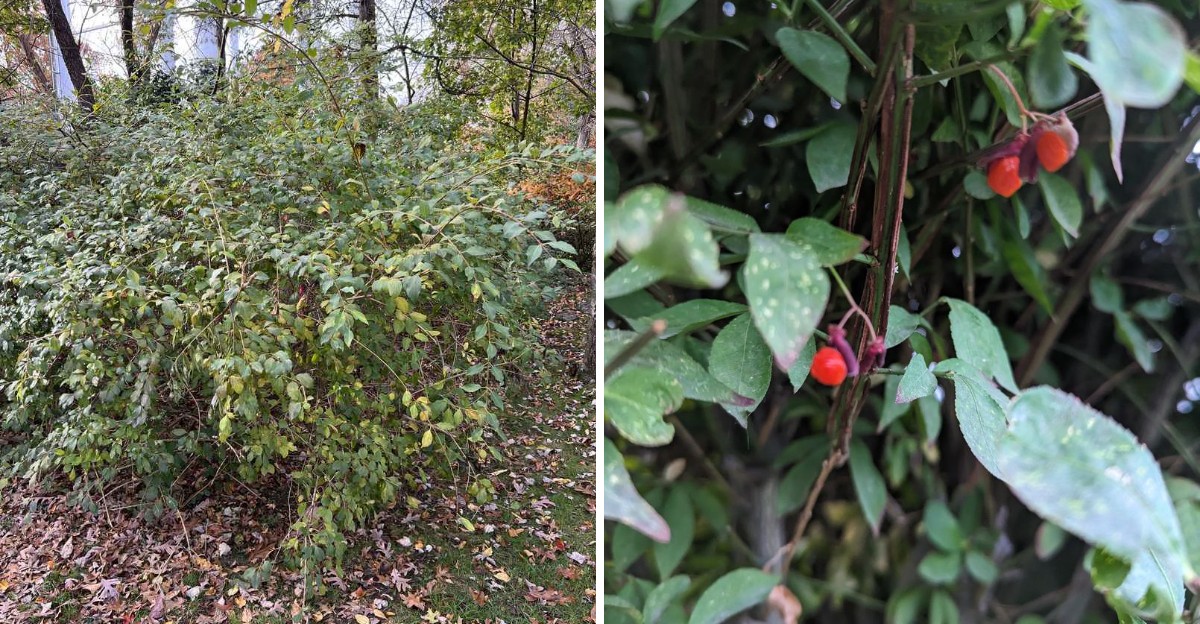
Picture a robin working its way through a hedge on a chilly November morning. The shrub is covered in small red capsules that pop open when ripe, showing off seeds wrapped in a glossy orange-red coating called an aril.
That flash of color acts like a neon sign for hungry birds. Up to four seeds hide inside each capsule, and the fleshy covering looks like a reward worth grabbing.
Ripening starts in late summer and stretches through fall, lining up neatly with the season when birds need fuel most. Migration burns enormous energy, and every stop counts.
Here is where the story gets disappointing. Research on invasive shrub fruit shows these berries carry little fat and modest energy compared to what birds truly need.
Native berries can provide a more varied and nutritious food supply for birds than many non-native fruits. Think of it as the difference between a handful of plain crackers and a proper meal before a marathon.
Your Ohio Garden Changes Every Week. Your Plan Should Too.
Gardening in Ohio changes quickly throughout the season. Every Friday you’ll receive a simple weekly plan showing exactly what to plant, prune, fertilize, harvest, and protect so you never miss the right timing.
Birds tend to eat burning bush fruit more often when better choices are missing from the neighborhood. In a yard full of lawn, pavement, and non-native hedges, a mediocre berry becomes the only option on the menu.
Offering richer alternatives changes that equation quickly and rewards the birds doing the traveling.
3. Follow How Seeds Travel Beyond The Yard
One shrub in a front yard rarely stays just one shrub. Seeds are the main way this plant reproduces, and it produces them in impressive numbers year after year.
Birds handle the delivery service. After swallowing those aril-coated seeds, a bird can carry the seeds well beyond the original planting before they pass through and land somewhere new.
What makes the system so effective is what happens during digestion. Passage through a bird’s gut can actually improve the odds that a seed will sprout, softening the coating and prepping it for germination.
So a tidy hedge trimmed twice a summer can still seed a woodlot across town. Distance means very little when the courier has wings.
Homeowners often assume that because they see no seedlings in their own mulch, the plant is behaving itself. The real evidence usually shows up somewhere nobody is watching, like a fencerow or a creek bank.
Wind, water, and mowers move a few seeds too, but birds do the heavy lifting.
Once you picture that invisible network of flight paths connecting your yard to every park and preserve nearby, planting decisions start to feel less private and a lot more neighborly.
4. Spot New Seedlings Beneath Established Shrubs
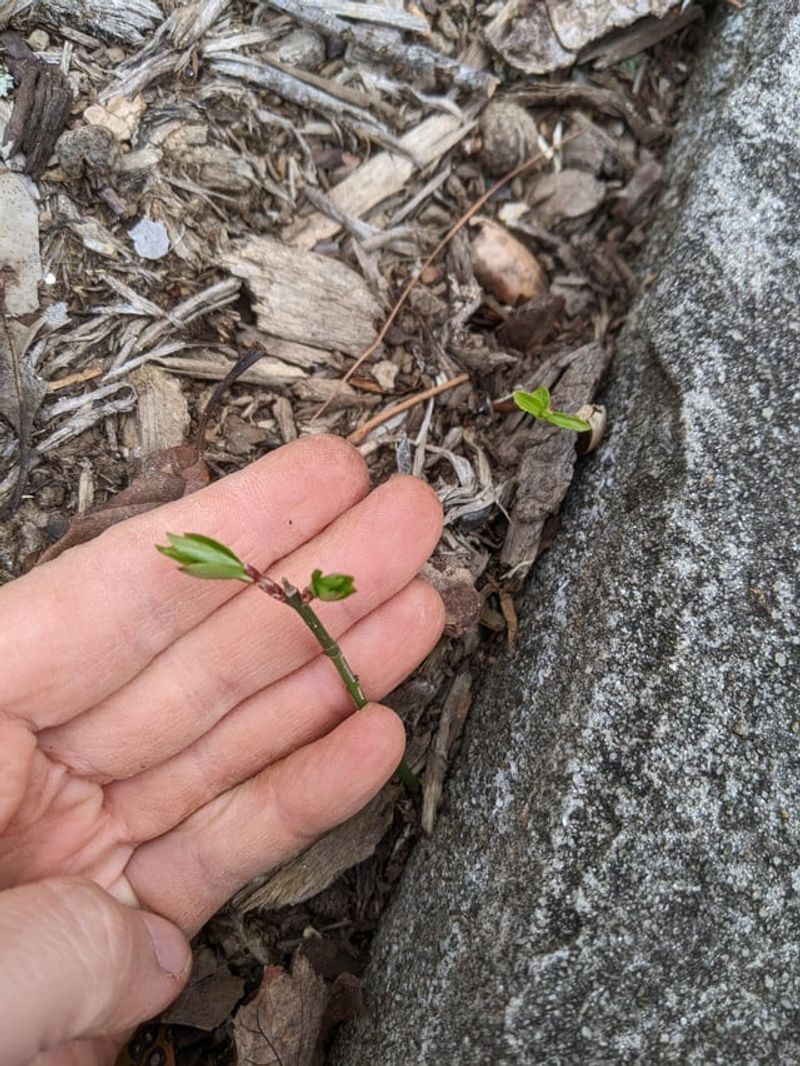
Crouch down and peek under a mature specimen sometime in late spring. Chances are good you will find a carpet of little seedlings with paired oval leaves crowding the mulch.
Scientists call that pattern a seed shadow. Plenty of seeds fall straight down or get dropped by birds perching right overhead, so the thickest crop of babies appears within a few feet of the parent.
In a garden bed, those seedlings look harmless and pull easily. In a woods, the same cluster becomes a dense thicket of young stems that crowds the forest floor.
Deer add another wrinkle to the story. Native seedlings often get browsed heavily, while burning bush seedlings face less pressure, so they grow up with fewer competitors around them.
Give that situation a few seasons and a shady understory that once held spring wildflowers and young native trees fills in with a single species.
Practical tip for homeowners: make a habit of scanning under your shrubs each May. Seedlings less than a foot tall slide out of moist soil with barely any effort, roots and all.
Ten minutes of pulling in spring saves hours of sawing and digging later, and it stops the seed shadow from stretching any farther.
5. Watch For Escapes Along Woods And Edges
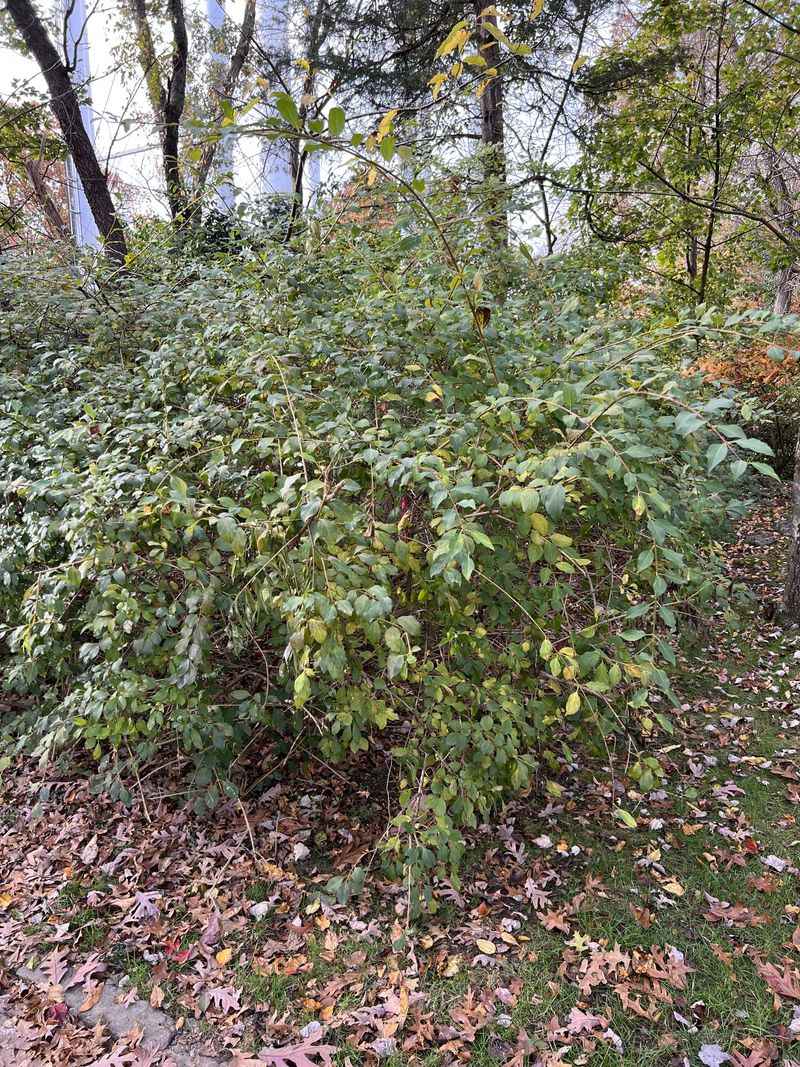
Take a walk along a rural fencerow in late October and the escapees announce themselves. Those scattered scarlet shrubs glowing at the treeline were planted by birds, not people.
Records from across the eastern states document this plant jumping the garden fence regularly. It settles into unmanaged ground in cities, suburbs, and the countryside alike.
Habitat preferences are frustratingly broad. Forests, woodland edges, old fields, roadsides, fencerows, pastures, some prairies, and even wetland margins all host populations.
The trait that really sets it apart is shade tolerance. Deep shade stops many aggressive plants cold, but this one settles comfortably beneath a closed forest canopy where sunlight barely reaches the ground.
That ability lets it reach the interior of mature woods, places that often stay safe from other troublesome species. Preserves with healthy tree cover are not automatically protected.
Fall is the easiest time to survey your area, because the red foliage stands out against browns and greens like a highlighter mark. Land managers in Ohio use exactly that trick when mapping populations.
If you spot young plants on property you own or help maintain, note the locations while they are visible. Coming back in spring with that map makes removal far quicker and far more thorough.
6. Understand Why Native Plants Lose Ground
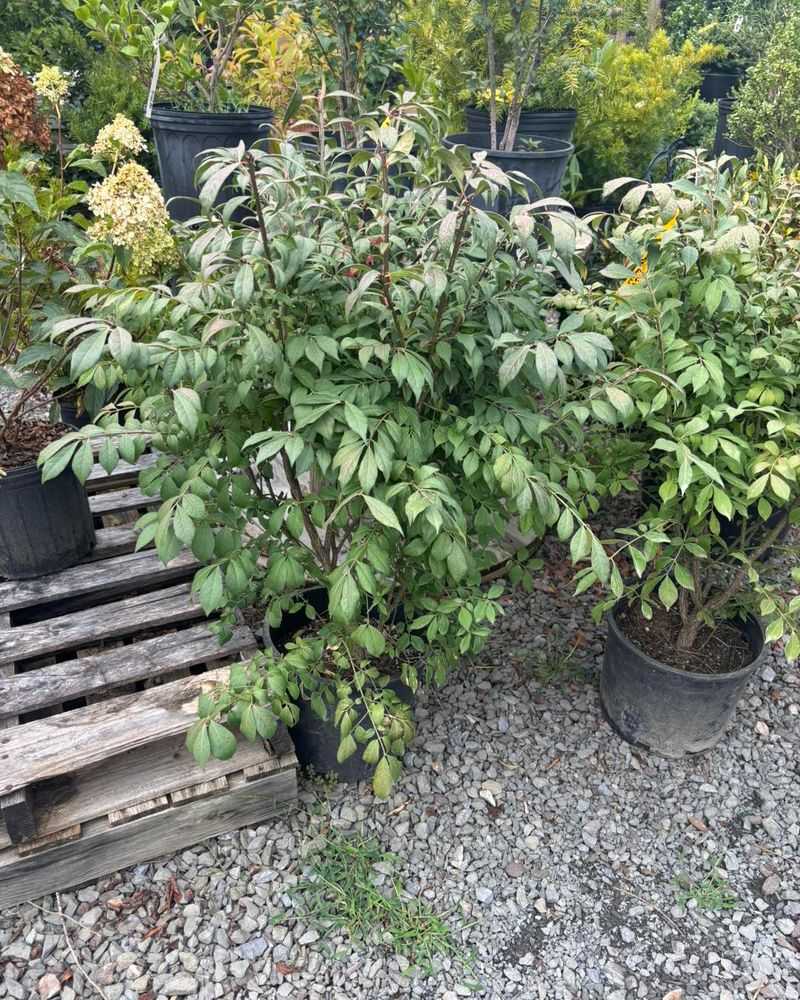
Competition in a forest comes down to light, space, and timing. Burning bush can gain an advantage in all three areas, helping it crowd out native plants as thickets become established.
Dense thickets form as seedlings mature side by side. Trilliums, mayapples, spicebush, and young tree saplings simply run out of room beneath that solid layer of branches.
Timing gives the shrub an extra edge. Leaves unfurl earlier in spring and hang on later in fall than most native shrubs manage, stretching the growing season by weeks on both ends.
Those extra weeks mean extra sunlight captured while everything else is bare. Over several years, that advantage compounds into dominance.
Biodiversity takes the hit. Fewer plant species means fewer insects, fewer caterpillars, and a habitat structure that no longer supports the variety of wildlife it once did.
Birds feel it too, in a roundabout way. Fruit low in fat may not supply the energy migration demands, so a landscape packed with these berries can shortchange the very travelers spreading the seeds.
None of this happens overnight, which is part of the challenge. Change creeps in season by season until a woodlot that once bloomed with spring ephemerals holds mostly one shrub and bare ground.
7. Replace Burning Bush With Ohio Native Shrubs
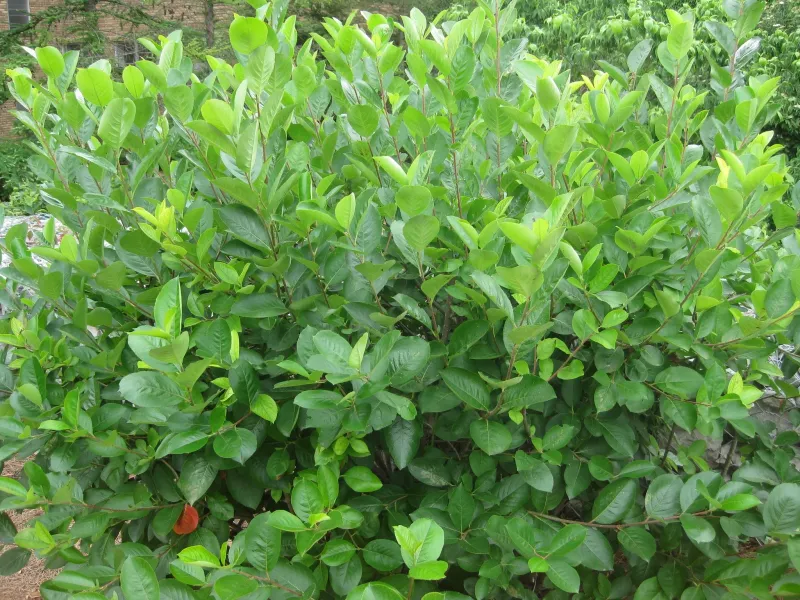
Worried about losing that famous fall color? Ohio natives deliver reds every bit as loud, plus berries that actually nourish wildlife.
Chokeberry, both red and black types, flames orange-red in autumn and holds fruit into winter. Fragrant sumac turns scarlet and works beautifully on slopes or dry banks where little else thrives.
For a shrub with similar structure, try arrowwood viburnum, with clean foliage, white spring flowers, and blue-black berries birds adore. Serviceberry adds early blossoms plus sweet June fruit people enjoy too.
There is even a native cousin worth meeting. Eastern wahoo, Euonymus atropurpureus, offers rosy fall leaves and unusual pink capsules without the invasive baggage.
Other strong picks for yards include spicebush, winterberry holly, red twig dogwood, fothergilla, highbush blueberry, American hazelnut, and American beautyberry.
Thinking bigger? Pawpaw, hawthorn, black cherry, and eastern red cedar all pull double duty as wildlife magnets and landscape anchors.
Matching the plant to the site matters more than matching it to a catalog photo. Winterberry likes moisture, fragrant sumac prefers things dry, and spicebush is happiest in dappled shade.
Swap one shrub this season rather than redoing everything at once. Small changes add up fast across a neighborhood.
8. Remove Existing Plants Before They Seed
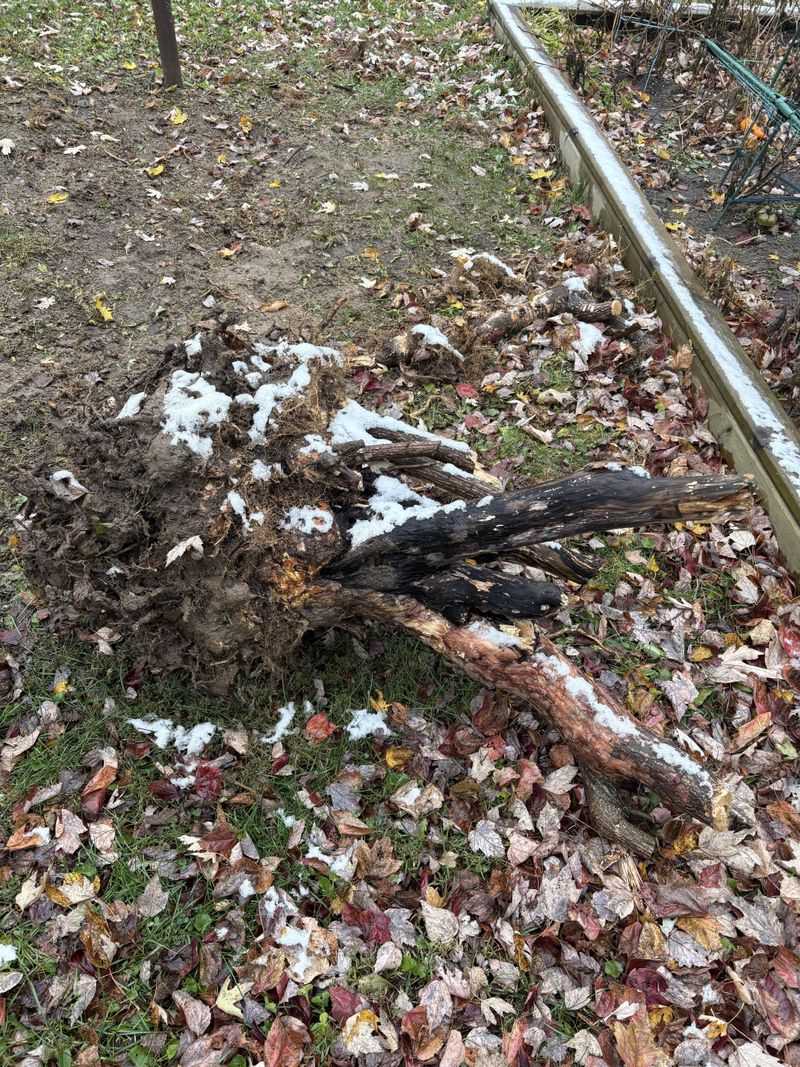
Timing beats muscle on this job. Getting plants out before fruit ripens stops the next wave of seeds from ever reaching a bird’s beak.
Early detection and quick action save enormous effort later. A seedling handled this year will not become a fifty-pound root ball three years from now.
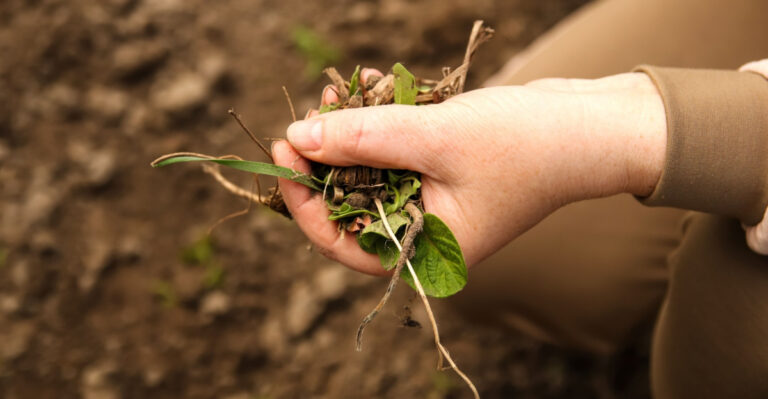
Small plants come out by hand, especially after rain when soil stays soft. Grab low, pull steadily, and check that the whole root system came along, since leftover roots can resprout.
Tools help with stubborn stems. A spading fork loosens the ground, and a weed wrench gives leverage on anything thicker than a pencil.
Large shrubs need a different approach. For larger shrubs, cut-stump treatment may be an option, using a product labeled for that use and following all label directions.
Foliar sprays work too but use more product and risk drifting onto plants you want to keep. Follow label directions carefully whichever route you choose.
One more step people skip: monitoring. Seeds already in the soil can sprout later, and treated stems sometimes push new shoots, so revisit the area for at least two years.
Replant the gap promptly with something native and the site fills in on your terms.
9. Give Birds Better Native Berry Options
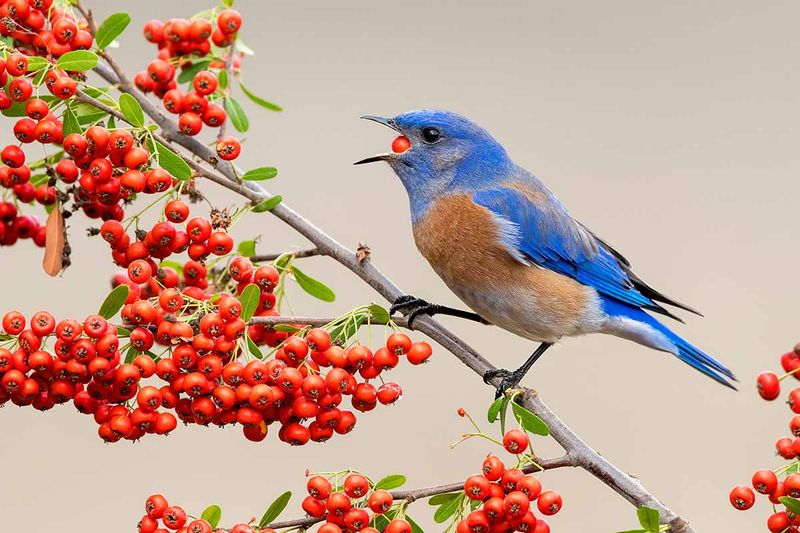
Feeding birds well goes beyond the seed feeder on the deck. Native fruit generally carries more fat, more carbohydrates, and better nutrients than the invasive stuff birds settle for.
During migration, fat is currency. A bird crossing hundreds of miles needs dense fuel, and berries from serviceberry, chokeberry, elderberry, and viburnums deliver exactly that.
Timing varies nicely among natives, which is part of the fun. Serviceberry ripens in June, elderberry in late summer, and winterberry holly hangs on through snow for the birds that stick around.
Berries tell only half the story though. Native plants host caterpillars and other insects, and those soft-bodied bugs are the protein that nestlings depend on during their first weeks.
A chickadee pair may gather thousands of caterpillars to raise a single brood. No berry, native or not, can substitute for that.
Solid choices for Ohio yards include spicebush, sumac, hawthorn, blueberries, eastern red cedar, and the viburnum trio of arrowwood, blackhaw, and American cranberrybush.
Plant in small groups rather than single specimens so fruit is easy for birds to find and harvest. Layering shrubs beneath trees creates cover too, which matters as much as food.
Do that, and your autumn show comes with a soundtrack of wings.