Native Ohio Plants For Containers That Actually Come Back Next Year
Container gardening in Ohio runs on annuals, and the math never quite works out in the gardener’s favor. Buy them in spring, enjoy them through summer, pull them in fall, start over next year.
The containers look great but the cycle never ends and the cost adds up faster than most people track. Native plants break that cycle in a way most container gardeners never consider.
Several natives are hardy enough to overwinter in containers with minimal protection and come back the following season with more presence than the year before. The key is knowing which ones actually pull it off.
Not every native handles container life through an Ohio winter. The ones that do have specific requirements that determine whether they come back strong or do not come back at all.
A container planting that returns on its own is a different kind of investment. Ohio natives make that possible more often than most gardeners realize.
1. Choose Wild Columbine For Spring Color That Can Return
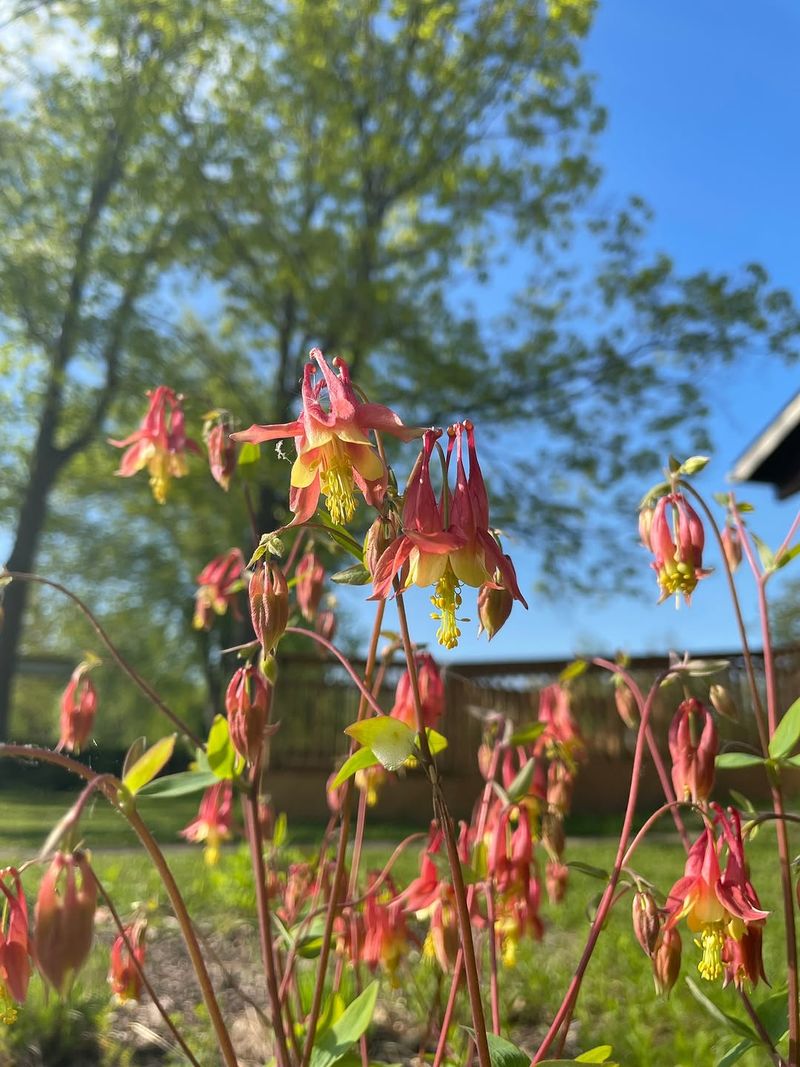
Picture a shaded porch in early May, and a container full of delicate red and yellow flowers nodding in the breeze. That is the kind of scene wild columbine can create.
Aquilegia canadensis is a true Ohio native, listed by the Ohio Department of Natural Resources as a woodland and woodland-edge species.
OSU PlantFacts notes it blooms from April through June, making it one of the earliest native perennials to brighten a container.
Wild columbine prefers part sun to light shade, which makes it a great fit for a north-facing porch or a spot that gets morning sun only. It likes well-drained soil and is sensitive to soggy roots, so drainage holes in the pot are non-negotiable.
Choose a container at least 12 inches deep to give the taproot room to anchor properly. A lightweight, loamy potting mix works better than heavy garden soil.
One appealing quality of wild columbine is that it may reseed when conditions suit it, potentially producing new seedlings nearby. That reseeding is not guaranteed in every container setup, but it is a welcome bonus when it happens.
For winter, move the pot to a sheltered spot like an unheated garage or against a protected wall. Mulching around the container can help buffer root temperatures during hard freezes.
With care, this graceful spring bloomer can return to greet you again next April.
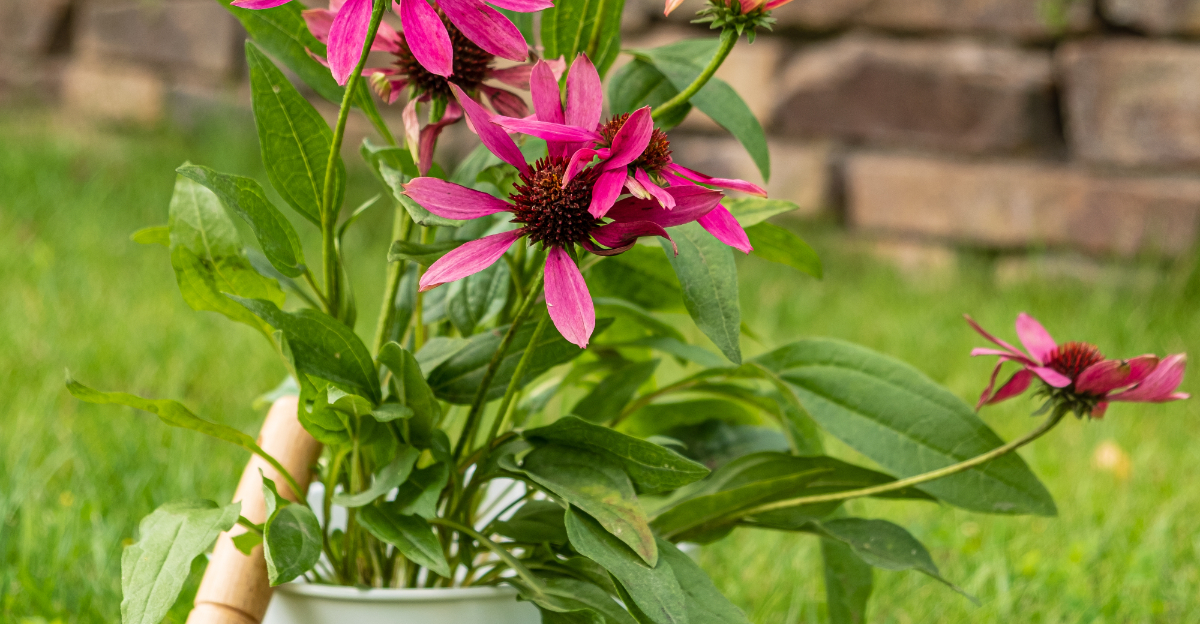
2. Let Purple Coneflower Anchor A Sunny Native Pot
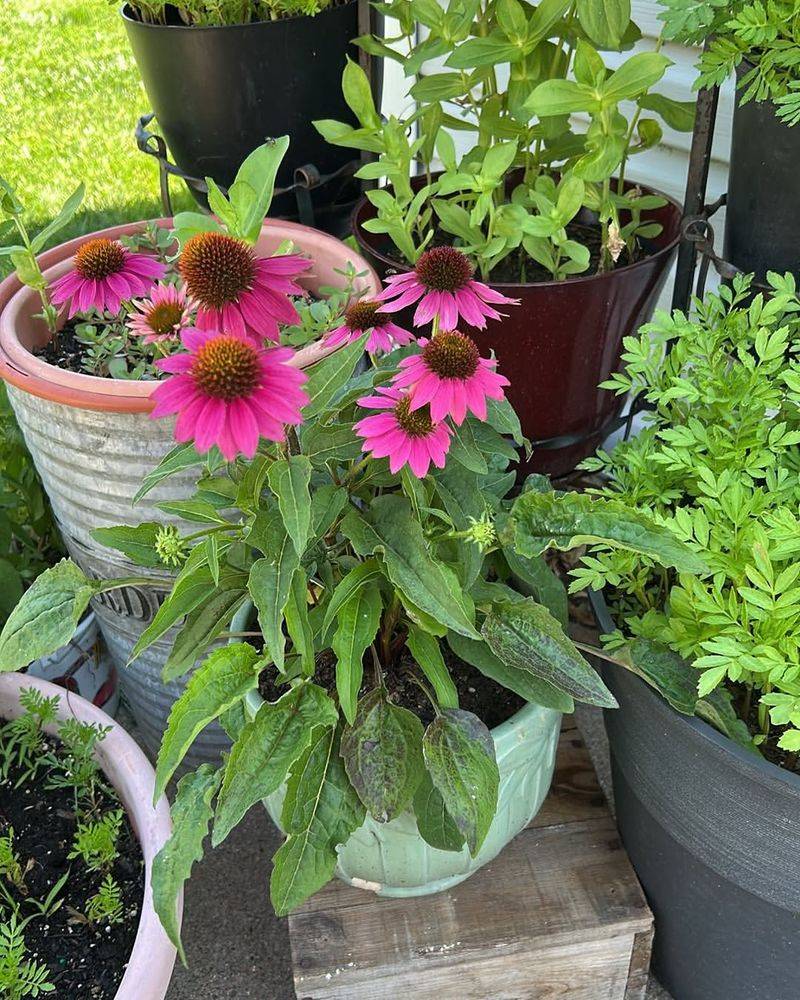
Few native perennials deliver summer color as reliably as purple coneflower, and it can absolutely hold its own in a container.
Echinacea purpurea is native to Ohio and widely supported by OSU Extension as a tough, adaptable perennial with strong wildlife value.
Goldfinches love the seed heads, and pollinators flock to the blooms from roughly June through August, according to OSU PlantFacts records.
Sunny spots are where this plant shines. A container in full sun, meaning at least six hours of direct light daily, gives coneflower the energy it needs to bloom well.
Root space matters a lot here. A cramped pot reduces vigor noticeably, so aim for a container that is at least 14 to 16 inches wide and equally deep.
Your Ohio Garden Changes Every Week. Your Plan Should Too.
Gardening in Ohio changes quickly throughout the season. Every Friday you’ll receive a simple weekly plan showing exactly what to plant, prune, fertilize, harvest, and protect so you never miss the right timing.
Good drainage is essential because coneflower does not like sitting in wet soil for extended periods.
Water consistently during dry stretches, especially in the first season when roots are getting established. Leaving some seed heads intact at the end of the season adds winter texture and feeds birds.
Come spring, cut back old stems before new growth emerges. For winter survival, the pot needs protection from repeated hard freezes.
Wrapping the container in burlap or moving it to a sheltered area can make a real difference. A healthy, well-rooted coneflower in a large pot may return the following year with even stronger blooms than its first season.
3. Plant Wild Geranium For A Soft Shade Container
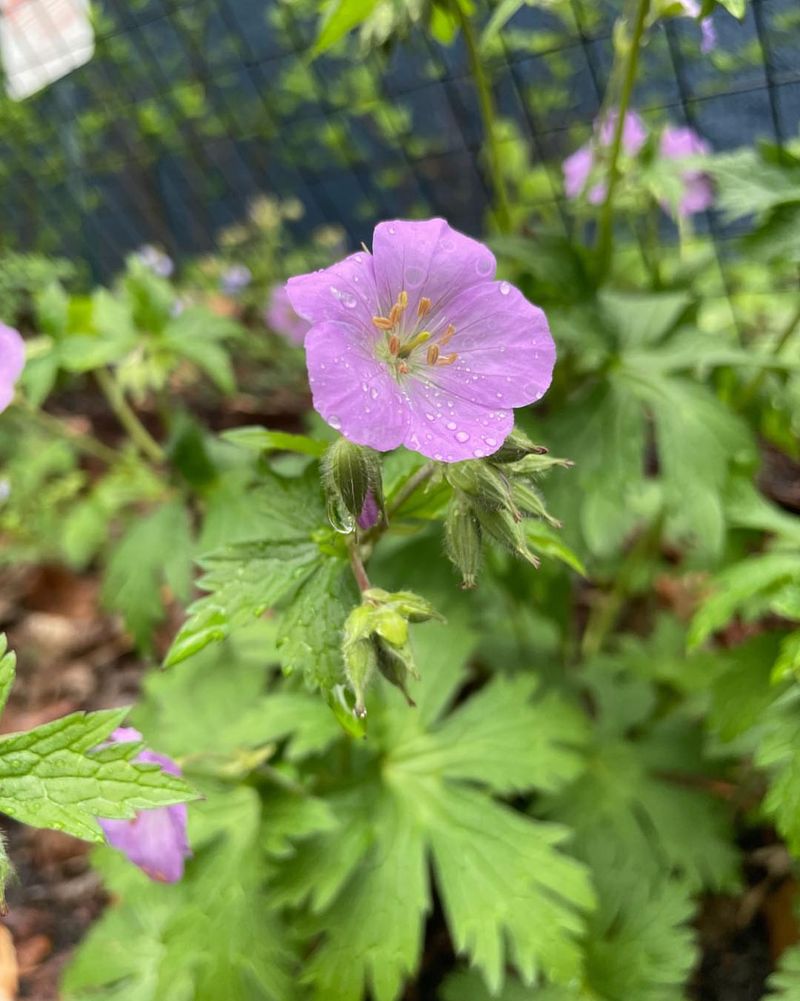
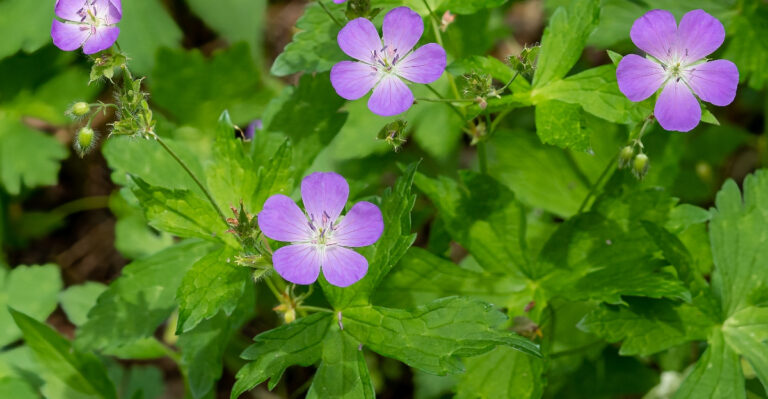
Shaded porches and north-facing patios often get overlooked in container gardening, but wild geranium proves they do not have to be boring. Geranium maculatum is a native Ohio woodland perennial that OSU PlantFacts lists as blooming from April through June.
Its attractive lobed foliage stays interesting even after flowers fade. It brings a soft, natural quality to container arrangements that feels right at home on a porch tucked under a tree canopy.
Part shade to full shade suits this plant well, and hot afternoon sun can stress it during summer heat waves. A moisture-retentive but well-drained potting mix is the right call here.
Wild geranium does not want to dry out completely between waterings, but standing water around the roots will cause problems. A container with drainage holes and a mix that holds some moisture without compacting works well in practice.
Wide, shallow containers can work for wild geranium since its root system is not extremely deep. A pot with decent volume still helps buffer winter temperature swings.
After blooming, the foliage remains tidy and provides ground-level texture throughout summer. In fall, the leaves may take on reddish tones before going dormant.
For overwintering, shelter the pot from the worst wind and cold. Roots in above-ground containers lose heat faster than in-ground roots.
A protected corner or insulated wrapping around the pot gives this shade lover a better shot at returning next spring.
4. Use Prairie Dropseed For Texture That Lasts
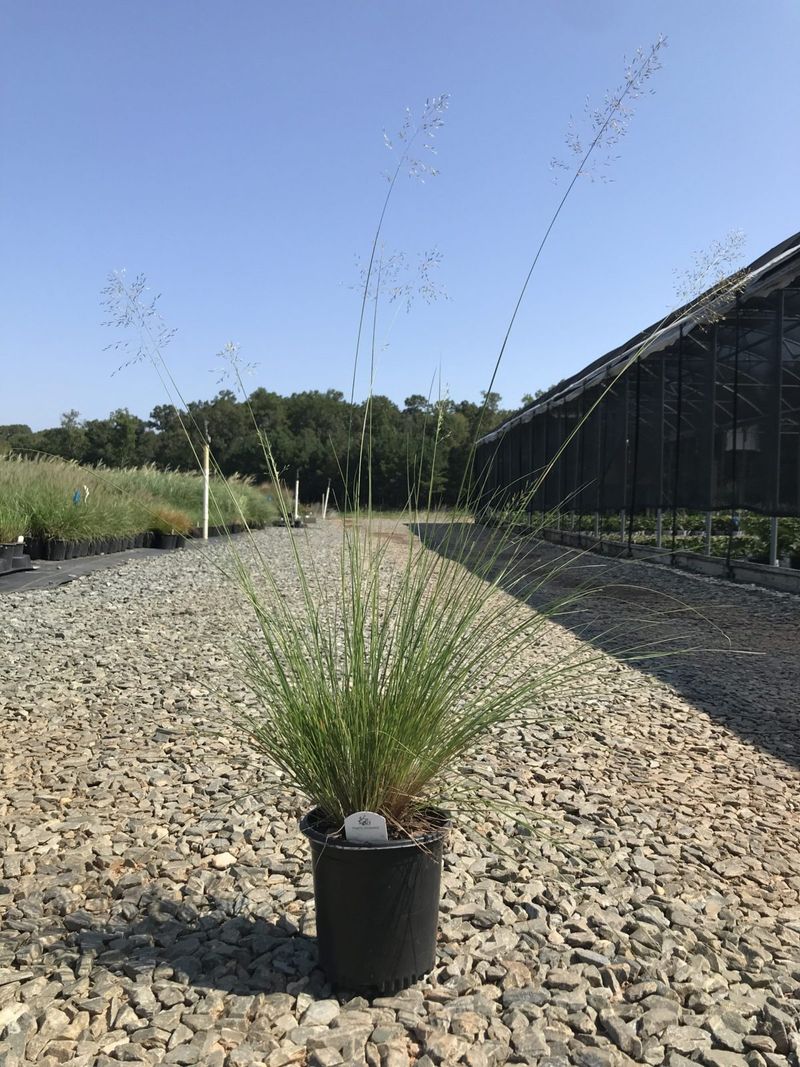
Flowers get a lot of attention, but texture is what keeps a container interesting all season long. Prairie dropseed, Sporobolus heterolepis, is a fine-textured native grass.
The Illinois Natural History Survey and multiple native plant organizations describe it as one of the most graceful grasses in the tallgrass prairie ecosystem.
OSU Extension and native plant sources confirm it is native to Ohio and well-suited to sunny, well-drained sites.
The arching, hair-fine blades of prairie dropseed create a soft, fountain-like shape that moves beautifully in any breeze. It is a warm-season grass, meaning it greens up later in spring but holds its form well into fall and even winter.
Mature plants can reach about two to three feet in height and spread, so choose a wide, sturdy container that gives the root system room to develop.
Full sun is ideal, and the plant is notably drought-tolerant once established, according to native grass references from university extension sources.
Avoid keeping the potting mix constantly wet. Prairie dropseed strongly prefers well-drained conditions and can decline in soggy soil.
Cut back old growth in late winter or very early spring before new blades emerge. For container overwintering, a large, frost-resistant pot is a real advantage because the bigger the root mass, the better the insulation.
Place the container in a spot that gets some sun but is shielded from brutal wind. With the right setup, prairie dropseed can return and look even more lush in its second and third years.
5. Try Blue Flag Iris In A Moist Patio Pot
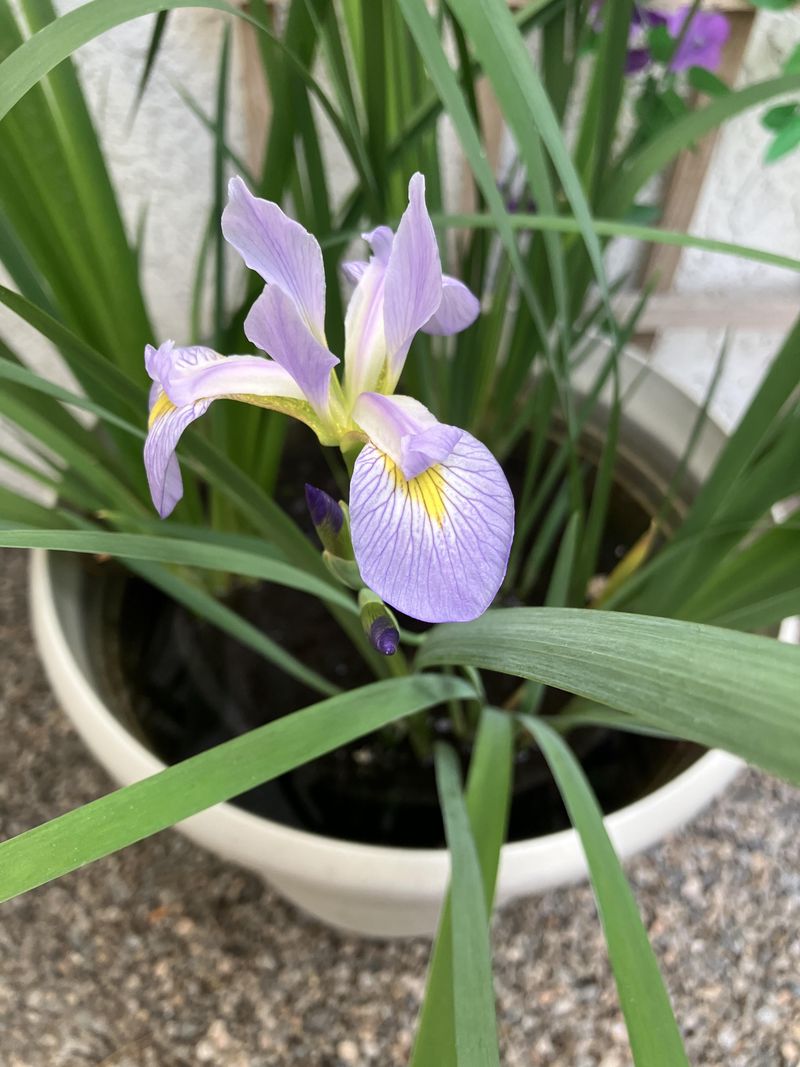
Most container advice focuses on drought-tolerant plants, but not every gardener has a hot, dry spot to work with. Blue flag iris, Iris versicolor, is a native wetland and wet meadow species that thrives where moisture stays consistent.
The Ohio Department of Natural Resources lists it as a native species found along stream banks, pond edges, and wet meadows across the state. Its violet-blue blooms appear in late spring to early summer and are genuinely stunning up close.
Growing blue flag iris in a container means committing to consistent moisture. It does not want to dry out between waterings the way drought-tolerant natives do.
A glazed ceramic or plastic pot holds moisture better than unglazed terracotta, which can wick water away too quickly. Some gardeners set the pot in a shallow tray of water, though the roots should not sit in completely stagnant conditions for extended periods.
Full sun to part sun suits this species well, based on wetland plant references from botanical and extension sources.
Before purchasing, confirm you are buying Iris versicolor or the closely related native Iris virginica rather than a non-native cultivar. All parts of blue flag iris are considered toxic if ingested, so keep that in mind around children and pets.
For winter, the rhizomes are fairly cold-hardy, but a container above ground still needs protection from severe freeze-thaw cycles.
Moving the pot to a sheltered location or insulating it can improve the odds of seeing those beautiful blooms return next May.
6. Add Aromatic Aster For Late Season Native Color
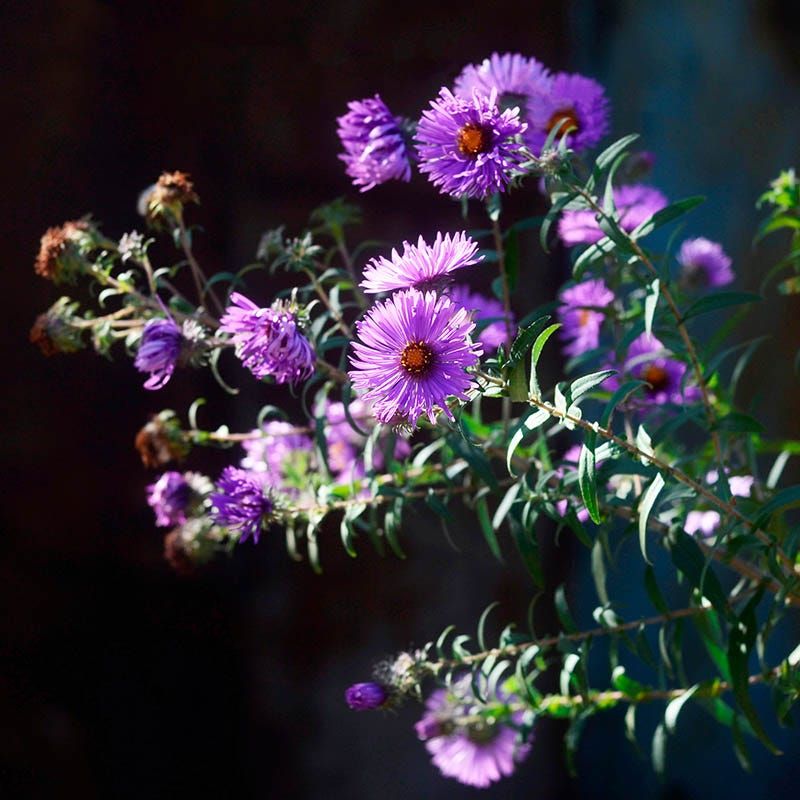
By September, a lot of containers look worn out. Annuals are fading, summer perennials have gone quiet, and the patio can feel like it is winding down before the season is really over.
Aromatic aster, Symphyotrichum oblongifolium, is one of the best native plants for solving that problem. It produces masses of small, violet-blue daisy-like flowers from late summer into fall.
OSU PlantFacts confirms it is a native species with strong ornamental value for sunny spots.
Full sun is where aromatic aster performs best. It tolerates lean, well-drained soil and does not appreciate overly rich or consistently wet conditions.
That makes it a good match for a container with a standard, well-draining potting mix. Avoid fertilizing heavily, as too much nitrogen can push leafy growth at the expense of flowers.
The plant can spread and get somewhat large in ideal conditions. A container that is at least 14 inches wide gives the root system room to develop without becoming cramped.
Late-season blooms are especially valuable for pollinators, including native bees and monarch butterflies passing through during fall migration. Leaving the plant mostly intact through early winter provides some seed for birds and protects the crown.
Cut back old stems in late winter or early spring before new growth begins. For overwintering the container, a sheltered wall or grouped containers can reduce cold exposure.
When well sited and given a large enough pot, aromatic aster may return next fall ready to put on another show.
7. Give Foxglove Beardtongue A Well Drained Home
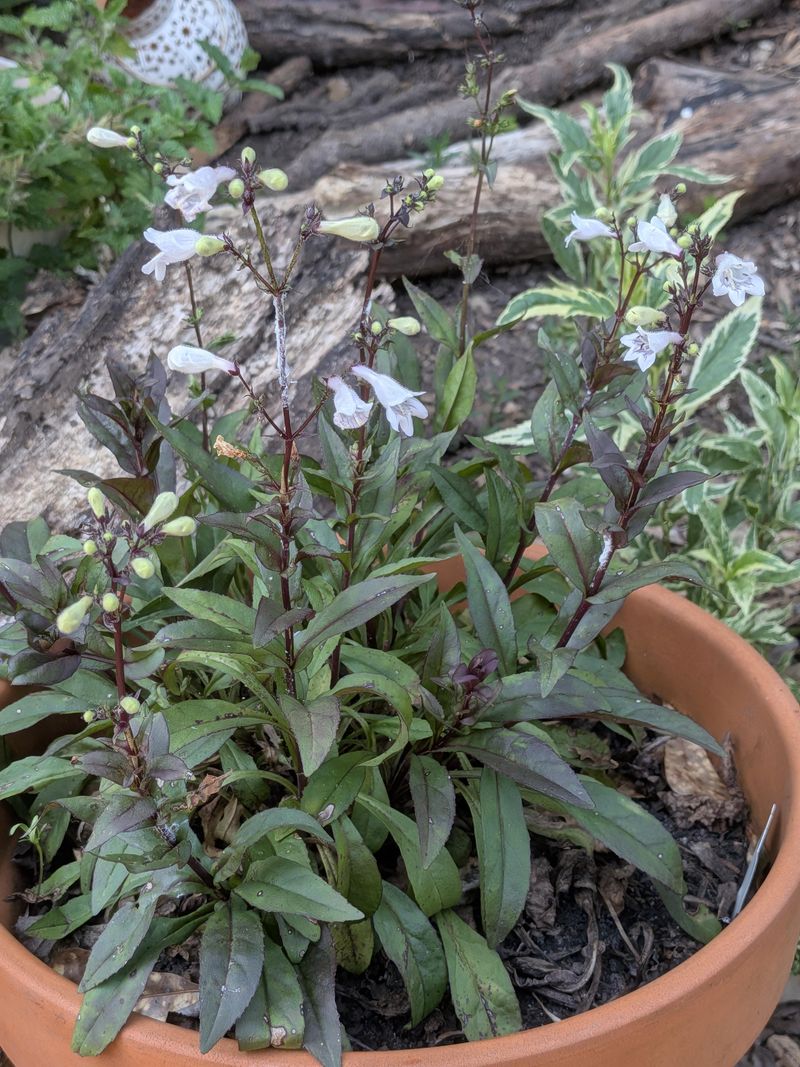
Standing tall with spikes of white, tubular flowers, foxglove beardtongue has a quiet elegance that earns it a second look on any patio.
Penstemon digitalis is a native Ohio perennial that OSU PlantFacts lists as blooming from late spring into early summer, typically May through June.
Native plant organizations and extension sources consistently highlight its value for native bees and other pollinators that visit those tube-shaped flowers.
One thing this plant makes very clear is that soggy roots are its enemy. Penstemon digitalis prefers well-drained to somewhat dry soil and can decline quickly in a container that stays waterlogged.
Always use a pot with drainage holes, and avoid filling it with heavy garden soil. A gritty or sandy potting mix, or a standard mix amended with perlite, suits this plant much better.
Full sun to part sun works well based on verified extension and native plant guidance.
Water regularly during the first season to help roots establish, but back off once the plant is settled in. Overwatering after establishment does more harm than good.
The foliage is semi-evergreen in mild winters, which means it may hold some green basal leaves even after frost. For container overwintering, drainage is the most critical factor.
A pot that drains well and sits in a spot protected from repeated hard freezes gives foxglove beardtongue a realistic chance of returning. Choose a container at least 12 inches deep and wide to support a healthy root system through the cold months.
8. Help Every Native Container Survive Winter
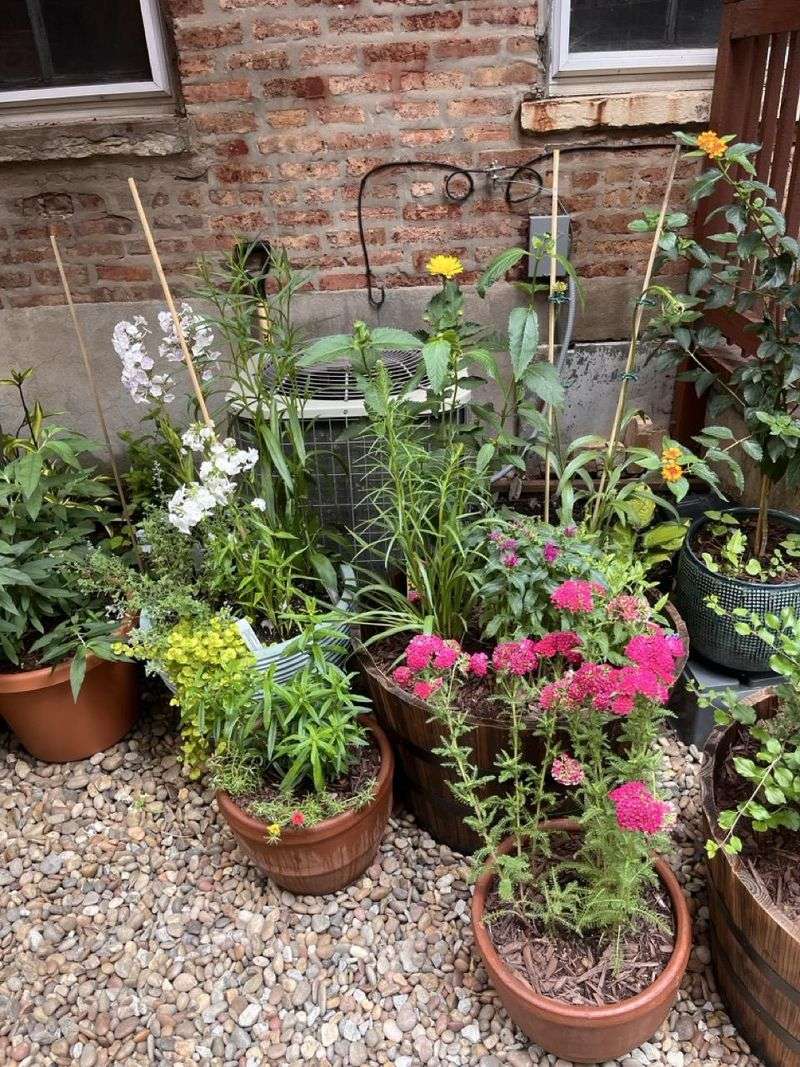
Choosing the right native plant is only half the equation. Getting it through a Buckeye State winter in a container is the other half, and it takes a little planning.
Roots in above-ground pots are exposed to air temperatures on all sides, which means they experience colder and more rapid temperature swings than roots in the ground.
University extension guidance consistently notes that container plants need to be at least one or two hardiness zones hardier than the local zone.
That gives them a stronger shot at winter survival.
Pot size is one of the most important factors. Larger containers hold more soil volume, which acts as insulation.
A plant that might survive fine in a 15-gallon container could struggle in a 6-inch pot through the same winter. Frost-resistant containers, such as thick-walled fiberglass, heavy ceramic, or foam, also help reduce temperature swings around the root zone.
Avoid thin plastic pots for perennials you want to keep.
Drainage still matters in winter. A pot that holds standing water and then freezes can damage both roots and the container itself.
Move pots to a sheltered spot against a south or west-facing wall, or group containers together to reduce wind exposure. Wrapping pots in burlap, bubble wrap, or foam insulation adds another layer of protection.
Some gardeners sink containers directly into the ground for the coldest months, which is one of the most effective methods available.
Whatever approach you choose, pairing good drainage with a protected location gives your native perennials the best realistic chance of greeting you again come spring.