Native Ohio Plants That Bloom In July When Everything Else Has Stopped
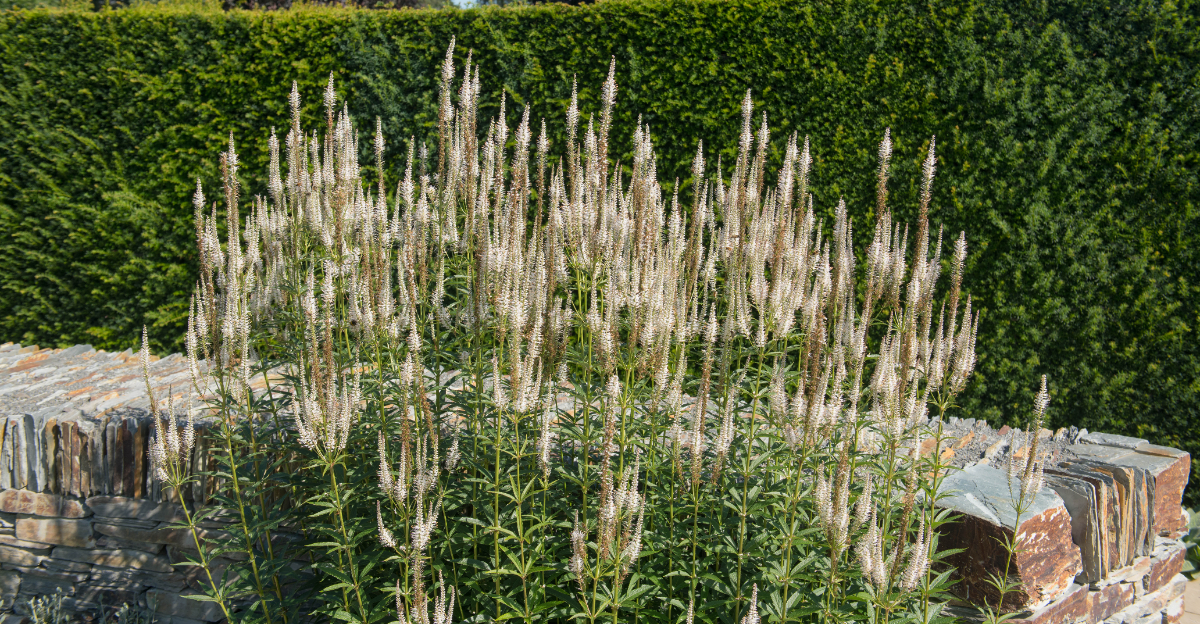
July has a way of exposing the gaps in an Ohio garden. The spring flush is a distant memory.
Early summer performers are winding down. What looked full in June starts feeling sparse right when the season should be hitting its stride.
Most Ohio gardens go quiet in July not because nothing blooms, but because the wrong plants were chosen for that window. Native plants that peak in July exist.
They fill that gap in ways imported ornamentals rarely match. These are not obscure species that require a specialist nursery.
Several are available, tough, and built for exactly what Ohio July delivers. A garden that blooms confidently through the hardest month of summer is a different kind of garden.
It starts with knowing which natives own that window.
1. Plant Wild Bergamot For Fragrant July Blooms
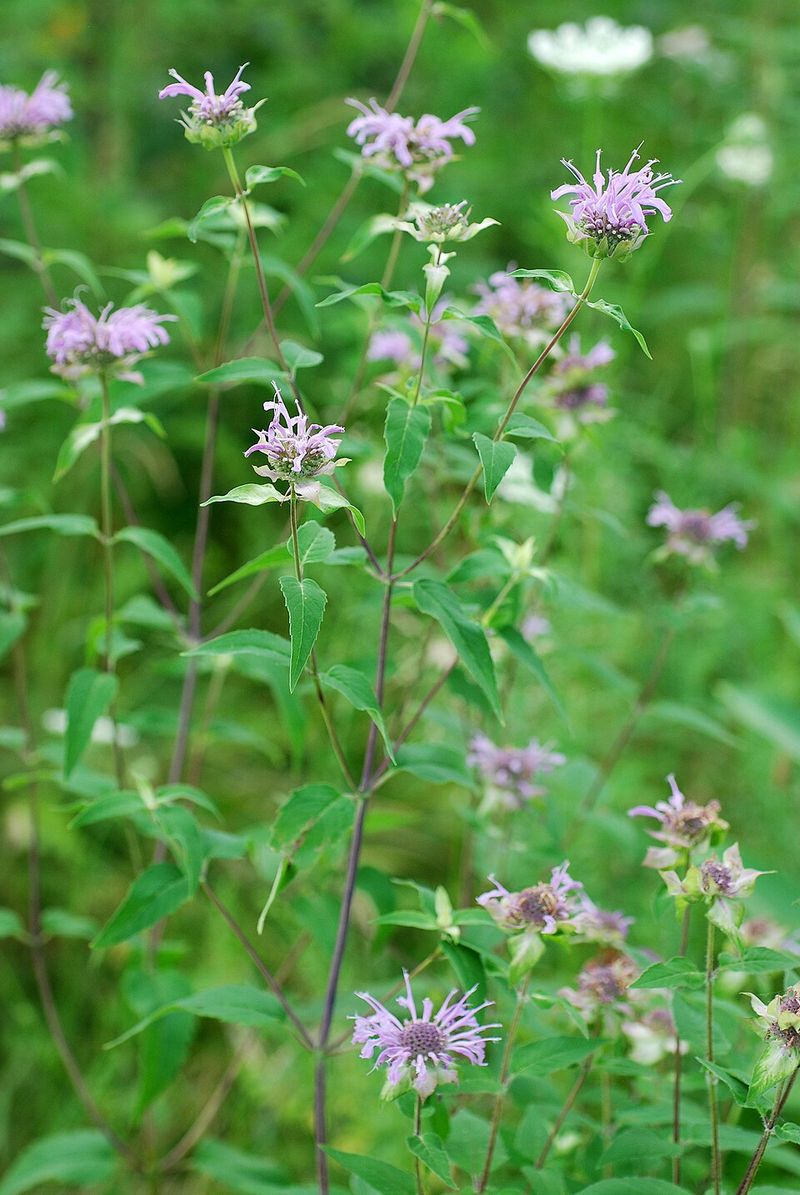
A July bed needs flowers that do not fold the moment spring’s softer show fades. Wild bergamot, Monarda fistulosa, is one of the best native plants to fill that gap.
Its lavender-pink, shaggy flower heads open in mid-summer and last for several weeks when the plant is well-sited.
The foliage smells like oregano when you brush against it. That aromatic quality is part of what makes this plant so useful.
Bees, butterflies, and hummingbirds visit the blooms regularly through July and into August.
Wild bergamot grows best in full sun with good airflow around the stems. Poor air circulation invites powdery mildew, which is common on this species in humid summers.
Choosing a breezy, open spot in the garden reduces that problem significantly.
This plant spreads by rhizome in loose, well-drained soil. In a fertile border, it can expand into a wide patch over a few seasons.
Dividing it every two or three years keeps it from crowding neighboring plants.
Heights typically reach three to four feet at bloom time. It fits well in the middle of a sunny native border alongside coneflowers or black-eyed Susans.
Give it room, give it sun, and it will reward you every July without much fuss.
2. Grow Purple Coneflower For Strong Mid-Summer Color
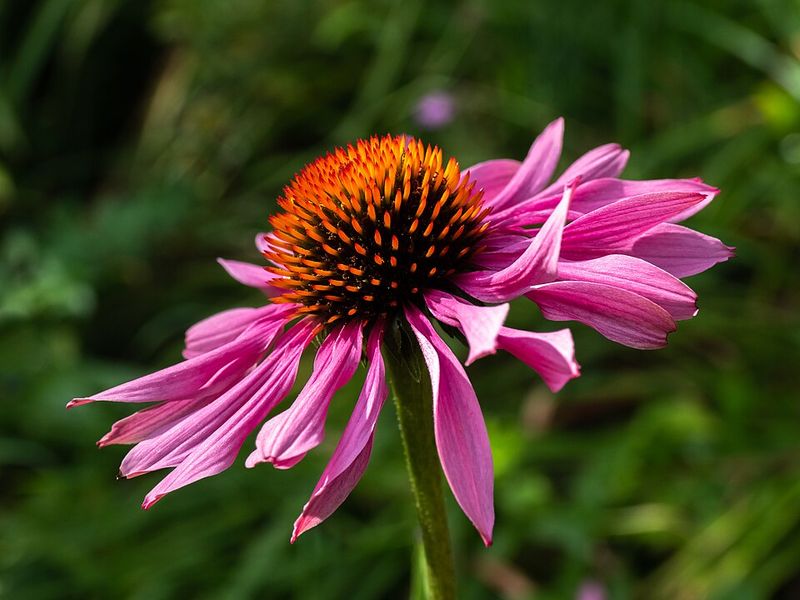
Few native plants hold up as well in a hot, sunny border as purple coneflower. Echinacea purpurea opens its rosy-purple petals in late June and keeps blooming through much of July.
The raised, spiky center cone is just as interesting as the petals around it.
This plant prefers full sun and well-drained soil. It handles summer heat well once roots are established, though young plants in their first season benefit from occasional watering during dry spells.
Do not expect perfection from a newly planted coneflower during a drought year.
The seed heads that form after blooming are genuinely useful. Goldfinches and other small birds visit them from late summer into fall.
Leaving the seed heads standing through winter adds structure to the garden and feeds wildlife at the same time.
Purple coneflower grows three to four feet tall in good conditions. Clumps expand slowly over time and can be divided in early spring.
Your Ohio Garden Changes Every Week. Your Plan Should Too.
Gardening in Ohio changes quickly throughout the season. Every Friday you’ll receive a simple weekly plan showing exactly what to plant, prune, fertilize, harvest, and protect so you never miss the right timing.
Some Ohio gardeners find that plants self-seed lightly, which can fill gaps in a native border naturally.
Powdery mildew can appear on the foliage late in the season, especially in shaded or crowded spots. Planting in open sun with good spacing reduces this issue.
Overall, it is a sturdy, reliable mid-summer bloomer that earns its place in local gardens year after year.
3. Use Butterfly Weed For Hot Orange Summer Flowers
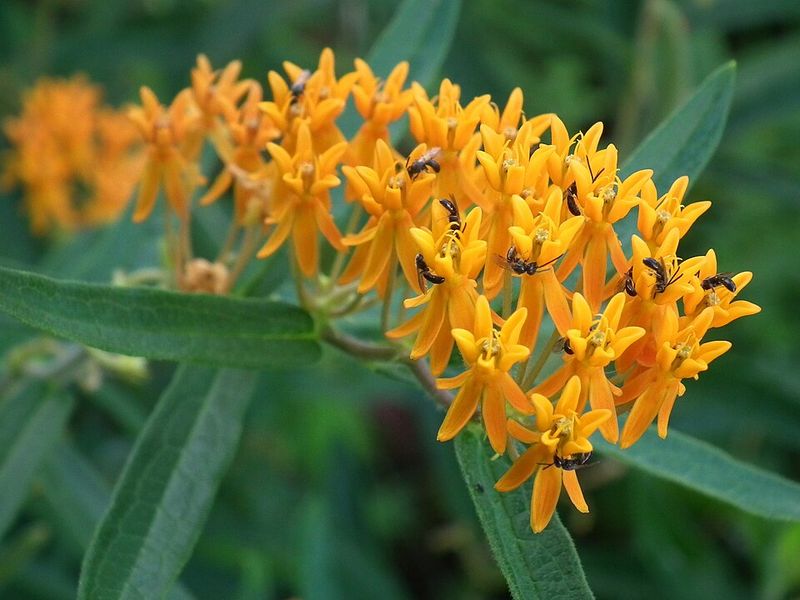
Dry, gravelly soil that defeats most perennials is exactly where butterfly weed thrives. Asclepias tuberosa produces some of the most vivid orange flowers of any native plant in this region.
The flat-topped clusters open in June and often continue into July, drawing monarchs, fritillaries, and native bees in real numbers.
This plant is a true milkweed and a monarch host plant. Female monarchs lay eggs on the foliage, and the caterpillars feed on the leaves.
Planting even a small grouping of three or five plants gives monarchs a reliable stop in a home landscape.
Butterfly weed needs sharp drainage above everything else. It will not tolerate wet or heavy clay soil for long.
A raised bed, a slope, or a naturally sandy or gravelly spot suits it well. Once settled in, established plants are genuinely drought-tolerant and rarely need supplemental water.
One important note: this plant does not transplant well once it has settled. The taproot goes deep, and moving a mature plant usually sets it back badly.
Choose your planting spot carefully and leave it there.
Plants emerge late in spring, so marking the spot helps avoid accidentally disturbing the crown. At two to three feet tall, butterfly weed fits neatly into the front or middle of a sunny, dry-soil native planting without overwhelming neighboring plants.
4. Add Blazing Star For Upright July Flower Spikes
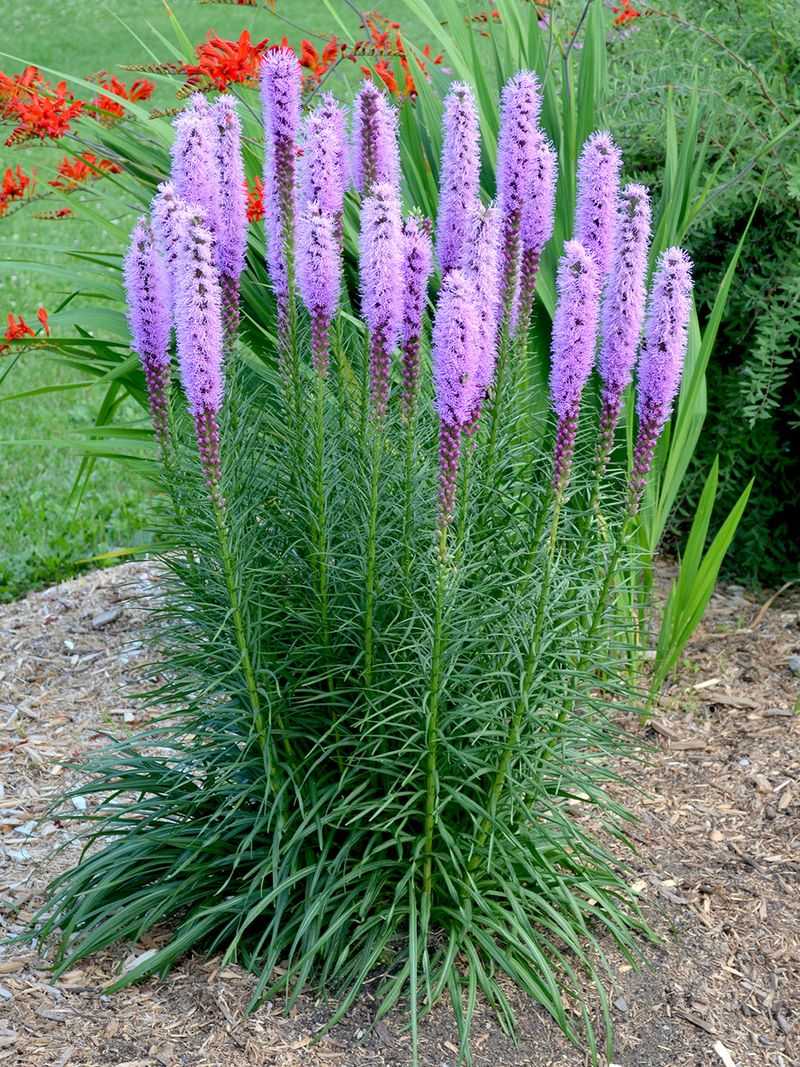
Vertical structure is something many summer borders lack. Blazing star fills that role with narrow, upright spikes of rosy-purple flowers.
They open from the top of the spike downward, which is the opposite of most flowering plants. That unusual trait makes it stand out in a mixed native planting.
Several Liatris species are native to this state. Liatris spicata, often called dense blazing star, grows naturally in moist meadows and tolerates heavier soil.
Liatris aspera, rough blazing star, handles drier, sandier conditions much better. Matching the species to your actual site makes a real difference in how well the plant performs.
Both species bloom in July into August and grow two to four feet tall depending on moisture and light. Full sun is essential.
Plants that receive less than six hours of direct sun tend to flop or produce fewer spikes. Staking is rarely needed when sunlight is adequate.
Pollinators respond strongly to blazing star. Bumblebees, monarch butterflies, and swallowtails visit the spikes regularly during bloom.
Goldfinches feed on the seed heads later in the season, so leaving them standing after bloom adds ongoing wildlife value.
Blazing star grows from a corm-like structure underground. It is slow to establish but long-lived once settled.
Planting in groups of three or more creates a stronger visual effect than single plants scattered through a bed.
5. Choose Culver’s Root For Tall White Summer Blooms
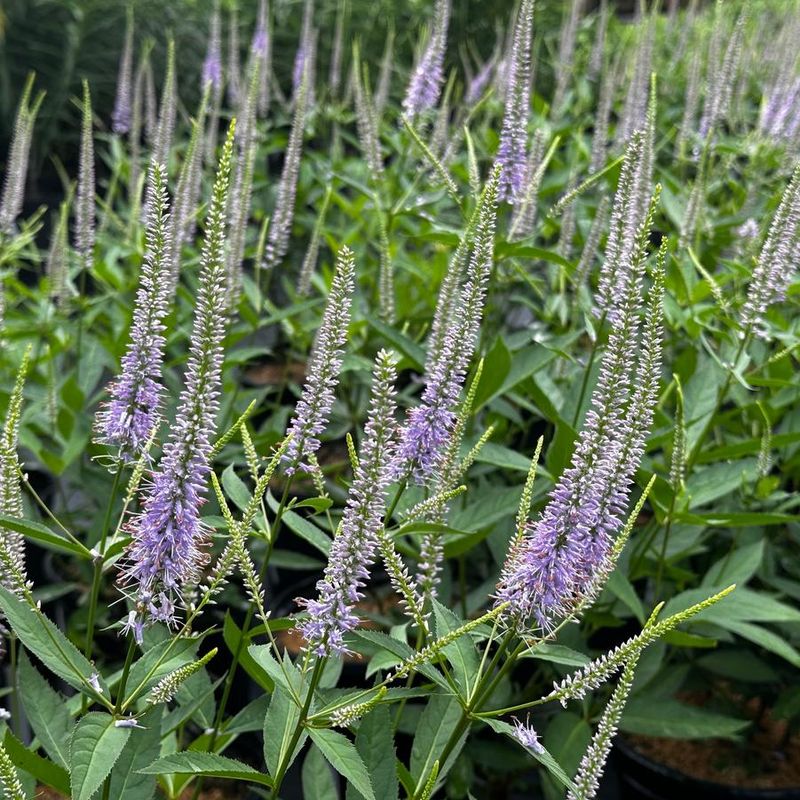
Not every July-blooming native shouts for attention. Culver’s root earns admiration through elegance rather than brightness.
Veronicastrum virginicum produces long, slender white to pale lavender flower spikes that rise well above the foliage in mid-summer. The layered whorls of leaves below the blooms add structure even before the flowers open.
This is a tall plant. Expect four to six feet of height at bloom time in a suitable spot.
It belongs at the back of a border or in the middle of a large meadow planting where its height reads as architecture rather than obstruction. Treating it like a front-of-border plant sets it up to disappoint.
Culver’s root prefers moist, fertile soil and full to partial sun. It grows naturally along stream banks, moist meadows, and open woodland edges across much of this state.
In the garden, consistent moisture through summer keeps it looking strong. It tolerates short dry spells once established but does not thrive in truly dry soil.
The flower spikes attract long-tongued bees and various butterflies through July and into August. The plant does not spread aggressively.
Clumps expand slowly and rarely need division for many years.
Combining Culver’s root with swamp milkweed, Joe Pye weed, or ironweed creates a bold, naturalistic planting that carries real impact through the hottest part of summer. It is one of the most structurally interesting native plants available to Ohio home gardeners in this region.
6. Grow Swamp Milkweed Where Soil Stays Moist
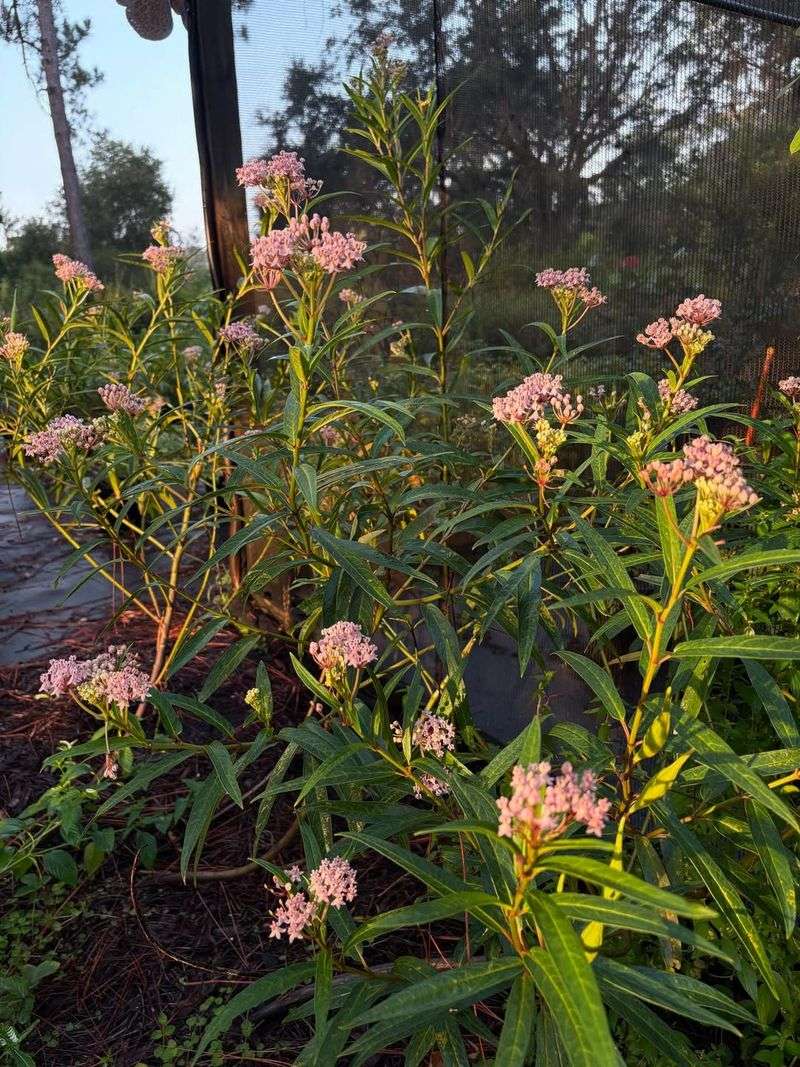
That low corner of the yard where water collects after rain is often treated as a problem. Swamp milkweed sees it as home.
Asclepias incarnata thrives in moist to wet soil and produces clusters of rose-pink flowers through July that are genuinely beautiful up close.
Like all milkweeds, this species is a monarch host plant. Monarchs lay eggs on the foliage, and caterpillars feed on the leaves as part of their development.
The nectar-rich flowers also draw a wide range of native bees, fritillaries, and swallowtails during the bloom period.
Swamp milkweed fits naturally into rain gardens, pond edges, low meadow areas, and any spot where the soil stays reliably moist through summer. It does not perform well in dry, hot, gravelly conditions.
Placing it in the wrong soil leads to stunted growth and early leaf drop, so site selection matters.
Plants grow three to five feet tall and have a fairly upright, well-behaved habit. They do not spread aggressively by rhizome the way some milkweeds do.
Clumps expand gradually and can be divided in early spring if needed.
The seed pods that follow the flowers are attractive in their own right. They split open in fall to release silky-tailed seeds that drift on the wind.
Leaving a few pods to mature helps the plant self-seed lightly and fill in a wet-garden planting over time.
7. Plant Black-Eyed Susan For Golden July Color
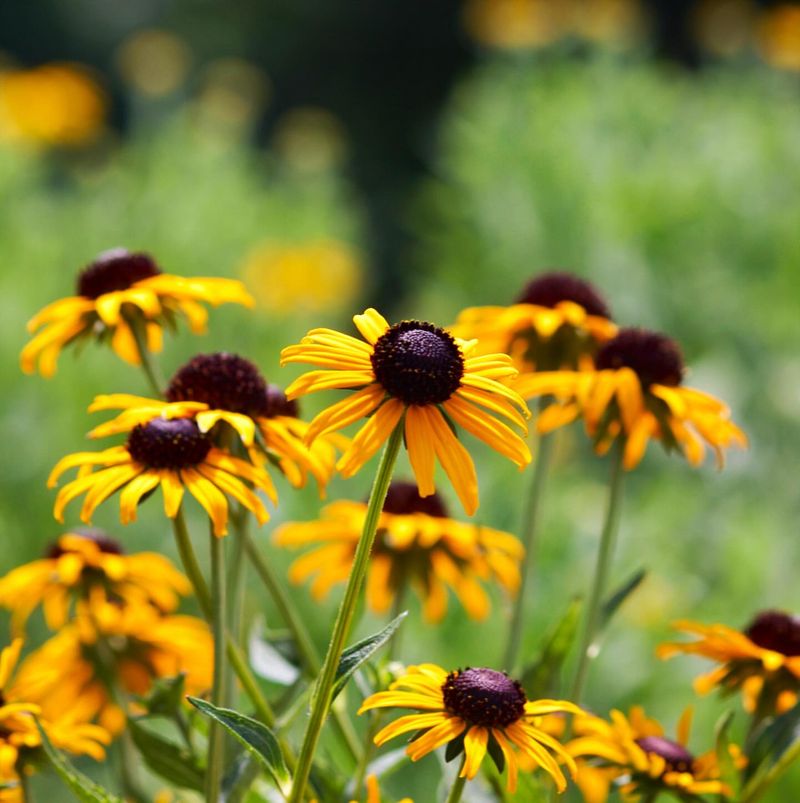
Golden-yellow flowers have a way of making a summer border feel alive even on a hot, hazy July afternoon. Black-eyed Susan delivers that color reliably in sunny spots across this state.
Rudbeckia hirta opens its cheerful blooms from late June through July and often into August, depending on the season and site.
Rudbeckia hirta behaves as a biennial or short-lived perennial in many Ohio gardens. It self-seeds freely in open, sunny spots, which means a planting tends to renew itself naturally over time.
Some gardeners find this quality helpful for filling gaps. Others prefer to trim spent flowers to manage where new seedlings appear.
This plant is not fussy about soil quality. It tolerates clay, loam, and somewhat sandy conditions as long as the site is sunny and reasonably well-drained.
Overly rich, moist soil can produce lush foliage at the expense of flowers and may encourage flopping.
Black-eyed Susan grows one to three feet tall, making it a flexible choice for front-of-border or mid-border use. The dark center cones contrast sharply with the bright petals and attract native bees and small butterflies throughout the bloom period.
Leaving the seed heads standing after bloom benefits finches and sparrows into fall and winter.
Rudbeckia hirta is one of the most recognizable and widely grown native wildflowers in regional gardens, and its July performance is a big reason for that reputation.
8. Use Mountain Mint To Keep Pollinators Busy
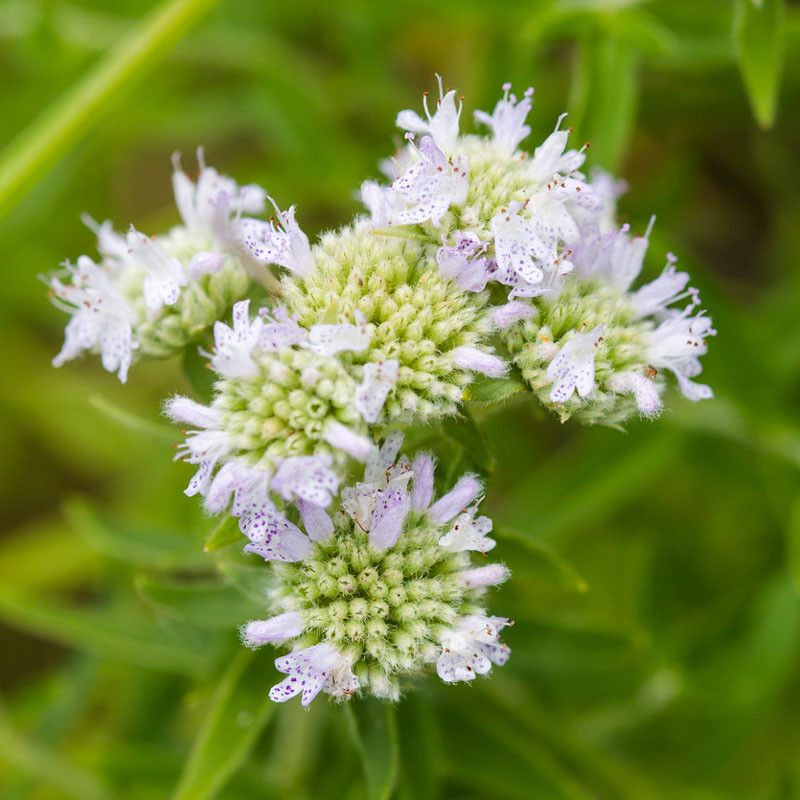
Watching a patch of mountain mint in full bloom on a warm July morning is one of the more surprising experiences in a native garden. The flowers are small and white, almost modest-looking.
But the number and variety of pollinators visiting them is remarkable. Native bees, wasps, beetles, and butterflies crowd the blooms throughout the day.
Pycnanthemum species, particularly Pycnanthemum virginianum and Pycnanthemum tenuifolium, are native to this region and bloom from July into August.
The silvery bracts surrounding the flower clusters catch the light and give the plant a frosted appearance that reads well in a mixed planting even from a distance.
The foliage is strongly aromatic when crushed or brushed. That minty fragrance may help deter some browsing by deer, though it is not a guarantee.
Mountain mint grows in full sun and tolerates a range of soil types, from average garden loam to somewhat moist conditions.
The spreading habit is worth understanding before planting. Mountain mint expands by rhizome and can colonize a generous area in loose, fertile soil over several seasons.
Planting it where a spreading patch is welcome, such as along a fence line or in a large meadow section, avoids the frustration of constant management.
At two to three feet tall, it works well in the middle of a sunny native border. Combining it with coneflowers, blazing star, or black-eyed Susan creates a July planting that stays active with pollinator activity from morning through late afternoon.