What Sawdust Under Pumpkin Vines Means In Pennsylvania Gardens
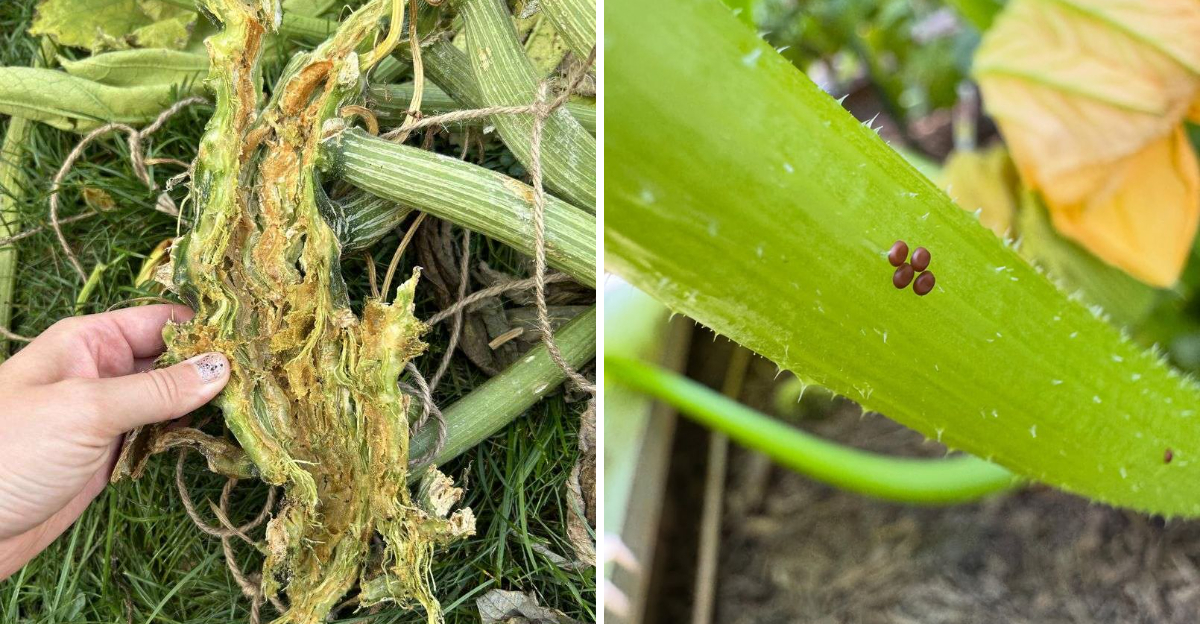
Pennsylvania pumpkin vines can hide a tiny disaster in plain sight.
One July morning, the patch looks lush. The next, a leaf droops, a stem looks tired, and a strange little pile of orange-brown grit sits at the base like the vine swept up after itself.
That is not ordinary dirt.
It is the clue many gardeners miss until the clock starts running.
The problem is not dry soil, no matter how thirsty the plant looks. Watering harder will not reach what is happening inside the stem, where damage can move quietly while the leaves put on the first dramatic show.
That tiny sawdust pile is the garden equivalent of a warning siren with manners.
So what does it mean for your pumpkins, and how fast do you need to act?
Start by reading the stem, not the soil. The earlier you catch the clue, the better chance your Pennsylvania pumpkin patch has of reaching fall with fruit still sizing up before the vines lose strength when autumn finally nears.
1. Frass Marks The Entry Point
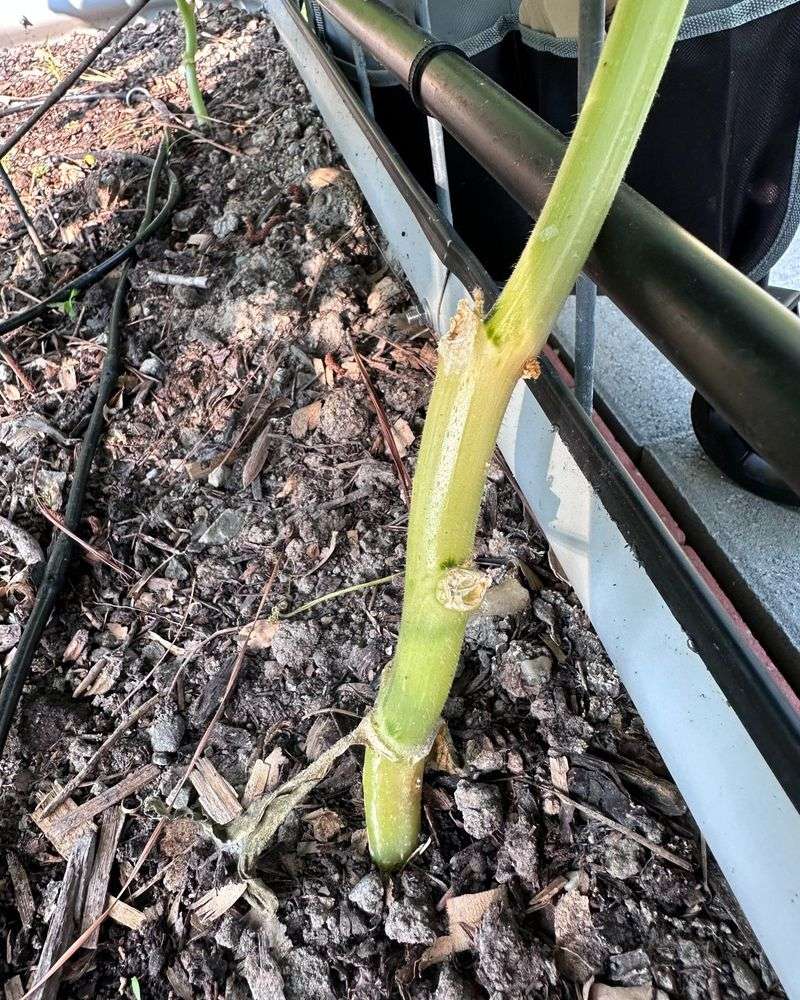
A little pile near the stem is never random.
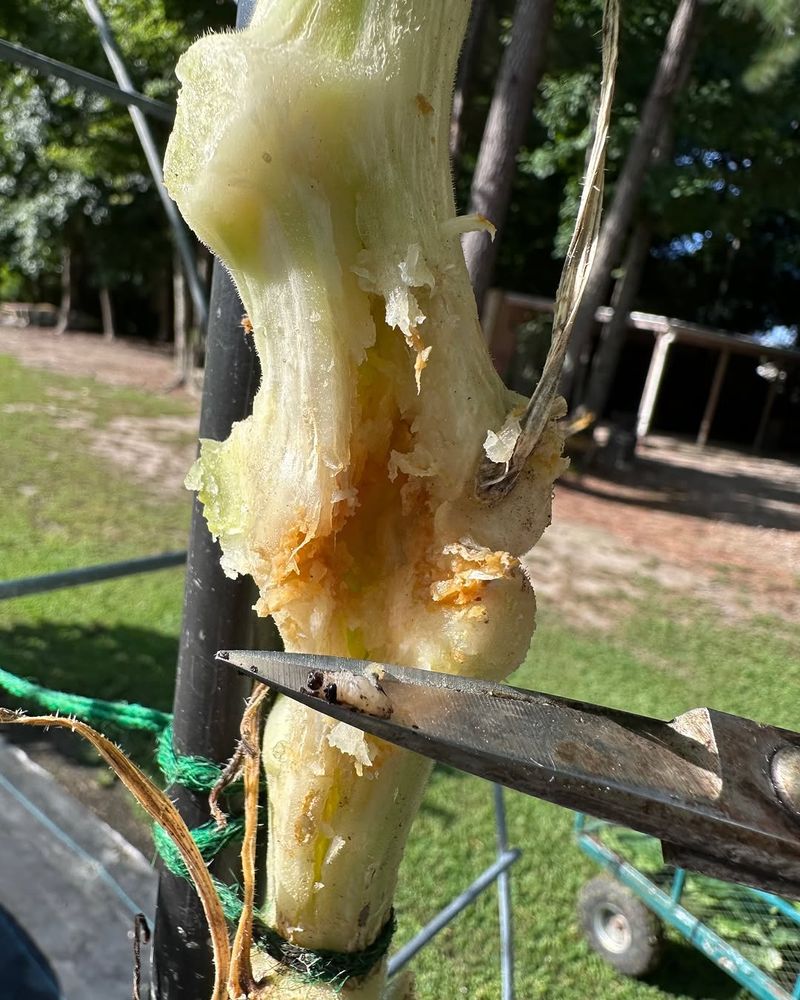
That grainy, rust-colored material clinging to your pumpkin vine’s base is called frass, which is basically the waste material left behind by a feeding larva chewing through plant tissue inside the stem.
It looks remarkably like wet sawdust mixed with a bit of orange grit, and once you know what it is, you will never mistake it for something harmless again.
Frass appears at the exact spot where a larva bored its way into the vine.
The entry hole is usually tiny and easy to overlook, but the frass piles up quickly as the larva feeds.
Pennsylvania gardeners often notice it first when they crouch down to water or weed and spot the discoloration against the green stem.
Checking for frass should become part of your regular garden walk from late June through August.
Look at the vine base, not just the leaves. The stem near the soil line is the most common entry zone, and catching frass early gives you the best shot at saving the plant.
Some gardeners find multiple entry points along a single vine, which means more than one larva may be feeding inside.
The frass does not wash away easily, so even after rain it tends to stay clustered near the hole. Think of it as the vine’s own distress signal, a tiny clue that something is very wrong just beneath the surface.
2. Squash Vine Borer Is Inside
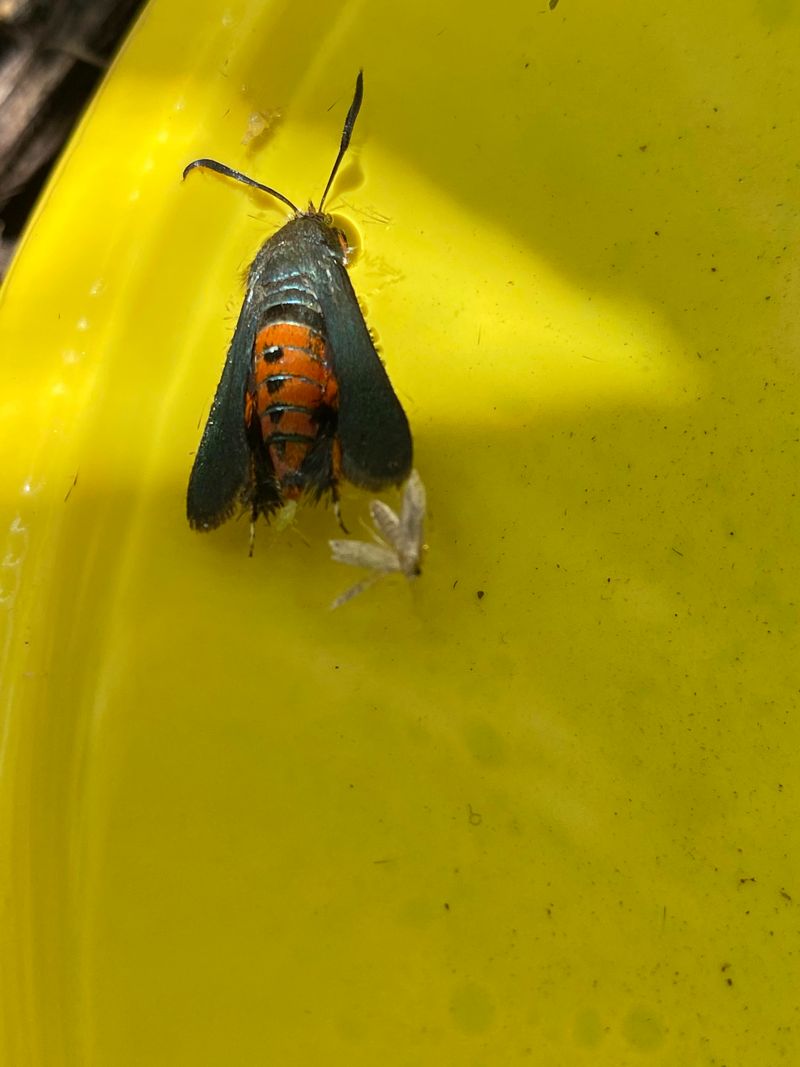
Tucked inside that vine, hidden from view and happily munching away, is a squash vine borer larva.
The adult is actually a moth, not a beetle, and it looks surprisingly wasp-like with its orange and black body.
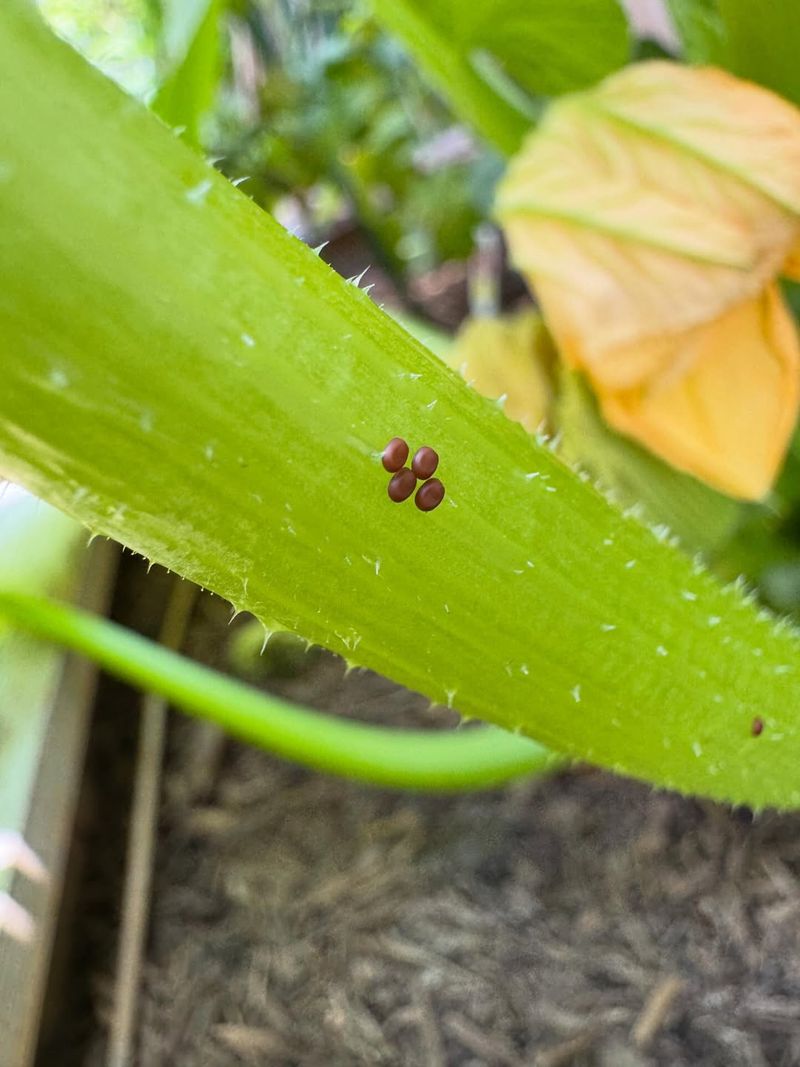
The adult moth lays flat, reddish-brown eggs on vine stems and leaf stalks during early to mid summer, and those eggs hatch into the real troublemakers within about a week.
Once the larva hatches, it wastes no time boring straight into the vine stem.
Your Pennsylvania Garden Changes Every Week. Your Plan Should Too.
Gardening in Pennsylvania changes quickly throughout the season. Every Friday you’ll receive a simple weekly plan showing exactly what to plant, prune, fertilize, harvest, and protect so you never miss the right timing.
From that point on, it feeds on the soft inner tissue, blocking the flow of water and nutrients to the rest of the plant.
The larva is creamy white with a brown head and can grow to about an inch long. You will not see it without cutting the stem open.
Penn State Extension notes that squash vine borers are one of the most damaging pests for cucurbit crops in the mid-Atlantic region, including Pennsylvania.
Pumpkins, zucchini, and summer squash are especially vulnerable. Butternut squash tends to be a bit less attractive to the pest, though it is not completely off the menu.
The borer completes one generation per year in Pennsylvania, which means the adults are flying and laying eggs during a fairly predictable window.
You are not fighting a mystery creature. You are working against a pest with a schedule, and that schedule can be used against it.
3. The Vine Base Needs Checking
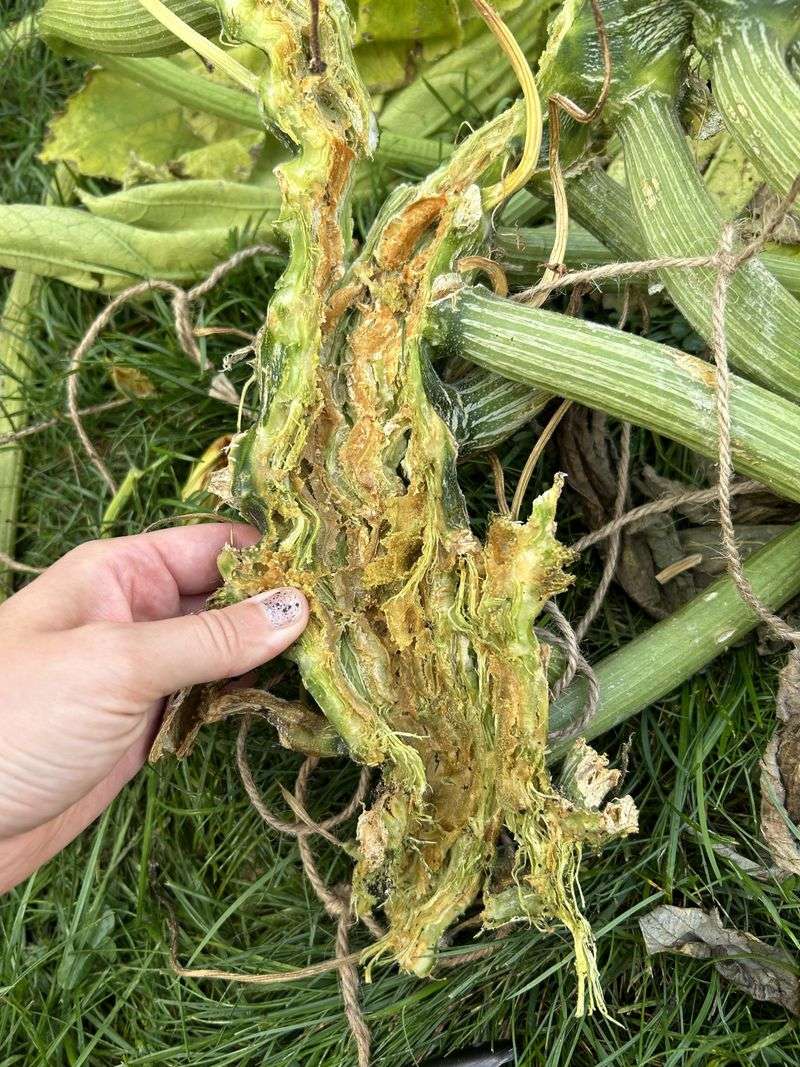
A split vine base or a soft, mushy stem section is a sign that feeding has already been going on for a while.
Before things get to that stage, a simple hands-on check of the vine base can catch problems much earlier.
Make it a habit to gently part the large leaves and look directly at the stem where it meets the soil.
Run your fingers along the bottom few inches of the vine.
Healthy stems feel firm and solid. A stem with a borer inside may feel slightly spongy or show a subtle swelling near the entry point.
You might also notice a greenish or yellowed discoloration on the outer skin of the stem before any frass becomes visible.
These are early physical clues that something is off.
Checking takes less than a minute per plant, but most gardeners skip it because the big leaves look fine from above.
The canopy of a pumpkin plant is deceptive. Those wide, dramatic leaves can look perfectly lush even while the stem below is being hollowed out.
By the time the leaves start drooping, significant damage has already occurred inside.
Checking the vine base two or three times per week during July and early August in Pennsylvania gives you the best window for catching an infestation while the vine still has enough healthy tissue to recover.
4. Wilting Leaves Raise The Alarm
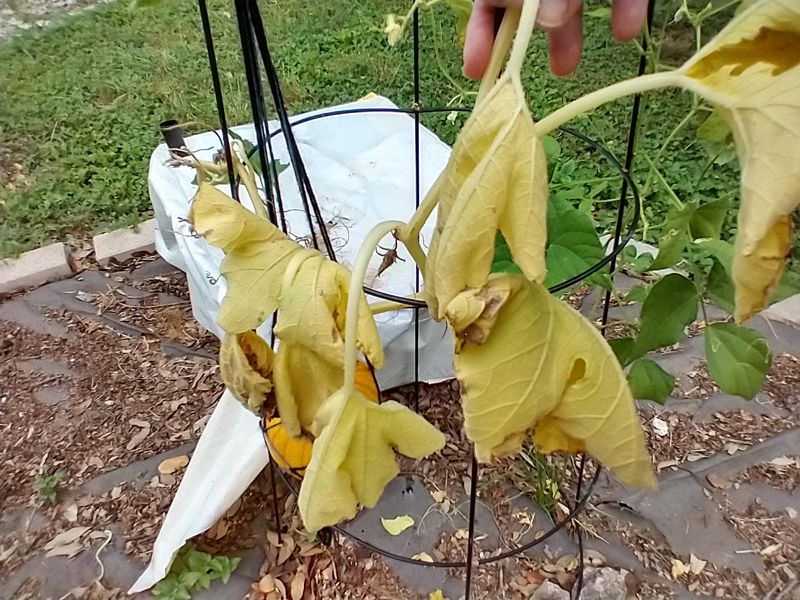
A leaf sagging in the afternoon heat is not always a drought problem.
Pumpkin leaves do wilt a bit during the hottest part of a summer day, and that is completely normal.
The real red flag goes up when the wilting happens in the morning, when temperatures are still cool and the soil is clearly moist.
That kind of wilting points to something blocking the plant’s ability to move water, not a lack of water in the ground.
Squash vine borer damage disrupts the vascular system inside the stem, the network of tiny channels that carries water from the roots up to the leaves.
When a larva chews through enough of that tissue, the plant simply cannot get water where it needs to go.
The leaves respond by collapsing, and no amount of watering will fix that because the problem is mechanical, not environmental.
Pennsylvania summers can be humid and hot, which makes it easy to blame wilting on heat stress and move on.
That mistake costs gardeners weeks of time they could have spent investigating and acting.
If your pumpkin leaves are wilting before noon on a day when the soil feels damp, do not just water again and hope for the best.
Get down low and look at that stem. Check for frass. Check for soft spots.
Wilting leaves are the vine’s loudest way of asking for help, and catching the signal early makes every next step more effective.
5. Split Stems Reveal More
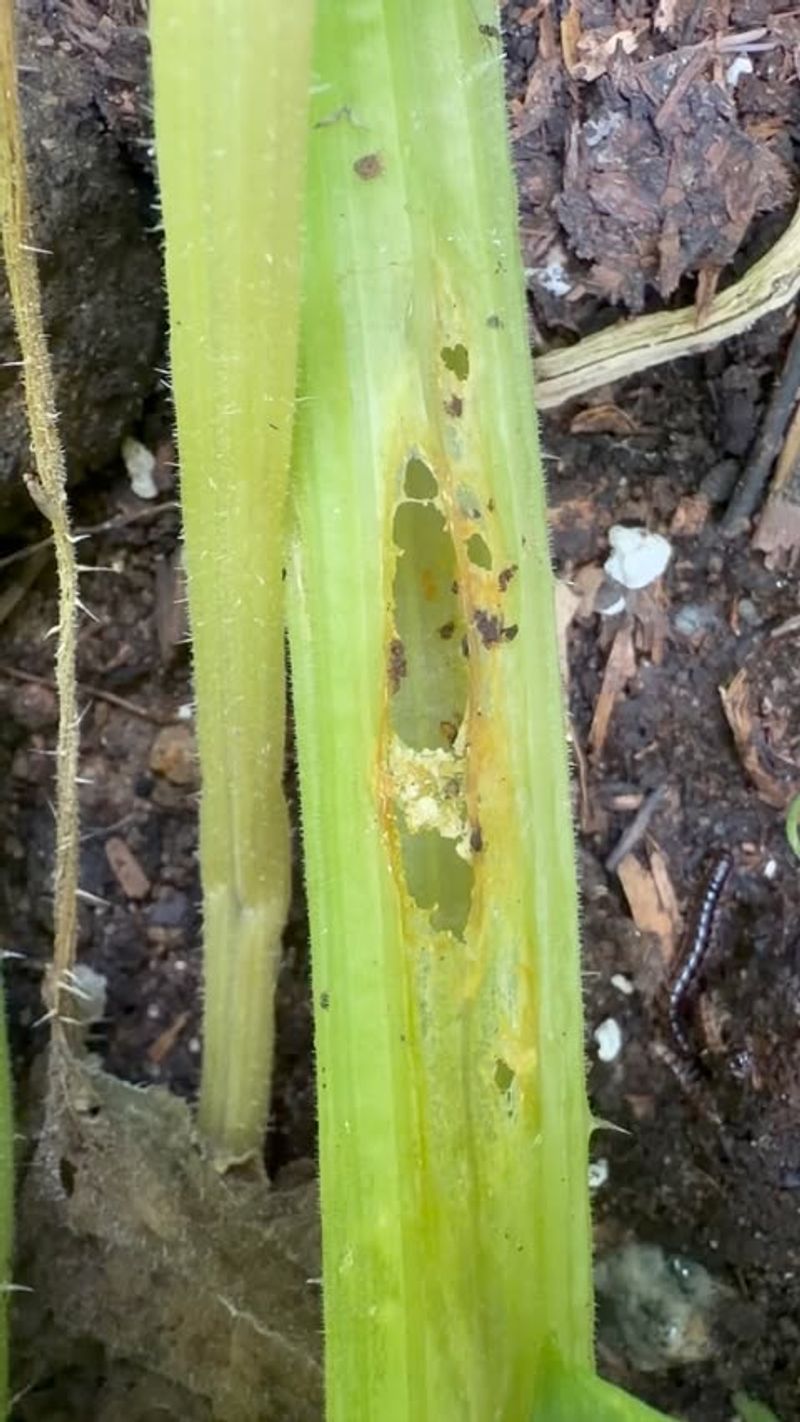
Once you have found frass and confirmed that something is feeding inside, some gardeners choose to carefully split the stem to investigate the damage and attempt removal.
This is not a guaranteed fix, but it has saved vines when done gently and followed up with proper care.
Use a clean, thin blade and make a shallow lengthwise cut along the discolored section of the stem, just deep enough to expose the hollow channel inside.
What you find inside can be surprising.
The larva is often tucked into a soft, brownish cavity surrounded by chewed plant material.
If you find it, you can carefully remove it with a toothpick or tweezers. Some gardeners find more than one larva in a single stem section, which explains why the damage is sometimes so extensive.
After removal, the stem does not just heal on its own.
Covering the cut area with moist soil and keeping it consistently damp encourages the vine to produce new roots along the buried section, a process called adventitious rooting.
Pumpkin vines are actually quite good at this if given the chance.
Mound a few inches of garden soil directly over the damaged area and water it gently. Over the following week or two, the vine may push out new roots and stabilize itself.
It will not be as vigorous as before, but it can still produce a pumpkin or two before the season ends.
6. Early Detection Matters Most
Catching the problem early is the single biggest factor in whether a vine survives a borer infestation.
A larva that has been feeding for three or four days has done far less damage than one that has had two weeks inside the stem.
The difference in recovery potential between those two scenarios is enormous, and it comes down entirely to how often you are paying attention to your plants.
Start scouting your pumpkin vines in late June in Pennsylvania.
The adult moth typically begins flying and laying eggs around the time black-eyed Susans bloom, which is a handy local timing cue.
Walk your garden every two or three days and spend a moment at each vine base.
Look for eggs, which are small, flat, and reddish-brown, often laid singly on stems and leaf stalks. Finding eggs before they hatch means you can wipe them off with a damp cloth and prevent the entry entirely.
Frass appearing for the first time means the larva just got started. At that stage, intervention has a real chance of working.
A vine with only a few days of feeding damage can often recover with stem burial and consistent watering.
Early detection is not about being a perfect gardener. It is about building a quick, simple habit of checking below the leaves.
Two minutes every other morning could be the reason you carve a jack-o-lantern this October instead of buying one at the store.
7. Row Covers Help Next Planting
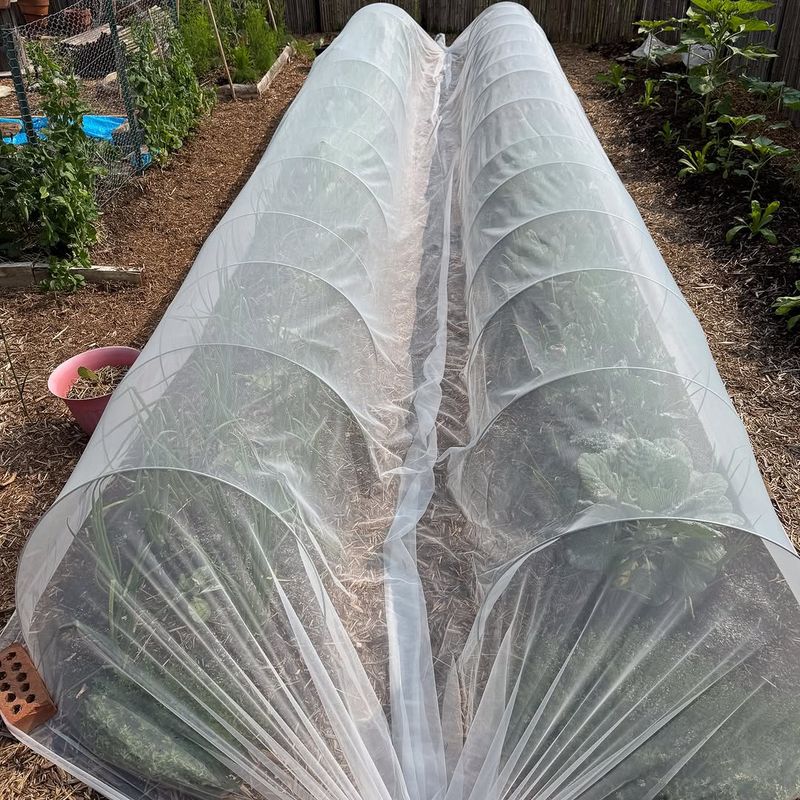
Prevention beats intervention every single time, and row covers are one of the most effective tools a Pennsylvania home gardener can use against squash vine borer moths.
A lightweight floating row cover acts as a physical shield that keeps the adult moth from reaching the vine stems to lay eggs.
No eggs mean no larvae, and no larvae mean no frass, no hollow stems, and no wilting leaves.
The key is timing.
Row covers need to go on at transplanting or direct seeding and stay in place through the main egg-laying period, which in Pennsylvania typically runs from late June into mid July.
The cover must be sealed at the edges with soil, rocks, or garden staples so moths cannot sneak underneath. A loose cover with gaps is not much better than no cover at all.
Here is the catch that trips up a lot of gardeners: pumpkins need pollinators to set fruit, and row covers block bees along with moths.
You can remove the covers once the main moth flight window has passed, usually by mid to late July, and accept some risk in exchange for open pollination.
Or you can remove covers briefly each morning during flowering to allow bee visits and replace them afterward.
The payoff is a protected vine with a real shot at producing the kind of pumpkin that makes the whole neighborhood stop and stare.
8. Rotation Breaks The Pattern
Moving your pumpkin patch to a fresh spot in the garden each year is one of the simplest long-term strategies for reducing squash vine borer pressure.
Crop rotation works because the pest’s pupae overwinter in the soil near where the previous year’s plants grew.
When the adults emerge in summer, they look for cucurbit plants nearby. If you have planted pumpkins in the same bed year after year, you are essentially rolling out a welcome mat right above where the next generation is waiting.
Penn State Extension recommends rotating cucurbit crops, which includes pumpkins, squash, cucumbers, and melons, to a different part of the garden each season.
Ideally, you want at least a two to three year gap before cucurbits return to the same spot.
Plant something completely unrelated in the old cucurbit bed, like beans, tomatoes, or peppers. These plants do not attract squash vine borers and give the soil a rest from cucurbit-specific pest pressure.
Keep a simple garden journal noting where each crop grew each year.
Even a rough sketch on paper is enough to guide your decisions at planting time.
Over three or four seasons, gardeners who rotate consistently often notice a real drop in the number of problems they face, and more pumpkins end up on the porch where they belong.