Native Pennsylvania Plants To Grow Instead Of Hostas In Shady May Beds
What if your shady garden beds could look just as beautiful as they do with hostas, but with plants that actually belong in Pennsylvania? Hostas are everywhere, and it is easy to see why.
They are reliable, they fill space well, and they handle shade without complaining. But they are not native to this region, which means they do not do much for the local ecosystem beyond looking pretty.
Pennsylvania has a surprisingly rich collection of native shade plants that bring real texture, seasonal interest, and genuine value to your yard. They support native bees, feed local wildlife, and work with your soil instead of just sitting in it.
May is actually one of the best times to get them in the ground while conditions are still cool and forgiving. If you have been defaulting to hostas out of habit, these natives might change your mind for good.
1. Foamflower
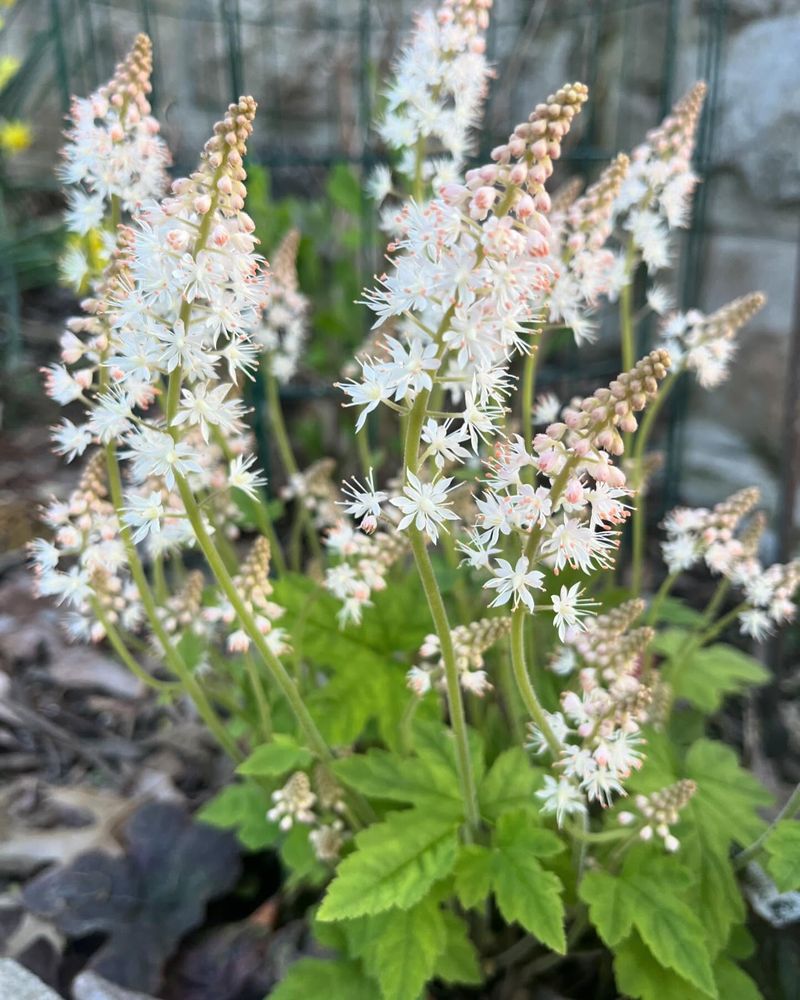
Walk through any Pennsylvania woodland in May and you might spot tiny white flowers floating like foam above heart-shaped leaves. That plant is foamflower, and it deserves a spot in every shady garden bed.
Its botanical name is Tiarella cordifolia, and it is one of the most charming native plants you can grow.
Foamflower spreads slowly by sending out runners, gradually filling empty spaces in your garden without taking over. It stays low to the ground, usually reaching only six to twelve inches tall.
The soft, fuzzy flower spikes appear in spring and attract early pollinators like native bees and small butterflies.
One thing that makes foamflower so easy to love is how adaptable it is. It thrives in moist, well-drained soil with lots of organic matter, which is exactly what most shaded Pennsylvania beds already have.
It handles everything from deep shade to partial sun without much fuss. Unlike hostas, foamflower is native to eastern North America, so it fits naturally into the local ecosystem. Birds and insects that evolved alongside it will benefit from having it in your yard.
The leaves also turn beautiful bronze and red shades in fall, giving your garden extra seasonal interest.
Plant foamflower about twelve inches apart to give it room to spread comfortably. Water it regularly during the first season, and after that it largely takes care of itself. It is a genuinely rewarding plant for beginner and experienced gardeners alike.
2. Wild Ginger
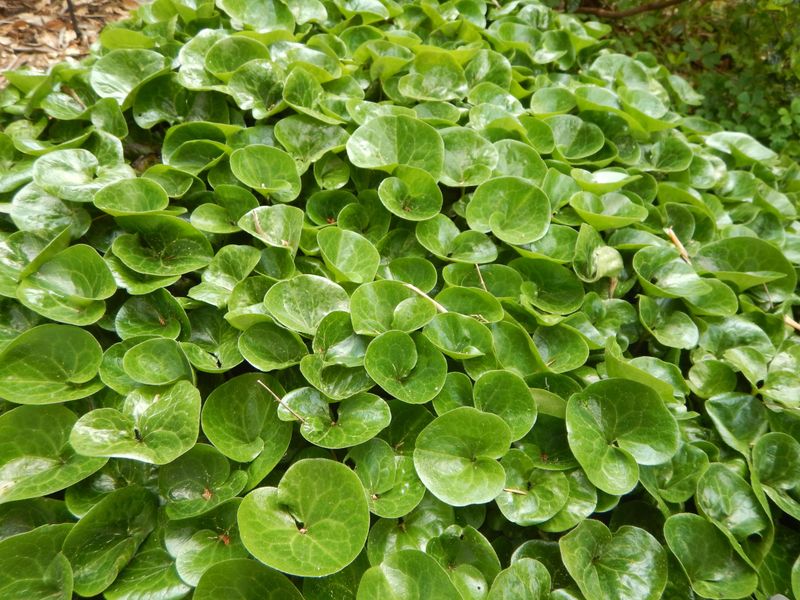
If you love the bold, leafy look of hostas, wild ginger might just become your new favorite plant. Its broad, dark green leaves form a dense carpet that smothers weeds naturally and keeps the soil cool and moist underneath.
It is one of the hardest-working ground covers you can plant in a shady Pennsylvania bed. Asarum canadense, as it is formally known, is a true Pennsylvania native. It grows slowly but steadily, spreading by underground rhizomes to fill in gaps over several seasons.
The leaves are soft and slightly fuzzy, with a rounded heart shape that creates a lush, full appearance even in deep shade.
Here is something fun: wild ginger produces small, reddish-brown flowers in spring, but they hide right at the base of the plant under the leaves. Most people never notice them, but ants do.
Your Pennsylvania Garden Changes Every Week. Your Plan Should Too.
Gardening in Pennsylvania changes quickly throughout the season. Every Friday you’ll receive a simple weekly plan showing exactly what to plant, prune, fertilize, harvest, and protect so you never miss the right timing.
Ants actually help spread wild ginger seeds, which is a fascinating little ecological partnership happening right in your garden.
The roots of wild ginger have a mild ginger scent when crushed, which is how it got its common name. However, it is not related to culinary ginger and should not be eaten. It is purely an ornamental and ecological treasure for your shade beds.
Plant wild ginger in moist, rich soil with good organic content. It pairs beautifully with ferns and foamflower for a layered, natural look. Once established, it needs very little attention and stays looking great all season long.
3. Christmas Fern
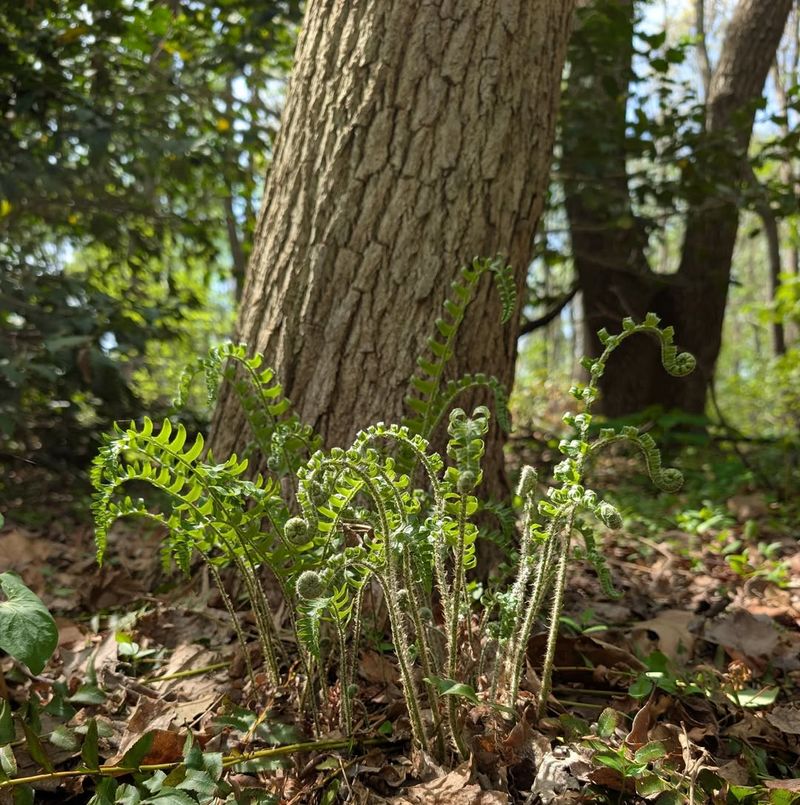
Some plants show up when the weather is nice and disappear when things get tough. Christmas fern is not one of those plants.
This tough, evergreen native keeps its dark green fronds looking great through rain, cold, and even snow, making it one of the most reliable plants you can add to a shaded Pennsylvania garden.
Polystichum acrostichoides earned its festive name because its fronds stay green through December, right into the holiday season.
Early American settlers reportedly used the fronds for holiday decorations, and honestly, it is easy to see why. The glossy, deep green leaves add rich texture to any shaded bed year-round.
In spring, new fronds emerge as tightly coiled fiddleheads that slowly unfurl into graceful arching leaves.
Mature plants can reach one to two feet tall and spread about two feet wide, creating a full, attractive clump. The arching form gives garden beds a natural, woodland feel that no hosta can quite match.
Christmas fern is remarkably easy to grow. It tolerates dry shade better than most native plants, which makes it perfect for spots under trees where the soil tends to dry out.
It prefers well-drained soil and partial to full shade, but it adapts well to a range of conditions across Pennsylvania.
Pair it with wild ginger or Solomon’s seal for a layered planting that looks intentional and beautiful. Divide established clumps every few years to keep them vigorous and to share plants with neighbors who want a low-effort, high-reward garden addition.
4. Pennsylvania Sedge
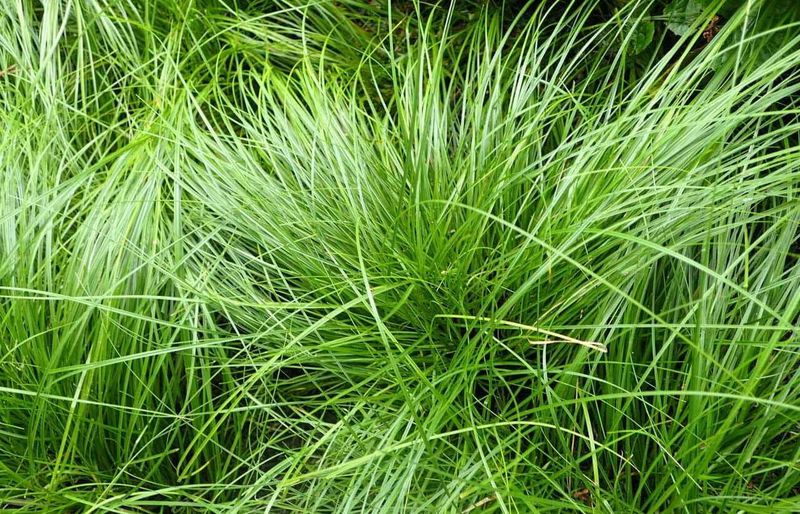
Not every shady spot needs a bold statement plant. Sometimes what a garden really needs is something soft, quiet, and effortlessly beautiful.
Pennsylvania sedge fills that role perfectly, and it does it with almost no maintenance required from you whatsoever.
Carex pensylvanica is a native grass-like plant that forms a low, fine-textured mat about six to twelve inches tall.
It grows naturally under oak trees across Pennsylvania, which means it is perfectly adapted to the dry, acidic, shaded conditions that can be so challenging for other plants. If you have struggled to grow anything under a big tree, this sedge is your answer.
In spring, Pennsylvania sedge sends up tiny, delicate flower spikes that sway gently in the breeze. They are not showy, but they add a subtle texture that makes the planting feel alive.
After flowering, the plant settles back into its soft, arching foliage that stays green well into fall and sometimes through mild winters.
Wildlife loves this plant too. Several native caterpillars use Pennsylvania sedge as a host plant, which means planting it directly supports local butterfly and moth populations. That is a big ecological benefit packed into a very small, unassuming plant.
Space plants about twelve inches apart for a ground cover effect, or mass them together more tightly for quicker coverage. Water during dry spells in the first season to help plants get established.
After that, Pennsylvania sedge is one of the most hands-off native plants you will ever grow, making it ideal for busy gardeners.
5. Blue Wood Aster
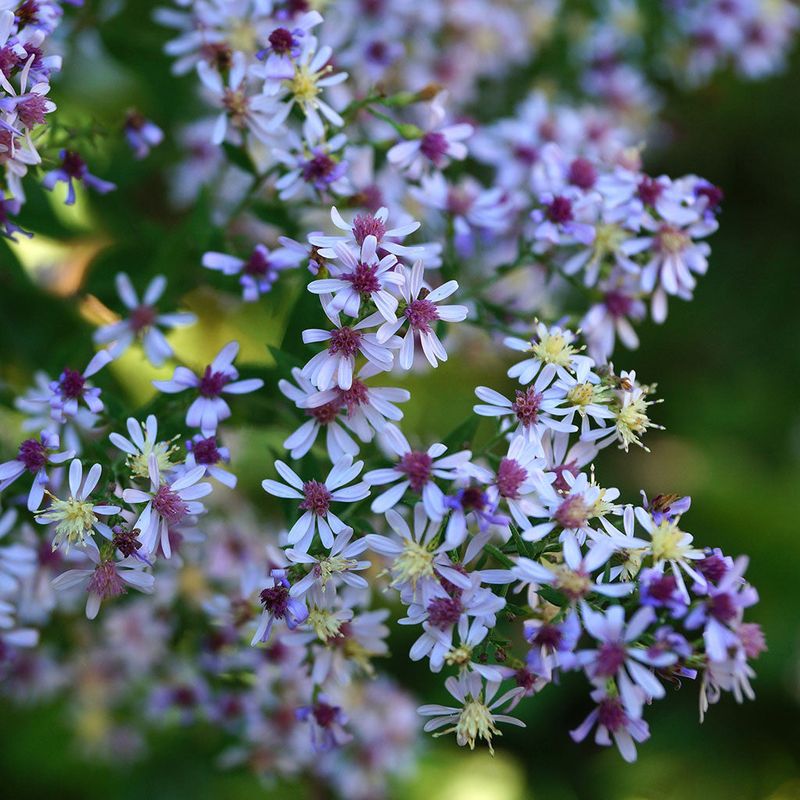
Most shade plants put on their best show in spring and then fade into the background for the rest of the season. Blue wood aster flips that script entirely.
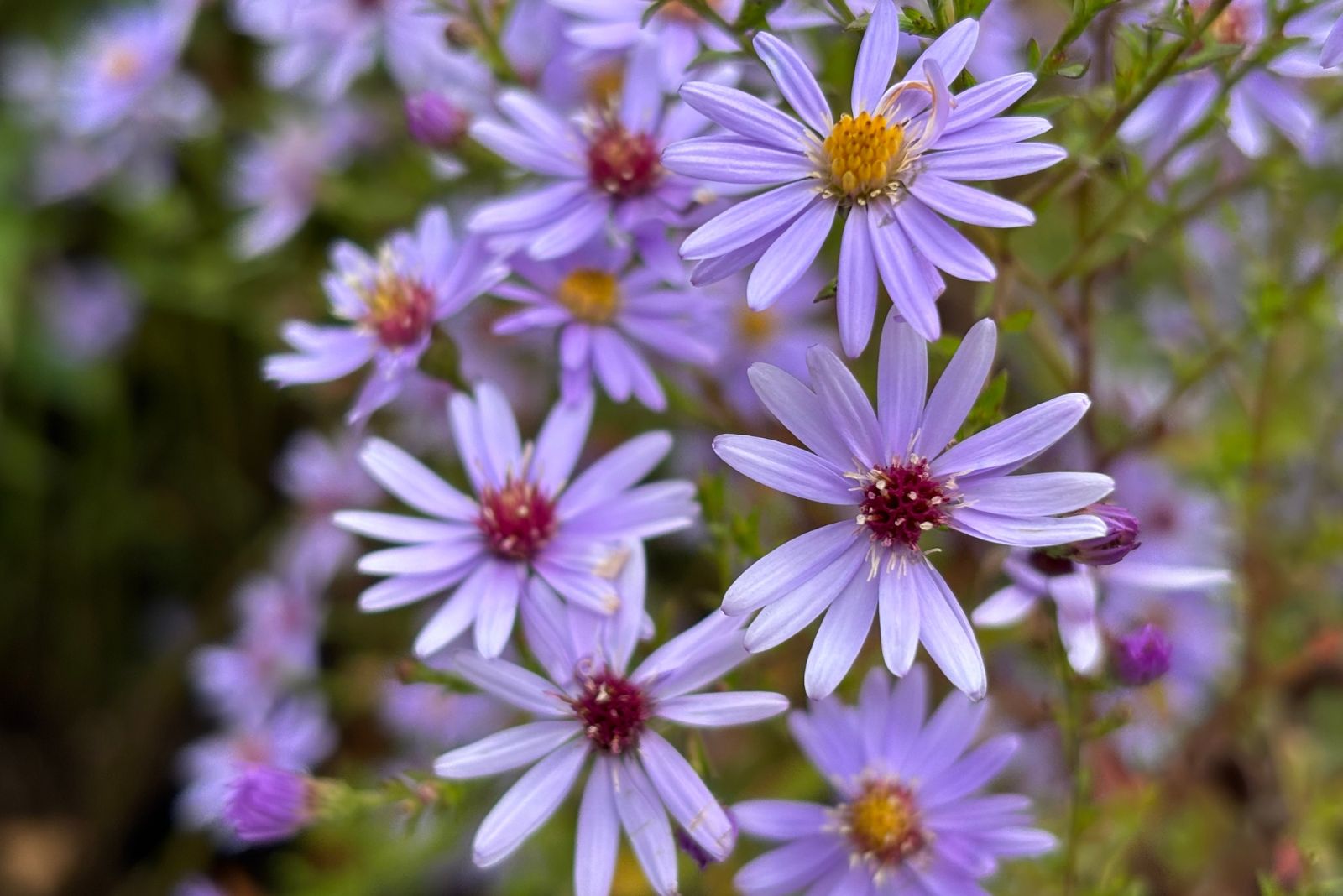
It saves its display for late summer and fall, covering itself in clouds of small, pale blue daisy-like flowers just when the rest of the garden is winding down.
Symphyotrichum cordifolium is a Pennsylvania native that handles partial shade with ease. It grows two to four feet tall and spreads naturally over time, creating a loose, airy presence in the garden.
The heart-shaped leaves are attractive all season before the flowers arrive in September and October.
Pollinators absolutely love blue wood aster. Native bees, butterflies, and beneficial insects flock to the blooms in fall, when food sources are getting scarce.
Planting this aster is essentially setting up a late-season buffet for the local insect community, which in turn supports birds and other wildlife.
Growing blue wood aster is straightforward. It prefers moist, well-drained soil and does best in partial shade, though it tolerates more sun if the soil stays reasonably moist.
It self-seeds gently, so you may find small seedlings popping up nearby each spring, which is a welcome bonus.
Cut plants back to about six inches in late fall or early spring to keep them tidy. Blue wood aster works beautifully alongside ferns and sedges, adding height and late-season color to layered shade plantings. It is the kind of plant that makes your garden feel alive long after summer ends.
6. Green-And-Gold
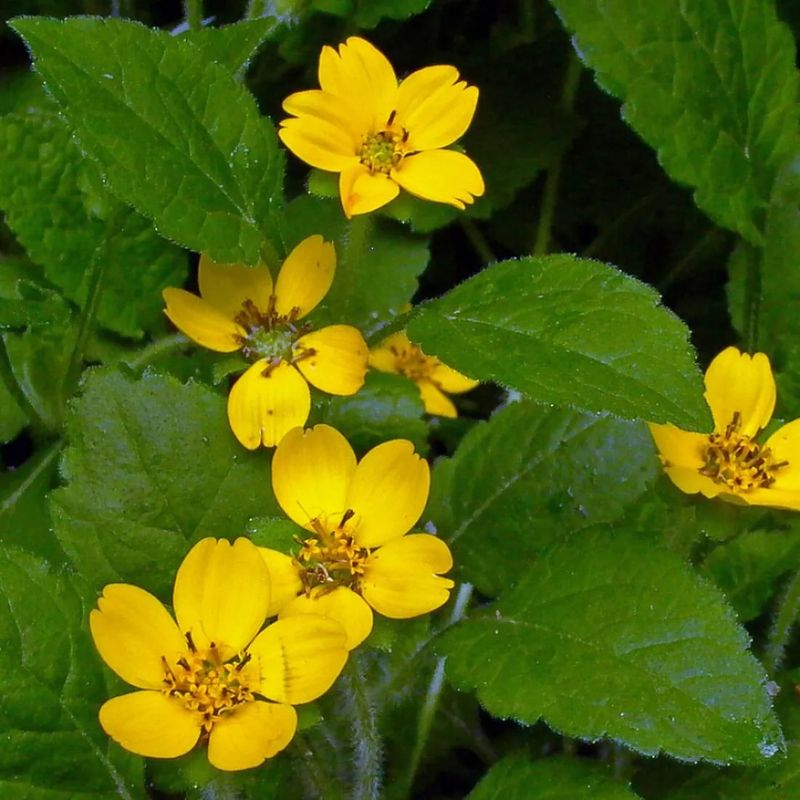
Cheerful is the only word that really captures what green-and-gold brings to a shady garden bed.
The bright yellow, star-shaped flowers pop against the dark green foliage in a way that genuinely makes you smile when you walk past. It is one of those plants that earns its place every single season.
Chrysogonum virginianum is a low-growing native perennial that stays under one foot tall while spreading outward to form a dense, weed-suppressing mat.
It blooms most heavily in spring, but unlike many plants, it keeps producing scattered flowers throughout summer and into fall.
That extended bloom season makes it especially valuable in a shade garden that needs consistent color.
The plant is native to the eastern United States and grows naturally in open woodlands and forest edges, which means it is perfectly adapted to the light conditions of a typical Pennsylvania shade bed.
It prefers well-drained soil and handles both partial and full shade, though it blooms more freely with a little morning sun.
Did you know green-and-gold is related to sunflowers? Both belong to the Asteraceae family, and you can see the family resemblance in those cheerful yellow blooms.
It is a fun conversation starter when guests visit your garden and ask about that bright, low-growing plant near the path.
Space plants about twelve to eighteen inches apart and water them regularly during the first growing season. Once established, green-and-gold is drought-tolerant and very low-maintenance.
It pairs especially well with Christmas fern, creating a bold contrast between the yellow flowers and deep green fern fronds.
7. Solomon’s Seal
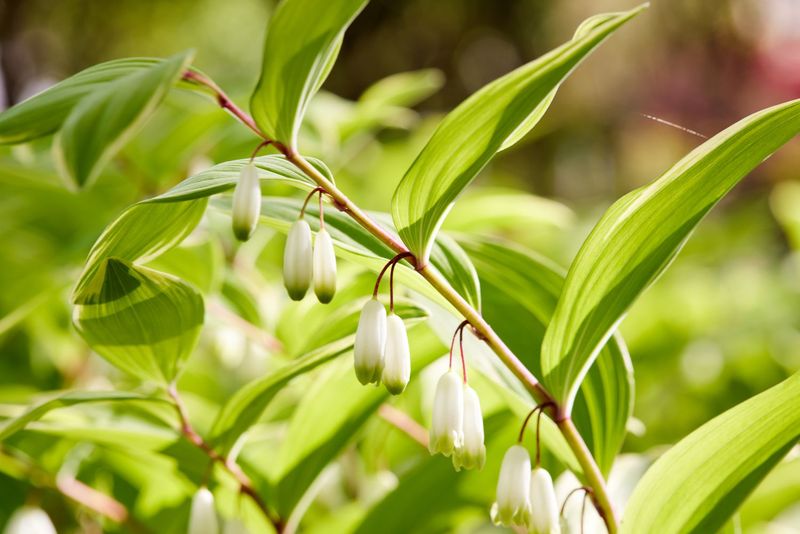
There is something almost elegant about Solomon’s seal that sets it apart from every other shade plant on this list.
The long, arching stems curve outward like the arms of a dancer, and in May, pairs of small white bell-shaped flowers dangle from each stem like tiny lanterns. It is genuinely one of the most graceful native plants in the eastern United States.
Polygonatum biflorum grows naturally in rich, moist woodlands across Pennsylvania, so it is completely at home in a shaded garden bed with good organic soil.
Plants typically reach two to three feet tall and spread slowly by underground rhizomes, gradually forming generous clumps that get more impressive with each passing year.
The foliage is just as beautiful as the flowers. Smooth, oval leaves line each stem in a neat, alternating pattern that creates a layered, architectural look in the garden.
In fall, the leaves turn a warm golden yellow before dropping, and small blue-black berries appear along the stems, which birds happily eat.
Solomon’s seal is named for the circular scars left on the rootstock after the stems die back each year. The scars resemble the ancient seal of King Solomon, which is a small but fascinating piece of botanical history worth sharing with curious gardeners.
Plant Solomon’s seal in moist, humus-rich soil in partial to full shade. It pairs beautifully with ferns, foamflower, and wild ginger for a layered, naturalistic planting that looks like it grew there on its own.
Give it room to spread and it will reward you with years of effortless beauty.