8 Native Texas Shrubs That Survive Freezes And Drought
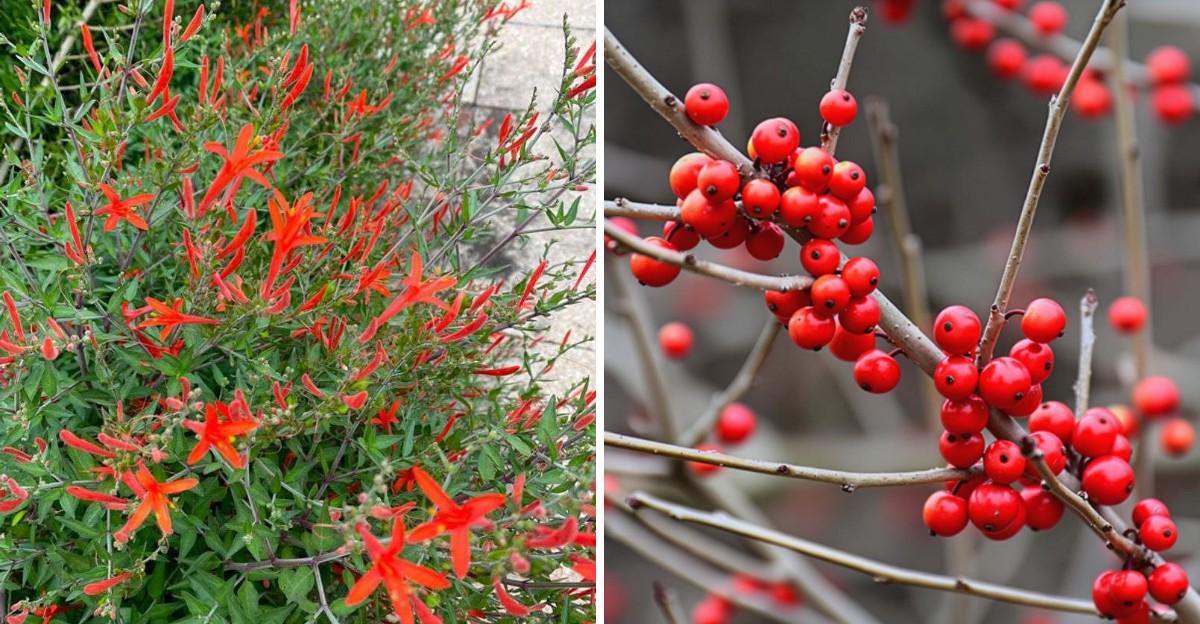
In February 2021, parts of Texas stayed below freezing for days, yet many wild hillside shrubs bounced back by spring. Those same tough plants also shrug off summers when rain disappears for weeks and the ground cracks open.
One of them blooms with flowers that smell like grape soda, which still makes me grin every spring. Another tends to burst into purple flowers after a good rain, so locals jokingly call it a barometer bush.
I used to baby thirsty imported shrubs every July, until my water bill finally taught me a lesson. Native shrubs grew up with this wild weather, so they ask for far less fuss once their roots settle.
You might be surprised how many of these tough beauties also feed hungry birds and busy bees. Which hardy Texas native will earn the sunniest, driest corner of your yard this coming year?
1. Agarita
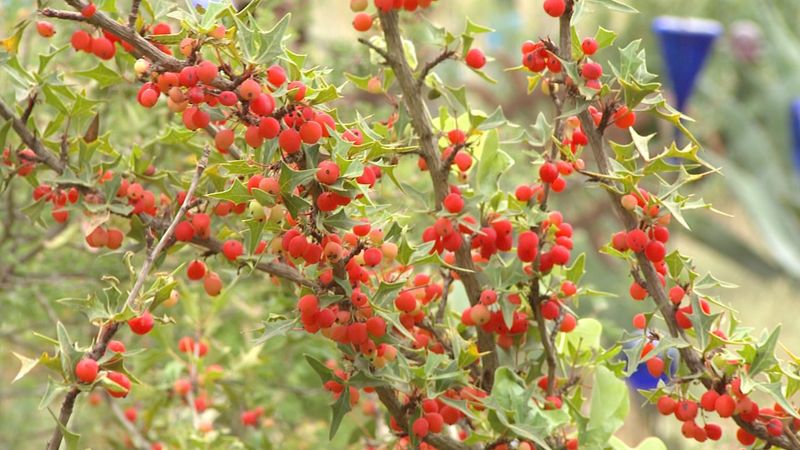
Few shrubs dare to bloom in late winter, yet agarita opens sweet yellow flowers while most yards still look sleepy.
Bees find those tiny blossoms fast, and the honey-like scent drifts across the yard on warm February afternoons.
Each stiff leaf splits into three spiny leaflets with a blue-gray tint that looks almost frosted in sunlight. Plants usually reach three to six feet tall, forming a prickly mound that deer mostly leave alone.
By late spring, small red berries ripen among the thorns, and birds start visiting the shrub for snacks. Old-time cooks gathered those tart berries for jelly, often by beating branches over a sheet on the ground.
Personally, I love planting agarita under windows, because nobody wants to push through those sharp leaves uninvited.
Quail and other small birds also tuck themselves inside the dense branches when hawks circle overhead.
Full sun gives you the most flowers and fruit, though part shade works fine under oaks. Rocky limestone and chalky caliche both suit agarita well, as long as extra water drains away quickly.
During the first two summers, give it a deep weekly soak to help roots reach cooler soil. After that, rainfall usually carries it through drought, and freezing nights rarely bother this tough evergreen.
Wear thick gloves when planting, since those leaf points poke right through thin cotton without warning. Trim only stray branches, and you will enjoy a tidy, wild-looking shrub that asks for very little.
2. Cenizo
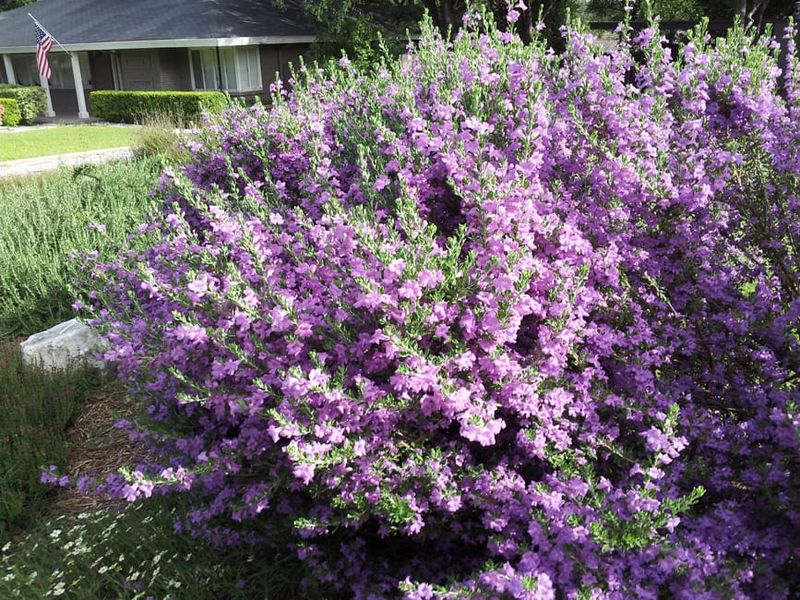
Locals swear this silvery shrub predicts rain, because it often bursts into purple blooms right after a summer storm.
The real trigger seems to be humidity and moisture, but watching it flower overnight still feels a little magical.
Cenizo, or Texas sage, usually grows four to six feet tall with soft gray leaves covered in tiny hairs. Those fuzzy hairs reflect harsh sunlight and slow water loss, which helps it handle blazing afternoons with ease.
Flowers range from lavender to deep purple, though some selections show off white or pink blossoms instead.
Bees and butterflies crowd around the bell-shaped flowers, especially during those sudden bloom flushes after rain.
I have to admit that I nearly drowned my first cenizo by watering it like a thirsty petunia. Soggy roots are its biggest weakness, so plant it on a slope or raised bed in heavy clay.
Full sun keeps the shape dense and the blooms plentiful, while shade makes branches stretch and flop. It handles alkaline, rocky soil beautifully, which explains why it grows wild on caliche hills out west.
Most cenizo plants handle winter lows near ten degrees, making them a fine choice across much of the state. Gardeners in the coldest northern areas may prefer a protected spot near a warm south-facing wall.
Skip the tight box shearing that turns cenizo into gumdrops and reduces its flowers each season. A light trim in late winter keeps it natural, letting that silver foliage glow beside darker green neighbors.
3. Flame Acanthus
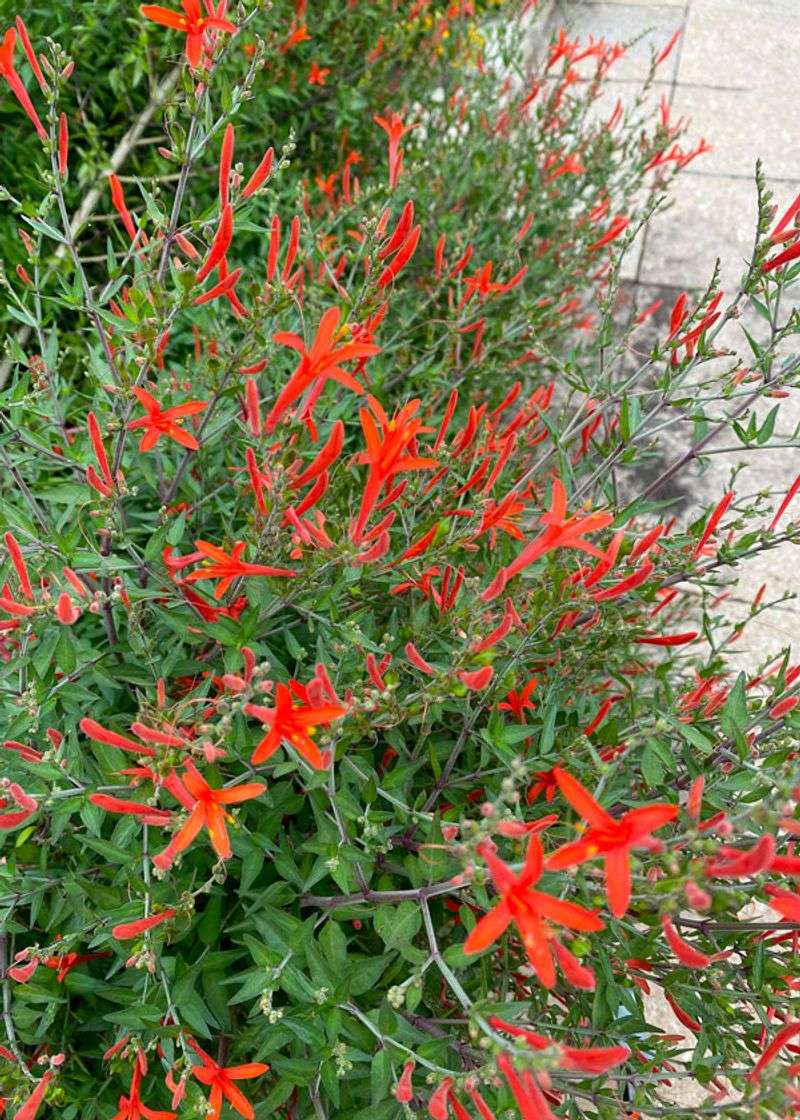
Hummingbirds treat flame acanthus like a roadside diner, zipping in for nectar from midsummer straight through fall.
Its skinny orange-red tubes fit their long bills perfectly, and I love watching them squabble over the best branches.
This deciduous shrub, Anisacanthus quadrifidus var. wrightii, usually reaches three to four feet tall and about as wide. Pale peeling bark and narrow green leaves give it a loose, airy look in mixed borders.
Blooms appear in heavy flushes during hot weather, especially after a good soaking rain or deep watering. Butterflies visit too, so you get plenty of motion in the garden when many other plants look tired.
Cold winters can freeze the stems to the ground, which surprised me the first time it happened. Roots usually survive the chill, and fresh shoots return in spring and bloom on that new growth.
Full sun brings the biggest show, though a little afternoon shade still produces plenty of orange tubes. Rocky limestone or heavy clay both work fine, provided water drains away instead of puddling around the crown.
Once established, a deep drink every few weeks in long dry spells keeps flowers coming steadily. Many gardeners cut the stems back to about six inches in late winter for a fuller shape.
Deer generally pass it by, and seedlings sometimes pop up nearby, giving you free plants to share. Tuck one near a patio chair, and you can enjoy front-row seats for the hummingbird show.
4. Possumhaw Holly
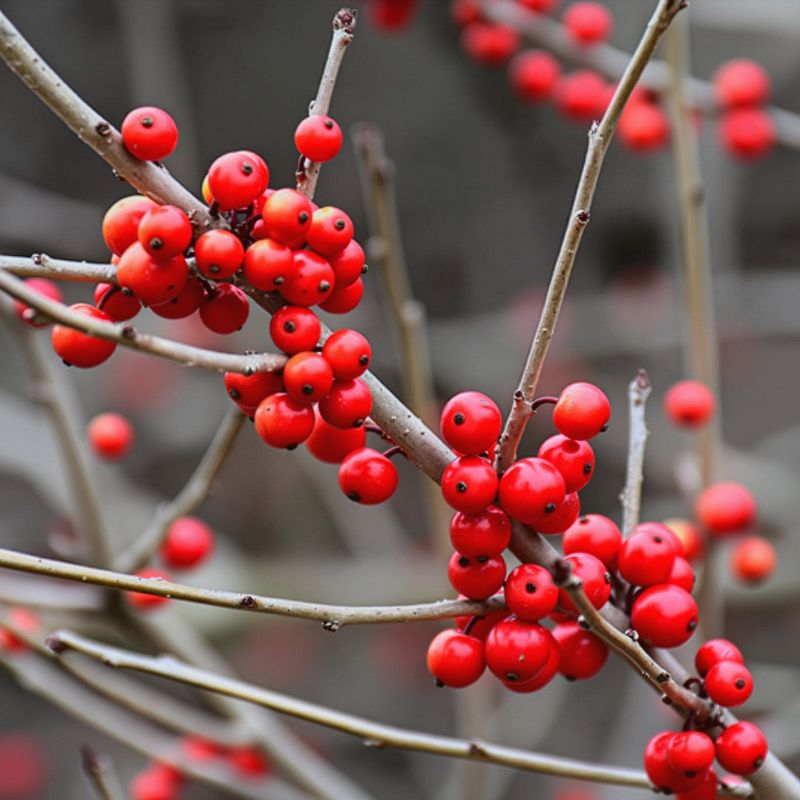
Bare winter branches rarely look exciting, but possumhaw covers its gray twigs with glowing red berries after leaves fall.
On a cold, cloudy morning, those bright clusters look like someone strung tiny holiday lights through the yard.
Ilex decidua is a deciduous holly that grows as a large shrub or small tree, often fifteen feet tall. Smooth, pale gray bark sets off the fruit beautifully, and the leaves turn yellowish before dropping in autumn.
Only female plants make berries, so buy them in fall when you can see the fruit clusters. A male holly nearby, including yaupon, usually supplies enough pollen for a good crop the following year.
Cedar waxwings and robins strip the berries in late winter, when other wild food has mostly run out. Opossums and other small mammals also nibble the fallen fruit, which likely explains its funny common name.
Possumhaw grows wild along creeks and bottomlands, yet it handles drought surprisingly well once roots settle. It tolerates heavy clay and limestone soils, plus occasional flooding after big spring storms roll through town.
Cold is barely a concern here, since this holly grows naturally far north of the Red River. Hard freezes simply tighten the show, and the berries usually hang on through much of winter.
Plant it in full sun for the heaviest fruit, though light shade still gives a respectable display. Prune lower limbs to reveal the trunk shape, and you get a living winter ornament for years.
5. Yaupon Holly
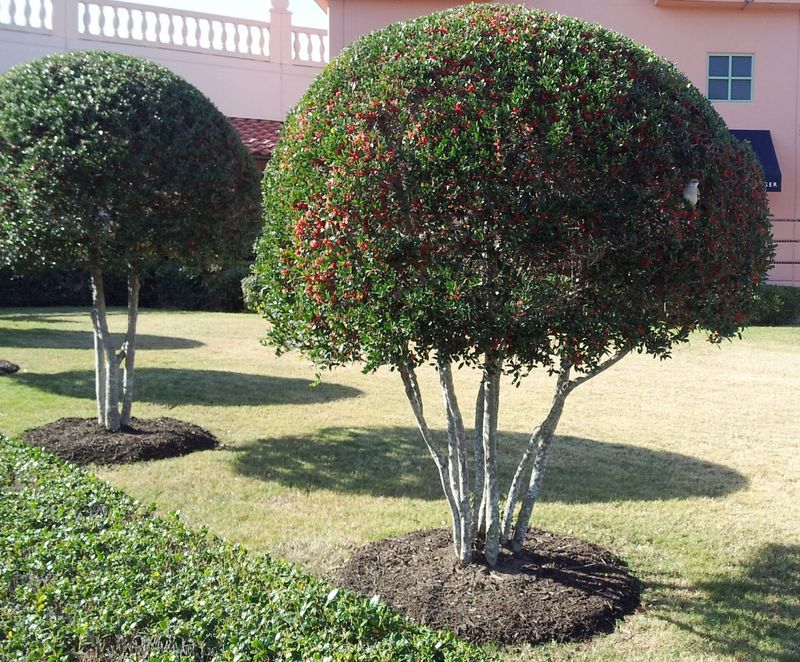
Long before coffee shops existed, native peoples brewed yaupon leaves into a caffeinated drink, and some farms sell it today.
It is the only plant native to North America known to contain caffeine, which makes it a fun conversation starter.
Yaupon holly stays evergreen year round, with small glossy leaves that look tidy in every single season. Wild plants can reach fifteen to twenty feet, but dwarf selections stay under four feet tall.
Female plants carry shiny red berries from fall into winter, giving hungry songbirds a reliable buffet. Cedar waxwings often arrive in noisy flocks and clean off a whole shrub in one afternoon visit.
Popular dwarf forms like Nana rarely produce berries, so choose a female selection if birds matter most to you. Weeping types add a graceful touch, and their drooping branches look lovely beside a front door.
Few shrubs handle such different conditions, from salty coastal breezes to heavy clay and dry upland soil. Sun or shade both work, though fuller sun makes denser branches and noticeably more colorful fruit.
Once established, yaupon handles long dry spells, and hard winter freezes rarely cause more than minor leaf burn. Water weekly for the first summer, then let natural rainfall handle most of the work afterward.
I truly believe it beats imported boxwood for hedges, because it needs less water and fewer treatments. Shape it in late winter, and keep cuts light so the plant keeps its soft natural outline.
6. Evergreen Sumac
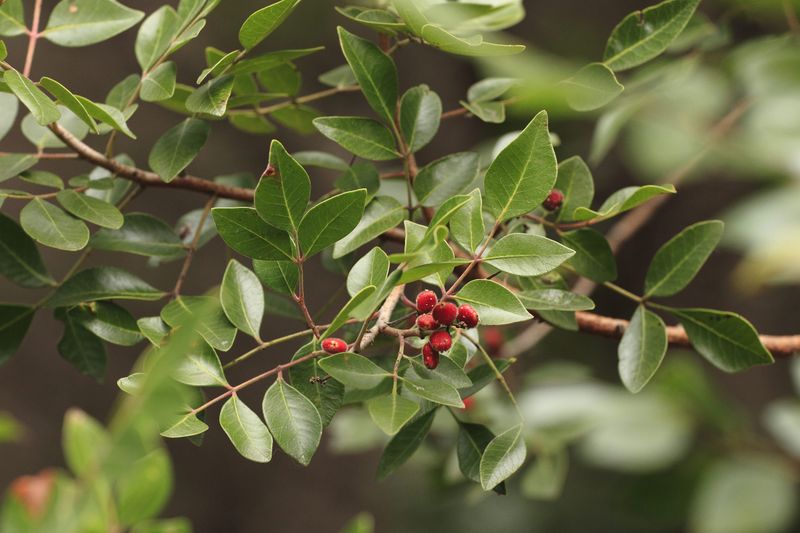
Glossy leaves that look freshly polished make evergreen sumac stand out on rocky hillsides where little else stays green. Touch one, and you will feel a leathery surface built to hold moisture through brutal summer heat.
Rhus virens grows as a rounded shrub or small tree, usually reaching six to twelve feet tall. Unlike poison sumac, this friendly native is safe to handle and makes a handsome garden plant.
Small creamy flower clusters appear in late summer, and bees swarm them when few other plants are blooming. Fuzzy red fruits follow in fall, and birds pick them over steadily as the weather turns cooler.
To my surprise, the foliage often blushes maroon after cold snaps, adding winter color you rarely expect. New spring leaves sometimes show a pinkish tint before settling into their usual deep, shiny green.
Give it full sun or light shade, and plant it in soil that drains well after heavy rain. Limestone and caliche suit it nicely, which makes it ideal for rocky lots in the Hill Country.
Once roots spread, evergreen sumac rarely needs extra water and usually does fine without any fertilizer at all. Pests and diseases seldom cause trouble, so most of your effort goes into simply enjoying it.
Its dense branches create a fine privacy screen between neighbors, especially where thirsty hedges have struggled before. Expect slow growth at first, but patience pays off with a sturdy shrub that handles both extremes.
7. Texas Mountain Laurel
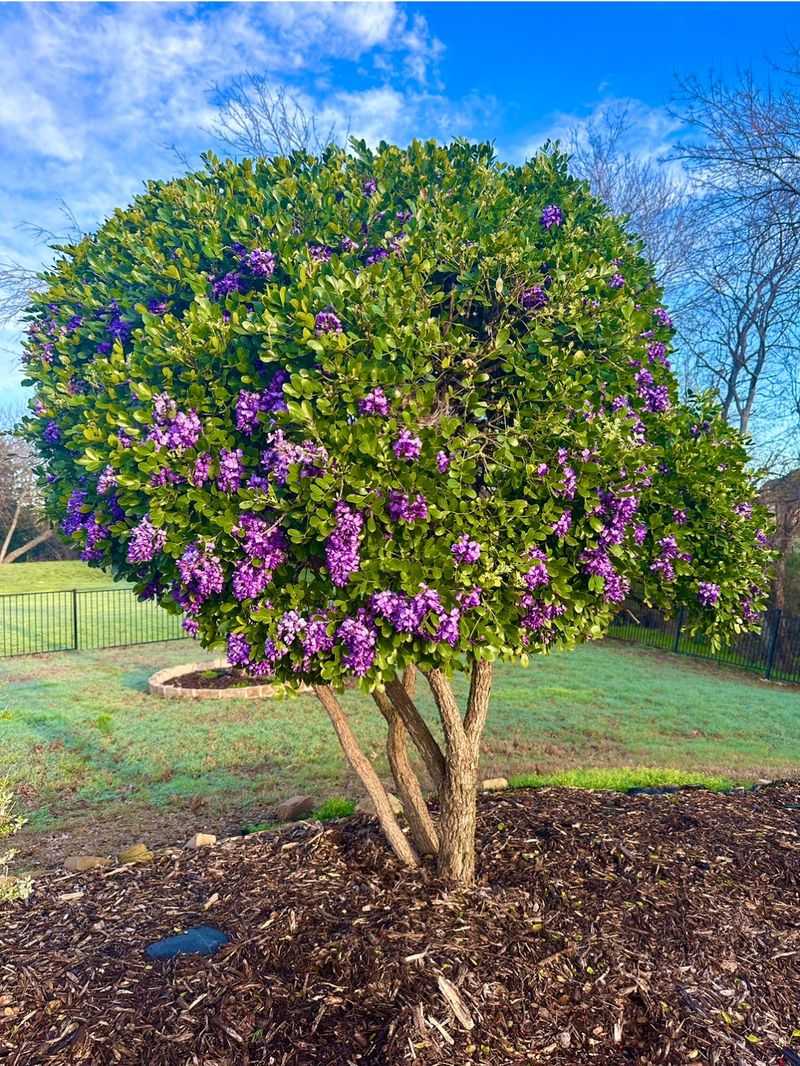
Walk past a blooming Texas mountain laurel in March, and you will swear someone spilled grape soda nearby. Those drooping purple clusters smell sweet and fruity, and the scent can carry across a whole yard.
This slow-growing evergreen, Sophora secundiflora, usually forms a shrub or small tree around ten to fifteen feet tall.
Botanists now often list it as Dermatophyllum secundiflorum, so you may spot either name on nursery tags.
Glossy, leathery leaves stay dark green year round and shine handsomely against limestone walls or pale gravel. Bees love the early flowers, which open before many other shrubs have even started waking up.
Woody, fuzzy pods follow the blooms and hold bright red seeds that look like little candies. Those seeds are highly poisonous if chewed, so keep curious kids and pets from collecting them.
Full sun and fast-draining alkaline soil make this plant happiest, and it handles rocky caliche with ease. Heavy, soggy clay often causes root problems, so raise the bed or choose a slope for planting.
Most mature plants handle winter lows near ten degrees, though hard freezes can brown leaves or flower buds. Damaged foliage usually recovers in spring, so wait patiently before pruning anything after a rough cold snap.
Watch for genista caterpillars in spring, since they can chew through leaves quickly on young plants. Personally, I think the wait for those fragrant blooms makes every slow inch of growth worthwhile.
8. Fragrant Sumac
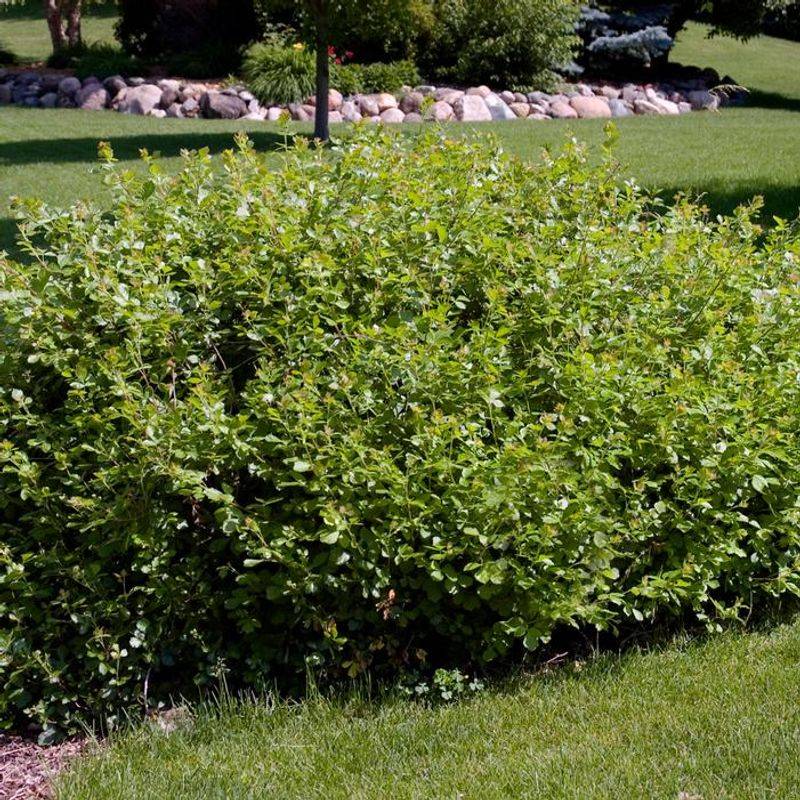
Crush a leaf of fragrant sumac, and you get a sharp, spicy scent that some people love and others don’t. That odd aroma earned it the nickname skunkbush, though I think it smells more like citrus peel than skunk.
Rhus aromatica is a low, spreading shrub, usually three to six feet tall with three-lobed leaves. Those leaves look a bit like poison ivy at first, yet this native is harmless to touch.
Tiny yellow flowers appear on bare stems in early spring, giving bees a welcome snack before most blooms. Fuzzy red berries ripen by summer, and their tart flavor once flavored a lemonade-like drink for many families.
Autumn brings another treat as leaves turn fiery orange and red, even in places with mild weather. Birds snack on the berries, and the low branches give ground-feeding birds shelter from predators.
Cold is no problem at all, since this shrub grows wild as far north as southern Canada. Drought is also manageable, because its spreading roots hold onto dry slopes and help control soil erosion.
Plant it in full sun or part shade, in almost any soil that does not stay waterlogged. It spreads slowly by suckers, so give it room or pull wandering shoots each spring to keep tidy.
Gardeners in the western half of the state often grow the closely related skunkbush, Rhus trilobata, too. Either one makes a tough, low-water cover for sunny banks, where mowing feels like a risky chore.