Native Texas Trees To Plant Instead Of Podocarpus For Privacy
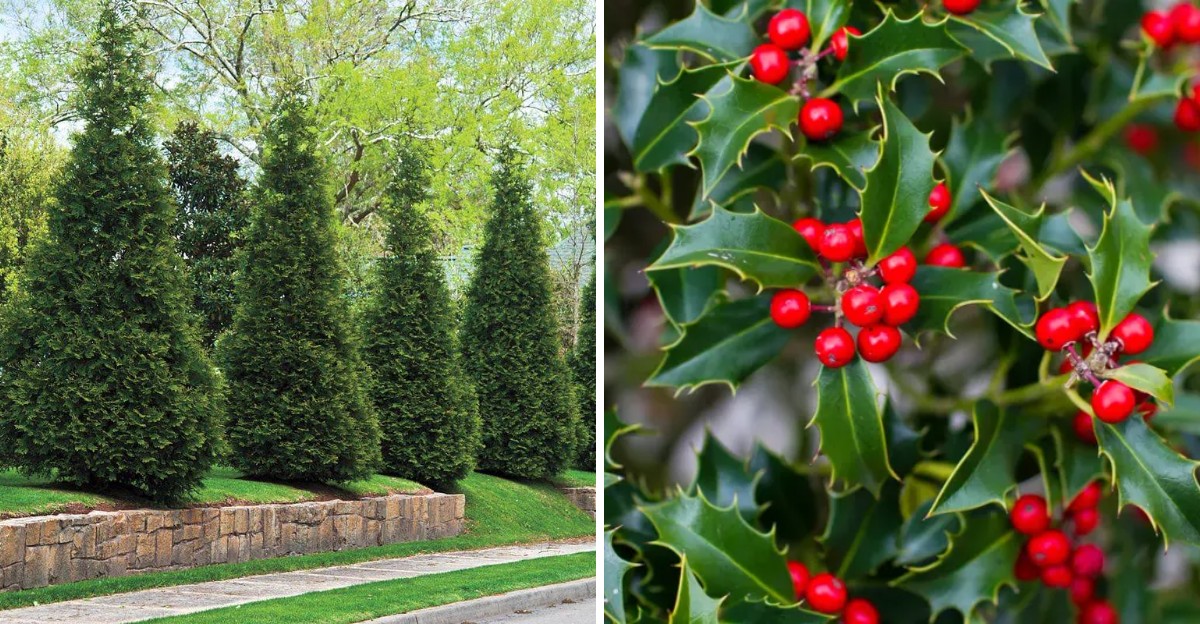
On paper, podocarpus looks like the perfect privacy plant. It’s tall, narrow, evergreen, and neat enough to line a fence without much effort.
No wonder it shows up in so many Texas neighborhoods. But it has a few drawbacks that don’t make it onto the plant tag.
It grows slowly, so waiting for real privacy can take years. Hard freezes in North and Central Texas can leave it browned and battered.
Its berries and leaves are toxic to dogs and cats. And because it comes from overseas, it offers very little to local birds, bees, and butterflies.
Native trees can do the same job, often better. Many grow faster, handle Texas weather with ease, and feed wildlife while blocking the view next door.
Some even add flowers, berries, or fall color to the mix. Your privacy screen can do a lot more than stand there looking green.
1. Yaupon Holly
Ask any Texas gardener about a plant that refuses to quit, and yaupon holly will likely come up fast.
Native Americans once brewed its leaves into a tea, since it is the only plant in North America with natural caffeine. That fun fact is just the start of its charm.
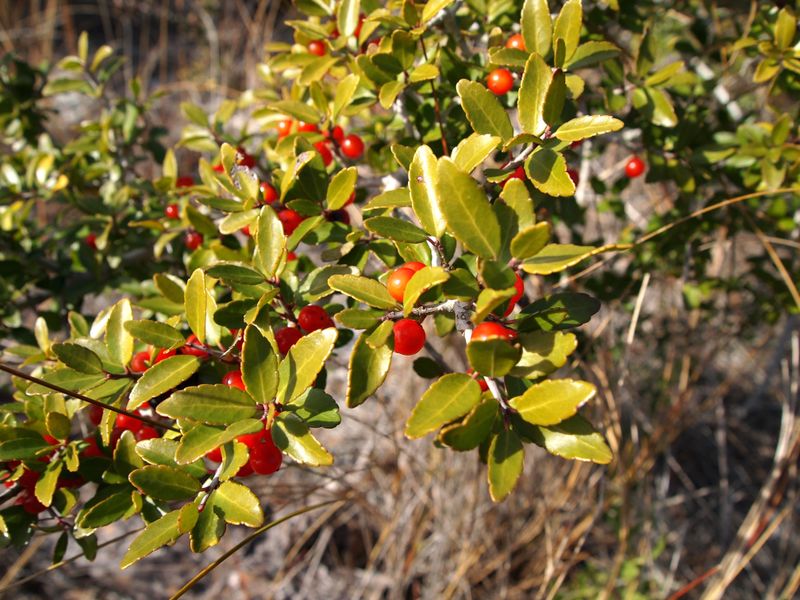
Yaupon can grow as a dense small tree around 15 to 25 feet tall. Its leaves are tiny, glossy, and packed close together. When you plant several in a row, they knit into a solid green wall.
Heat does not bother it. Drought does not scare it either. Yaupon grows in sandy soil, clay, and even rocky ground, so it fits almost any Texas yard.
Female plants make bright red berries in fall and winter. Birds like cedar waxwings and robins flock to them when other food is hard to find. If you want berries, buy female plants from a nursery that labels them.
For privacy, plant yaupon about 6 to 10 feet apart. Water it deeply once a week during the first summer. After that, rain usually does the job except during long dry spells.
You can trim it into a neat hedge or let it grow loose and natural. It also takes pruning well, so you can shape it into a tree form with a few trunks. Many people love the look of multi-trunk yaupons near patios.
Watch out for dwarf types if you need height. Varieties like Nana stay knee-high and will not block much. Choose upright or standard forms instead.
Yaupon is a smart, low-cost pick that gives you privacy, wildlife, and a little Texas history all at once.
2. Wax Myrtle
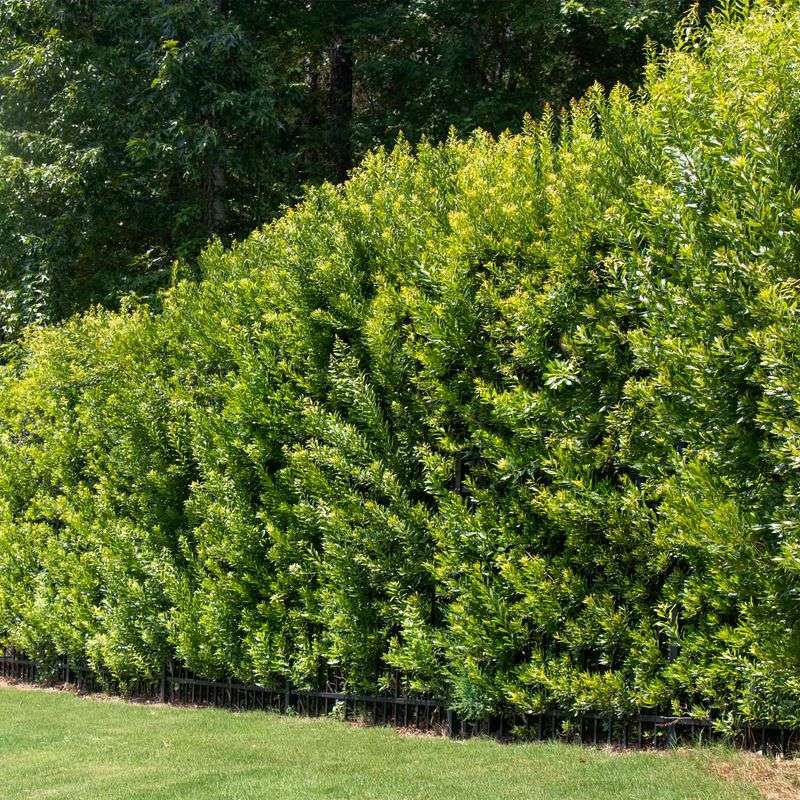
Need privacy, like, yesterday? Wax myrtle might be your new best friend. It is one of the fastest-growing native options in Texas, often adding three to five feet a year.
Colonial settlers boiled its berries to make wax for candles. The candles gave off a nice, clean smell. That is why some people still call it bayberry.
Wax myrtle grows into a large shrub or small tree, usually 10 to 20 feet tall. The leaves stay green all year and smell spicy when you crush them. Many folks say the scent helps keep some bugs away.
Your Texas Garden Changes Every Week. Your Plan Should Too.
Gardening in Texas changes quickly throughout the season. Every Friday you’ll receive a simple weekly plan showing exactly what to plant, prune, fertilize, harvest, and protect so you never miss the right timing.
Birds are big fans of this plant. Yellow-rumped warblers eat the waxy berries all winter long. Few other birds can digest the wax, so wax myrtle gives these warblers a special food source.
Plant wax myrtle in full sun or part shade. It handles wet spots, sandy soil, and even salty coastal air. That makes it great for yards near Galveston or Corpus Christi.
Space plants about 6 to 8 feet apart for a thick hedge. Trim lower branches lightly so the bottom stays full. If you skip this step, it may get leggy and open near the ground.
One downside is that wax myrtle sends up suckers from its roots. Pull them or mow them if they pop up where you do not want them. Also, very old plants can thin out after 15 to 20 years.
Still, for a quick, bird-friendly, nice-smelling screen, wax myrtle is hard to beat. Plant it in fall, and by next summer you may already have a cozy green wall.
3. Carolina Cherry Laurel
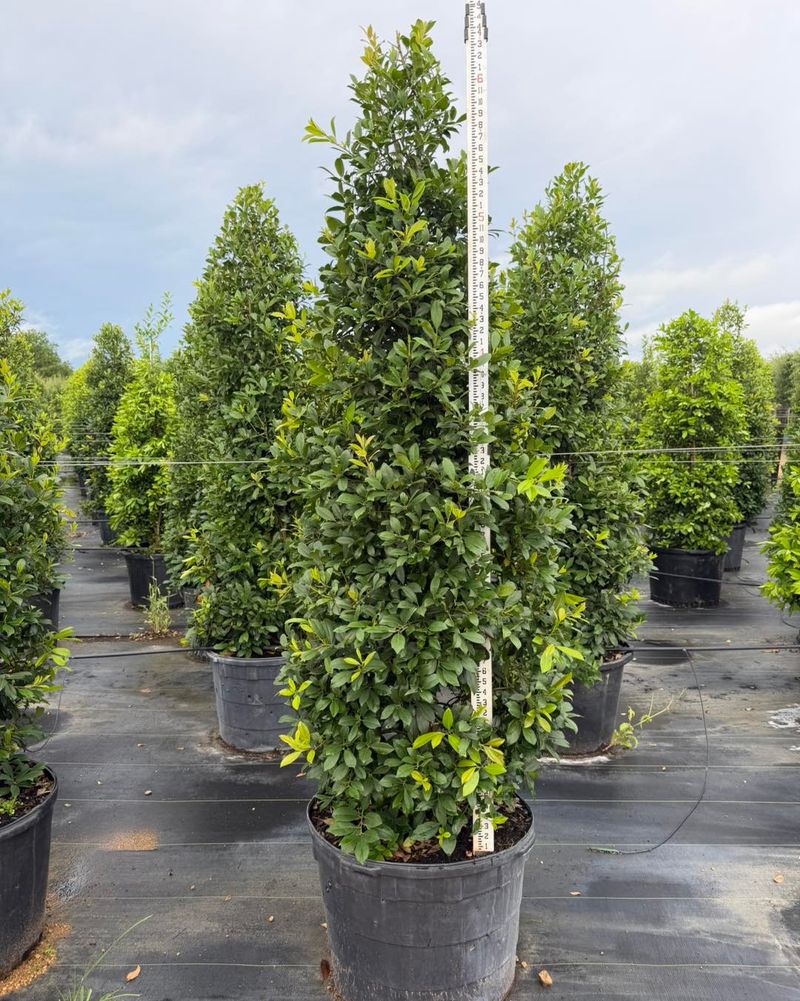
Walk through an old East Texas neighborhood, and you will spot tall, shiny hedges along many driveways. Plenty of those are Carolina cherry laurel. Southern families have trusted it for generations.
The leaves are dark green and glossy, almost like they were polished. They grow thick from top to bottom. You can keep it as a tall hedge or let it rise into a small tree 20 to 30 feet high.
In early spring, tiny cream-colored flowers cover the branches. Bees buzz all over them. Later, small black fruits form, and birds like mockingbirds gobble them up.
Now for a serious safety note. The leaves and seeds are toxic to people, pets, and livestock. Keep it away from horse pastures and goat pens, and teach kids not to snack on the fruits.
Cherry laurel likes well-drained soil and full sun to part shade. It grows best in East and Central Texas. In the hot, dry west, it may struggle without extra water.
Plant shrubs about 8 to 10 feet apart for a screen. It grows fairly fast, often two feet a year. Trim it in late winter or after flowering to keep a neat shape.
Birds tend to drop seeds around the yard. You may find little seedlings popping up in flower beds. Pull them while they are small so they do not take over.
Looking for a classic Southern look with very little work? Carolina cherry laurel delivers. Just plant it in a spot where curious pets and grazing animals cannot reach it, and you will enjoy a lush green barrier for years.
4. Eastern Red Cedar
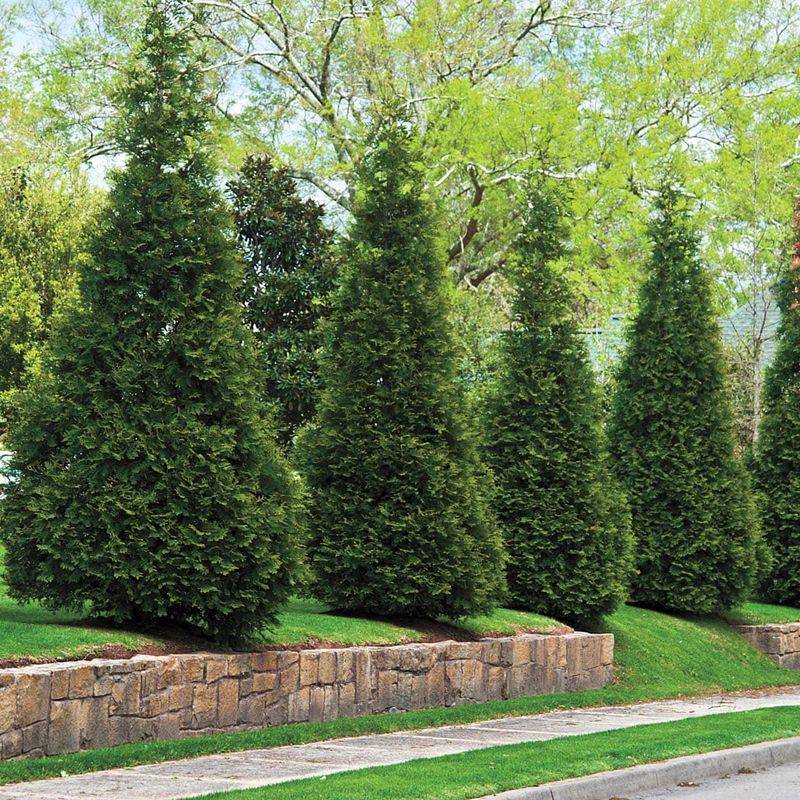
Out on Texas farms, ranchers have planted rows of eastern red cedar for a long time. Why? Because few trees stand up to hard wind and dry summers quite like it.
Eastern red cedar is actually a juniper, not a true cedar. Its foliage is made of tiny, scale-like leaves packed tight on every branch. The result is a dense evergreen that blocks views and wind all year.
Most trees grow 30 to 40 feet tall with a cone or column shape. They can live for hundreds of years. Some old ones in the eastern United States are over 900 years old.
Poor soil is no problem. Rocky, sandy, or clay ground all work. Once roots settle in, it rarely needs extra water.
Birds love the blue, berry-like cones. Cedar waxwings got their name from eating them. The thick branches also give birds safe places to nest and hide from hawks.
Here is one thing to watch. Red cedar can host cedar-apple rust, a fungus that spreads to apple and crabapple trees. If you grow those fruits, plant your cedars far away from them.
Some people also sneeze around junipers in winter when pollen flies. Choose female trees if allergies run in your family, since males make the pollen.
For a privacy row, plant trees about 8 to 12 feet apart in full sun. Shade makes them thin and sparse. Water weekly the first year, then let nature take over.
If you want a tough, long-lasting barrier that laughs at wind and drought, eastern red cedar is a solid choice.
5. American Holly
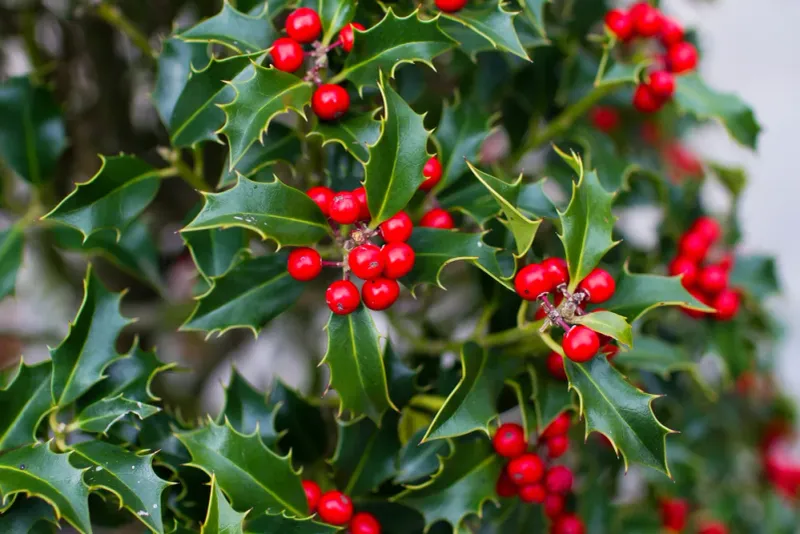
Some trees just look like the holidays. American holly, with its spiny leaves and bright red berries, is the one people pictured on old Christmas cards. It is also a clever guard for your yard.
Those prickly leaves are not just for show. Nobody wants to push through a holly hedge. Planted along a property line, it keeps out stray visitors and wandering animals.
American holly is native to East Texas. It grows into a dense, pyramid-shaped tree, often 15 to 30 feet tall. Its growth is slow, so be patient in the first few years.
Soil matters with this one. It likes acidic, well-drained ground, like you find in the Piney Woods. In alkaline soil, the leaves may turn yellow.
Want berries? You need both a female and a male tree. Only females make berries, and they need a male nearby to make it happen. One male can handle several females.
Birds such as bluebirds and robins eat the berries in late winter. Even so, the berries are not safe for people or pets to eat. Keep that in mind if you have small kids.
Plant hollies about 8 to 10 feet apart in sun or part shade. Add mulch to hold moisture and keep roots cool. Pine straw works great and adds a little acid to the soil.
Wear thick gloves when you prune. Trust us, those leaves bite. Trim in winter, and you can bring the clippings inside for festive decor.
With a little patience, American holly becomes a beautiful, prickly wall that looks good every season.
6. Texas Mountain Laurel
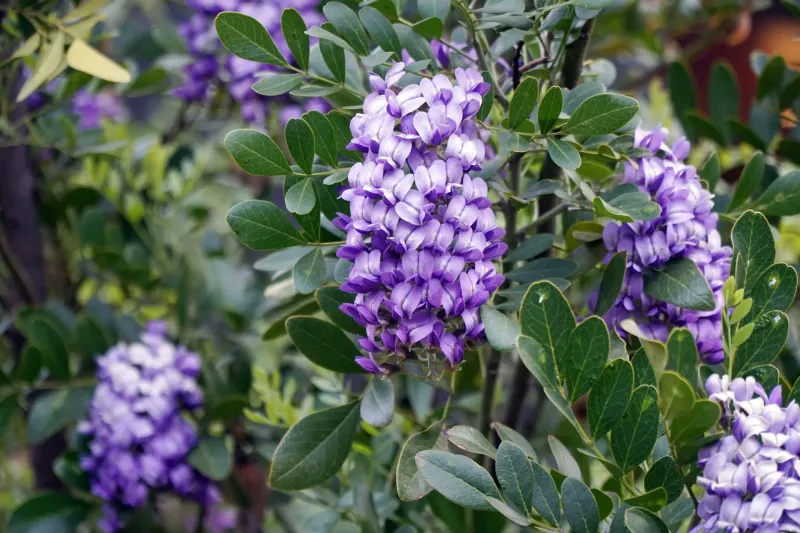
Close your eyes in late winter near a Texas mountain laurel, and you might think someone spilled grape soda. That sweet scent comes from its big, purple flower clusters. Many people say it smells exactly like grape candy.
The blooms show up from late winter to early spring. They hang like bunches of grapes against shiny green leaves. Bees and butterflies come early to enjoy them.
Texas mountain laurel grows slowly into a small, dense tree. Most stay under about 15 to 20 feet tall. That size works nicely for small yards, patios, and spots near windows.
Leaves stay glossy and green all year. The thick branches give you good screening even when the tree is young. You can let it grow with many trunks for a fuller shape.
It thrives in the Hill Country and West Texas. Rocky, alkaline soil suits it well. Good drainage is a must, because soggy roots cause problems.
Once it is settled, it needs very little water. That makes it a great pick for water-wise gardens. Avoid heavy fertilizer, since it prefers lean soil.
Now a big warning. The bright red seeds inside the pods are highly toxic. Pick up fallen pods if you have kids or pets, and never use the seeds for crafts.
Watch for the genista caterpillar in spring. It can chew leaves quickly. Pick them off by hand or use a natural spray made with Bt.
For privacy with a burst of color and a smell you will remember, Texas mountain laurel is worth the wait.
7. Southern Magnolia
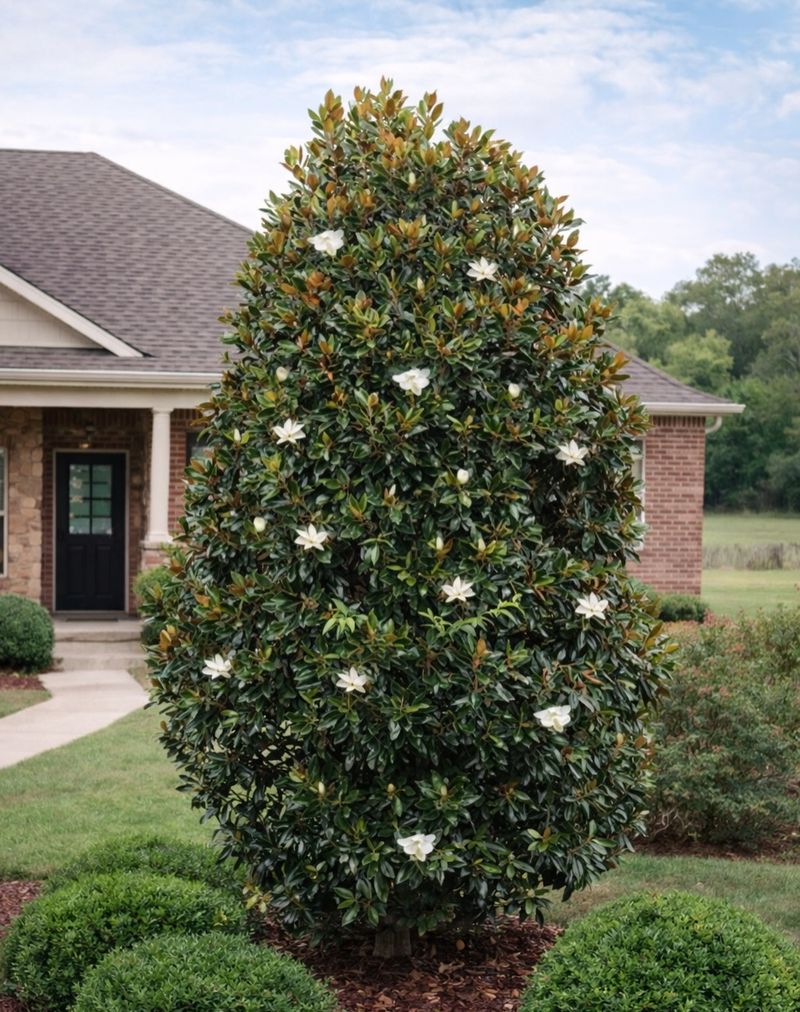
Few trees say Southern charm like a blooming magnolia. Its huge white flowers can be as wide as a dinner plate. The lemony fragrance drifts across a whole yard on warm evenings.
Southern magnolia is native to East Texas. Its leaves are large, thick, and glossy green on top. Many have a fuzzy, rusty-brown color underneath that looks great when the wind flips them.
Full-size trees get very big, often 60 to 80 feet tall. That is too much for most city lots. Luckily, compact varieties solve that problem.
Little Gem is the star for small spaces. It stays closer to 20 to 25 feet tall and about 10 feet wide. It also blooms younger and longer than the giant types, often from spring into fall.
Plant magnolias in full sun or part shade. They like rich, slightly acidic soil that drains well. Water deeply during dry summers, especially for the first two years.
For a screen, space Little Gem trees about 8 to 10 feet apart. Keep branches low to the ground for the best privacy. Magnolias look fuller when you do not trim off the bottom limbs.
The trees do drop leaves all year. The leaves are tough and slow to break down. Leave them under the tree as mulch to save time raking.
Did you know? Magnolias are one of the oldest flowering plants on Earth. They existed before bees, so beetles were their first pollinators.
Choose a compact magnolia, and you get privacy, fragrance, and a living piece of ancient history right outside your door.