How To Stop Blue Jays From Dominating Your Virginia Feeders This Fall
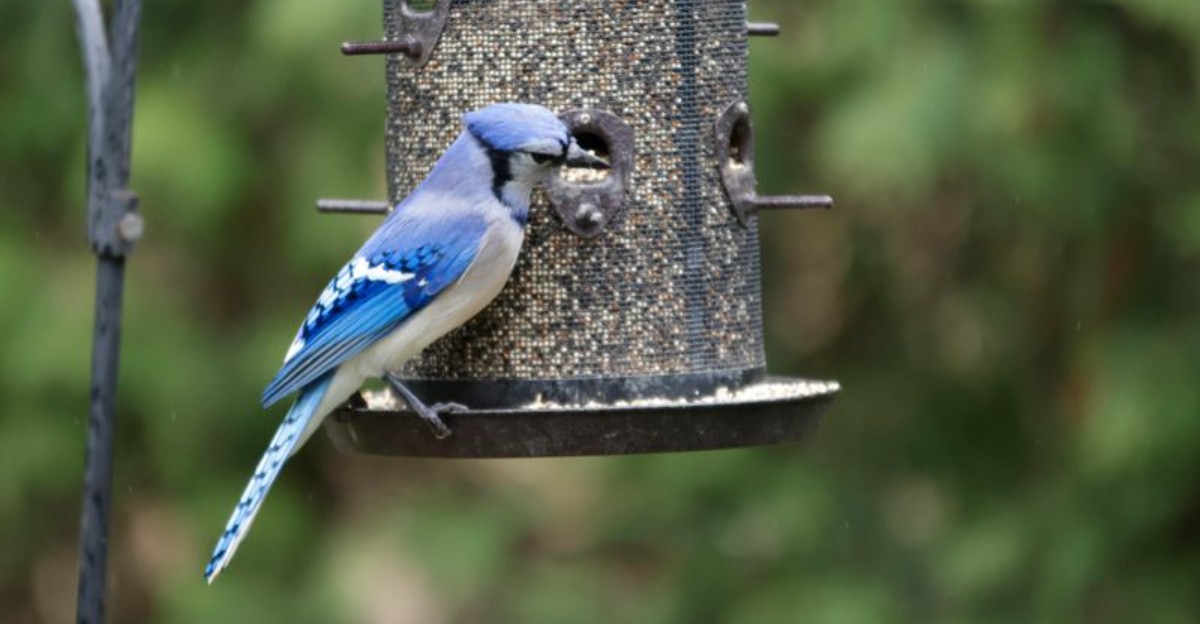
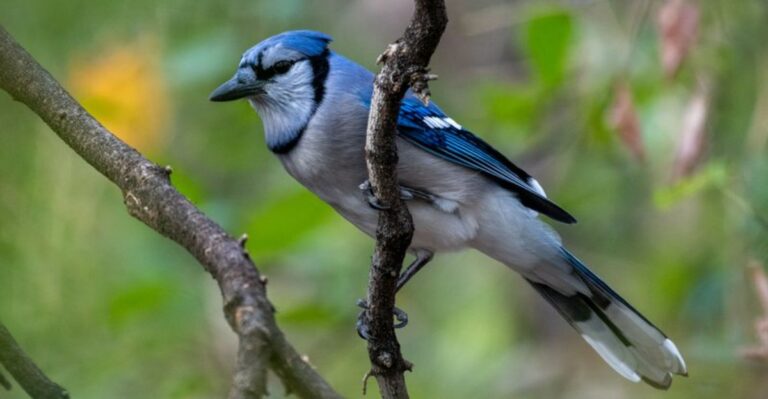
If you feed birds in Virginia, you’ve probably watched a gang of blue jays empty a tray in minutes. They’re bold, beautiful, and loud enough to rattle your coffee mug.
Meanwhile, chickadees and finches wait politely in the bushes, hoping for leftovers. Fall makes it worse, since jays turn into busy little hoarders and carry off acorns and seeds to stash for winter.
You don’t have to pick a side, though. A few smart changes to seed, feeder style, and placement can share the buffet more fairly.
Some tricks cost almost nothing, while others take a small upgrade. The steps below show how to outsmart one of the cleverest birds in the backyard.
Jays Stash Food For Winter, So They Swarm Feeders
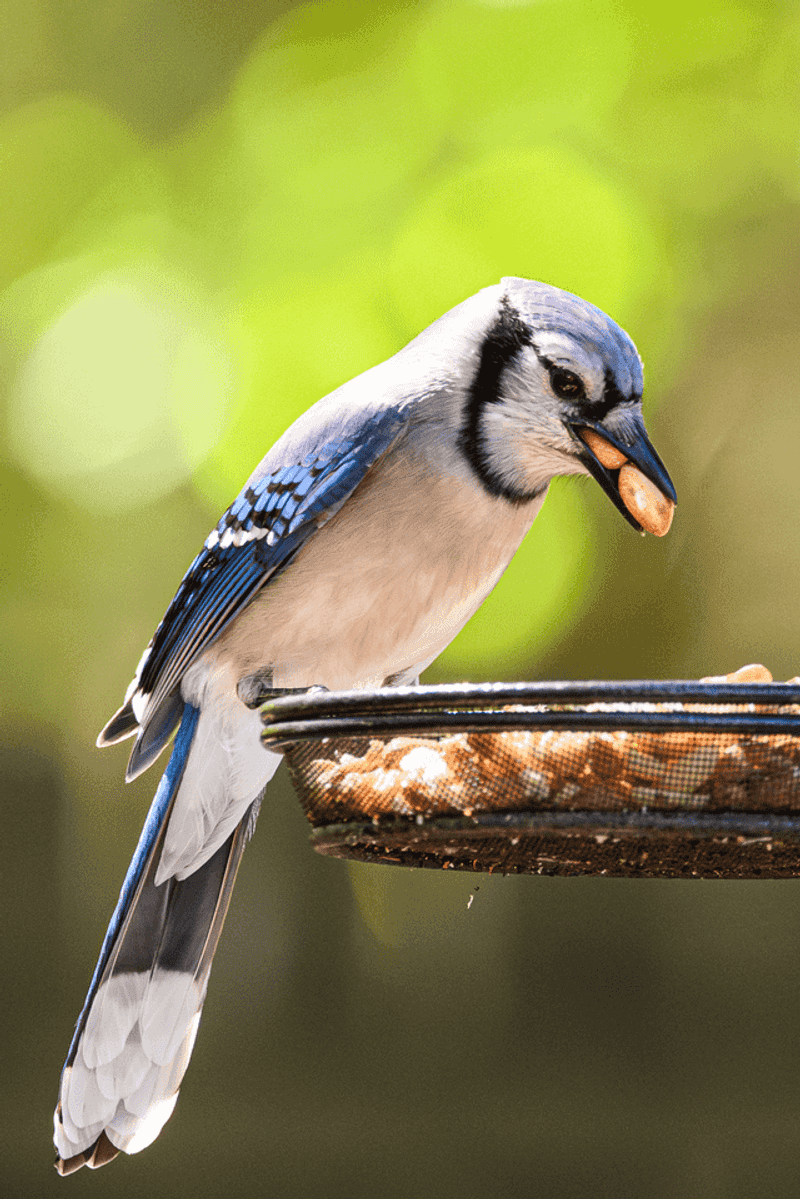
Picture a squirrel with wings and a loud mouth. That is pretty much a Blue Jay in October, racing to pack away snacks before the cold arrives.
Blue Jays eat nuts, seeds, grains, insects, fruits, and berries. In fall, their menu shifts heavily toward acorns and other rich, fatty nuts.
Here is the real reason your feeder empties so fast. Jays cache food, which means they hide it in many spots to eat later.
Caching helps them survive rough weather and lean winter months. When wild food runs low, those hidden stashes become a life-saving pantry.
Ever notice a jay gulping seed after seed? A special throat pouch lets it carry several peanuts at once before flying off.
Their memory is impressive too. Jays can recall the locations of many hidden stashes, even weeks after tucking them away.
Across Virginia, jays make repeated trips to feeders all through autumn. Each visit is quick, focused, and aimed at grabbing food to hide somewhere else.
Big open trays and large foods like peanuts and sunflower seeds suit them best. Groups of jays act confident and territorial, which pushes shy birds aside.
Knowing why they swarm changes how you respond. Jays are not being greedy for fun, since they are simply preparing for hard times.
Once you understand their habits, the fixes start making sense. Every tip ahead works with jay behavior rather than fighting against it.
Offer Nyjer Or Other Seeds Jays Skip
Sometimes the easiest fix is hiding right in the seed bag. Change the menu, and the rowdy guests may wander off on their own.
Black oil sunflower seed works like a dinner bell for Blue Jays. If that is your main offering, expect a crowd of blue visitors every morning.
Safflower seed tells a different story. Jays generally dislike its bitter taste, yet cardinals and many finches eat it happily.
Small white safflower seeds look a bit like sunflower seeds without the stripes. Many bird stores sell it in plain bags or mixed blends.
Nyjer, often called thistle seed, is another smart choice. The seeds are tiny and black, perfect for finch beaks.
Jays typically find Nyjer too much work for too little reward. They would rather chase bigger snacks than pick at those small grains.
Your Virginia Garden Changes Every Week. Your Plan Should Too.
Gardening in Virginia changes quickly throughout the season. Every Friday you’ll receive a simple weekly plan showing exactly what to plant, prune, fertilize, harvest, and protect so you never miss the right timing.
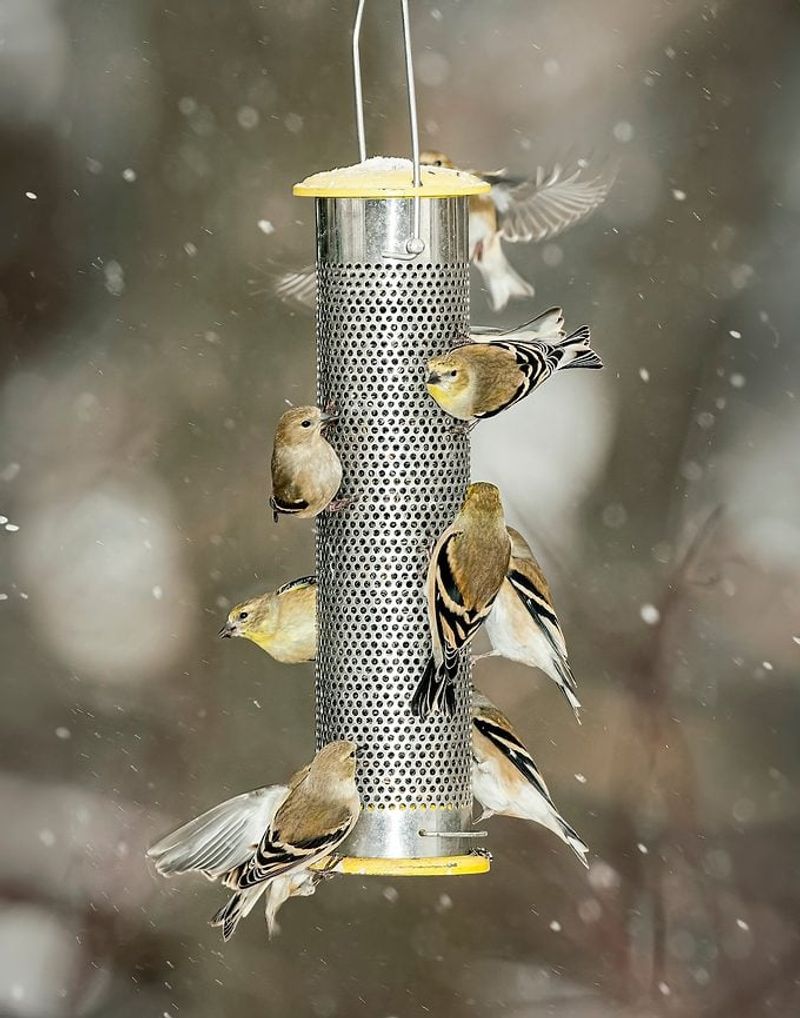
Goldfinches love Nyjer, and Virginia has plenty of them in fall and winter. Their olive winter feathers make them easy to overlook, but they show up fast.
Fresh Nyjer matters, since old seed dries out and birds ignore it. Buy smaller bags and shake the feeder now and then to keep it flowing.
Switching seeds gradually helps your regular birds adjust. Try mixing safflower into your usual blend, then increase the amount over a couple of weeks.
Before long, the feeder should attract a calmer crowd. Jays may still pass through, though they will likely spend less time there.
Switch To Tube Feeders With Short Perches
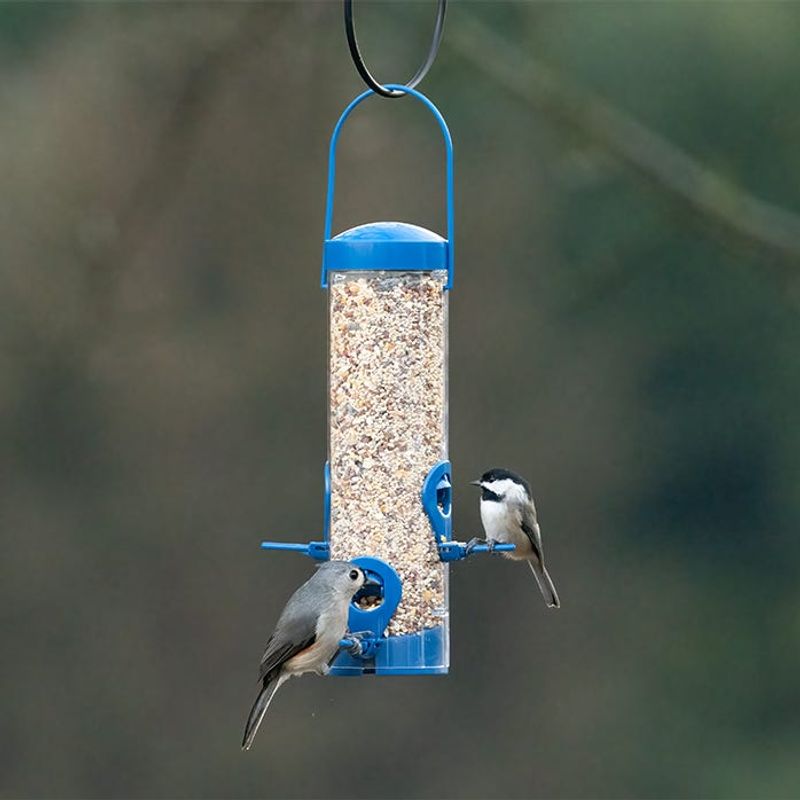
Imagine trying to eat dinner while balancing on a pencil. For a Blue Jay, a tiny feeder perch feels just about that awkward.
Jays are big birds, often around a foot long from beak to tail. They like sturdy feeders with wide landing spots and plenty of elbow room.
Tube feeders flip that setup around. Slim tubes with short perches give little birds an easy seat and big birds a wobbly struggle.
Finches, chickadees, and titmice handle these tubes with ease. Their small feet grip the short perches while they pull seeds from the ports.
Jays, on the other hand, have trouble steadying their bodies. Many give up quickly and fly off toward an easier meal.
Look for perches about one inch long or shorter. Some brands let you trim or swap perches, which makes adjustments simple.
Another clever design places the perch above the seed hole. Small birds can hang upside down to eat, while larger birds find it nearly impossible.
Metal tubes hold up better than plastic ones during a busy fall. They resist chewing and last for several seasons with basic care.
Pair your tube feeder with safflower or Nyjer for a double layer of protection. The right seed and the right shape work nicely together.
Clean the tube every two weeks or so with warm, soapy water. Dry it fully before refilling, so seed stays fresh and free of clumps.
Use Cages To Block Larger Birds
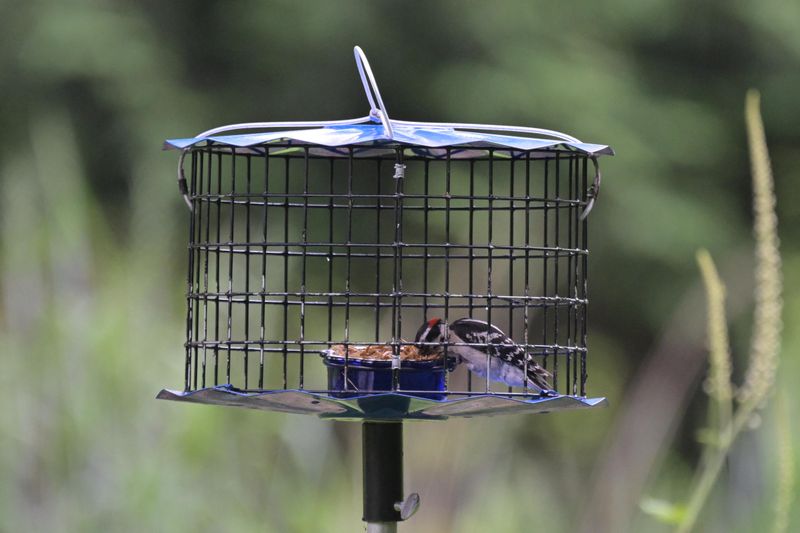
Think of it as a bird club with a strict size rule at the door. Small birds slip right in, while the big bullies stay outside.
Caged feeders surround the seed with an outer wire frame. The openings are sized just right for chickadees, nuthatches, and other petite birds.
Blue Jays simply cannot squeeze through those gaps. They may cling to the cage and peer inside, but the food stays out of reach.
Watching a chickadee zip through the bars is pretty entertaining. It grabs a seed, darts out, and returns a moment later for another.
Suet lovers benefit from cages too. Woodpeckers and nuthatches can still reach a caged suet cake, while jays struggle to grab big chunks.
Many squirrel-resistant feeders use the same caging idea. You get help against two hungry problems with a single purchase.
Pick a cage with openings around one and a half inches wide. Wider gaps might let medium birds sneak through and defeat the purpose.
Sturdy coated wire stands up to weather and curious beaks. Cheap cages can bend over time, so check them every few weeks.
Hang the feeder from a branch or pole where jays cannot perch directly above it. A bird sitting on top may knock seed loose for itself.
Give your small birds a few days to learn the setup. Once one figures it out, others usually follow along quickly.
Try Weight-Activated Feeders
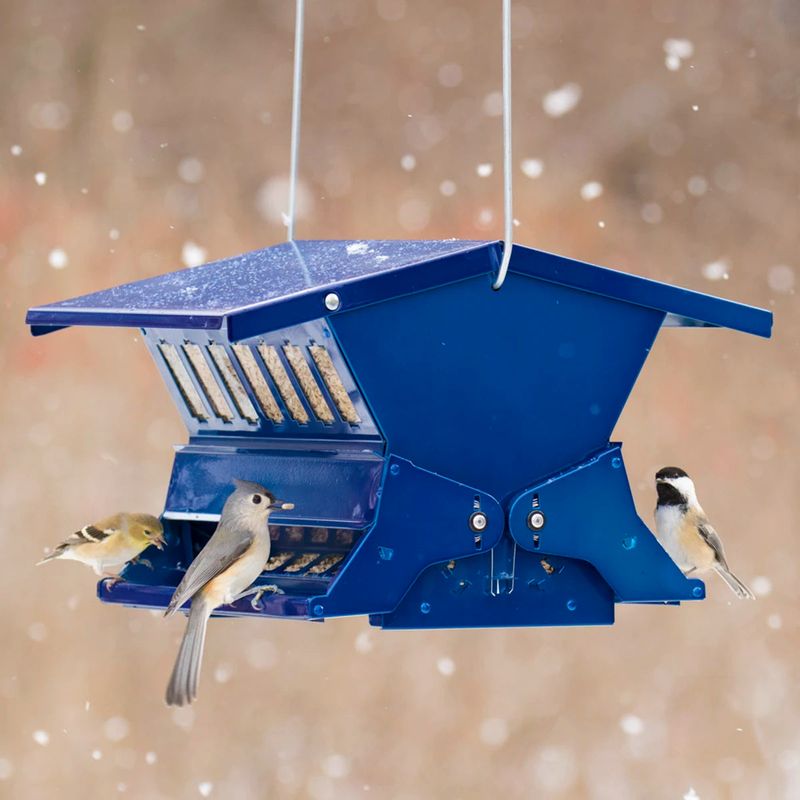
Clang! The metal shroud drops, and a puzzled jay stares at a feeder that just shut its doors.
Few backyard gadgets deliver such instant satisfaction.
Weight-activated feeders use a spring-loaded perch or outer sleeve. When something heavy lands, the seed ports slide closed automatically.
Small birds weigh very little, so the ports stay open for them. A chickadee weighs less than half an ounce, while a jay weighs roughly three ounces.
Most models let you adjust the weight setting. Start with the lightest setting, then tweak it based on which birds visit.
Cardinals sit somewhere in the middle size range. If you want them dining too, set the trigger just below a jay’s weight.
Squirrels hate these feeders as much as jays do. A furry thief hops on, and the food vanishes behind metal in a second.
Many homeowners fight squirrels and jays at the same time. A weight-sensitive feeder handles both problems without extra effort.
Expect to pay more than you would for a basic tube. Still, solid models often last for years and save money on wasted seed.
Fill the feeder with safflower or a small-seed blend for best results. Combining tools makes your setup much harder for jays to beat.
Watch closely during the first week. You may spot a clever jay testing the perch, then flying off with clear annoyance.
Set Up A Peanut Decoy Feeder Away From The Main Station
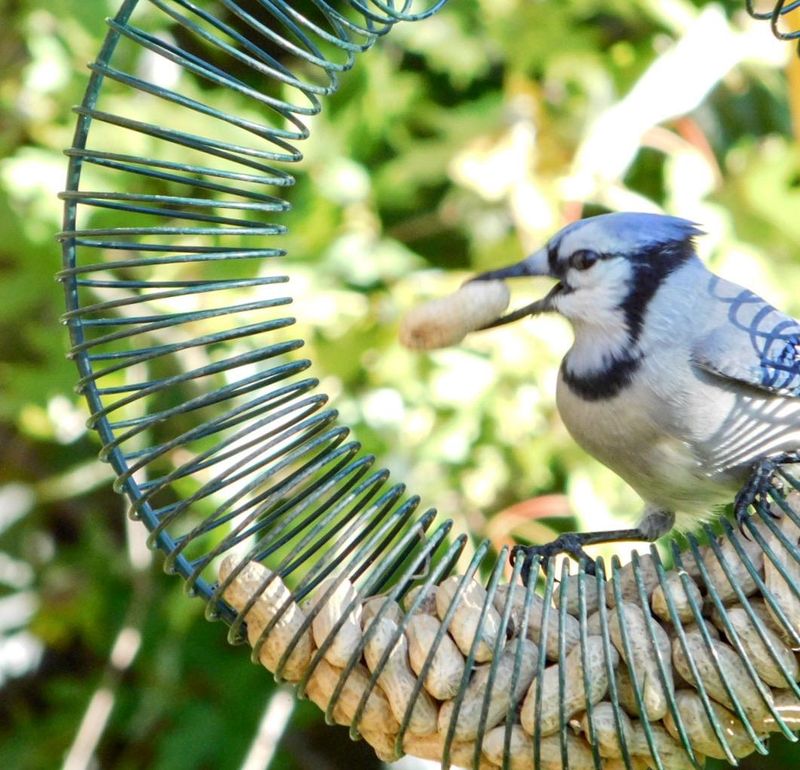
Sometimes the smartest move is a friendly bribe. Give jays their own snack bar, and they may leave the rest of the yard alone.
Blue Jays adore peanuts, especially ones still in the shell. Peanuts pack fat and protein, which jays crave as fall weather cools.
Put out a handful, and jays often appear within minutes. Their sharp eyes and loud calls spread the news across the neighborhood fast.
Set up a separate peanut feeder at least 30 feet from your main station. A far corner of the yard or a spot near tall trees works well.
Fill it with in-shell peanuts or sunflower seeds. Ring-shaped peanut wreaths and simple platform trays both appeal to jays.
Here is the clever part. Jays tend to guard a rich food source, so they focus their energy on the decoy instead.
Your small birds then get breathing room at the main feeders. Finches and chickadees can eat without blue shadows swooping in every minute.
Choose unsalted, plain peanuts made for wildlife. Salted or flavored peanuts from the snack aisle can upset a bird’s system.
Refill the decoy early in the day for the strongest effect. An empty decoy sends jays right back toward your other feeders.
Bonus perk: you get front-row seats to some amazing behavior. Watching a jay stuff three peanuts in its throat pouch is pure comedy.
Skip Open Platform Trays
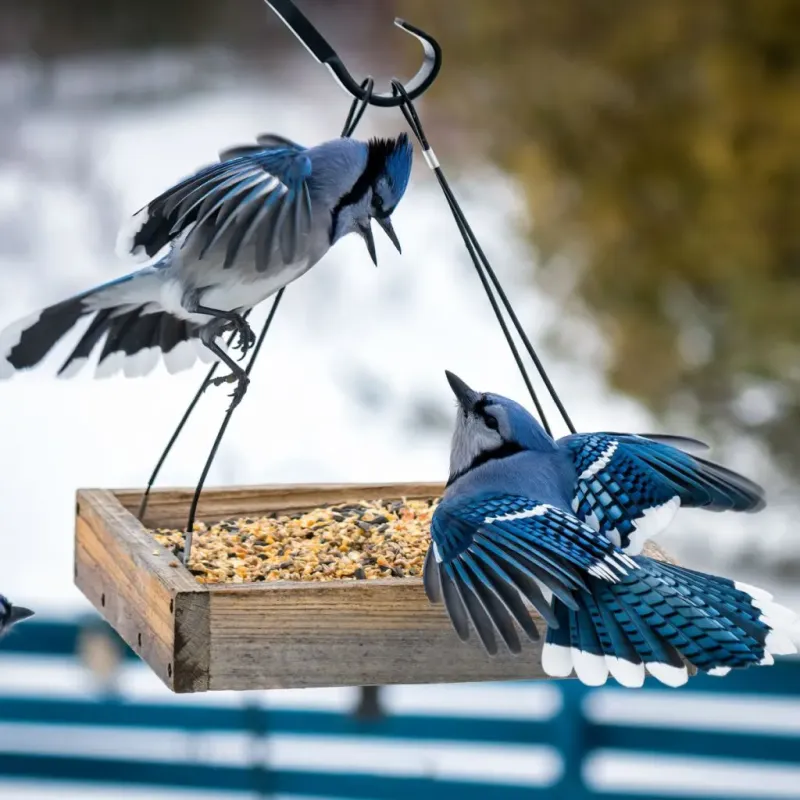
A wide wooden tray full of seed is basically a red carpet for jays. They land, spread out, and eat like they own the place.
Platform feeders give big birds lots of room to stand. Large hopper feeders with roomy ledges attract jays for the same reason.
If smaller birds keep losing out, move these feeders away from your main area. Better yet, store them in the shed for the fall season.
Removing the tray changes the whole mood of a feeding station. Shy visitors stop waiting in the shrubs and start showing up more often.
Doves can also crowd platform feeders. Mourning doves love open trays and sometimes sit there for long stretches, munching steadily.
Many Virginia yards see big flocks of doves in autumn. Combine them with jays, and a tray quickly becomes a busy, noisy mess.
Already own a nice platform feeder? Turn it into your peanut decoy station far from the small-bird area.
Hopper feeders can still work if you pick a smaller design. Look for narrow ledges that limit perching space for big birds.
Swap each removed tray for a tube or caged feeder. Your seed then reaches the birds you most want to see.
Give the change a week or two to settle in. Birds learn new patterns quickly once their favorite spot looks different.
Sweep Up Spilled Seed
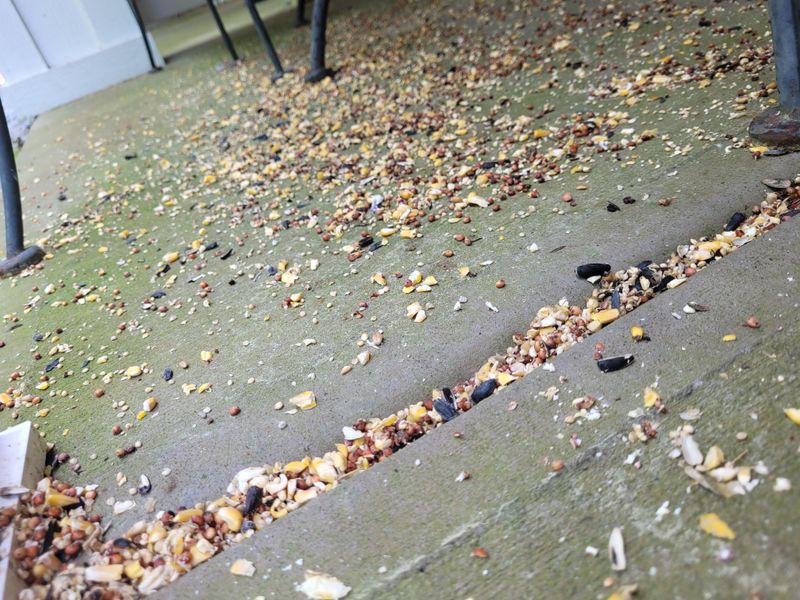
Nobody loves chores, but this one pays off fast. A broom and five minutes can change who hangs around your feeders.
Jays feel right at home foraging on the ground. Spilled sunflower seeds and dropped peanut bits keep them lingering long after the feeder empties.
Small, cautious birds act differently. Many prefer a tidy feeding area where they can grab a bite and leave quickly.
Sweep or rake under feeders every few days. A small dustpan works well on patios, while a leaf rake handles grass and mulch.
Clean ground protects bird health too. Old, damp seed grows mold and bacteria that can make visiting birds sick.
Fall rain soaks fallen seed quickly. Within days, a soggy pile can turn smelly and unsafe for wildlife.
Leftover food also draws rats and mice into your yard. Nobody wants rodents moving in just because the birdseed overflowed.
A seed tray attached under the feeder catches some of the mess. Just choose a small one, so it does not become another jay perch.
Hulled seeds, sometimes called no-mess blends, leave fewer shells behind. They cost a bit more but cut cleanup time noticeably.
Think of sweeping as part of your bird-watching routine. You get fresh air, a quick stretch, and a calmer feeder scene afterward.
Hang Feeders Close To Cover For Small Birds
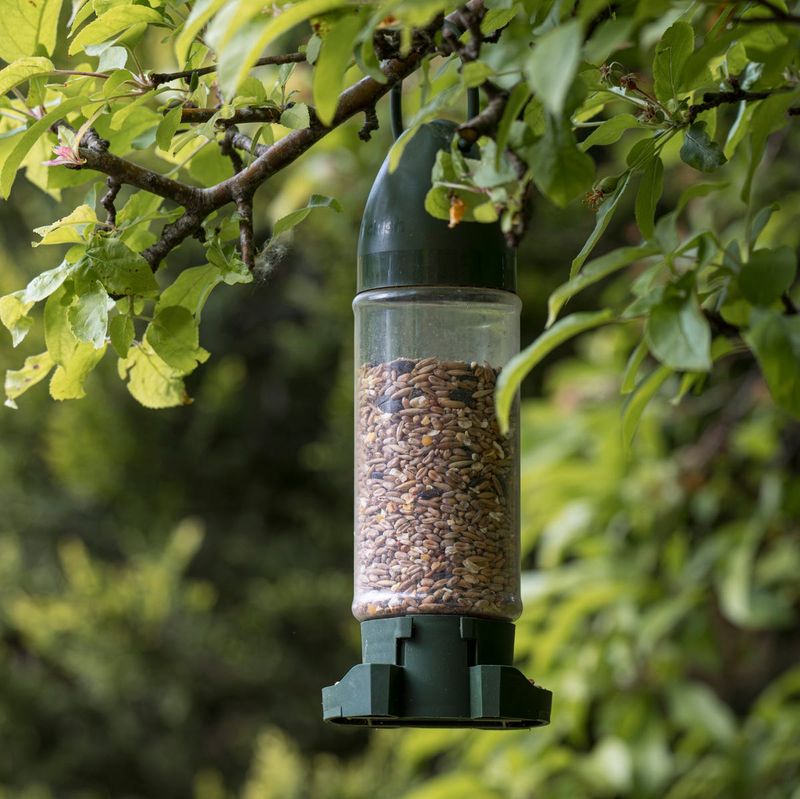
Ask any chickadee, and it will say safety beats snacks. Small birds eat more comfortably when a hiding spot sits close by.
Shrubs and trees give tiny birds a quick escape route. When a jay swoops in or a hawk passes, they dart into the branches.
Aim to place feeders about 5 to 15 feet from good cover. That range gives birds safety without creating trouble.
Too close can backfire, though. Thick leaves may hide cats, and branches give squirrels a perfect launching pad.
Native evergreens make fantastic cover in Virginia. American holly, eastern red cedar, and wax myrtle stay green through the colder months.
Brush piles help too, especially in larger yards. Stack fallen branches loosely, and small birds will happily duck inside.
Window placement matters for safety as well. Set feeders within three feet of glass or farther than 30 feet away.
Very close feeders keep birds from building up dangerous speed toward a window. Distant feeders give them plenty of space to turn.
Watch how birds move after you rearrange things. Smaller birds often visit more once they feel protected nearby.
Jays will still visit, of course, since they are bold and curious. Yet the little guys gain confidence, and that balance is the goal.
Appreciate Them As Alarm Callers
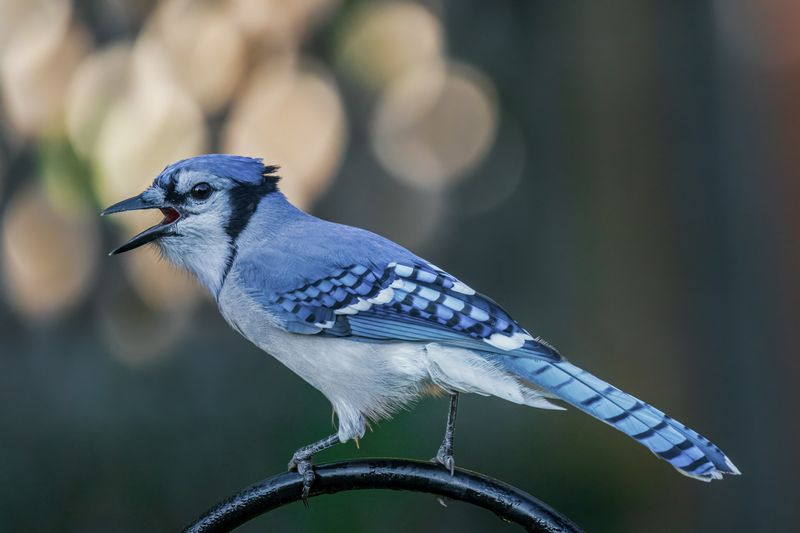
Before you grumble at the next jay, hear this out. That loud blue bird might be the best security guard your yard has.
Blue Jays make an amazing range of sounds. They squawk, whistle, chatter, and can even mimic the scream of a red-shouldered hawk.
Many of those calls work as warnings. Jays alert nearby birds when hawks, owls, or prowling cats come too close.
Small birds pay close attention to these alarms. One sharp jay call can send chickadees and sparrows diving for cover.
Jays sometimes team up to mob predators. A group will dive, scold, and chase until the threat finally moves along.
Picture a hawk perched near your feeder on a frosty morning. Without the jays, your songbirds might not notice until too late.
Jays also help plant forests. Some cached acorns get forgotten and sprout into young oak trees.
Fun fact: scientists believe jays helped spread oaks northward after the last ice age. Not bad for a bird known mostly for being noisy.
So the goal is balance, not banishment. A few jays visiting a decoy feeder bring real benefits to your backyard community.
Next time a blue streak sounds the alarm, give it a little credit. Your feeders stay safer, livelier, and more interesting because of it.