10 Native Washington Plants That Give Bees A Reason To Return
Native bees are not being dramatic. They are specialists, and a lot of modern landscaping simply does not speak their language.
Washington is home to hundreds of native bee species, many of which have spent thousands of years developing preferences that run deeper than any garden center can satisfy.
The plants on this list are different. They evolved here, alongside the exact bees that visit them, and that history shows up in ways you can actually see.
More species, longer visits, and a yard that stays active from early spring through fall. Plant one and you will notice. Plant several and your neighbors will start asking questions.
1. Red-Flowering Currant
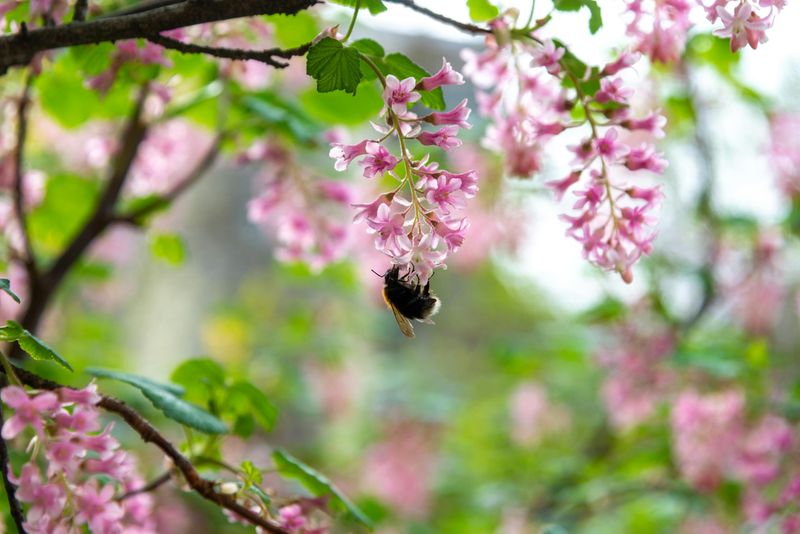
Spring has barely arrived and Red-Flowering Currant is already showing off. Those deep rose-pink flower clusters appear in March, often before most other plants have even woken up.
That early timing is no accident. Native bumblebees emerge hungry in late winter, and this shrub meets them right on schedule.
Gardeners across Washington love it because it practically takes care of itself. Once established, it handles dry summers without complaint.
It grows well in sun or partial shade, making it flexible for tricky spots in your yard. Heights range from four to ten feet, so it works as a hedge or a standalone specimen.
The tubular blossoms are perfectly shaped for long-tongued bees, and hummingbirds adore them too. You get double the wildlife value from one plant.
After the flowers fade, small blue-black berries appear in summer. Birds feast on those, extending the ecological benefit well past bloom season.
Plant it near a fence or along a property line for a natural, low-maintenance border. It is one of the more rewarding shrubs you can add to a Washington garden.
2. Oregon Grape / Mahonia
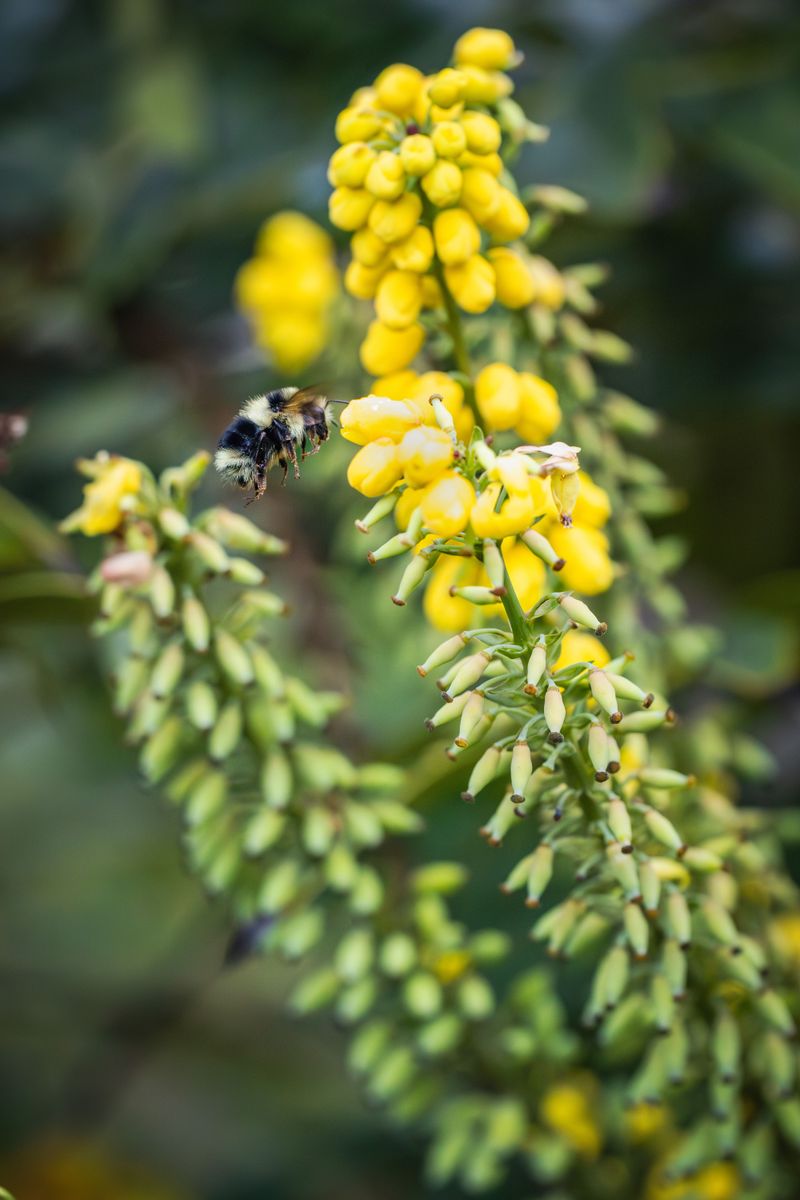
Oregon Grape is the kind of plant that earns its keep in every single season. Bright yellow flower clusters light up the garden in late winter, sometimes as early as February.
Bees that emerge on warm winter days find this shrub like a beacon. It is often one of the first reliable nectar sources available in the new year.
The foliage is bold and architectural, with glossy, holly-like leaves that stay green all year. That evergreen quality makes it a standout even when nothing else is blooming.
Low Oregon Grape, Mahonia nervosa, stays under two feet and spreads nicely as a ground cover. Tall Oregon Grape, Mahonia aquifolium, can reach six feet and works beautifully as a hedge.
Both species attract native bees, especially small native sweat bees that match the scale of the flowers. You will notice them working the blossoms on sunny winter afternoons.
Grape-like blue berries follow the flowers in summer. They are edible, tart, and popular with birds and adventurous humans alike.
This plant thrives in shade, making it ideal under trees where other species struggle. Few shrubs offer this much ecological value with this little effort.
3. Oceanspray
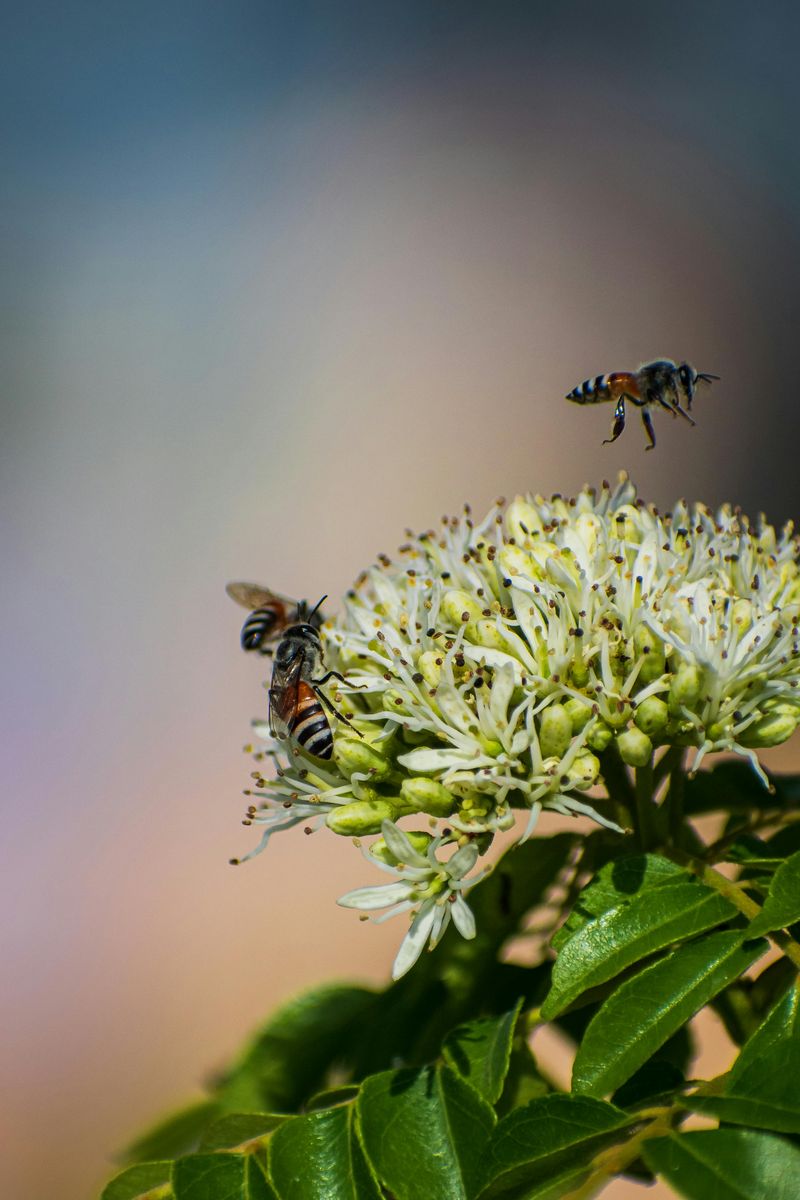
When Oceanspray blooms in midsummer, it looks like someone draped white sea foam over every branch. Those frothy, cream-colored plumes can cover the entire shrub from top to bottom.
Your Washington Garden Changes Every Week. Your Plan Should Too.
Gardening in Washington changes quickly throughout the season. Every Friday you’ll receive a simple weekly plan showing exactly what to plant, prune, fertilize, harvest, and protect so you never miss the right timing.
The fragrance is light and sweet, and bees pick up on it from a surprising distance. On a warm July afternoon, a blooming Oceanspray is genuinely hard to walk past.
Native to dry hillsides and open forests, this shrub is built for tough conditions. It tolerates poor soil, rocky ground, and summer drought without skipping a beat.
Heights typically range from five to fifteen feet, depending on sun and soil. In ideal conditions, it becomes a large, arching shrub with real visual presence.
The tiny individual flowers are loaded with pollen and nectar. Native bees of all sizes work the plumes, from big bumblebees to tiny sweat bees smaller than a fingernail.
After bloom, the dried flower heads stay on the plant through winter. They add texture to the garden and provide cover for small insects in cold months.
Oceanspray is one of those native plants that rewards you far beyond what you expect. Plant it once and it will feed your local bees for decades.
4. Serviceberry
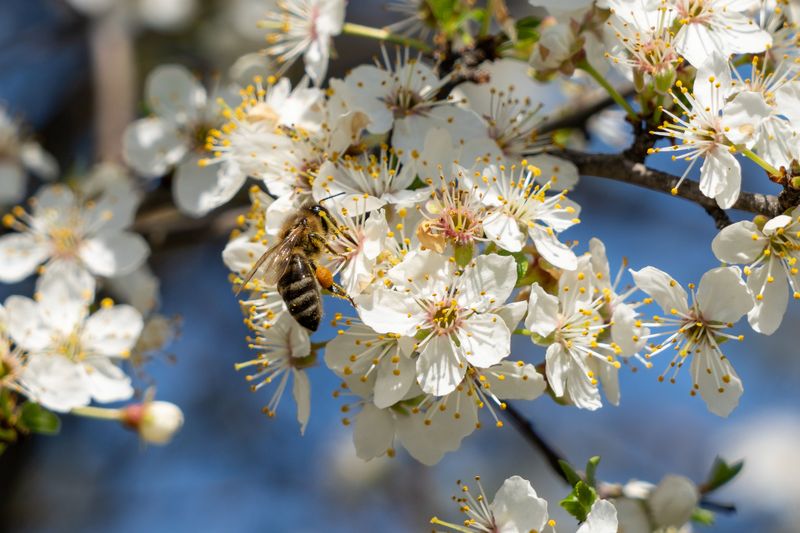
Indigenous communities across Washington have relied on Serviceberry for food and medicine for centuries. Those small, sweet berries have been feeding people and wildlife for thousands of years.
For bees, the real prize comes in early spring when the white blossoms open. The flowers appear just as native bees start foraging, making this one of the more valuable early-season plants for Washington yards.
Serviceberry grows as a large shrub or small tree, reaching anywhere from six to twenty feet. It fits naturally into the back of a border or along a woodland edge.
The blossoms are simple, five-petaled, and completely accessible to a wide range of bee species. You do not need a long tongue or specialized anatomy to get to the nectar.
Fall color is another reason to love this plant. Leaves turn orange, red, and gold, giving you a second season of visual interest after the berries are gone.
Birds compete fiercely for the ripe berries in summer. If you want any for yourself, plan to act fast once they turn dark purple.
Adaptable to sun or partial shade, Serviceberry fits into almost any yard. It is a multi-season performer that earns every square foot it occupies.
5. Camas
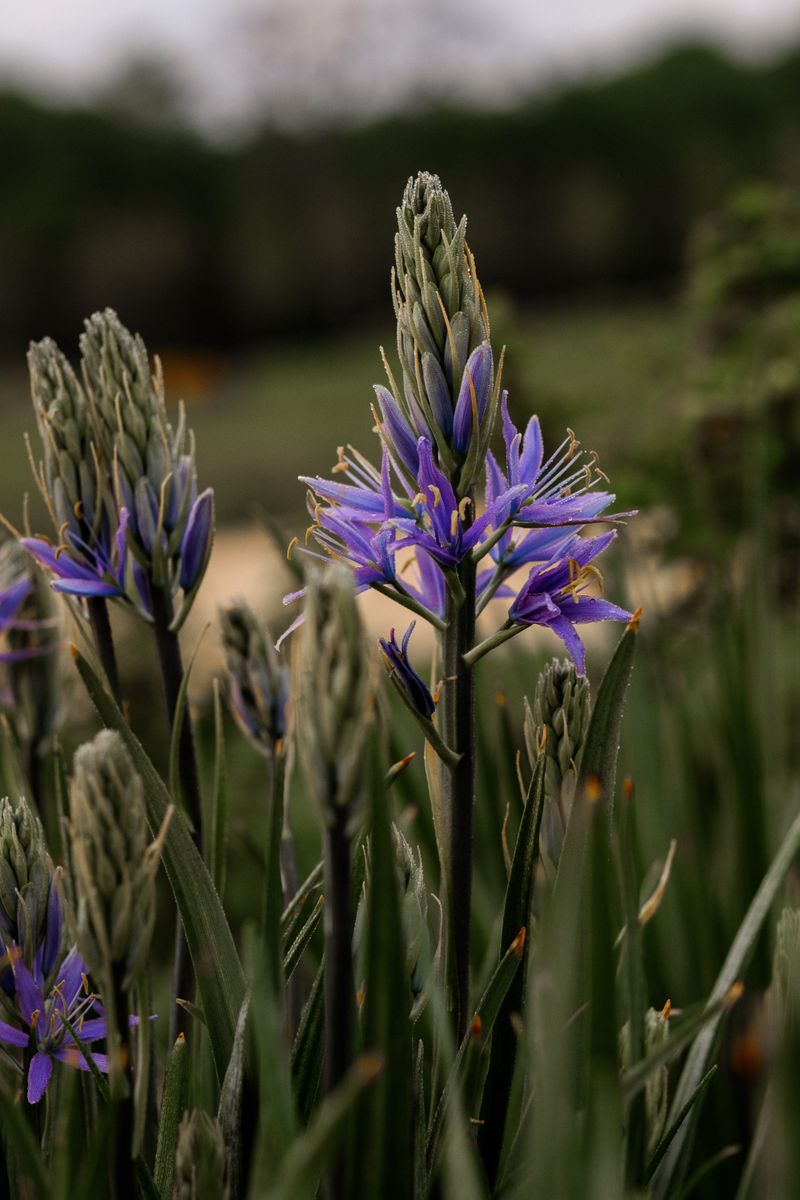
Few sights in Washington are more striking than a meadow full of blooming Camas. Those violet-blue flower spikes create a sea of color that looks almost surreal in late spring.
Native bees go absolutely wild for Camas blossoms. The flowers produce generous amounts of pollen and nectar right when many native bees are most active.
Historically, Camas bulbs were a critical food source for many Indigenous nations across the region. Entire prairies were managed and harvested for centuries before European settlement disrupted those systems.
In your garden, Camas grows from bulbs planted in fall. Come spring, those bulbs push up tall flower spikes that reach one to two feet high.
It thrives in moist, open areas with full sun. A low spot that stays wet in winter and spring is actually ideal, matching its natural meadow habitat.
After blooming, the foliage fades back and the plant goes dormant through summer. That makes it a great companion for later-blooming perennials that fill in the gap.
Planting Camas in drifts creates the most dramatic effect and the biggest payoff for pollinators. A patch of twenty bulbs can become a bee magnet that stops you in your tracks.
6. Lupine
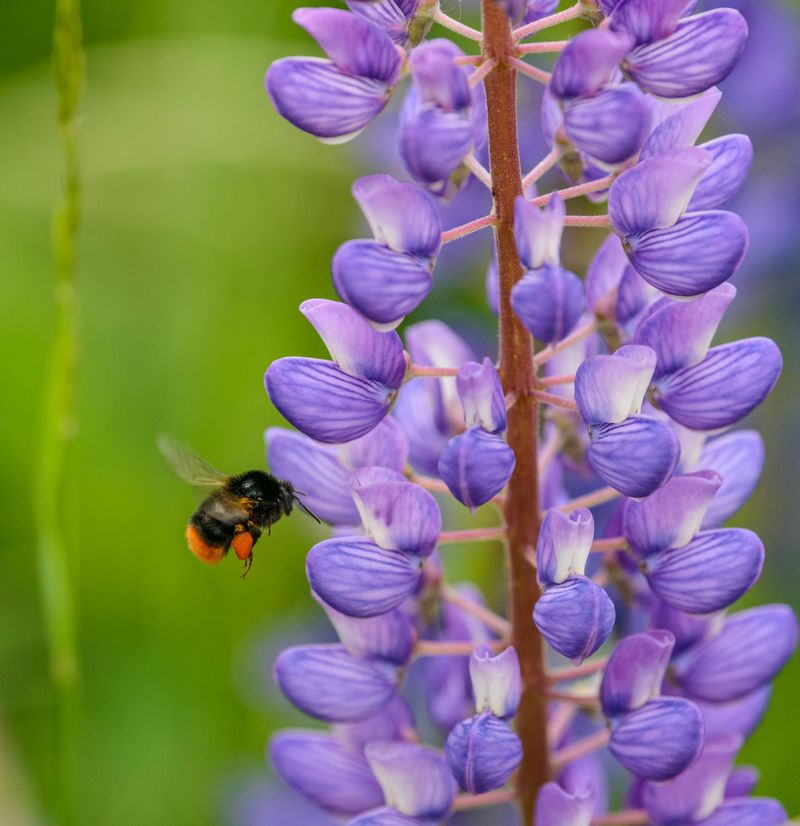
Image Credit: © Petr Ganaj / Pexels
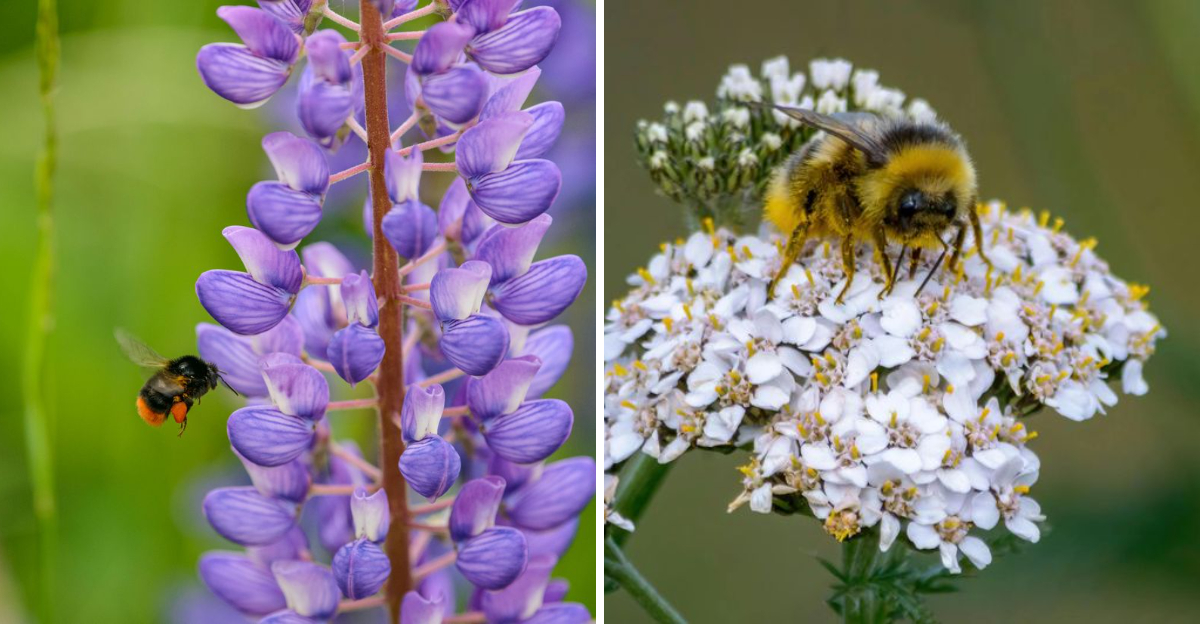
Lupine is one of those wildflowers that makes you feel like you stumbled into a nature documentary. Those tall spikes of purple-blue flowers are bold, architectural, and completely irresistible to bumblebees.
Bumblebees are especially drawn to Lupine because their size and weight give them an advantage. They are heavy enough to push open the tightly closed blossoms and reach the pollen inside, something smaller bees simply cannot do.
Native Lupine species like Lupinus polyphyllus and Lupinus latifolius are built for Washington conditions. They thrive in moist meadows, forest edges, and roadside areas with minimal care.
The palm-shaped leaves are attractive even before the flowers appear. They catch morning dew and hold it in perfect droplets, which is genuinely one of the more satisfying garden sights.
Lupine also fixes nitrogen in the soil, improving conditions for neighboring plants. That makes it a generous neighbor in a mixed native planting.
Bloom time runs from late spring into early summer, bridging the gap between early shrubs and midsummer perennials. That timing keeps your bee garden humming without a break.
Allow seed pods to dry on the plant for natural reseeding. A well-established Lupine patch will spread and thicken over the years, creating more habitat with no extra effort.
7. Goldenrod
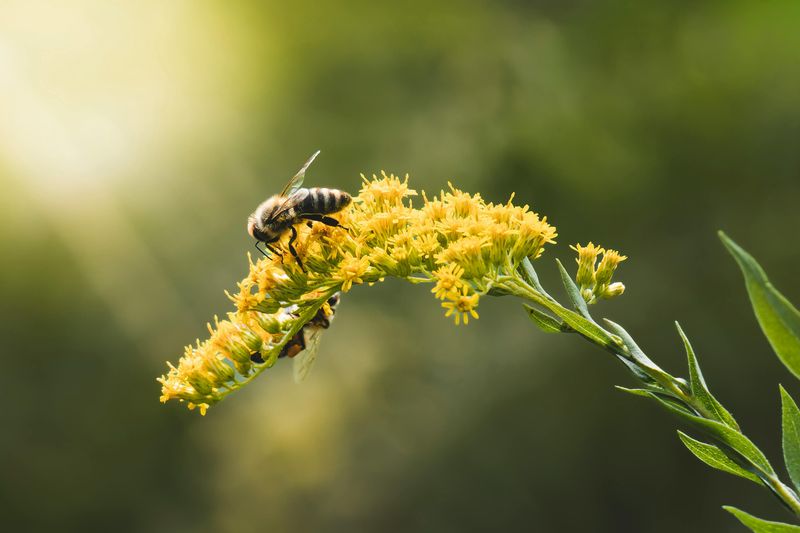
Goldenrod gets a bad reputation it does not deserve. Most people blame it for hay fever, but the real culprit is ragweed, which blooms at the same time.
Goldenrod pollen is heavy and sticky, designed to be carried by insects rather than wind. Your sinuses are completely safe, and the bees are absolutely thrilled.
Late summer and fall are when native bee populations need fuel most urgently. Goldenrod blooms exactly then, providing a critical energy source before winter sets in.
The golden-yellow plumes are loaded with both nectar and pollen. Native bees, honeybees, butterflies, and even wasps all converge on a blooming Goldenrod plant.
Native species like Solidago canadensis and Solidago elongata grow naturally throughout Washington. They handle dry conditions and poor soil with remarkable resilience.
Heights range from two to five feet, and the arching stems have a natural, relaxed look. They blend beautifully into informal gardens and native plant borders.
Goldenrod spreads by rhizomes, so give it room to expand over time. That spreading habit is actually a feature, not a flaw, since it creates larger foraging patches for pollinators.
Few plants deliver this much late-season value with this little fuss.
8. Douglas Aster
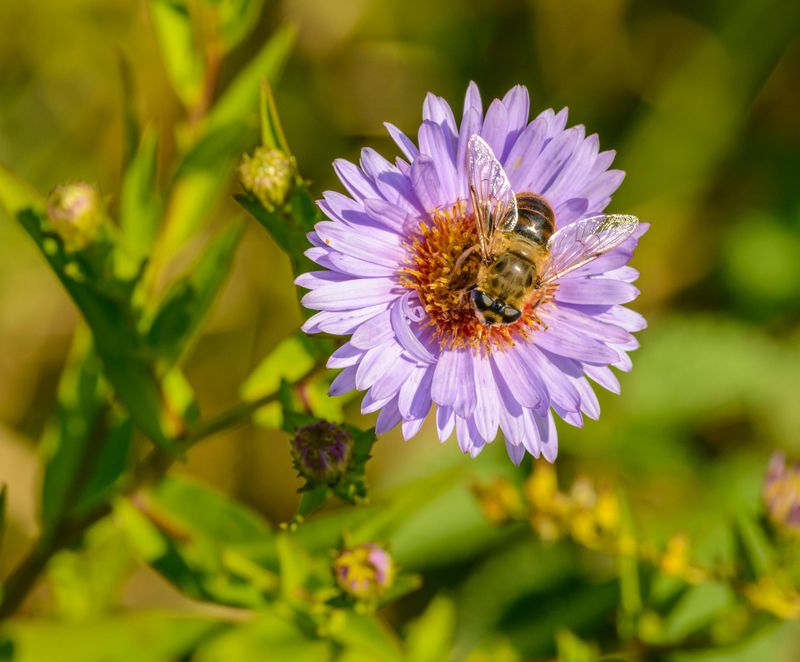
By the time September arrives, most gardens are winding down. Douglas Aster is just getting started, and the bees know it.
Those cheerful lavender-purple blooms with bright yellow centers appear in late summer and keep going well into October. For bees preparing for winter, that extended season provides a critical energy boost.
Native to coastal areas and moist lowlands, Douglas Aster handles wet Washington winters without rotting or sulking. It is a tough plant wearing a delicate disguise.
Bumblebee queens feed heavily on late-season asters before they go dormant for winter. A patch of Douglas Aster can contribute to next year’s bee population.
The plants grow two to four feet tall and spread into loose clumps over time. They work well at the back of a border or naturalized along a fence line.
Full sun brings the most flowers, but partial shade is tolerated. In shadier spots, plants get a bit taller and leggier, which can actually look nice in a casual garden.
Pair Douglas Aster with Goldenrod for a spectacular late-season combination. Together, they create a fall pollinator buffet that keeps your garden alive and buzzing right up to the first frost.
9. Yarrow
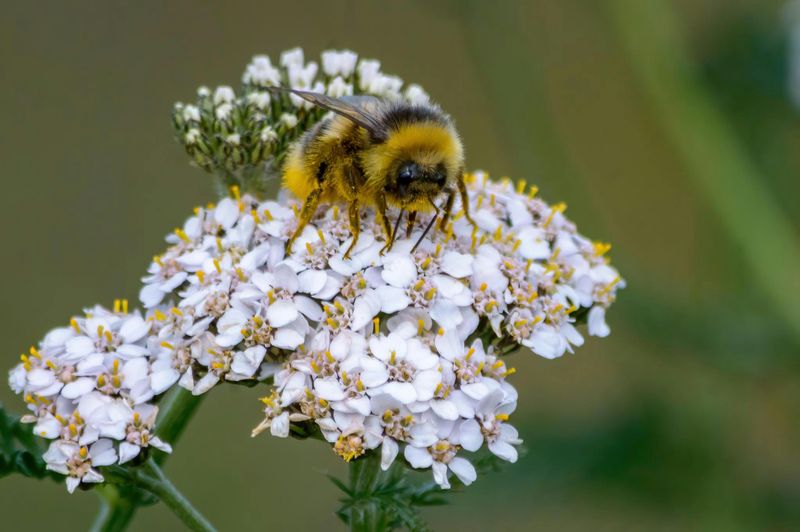
Image Credit: © Thorarinn Torfason / Pexels
Yarrow has been growing in Washington meadows long before anyone thought to put it in a garden. Its flat-topped white flower clusters are like tiny landing pads built specifically for pollinators.
The flower structure is open and accessible, welcoming short-tongued bees that cannot reach into tubular blossoms. That inclusivity makes Yarrow one of the most broadly useful plants on this list.
Native Achillea millefolium grows naturally in fields, roadsides, and open forests across the region. It is already adapted to your climate, which means less work for you.
Drought tolerance is one of Yarrow’s best qualities. Once established, it survives dry summers on rainfall alone, asking almost nothing in return for months of blooms.
The feathery, fern-like foliage is attractive even when the plant is not flowering. It adds fine texture to a garden full of broader-leaved plants.
Bloom time stretches from late spring through midsummer. Cutting back spent flowers can trigger a second flush, extending the season even further.
Yarrow spreads steadily by underground runners, filling in gaps and creating a dense, weed-suppressing mat. That spreading habit makes it an excellent ground cover in sunny, dry spots.
For native Washington plants that work hard without complaint, Yarrow is a strong candidate for most pollinator gardens.
10. Oregon Sunshine
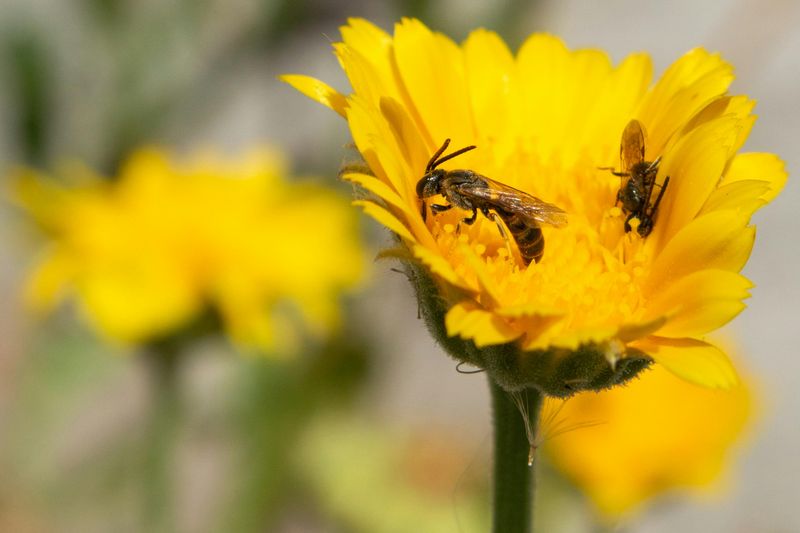
Oregon Sunshine sounds like a nickname someone gave their most cheerful friend. The plant absolutely lives up to it, with bold yellow daisy-like flowers that glow against silvery-gray foliage.
Native bees cannot resist those sunny blooms, which appear from late spring through midsummer. On a warm day, a patch of Oregon Sunshine hums with activity.
This plant is native to rocky outcroppings, open slopes, and dry meadows across Washington. That origin story explains why it thrives in conditions that would stress most garden plants.
Poor soil, full sun, and summer drought are not problems for Oregon Sunshine. Those are its preferred conditions, making it perfect for hot, dry spots where other plants give up.
The woolly silver leaves are a design element on their own. They reflect light, reduce water loss, and give the plant a soft, textural quality that contrasts beautifully with greener neighbors.
Heights stay modest, typically under one foot, making this an ideal front-of-border plant. It also works beautifully in rock gardens, gravel paths, and green roofs.
Adding Oregon Sunshine to your native Washington plants lineup fills an important niche in dry, sunny areas. It proves that a tough plant can also be one of the most beautiful in the garden.
It tends to perform best in sunny, well-drained spots, particularly in eastern and central Washington.