7 Ohio August Tips For Protecting Boxwoods From Box Tree Moths
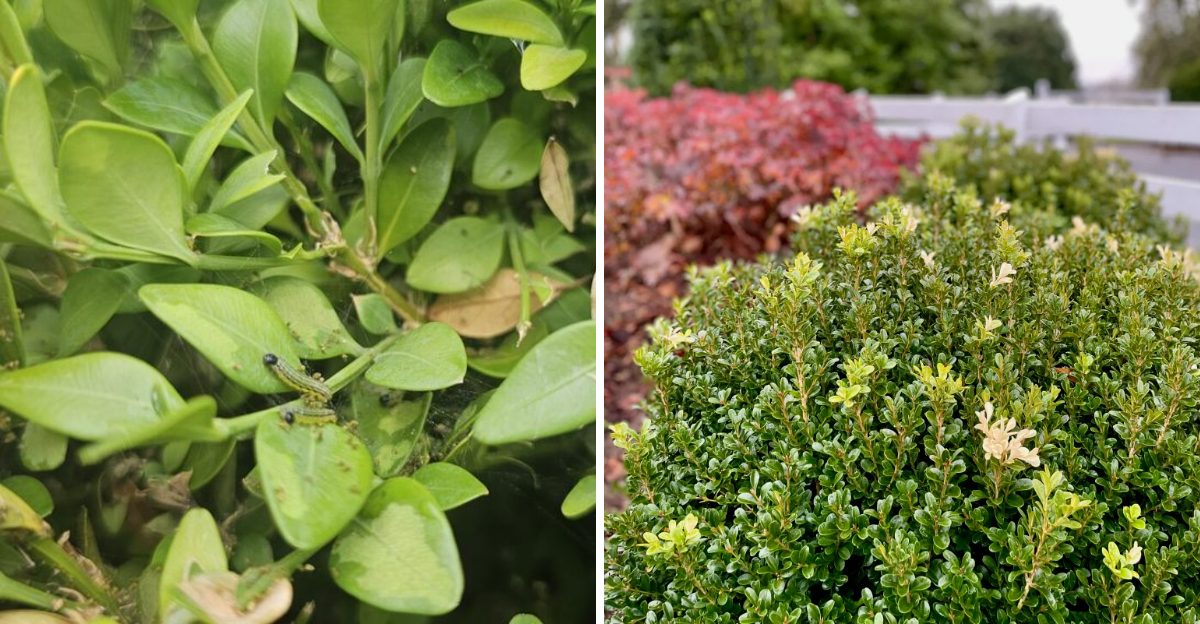
Box tree moth does not announce itself. The boxwood looks fine from the outside.
Green, dense, apparently healthy. Then someone looks inside the canopy and finds what has been happening in there for weeks.
Stripped stems. Webbing.
A population that has already cycled through a generation while nobody was checking. This pest arrived in Ohio recently and has been accelerating ever since.
August is when it does its most damaging work. The window for meaningful intervention is open right now and it does not stay open long.
Boxwoods that come through August intact almost always had someone paying attention at the right moment. The ones that do not tell the story of what happens when August gets treated like a quiet month in the garden.
It is not. Not this year.
Not with box tree moth pressure building across Ohio the way it currently is.
1. Look Deep Inside Boxwoods Before Damage Reaches The Outside
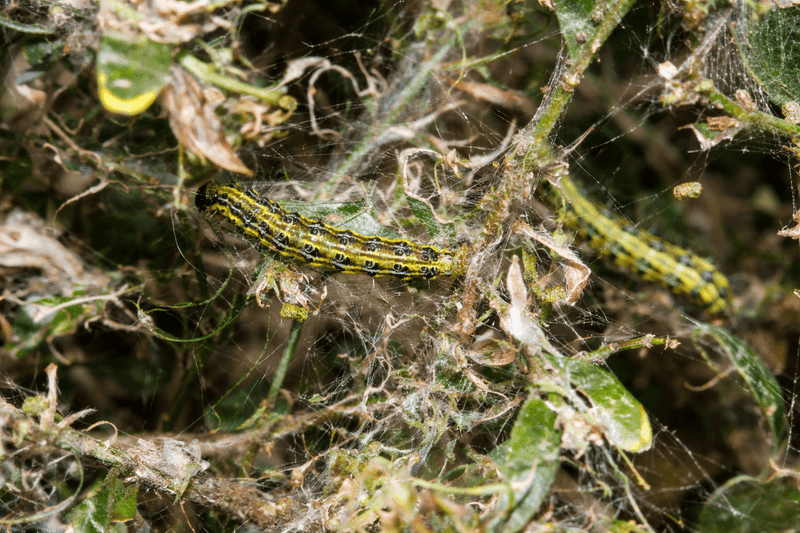
A quick scan of the outer leaves of a boxwood hedge can give a false sense of security. Young caterpillars of the box tree moth tend to feed within the dense interior of the shrub rather than on the outer surface where they would be easy to spot.
By the time visible browning appears on the outside, feeding may have already been underway for some time on the inside.
To inspect properly, gently part the outer branches with your hands and look into the interior canopy. Pay close attention to leaf undersides, branch intersections, and areas where foliage is especially dense.
These sheltered spots are where early feeding activity and webbing are most likely to occur. That pattern aligns with Ohio State University Extension guidance on box tree moth detection.
Look carefully for frass, which is the small dark droppings caterpillars leave behind as they feed. Frass collecting on inner leaves or on the soil beneath a shrub can be an early clue worth investigating further.
You may also notice skeletonized leaves, where only the leaf framework remains after the tissue has been consumed.
Work your way around the entire shrub rather than checking just one side. Light infestations can be concentrated in one area while the rest of the plant still appears normal.
Spend a few minutes carefully inspecting the interior of the shrub. That gives you a far more accurate picture than any view from several feet away.
2. Webbing And Chewed Leaves Can Give Caterpillars Away Early
Recognizing what actual feeding damage looks like is different from noticing that a shrub looks generally off.
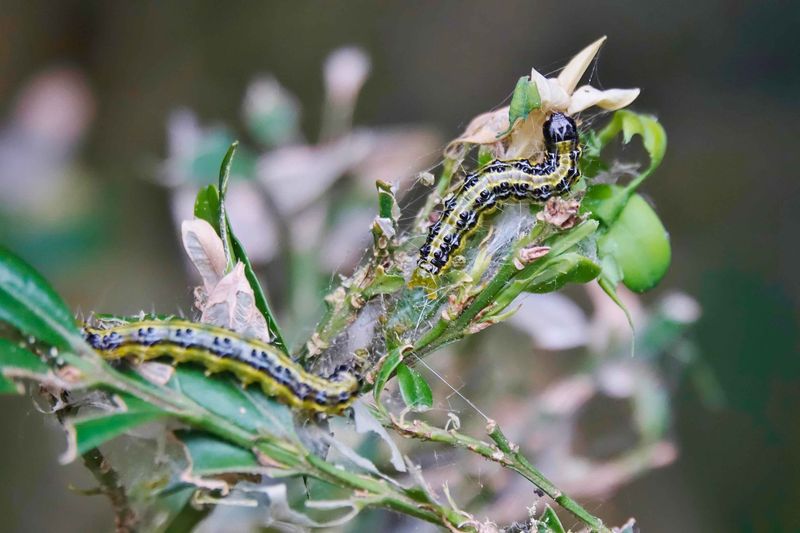
Leaves that have been partially or fully consumed, leaving behind only the midrib or a thin papery layer, are a more specific clue than general yellowing or browning.
Boxwoods can turn brown for many reasons, including winter injury, drought stress, and fungal problems like boxwood blight. Missing or skeletonized leaf tissue points more directly toward an insect feeding problem.
Webbing is another sign worth knowing. Box tree moth caterpillars produce silky webbing that can mat together foliage and frass in the interior of the shrub.
Your Ohio Garden Changes Every Week. Your Plan Should Too.
Gardening in Ohio changes quickly throughout the season. Every Friday you’ll receive a simple weekly plan showing exactly what to plant, prune, fertilize, harvest, and protect so you never miss the right timing.
This webbing is often one of the first visible signs that feeding has begun, and it can appear before significant leaf loss is obvious from the outside.
The caterpillars themselves have a fairly recognizable appearance. They are typically lime green with a dark head and dark longitudinal striping along the body, according to identification guidance from OSU Extension and USDA APHIS.
Seeing a caterpillar with that description inside a boxwood is a strong reason to investigate further. Consider contacting your local Extension office or state department of agriculture.
No single symptom should be treated as a definitive confirmation on its own. If you find webbing, frass, and feeding damage together inside a boxwood, that combination is more meaningful than any one sign alone.
If you are uncertain, reaching out to the Ohio Department of Agriculture or OSU Extension for current reporting and identification guidance is the right next step.
3. Treat An Active Infestation Instead Of Spraying Just In Case
Reaching for a pesticide before confirming a problem is one of the more common mistakes in home pest management. OSU Extension guidance on box tree moth emphasizes that monitoring and detection come before any treatment decision.
Spraying a healthy boxwood with no confirmed exposure to the pest is not a step that current Extension recommendations support as a routine practice in Ohio.
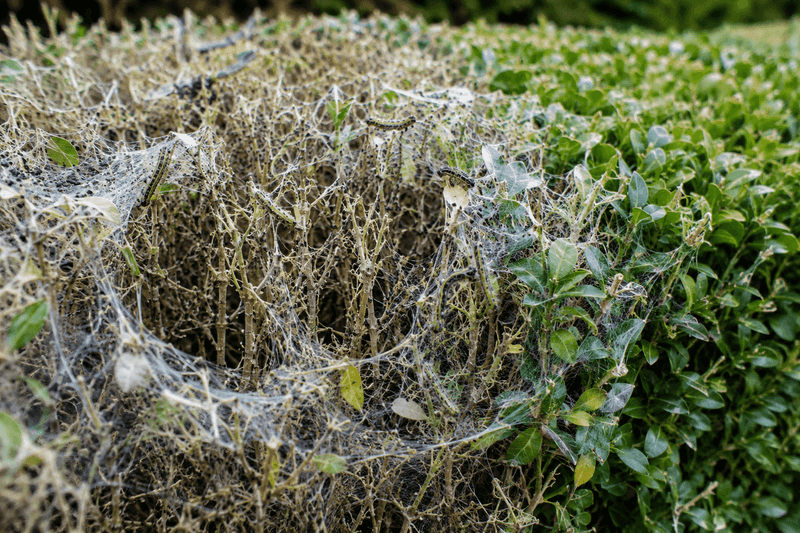
Treatment is most appropriate when an active infestation has been identified through the kind of interior inspection described in the previous section. If caterpillars, frass, webbing, or feeding damage are present, that is when evaluating treatment options makes sense.
Boxwoods very close to a confirmed infestation may warrant closer attention. Follow current OSU Extension or ODA recommendations for that situation rather than relying on general assumptions.
Making a treatment decision based solely on the existence of box tree moth somewhere in the county is not the same as confirming it in your own shrubs.
The pest is regulated and spreading, but not every boxwood in an affected area is necessarily infested at any given time.
Checking the plant first is always the more accurate starting point.
If treatment is warranted, the product label controls how it must be used. No application rate, interval, or method should be improvised beyond what the label permits.
Current OSU Extension resources identify active ingredients appropriate for managing box tree moth on ornamental boxwoods. Consult those resources before selecting or applying any product.
4. Small Caterpillars Are The Best Time To Make A Treatment Count
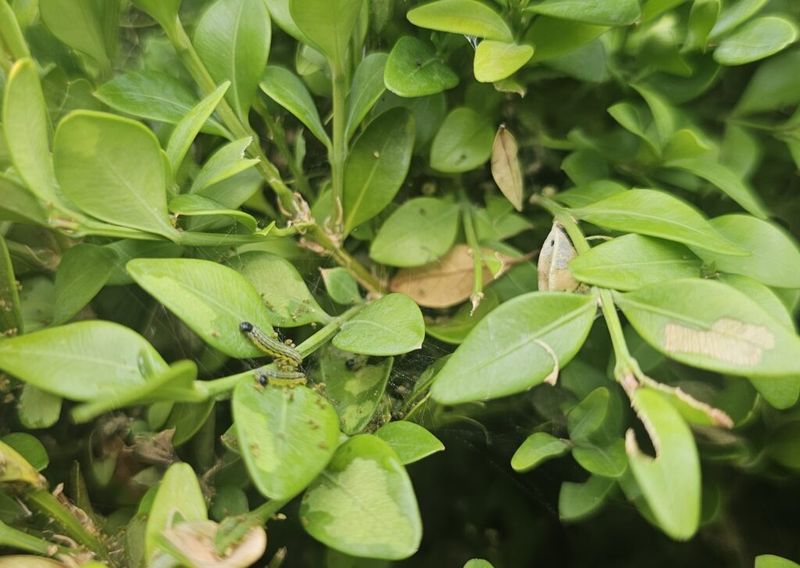
Finding an infestation early, when caterpillars are still small, can meaningfully expand your management options.
Some biological insecticides, including those containing Bacillus thuringiensis kurstaki, commonly called Btk, work most effectively against younger larvae.
OSU Extension notes that Btk is one option for box tree moth. It is generally more effective against caterpillars in early instars than against fully developed larvae.
Btk is a naturally occurring soil bacterium that produces proteins toxic to certain caterpillar species when ingested. It does not target only box tree moth.
Other caterpillar species that consume treated foliage can also be affected, so application near non-target plants should factor that in. It is not a broad-spectrum insecticide, but it is not entirely selective either.
Beyond biological options, the practical reason for acting early is straightforward. Smaller caterpillars have had less time to consume foliage.
As larvae develop and grow, their feeding rate increases and the visible damage accumulates more quickly. Catching an infestation while caterpillars are still young reduces the total amount of plant material lost before management takes effect.
Actual larval stage in any specific shrub depends on when eggs were laid and on local temperature conditions that influence development. No fixed statewide calendar reliably predicts what stage caterpillars will be at in a given yard in August.
Check the plant directly and contact OSU Extension for current regional pest development information. Those steps give you a more accurate picture than a generalized seasonal forecast.
5. Dense Boxwoods Need Thorough Coverage Where Caterpillars Are Feeding
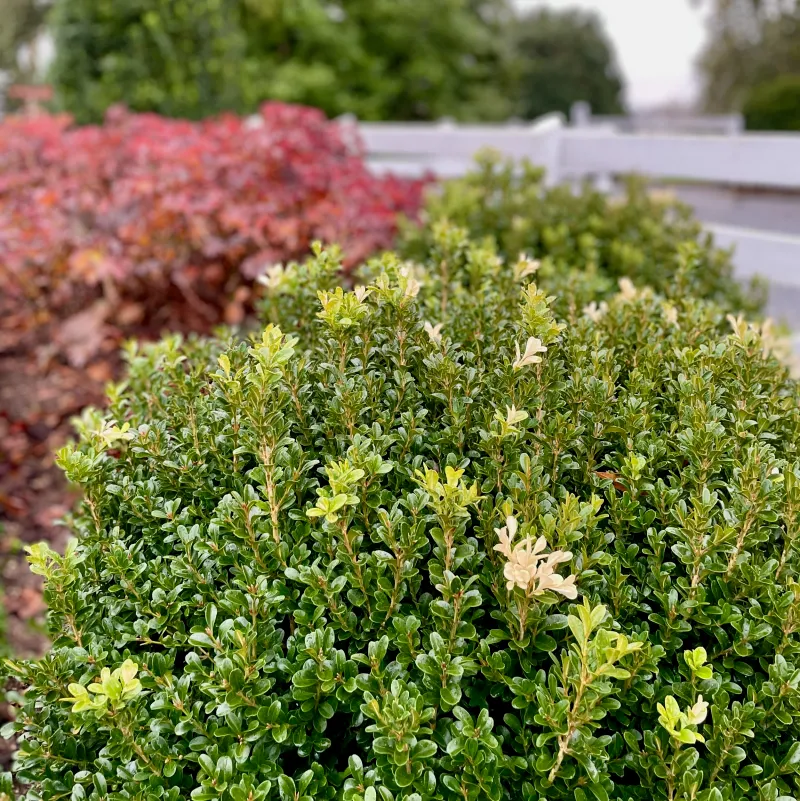
One reason treating box tree moth can be more complicated than it first appears is the physical structure of the plant. Boxwoods are often grown as tightly clipped hedges or dense rounded shrubs, and that density creates real coverage challenges.
Caterpillars feeding deep within the canopy may be largely shielded from a spray applied only to the outer surface of the shrub.
Foliar insecticide treatments that rely on contact or ingestion need to reach the foliage where caterpillars are actually present.
Spraying the visible exterior while leaving the interior untreated may produce limited results if feeding is concentrated inside the shrub.
OSU Extension guidance on box tree moth management notes the importance of thorough coverage when foliar treatments are used.
Thorough coverage does not mean applying more product than the label allows. Increasing the concentration or the application rate beyond label directions is never appropriate and can create off-target risks.
The goal is to reach the right areas within the label’s permitted parameters, not to compensate for a coverage gap by using more pesticide.
Technique matters more than volume. Move the sprayer slowly and work it toward the interior of the shrub.
This generally produces better coverage than quickly sweeping across the outer surface. Always follow the personal protective equipment requirements listed on the specific product label, since those requirements vary by product.
Applying any insecticide during cooler parts of the day and away from open blooms can help reduce unintended exposure to pollinators.
6. Prune Out Badly Infested Growth And Bag The Debris
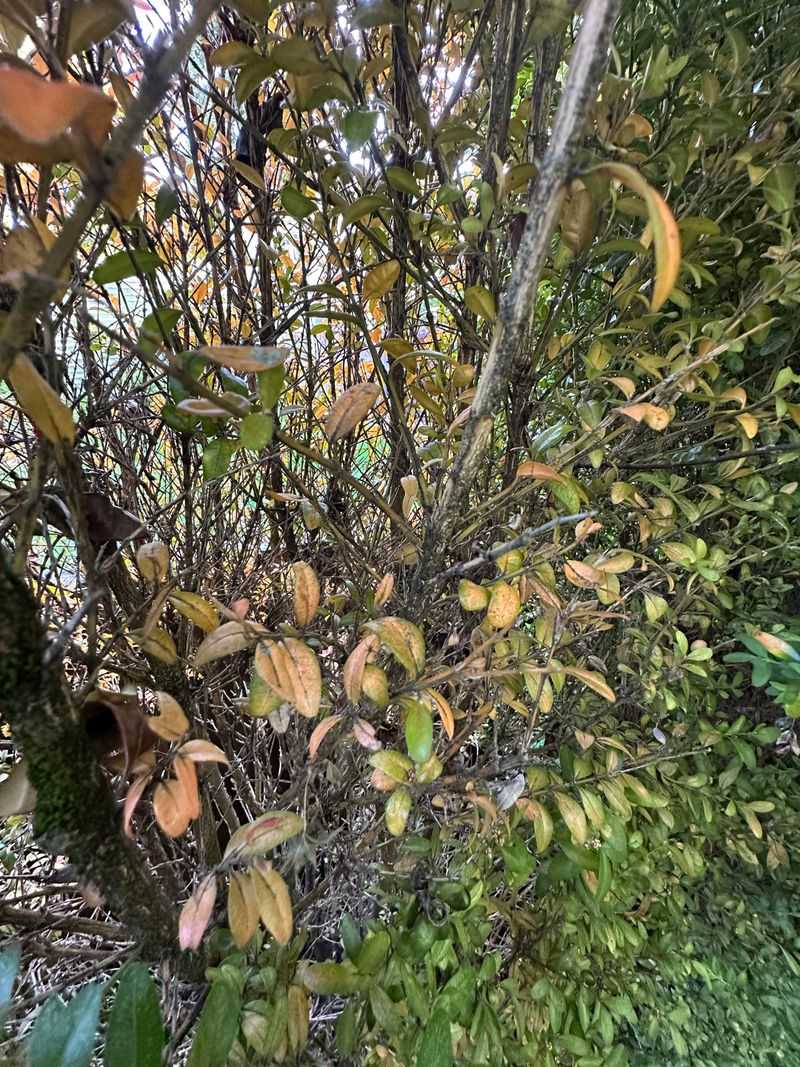
Removing heavily infested branches can be a reasonable step when an active infestation is confirmed and current Ohio guidance supports it.
Cutting out the most affected growth reduces the number of caterpillars present and removes webbing and frass along with the plant material.
This kind of targeted removal is different from major rejuvenation pruning of an established shrub.
Significant rejuvenation pruning involves cutting a heavily damaged boxwood back hard to encourage regrowth. That work is generally best done while plants are dormant rather than during summer heat.
OSU Extension guidance on boxwood recovery suggests that dormant-season pruning is more appropriate for that level of intervention.
Cutting a stressed shrub back aggressively in August, simply because it looks brown, is a different situation and is not automatically recommended.
Disposal of infested material requires care. USDA APHIS guidance advises placing infested boxwood clippings and debris into sealed bags before placing them in the trash.
This helps prevent caterpillars, pupae, or eggs from being transferred to other locations. Do not compost infested material, leave clippings beside the hedge, or move debris to a natural area or another property.
Quarantine rules may also govern how plant parts and debris are handled, especially within regulated counties. The next section covers movement rules in more detail.
Treat infested clippings as regulated material, even from a backyard hedge. Continue doing so until you confirm what current ODA and USDA guidance requires in your location.
7. Check Quarantine Rules Before Moving Boxwoods Off Your Property
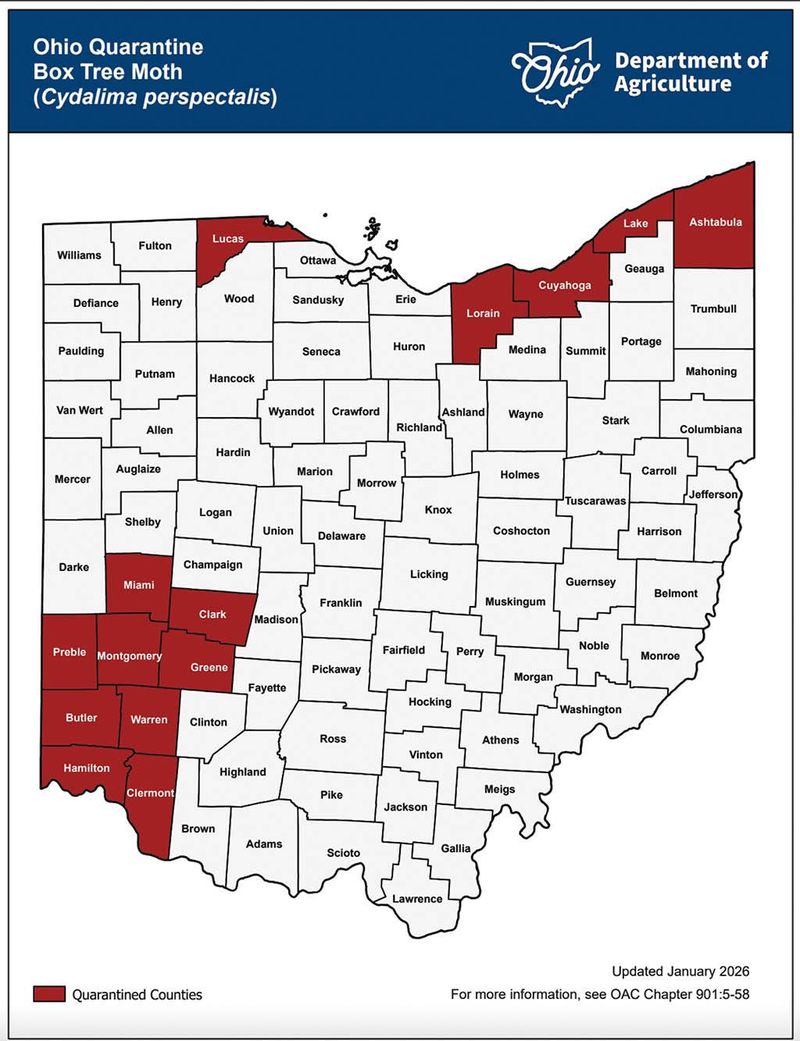
Plant movement rules can catch gardeners off guard, especially when a pest is under active federal and state regulation.
Box tree moth is subject to both a federal quarantine administered by USDA APHIS and a state-level quarantine managed by the Ohio Department of Agriculture.
These regulations restrict the movement of boxwood plants, plant parts, cuttings, and related debris out of quarantined areas.
The list of regulated counties has expanded as detections have been confirmed in new locations. Quarantine boundaries can change, so check the current official ODA or USDA APHIS map before moving boxwood material.
That is more reliable than using a county list from an older article or news report. The official boundary viewer maintained by USDA APHIS reflects the most current federal quarantine status.
Moving material within your own property is generally a different situation than transporting it across a quarantine boundary or to another property.
Commercial nursery movement is subject to additional certification requirements that differ from what applies to homeowners.
These are distinct regulatory situations, and the rules should not be assumed to be the same across all of them.
Be cautious about sharing boxwood cuttings, transporting a shrub to a second home, or taking clippings to another county. This matters especially if your property is in or near a regulated area.
Human-assisted movement has played a documented role in spreading regulated pests across new regions. Checking the current official map first takes only a few minutes and keeps you on the right side of regulations that exist for a clear reason.