8 Oregon Plants That Complement Lavender Perfectly
Lavender looks complete on its own. That is the first thing many Oregon gardeners believe, right up until they see what happens when the right plant grows beside it.
Then something shifts.
The lavender does not change. Same fragrance, same silvery stems, same reliable purple bloom from early to midsummer. But the garden around it suddenly looks considered in a way that is difficult to explain and very easy to notice.
What makes a lavender planting go from pleasant to the kind of thing visitors stop and ask about?
It is not a complicated technique or an expensive amendment or a timing strategy that requires a spreadsheet. It is placement.
Specifically, what is growing alongside it and how those neighbors interact with Oregon’s specific combination of dry summers, mild winters west of the Cascades, and that particular quality of Pacific Northwest light.
Some plants make lavender look better. Some share its conditions so precisely that maintaining both in the same bed barely qualifies as extra work.
These plants belong next to Oregon lavender. A few of them may be already in your garden. A few might surprise you.
1. Rosemary
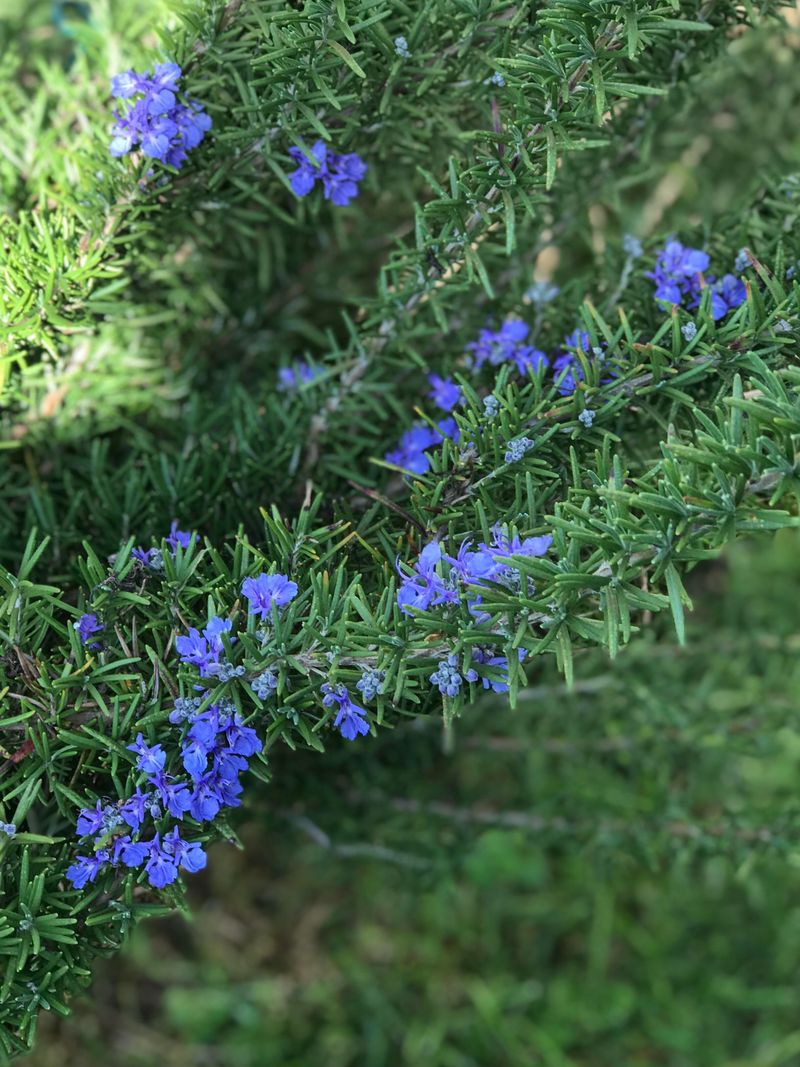
Rosemary and lavender are essentially the same plant’s philosophy expressed twice. Both want full sun. Both want fast-draining soil.
Both come from Mediterranean climates and respond to Oregon’s conditions with the same level of composed indifference to occasional neglect.
Plant them side by side and the visual effect arrives immediately. Lavender’s soft, feathery stems and rounded flower heads sit against rosemary’s stiff upright branches and narrow waxy leaves.
That textural contrast creates depth without competition. The combination looks intentional even in casual, informal plantings where nothing else was particularly planned.
In Oregon, rosemary performs best west of the Cascades where winters stay mild enough to keep it evergreen through the season.
East of the mountains, hardier varieties like Arp or Hill Hardy handle colder snaps more reliably. Either way, both plants share the same low-water needs once established, which simplifies irrigation planning considerably.
Heavy clay is the one condition neither plant tolerates well.
Amending Oregon’s native soils with grit or coarse sand before planting improves drainage enough to make the difference between a thriving bed and a struggling one. A soil pH between 6.5 and 7.5 suits both plants well.
High-nitrogen fertilizers push leggy growth and reduce blooms on both species. Keep them lean, sunny, and slightly on the dry side and they perform better than they would with more attentive care.
Rosemary and lavender require nearly identical conditions, produce contrasting textures, and make the garden smell extraordinary from a considerable distance.
There are worse problems to have in an Oregon garden.
2. Catmint
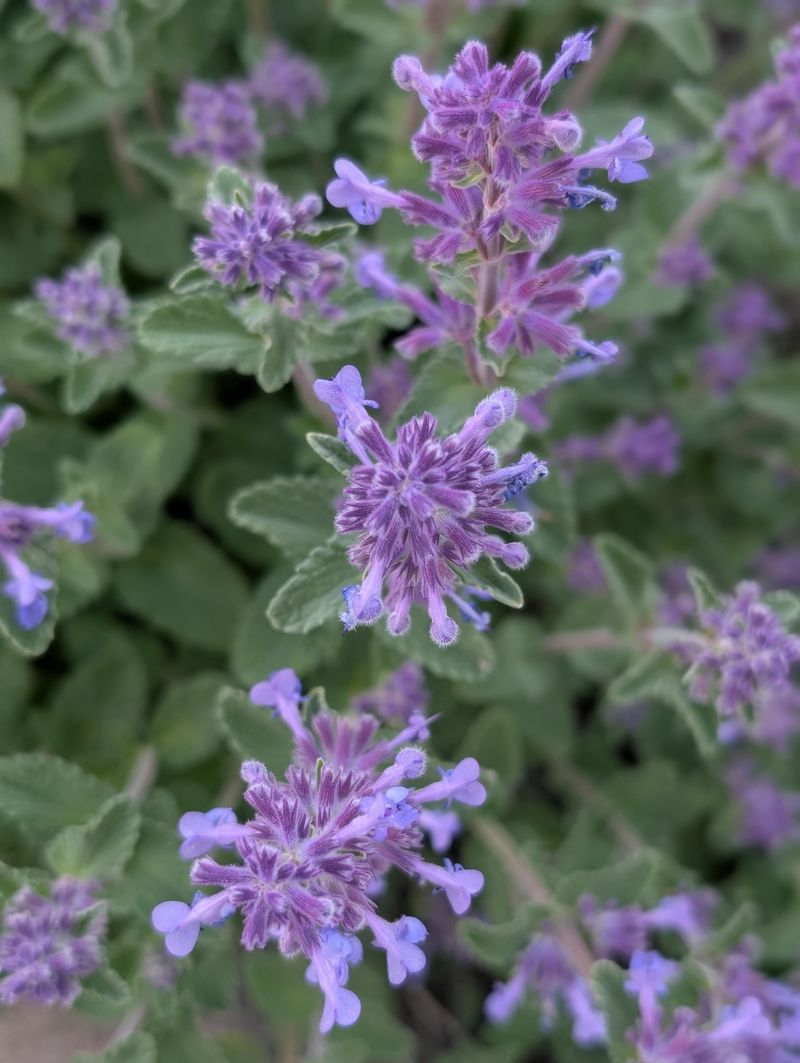
Catmint and lavender together produce one of the most reliably productive pollinator combinations available for an Oregon garden.
Bees arrive at catmint’s airy blue-purple flower clusters in numbers that turn the bed into a constant, buzzing presence from late spring onward.
When lavender joins the display at midsummer, the combined effect is something a single plant cannot achieve on its own.
Your Oregon Garden Changes Every Week. Your Plan Should Too.
Gardening in Oregon changes quickly throughout the season. Every Friday you’ll receive a simple weekly plan showing exactly what to plant, prune, fertilize, harvest, and protect so you never miss the right timing.
The timing layering is what makes this pairing particularly useful. Catmint blooms first, hard, in late spring. Cutting it back by about one-third after that initial flush encourages a quick rebound.
The second wave of catmint bloom overlaps directly with lavender’s peak, creating a continuous display rather than two separate events with a gap between them.
Walker’s Low is the most widely planted catmint variety for good reason. It stays compact, blooms generously, and handles Oregon’s wet winters and dry summers with equal composure.
Once established, it needs almost no supplemental irrigation, which aligns perfectly with lavender’s drought-tolerant character.
Do you have both in the same bed yet? The height relationship works naturally. Catmint typically reaches eighteen to twenty-four inches, making it a strong front-of-border companion to medium-height lavender varieties like Hidcote or Munstead.
Reducing supplemental irrigation in late summer actually benefits both plants by encouraging them to harden before Oregon’s rainy season arrives. Less water in August, stronger plants through winter.
That is either excellent advice or the most counterintuitive thing you will read about watering this season. It happens to be both.
3. Yarrow
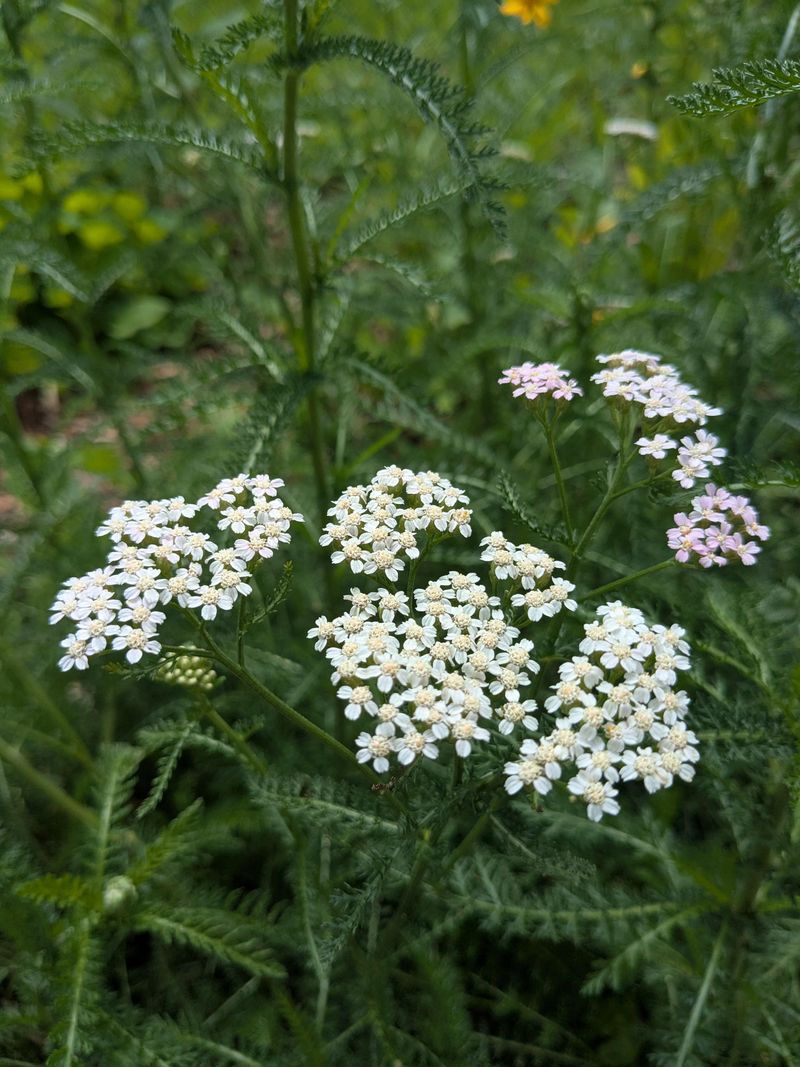
Lavender keeps its color in the cool purple range. Yarrow disagrees loudly and productively.
Cultivated yarrow varieties like Coronation Gold, Paprika, and Terracotta bring warm yellows, reds, and oranges that contrast directly against lavender’s cool tones.
Planted behind lavender, they create a clear height progression and a color tension that garden designers describe as complementary contrast.
In practice it simply means the bed looks significantly more interesting than it did before yarrow arrived.
Yarrow blooms from early summer through midsummer with deadheading extending the show into early fall.
The ferny, aromatic foliage stays visually attractive between bloom cycles, which means the plant contributes to the bed’s appearance across most of the growing season rather than only during its flowering window.
Have you grown yarrow in rich, heavily amended soil? That experience produces floppy stems that need staking and rarely look as good as the catalog suggested.
Slightly poor, gravelly soil keeps yarrow upright and compact, which is exactly what you want behind a tidy lavender hedge.
Both plants prefer lean, well-drained conditions and full sun. Both handle Oregon’s summer drought well once established. The shared requirements make them easy to maintain together without managing two separate watering schedules.
Butterflies and beneficial wasps visit yarrow consistently through the blooming season, adding movement to the bed beyond what the color combination already provides.
Native yarrow species grow wild across Oregon from the coast to the high desert. The cultivated forms are essentially the same plant wearing better clothes.
4. Salvia
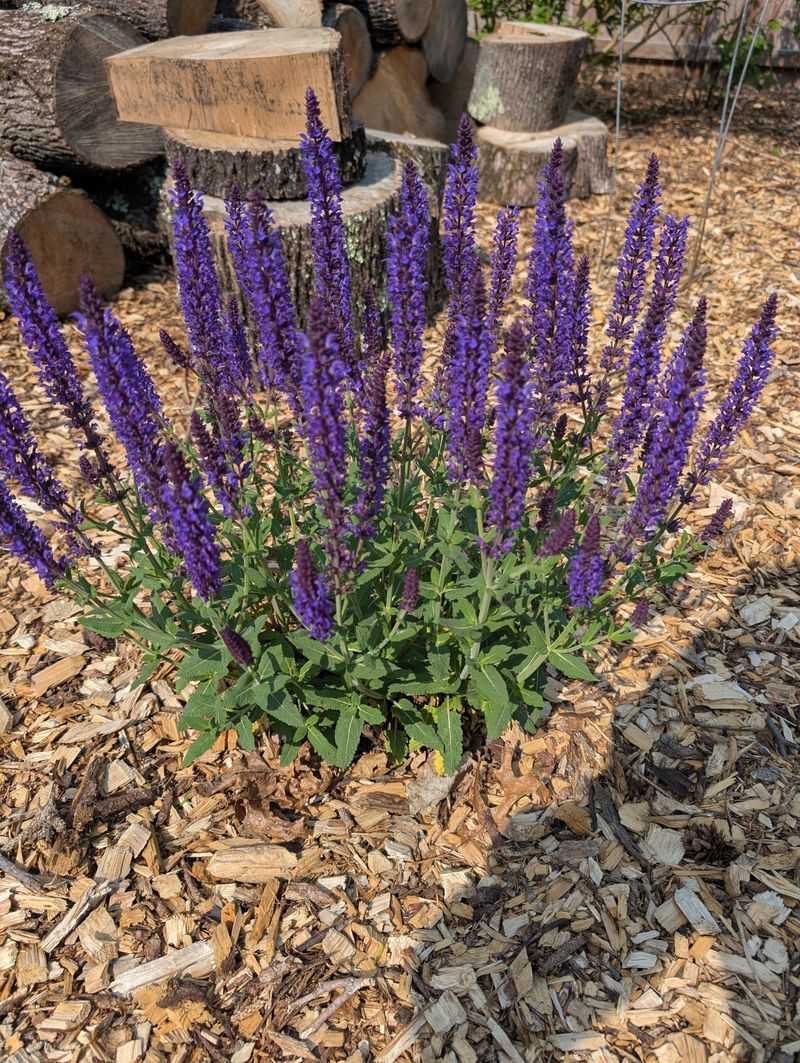
Lavender blooms brilliantly in early to midsummer and then winds down. That transition leaves a visible gap in the bed unless something is positioned to pick up where it leaves off. Salvia fills that role with almost suspicious precision.
Many salvia varieties bloom from midsummer well into fall, arriving in color right as lavender fades. The garden holds its purple-blue theme for months longer than lavender alone could sustain.
The transition is gradual enough that visitors may not notice the shift, which is exactly the kind of seamless continuity a well-planned planting produces.
Salvia nemorosa varieties like Caradonna and May Night suit Oregon gardens particularly well. They tolerate clay-heavy soils better than lavender does, which is useful given how common heavy ground is across the Willamette Valley.
They also handle Oregon’s wet springs without the root concerns that sometimes trouble lavender in poorly drained conditions.
The visual pairing works because salvia’s upright flower spikes echo lavender’s form closely enough to feel cohesive while the deeper, richer tones create enough contrast to keep the combination from blending into a single undifferentiated color mass.
Are you planting one salvia per lavender, or more? Three to five salvia plants for every one lavender creates a natural rhythm that reads as balanced rather than chaotic.
Cut salvia back by half after its first bloom flush in early summer and it rebounds with fresh growth carrying new flowers through September.
Lavender hands the season to salvia. Salvia does not waste the opportunity.
5. Thyme
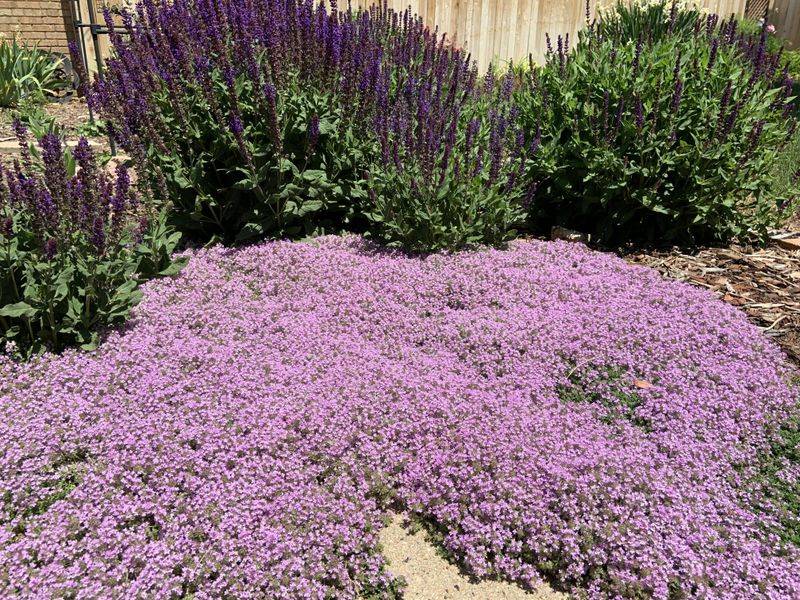
Bare soil between lavender plants is an open advertisement for weeds. Thyme accepts that vacancy before anything less desirable can claim it.
Low-growing varieties like Thymus serpyllum and Elfin thyme stay under three inches tall, which means they never compete with lavender for visual attention.
Woolly thyme adds a silvery, textured appearance that echoes lavender’s own soft foliage. All of them tolerate moderate foot traffic, making them a practical choice along path edges where lavender borders a walkway.
Thyme and lavender originate from the same Mediterranean climate zone. Their water and soil preferences align almost completely.
Full sun, sharp drainage, and minimal supplemental irrigation once established covers the requirements for both plants simultaneously.
Have you noticed thyme flowering in your garden? Tiny pink, white, or purple blooms appear in late spring and early summer, drawing small native bees and hoverflies into the bed before lavender’s peak arrives.
The dense mat-forming habit thyme develops over a season suppresses weed germination naturally. The need for mulching or manual weeding between lavender plants decreases considerably once thyme has filled in.
Thyme also releases fragrance when brushed against or stepped near, which changes the sensory experience of the entire planting area from purely visual to something considerably more engaging.
A groundcover that smells good, prevents weeds, feeds pollinators, and costs the same as any other herb at the nursery.
The only question is why it is not in every lavender bed already.
6. Echinacea
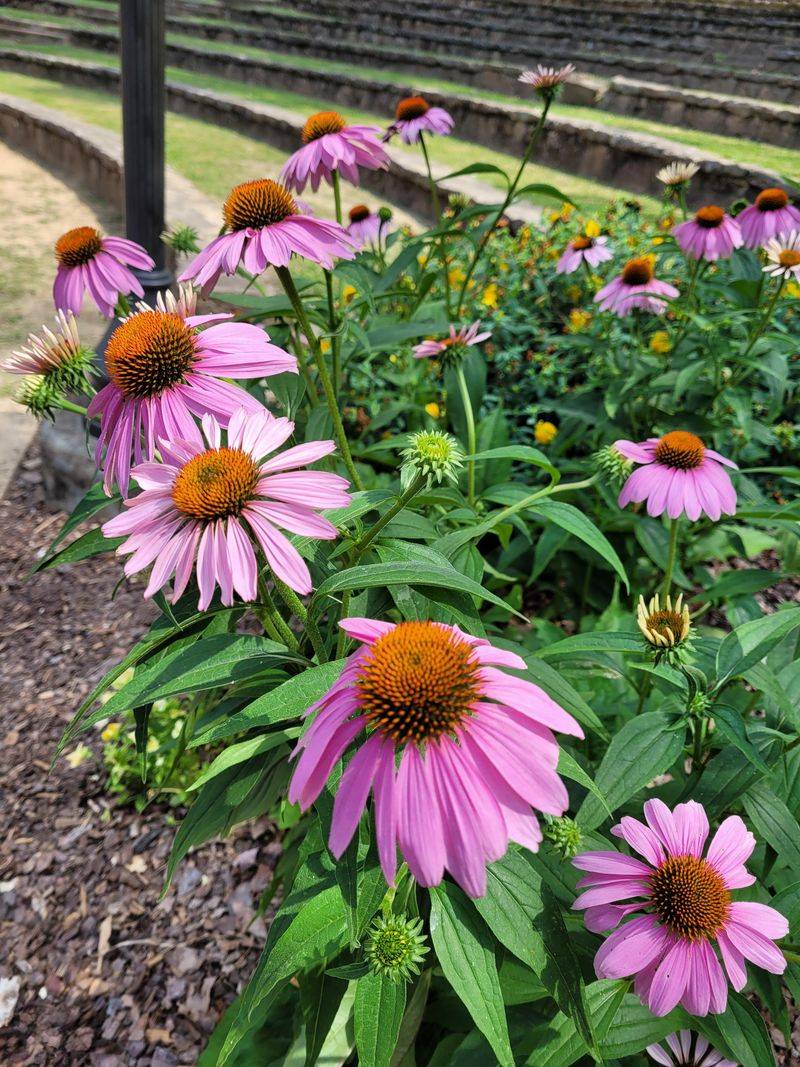
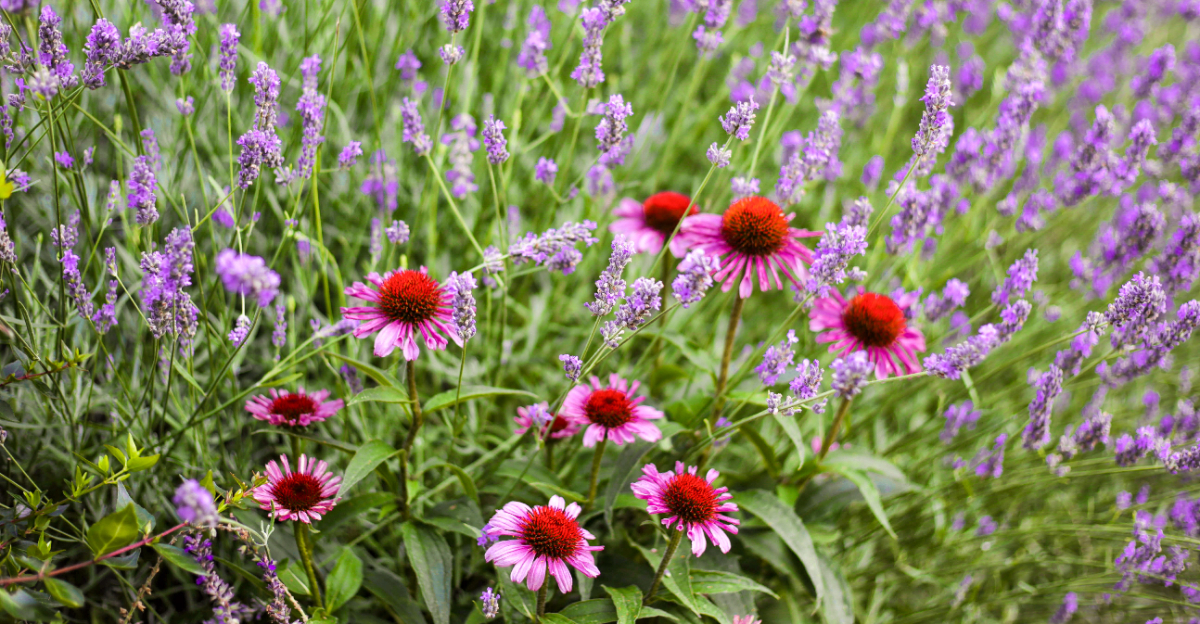
Lavender is refined. Echinacea is confident. Together they create a combination that reads as both intentional and alive in a way that neither plant achieves on its own.
The large daisy-like blooms of echinacea in hot pinks, burnt oranges, and deep reds contrast directly against lavender’s cooler purple tones.
That color tension is the kind of pairing that photographs well and looks even better in person at the right time of day.
Echinacea blooms from midsummer through early fall in Oregon, overlapping with lavender’s tail end and carrying the garden forward as lavender fades.
The drooping petals and prominent central cones give the planting a naturalistic, prairie-inspired quality that suits Oregon’s landscape aesthetic well.
Echinacea tolerates Oregon’s heavier clay soils better than lavender does. Planting it in the middle to back of a border, just behind lavender, creates a height progression that looks considered without requiring any particular design skill.
Established echinacea clumps benefit from division every three to four years to maintain vigor and prevent crowding. That task produces extra plants that can extend the combination to other parts of the garden.
Bold color, pollinator value, winter structure, and free divisions. Echinacea is not subtle about making itself useful.
7. Sedum
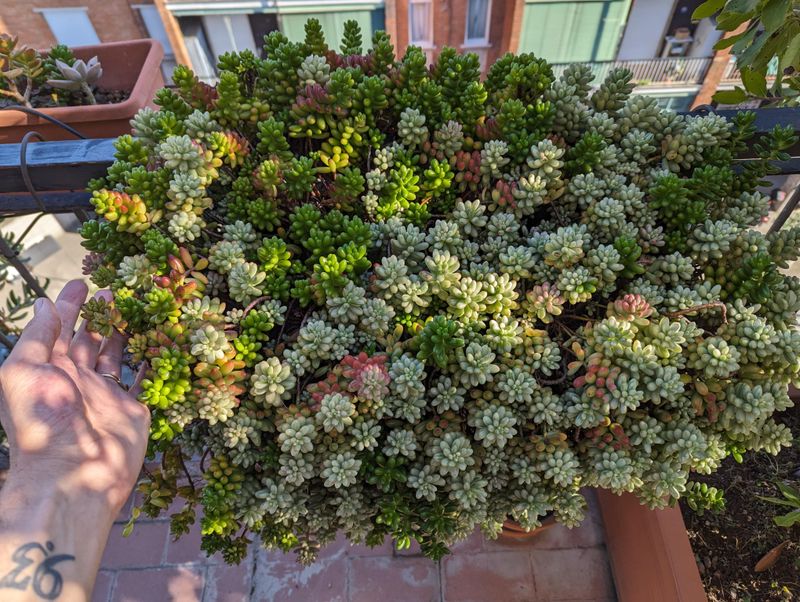
Sedum makes a case that the best part of a garden bed can happen after the main event is finished.
Tall sedum varieties like Autumn Joy and Matrona grow eighteen to twenty-four inches and produce large flat-topped flower clusters that shift from pale green through dusty pink to rusty red as summer transitions into fall.
That color evolution begins exactly when lavender is winding down, which keeps the bed visually engaged through October without any additional planting.
The textural contrast between these two plants is one of the more visually satisfying in the Oregon garden palette. Lavender’s soft, feathery stems look delicate against sedum’s chunky, succulent rosettes.
Both plants carry a sculptural quality that holds through Oregon’s long gray winters when most perennials have disappeared completely underground.
However, be careful if you amend heavily with compost in the beds where sedum is planted. Rich soil causes it to flop and sprawl in a way that ruins the pairing with lavender’s upright form.
Slightly poor, gritty soil keeps sedum compact and upright, which suits a tidy border arrangement considerably better.
Both plants want lean, well-drained conditions and full sun. The shared requirements make irrigation and maintenance straightforward.
Cut sedum stems back to the ground in late winter before new growth emerges. That single annual task keeps the planting looking vigorous and intentional rather than accumulating seasons of old material.
Sedum takes the garden from summer through fall without asking for much. That is the kind of work ethic any gardener can appreciate.
8. Santolina
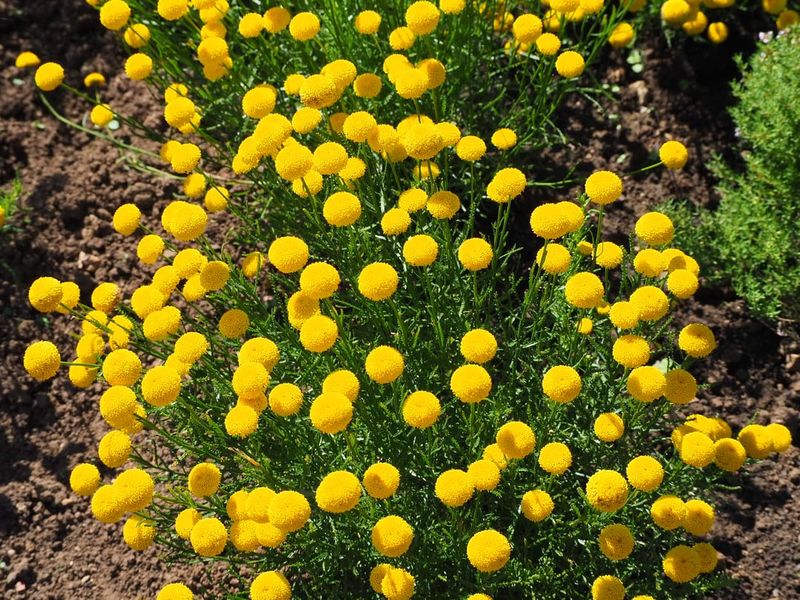
Santolina is one of the most underused silver-foliage plants in Pacific Northwest gardens, and the lavender bed is the place it performs at its absolute best.
The dense, finely textured mounds of gray-green or silver leaves create a cool, calm contrast next to lavender’s warmer purple tones.
Positioned nearby, santolina makes lavender’s color look more saturated by comparison, which is the kind of visual effect that improves the entire bed without anyone being able to immediately identify why.
In midsummer, small bright yellow button flowers appear against the silver foliage. Some gardeners clip them off for a cleaner, more structured look.
Others let them bloom freely for a cheerful, informal effect alongside lavender. Both approaches work depending on the garden style you are developing.
If you’re dealing with deer or rabbit pressure in your yard, santolina’s sharp, camphorous fragrance deters both.
That practical benefit runs alongside the visual contribution and the fragrance experience that happens when anyone brushes against the plant while walking past.
Both santolina and lavender prefer alkaline to neutral soil, full sun, and excellent drainage.
They share nearly identical water needs once established. It means they can run on the same irrigation zone without one plant being over or underserved.
Shearing santolina by about one-third in early spring maintains its rounded shape and prevents the woody base from opening up over time. One annual trim keeps the pairing looking crisp through the entire growing season.
Silver foliage, deer deterrence, yellow summer flowers, and identical water requirements.
Santolina has clearly been waiting for someone to notice how well it fits next to lavender.