Overlooked Native Michigan Groundcovers That Survive Severe Summer Storms
Michigan summer storms test every plant in the garden, but groundcovers take the full force of heavy rain, wind, and the soil erosion that follows a serious weather event without any of the structural support that larger plants benefit from.
Most ornamental groundcovers recover poorly from repeated storm exposure through a Michigan summer. Native groundcovers built for this region handle it differently.
Their root systems developed through generations of Michigan weather, and their above-ground growth rebounds from storm damage with a speed and completeness that imported alternatives rarely match.
The ones most worth knowing about are genuinely absent from mainstream landscaping conversations despite being some of the most storm-resilient plants available for Michigan properties.
1. Wild Strawberry
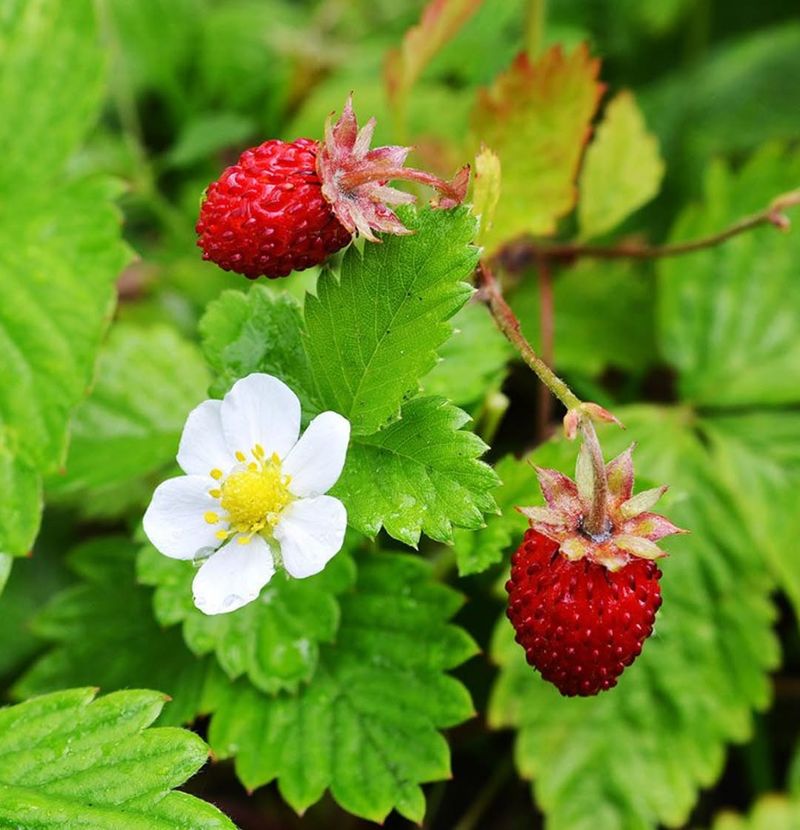
Most people walk right past wild strawberry without realizing it is one of the hardest-working native groundcovers in Michigan.
Fragaria virginiana grows low to the ground and sends out spreading runners that root quickly, filling in bare patches faster than you might expect.
Sunny edges, partly shaded beds, and low-traffic lawn areas are all fair game for this little plant.
After a heavy summer rainstorm, bare soil can wash or splash away, leaving ugly gaps in your garden.
Wild strawberry handles this well because its dense mat of leaves and rooting runners holds soil in place even when water rushes across the surface. It actually bounces back quickly after storms, looking fresh and green once the rain stops.
Planting wild strawberry along a sunny bed edge or mixing it into a low-mow lawn area gives you soil coverage and a seasonal bonus: tiny, sweet strawberries that birds and wildlife absolutely love.
It thrives in well-drained to moderately moist soil and handles both full sun and light shade. Once established, it needs very little attention.
Skip the fertilizer, since rich soil tends to push leafy growth at the expense of fruit and flowers.
Give it open ground, decent drainage, and a bit of patience, and wild strawberry will reward you with a tough, attractive, and surprisingly productive native groundcover that laughs in the face of Michigan summer storms.
2. Pennsylvania Sedge
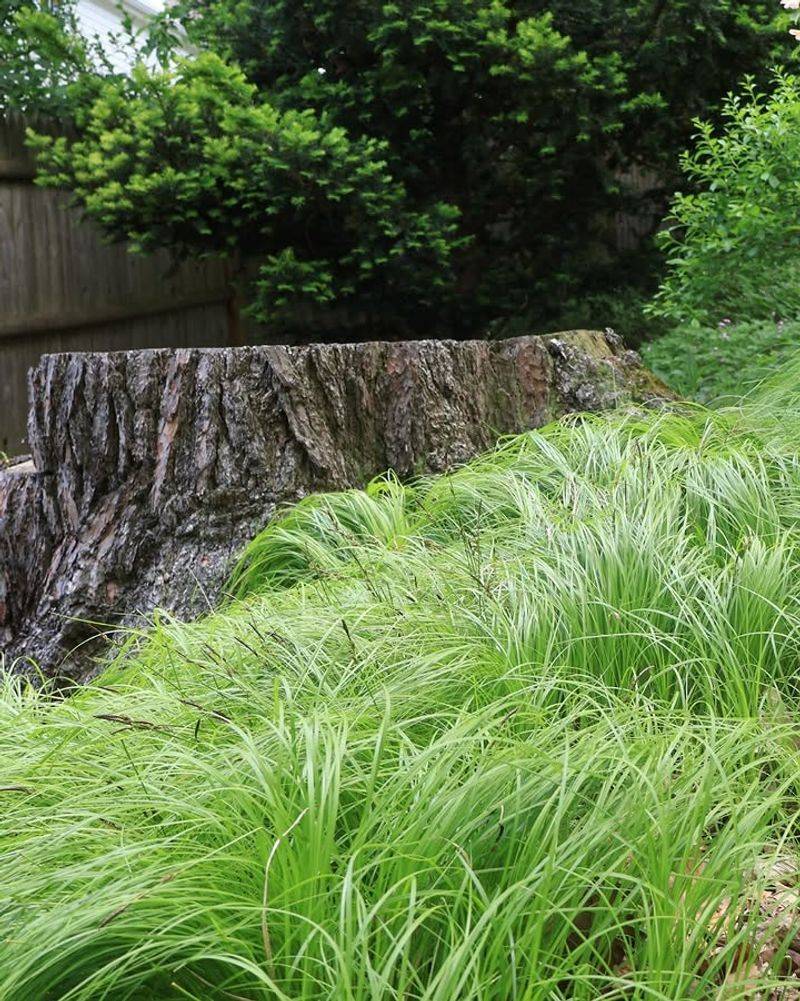
If you have ever struggled to grow turf grass under a big oak or pine tree, Pennsylvania sedge might be exactly what your yard needs.
Carex pensylvanica is a native sedge with a soft, grass-like texture that forms low, graceful clumps in shaded and partly shaded spots where regular lawn simply refuses to cooperate. It looks like a lawn but asks for almost nothing in return.
What makes it especially valuable in storm-prone gardens is its deep root system and its natural comfort in dry, sandy, or rocky woodland soil.
Heavy rain can rush through shaded areas under trees, and Pennsylvania sedge holds its ground without complaint.
Its dense growth also helps slow water movement across the soil surface, which reduces erosion on sloped or uneven terrain.
Gardeners love this plant because it rarely needs mowing. A single trim in early spring keeps it tidy, and then it grows on its own through the season.
Your Michigan Garden Changes Every Week. Your Plan Should Too.
Gardening in Michigan changes quickly throughout the season. Every Friday you’ll receive a simple weekly plan showing exactly what to plant, prune, fertilize, harvest, and protect so you never miss the right timing.
It spreads slowly by underground rhizomes, gradually thickening into a soft, natural-looking carpet.
Planting it under oaks, pines, or along open woodland edges gives you a polished, low-maintenance alternative to mulch or struggling turf.
Pennsylvania sedge is one of those plants that quietly does its job season after season, asking for little while giving your landscape a calm, refined, and thoroughly storm-ready appearance that most conventional lawn grasses simply cannot match.
3. Bearberry
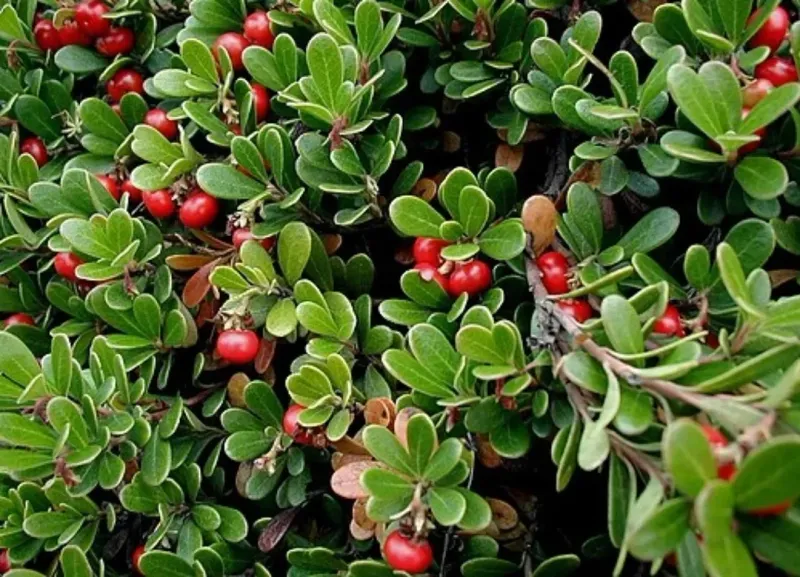
Sandy, sunny, and bone dry sounds like a gardening nightmare, but bearberry thrives in exactly those conditions.
Arctostaphylos uva-ursi is a native evergreen groundcover that hugs the ground with trailing woody stems, glossy small leaves, and cheerful red berries that persist well into fall.
It is one of the few native plants that genuinely loves the kind of harsh, exposed sites where most other groundcovers quickly struggle.
Summer storms with strong winds and driving rain can thin out shallow-rooted plants on open slopes and sandy edges.
Bearberry handles these conditions because its roots reach deep into sandy or gravelly soil, anchoring the plant firmly while its dense mat of stems and leaves protects the surface from rain splash and runoff.
It stays evergreen through Michigan winters too, which means year-round soil coverage with minimal effort from you. The best sites for bearberry are full sun locations with acidic, well-drained soil.
Think of open sandy banks, lakeside edges, dry roadsides, or sunny rock gardens where water drains fast and the soil never gets soggy.
Avoid planting it in clay or low spots where water pools after storms, since poor drainage is one of the few things bearberry genuinely dislikes.
Once established, it is remarkably self-sufficient. No fertilizer, no fussing. Bearberry is a tough, beautiful, and underappreciated native that earns its place in any storm-exposed landscape.
4. Creeping Juniper
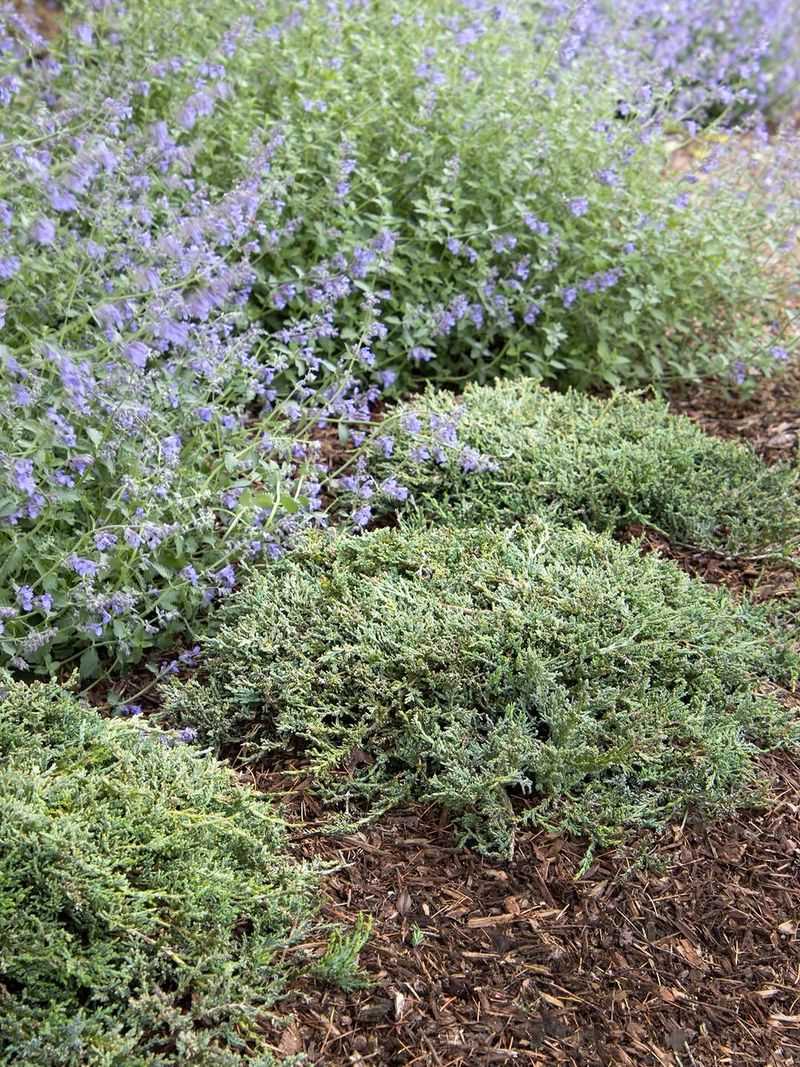
Creeping juniper is one of those plants that looks like it was made for difficult spots.
Juniperus horizontalis spreads wide and low, hugging the ground with blue-green needle foliage that stays attractive through every season.
It is native to Michigan and naturally suited to sandy, well-drained sites that get plenty of sun and occasional punishment from summer weather. Slopes and open sunny banks are where creeping juniper really shines.
Its sprawling branches root as they spread, creating a tough, interlocking mat that holds sandy or gravelly soil in place even during heavy rain.
Strong summer storms that might wash away lighter groundcovers barely bother creeping juniper, which grips the ground with quiet determination and keeps the slope looking stable and well-covered.
One important thing to keep in mind is that creeping juniper is not a good fit for every spot.
Soggy clay soil, low areas where water collects after storms, or shaded locations are all wrong for this plant.
It needs sharp drainage and sun to stay healthy and attractive. In the right spot, though, it is incredibly low maintenance.
No mowing, very little watering once established, and no need for regular fertilizing. Birds also appreciate the small berries creeping juniper produces in fall and winter.
For exposed sandy banks, dry sunny edges, or challenging open areas where other groundcovers struggle, creeping juniper is a reliable and handsome native solution worth planting.
5. Wild Ginger
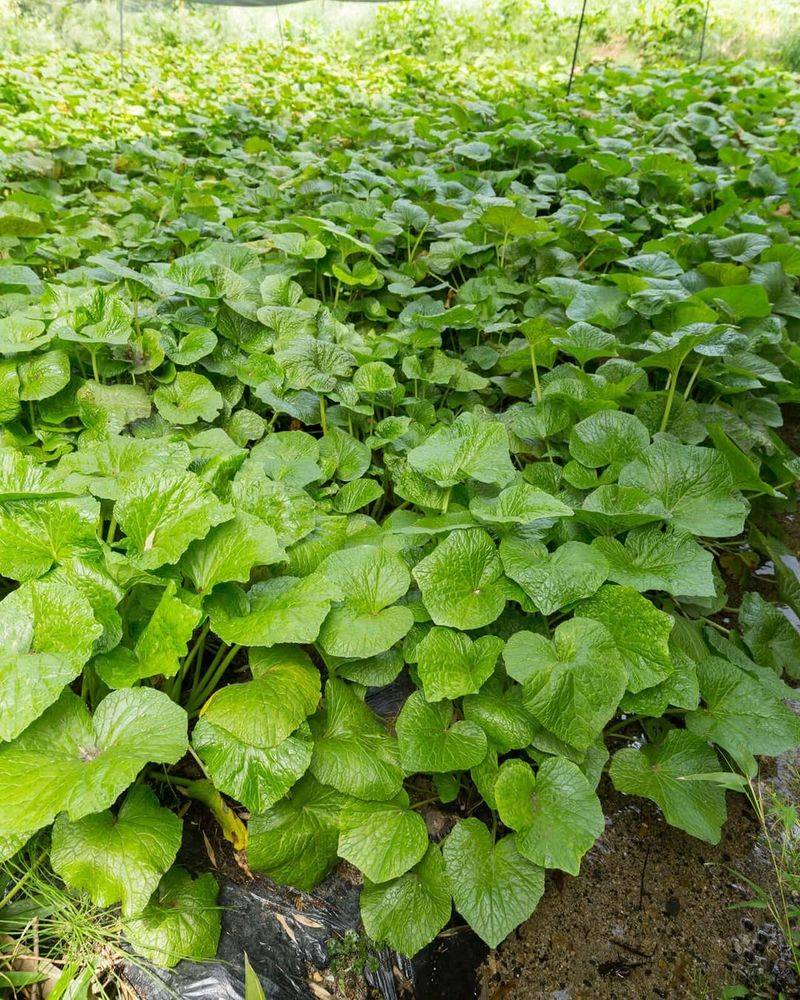
Walk into a shaded woodland in summer and you might spot wild ginger carpeting the forest floor with broad, heart-shaped leaves that overlap and interlock like a living green quilt.
Asarum canadense is one of the most satisfying native groundcovers for shaded garden spaces because it looks lush, handles summer rain well, and protects woodland soil from the kind of splashing and erosion that heavy storms can cause.
The large leaves do a remarkable job of absorbing rainfall and slowing water as it hits the ground.
Under trees and shrubs with humus-rich soil, wild ginger spreads steadily by underground rhizomes, filling in shaded beds with a soft, even carpet.
It works beautifully under mature trees, along shaded foundation edges, and in naturalized garden areas where the soil stays consistently moist but not waterlogged.
Placement matters a lot with wild ginger. Hot sunny spots, dry sandy areas, or paths where storm runoff races across the ground are not good matches.
It prefers steady, moderate moisture and the kind of rich, organic soil that forms naturally in woodland settings.
Adding compost to your planting area before getting started gives it a real boost.
Wild ginger is deciduous, so it disappears in winter, but it returns reliably each spring with fresh, handsome foliage.
For shaded gardens that need strong storm-season soil protection, it is one of the most elegant and practical native options Michigan has to offer.
6. Partridgeberry
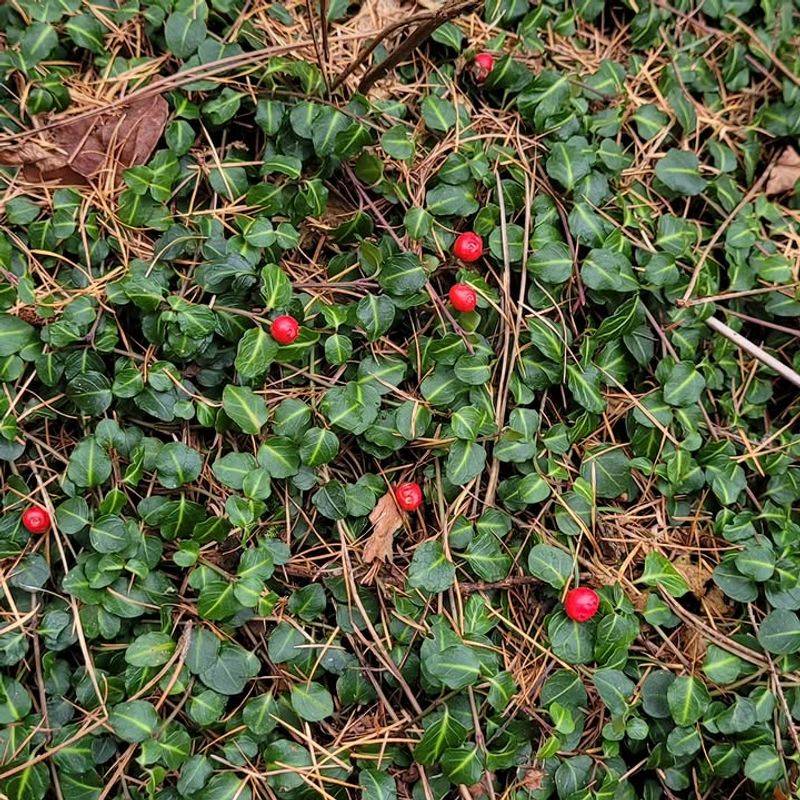
Tucked beneath hemlocks and in the quiet corners of acidic woodland gardens, partridgeberry is one of Michigan’s most charming and underused native groundcovers.
Mitchella repens is a tiny, trailing evergreen with small paired leaves, delicate white flowers in early summer, and bright red berries that last through winter.
It is slow and unhurried, but in the right spot it creates a tight, beautiful mat that protects soil from bare patches and storm splash.
Patience is the key ingredient when growing partridgeberry. It does not race to fill space, but once it settles into acidic, humus-rich soil under the right canopy, it holds on with surprising resilience.
Heavy summer rain events that might wash away loose mulch or bare soil have little effect on partridgeberry once it has rooted in and spread across the ground.
Its fine, interlocking stems grip the surface and keep the soil beneath intact.
The best sites for this plant are shaded spots with consistently moist, well-drained, acidic soil.
Under hemlocks, pines, or rhododendrons works wonderfully. Avoid sunny, dry, or compacted areas, as partridgeberry simply will not thrive there.
It is also a plant that rewards careful watering during establishment. Once rooted, it becomes quite self-sufficient.
For small woodland garden corners, shaded paths, or acidic garden beds where you want year-round coverage, partridgeberry brings quiet beauty and genuine storm-season staying power to the Michigan garden landscape.
7. Common Blue Violet
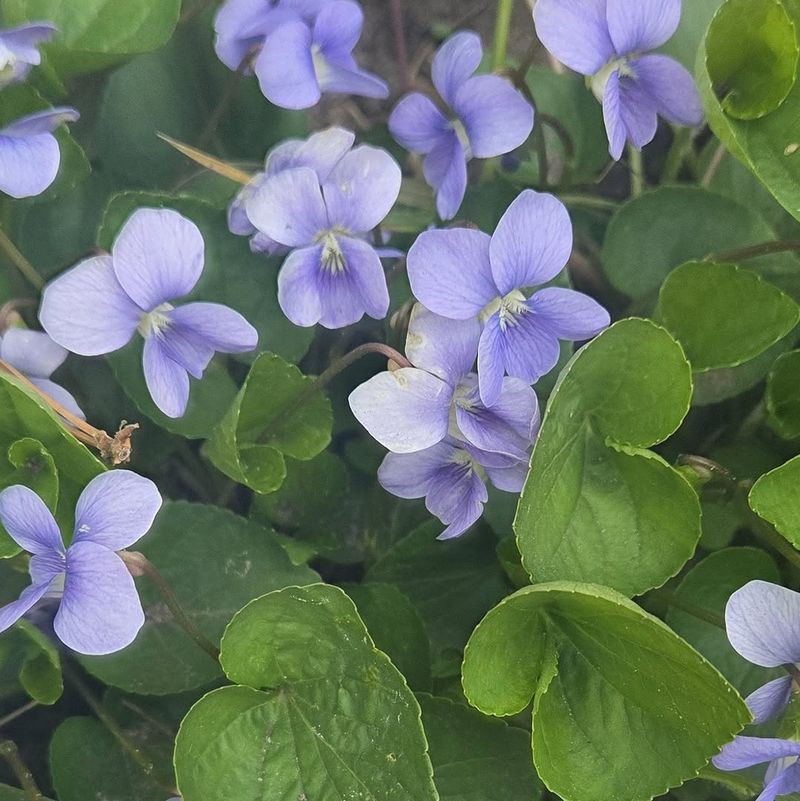
Common blue violet might already be growing in your yard without you even noticing.
Viola sororia is one of Michigan’s most familiar native plants, popping up in lawns, along path edges, and in partly shaded garden beds every spring with cheerful purple flowers and heart-shaped leaves.
Many gardeners pull it out as a weed, not realizing it is actually a tough, useful native that handles summer rain far better than bare soil or struggling grass.
In low-mow or natural lawn areas, common blue violet blends in beautifully.
Its foliage stays green and full through summer, covering the ground and preventing soil from washing away during heavy storms.
Unlike many delicate wildflowers, it does not sulk after a hard rain. It simply keeps growing, holding soil in place and filling gaps that other plants leave behind when conditions get rough.
Violets also serve as host plants for several native fritillary butterflies, which makes them genuinely valuable beyond just groundcover function.
They self-seed moderately, so they spread naturally over time without becoming aggressive in most garden settings.
Partly shaded areas with average soil moisture suit them best, though they tolerate a surprising range of conditions. Full sun with consistent moisture works too.
For gardeners who want a low-effort, storm-resilient native plant that adds spring color and supports wildlife, common blue violet is one of the easiest and most rewarding choices available in the Michigan native plant palette.
8. Foamflower
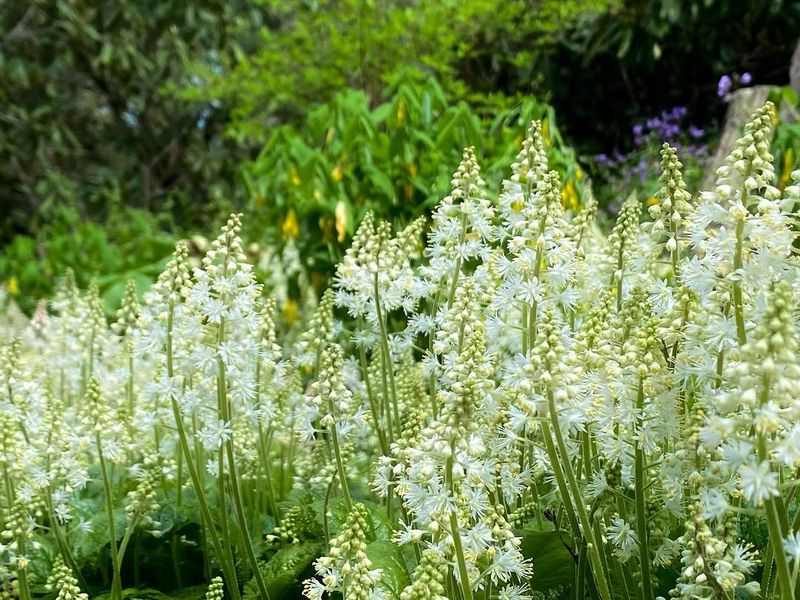
Few native plants can match the sheer charm of foamflower in full bloom.
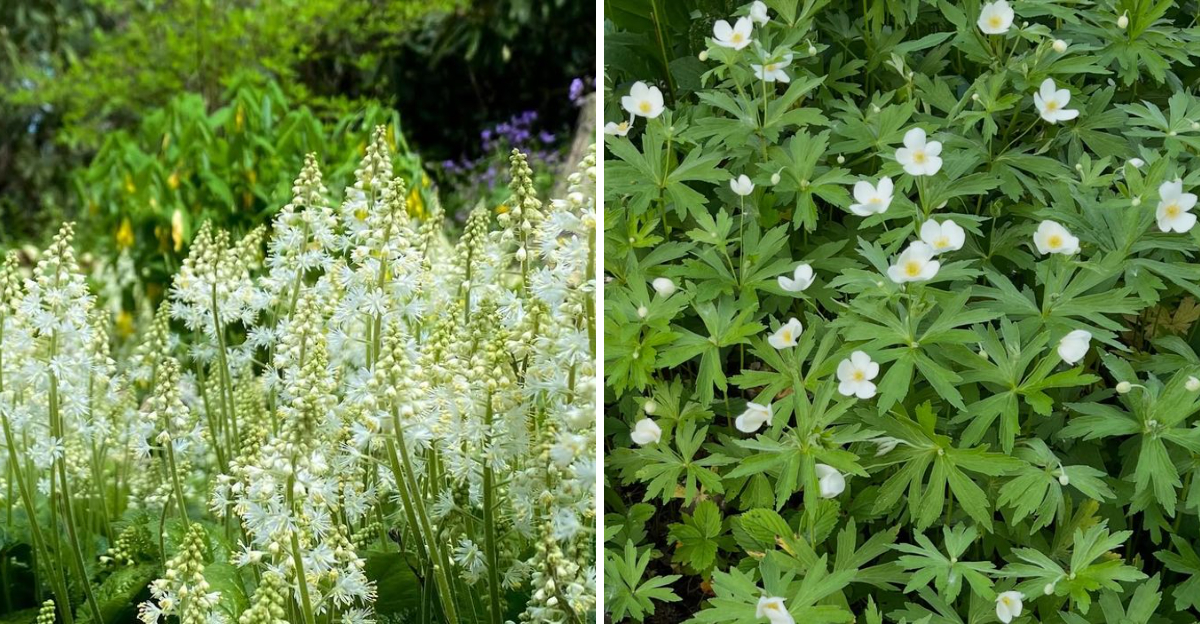
Tiarella cordifolia sends up frothy white flower spikes in spring that look like tiny clouds hovering above its lobed, maple-like leaves, which is exactly how it earned its memorable name.
Beyond the flowers, it is a genuinely hardworking groundcover for moist, shaded spaces that need reliable storm-season soil protection.
Foamflower spreads by stolons, forming a steadily expanding patch of overlapping leaves that cover the soil surface effectively.
In woodland gardens, shaded hollows, and moist bed edges, this coverage helps absorb the impact of heavy summer rain, slowing water movement and preventing the soil splash that can expose roots and wash away fine topsoil.
It is the kind of plant that quietly protects your garden infrastructure while looking beautiful doing it.
The key to success with foamflower is matching it to the right site. It wants evenly moist, humus-rich, well-drained soil in partial to full shade.
It does not tolerate drought or standing water, so avoid spots where the ground dries out completely in summer or where storm runoff pools for long periods.
Damp woodland edges, shaded rain garden borders, and north-facing beds with good organic matter are ideal.
Foamflower is also semi-evergreen in Michigan, giving you some winter interest and early spring coverage before other plants wake up.
For moist shaded gardens, it is one of the most beautiful and storm-capable native groundcovers available.
9. Golden Ragwort
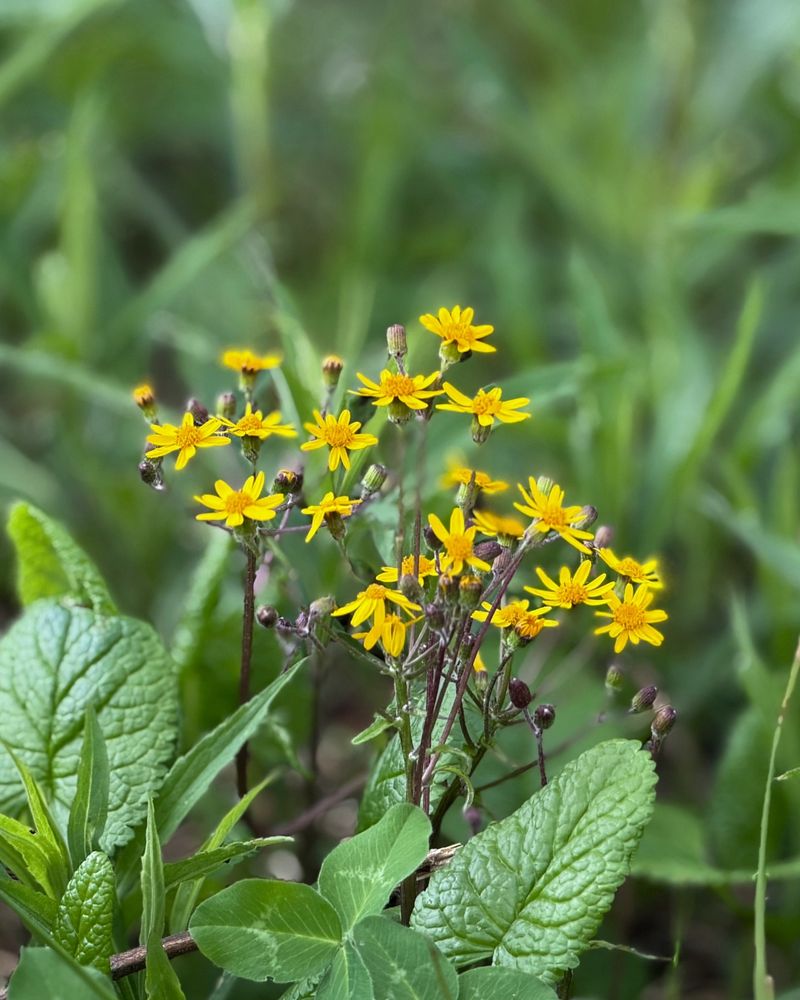
Golden ragwort brings a burst of bright yellow to the spring garden that feels almost electric after a gray Michigan winter.
Packera aurea forms a dense rosette of ground-hugging leaves that serve as an effective groundcover throughout the growing season. This foliage continues working long after its cheerful yellow late-spring flowers have finished blooming.
What makes golden ragwort especially valuable in storm-prone gardens is its comfort in moist, shaded, and even periodically wet soil.
Along rain garden edges, in naturalized bed borders, and in low spots that collect occasional runoff, it holds its own beautifully.
The broad basal leaves cover the soil surface effectively, reducing splash erosion and helping to keep fine soil particles in place during heavy summer downpours.
This plant is a much better fit for moist, organically rich sites than for dry sandy slopes. In the right conditions, it can spread steadily by seed and by short rhizomes, gradually filling in shaded or partly shaded areas with a reliable green mat.
Rain gardens, woodland edges near drainage swales, and moist naturalized areas are all excellent placements.
Full shade to part shade suits it well, and it tolerates clay soil better than many other native groundcovers.
For gardeners looking to stabilize moist, shaded ground while also adding genuine seasonal color, golden ragwort is a smart, underappreciated, and storm-ready native choice for Michigan landscapes.
10. Canada Anemone
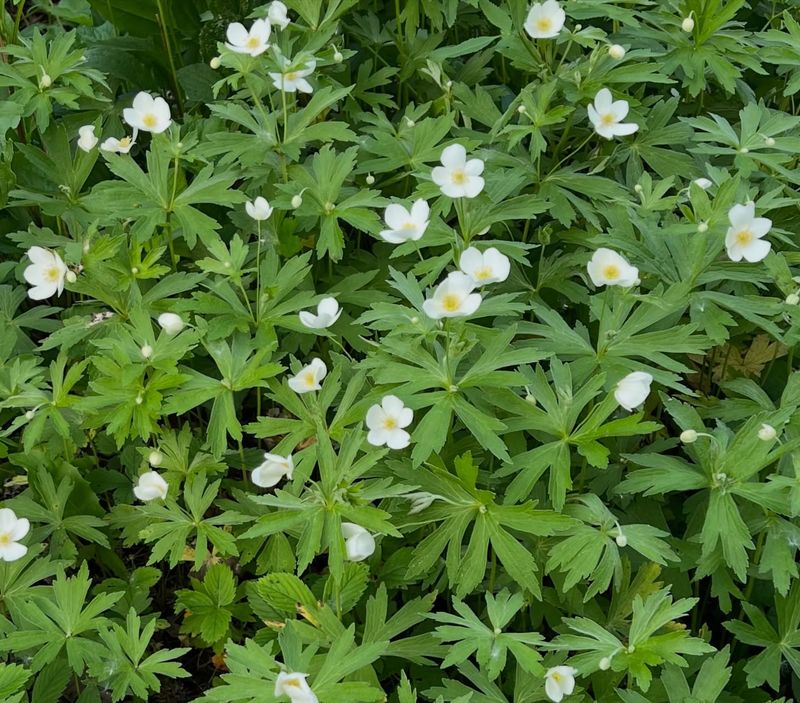
Canada anemone is the kind of plant that means business. Anemone canadensis spreads by underground rhizomes with real energy, filling in moist sunny or partly shaded spaces faster than most native groundcovers on this list.
Once it gets comfortable, it forms a dense, knee-high carpet of deeply lobed leaves topped with bright white flowers in late spring and early summer, creating a look that feels both wild and wonderfully purposeful.
For spots that receive storm runoff, Canada anemone is one of the most practical choices a gardener can make.
Its extensive root network holds moist soil firmly in place, even when heavy rain rushes across the surface.
Wet meadow areas, low spots near downspouts, moist roadside edges, and open sunny areas with periodic flooding are all well within its comfort zone.
It handles these challenging conditions with remarkable ease. The one thing to plan for with Canada anemone is its spreading habit.
In favorable soil with consistent moisture, it can expand quickly and move into neighboring plants if left unchecked.
Giving it a defined space with natural barriers, or planting it in areas where spreading is actually welcome, makes management much simpler. It is not a plant for tight, manicured beds with delicate neighbors.
But for open, difficult, wet areas where you need strong storm-season soil coverage and reliable native beauty, Canada anemone delivers results that few other plants can match in the Michigan landscape.