8 Florida Plant Placement Tricks That Keep Bringing More Birds Even Without A Single Feeder
The feeder is full. Your Florida yard looks fine. And yet the birds barely show up.
Meanwhile, two streets over, a neighbor without a single feeder has warblers in the shrubs, towhees scratching through the leaf litter, and cedar waxwings moving through every afternoon like they own the place.
What is the difference?
It is not the seed variety. It is not a special product or a costly upgrade. It is the way the plants are arranged.
Birds are not searching for food the way a shopper browses a grocery store. They are scanning a landscape for signals. Safety signals. Structure signals. Signs that a particular yard is worth trusting with their presence, their nesting, and their young.
Most of the time, the yard failed to communicate something specific that the bird needed to see.
These placement strategies change that conversation entirely. None of them require a feeder, a budget, or anything more than a shift in how plants get positioned.
1. Place Berry Shrubs Near Cover
Birds are cautious eaters. A berry shrub sitting out in the open with no quick escape route is a berry shrub that gets skipped by most species worth watching.
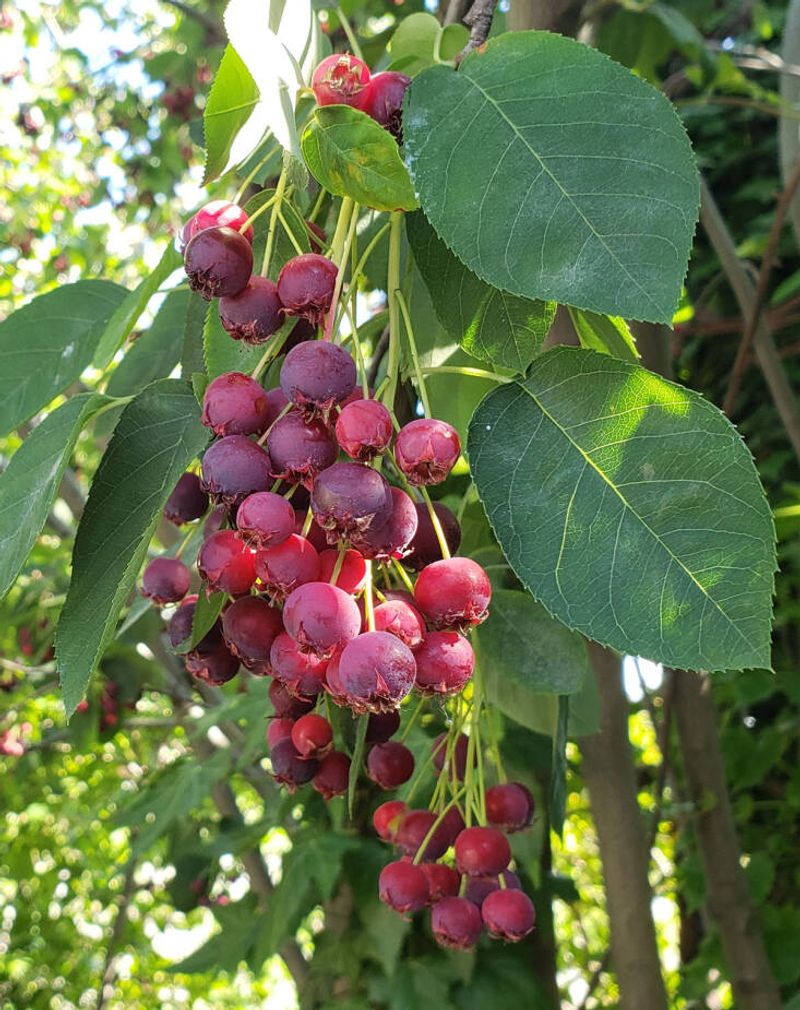
Native berry-producing shrubs like American holly, serviceberry, and beautyberry offer fruit that ripens at different points across the year.
That staggered timing keeps birds returning across multiple seasons rather than visiting once and moving on. But the fruit alone does not determine how much bird traffic a shrub generates. The placement does.
Tucking berry shrubs within three to five feet of a hedgerow, dense shrub border, or tree line edge gives birds a reliable escape path within one or two wingbeats.
A bird can drop in for a berry, spot a threat, and disappear back into cover before the threat closes in. That speed is what makes a bird feel confident enough to come back repeatedly.
Robins, cedar waxwings, and thrushes are especially drawn to this kind of setup. They are not casual visitors to exposed locations. They are regular patrons of well-designed ones.
A small serviceberry planted beside an existing fence shrub or a thick evergreen already in the yard creates a working micro-habitat without any major redesign.
Start with one well-placed shrub pair. Watch which birds arrive first. Then expand from there.
Smart placement consistently outperforms sheer quantity of plants. One berry shrub next to good cover beats five berry shrubs in the open almost every time.
2. Stack Tall Trees Behind Shrubs
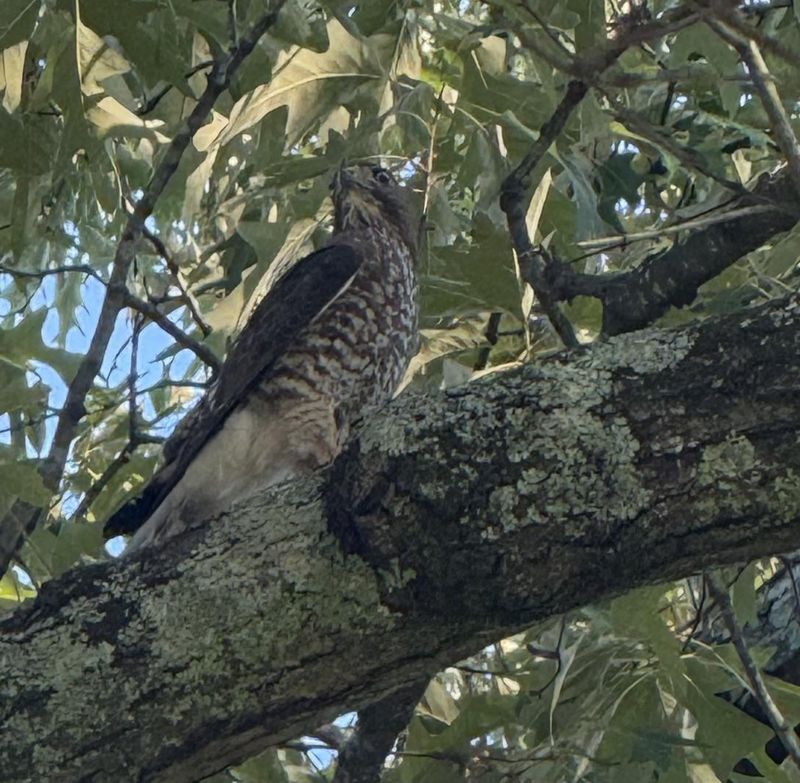
A towhee scratches at ground level. A yellow warbler sings from mid-shrub height. A red-tailed hawk perches twenty feet up in the canopy.
All three birds are using the same yard at the same time, and none of them are competing for the same layer. That is vertical structure, and it is one of the most powerful things a backyard can offer.
When tall trees stand behind shorter shrubs, and those shrubs rise above low groundcovers, the yard begins to function the way a forest edge does.
Birds of different sizes and habits find exactly the height they need. Every species has a role in this layered environment, and every layer attracts species that the other layers cannot.
Your Florida Garden Changes Every Week. Your Plan Should Too.
Gardening in Florida changes quickly throughout the season. Every Friday you’ll receive a simple weekly plan showing exactly what to plant, prune, fertilize, harvest, and protect so you never miss the right timing.
Tall background trees offer nesting sites, singing perches, and roosting spots that shrubs simply cannot provide.
Oaks, maples, and native cherries support enormous caterpillar populations that birds rely on to feed nestlings. A yard with only shrubs is genuinely one-dimensional in a way that limits which species visit.
Position tall trees along the back or north edge of the yard so they do not shade out the shorter plants in front.
Leave the mid-layer open for viburnum, elderberry, or native dogwood. Keep the front low with groundcovers or native grasses.
Over a few seasons, woodpeckers, vireos, and flycatchers begin showing up in what was previously a quiet, flat yard.
The birds were always nearby. They just needed something worth descending into.
3. Set Seed Flowers Near Perches
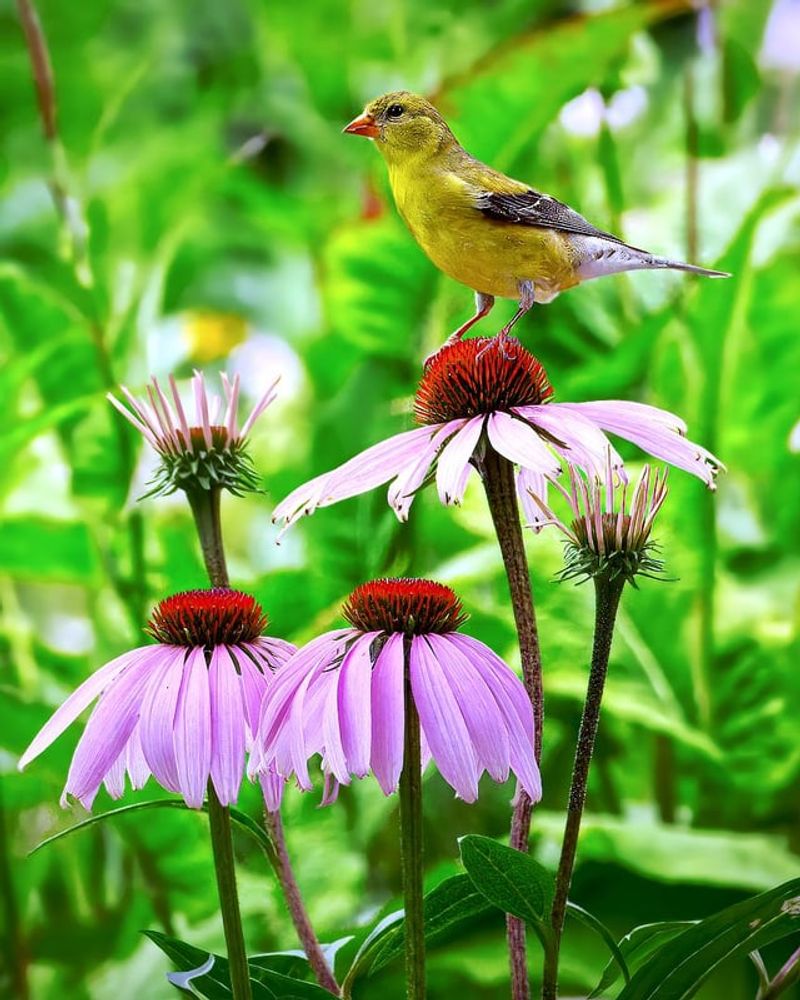
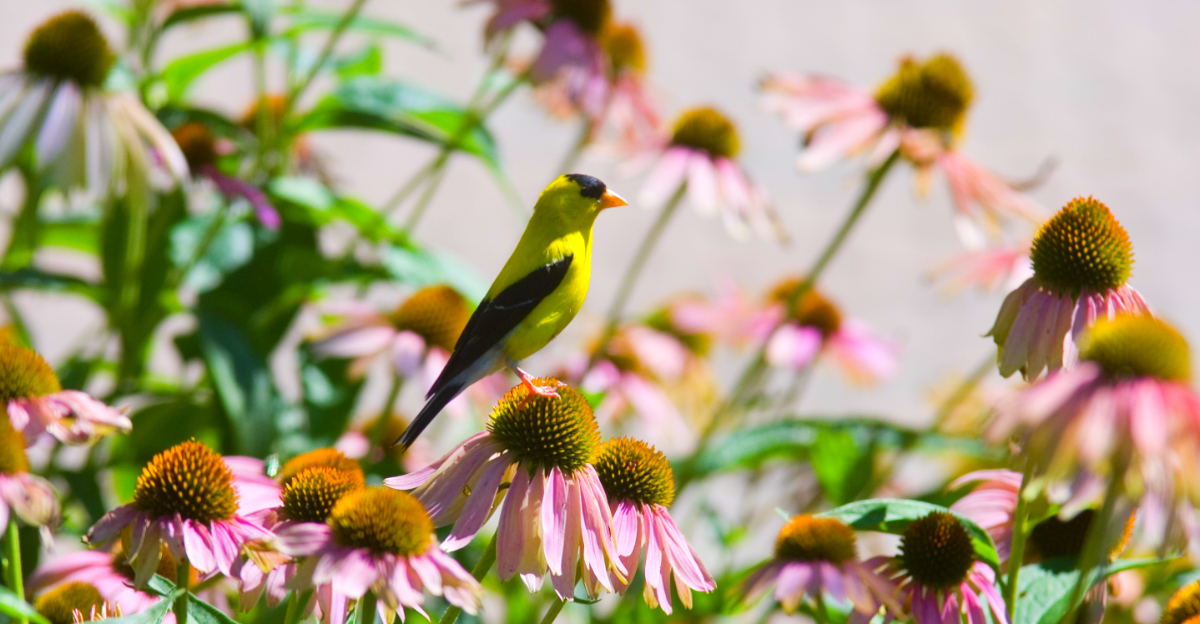
A goldfinch does not dive directly from the sky into a flower patch. It lands somewhere elevated first, scans for a moment, confirms the area is safe, and then drops down to feed.
That intermediate perch step is hardwired behavior, and designing for it changes how much traffic a seed garden generates.
Native seed-bearing flowers like purple coneflower, black-eyed Susan, and native sunflowers attract a wide range of seed-eating birds.
The key is letting flower heads dry and stand through fall and into winter rather than cutting them back. Birds want fresh seed heads swaying a few feet from a safe perch, not packaged seed from a bag.
A perch can be a fence post, a low tree branch, or even a tall garden stake. Position it within five to eight feet of the seed flower patch.
That in-between stop gives birds a scanning platform before they commit to landing. Without a nearby perch, many birds assess the patch, decide the approach is too exposed, and move on.
Grouping coneflowers or native sunflowers along the edge of a border where a wooden fence or low branch hangs above creates the complete setup.
Chickadees, finches, native sparrows, and downy woodpeckers cycle through reliably once the perch-to-flower relationship is established.
No bags of seed required. No feeder to refill. Just a perch, a patch, and a bird that knows exactly how this is supposed to work.
4. Group Native Plants In Clusters
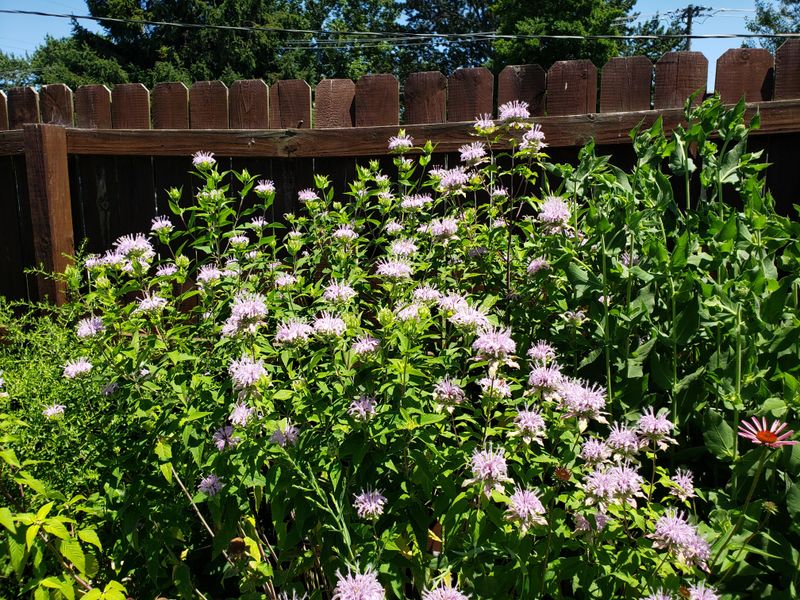
Scatter ten native plants across a large yard and birds find a plant here, a plant there. Group those same ten plants into a dense cluster and suddenly there is a miniature habitat that birds can locate, remember, and count on.
Clustering mirrors the natural way plants establish in the wild. Birds are not botanists comparing individual specimens.
They are responding to patches of abundance. A concentrated cluster communicates productivity in a way that scattered individual plants simply cannot.
When native plants grow in clusters, they create pockets of food, insects, and shelter in one reliable location.
A bird that finds the cluster once returns because that spot proved productive. The cluster also builds insect diversity faster than spread-out plantings, which matters enormously in spring when parent birds are feeding nestlings constantly.
Plant three to five of the same species together first. Then pair that cluster with a different species cluster nearby.
The overlapping and sequential bloom and fruiting times create a patch that offers something across the whole growing season.
Native viburnum, wild bergamot, little bluestem grass, and native asters work particularly well together. Their seasons follow each other in a way that keeps the cluster productive from spring through fall.
Once a productive cluster is established, birds communicate it to each other through their presence and behavior. New species start arriving during migration that were never seen in the yard before.
Ten plants. One cluster. Entirely different result.
5. Keep Leaf Litter Below Shrubs
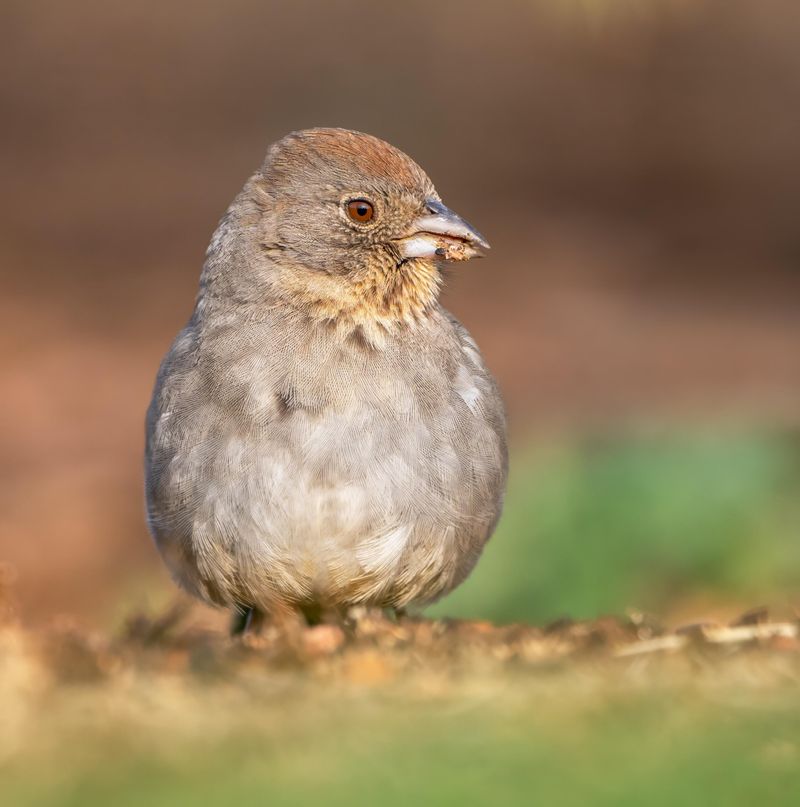
Most people rake it up. The birds wish they would not.
A thick, undisturbed layer of fallen leaves beneath shrubs is one of the most productive foraging zones a backyard can offer, and it costs nothing to create. Just stop removing it from specific spots and let it accumulate.
Decomposing leaves host thousands of small invertebrates including beetles, millipedes, earthworms, and dormant insect eggs.
That community of tiny creatures forms a critical part of the food chain that supports ground-foraging birds through fall and winter when food above ground becomes genuinely scarce.
Towhees, thrushes, catbirds, and hermit thrushes spend hours in quality leaf litter. They scratch and flip and probe in a systematic way that is genuinely entertaining to watch from a window on a cold morning.
Ground-feeding birds prefer leaf litter that is at least two to three inches deep. Thicker layers over larger areas are even better.
The management required is essentially nothing. Let the leaves fall under shrubs, along fence lines, and beneath native trees. Do not touch those spots at all.
A backyard that appears slightly messy in strategic places is not a neglected yard. It is a yard making a specific, informed decision about where wildlife resources matter most.
Birds learn which yards offer reliable ground-level food. They return to those yards with impressive consistency year after year.
The leaves were already doing the work. The rake was the only problem.
6. Add Evergreens Along Windy Edges
Florida yards do not need winter windbreaks.
They need something different entirely: dense, year-round structure that holds up through afternoon thunderstorms, hurricane season wind events, and the kind of driving rain that moves through quickly and leaves everything soaked.
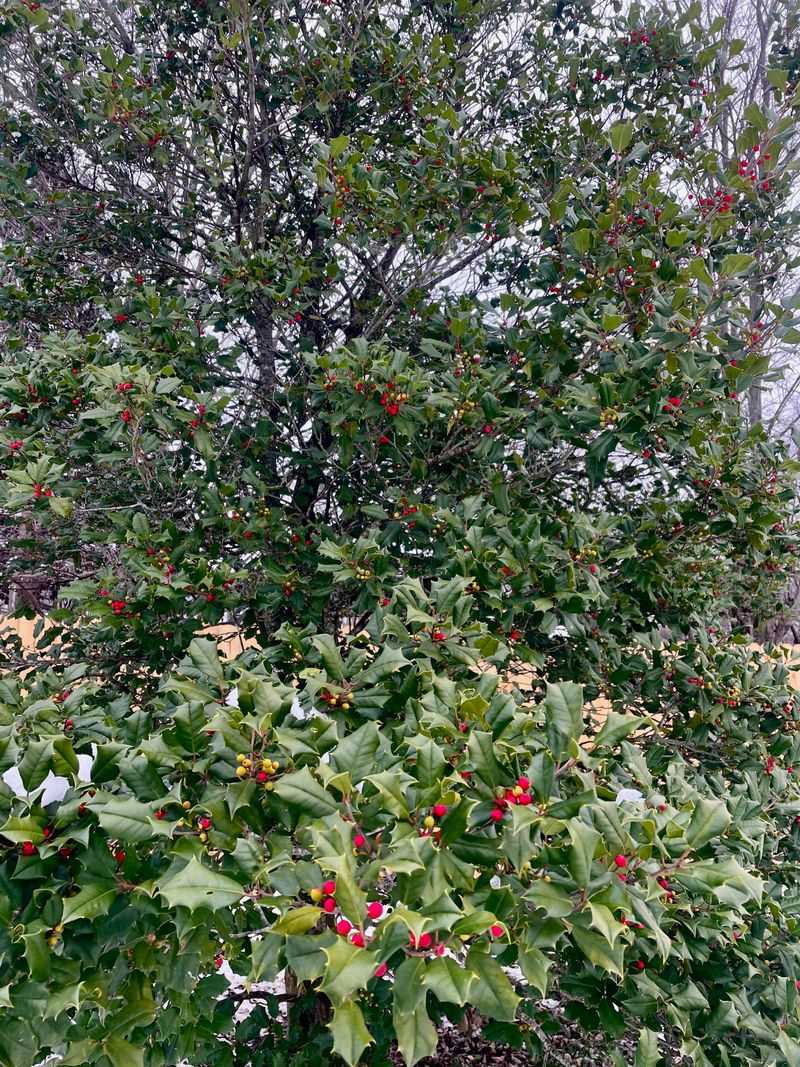
Native evergreens like eastern red cedar, American holly, and inkberry provide that structural reliability without losing their value between seasons.
Florida’s mild winters mean these plants stay productive and sheltered every month of the year rather than serving one narrow seasonal purpose.
Eastern red cedar produces berries that cedar waxwings rely on during their Florida visits, and its dense branching creates both shelter and nesting opportunities that bare or thin-canopied trees cannot replicate.
American holly brings consistent berry production and layered interior branch structure that small birds use for cover during sudden afternoon weather.
A single isolated evergreen does considerably less than a staggered row or small grove of three or more plants.
A grove creates better internal coverage, more protected roosting options, and a more complex approach that predators find harder to navigate.
Positioning a dense grove along the edge that receives the most afternoon storm exposure gives the whole yard a structural anchor that birds return to consistently.
In Florida, the question is never whether storms will arrive. The question is whether the yard offers birds somewhere reliable to wait them out.
A well-placed evergreen grove answers that question before the clouds build.
7. Keep Native Grasses At Ground Level
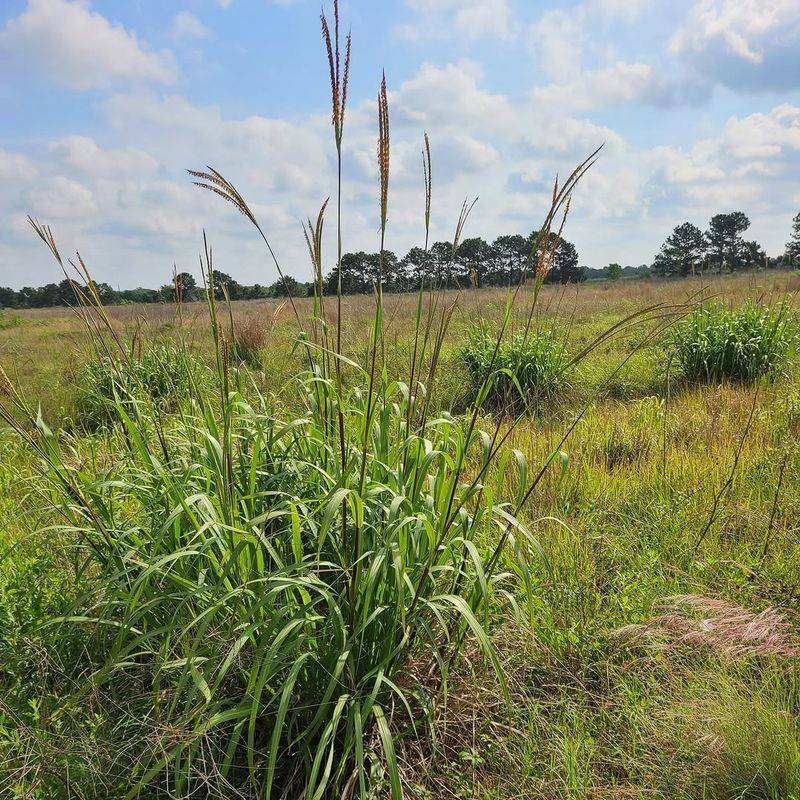
Florida’s ground level is one of the most underused layers in most residential yards. Birds that forage low, roost close to the ground, and collect nesting material in spring actively seek it out, and native grasses are the plants that make it useful.
Muhly grass, gulf muhly, and Florida gama grass are genuinely Florida-native options that provide seed heads, dense basal cover, and fine stem material that birds collect for nesting.
Muhly grass in particular puts on a dramatic late-season display of feathery pink plumes that persist long enough to feed sparrows and finches through the fall and into winter.
Unlike non-native ornamental grasses that may look similar but contribute little to local wildlife, these species evolved alongside Florida’s bird community.
Their seeds, structure, and seasonal timing align with what resident and migrating birds actually need.
Positioning native grass clusters along the transition zone between open lawn and taller plantings creates a gradual edge that ground-feeding birds move along comfortably.
That edge zone suits sparrows, towhees, and ground-foraging species that prefer stepping between cover and open ground rather than committing fully to either.
Resist cutting grasses back aggressively. The standing structure through fall and into Florida’s mild winter keeps seed heads accessible and basal cover intact during the months when other food sources thin out.
Native grasses ask almost nothing from the gardener. The birds, however, consider them essential.
8. Add Dense Vine Coverage On Fences And Structures
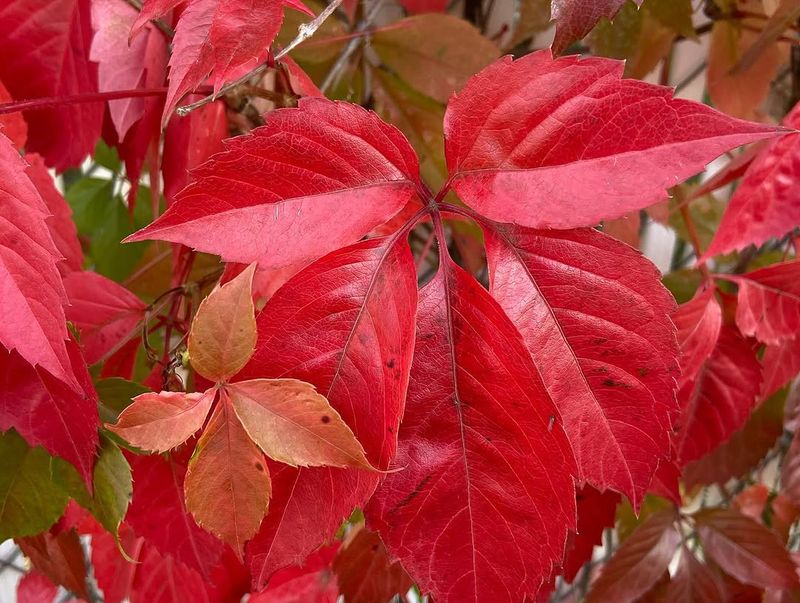
A bare fence is a boundary. A fence covered in dense native vine is a habitat corridor, a nesting zone, and a shelter structure that birds use year-round without any additional effort from the gardener who planted it.
Native vines like trumpet vine, Virginia creeper, and native coral honeysuckle attach to fences, trellises, and pergolas and build dense foliar coverage over two to three seasons.
That coverage creates exactly the kind of layered, hidden interior that birds seek when building nests or roosting during cold nights and stormy weather.
Trumpet vine in particular attracts hummingbirds with a consistency that almost nothing else matches. The tubular orange flowers produce nectar that hummingbirds return to on a reliable daily schedule during bloom.
Virginia creeper produces small berries in fall that thrushes, flickers, and woodpeckers eat steadily through early winter.
The structural benefit matters as much as the food value. Dense vine coverage on a fence gives small birds a place to move through the yard at mid-height, transitioning between planting areas without crossing open space that feels exposed.
Position vines along fences that already border other plantings rather than isolated ones. The connectivity between vine coverage and nearby shrubs creates a linked habitat network rather than a single isolated feature.
A bare fence costs almost the same to own as a vine-covered one. Only one of them earns its place in a bird-friendly yard.