Pennsylvania Gardeners Are Replacing Forsythia With These Native Shrubs
Yellow bells might be a nostalgic sign of spring, but many Pennsylvania gardeners are realizing that forsythia offers very little to the local ecosystem. While those bright petals look cheerful, they act like a plastic centerpiece for our native bees and butterflies.
This season, the trend is shifting toward vibrant, indigenous alternatives that provide both stunning aesthetics and vital habitat support.
Swapping out non-native plants for local varieties helps restore the natural balance of your backyard while reducing the need for intensive maintenance.
Choosing native shrubs means you get to enjoy spectacular seasonal colors and interesting textures that feel right at home in the Keystone State.
From the delicate white clusters of serviceberry to the fragrant blooms of spicebush, these replacements offer way more than just a quick flash of gold.
You can create a thriving landscape that feeds songbirds and supports pollinators without sacrificing that gorgeous curb appeal you love.
1. Northern Spicebush
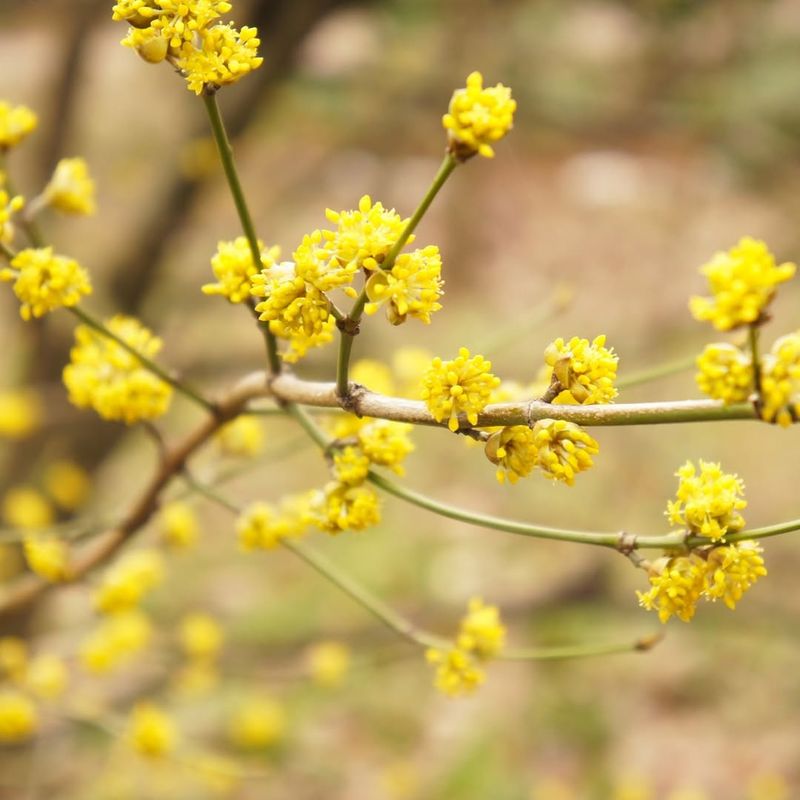
Walk past a Northern Spicebush on a warm March morning in Pennsylvania, and you might catch a faint spicy scent before you even see the blooms. That early fragrance is one of the first signs that spring is actually here.
The tiny yellow flowers appear on bare branches before most other shrubs have even thought about waking up, giving your yard a soft golden glow at a time when everything else still looks brown and dormant.
Spicebush is a true Pennsylvania native, meaning it has been growing in this region for thousands of years. It knows how to handle the cold winters, the wet springs, and the clay-heavy soils that challenge so many other plants.
It does best in part shade, making it a smart pick for spots under trees where forsythia would struggle to bloom well anyway.
Beyond the early flowers, Spicebush keeps giving. Its leaves turn a clean, bright yellow in fall, adding another season of color.
The bright red berries that appear in late summer are a favorite food source for migratory birds, including the spicebush swallowtail butterfly, which uses this shrub as a host plant for its caterpillars. You are essentially creating a small wildlife habitat just by planting one shrub.
It typically grows six to twelve feet tall and wide, so give it room to spread. Once established, it needs very little attention, making it one of the easiest and most rewarding native swaps a Pennsylvania gardener can make.
2. Common Ninebark
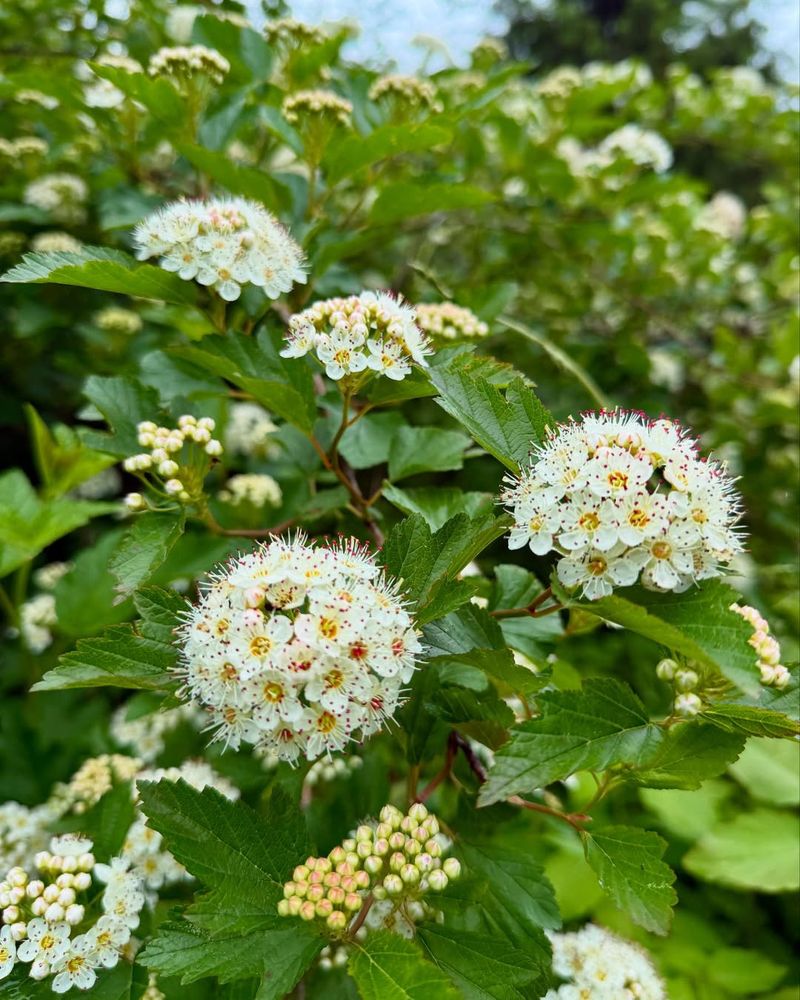
If forsythia gives you one good week of yellow flowers and then disappears into the background, Ninebark makes you wonder why you ever settled for so little. This tough, adaptable native shrub puts on a show across multiple seasons, and it does it with almost zero fuss.
White flower clusters cover the arching branches in late spring, buzzing with bees and other pollinators that are hungry after a long winter.
After the flowers fade, something interesting happens. Small reddish seed capsules take their place, adding texture and subtle color through summer.
Then the peeling, coppery bark becomes the star in fall and winter, giving the plant an almost sculptural look when everything else has gone bare. Many Pennsylvania gardeners are also drawn to the dark-leafed cultivars like “Diabolo,” which add deep purple foliage color from spring all the way through fall.
Your Pennsylvania Garden Changes Every Week. Your Plan Should Too.
Gardening in Pennsylvania changes quickly throughout the season. Every Friday you’ll receive a simple weekly plan showing exactly what to plant, prune, fertilize, harvest, and protect so you never miss the right timing.
Ninebark is one of the most adaptable native shrubs you can plant in Pennsylvania. It handles wet soil, dry soil, full sun, and part shade without complaining.
It grows quickly, reaching six to ten feet tall, so it works well as a privacy screen or a naturalized hedge along a property line. Birds use the dense branching for nesting cover, and the seed capsules provide food into winter.
Compared to forsythia, which offers nothing for wildlife, Ninebark is a clear upgrade. It is low-maintenance, long-lived, and genuinely beautiful across every season, making it one of the smartest native replacements available to Pennsylvania gardeners today.
3. Mapleleaf Viburnum
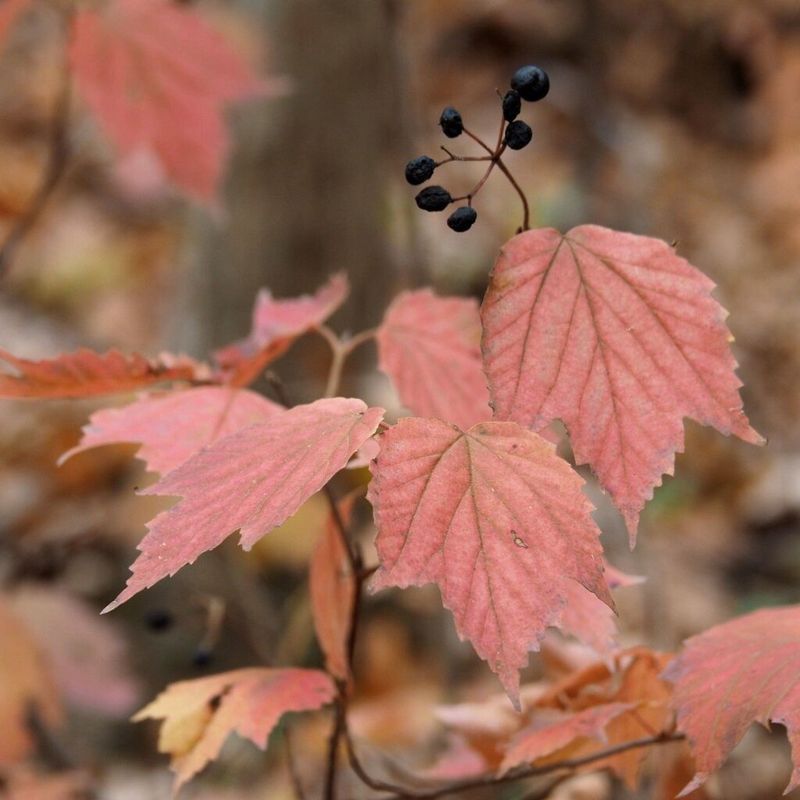
Not every corner of a Pennsylvania yard gets full sun, and that is exactly where Mapleleaf Viburnum shines. Most gardeners think of viburnums as sun lovers, but this particular species is built for shade.
It thrives under the canopy of oaks and maples, filling in spots where forsythia would bloom weakly or not at all. Its leaves look remarkably similar to maple leaves, which gives it a clean, woodland feel that fits naturally into Pennsylvania landscapes.
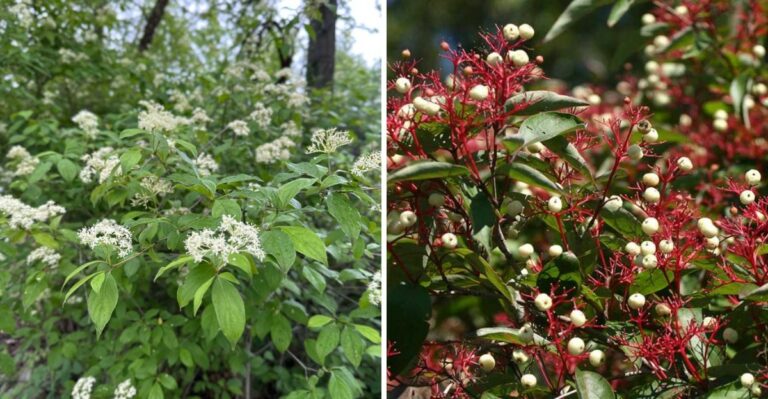
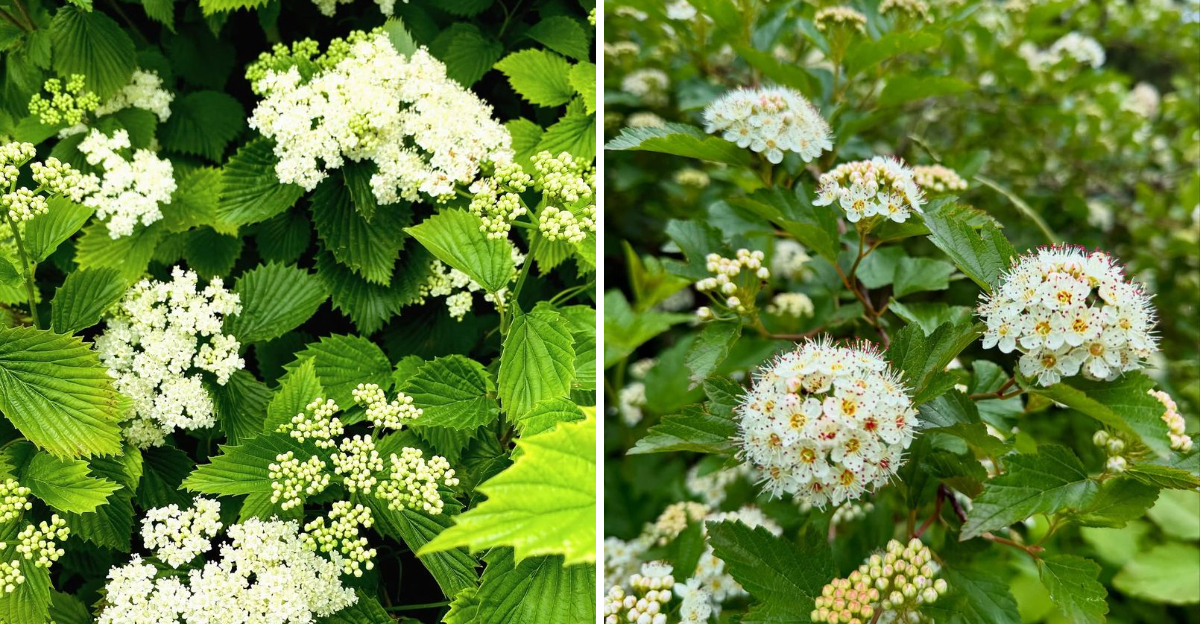
In late spring, flat-topped clusters of creamy white flowers appear above the foliage, attracting native bees and butterflies. By late summer, those flowers turn into blue-black berries that songbirds cannot resist.
More than 35 species of birds have been recorded eating viburnum berries, so planting one near a window gives you a front-row seat to some great bird watching.
The fall color on Mapleleaf Viburnum is genuinely stunning. The leaves shift through shades of pink, rose, and deep purple before dropping, rivaling many trees for autumn interest.
It stays on the smaller side, typically reaching four to six feet tall, which makes it a better fit for tight spaces than forsythia ever was. It spreads slowly by suckering, forming loose colonies that look natural and fill in shady areas over time.
For Pennsylvania gardeners dealing with challenging shaded spots under large trees, Mapleleaf Viburnum is one of the most reliable and beautiful native shrubs you can choose as a forsythia replacement.
4. Northern Bush Honeysuckle
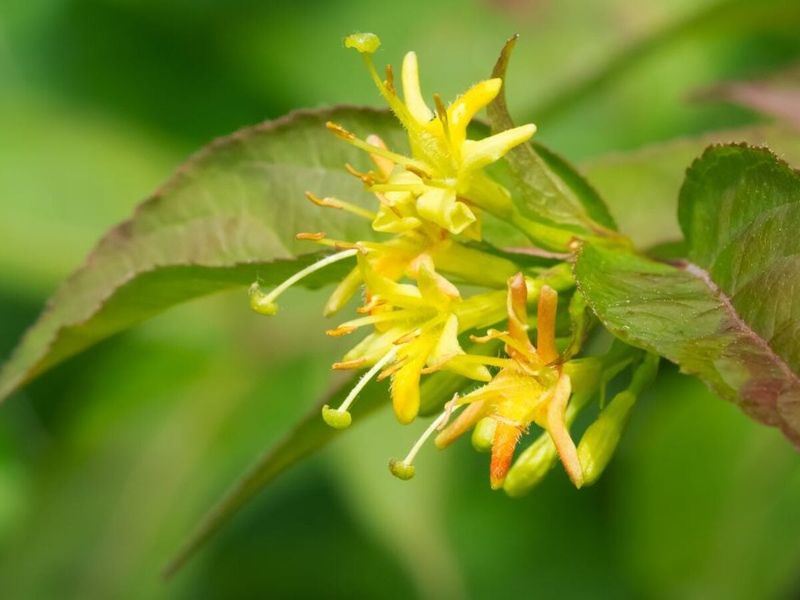
Most people hear the word “honeysuckle” and immediately think of the invasive Japanese honeysuckle that tangles through Pennsylvania hedgerows and smothers native plants. Northern Bush Honeysuckle is something completely different.
It is a well-behaved, compact native shrub that belongs here, supports local wildlife, and actually looks great for more than just a few weeks. Once you understand what it offers, the comparison to forsythia feels almost unfair.
The yellow tubular flowers bloom in early to midsummer, which is a real advantage. By the time forsythia has been green and forgettable for months, Northern Bush Honeysuckle is just getting started.
The flowers attract hummingbirds and long-tongued native bees, and the show continues for several weeks. The foliage also has a reddish tint in spring that adds extra visual interest before the blooms even open.
Fall brings another round of color, as the leaves turn shades of orange and red before dropping. This shrub is especially useful on slopes, dry banks, and other tough sites where many plants struggle.
It tolerates poor, rocky, or sandy soil, handles drought once established, and spreads gradually by suckering to form a low, dense groundcover-like mass. In Pennsylvania, where erosion on slopes is a real concern, that spreading habit is actually a benefit.
It grows two to four feet tall, making it one of the more compact native options on this list. For gardeners who want low-maintenance color that lasts well beyond spring, Northern Bush Honeysuckle is a genuinely exciting native choice.
5. New Jersey Tea
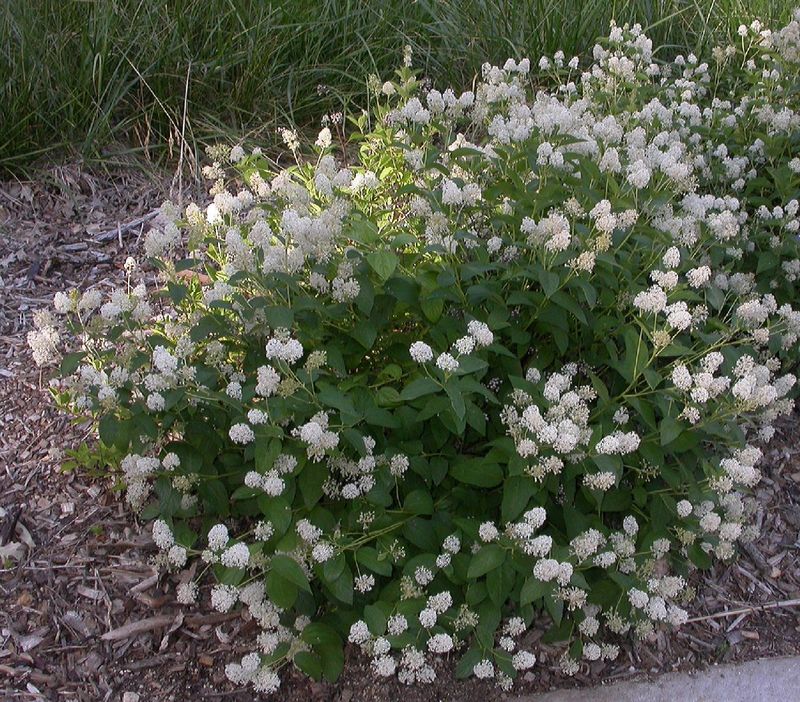
There is a fun piece of history attached to this small native shrub. During the American Revolution, colonists used the dried leaves of Ceanothus americanus as a tea substitute when British taxes made real tea too expensive or unavailable.
Pennsylvania was right in the middle of that history, and the plant has been growing here long before the country even existed. Planting New Jersey Tea is a small way of connecting your yard to something genuinely rooted in American soil.
Beyond the history, this shrub earns its place in modern Pennsylvania gardens on its own merits. In early summer, it produces fluffy clusters of tiny white flowers that cover the plant and attract an impressive variety of native bees, butterflies, and other beneficial insects.
It is a known host plant for several native butterfly species, including the spring azure, adding another layer of ecological value. The flowers have a light, pleasant fragrance that makes them even more enjoyable up close.
New Jersey Tea stays compact, usually reaching two to four feet tall and wide. That smaller size is a real advantage for Pennsylvania gardeners with modest-sized yards who find forsythia grows too large and unruly.
It prefers well-drained soil and full sun to light shade, and once established it handles dry conditions very well thanks to its deep taproot. It does not need much fertilizer and rarely has serious pest problems.
If you want a neat, wildlife-friendly native shrub that fits beautifully into a smaller Pennsylvania yard without taking over, New Jersey Tea is well worth considering.
6. Shrubby St. John’s Wort
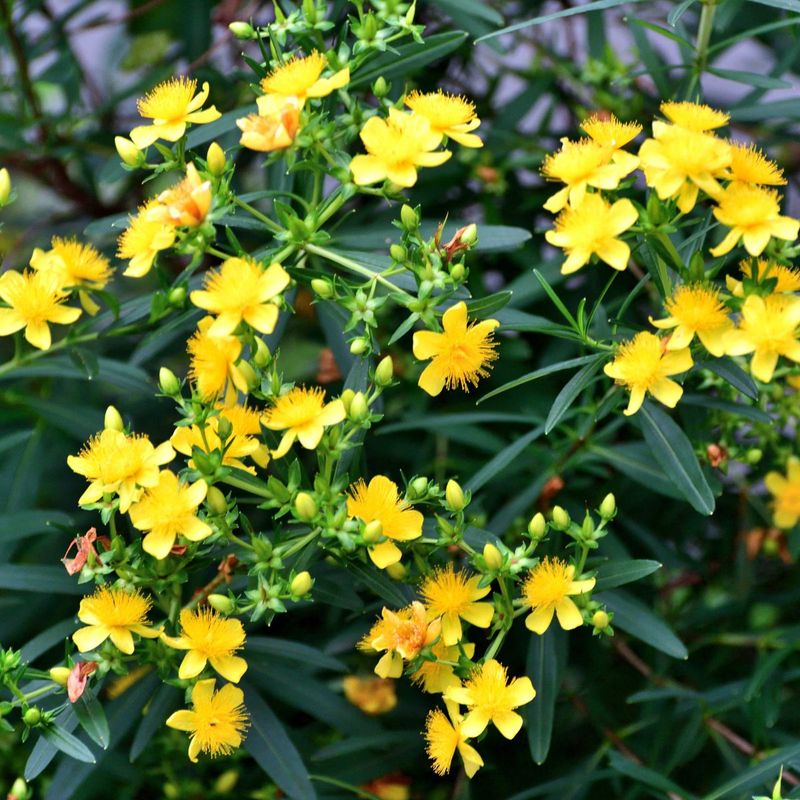
Bright yellow flowers in midsummer are not easy to find among native shrubs, which is exactly what makes Shrubby St. John’s Wort such a valuable plant for Pennsylvania gardens.
While forsythia drops its yellow blooms in early spring and then fades into the background, this native shrub holds its color right through the hottest part of summer, when most flowering shrubs have long gone quiet.
The cheerful, star-shaped yellow flowers open from late June through August, giving your yard a reliable pop of color at a time when it is most needed.
The plant itself is tidy and well-structured, with narrow, glossy leaves and a naturally rounded form that rarely needs pruning. It grows two to four feet tall and wide, fitting easily into mixed borders, foundation plantings, or naturalized garden areas.
Pennsylvania gardeners dealing with difficult dry or rocky sites will appreciate how tough this shrub is once established. It handles poor soils, drought, and heat without flinching, making it one of the more resilient native options on this list.
Native bees are especially attracted to the flowers, and research has shown that Hypericum species support a notable number of specialist bee species that depend on this genus. That kind of ecological specificity is something forsythia, a non-native plant, simply cannot provide.
The small seed capsules that follow the flowers also add subtle texture through fall and winter.
For Pennsylvania gardeners who want long-lasting summer color and genuine ecological value in one compact, low-maintenance native package, Shrubby St. John’s Wort is a plant that absolutely deserves more attention.
7. Arrowwood Viburnum
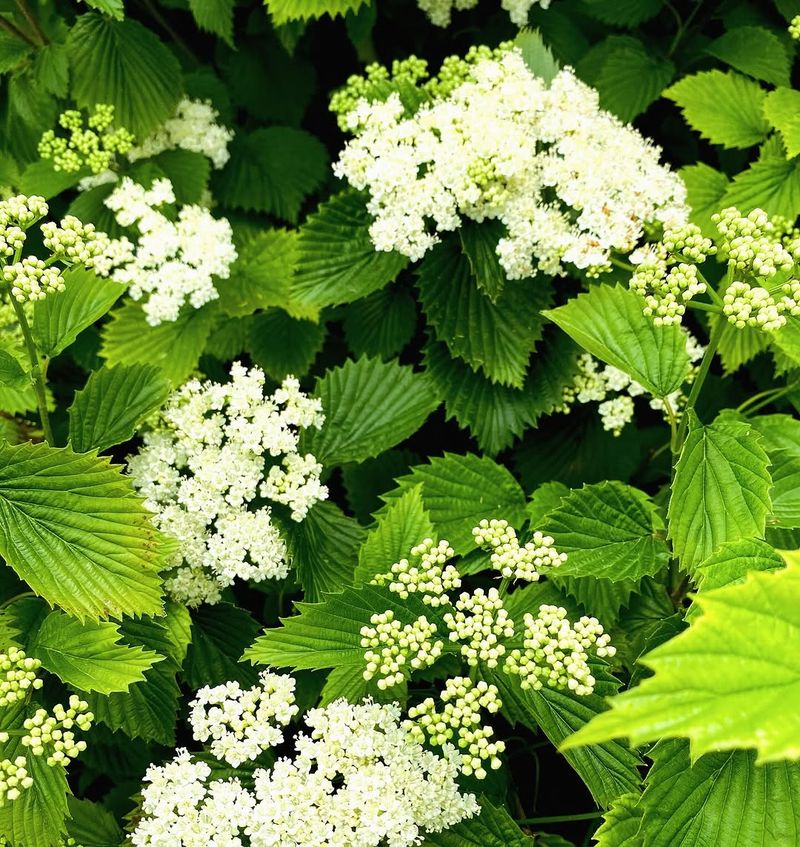
Arrowwood Viburnum might be the most well-rounded native shrub swap for forsythia that Pennsylvania gardeners can make. It delivers something interesting in every single season, which is something forsythia simply cannot claim.
The name comes from the long, straight stems that Native Americans reportedly used to make arrow shafts, so this plant has been part of the Pennsylvania landscape and its human history for a very long time.
In late spring, flat-topped clusters of creamy white flowers cover the plant, drawing in native bees, beetles, and butterflies. By late summer, clusters of blue-black berries ripen, and birds go absolutely wild for them.
More than 35 bird species feed on viburnum berries, including thrushes, waxwings, and bluebirds. If attracting birds to your Pennsylvania yard is a priority, few native shrubs deliver the way Arrowwood Viburnum does.
Fall brings reddish-purple foliage color that rivals many ornamental shrubs sold at garden centers for purely decorative purposes. The shrub grows six to ten feet tall and can spread to a similar width, making it an excellent choice for hedges, screens, or naturalized areas along property borders.
It adapts well to a wide range of soil types, including clay, and handles both sun and part shade without issue. It is also resistant to most pests and diseases common in Pennsylvania.
Whether you are replacing a single forsythia or redesigning an entire shrub border, Arrowwood Viburnum brings four-season beauty, wildlife support, and low-maintenance toughness to any Pennsylvania garden.