Pennsylvania Native Plants That Look Beautiful And Create The Underground Habitat Firefly Larvae Depend On
A backyard in Lancaster County used to flicker like a slow-motion fireworks show every June, kids running barefoot through the grass chasing lights across the lawn.
These days that same yard sits mostly dark, and the family can’t quite figure out what changed.
The answer is usually hidden underground.
Fireflies spend one to two years as larvae living in soil and leaf litter, hunting slugs, snails, and worms long before they ever glow above the grass.
Whatever’s happening down there decides whether June puts on a show or not.
Penn State Extension points to moist, undisturbed ground as the make-or-break factor in all of this. The right native plants help hold that moisture in place, while the leaves most people rake away every fall do the rest of the work.
Here’s what actually rebuilds a yard fireflies want to live in.
1. Pennsylvania Sedge
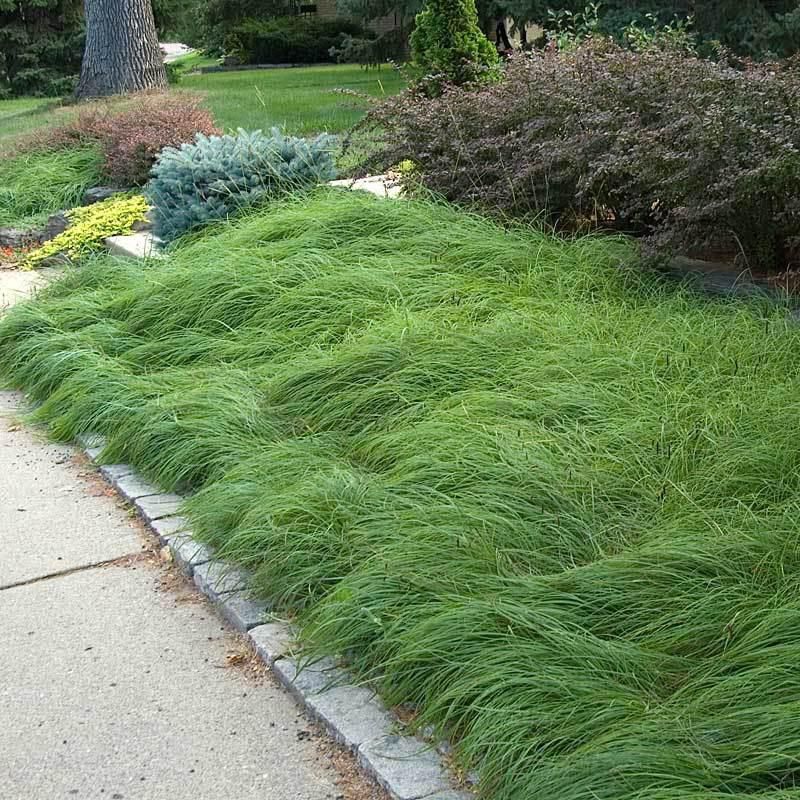
Walk through an oak woods in central Pennsylvania and there’s a good chance you’ll step on this without noticing.
It forms a fine, arching green mat that looks a bit like unmowed grass, except it never demands mowing, fertilizer, or full sun.
What makes it useful for fireflies has nothing to do with looking showy. Its dense, shallow root system and low leafy cover shade the ground surface, which slows evaporation and keeps the top few inches of soil damp longer after rain passes through.
Penn State Extension emphasizes that firefly larvae spend one to two years down in that soil and leaf layer, hunting slugs, snails, and earthworms.
Consistently moist ground is what lets them survive the whole stretch, and this plant helps hold those conditions steady over time.
Plant it in part to full shade, spacing plugs roughly a foot apart, and expect it to knit together over two or three seasons.
It spreads politely by short rhizomes rather than bullying its neighbors, which makes it a natural fit under trees where turfgrass always sulks anyway.
One practical bonus: it catches and holds fallen leaves instead of letting them blow away. That trapped litter is exactly the messy layer larvae hide in through the year.
Skip the leaf blower in these patches entirely. Raking bare in autumn undoes most of the benefit, since exposed soil dries fast and offers larvae nowhere to hide from heat or predators.
2. Wild Bergamot
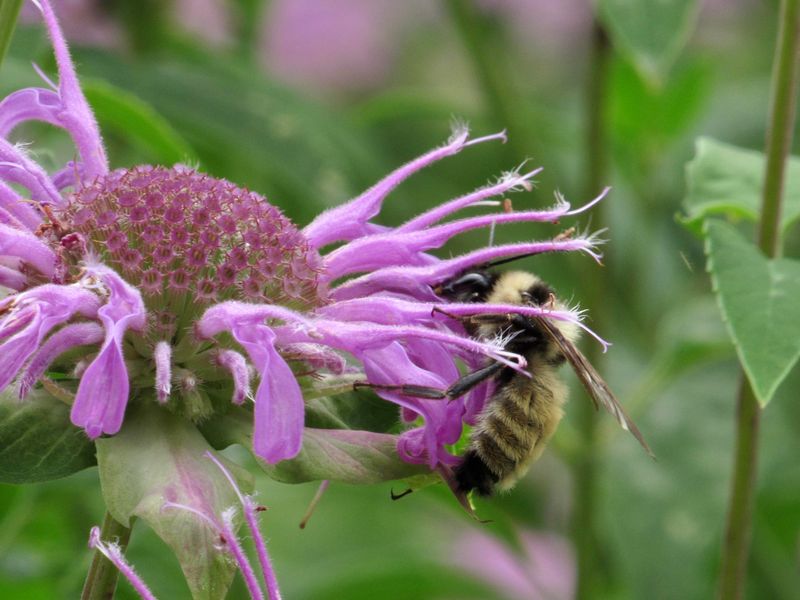
Crush a leaf between your fingers and you get a sharp minty scent that smells almost like oregano. The lavender flowers look delightfully unkempt, like tiny fireworks frozen mid-burst, and pollinators can’t seem to leave them alone.
Bees, moths, butterflies, and hoverflies all show up through midsummer without fail.
That constant traffic matters because a garden buzzing with insects tends to be a garden with a fuller food web overall, including the soft-bodied creatures that fall, decompose, and feed the little scavengers working below.
Here’s the honest part. Adult fireflies of many species barely eat at all, and it’s the larvae underground doing the serious hunting, mostly of slugs, snails, and worms.
Your Pennsylvania Garden Changes Every Week. Your Plan Should Too.
Gardening in Pennsylvania changes quickly throughout the season. Every Friday you’ll receive a simple weekly plan showing exactly what to plant, prune, fertilize, harvest, and protect so you never miss the right timing.
This plant doesn’t feed larvae directly, so it works better as a supporting player than a magic fix on its own.
Its real contribution is structure and shade. Standing three to four feet tall with a clumping habit, it cools the ground beneath it and catches leaf litter through winter if the stems get left standing rather than cut.
Give it full sun to light shade and decent air movement, since crowded plants can pick up powdery mildew otherwise. Thinning stems in spring helps keep that in check.
Leave the dried seed heads up through the cold months. Goldfinches pick at them, stems shelter overwintering insects, and the undisturbed base stays exactly the kind of quiet, damp ground larvae need.
3. Cardinal Flower
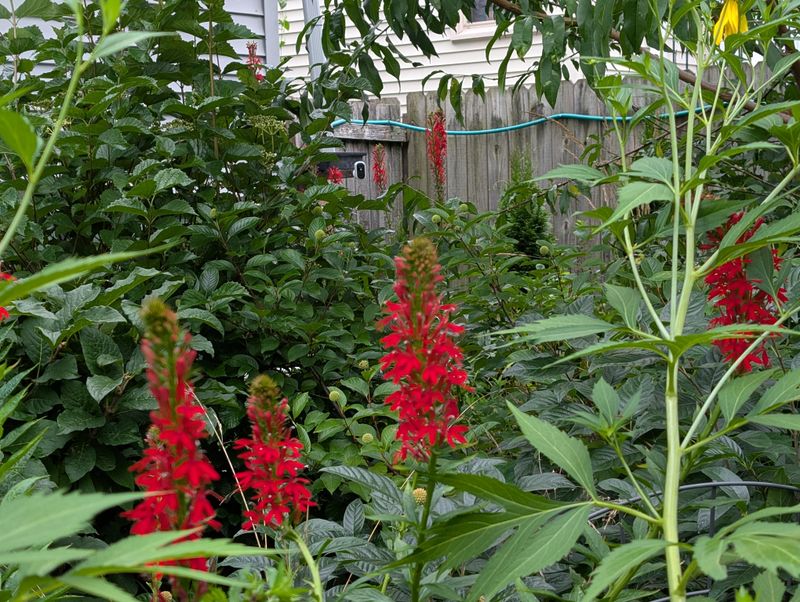
Few native plants stop people mid-walk quite the way this one does. Blooms come in an almost unreal scarlet, stacked on spikes two to four feet tall, and hummingbirds treat them like a roadside diner through August.
Beauty aside, its growing preferences line up neatly with firefly habitat needs. It wants soil that stays consistently moist, the kind found along stream edges, rain garden bottoms, and low spots that never quite dry out completely.
Those same damp, shaded pockets are where Penn State Extension notes firefly larvae do best, since they need moisture around them for the full one to two years they spend developing underground.
Planting this in a wet corner is basically a signal that you’re managing that area for dampness instead of drainage.
It’s a short-lived perennial, so let it self-sow when it wants to. Seedlings need bare-ish soil contact, which means clearing a small patch while leaving the surrounding litter layer intact around it.
Part shade suits it well in Pennsylvania gardens, though it tolerates sun with steady water available. Mulch lightly with shredded leaves rather than heavy bark, which packs down and dries the surface out.
Keep foot traffic out of the bed entirely. Compacted soil around these plants squeezes out the air pockets and tunnels larvae move through underground.
4. Swamp Milkweed
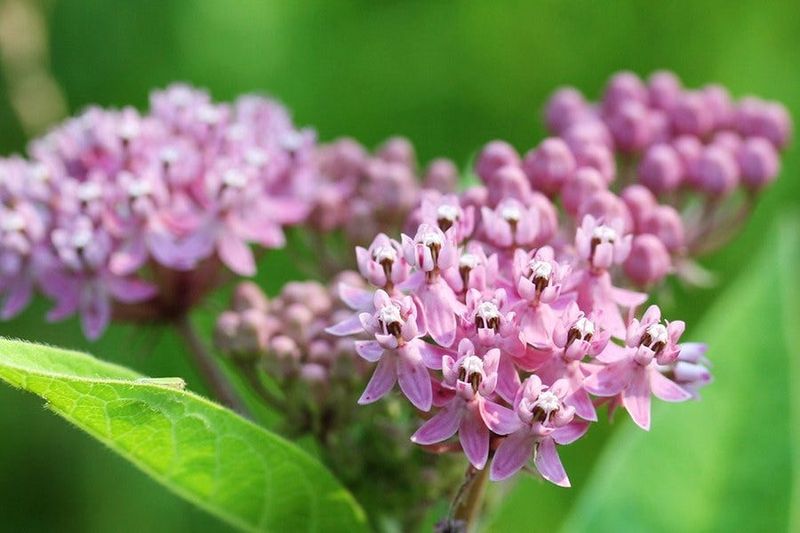
Don’t let the name scare you off. This one behaves beautifully in ordinary garden beds as long as the soil stays damp, and its clusters of dusty pink flowers smell faintly of vanilla on warm evenings.
Monarch caterpillars use it as a host plant, which is reason enough for most gardeners on its own. That pollinator value is real and entirely separate from anything firefly related, so it deserves its own credit regardless.
Where fireflies come in is the growing conditions it encourages you to maintain. A bed built around this plant is a bed you water less aggressively but keep naturally moist, often a rain garden or a low swale that collects runoff over time.
Steady moisture in the top layer of soil is what carries firefly larvae through their long development, according to Penn State Extension guidance on their habitat needs.
The plant holds soil, shades the surface, and catches leaves that pile up around its base.
Pair it with cardinal flower and sedges for a layered look, tall pink and red spikes rising above a low green floor. The combination fills space so weeds struggle and the ground stays covered year-round.
Cut nothing back in fall. Hollow stems shelter native bees, and standing growth traps drifting leaves right where you want the litter to actually settle.
5. Ferns
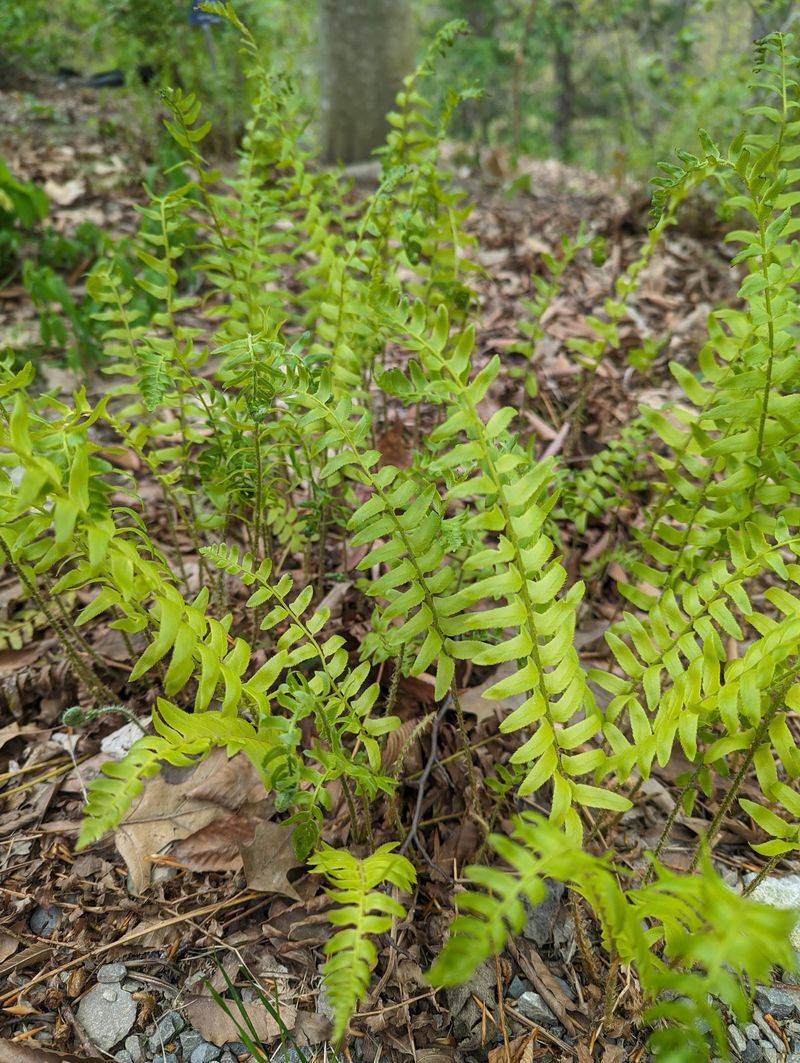
Step under a stand of these on a hot July afternoon, and the temperature drop is immediate. That cool, humid pocket of air isn’t just pleasant for people walking through, it’s the microclimate firefly larvae are quietly counting on nearby.
Native Pennsylvania options are plentiful beyond this one too. Christmas fern stays evergreen and handles dry shade better than most, while cinnamon fern, sensitive fern, and ostrich fern all lean toward wetter ground instead.
Their arching fronds form an overlapping canopy just inches above the soil surface.
Sunlight rarely reaches through, so evaporation slows dramatically and the leaf layer underneath stays spongy and dark, exactly where larvae hunt slugs and snails through their long underground stretch.
Ferns also collapse into mush each fall in most species, adding to the organic layer instead of needing removal afterward. That decomposing material feeds the worms and small invertebrates larvae prey on all season.
Plant them in colonies rather than as single specimens scattered around. A dozen ferns across a shaded slope build a functioning habitat patch, while one lonely fern sitting in a mulch sea does very little on its own.
Resist tidying up too much. Broken fronds, half-rotted leaves, and a slightly wild look at ground level are all signs the system is working, and a rake pulled through in October can undo months of habitat building in an afternoon.
6. Golden Ragwort
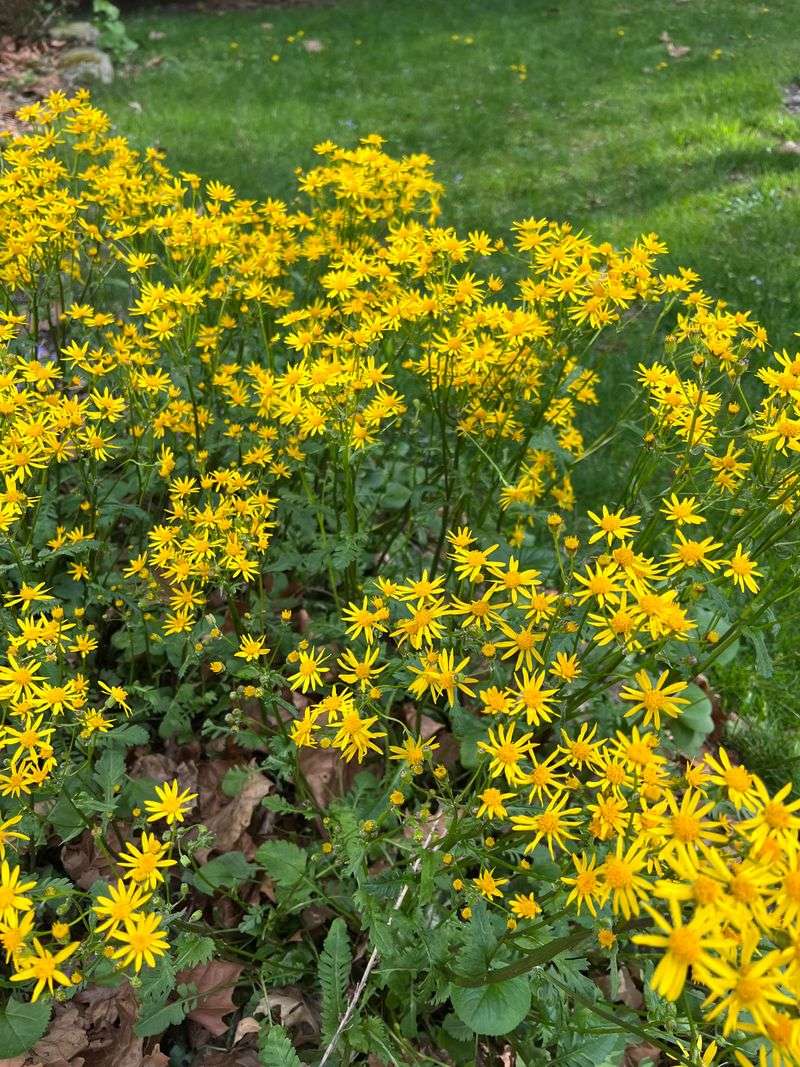
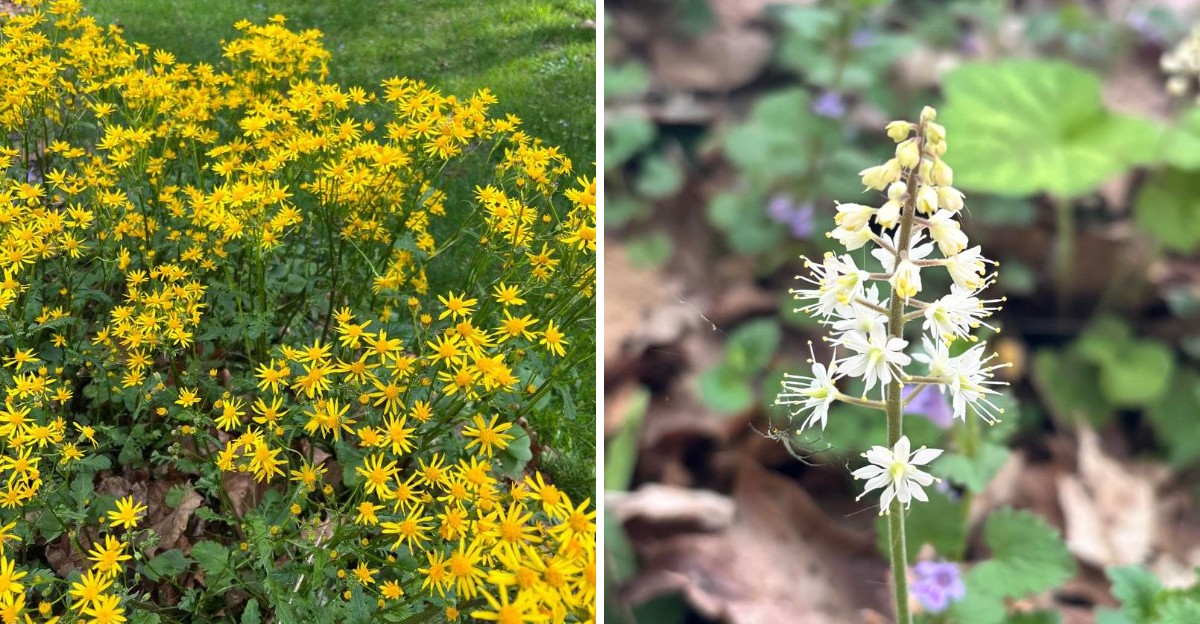
Bright yellow flowers open in loose clusters each spring, floating just above a low mat of dark, glossy leaves that stay put through most of the year. Bees find the blooms immediately, but the real value here happens closer to the ground.
This plant spreads by shallow rhizomes into a dense, semi-evergreen groundcover, which matters more than the flowers ever will for firefly habitat.
That low mat shades the soil surface year-round, keeping moisture locked in and slowing the kind of evaporation that dries out the top layer larvae depend on.
Penn State Extension lists it among native groundcovers suited to moist woodland edges and shaded beds, exactly the damp, undisturbed conditions firefly larvae need through their one to two years underground.
Where turfgrass struggles in wet shade, this plant fills the gap instead.
It tolerates standing water better than most groundcovers, making it a natural fit for the same low, damp corners where cardinal flower and swamp milkweed already thrive. Plant it in drifts rather than as scattered singles for the fullest ground coverage.
Winter foliage stays low and semi-evergreen in mild stretches, holding leaf litter in place rather than letting wind scatter it across bare soil. That trapped litter layer is precisely where larvae spend the cold months hunting.
Skip cutting it back in fall. Let the basal leaves ride out winter as they are, and clean up only once new growth pushes through in spring.
7. Foamflower
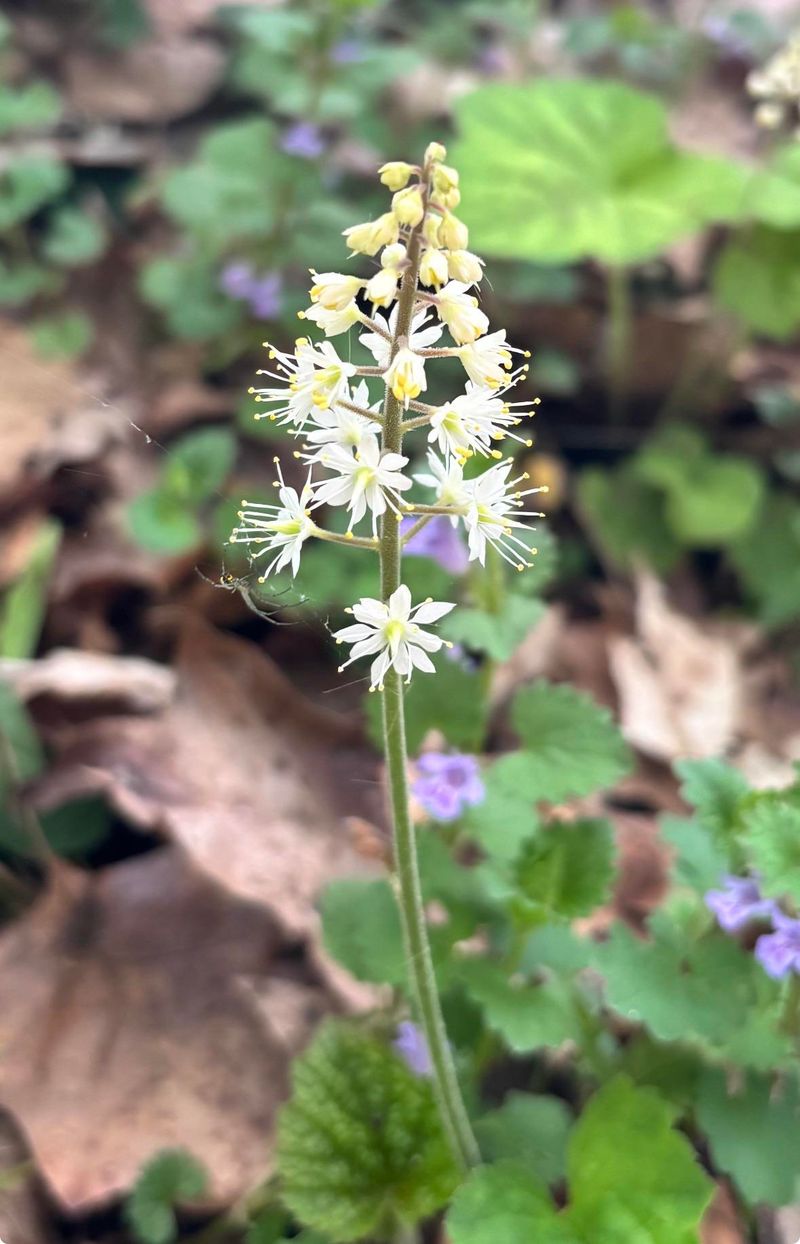
Delicate white flower spikes rise a few inches above heart-shaped, slightly fuzzy leaves each April and May, giving this plant its foamy, airy name. It spreads slowly into a tidy groundcover mat that thickens over a few seasons without becoming aggressive.
Foamflower prefers exactly the moist, shaded, humus-rich soil firefly larvae rely on, which makes it less a decoration and more a functional part of the same underground system.
Its dense root network holds soil moisture near the surface, and its low leaf canopy keeps direct sun off the ground beneath it.
Penn State Extension includes it among native woodland groundcovers valuable for shaded, moist sites, the same conditions that show up throughout every plant on this list.
Pair it near ferns and sedge for a layered floor that leaves no bare soil exposed to dry out in the sun.
It handles average to wet soil in part to full shade, and unlike more aggressive spreaders, it stays well-behaved in a defined bed without needing regular thinning or containment.
Leaves often persist through winter in a reddish-bronze color, adding both visual interest and continued ground cover exactly when bare soil would otherwise be exposed to cold and wind.
Leave the leaf litter that collects around its base undisturbed. That combination of persistent foliage and trapped leaves creates the layered, humid microhabitat larvae use to move through the coldest stretch of the year.