Plant These California Natives Instead Of Pampas Grass Before It Spreads Further
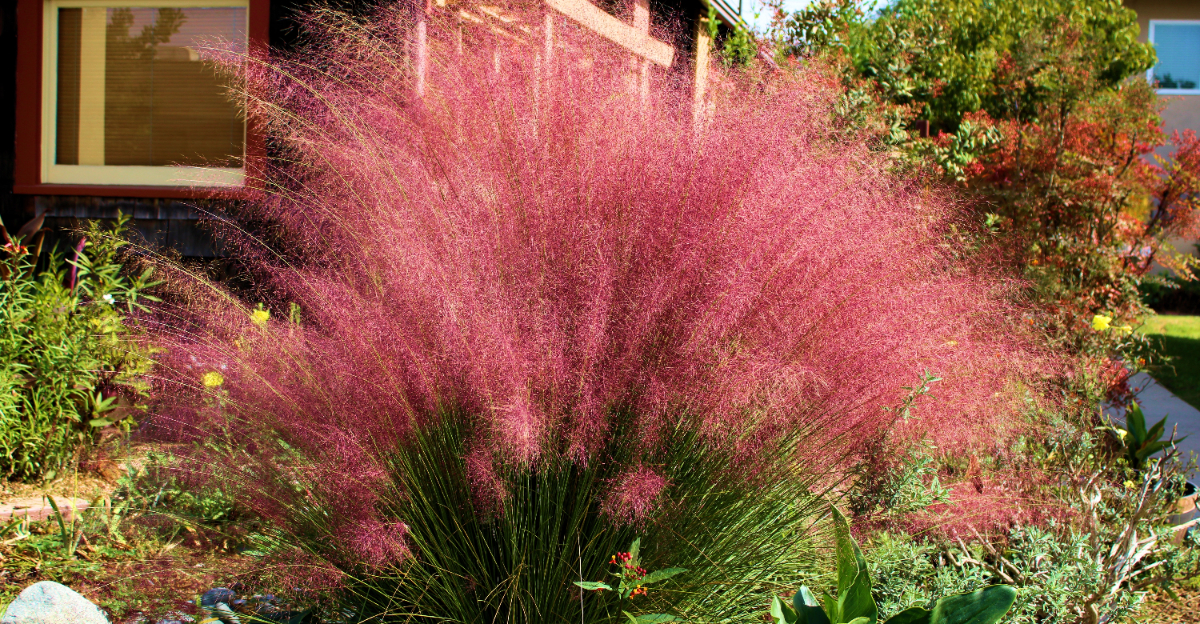
Pampas grass can look dramatic at first, but it has a way of taking more space than planned. In California, that is a real problem.
Those tall plumes may seem harmless in a yard, then seedlings start showing up where they were never invited. A better choice is to plant natives that bring beauty without the same headache.
The right California plants can give a fence line, slope, or open corner a bold look that feels more connected to the landscape. They can also support a garden that works with the local climate instead of fighting it.
Replacing pampas grass before it spreads further is a smart move, especially if young plants are already popping up nearby.
Choose native options with strong shape and seasonal interest, and your garden can still feel full of movement without creating extra trouble later.
1. Deer Grass Gives You The Big Native Fountain Shape
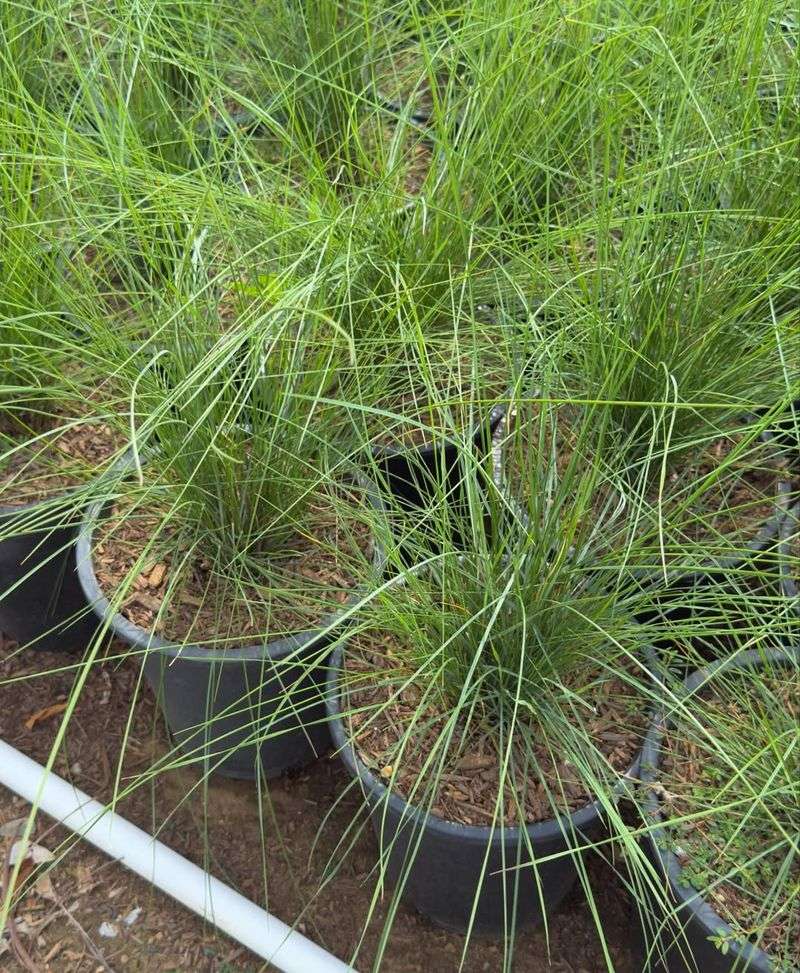
Few native grasses make as bold a statement as deer grass does when it reaches full size.
Muhlenbergia rigens grows in a wide, rounded mound that looks almost exactly like a fountain, which is exactly what draws so many gardeners to it as a pampas grass replacement.
The shape is full, dramatic, and satisfying without being dangerous to the local ecosystem.
Deer grass is native to much of our state and thrives in hot, dry conditions once it gets established. It handles full sun beautifully and does not need much water after the first year or two.
That makes it a great fit for water-wise gardens, fire-wise landscaping plans, and low-maintenance front yards.
The tall seed stalks shoot up in late summer and can reach five or six feet high. They sway in the breeze and catch the light in a way that feels almost magical in the late afternoon.
Birds love picking at the seeds, so you get wildlife activity as a bonus.
You can plant deer grass as a single focal point or group several together for a meadow effect. It pairs well with native sages, buckwheats, and California poppies.
Trim it back lightly in late winter to keep the clump looking fresh and tidy going into spring. It bounces back fast and looks gorgeous by early summer.
2. Giant Wildrye Replaces Pampas With Real Structure
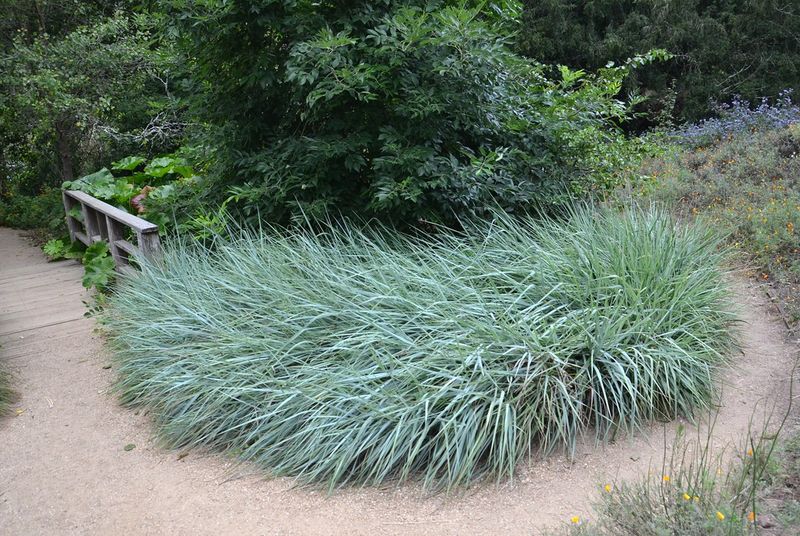
If you want height, presence, and a real architectural feel in your garden, giant wildrye delivers all of that without the invasive baggage that comes with pampas grass.
Leymus condensatus is native to coastal ranges and inland valleys across our state, and it has the kind of bold, upright structure that stops people in their tracks.
The leaves are wide, blue-green, and almost glaucous in appearance. They catch light differently throughout the day, giving the plant a shifting quality that feels alive and dynamic.
Planted against a fence or wall, giant wildrye creates a lush, almost tropical-looking backdrop without needing tropical amounts of water.
This grass spreads slowly by rhizomes, so it can fill in a large area over time. That spreading habit is manageable and actually useful in erosion-prone spots or on slopes where you need roots to hold the soil in place.
Your California Garden Changes Every Week. Your Plan Should Too.
Gardening in California changes quickly throughout the season. Every Friday you’ll receive a simple weekly plan showing exactly what to plant, prune, fertilize, harvest, and protect so you never miss the right timing.
It is nothing like the aggressive seeding of pampas grass. Giant wildrye grows best in full sun to partial shade and tolerates poor, dry soil with ease. Once established, it needs very little supplemental irrigation.
The variety called Canyon Prince is especially popular for its striking silver-blue color and slightly more compact growth habit.
It works beautifully in modern, drought-tolerant garden designs and native habitat plantings alike.
3. Pacific Reedgrass Fits Coastal Gardens Better
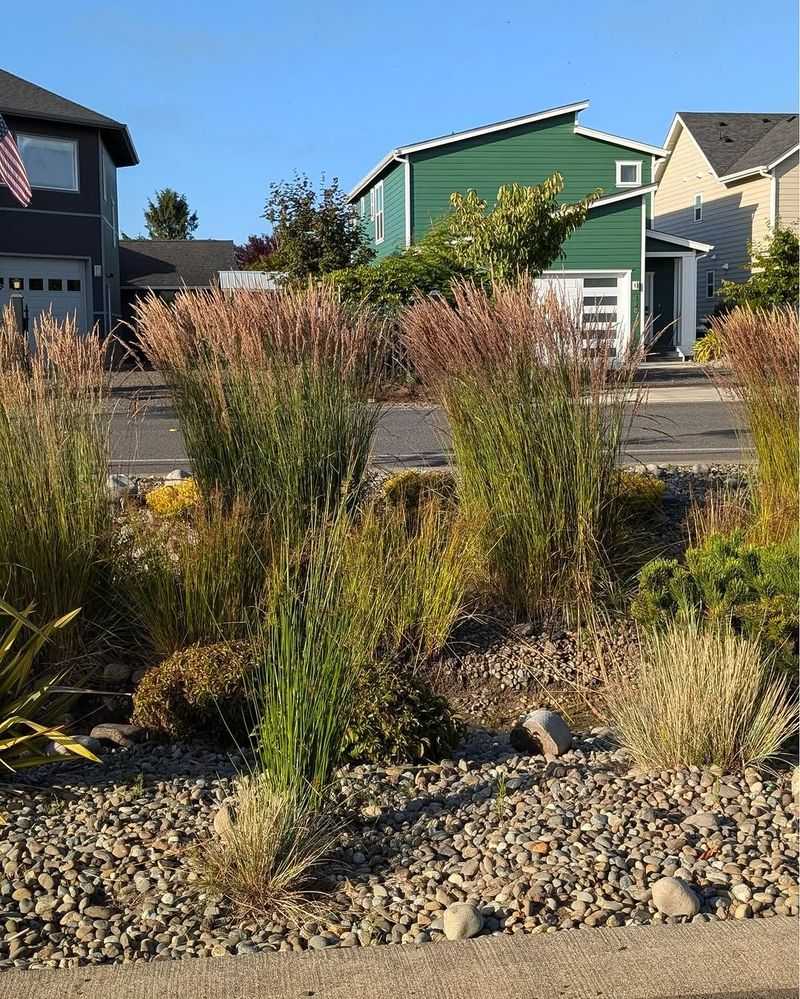
Coastal gardens have their own set of challenges. Salt air, wind, and sandy soil can make it hard to find plants that actually thrive rather than just survive.
Pacific reedgrass, known botanically as Calamagrostis nutkaensis, is built for exactly these conditions and looks stunning in the process.
This grass grows in graceful, arching clumps that move beautifully in coastal breezes. The seed heads are feathery and light, rising above the foliage in a way that feels soft and natural rather than stiff or formal.
Along the coast, where pampas grass has caused enormous damage to native dune ecosystems, choosing Pacific reedgrass is a genuinely restorative act.
It prefers moist to moderately dry conditions and does well in partial shade, which makes it versatile for spots that other grasses struggle with.
You can use it along pathways, near rain gardens, or in low spots that collect seasonal moisture. It naturalizes well and creates habitat for small birds and insects.
Pacific reedgrass pairs nicely with native rushes, sedges, and coastal wildflowers like Douglas iris and seaside daisy.
The overall effect is lush and layered, like a piece of the wild coast brought right into your garden.
It stays relatively tidy without much intervention and does not produce seeds that become a problem in surrounding wild lands.
4. Purple Needlegrass Brings Soft Movement Without The Spread
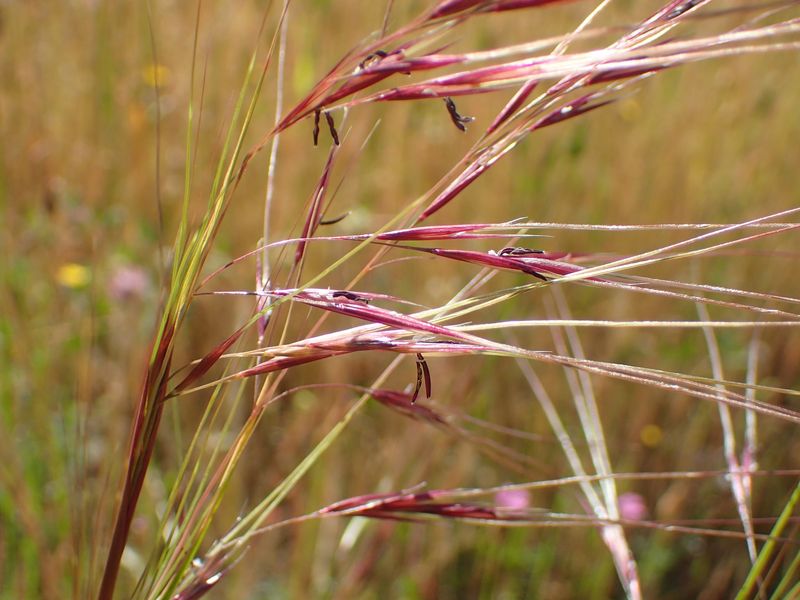
Purple needlegrass holds a special place in our state’s natural history. It is the official state grass, and for good reason.
Stipa pulchra once covered vast stretches of our valleys and foothills in a sea of soft, flowing green before non-native grasses pushed it out of most of its original range.
Planting it in your yard is a small act of ecological restoration. The fine-textured blades create a gentle, meadow-like feel that is a world apart from the coarse, aggressive look of pampas grass.
The seed heads are slender and purplish, nodding gracefully in the slightest breeze and catching light in a way that is genuinely beautiful.
This grass is well-adapted to dry summers and clay soils, which are common across much of our inland and foothill regions. It needs very little water once established and almost no fertilizer.
That means lower water bills and less time fussing over your garden during the dry season.
Purple needlegrass works well in meadow-style plantings, native lawns, and natural-looking borders.
It grows to about two or three feet tall and wide, staying manageable without crowding out its neighbors.
Gophers and deer tend to leave it alone, which is a real bonus in rural and semi-rural areas. Pair it with native wildflowers for a planting that feels alive all year long.
5. Alkali Sacaton Handles Dry, Tough Planting Strips
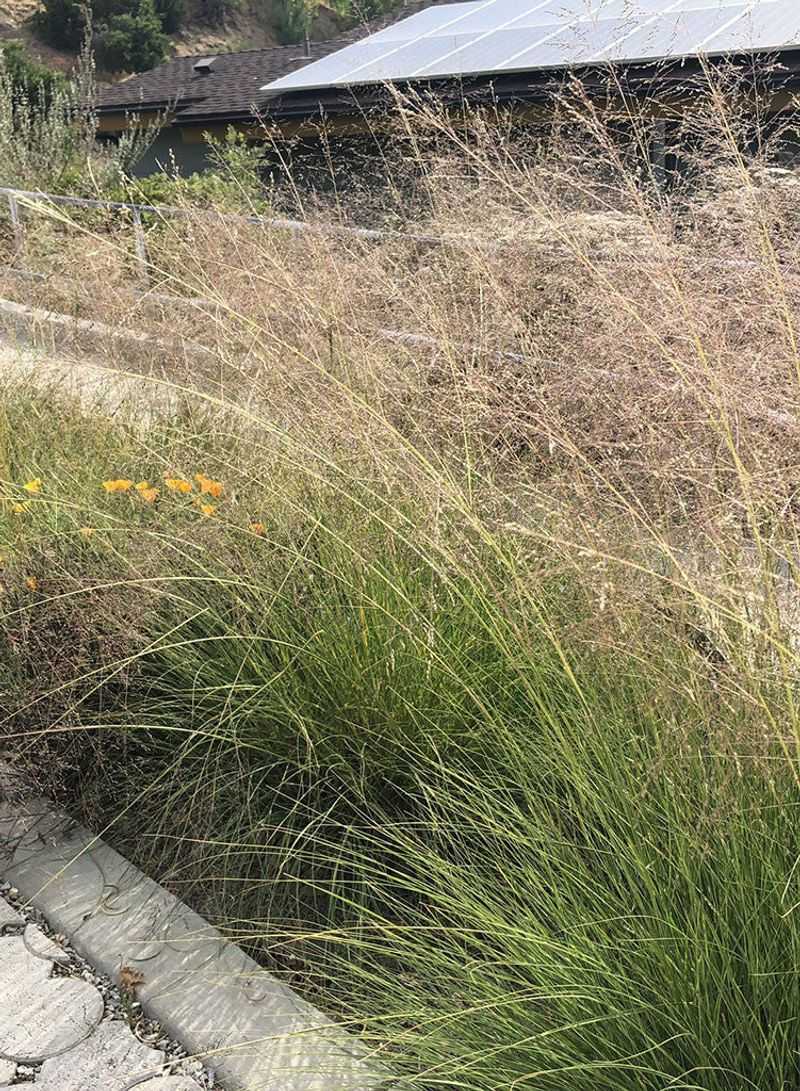
Planting strips between the sidewalk and the street are notoriously difficult spots. The soil is often compacted, alkaline, and bone dry.
Most ornamental grasses struggle there, and pampas grass, while it technically survives, spreads its seeds into every nearby natural area. Alkali sacaton is a much smarter choice for these tough, exposed spaces.
Sporobolus airoides is native to dry, alkaline, and even saline soils across the western United States.
It evolved to handle exactly the kind of punishment that planting strips dish out every single day.
Foot traffic, road salt, reflected heat from pavement, and long dry spells are no match for this tough, adaptable grass.
The plant grows in a tidy, upright clump and produces enormous clouds of fine, airy seed heads that catch the light beautifully in late summer and fall.
From a distance, it almost looks like a soft mist hovering above the foliage. Up close, the texture is delicate and intricate, which surprises most people who expect a tough plant to look rough.
Alkali sacaton tops out at around three to four feet tall and wide, making it a manageable size for most planting strips and medians. It needs almost no supplemental water once it gets going.
The seeds it produces are small, not wind-dispersed aggressively, and provide food for native sparrows and finches throughout the cooler months. It is a genuinely hard-working plant.
6. California Fescue Softens Borders Without Getting Huge
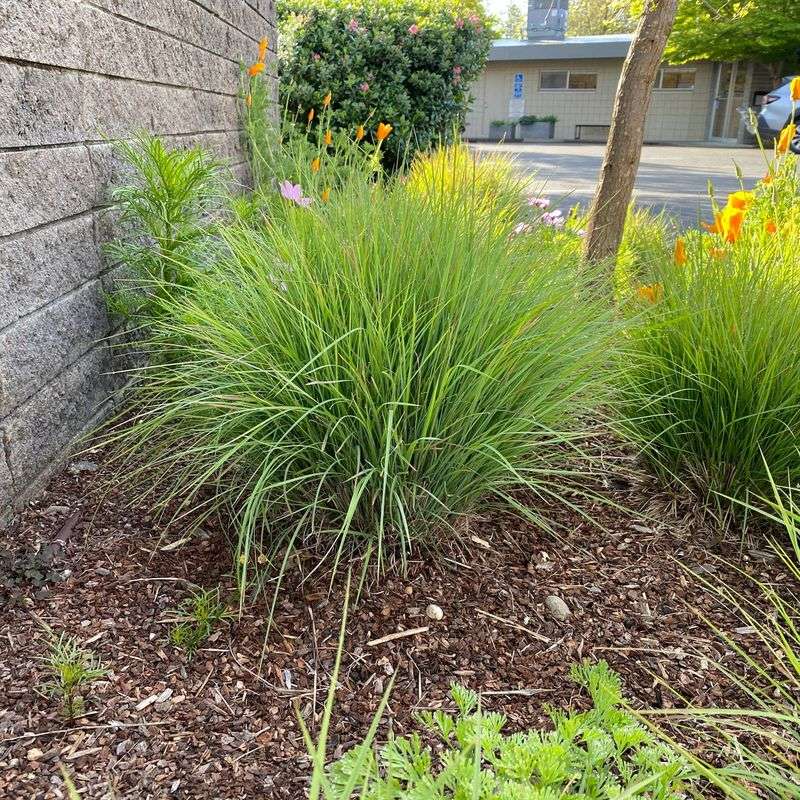
Not every garden needs a giant, dramatic grass. Sometimes what a space really calls for is something softer, more restrained, and a little more elegant.
That is exactly where California fescue earns its place as one of the most useful native grasses for home gardeners across our state.
Festuca californica grows in loose, graceful clumps with fine, blue-green blades that arch outward in a relaxed, almost casual way.
It stays relatively compact, usually reaching two to three feet tall, which makes it easy to tuck into borders, edges, and woodland garden spots without overwhelming nearby plants.
One of its best qualities is its tolerance for shade. Most ornamental grasses demand full sun, but California fescue handles partial to full shade quite well.
That opens up a whole range of planting spots under oaks, along north-facing fences, and beneath other trees where few grasses will perform reliably.
It pairs beautifully with native shade plants like coral bells, wild ginger, and sword fern.
The combination creates a layered, naturalistic look that feels like a small piece of the forest floor brought into your garden.
California fescue is also a larval host plant for several native skipper butterfly species, adding real ecological value beyond just its good looks.
Water it occasionally during the first summer, then pull back as it settles into its new home.
7. Blue Wildrye Fills In Native Meadow Edges
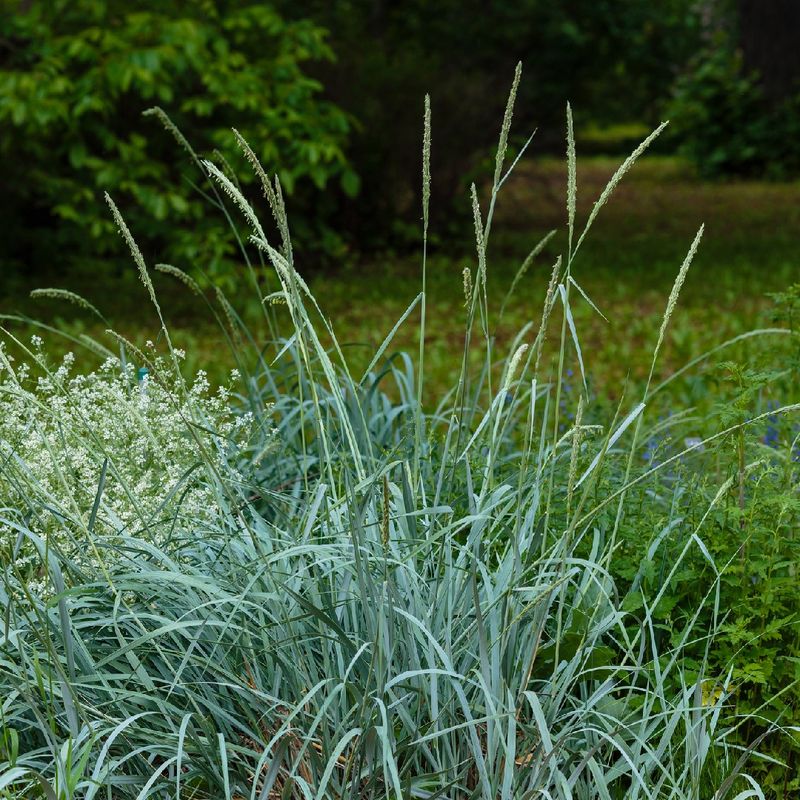
Meadow edges are some of the most ecologically productive spots in any landscape. They are where open space meets shelter, where wildlife moves between feeding and nesting areas, and where a diverse mix of plants can create real habitat value.
Blue wildrye is one of the best native grasses for filling in these transitional zones with something that actually belongs there.
Elymus glaucus is found naturally in woodland edges, chaparral margins, and open forests across our state and into neighboring regions.
It grows in upright, loosely bunched clumps with attractive blue-green foliage and slender seed spikes that stand up like little flags in the breeze. The overall look is relaxed and natural without being messy.
This grass handles shade better than most, making it a reliable choice for spots under open tree canopies or along the shaded side of hedges and fences.
It grows to about two to four feet tall and spreads modestly by seed, filling in gaps in a meadow planting over time without becoming overwhelming or hard to manage.
Blue wildrye is an important food source for native sparrows, juncos, and other seed-eating birds.
Caterpillars of several native skipper butterfly species also feed on its foliage, which means planting it supports multiple layers of the local food web.
It pairs well with native wildflowers, shrubs, and other grasses to create a planting that hums with life through every season of the year.
8. California Muhly Adds Airy Texture In Sunny Beds
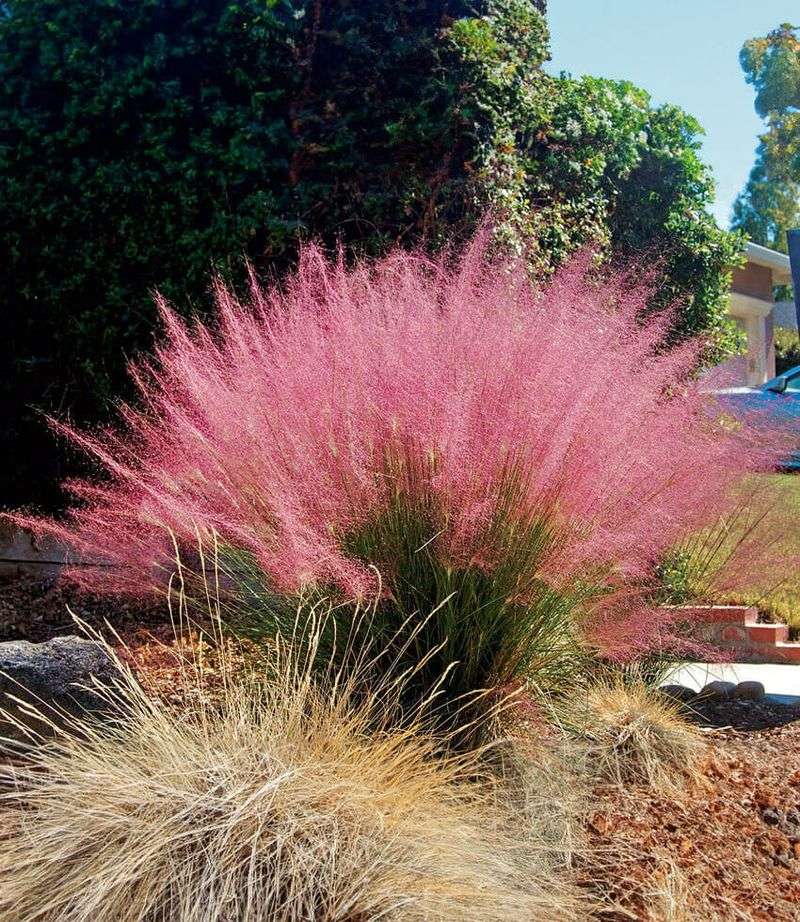
There is something almost magical about a grass that turns into a cloud of color in late summer.
California muhly does exactly that, producing a haze of fine, pinkish-purple seed heads that seem to glow when the sun hits them from behind.
It is one of the most visually striking native grasses available, and it is still surprisingly underused in home gardens.
Muhlenbergia californica is related to deer grass and shares some of its toughness, but it has a finer, more delicate texture that suits smaller gardens and mixed perennial beds.
It grows to about two to three feet tall and wide, forming a tidy, arching clump that stays attractive through most of the year.
Full sun is where it performs best, and it handles dry summers with ease once established. It does well in loamy or sandy soils and does not need rich amendments to look good.
That kind of low-maintenance reliability is exactly what busy gardeners appreciate most in a landscape plant.
The seed heads attract finches and other small birds who pick at them through fall and winter. The fine foliage also provides cover for ground-nesting insects and small beneficial beetles.
Plant California muhly in groups of three or five for the biggest visual impact, or use it as a soft edging plant along sunny pathways and garden beds.
It looks especially beautiful planted near boulders or alongside native sages and buckwheats.