Plant These Perennials During July In Texas And Enjoy Them For Years
July is not the month most Texas gardeners think about planting perennials. The heat is intense, the ground is tough, and the idea of putting new plants in the soil during the hardest stretch of summer feels counterintuitive.
But here’s what experienced Texas gardeners know that beginners often miss. Certain perennials actually establish remarkably well when planted in July, and getting them in the ground now sets them up for years of strong, reliable performance.
The key is choosing the right ones. Not every perennial can handle a July start in Texas. But the ones that can tend to be tougher, more drought tolerant, and better adapted to the local climate than the plants that need gentler conditions to get going.
Plant them now with a little extra care during establishment, and will they reward you season after season without asking for much in return.
1. Autumn Sage
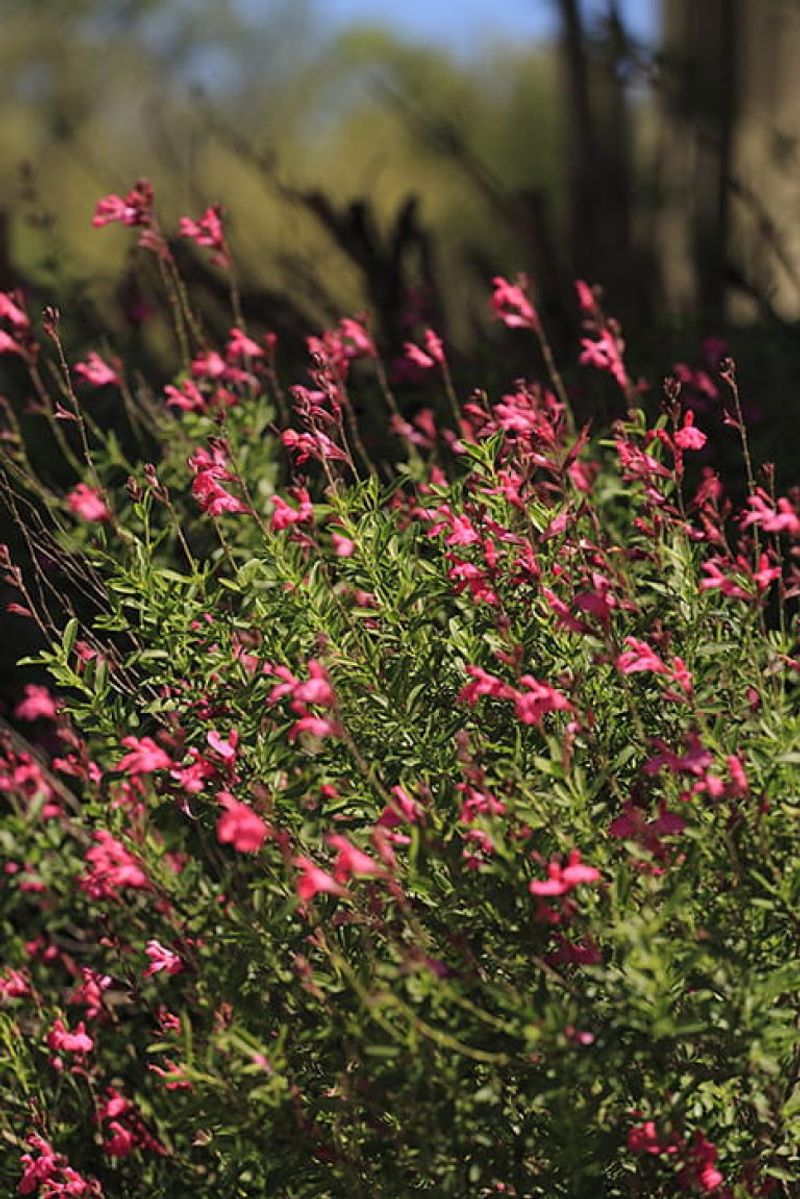
Few plants earn their place in a Texas garden the way Autumn Sage does. This tough little perennial has been a go-to for Texas gardeners for decades, and once you see it covered in red blooms while everything else looks tired from the heat, you will understand why.
Autumn Sage, or Salvia greggii, is native to the Texas Hill Country and northern Mexico. That origin story matters because it means this plant already knows how to handle brutal summers.
It thrives in full sun and well-drained soil, and it actually blooms better when it is not overwatered. Too much moisture in heavy clay soil can cause root problems, so if your yard holds water, mix in some gravel or coarse sand before planting.
Planting in July means you need to be a little more attentive at first. Water your new Autumn Sage every two to three days for the first few weeks until it shows new growth. After that, back off and let it toughen up. Once established, it needs very little from you.
The blooms come in red, pink, coral, and white, but the classic red variety is the most popular for good reason. Hummingbirds absolutely love it, and butterflies are not far behind.
You can expect flowers from spring all the way through fall with a short break in the hottest weeks.
Trim it back lightly after each bloom cycle to keep it bushy and full. A well-cared-for Autumn Sage can live for ten years or more in a Texas garden.
2. Red Yucca
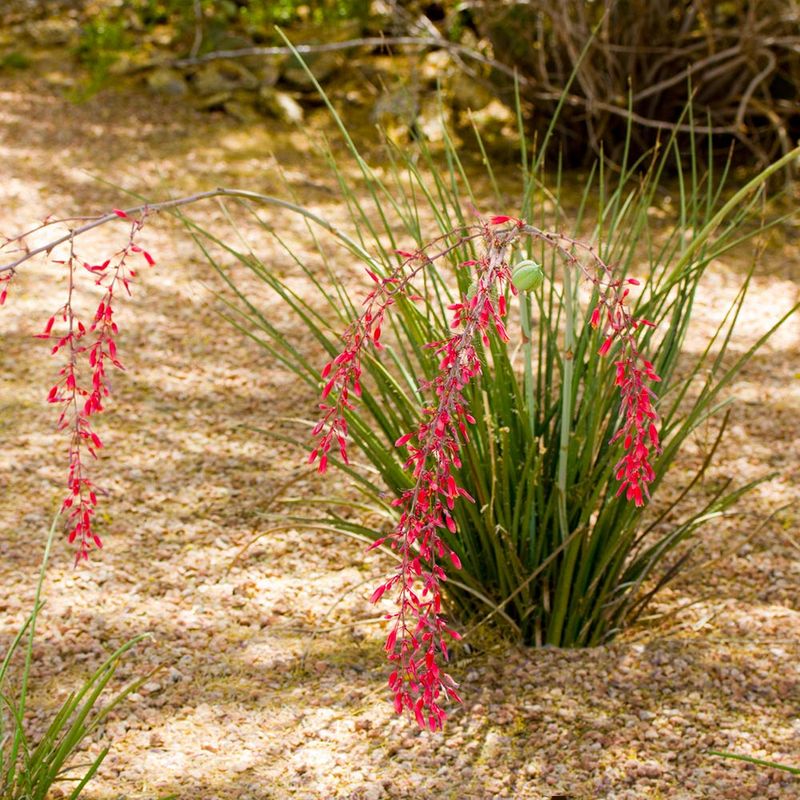
There is something almost architectural about Red Yucca. Its long, arching green leaves form a bold clump at the base, and then in late spring and summer, tall flower stalks shoot up and explode with tubular coral-pink blooms.
It looks dramatic without requiring any drama to maintain. Despite its name, Red Yucca is not a true yucca. Its botanical name is Hesperaloe parviflora, and it belongs to the agave family.
It is native to the Chihuahuan Desert and West Texas, which tells you everything you need to know about its toughness. Full sun, reflected heat from concrete or walls, rocky or sandy soil, and months without rain are all conditions this plant handles without complaint.
Your Texas Garden Changes Every Week. Your Plan Should Too.
Gardening in Texas changes quickly throughout the season. Every Friday you’ll receive a simple weekly plan showing exactly what to plant, prune, fertilize, harvest, and protect so you never miss the right timing.
Planting Red Yucca in July works well as long as you choose a spot with excellent drainage. Dig your hole, set the plant at the same depth it was in the pot, and water it in well.
For the first month, water it once or twice a week. After that, rainfall alone is usually enough in most parts of Texas.
Hummingbirds are wild about the long tubular flowers and will visit your garden repeatedly throughout the blooming season. The flower stalks can reach four to six feet tall, making this plant a real focal point in a landscape bed.
Red Yucca is also evergreen, so it provides structure and green color even in winter. One plant can last for twenty years or more, spreading slowly into a wider clump over time.
3. Texas Lantana
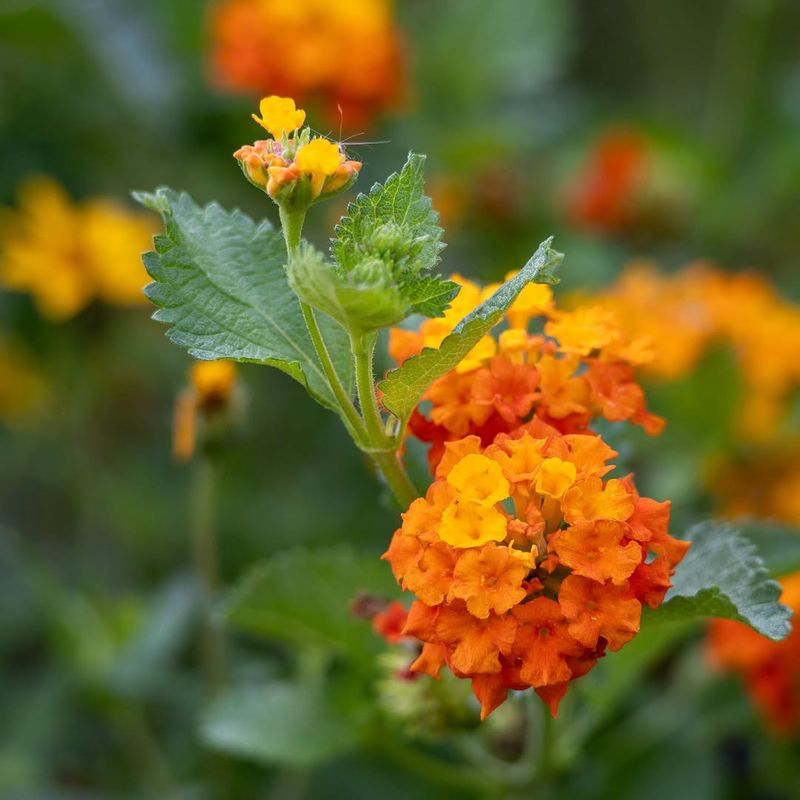
Walk through almost any established Texas neighborhood in summer and you will spot Texas Lantana growing along sunny fence lines and garden edges. It is one of those plants that looks like it was made for the Texas summer because, honestly, it was.
Texas Lantana, or Lantana urticoides, is a native species that grows naturally across central and south Texas.
Unlike the tropical lantana varieties sold at big-box stores, this native version is fully perennial in most of Texas and comes back reliably from the roots each spring.
Its flowers shift between orange, yellow, and red in tight round clusters, creating a color show that keeps going from late spring through the first frost.
Butterflies are obsessed with Texas Lantana. On a warm summer morning, you might count five or six different species feeding on a single plant. Bees love it too, making it a powerhouse for pollinator gardens.
Planting in July is fine, but new plants need consistent watering until they settle in. Water every two to three days for the first three to four weeks, then taper off as the plant roots into the soil.
Lantana planted in heavy shade will not bloom well, so always choose the sunniest spot available.
One important note: Texas Lantana berries are toxic to people and pets, so plant it in areas where children and animals do not roam unsupervised.
In the right spot, though, this plant is nearly unstoppable and will reward you with color and wildlife activity for many years ahead.
4. Mealy Blue Sage
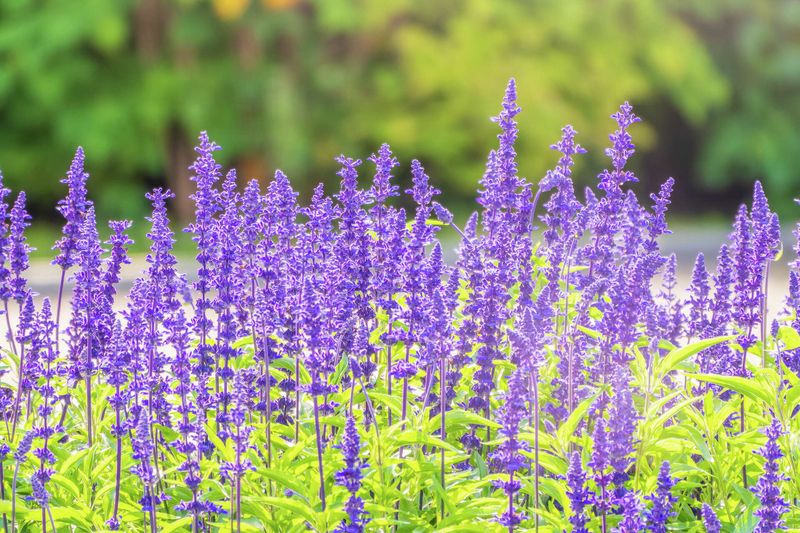
If you want a plant that bees and butterflies treat like their personal buffet, Mealy Blue Sage is the one to grow. The soft blue-purple flower spikes rise up above gray-green foliage and keep coming back all season long, drawing in pollinators from every direction.
Mealy Blue Sage, known botanically as Salvia farinacea, is native to Texas and New Mexico. It earns its common name from the fine white powder, called farina, that coats its stems and flower bracts.
This native salvia adapts to a wide range of soil types, from sandy loam to rocky ground, as long as the soil drains well. It will not survive in soggy conditions, so avoid low spots in your yard.
July planting is very doable with Mealy Blue Sage. Set it in full sun, water it in deeply after planting, and keep the soil slightly moist for the first two to three weeks.
Once you see new growth pushing out, you can start stretching the time between waterings. Established plants are quite drought-tolerant and can go a week or more without supplemental water.
The plant grows about two to three feet tall and wide, making it a good mid-border choice. Deadheading the spent flower spikes encourages fresh blooms to form quickly.
You can also cut the whole plant back by about a third in midsummer to refresh it for a strong fall showing.
Mealy Blue Sage reseeds itself gently, so over time you may find small new plants popping up nearby, giving you free plants to share with neighbors.
5. Turk’s Cap
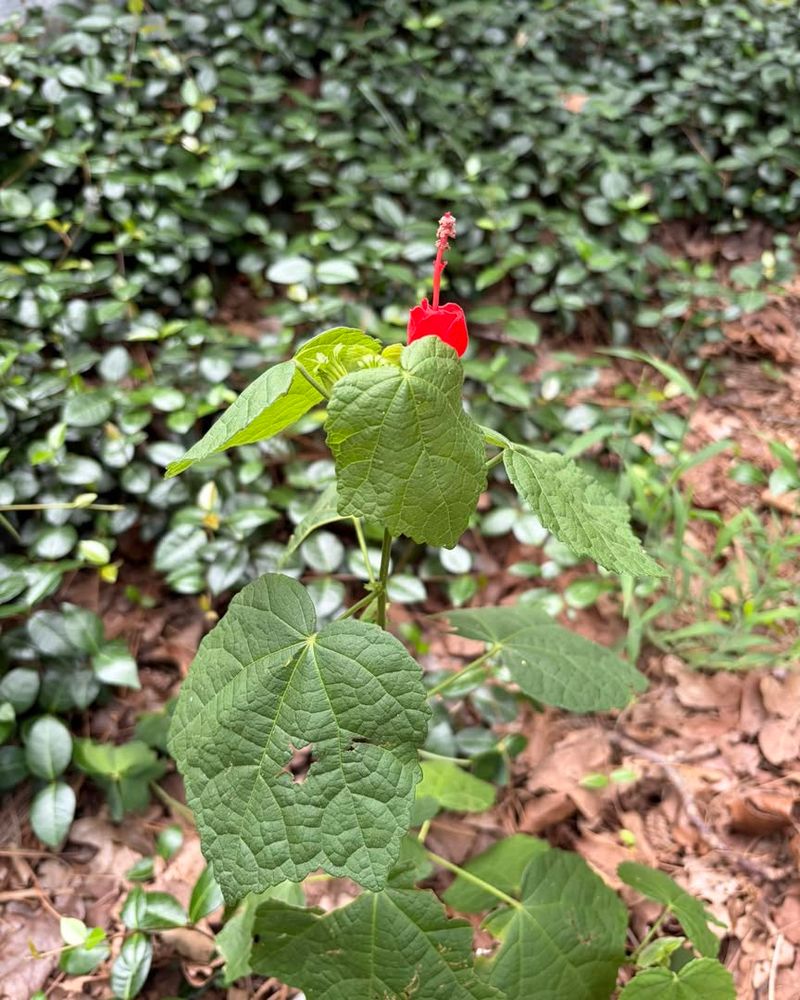
Most heat-loving Texas perennials demand full sun, which makes Turk’s Cap a real standout. This one thrives in part shade, making it a go-to solution for those tricky spots under trees or along the north side of a fence where other plants just refuse to perform.
Turk’s Cap, or Malvaviscus arboreus var. drummondii, is native to Texas and grows naturally under the canopy of live oaks and cedar elms across the Hill Country and beyond. Its flowers are unique and easy to recognize.
The bright red petals twist together without ever fully opening, forming a shape that looks like a tiny turban or, as the name suggests, a Turkish cap. Hummingbirds, butterflies, and even mockingbirds are drawn to the nectar and fruit this plant produces.
Planting in July works well because Turk’s Cap is already adapted to summer conditions. Dig a hole in your chosen shady spot, mix in a little compost to help with moisture retention, and water the new plant every two to three days for the first month.
It grows quickly once it settles in, sometimes reaching five to eight feet tall and wide by the end of its first season.
In late fall, Turk’s Cap will die back to the ground in most parts of Texas. Do not be alarmed.
The roots are very much alive underground and will send up fresh growth when spring warmth returns.
Over time, established clumps spread and fill in beautifully, creating a lush, tropical-looking ground layer that requires almost no maintenance at all.
6. Esperanza
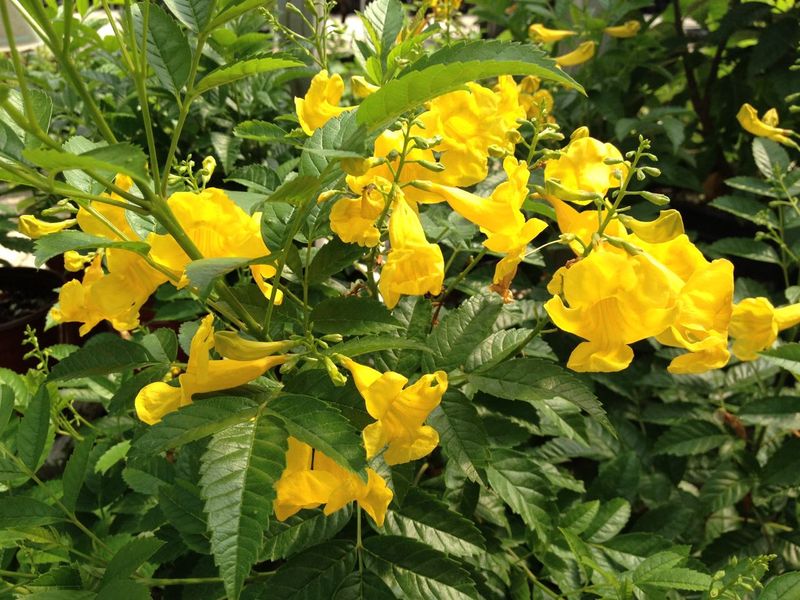
Bright, bold, and unapologetically cheerful, Esperanza is one of those plants that makes people stop their cars and ask what it is.
Those big clusters of golden yellow trumpet flowers bloom nonstop through the hottest months of summer, putting on a show when most gardens look scorched and tired.
Esperanza, also called Yellow Bells or Tecoma stans, is a fast-growing perennial shrub that loves heat more than almost anything else you can plant in Texas. It thrives in full sun and well-drained soil, and it responds to summer heat by blooming even harder.
In the warmest parts of Texas, such as the Rio Grande Valley and San Antonio, it grows into a large shrub reaching six feet or taller.
In cooler central and north Texas areas, a hard freeze may cut it back to the ground, but it usually returns from the roots the following spring.
Planting Esperanza in July puts it right in its comfort zone. Water it deeply after planting and then every few days until it establishes. After that, it is surprisingly drought-tolerant for such a vigorous bloomer.
Hummingbirds frequently visit the trumpet-shaped flowers, and the plant also attracts large butterflies like swallowtails. Its feathery green leaves stay attractive even on non-blooming days, giving the plant a full, lush appearance throughout the season.
Avoid planting Esperanza in low-lying spots where water collects after rain. Root health depends on good drainage, and a well-sited Esperanza can reward you with color from July straight through to the first frost without missing a beat.
7. Purple Coneflower
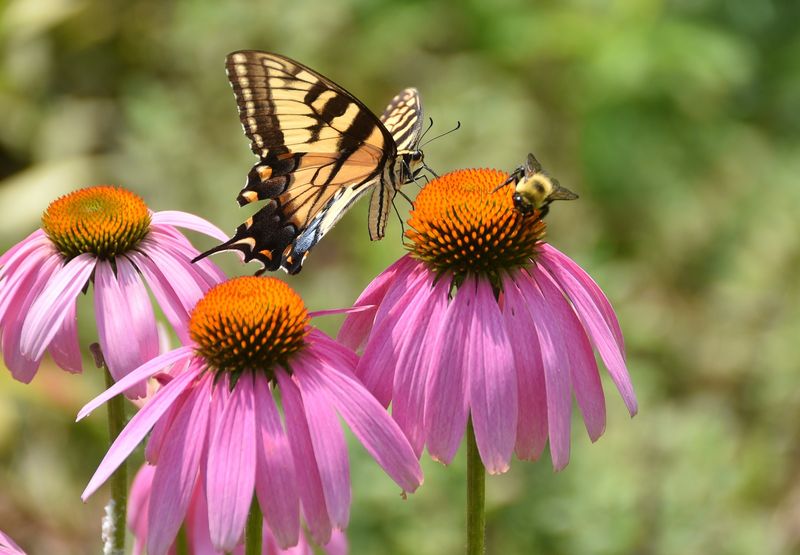
Purple Coneflower has been growing in Texas prairies long before it became a garden favorite.
Walk through a central Texas meadow in midsummer and you will likely spot its familiar daisy-like blooms nodding in the breeze, proving it belongs here and knows how to handle the climate.
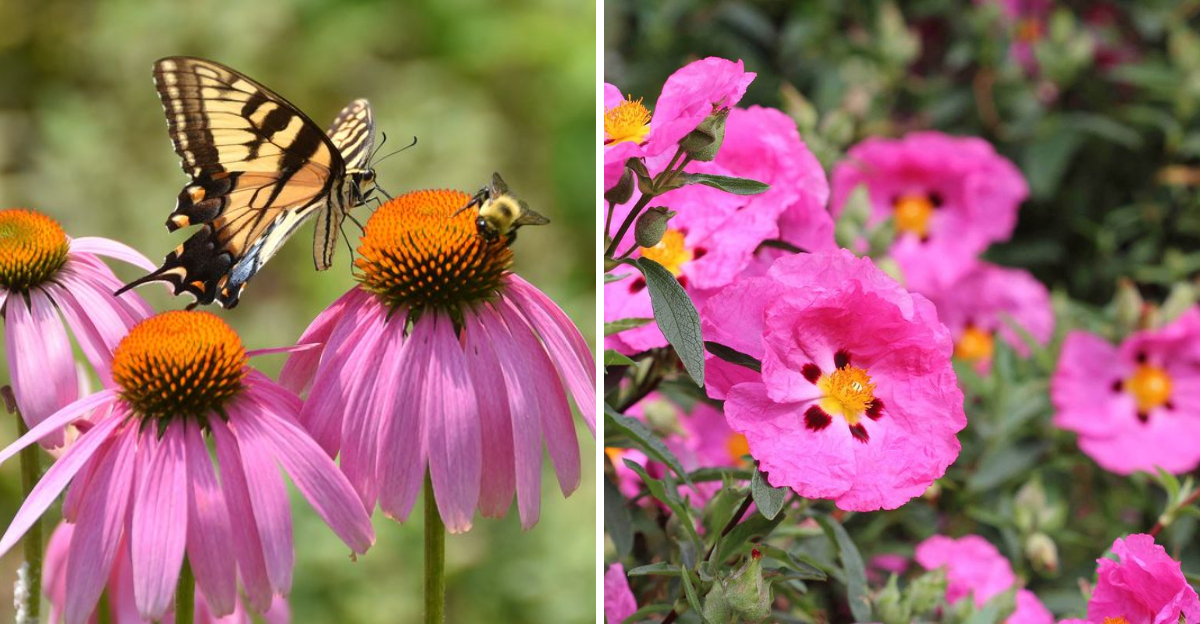
Echinacea purpurea is the botanical name for the most commonly grown coneflower variety. Its flowers have broad pink-purple petals that droop slightly backward from a raised, spiky orange-brown center cone.
That cone is part of what makes this plant so valuable to wildlife. Goldfinches and other seed-eating birds cling to the dried seed heads in fall and winter, so many gardeners leave the spent flowers standing rather than cutting them down.
Planting Purple Coneflower in July requires a bit of extra care compared to spring planting. The heat is intense, so water your new plants every other day for the first two to three weeks.
Choose a spot with full sun and well-draining soil. Coneflowers do not tolerate wet feet, and heavy clay that stays soggy can cause problems. Raised beds or slightly elevated ground work great.
Once established, Purple Coneflower is quite tough. It handles dry spells better than most traditional garden flowers and bounces back after summer storms.
Divide large clumps every three to four years to keep plants vigorous and encourage better blooming.
Beyond its beauty, Echinacea has a long history of use in herbal medicine among Native American tribes, making it one of the most historically rich plants you can add to a Texas garden.
8. Rock Rose
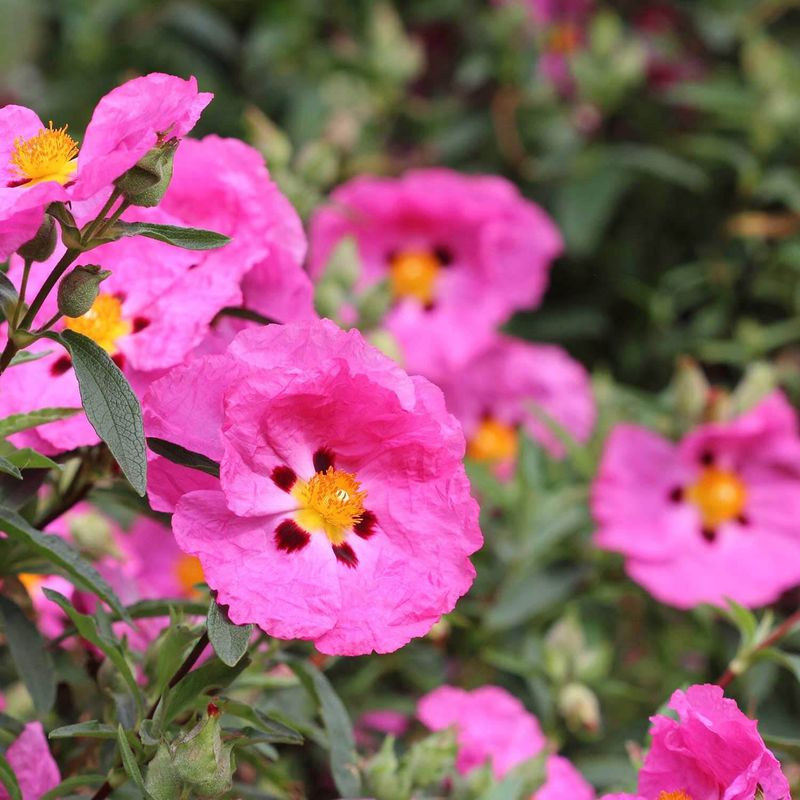
There is a quiet charm to Rock Rose that is easy to overlook at first glance, but once it settles into your garden and starts pushing out those soft pink blooms day after day through the heat of summer, you will wonder how you ever gardened without it.
Rock Rose, or Pavonia lasiopetala, is a Texas native shrub that grows naturally on rocky limestone hillsides across the Edwards Plateau and surrounding regions.
Its small hibiscus-like flowers open fresh each morning in a warm rosy pink, and while each bloom lasts only one day, the plant produces so many buds that the show feels continuous.
It grows three to four feet tall and wide with a relaxed, slightly wild shape that fits perfectly in naturalistic garden styles.
July planting works well for Rock Rose because it is already adapted to summer heat and dry conditions. Plant it in full sun to light shade and make sure the soil drains freely.
Water your new plant every two to three days for the first three to four weeks, then ease back as the roots take hold. Once established, Rock Rose handles drought very well and rarely needs supplemental watering except during extreme dry spells.
Hummingbirds and butterflies visit the flowers regularly, and the plant reseeds gently, giving you new plants in nearby spots over time. You can transplant these seedlings to fill gaps in your garden or share them with friends.
In late fall, trim Rock Rose back by about half to keep it tidy. It will return each spring with fresh growth and another full season of soft pink color ahead.